
Potsdam
Am Alten Markt 9, 14467 Potsdam, Deutschland
Potsdam Museum – Forum for Art and History | Photos & Directions
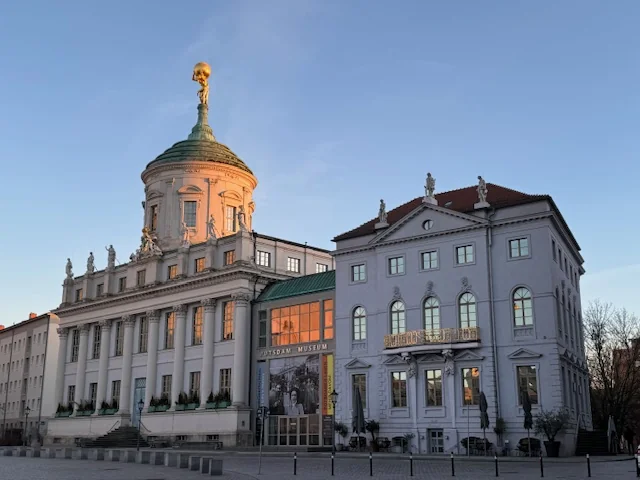
The Potsdam Museum – Forum for Art and History is one of the most exciting places for everyone who wants to not just visit Potsdam, but truly understand it. Located directly at Alten Markt 9, in the historic center of the city, the museum combines architecture, urban history, art, and the present into a place that is both informative and atmospheric. Those looking for photos, impressions, or good orientation in the city center of Potsdam will quickly find themselves here, as the ensemble of the Old Town Hall, the modern connecting part, and the Knobelsdorff House visibly shapes the square and gives the museum a special presence. Since 2012, the building has been back at its original museum location; however, its roots go far back to the civic museum movement of 1909. Today, the museum presents the history of the city with free admission to the permanent exhibition, changing special exhibitions, and a lively event program. It is thus not only a place to look at but also to learn, discuss, remember, and discover. ([potsdam-museum.de](https://www.potsdam-museum.de/de/wer-wir-sind-und-was-wir-machen))
The Potsdam Museum is particularly strong where history becomes concrete: in original objects, in carefully curated rooms, in its immediate location at Alten Markt, and in the combination of old building substance with modern museum functions. This mix makes the house so interesting for visitors who are looking for reviews, images, directions, parking, or events. The museum is also a place with a clear service orientation: opening hours, visitor address, guided tours, barrier-free access, café, shop, and event hall are transparently described and easily findable. From an SEO perspective, it is especially relevant that several strong search intentions converge here: photos, location, opening hours, exhibition, guided tour, parking, and event location. For the content, however, one thing counts above all: The Potsdam Museum does not tell abstractly but directly from the city. It shows how Potsdam has grown, how it was destroyed and rebuilt, and how the city has changed to this day. Thus, it is a cultural place with historical depth and practical utility at the same time. ([potsdam-museum.de](https://www.potsdam-museum.de/de))
History at Alten Markt and the Way to the Old Town Hall
The history of the Potsdam Museum is closely linked to the history of the city itself. As early as 1909, citizens founded the museum association in Potsdam to create a municipal museum with natural science, prehistory, and cultural history departments. The first exhibition was located in the Old Town Hall, exactly at the place where the museum was to return in 2012. After that, the collection moved several times, experienced war losses, upheavals, new locations, and organizational changes. This development makes it clear how much the museum itself is part of Potsdam's urban history. The official chronicles reveal that from a civic project, a significant cultural institution emerged over decades, which today presents itself as the Potsdam Museum – Forum for Art and History. The fact that the return to Alten Markt was only possible after a comprehensive renovation and realignment underscores the symbolic value of this place. The museum is not just an exhibition building but an identity-forming place in the historic center. ([potsdam-museum.de](https://www.potsdam-museum.de/de/ueber-uns/geschichte))
The building ensemble itself also tells history. The Old Town Hall was transformed into a cultural house in 1966 and has been a museum again since 2012; the Knobelsdorff House was built in 1750 and bore the name of its architect Georg Wenzeslaus von Knobelsdorff. Both buildings were heavily damaged in April 1945, which makes their current restoration and use even more remarkable. The house is also located at one of the most historically significant places in Potsdam, Alten Markt, whose development is closely linked to monarchy, reconstruction, urban planning, and public debate. This is precisely where the strong first impression that many visitors perceive in photos comes from: historical façade, urban environment, plenty of space for perspective and sightlines. So, if you wonder why the Potsdam Museum often appears in search queries together with Alten Markt, the Old Town Hall, or the Knobelsdorff House, you will find the answer in the interplay of place, architecture, and urban memory. The museum is not on the edge but at the center of the Potsdam narrative. ([potsdam-museum.de](https://www.potsdam-museum.de/de/das-alte-rathaus))
Potsdam. A City Makes History: Collection, Permanent Exhibition, and City Images
The permanent exhibition of the house is titled Potsdam. A City Makes History and does exactly what a good city museum should do: it tells the development of the city in an understandable, concrete manner with many originals. Officially, there are about 500 original objects, supplemented by images, short texts, audio, and film contributions. The exhibition traces Potsdam's development from the Middle Ages to the present and focuses not only on major epochs but also on daily life, on people, on anecdotes, and on the fractures of history. Themes such as luxury and splendor, immigration and military, kings and bourgeoisie, religion, urban development and architecture, art, crafts, and scientific achievements are interconnected. This thematic breadth is important because it makes the museum attractive for different interests: for school classes, families, those interested in cultural history, and anyone who wants to better place Potsdam as a city. Admission to this permanent exhibition is free, which significantly lowers the threshold for a spontaneous visit. ([potsdam-museum.de](https://www.potsdam-museum.de/de/potsdam-eine-stadt-macht-geschichte-0))
Moreover, the museum has an exceptionally large collection. On the homepage, it is described as the holder of the largest art, culture, and regional historical collection in Brandenburg, with over 270,000 objects. This is interesting not only for professionals but also for visitors who want to know why the museum is much more than a regional showcase. The collection areas range from photography and militaria to applied arts and everyday culture to posters, graphic design, writing and printing, as well as visual arts. This creates a very broad content foundation on which the exhibitions can build. For SEO relevance, this means: Those searching for Potsdam Museum, Forum for Art, urban history, collection, or photos often seek not just a building but a whole world of knowledge. The permanent exhibition is the best entry point for this because it is designed to be engaging and makes the most important lines of urban history visible in a compact form. With the additional audio guide option in German and English, the visit becomes even more accessible and profound. The museum is thus not just a place to pass by but a real cultural station in the heart of Potsdam. ([potsdam-museum.de](https://www.potsdam-museum.de/de))
Special Exhibitions, Program, and Tours
A significant part of the appeal of the Potsdam Museum lies in the alternation between the permanent exhibition and current special exhibitions. The exhibition page currently features, among others, Platz____ für Neues? Visions for the Old Market 1945–2025 and Christopher Lehmpfuhl | Alter Markt Potsdam. The first exhibition is dedicated to the Old Market as the historically proud heart of Potsdam and as a contested future space since its destruction in 1945; it runs until 25.10.2026 according to the official site. The second exhibition shows the perspective of an internationally renowned Berlin artist on one of Germany's most famous squares and is also scheduled until 25.10.2026. This dual perspective fits very well with the museum's profile: it combines historical reflection with artistic observation of the present. Precisely for this reason, the current program is interesting for visitors who are specifically looking for programs, events, or exhibition dates. The homepage also regularly announces individual dates such as image presentations, tower climbs, and thematic tours, so the house remains continuously in dialogue with its audience. ([potsdam-museum.de](https://www.potsdam-museum.de/de/ausstellungen))
The museum also shows remarkable versatility in its tours. For groups, there are curator-led tours through the permanent exhibition or current special exhibitions, lasting 90 minutes and for groups of 10 to 25 people. In addition, a tour of the Old Market is offered, explaining the current square with its historical buildings, reconstruction phases, and urban planning debates, and is then continued in the permanent exhibition. This tour lasts 60 minutes and can be booked in German, English, or Russian. So, for those looking for a clear, thematically guided access to the place, they not only receive information but also context. For event organizers, it is particularly interesting that tours can be combined with special opening hours and event concepts. This creates added value for conferences, receptions, or cultural groups that do not just want to rent spaces but want a contextually charged environment. The Potsdam Museum thus becomes a forum in the true sense: a place where art, history, and urban conversation come together. ([potsdam-museum.de](https://www.potsdam-museum.de/de/oeffentliche-fuehrungen))
Directions, Parking, and Barrier-Free Visit
For visitors, the location of the museum is extremely practical. The Potsdam Museum itself recommends public transport, cycling, or walking as the best means of arrival. With the S-Bahn S7 or regional transport, you can reach Potsdam Hbf; from there, it is about an 8-minute walk over the Lange Brücke. Several tram lines, including 91, 92, 93, 96, 98, and 99, stop at the Potsdam, Alter Markt/Landtag station, and various bus lines also connect the museum. Additionally, there is a stop for the Potsdam water taxi at Lange Brücke. Those arriving by bike will find a designated bike parking area right next to the Old Town Hall. This combination of central location and different means of arrival makes the house particularly user-friendly. Especially for a visit to the city center, this is an advantage, as the museum, old town walk, and other destinations can be easily combined. ([potsdam-museum.de](https://www.potsdam-museum.de/de/anfahrt))
The topic of parking is also clearly regulated. Paid parking spaces are available in the immediate vicinity of Alten Markt, including the P+R Bahnhofspassagen parking garage, the Am Kanal parking lot, the Am Lustgarten parking lot, the Wilhelm-Galerie parking garage, and the Am Neuen Markt parking garage. Additionally, the museum points out barrier-free parking: severely disabled individuals can reach the museum barrier-free via reservable parking spaces. Inside the building, there is a barrier-free elevator and a barrier-free restroom; the event hall is also barrier-free. For a city center location, this is an important plus point, as it makes the visit not only historically attractive but also practically well-planned. The official pages also clearly state the visitor address and transparently list the opening hours. This is helpful for anyone who wants to drop by spontaneously or plan their trip in advance. The Potsdam Museum is thus an example of how a historical location can meet today's demands for accessibility, orientation, and inclusion. ([potsdam-museum.de](https://www.potsdam-museum.de/de/anfahrt))
Event Hall, Foyer, and Exclusive Events
The Potsdam Museum is not only an exhibition house but also an interesting event location. The event hall offers around 180 square meters of space, is flexibly furnished, and accommodates up to 180 seats. It can be divided into two rooms of about 80 square meters each, has natural light, can be completely darkened, and is equipped with modern lighting and sound technology. Additionally, a room height of 6 meters gives the hall a spacious, representative effect. According to the official rental documents, the hall and event rooms are located on the ground floor in direct proximity to the exhibition rooms, making it easy to combine conferences and culture. This is attractive for companies, institutions, associations, or cultural organizers because here not only a room is booked but an environment with a strong identity. Receptions, lectures, conferences, workshops, and readings fit well into this house, which differs from many standard locations due to its connection of history and present. ([potsdam.de](https://www.potsdam.de/de/veranstaltungssaal-im-potsdam-museum-forum-fuer-kunst-und-geschichte))
The hall is complemented by a foyer and a corridor of around 200 square meters and about 150 standing places. This area is particularly suitable for conference catering and standing receptions and serves as a fitting entrance to the event hall and exhibition halls. For events, special openings of the museum rooms can also be arranged, as well as knowledgeable tours of the collection, special exhibitions, or specific topics; guided tours in foreign languages are also possible upon request. This turns a room rental into a culturally charged overall process that remains in the guests' memory. The use is generally possible from Tuesday to Sunday during opening hours, but in individual cases, it can also be arranged outside of those hours. So, for those searching for Potsdam Museum event hall, tickets, floor plan, or capacity, clear facts can be found here: The house is small enough for atmosphere and large enough for professional formats. This balance makes the event area so interesting. ([potsdam-museum.de](https://www.potsdam-museum.de/system/files/documents/2023_vermietungsunterlagen.pdf))
Museum Café, Shop, and Photo Opportunities Around Alten Markt
For a complete visit, the quality of stay is also important, and here the Potsdam Museum excels with its Café Central and museum shop. The café offers coffee specialties, lemonades, cakes, and light meals, making the house a place where you can not only view exhibitions but also take a break. The shop complements the offer with catalogs, photo books, Potsdam books, and souvenirs; even an online shop is mentioned on the homepage. So, for those looking for images, photos, or small souvenirs, they get more than just a fleeting museum visit here. Additionally, the strong visual impact of the place itself: the ensemble at Alten Markt, the façade of the Old Town Hall, and the historic surroundings create a first impression that works particularly well in many photos. This is important for all those who want to orient themselves in advance or consciously pay attention to motifs during a city tour. ([potsdam-museum.de](https://www.potsdam-museum.de/de))
The museum is also digitally present and easily findable. The homepage provides information on newsletters, Instagram, Facebook, current programs, and changing content. Additionally, public events, image presentations, tower climbs, and thematic tours continuously bring the museum back into focus. For this reason, searching for reviews or photos for this house is so obvious: there is not only a historical substance but also continuously new occasions for impressions and images. Those who plan their visit wisely combine a walk through the permanent exhibition with a look at Alten Markt, a coffee at Café Central, and perhaps a glance into the shop or the current event program. This way, a museum visit becomes a small city trip with culture, architecture, and atmosphere. The Potsdam Museum – Forum for Art and History offers exactly the right mix of content, location, and accessibility, making it a very strong focal point for search queries related to photos, directions, opening hours, events, and urban history. ([potsdam-museum.de](https://www.potsdam-museum.de/de))
Sources:
Mehr anzeigenWeniger anzeigen
Potsdam Museum – Forum for Art and History | Photos & Directions
The Potsdam Museum – Forum for Art and History is one of the most exciting places for everyone who wants to not just visit Potsdam, but truly understand it. Located directly at Alten Markt 9, in the historic center of the city, the museum combines architecture, urban history, art, and the present into a place that is both informative and atmospheric. Those looking for photos, impressions, or good orientation in the city center of Potsdam will quickly find themselves here, as the ensemble of the Old Town Hall, the modern connecting part, and the Knobelsdorff House visibly shapes the square and gives the museum a special presence. Since 2012, the building has been back at its original museum location; however, its roots go far back to the civic museum movement of 1909. Today, the museum presents the history of the city with free admission to the permanent exhibition, changing special exhibitions, and a lively event program. It is thus not only a place to look at but also to learn, discuss, remember, and discover. ([potsdam-museum.de](https://www.potsdam-museum.de/de/wer-wir-sind-und-was-wir-machen))
The Potsdam Museum is particularly strong where history becomes concrete: in original objects, in carefully curated rooms, in its immediate location at Alten Markt, and in the combination of old building substance with modern museum functions. This mix makes the house so interesting for visitors who are looking for reviews, images, directions, parking, or events. The museum is also a place with a clear service orientation: opening hours, visitor address, guided tours, barrier-free access, café, shop, and event hall are transparently described and easily findable. From an SEO perspective, it is especially relevant that several strong search intentions converge here: photos, location, opening hours, exhibition, guided tour, parking, and event location. For the content, however, one thing counts above all: The Potsdam Museum does not tell abstractly but directly from the city. It shows how Potsdam has grown, how it was destroyed and rebuilt, and how the city has changed to this day. Thus, it is a cultural place with historical depth and practical utility at the same time. ([potsdam-museum.de](https://www.potsdam-museum.de/de))
History at Alten Markt and the Way to the Old Town Hall
The history of the Potsdam Museum is closely linked to the history of the city itself. As early as 1909, citizens founded the museum association in Potsdam to create a municipal museum with natural science, prehistory, and cultural history departments. The first exhibition was located in the Old Town Hall, exactly at the place where the museum was to return in 2012. After that, the collection moved several times, experienced war losses, upheavals, new locations, and organizational changes. This development makes it clear how much the museum itself is part of Potsdam's urban history. The official chronicles reveal that from a civic project, a significant cultural institution emerged over decades, which today presents itself as the Potsdam Museum – Forum for Art and History. The fact that the return to Alten Markt was only possible after a comprehensive renovation and realignment underscores the symbolic value of this place. The museum is not just an exhibition building but an identity-forming place in the historic center. ([potsdam-museum.de](https://www.potsdam-museum.de/de/ueber-uns/geschichte))
The building ensemble itself also tells history. The Old Town Hall was transformed into a cultural house in 1966 and has been a museum again since 2012; the Knobelsdorff House was built in 1750 and bore the name of its architect Georg Wenzeslaus von Knobelsdorff. Both buildings were heavily damaged in April 1945, which makes their current restoration and use even more remarkable. The house is also located at one of the most historically significant places in Potsdam, Alten Markt, whose development is closely linked to monarchy, reconstruction, urban planning, and public debate. This is precisely where the strong first impression that many visitors perceive in photos comes from: historical façade, urban environment, plenty of space for perspective and sightlines. So, if you wonder why the Potsdam Museum often appears in search queries together with Alten Markt, the Old Town Hall, or the Knobelsdorff House, you will find the answer in the interplay of place, architecture, and urban memory. The museum is not on the edge but at the center of the Potsdam narrative. ([potsdam-museum.de](https://www.potsdam-museum.de/de/das-alte-rathaus))
Potsdam. A City Makes History: Collection, Permanent Exhibition, and City Images
The permanent exhibition of the house is titled Potsdam. A City Makes History and does exactly what a good city museum should do: it tells the development of the city in an understandable, concrete manner with many originals. Officially, there are about 500 original objects, supplemented by images, short texts, audio, and film contributions. The exhibition traces Potsdam's development from the Middle Ages to the present and focuses not only on major epochs but also on daily life, on people, on anecdotes, and on the fractures of history. Themes such as luxury and splendor, immigration and military, kings and bourgeoisie, religion, urban development and architecture, art, crafts, and scientific achievements are interconnected. This thematic breadth is important because it makes the museum attractive for different interests: for school classes, families, those interested in cultural history, and anyone who wants to better place Potsdam as a city. Admission to this permanent exhibition is free, which significantly lowers the threshold for a spontaneous visit. ([potsdam-museum.de](https://www.potsdam-museum.de/de/potsdam-eine-stadt-macht-geschichte-0))
Moreover, the museum has an exceptionally large collection. On the homepage, it is described as the holder of the largest art, culture, and regional historical collection in Brandenburg, with over 270,000 objects. This is interesting not only for professionals but also for visitors who want to know why the museum is much more than a regional showcase. The collection areas range from photography and militaria to applied arts and everyday culture to posters, graphic design, writing and printing, as well as visual arts. This creates a very broad content foundation on which the exhibitions can build. For SEO relevance, this means: Those searching for Potsdam Museum, Forum for Art, urban history, collection, or photos often seek not just a building but a whole world of knowledge. The permanent exhibition is the best entry point for this because it is designed to be engaging and makes the most important lines of urban history visible in a compact form. With the additional audio guide option in German and English, the visit becomes even more accessible and profound. The museum is thus not just a place to pass by but a real cultural station in the heart of Potsdam. ([potsdam-museum.de](https://www.potsdam-museum.de/de))
Special Exhibitions, Program, and Tours
A significant part of the appeal of the Potsdam Museum lies in the alternation between the permanent exhibition and current special exhibitions. The exhibition page currently features, among others, Platz____ für Neues? Visions for the Old Market 1945–2025 and Christopher Lehmpfuhl | Alter Markt Potsdam. The first exhibition is dedicated to the Old Market as the historically proud heart of Potsdam and as a contested future space since its destruction in 1945; it runs until 25.10.2026 according to the official site. The second exhibition shows the perspective of an internationally renowned Berlin artist on one of Germany's most famous squares and is also scheduled until 25.10.2026. This dual perspective fits very well with the museum's profile: it combines historical reflection with artistic observation of the present. Precisely for this reason, the current program is interesting for visitors who are specifically looking for programs, events, or exhibition dates. The homepage also regularly announces individual dates such as image presentations, tower climbs, and thematic tours, so the house remains continuously in dialogue with its audience. ([potsdam-museum.de](https://www.potsdam-museum.de/de/ausstellungen))
The museum also shows remarkable versatility in its tours. For groups, there are curator-led tours through the permanent exhibition or current special exhibitions, lasting 90 minutes and for groups of 10 to 25 people. In addition, a tour of the Old Market is offered, explaining the current square with its historical buildings, reconstruction phases, and urban planning debates, and is then continued in the permanent exhibition. This tour lasts 60 minutes and can be booked in German, English, or Russian. So, for those looking for a clear, thematically guided access to the place, they not only receive information but also context. For event organizers, it is particularly interesting that tours can be combined with special opening hours and event concepts. This creates added value for conferences, receptions, or cultural groups that do not just want to rent spaces but want a contextually charged environment. The Potsdam Museum thus becomes a forum in the true sense: a place where art, history, and urban conversation come together. ([potsdam-museum.de](https://www.potsdam-museum.de/de/oeffentliche-fuehrungen))
Directions, Parking, and Barrier-Free Visit
For visitors, the location of the museum is extremely practical. The Potsdam Museum itself recommends public transport, cycling, or walking as the best means of arrival. With the S-Bahn S7 or regional transport, you can reach Potsdam Hbf; from there, it is about an 8-minute walk over the Lange Brücke. Several tram lines, including 91, 92, 93, 96, 98, and 99, stop at the Potsdam, Alter Markt/Landtag station, and various bus lines also connect the museum. Additionally, there is a stop for the Potsdam water taxi at Lange Brücke. Those arriving by bike will find a designated bike parking area right next to the Old Town Hall. This combination of central location and different means of arrival makes the house particularly user-friendly. Especially for a visit to the city center, this is an advantage, as the museum, old town walk, and other destinations can be easily combined. ([potsdam-museum.de](https://www.potsdam-museum.de/de/anfahrt))
The topic of parking is also clearly regulated. Paid parking spaces are available in the immediate vicinity of Alten Markt, including the P+R Bahnhofspassagen parking garage, the Am Kanal parking lot, the Am Lustgarten parking lot, the Wilhelm-Galerie parking garage, and the Am Neuen Markt parking garage. Additionally, the museum points out barrier-free parking: severely disabled individuals can reach the museum barrier-free via reservable parking spaces. Inside the building, there is a barrier-free elevator and a barrier-free restroom; the event hall is also barrier-free. For a city center location, this is an important plus point, as it makes the visit not only historically attractive but also practically well-planned. The official pages also clearly state the visitor address and transparently list the opening hours. This is helpful for anyone who wants to drop by spontaneously or plan their trip in advance. The Potsdam Museum is thus an example of how a historical location can meet today's demands for accessibility, orientation, and inclusion. ([potsdam-museum.de](https://www.potsdam-museum.de/de/anfahrt))
Event Hall, Foyer, and Exclusive Events
The Potsdam Museum is not only an exhibition house but also an interesting event location. The event hall offers around 180 square meters of space, is flexibly furnished, and accommodates up to 180 seats. It can be divided into two rooms of about 80 square meters each, has natural light, can be completely darkened, and is equipped with modern lighting and sound technology. Additionally, a room height of 6 meters gives the hall a spacious, representative effect. According to the official rental documents, the hall and event rooms are located on the ground floor in direct proximity to the exhibition rooms, making it easy to combine conferences and culture. This is attractive for companies, institutions, associations, or cultural organizers because here not only a room is booked but an environment with a strong identity. Receptions, lectures, conferences, workshops, and readings fit well into this house, which differs from many standard locations due to its connection of history and present. ([potsdam.de](https://www.potsdam.de/de/veranstaltungssaal-im-potsdam-museum-forum-fuer-kunst-und-geschichte))
The hall is complemented by a foyer and a corridor of around 200 square meters and about 150 standing places. This area is particularly suitable for conference catering and standing receptions and serves as a fitting entrance to the event hall and exhibition halls. For events, special openings of the museum rooms can also be arranged, as well as knowledgeable tours of the collection, special exhibitions, or specific topics; guided tours in foreign languages are also possible upon request. This turns a room rental into a culturally charged overall process that remains in the guests' memory. The use is generally possible from Tuesday to Sunday during opening hours, but in individual cases, it can also be arranged outside of those hours. So, for those searching for Potsdam Museum event hall, tickets, floor plan, or capacity, clear facts can be found here: The house is small enough for atmosphere and large enough for professional formats. This balance makes the event area so interesting. ([potsdam-museum.de](https://www.potsdam-museum.de/system/files/documents/2023_vermietungsunterlagen.pdf))
Museum Café, Shop, and Photo Opportunities Around Alten Markt
For a complete visit, the quality of stay is also important, and here the Potsdam Museum excels with its Café Central and museum shop. The café offers coffee specialties, lemonades, cakes, and light meals, making the house a place where you can not only view exhibitions but also take a break. The shop complements the offer with catalogs, photo books, Potsdam books, and souvenirs; even an online shop is mentioned on the homepage. So, for those looking for images, photos, or small souvenirs, they get more than just a fleeting museum visit here. Additionally, the strong visual impact of the place itself: the ensemble at Alten Markt, the façade of the Old Town Hall, and the historic surroundings create a first impression that works particularly well in many photos. This is important for all those who want to orient themselves in advance or consciously pay attention to motifs during a city tour. ([potsdam-museum.de](https://www.potsdam-museum.de/de))
The museum is also digitally present and easily findable. The homepage provides information on newsletters, Instagram, Facebook, current programs, and changing content. Additionally, public events, image presentations, tower climbs, and thematic tours continuously bring the museum back into focus. For this reason, searching for reviews or photos for this house is so obvious: there is not only a historical substance but also continuously new occasions for impressions and images. Those who plan their visit wisely combine a walk through the permanent exhibition with a look at Alten Markt, a coffee at Café Central, and perhaps a glance into the shop or the current event program. This way, a museum visit becomes a small city trip with culture, architecture, and atmosphere. The Potsdam Museum – Forum for Art and History offers exactly the right mix of content, location, and accessibility, making it a very strong focal point for search queries related to photos, directions, opening hours, events, and urban history. ([potsdam-museum.de](https://www.potsdam-museum.de/de))
Sources:
Potsdam Museum – Forum for Art and History | Photos & Directions
The Potsdam Museum – Forum for Art and History is one of the most exciting places for everyone who wants to not just visit Potsdam, but truly understand it. Located directly at Alten Markt 9, in the historic center of the city, the museum combines architecture, urban history, art, and the present into a place that is both informative and atmospheric. Those looking for photos, impressions, or good orientation in the city center of Potsdam will quickly find themselves here, as the ensemble of the Old Town Hall, the modern connecting part, and the Knobelsdorff House visibly shapes the square and gives the museum a special presence. Since 2012, the building has been back at its original museum location; however, its roots go far back to the civic museum movement of 1909. Today, the museum presents the history of the city with free admission to the permanent exhibition, changing special exhibitions, and a lively event program. It is thus not only a place to look at but also to learn, discuss, remember, and discover. ([potsdam-museum.de](https://www.potsdam-museum.de/de/wer-wir-sind-und-was-wir-machen))
The Potsdam Museum is particularly strong where history becomes concrete: in original objects, in carefully curated rooms, in its immediate location at Alten Markt, and in the combination of old building substance with modern museum functions. This mix makes the house so interesting for visitors who are looking for reviews, images, directions, parking, or events. The museum is also a place with a clear service orientation: opening hours, visitor address, guided tours, barrier-free access, café, shop, and event hall are transparently described and easily findable. From an SEO perspective, it is especially relevant that several strong search intentions converge here: photos, location, opening hours, exhibition, guided tour, parking, and event location. For the content, however, one thing counts above all: The Potsdam Museum does not tell abstractly but directly from the city. It shows how Potsdam has grown, how it was destroyed and rebuilt, and how the city has changed to this day. Thus, it is a cultural place with historical depth and practical utility at the same time. ([potsdam-museum.de](https://www.potsdam-museum.de/de))
History at Alten Markt and the Way to the Old Town Hall
The history of the Potsdam Museum is closely linked to the history of the city itself. As early as 1909, citizens founded the museum association in Potsdam to create a municipal museum with natural science, prehistory, and cultural history departments. The first exhibition was located in the Old Town Hall, exactly at the place where the museum was to return in 2012. After that, the collection moved several times, experienced war losses, upheavals, new locations, and organizational changes. This development makes it clear how much the museum itself is part of Potsdam's urban history. The official chronicles reveal that from a civic project, a significant cultural institution emerged over decades, which today presents itself as the Potsdam Museum – Forum for Art and History. The fact that the return to Alten Markt was only possible after a comprehensive renovation and realignment underscores the symbolic value of this place. The museum is not just an exhibition building but an identity-forming place in the historic center. ([potsdam-museum.de](https://www.potsdam-museum.de/de/ueber-uns/geschichte))
The building ensemble itself also tells history. The Old Town Hall was transformed into a cultural house in 1966 and has been a museum again since 2012; the Knobelsdorff House was built in 1750 and bore the name of its architect Georg Wenzeslaus von Knobelsdorff. Both buildings were heavily damaged in April 1945, which makes their current restoration and use even more remarkable. The house is also located at one of the most historically significant places in Potsdam, Alten Markt, whose development is closely linked to monarchy, reconstruction, urban planning, and public debate. This is precisely where the strong first impression that many visitors perceive in photos comes from: historical façade, urban environment, plenty of space for perspective and sightlines. So, if you wonder why the Potsdam Museum often appears in search queries together with Alten Markt, the Old Town Hall, or the Knobelsdorff House, you will find the answer in the interplay of place, architecture, and urban memory. The museum is not on the edge but at the center of the Potsdam narrative. ([potsdam-museum.de](https://www.potsdam-museum.de/de/das-alte-rathaus))
Potsdam. A City Makes History: Collection, Permanent Exhibition, and City Images
The permanent exhibition of the house is titled Potsdam. A City Makes History and does exactly what a good city museum should do: it tells the development of the city in an understandable, concrete manner with many originals. Officially, there are about 500 original objects, supplemented by images, short texts, audio, and film contributions. The exhibition traces Potsdam's development from the Middle Ages to the present and focuses not only on major epochs but also on daily life, on people, on anecdotes, and on the fractures of history. Themes such as luxury and splendor, immigration and military, kings and bourgeoisie, religion, urban development and architecture, art, crafts, and scientific achievements are interconnected. This thematic breadth is important because it makes the museum attractive for different interests: for school classes, families, those interested in cultural history, and anyone who wants to better place Potsdam as a city. Admission to this permanent exhibition is free, which significantly lowers the threshold for a spontaneous visit. ([potsdam-museum.de](https://www.potsdam-museum.de/de/potsdam-eine-stadt-macht-geschichte-0))
Moreover, the museum has an exceptionally large collection. On the homepage, it is described as the holder of the largest art, culture, and regional historical collection in Brandenburg, with over 270,000 objects. This is interesting not only for professionals but also for visitors who want to know why the museum is much more than a regional showcase. The collection areas range from photography and militaria to applied arts and everyday culture to posters, graphic design, writing and printing, as well as visual arts. This creates a very broad content foundation on which the exhibitions can build. For SEO relevance, this means: Those searching for Potsdam Museum, Forum for Art, urban history, collection, or photos often seek not just a building but a whole world of knowledge. The permanent exhibition is the best entry point for this because it is designed to be engaging and makes the most important lines of urban history visible in a compact form. With the additional audio guide option in German and English, the visit becomes even more accessible and profound. The museum is thus not just a place to pass by but a real cultural station in the heart of Potsdam. ([potsdam-museum.de](https://www.potsdam-museum.de/de))
Special Exhibitions, Program, and Tours
A significant part of the appeal of the Potsdam Museum lies in the alternation between the permanent exhibition and current special exhibitions. The exhibition page currently features, among others, Platz____ für Neues? Visions for the Old Market 1945–2025 and Christopher Lehmpfuhl | Alter Markt Potsdam. The first exhibition is dedicated to the Old Market as the historically proud heart of Potsdam and as a contested future space since its destruction in 1945; it runs until 25.10.2026 according to the official site. The second exhibition shows the perspective of an internationally renowned Berlin artist on one of Germany's most famous squares and is also scheduled until 25.10.2026. This dual perspective fits very well with the museum's profile: it combines historical reflection with artistic observation of the present. Precisely for this reason, the current program is interesting for visitors who are specifically looking for programs, events, or exhibition dates. The homepage also regularly announces individual dates such as image presentations, tower climbs, and thematic tours, so the house remains continuously in dialogue with its audience. ([potsdam-museum.de](https://www.potsdam-museum.de/de/ausstellungen))
The museum also shows remarkable versatility in its tours. For groups, there are curator-led tours through the permanent exhibition or current special exhibitions, lasting 90 minutes and for groups of 10 to 25 people. In addition, a tour of the Old Market is offered, explaining the current square with its historical buildings, reconstruction phases, and urban planning debates, and is then continued in the permanent exhibition. This tour lasts 60 minutes and can be booked in German, English, or Russian. So, for those looking for a clear, thematically guided access to the place, they not only receive information but also context. For event organizers, it is particularly interesting that tours can be combined with special opening hours and event concepts. This creates added value for conferences, receptions, or cultural groups that do not just want to rent spaces but want a contextually charged environment. The Potsdam Museum thus becomes a forum in the true sense: a place where art, history, and urban conversation come together. ([potsdam-museum.de](https://www.potsdam-museum.de/de/oeffentliche-fuehrungen))
Directions, Parking, and Barrier-Free Visit
For visitors, the location of the museum is extremely practical. The Potsdam Museum itself recommends public transport, cycling, or walking as the best means of arrival. With the S-Bahn S7 or regional transport, you can reach Potsdam Hbf; from there, it is about an 8-minute walk over the Lange Brücke. Several tram lines, including 91, 92, 93, 96, 98, and 99, stop at the Potsdam, Alter Markt/Landtag station, and various bus lines also connect the museum. Additionally, there is a stop for the Potsdam water taxi at Lange Brücke. Those arriving by bike will find a designated bike parking area right next to the Old Town Hall. This combination of central location and different means of arrival makes the house particularly user-friendly. Especially for a visit to the city center, this is an advantage, as the museum, old town walk, and other destinations can be easily combined. ([potsdam-museum.de](https://www.potsdam-museum.de/de/anfahrt))
The topic of parking is also clearly regulated. Paid parking spaces are available in the immediate vicinity of Alten Markt, including the P+R Bahnhofspassagen parking garage, the Am Kanal parking lot, the Am Lustgarten parking lot, the Wilhelm-Galerie parking garage, and the Am Neuen Markt parking garage. Additionally, the museum points out barrier-free parking: severely disabled individuals can reach the museum barrier-free via reservable parking spaces. Inside the building, there is a barrier-free elevator and a barrier-free restroom; the event hall is also barrier-free. For a city center location, this is an important plus point, as it makes the visit not only historically attractive but also practically well-planned. The official pages also clearly state the visitor address and transparently list the opening hours. This is helpful for anyone who wants to drop by spontaneously or plan their trip in advance. The Potsdam Museum is thus an example of how a historical location can meet today's demands for accessibility, orientation, and inclusion. ([potsdam-museum.de](https://www.potsdam-museum.de/de/anfahrt))
Event Hall, Foyer, and Exclusive Events
The Potsdam Museum is not only an exhibition house but also an interesting event location. The event hall offers around 180 square meters of space, is flexibly furnished, and accommodates up to 180 seats. It can be divided into two rooms of about 80 square meters each, has natural light, can be completely darkened, and is equipped with modern lighting and sound technology. Additionally, a room height of 6 meters gives the hall a spacious, representative effect. According to the official rental documents, the hall and event rooms are located on the ground floor in direct proximity to the exhibition rooms, making it easy to combine conferences and culture. This is attractive for companies, institutions, associations, or cultural organizers because here not only a room is booked but an environment with a strong identity. Receptions, lectures, conferences, workshops, and readings fit well into this house, which differs from many standard locations due to its connection of history and present. ([potsdam.de](https://www.potsdam.de/de/veranstaltungssaal-im-potsdam-museum-forum-fuer-kunst-und-geschichte))
The hall is complemented by a foyer and a corridor of around 200 square meters and about 150 standing places. This area is particularly suitable for conference catering and standing receptions and serves as a fitting entrance to the event hall and exhibition halls. For events, special openings of the museum rooms can also be arranged, as well as knowledgeable tours of the collection, special exhibitions, or specific topics; guided tours in foreign languages are also possible upon request. This turns a room rental into a culturally charged overall process that remains in the guests' memory. The use is generally possible from Tuesday to Sunday during opening hours, but in individual cases, it can also be arranged outside of those hours. So, for those searching for Potsdam Museum event hall, tickets, floor plan, or capacity, clear facts can be found here: The house is small enough for atmosphere and large enough for professional formats. This balance makes the event area so interesting. ([potsdam-museum.de](https://www.potsdam-museum.de/system/files/documents/2023_vermietungsunterlagen.pdf))
Museum Café, Shop, and Photo Opportunities Around Alten Markt
For a complete visit, the quality of stay is also important, and here the Potsdam Museum excels with its Café Central and museum shop. The café offers coffee specialties, lemonades, cakes, and light meals, making the house a place where you can not only view exhibitions but also take a break. The shop complements the offer with catalogs, photo books, Potsdam books, and souvenirs; even an online shop is mentioned on the homepage. So, for those looking for images, photos, or small souvenirs, they get more than just a fleeting museum visit here. Additionally, the strong visual impact of the place itself: the ensemble at Alten Markt, the façade of the Old Town Hall, and the historic surroundings create a first impression that works particularly well in many photos. This is important for all those who want to orient themselves in advance or consciously pay attention to motifs during a city tour. ([potsdam-museum.de](https://www.potsdam-museum.de/de))
The museum is also digitally present and easily findable. The homepage provides information on newsletters, Instagram, Facebook, current programs, and changing content. Additionally, public events, image presentations, tower climbs, and thematic tours continuously bring the museum back into focus. For this reason, searching for reviews or photos for this house is so obvious: there is not only a historical substance but also continuously new occasions for impressions and images. Those who plan their visit wisely combine a walk through the permanent exhibition with a look at Alten Markt, a coffee at Café Central, and perhaps a glance into the shop or the current event program. This way, a museum visit becomes a small city trip with culture, architecture, and atmosphere. The Potsdam Museum – Forum for Art and History offers exactly the right mix of content, location, and accessibility, making it a very strong focal point for search queries related to photos, directions, opening hours, events, and urban history. ([potsdam-museum.de](https://www.potsdam-museum.de/de))
Sources:
Upcoming Events
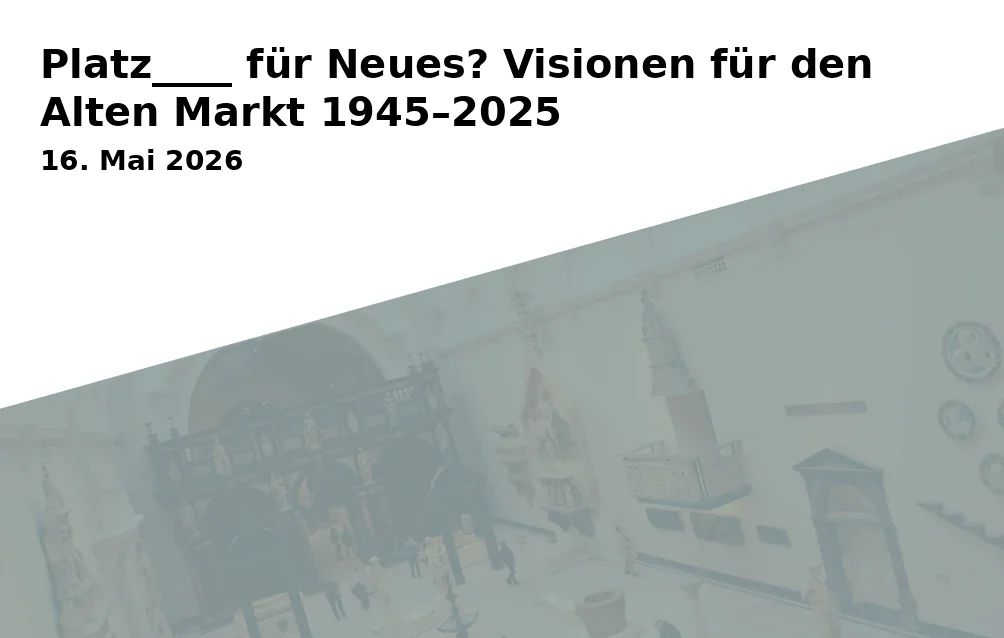
Place____ for New? Visions for the Old Market 1945–2025
Experience Potsdam's Old Market anew: The exhibition connects city history, artworks, and visions for tomorrow. Until 10.25.2026, €6. #Potsdam
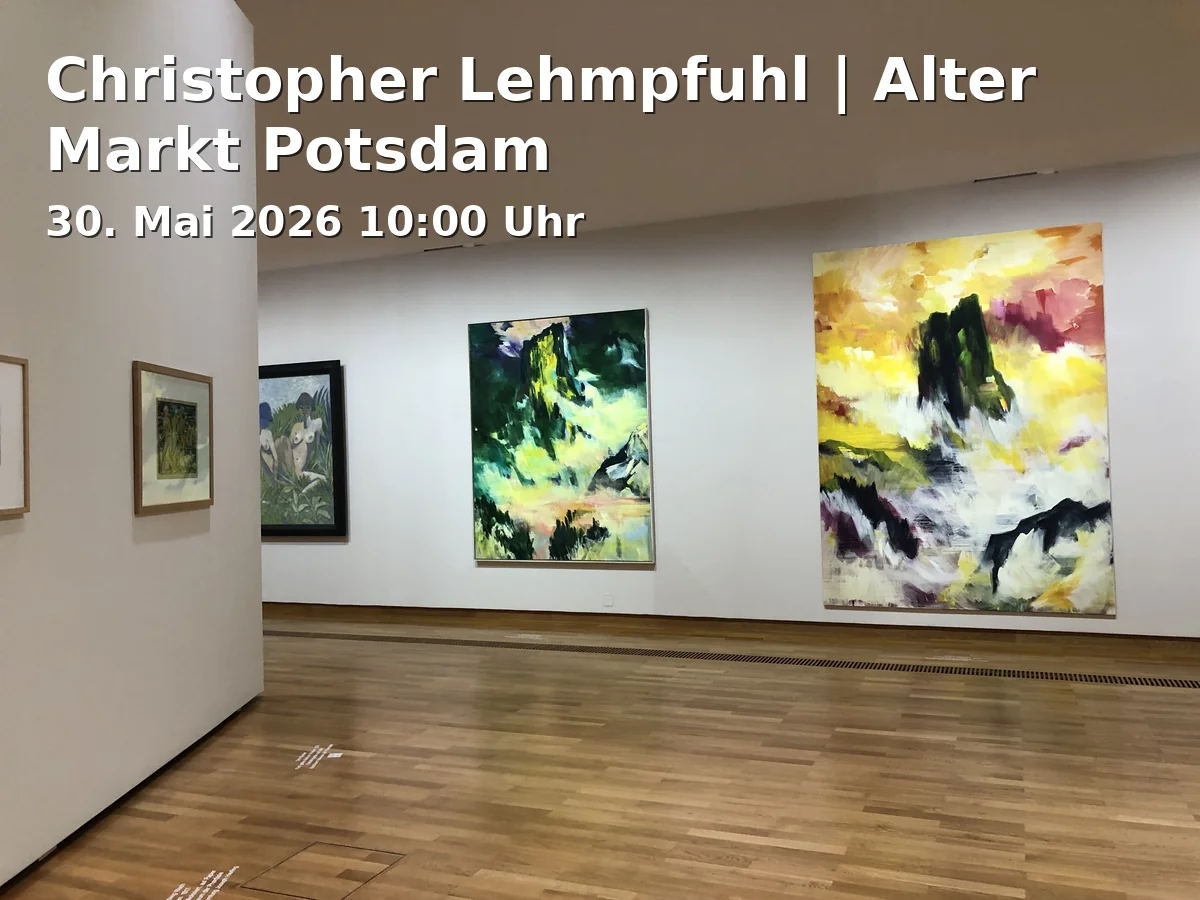
Christopher Lehmpfuhl | Alter Markt Potsdam
Vibrant cityscapes, pasty color, and Potsdam's center in transformation: Experience Lehmpfuhl in the museum. 30.05.–25.10.2026, from 6 €. #PotsdamArt
Space____for New? Photographs of the Old Market 1945–2025
Potsdam's Old Market in Transition: This exhibition connects photography, urban history, and future questions into a powerful artistic experience. #Potsdam

Reading the Old Market - a Thought Walk
Potsdam's Old Market becomes a literary space for thought: thought walk in the museum, 28.08.2026 at 18:00, indoor. Read history anew. #Potsdam #Literature
Silver Salon: Presentation of the Special Exhibition on Christopher Lehmpfuhl
An evening full of painting and city history at the Potsdam Museum: Christopher Lehmpfuhl brings the Old Market into the light. 09.09.2026, 2 PM, €6. #Potsdam #Art
Old Stones, New Ideas!
Creative museum afternoon for children aged 6 and above in Potsdam: Old Stones, New Ideas! at the Old Market, 13.09.2026, from 2 PM, free of charge. #Potsdam #Museum
SCRAP OR OPPORTUNITY - A Building Divides Potsdam
An evening full of city history, conflict, and goosebumps in Potsdam. Scrap or Opportunity shows the debate about demolition and remembrance. 17.09.2026, 18:00. #Potsdam #documentary
Potsdam: A City Makes History
Experience the permanent exhibition at the Potsdam Museum and immerse yourself in 1000 years of historical development.
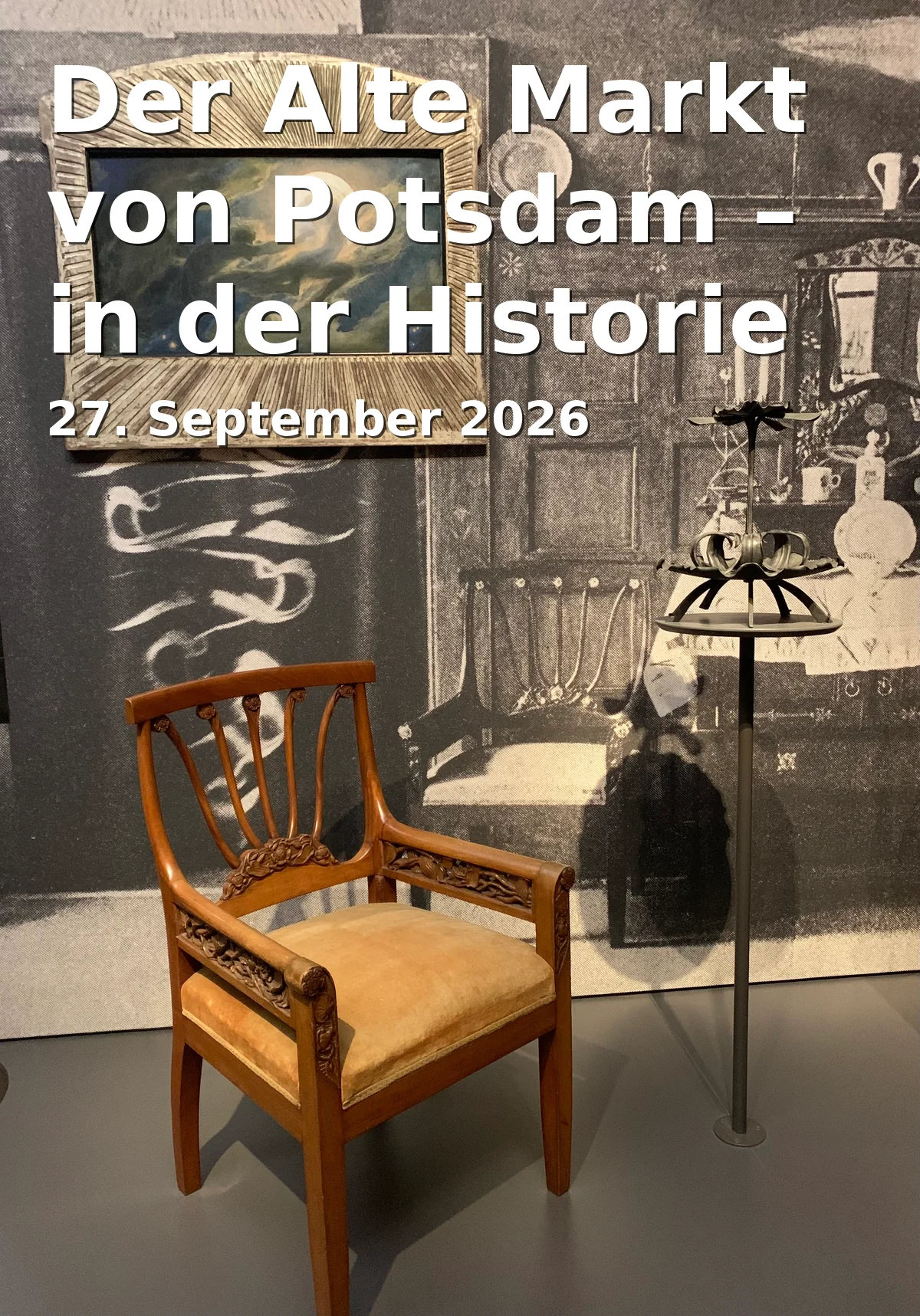
The Old Market of Potsdam – in History and Art
Experience history and art at the Old Market in Potsdam, presented through impressive works by Christopher Lehmpfuhl.
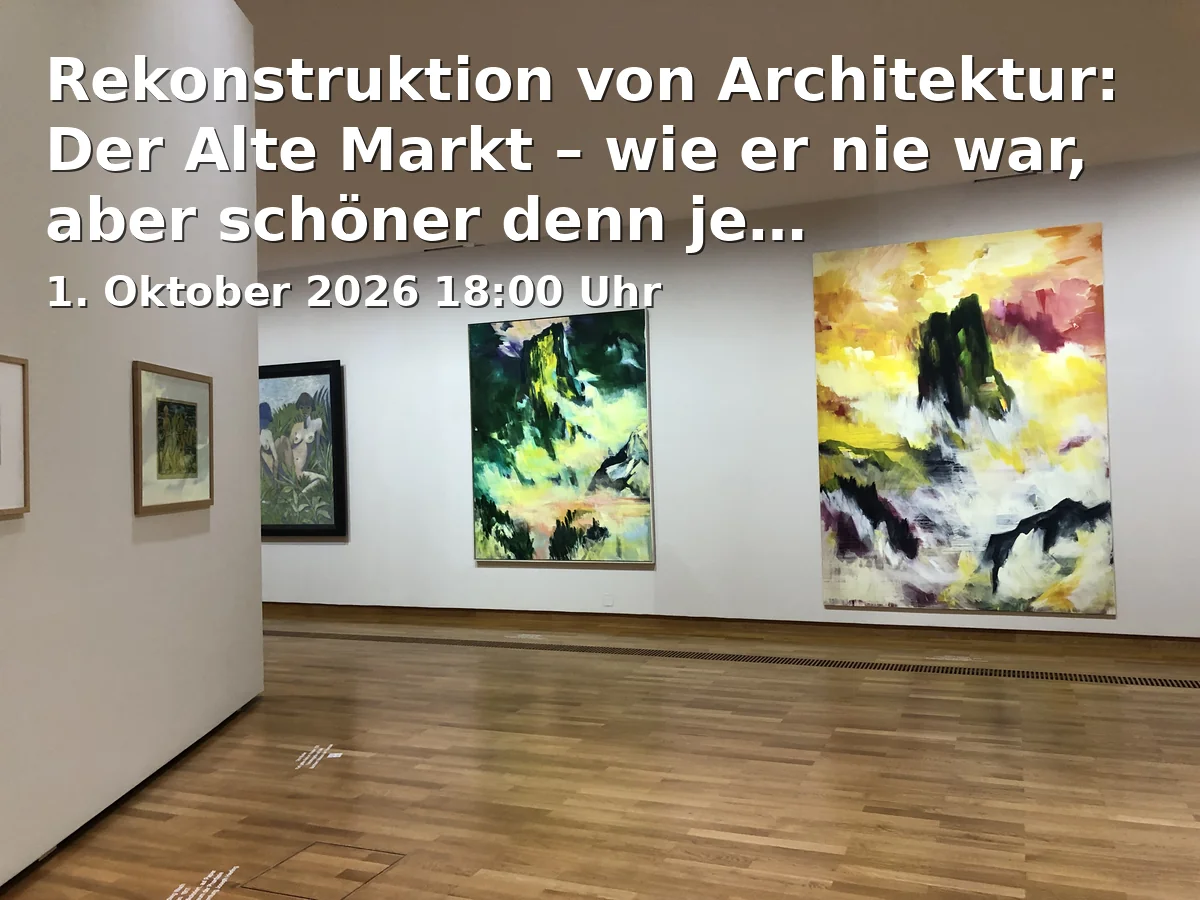
Reconstruction of Architecture: The Old Market – how it never was, but more beautiful than ever…
An inspiring evening at the Potsdam Museum: Reconstruction, city history, and the Old Market as a living space of thought. 01.10.2026, 6 PM. #Potsdam
Frequently Asked Questions
Reviews
Isabella St. Andrews
25. July 2025
Not overwhelming; perfect for a 1-hour visit! The exhibits have English translations. Spans Potsdam history through Prussian kings, the Potsdam Conference, and DDR.
UK Photo Journey
6. January 2024
This beautiful museum is holding the history of more than 1000 years. A historical museum situated in the historic center of Potsdam with remarkable beauty both inside and outside.
Alina Studenova
18. April 2025
I enjoyed both permanent and temporary exhibitions. The entrance for the permanent exhibition is free. The approximate time to go through without rushing is ~2 hours.
Shiks
19. March 2023
Worth a ride! If you are a historian or into past events then this is a place worth visiting. For English speakers you are given an audio device to help you as a guide.
Jon Chen
26. August 2023
Excellent museum on the history of the city of Potsdam, with English translation available. Free entry.