

Potsdam
Burgstraße, 14467 Potsdam, Deutschland
Burgstraße Potsdam | History & Parking
The Burgstraße in Potsdam is not just any street, but a place where city history, war destruction, reconstruction, and today's city logic particularly overlap. It is located in the eastern city center between Alter Fahrt and Am Kanal, named after the Burg Potsdam, and is one of the oldest streets in the city. The historical context dates back to the early settlement and castle history of Potsdam, while its current form is strongly influenced by the destruction of April 14, 1945, and the subsequent reconstruction. Today, visitors to Burgstraße experience less of a classic shopping street and more of an urban memory space with short distances to significant places such as Alter Markt, Heilig-Geist-Straße, Nikolaikirche, and the waterfront area at Alter Fahrt. At the same time, the location is practical: the Potsdam city center is easily accessible by train, S-Bahn, tram, and bus, and there are paid parking options available along the canal. This mix of history, location, and everyday usability makes Burgstraße an exciting point of orientation in the center of Potsdam. ([potsdam-wiki.de](https://www.potsdam-wiki.de/Burgstra%C3%9Fe))
Why Burgstraße is one of the oldest streets in Potsdam
The historical significance of Burgstraße begins long before the current city structure. According to city history, its name recalls medieval Potsdam, which was initially small and centered around the market, church, and cemetery. Burgstraße connects to this early development. It is considered one of the oldest streets in the city and originated as a simple causeway to make a marshy area passable. At the same time, it connected the then-Slavic castle with the German settlement, from which the castle and city palace later emerged. This connection is important because it shows that Burgstraße was not just a traffic space but a functional part of early urban development. The location at Alter Fahrt also plays a role: the old Potsdam was situated on an important historical axis where settlement, water, and trade overlapped. The street once led from Heilig-Geist-Kirche to Blücherplatz, and in its vicinity were Burgfischer, an administrative building, and a salt house. For SEO and user intent, this historical core is particularly relevant because search queries for “Burgstraße history” or “Burgstraße Potsdam historical” usually inquire exactly about this origin. ([potsdam-wiki.de](https://www.potsdam-wiki.de/Burgstra%C3%9Fe))
The present-day Burgstraße cannot be understood without the rupture of World War II. On the night of Potsdam on April 14, 1945, the original Burgstraße was almost completely destroyed, and little consideration was given to the old street layout during the post-war redevelopment. This resulted in a significantly altered course that is still visible in the urban landscape but no longer corresponds to the historical grid. This break explains why Burgstraße today does not appear as a continuously closed old town street but runs in sections and touches on different urban development situations. The easternmost part at the Heilig-Geist-Residenz has been preserved; there, three houses remain in their original state, including the two former preacher's houses of Heilig-Geist-Kirche at Burgstraße 32-33 and Burgstraße 29-31. The duplex house, damaged in the war, was reconstructed from 1982 to 1984. For visitors, this mix of loss, reconstruction, and remnants of the old buildings is particularly exciting because it makes the history of Potsdam's city center very immediately visible. ([potsdam-wiki.de](https://www.potsdam-wiki.de/Burgstra%C3%9Fe))
Where is Burgstraße located in Potsdam? Location between Alter Fahrt and Am Kanal
Burgstraße is located in the city center of Potsdam between Alter Fahrt and Am Kanal. This spatial framework makes it interesting for those seeking orientation and city visitors because it is situated in one of the most historically significant areas of the city. In close proximity are Heilig-Geist-Straße and the axis to Alter Markt, and the transition to Freundschaftsinsel is also urbanistically closely connected to the surroundings. The official city history describes Alter Markt as the birthplace of the city and as the heart of Potsdam; from there, Burgstraße, Alter Markt, Alte Fahrt, and the northern waterfront area can be understood as a coherent urban space. Those moving along Burgstraße are therefore not in a peripheral location but in the core of a historical center where baroque urban planning, post-war changes, and modern usage remain visible side by side. For an SEO page, this location is particularly important because it neatly serves search queries for “Burgstraße Potsdam city center,” “Burgstraße Am Kanal,” or “Burgstraße Alte Fahrt.” ([potsdam-wiki.de](https://www.potsdam-wiki.de/Burgstra%C3%9Fe))
The immediate surroundings also show why Burgstraße is more than just an address. Directly at Burgstraße 31 or at the corner with Heilig-Geist-Straße stood Heilig-Geist-Kirche, which was located in the eastern city center, directly at Alter Fahrt and opposite Freundschaftsinsel. Today, the Heilig-Geist-Park residence stands there. This spatial proximity explains why Burgstraße is strongly associated with the themes of “water location” and “historical city center.” Additionally, the city describes the area along the waterfront of Alter Fahrt as a formerly densely built-up neighborhood that was transformed into a waterfront park after the war destruction in the 1970s. Thus, Burgstraße is now situated in a space where pathways along the water, urban open spaces, and historical reference points intertwine. Visitors who want to understand the location not just as a street name but as a building block of the city will find the best explanation here for why this address plays a special role in Potsdam. ([potsdam-wiki.de](https://www.potsdam-wiki.de/Heilig-Geist-Kirche))
Getting to Burgstraße by tram, bus, train, and on foot
For getting to Burgstraße, the good accessibility of the Potsdam city center is crucial. The state capital explicitly points out that Potsdam is well connected by public transport from all directions. Trains, S-Bahn, and buses connect the city with the surrounding area and Berlin, and within the city center, buses and trams from the Potsdam transport company operate. For visitors to Burgstraße, this means: those arriving without a car usually reach their destination most comfortably through the central city area. The Alter Markt, as a historical center, is particularly conveniently located within this network; tram and bus stops are about two minutes away. This is relevant for anyone searching for “Burgstraße public transport” or “Burgstraße access,” as Burgstraße is located in exactly this urban interconnection area. Even those walking from the train station or other parts of the city benefit from the fact that the city center can be experienced as a compact urban space with short distances. Especially during walks around Alter Markt, Alte Fahrt, and Freundschaftsinsel, the route is intuitive and easily combinable. ([potsdam.de](https://www.potsdam.de/de/content/anreise-oepnv))
For practical purposes, it is also important that Alter Markt, as a central reference point, functions not only culturally but also logistically. The city describes a usable area of about 3,300 square meters there and mentions the immediate proximity to stops and the city train station. This shows how closely mobility and city center structure are interconnected in Potsdam. Therefore, those orienting themselves at Burgstraße can frequently navigate through Alter Markt, Alte Fahrt, or the streets around Am Kanal. For visitors planning a walk, the combination of public transport access and footpaths is particularly sensible because the most important destinations in the historical core of the city are close together. This results in a very urban experience: arrive, walk a few minutes, then switch between water, square, and historical buildings. This form of arrival fits ideally with a street like Burgstraße, which is itself more of a historical urban space than an isolated single destination. ([potsdam.de](https://www.potsdam.de/de/alter-markt-als-veranstaltungsort))
Parking at Burgstraße and in the Am Kanal area
Those driving to Burgstraße should consider the central location and the associated parking situation. The city of Potsdam operates a parking system in the city center with more than 2,500 parking spaces and points out that there is a managed, unguarded parking lot with parking ticket machines available at Am Kanal. This parking lot is integrated into the parking guidance system, offers optimal connections to the tram, and is located on the city ring. The city mentions 170 parking spaces there, a fee zone 2, and a rate of 0.50 euros per 10 minutes. Additionally, according to city information, the parking lot is about 5 minutes from Freundschaftsinsel and the city canal and about 10 minutes from the center. This is particularly helpful for the search intent “Burgstraße parking,” as the most relevant parking spaces are located directly in the vicinity of the street. If no space is found in the immediate street area, one can rely on a well-marked city center parking offer. At the same time, it should be noted that the center is densely urban, and the search traffic for parking should not be underestimated. Especially on weekends or during events, it is advisable to arrive early or rely on public transport. ([mobil-potsdam.de](https://www.mobil-potsdam.de/de/parken/parken-in-potsdam?c=38))
For the classification in the street space, the official parking fee regulations are also important because they indicate the area in which Burgstraße is located. Parking zone 1 is limited by Am Kanal, Am Alten Markt, Humboldtstraße, and Breite Straße; thus, Burgstraße is in a part of the city center where paid parking is already structurally part of everyday life. Therefore, those searching for “Burgstraße parking lot” or “Burgstraße parking Potsdam” should not only hope for free spaces but understand the city center as paid and organized parking space. Practically, this means: short visits can be well combined with the parking lot at Am Kanal, while longer stays should be realistically planned because fees and management times must be taken into account. The combination of the parking guidance system, footpaths to the center, and tram connections makes the location manageable, but not spontaneously “car-free.” This is precisely why Burgstraße is pleasant for visitors who want to switch flexibly between car and public transport: the location is accessible, but the actual added value lies in the walkable city center environment. ([potsdam.de](https://www.potsdam.de/system/files/documents/pgo_02.06.2022.pdf))
Sights around Burgstraße: Alter Markt, Heilig-Geist, and Alte Fahrt
The area around Burgstraße is one of the densest historical spaces in Potsdam. In close proximity are Alter Markt, Nikolaikirche, the Old Town Hall or the Potsdam Museum, the Brandenburg State Parliament, and Alte Fahrt. The city describes Alter Markt as the heart of Potsdam, which was designed as a Roman square in the mid-18th century under Frederick the Great. This is important for visitors to Burgstraße because from here, the historical center can be experienced as an ensemble. Those walking through this area not only pass by individual sights but move through an urban network of squares, water locations, and rebuilt or reconstructed facades. The Heilig-Geist-Kirche or the current location of the Heilig-Geist-Park residence is also closely connected to Burgstraße. This creates a walk where medieval origins, baroque urban expansion, war destruction, and modern reuse alternate in short distances. For user inquiries like “Burgstraße sights” or “Burgstraße nearby,” this is the right perspective: the street itself is part of a larger historical tour. ([potsdam.de](https://www.potsdam.de/de/alter-markt))
Particularly appealing is the connection to Alte Fahrt. The city describes the waterfront promenade opposite Freundschaftsinsel as a promenade area between Lange Brücke and Heilig-Geist-Spital, from which one can walk along the renovated quay wall from Alter Markt further to Freundschaftsinsel or to Große Fischerstraße. Additionally, the city points out that the north side of the former Burgstraße neighborhood was densely built before the war destruction and later transitioned into the waterfront park. This transformation is what makes the location appealing: instead of a closed old neighborhood, one now finds a mix of waterfront paths, open spaces, remnants of historical urban structure, and new sightlines. For visitors, this means beautiful perspectives, short distances, and many good photo opportunities. Those planning a day route around Burgstraße can walk from Alter Markt via Heilig-Geist-Straße to Alte Fahrt, enjoy the water location, and then continue towards the city center or Freundschaftsinsel. Thus, the location is suitable not only for pure address searching but also for cultural walks, city history, and relaxed exploration. ([potsdam.de](https://www.potsdam.de/en/content/havel-alte-fahrt))
What historical traces are still visible in Burgstraße today?
Despite the massive destruction of 1945, historical traces are still recognizable in Burgstraße if one looks closely. The easternmost section at the Heilig-Geist-Residenz has retained its basic structure, and there stand three houses in their original state. These include the two former preacher's houses of Heilig-Geist-Kirche at Burgstraße 32-33, which were reconstructed after war damage, as well as the house at Burgstraße 29-31. This building substance is central to understanding the street because it shows that not everything has disappeared, but that individual parts of the historical buildings have survived the upheavals or were made visible again later. Therefore, those searching for Burgstraße as a “historical street” will not find a museum-frozen old town here but an urban layout where loss and preservation stand side by side. This makes the place credible and multifaceted. It is precisely this mix of reconstruction, new construction, and remnants that makes Burgstraße an authentic example of Potsdam's center. ([potsdam-wiki.de](https://www.potsdam-wiki.de/Burgstra%C3%9Fe))
In a broader context, Burgstraße is today a space of remembrance. The official city history points out that medieval Potsdam remains recognizable through names like Burgstraße and Alter Markt, and the city center side explains that at the site of the old bridge crossing over the Havel, a castle stood as early as the early Middle Ages to secure an important trade route. In connection with Alte Fahrt and the current waterfront park, it becomes visible how strongly Potsdam has spatially changed while still holding on to important axes. Thus, Burgstraße is an ideal starting point for all who want to not only visit Potsdam but also understand it: as a city between water and square, between baroque order and destruction, between memory and new use. Those who continue from here quickly realize that Burgstraße does not play a secondary role but is a key to understanding how Potsdam's historical center came into being and why it appears as it does today. ([potsdam.de](https://www.potsdam.de/de/content/die-landeshauptstadt-potsdam-und-ihre-geschichte))
Sources:
Show moreShow less
Burgstraße Potsdam | History & Parking
The Burgstraße in Potsdam is not just any street, but a place where city history, war destruction, reconstruction, and today's city logic particularly overlap. It is located in the eastern city center between Alter Fahrt and Am Kanal, named after the Burg Potsdam, and is one of the oldest streets in the city. The historical context dates back to the early settlement and castle history of Potsdam, while its current form is strongly influenced by the destruction of April 14, 1945, and the subsequent reconstruction. Today, visitors to Burgstraße experience less of a classic shopping street and more of an urban memory space with short distances to significant places such as Alter Markt, Heilig-Geist-Straße, Nikolaikirche, and the waterfront area at Alter Fahrt. At the same time, the location is practical: the Potsdam city center is easily accessible by train, S-Bahn, tram, and bus, and there are paid parking options available along the canal. This mix of history, location, and everyday usability makes Burgstraße an exciting point of orientation in the center of Potsdam. ([potsdam-wiki.de](https://www.potsdam-wiki.de/Burgstra%C3%9Fe))
Why Burgstraße is one of the oldest streets in Potsdam
The historical significance of Burgstraße begins long before the current city structure. According to city history, its name recalls medieval Potsdam, which was initially small and centered around the market, church, and cemetery. Burgstraße connects to this early development. It is considered one of the oldest streets in the city and originated as a simple causeway to make a marshy area passable. At the same time, it connected the then-Slavic castle with the German settlement, from which the castle and city palace later emerged. This connection is important because it shows that Burgstraße was not just a traffic space but a functional part of early urban development. The location at Alter Fahrt also plays a role: the old Potsdam was situated on an important historical axis where settlement, water, and trade overlapped. The street once led from Heilig-Geist-Kirche to Blücherplatz, and in its vicinity were Burgfischer, an administrative building, and a salt house. For SEO and user intent, this historical core is particularly relevant because search queries for “Burgstraße history” or “Burgstraße Potsdam historical” usually inquire exactly about this origin. ([potsdam-wiki.de](https://www.potsdam-wiki.de/Burgstra%C3%9Fe))
The present-day Burgstraße cannot be understood without the rupture of World War II. On the night of Potsdam on April 14, 1945, the original Burgstraße was almost completely destroyed, and little consideration was given to the old street layout during the post-war redevelopment. This resulted in a significantly altered course that is still visible in the urban landscape but no longer corresponds to the historical grid. This break explains why Burgstraße today does not appear as a continuously closed old town street but runs in sections and touches on different urban development situations. The easternmost part at the Heilig-Geist-Residenz has been preserved; there, three houses remain in their original state, including the two former preacher's houses of Heilig-Geist-Kirche at Burgstraße 32-33 and Burgstraße 29-31. The duplex house, damaged in the war, was reconstructed from 1982 to 1984. For visitors, this mix of loss, reconstruction, and remnants of the old buildings is particularly exciting because it makes the history of Potsdam's city center very immediately visible. ([potsdam-wiki.de](https://www.potsdam-wiki.de/Burgstra%C3%9Fe))
Where is Burgstraße located in Potsdam? Location between Alter Fahrt and Am Kanal
Burgstraße is located in the city center of Potsdam between Alter Fahrt and Am Kanal. This spatial framework makes it interesting for those seeking orientation and city visitors because it is situated in one of the most historically significant areas of the city. In close proximity are Heilig-Geist-Straße and the axis to Alter Markt, and the transition to Freundschaftsinsel is also urbanistically closely connected to the surroundings. The official city history describes Alter Markt as the birthplace of the city and as the heart of Potsdam; from there, Burgstraße, Alter Markt, Alte Fahrt, and the northern waterfront area can be understood as a coherent urban space. Those moving along Burgstraße are therefore not in a peripheral location but in the core of a historical center where baroque urban planning, post-war changes, and modern usage remain visible side by side. For an SEO page, this location is particularly important because it neatly serves search queries for “Burgstraße Potsdam city center,” “Burgstraße Am Kanal,” or “Burgstraße Alte Fahrt.” ([potsdam-wiki.de](https://www.potsdam-wiki.de/Burgstra%C3%9Fe))
The immediate surroundings also show why Burgstraße is more than just an address. Directly at Burgstraße 31 or at the corner with Heilig-Geist-Straße stood Heilig-Geist-Kirche, which was located in the eastern city center, directly at Alter Fahrt and opposite Freundschaftsinsel. Today, the Heilig-Geist-Park residence stands there. This spatial proximity explains why Burgstraße is strongly associated with the themes of “water location” and “historical city center.” Additionally, the city describes the area along the waterfront of Alter Fahrt as a formerly densely built-up neighborhood that was transformed into a waterfront park after the war destruction in the 1970s. Thus, Burgstraße is now situated in a space where pathways along the water, urban open spaces, and historical reference points intertwine. Visitors who want to understand the location not just as a street name but as a building block of the city will find the best explanation here for why this address plays a special role in Potsdam. ([potsdam-wiki.de](https://www.potsdam-wiki.de/Heilig-Geist-Kirche))
Getting to Burgstraße by tram, bus, train, and on foot
For getting to Burgstraße, the good accessibility of the Potsdam city center is crucial. The state capital explicitly points out that Potsdam is well connected by public transport from all directions. Trains, S-Bahn, and buses connect the city with the surrounding area and Berlin, and within the city center, buses and trams from the Potsdam transport company operate. For visitors to Burgstraße, this means: those arriving without a car usually reach their destination most comfortably through the central city area. The Alter Markt, as a historical center, is particularly conveniently located within this network; tram and bus stops are about two minutes away. This is relevant for anyone searching for “Burgstraße public transport” or “Burgstraße access,” as Burgstraße is located in exactly this urban interconnection area. Even those walking from the train station or other parts of the city benefit from the fact that the city center can be experienced as a compact urban space with short distances. Especially during walks around Alter Markt, Alte Fahrt, and Freundschaftsinsel, the route is intuitive and easily combinable. ([potsdam.de](https://www.potsdam.de/de/content/anreise-oepnv))
For practical purposes, it is also important that Alter Markt, as a central reference point, functions not only culturally but also logistically. The city describes a usable area of about 3,300 square meters there and mentions the immediate proximity to stops and the city train station. This shows how closely mobility and city center structure are interconnected in Potsdam. Therefore, those orienting themselves at Burgstraße can frequently navigate through Alter Markt, Alte Fahrt, or the streets around Am Kanal. For visitors planning a walk, the combination of public transport access and footpaths is particularly sensible because the most important destinations in the historical core of the city are close together. This results in a very urban experience: arrive, walk a few minutes, then switch between water, square, and historical buildings. This form of arrival fits ideally with a street like Burgstraße, which is itself more of a historical urban space than an isolated single destination. ([potsdam.de](https://www.potsdam.de/de/alter-markt-als-veranstaltungsort))
Parking at Burgstraße and in the Am Kanal area
Those driving to Burgstraße should consider the central location and the associated parking situation. The city of Potsdam operates a parking system in the city center with more than 2,500 parking spaces and points out that there is a managed, unguarded parking lot with parking ticket machines available at Am Kanal. This parking lot is integrated into the parking guidance system, offers optimal connections to the tram, and is located on the city ring. The city mentions 170 parking spaces there, a fee zone 2, and a rate of 0.50 euros per 10 minutes. Additionally, according to city information, the parking lot is about 5 minutes from Freundschaftsinsel and the city canal and about 10 minutes from the center. This is particularly helpful for the search intent “Burgstraße parking,” as the most relevant parking spaces are located directly in the vicinity of the street. If no space is found in the immediate street area, one can rely on a well-marked city center parking offer. At the same time, it should be noted that the center is densely urban, and the search traffic for parking should not be underestimated. Especially on weekends or during events, it is advisable to arrive early or rely on public transport. ([mobil-potsdam.de](https://www.mobil-potsdam.de/de/parken/parken-in-potsdam?c=38))
For the classification in the street space, the official parking fee regulations are also important because they indicate the area in which Burgstraße is located. Parking zone 1 is limited by Am Kanal, Am Alten Markt, Humboldtstraße, and Breite Straße; thus, Burgstraße is in a part of the city center where paid parking is already structurally part of everyday life. Therefore, those searching for “Burgstraße parking lot” or “Burgstraße parking Potsdam” should not only hope for free spaces but understand the city center as paid and organized parking space. Practically, this means: short visits can be well combined with the parking lot at Am Kanal, while longer stays should be realistically planned because fees and management times must be taken into account. The combination of the parking guidance system, footpaths to the center, and tram connections makes the location manageable, but not spontaneously “car-free.” This is precisely why Burgstraße is pleasant for visitors who want to switch flexibly between car and public transport: the location is accessible, but the actual added value lies in the walkable city center environment. ([potsdam.de](https://www.potsdam.de/system/files/documents/pgo_02.06.2022.pdf))
Sights around Burgstraße: Alter Markt, Heilig-Geist, and Alte Fahrt
The area around Burgstraße is one of the densest historical spaces in Potsdam. In close proximity are Alter Markt, Nikolaikirche, the Old Town Hall or the Potsdam Museum, the Brandenburg State Parliament, and Alte Fahrt. The city describes Alter Markt as the heart of Potsdam, which was designed as a Roman square in the mid-18th century under Frederick the Great. This is important for visitors to Burgstraße because from here, the historical center can be experienced as an ensemble. Those walking through this area not only pass by individual sights but move through an urban network of squares, water locations, and rebuilt or reconstructed facades. The Heilig-Geist-Kirche or the current location of the Heilig-Geist-Park residence is also closely connected to Burgstraße. This creates a walk where medieval origins, baroque urban expansion, war destruction, and modern reuse alternate in short distances. For user inquiries like “Burgstraße sights” or “Burgstraße nearby,” this is the right perspective: the street itself is part of a larger historical tour. ([potsdam.de](https://www.potsdam.de/de/alter-markt))
Particularly appealing is the connection to Alte Fahrt. The city describes the waterfront promenade opposite Freundschaftsinsel as a promenade area between Lange Brücke and Heilig-Geist-Spital, from which one can walk along the renovated quay wall from Alter Markt further to Freundschaftsinsel or to Große Fischerstraße. Additionally, the city points out that the north side of the former Burgstraße neighborhood was densely built before the war destruction and later transitioned into the waterfront park. This transformation is what makes the location appealing: instead of a closed old neighborhood, one now finds a mix of waterfront paths, open spaces, remnants of historical urban structure, and new sightlines. For visitors, this means beautiful perspectives, short distances, and many good photo opportunities. Those planning a day route around Burgstraße can walk from Alter Markt via Heilig-Geist-Straße to Alte Fahrt, enjoy the water location, and then continue towards the city center or Freundschaftsinsel. Thus, the location is suitable not only for pure address searching but also for cultural walks, city history, and relaxed exploration. ([potsdam.de](https://www.potsdam.de/en/content/havel-alte-fahrt))
What historical traces are still visible in Burgstraße today?
Despite the massive destruction of 1945, historical traces are still recognizable in Burgstraße if one looks closely. The easternmost section at the Heilig-Geist-Residenz has retained its basic structure, and there stand three houses in their original state. These include the two former preacher's houses of Heilig-Geist-Kirche at Burgstraße 32-33, which were reconstructed after war damage, as well as the house at Burgstraße 29-31. This building substance is central to understanding the street because it shows that not everything has disappeared, but that individual parts of the historical buildings have survived the upheavals or were made visible again later. Therefore, those searching for Burgstraße as a “historical street” will not find a museum-frozen old town here but an urban layout where loss and preservation stand side by side. This makes the place credible and multifaceted. It is precisely this mix of reconstruction, new construction, and remnants that makes Burgstraße an authentic example of Potsdam's center. ([potsdam-wiki.de](https://www.potsdam-wiki.de/Burgstra%C3%9Fe))
In a broader context, Burgstraße is today a space of remembrance. The official city history points out that medieval Potsdam remains recognizable through names like Burgstraße and Alter Markt, and the city center side explains that at the site of the old bridge crossing over the Havel, a castle stood as early as the early Middle Ages to secure an important trade route. In connection with Alte Fahrt and the current waterfront park, it becomes visible how strongly Potsdam has spatially changed while still holding on to important axes. Thus, Burgstraße is an ideal starting point for all who want to not only visit Potsdam but also understand it: as a city between water and square, between baroque order and destruction, between memory and new use. Those who continue from here quickly realize that Burgstraße does not play a secondary role but is a key to understanding how Potsdam's historical center came into being and why it appears as it does today. ([potsdam.de](https://www.potsdam.de/de/content/die-landeshauptstadt-potsdam-und-ihre-geschichte))
Sources:
Burgstraße Potsdam | History & Parking
The Burgstraße in Potsdam is not just any street, but a place where city history, war destruction, reconstruction, and today's city logic particularly overlap. It is located in the eastern city center between Alter Fahrt and Am Kanal, named after the Burg Potsdam, and is one of the oldest streets in the city. The historical context dates back to the early settlement and castle history of Potsdam, while its current form is strongly influenced by the destruction of April 14, 1945, and the subsequent reconstruction. Today, visitors to Burgstraße experience less of a classic shopping street and more of an urban memory space with short distances to significant places such as Alter Markt, Heilig-Geist-Straße, Nikolaikirche, and the waterfront area at Alter Fahrt. At the same time, the location is practical: the Potsdam city center is easily accessible by train, S-Bahn, tram, and bus, and there are paid parking options available along the canal. This mix of history, location, and everyday usability makes Burgstraße an exciting point of orientation in the center of Potsdam. ([potsdam-wiki.de](https://www.potsdam-wiki.de/Burgstra%C3%9Fe))
Why Burgstraße is one of the oldest streets in Potsdam
The historical significance of Burgstraße begins long before the current city structure. According to city history, its name recalls medieval Potsdam, which was initially small and centered around the market, church, and cemetery. Burgstraße connects to this early development. It is considered one of the oldest streets in the city and originated as a simple causeway to make a marshy area passable. At the same time, it connected the then-Slavic castle with the German settlement, from which the castle and city palace later emerged. This connection is important because it shows that Burgstraße was not just a traffic space but a functional part of early urban development. The location at Alter Fahrt also plays a role: the old Potsdam was situated on an important historical axis where settlement, water, and trade overlapped. The street once led from Heilig-Geist-Kirche to Blücherplatz, and in its vicinity were Burgfischer, an administrative building, and a salt house. For SEO and user intent, this historical core is particularly relevant because search queries for “Burgstraße history” or “Burgstraße Potsdam historical” usually inquire exactly about this origin. ([potsdam-wiki.de](https://www.potsdam-wiki.de/Burgstra%C3%9Fe))
The present-day Burgstraße cannot be understood without the rupture of World War II. On the night of Potsdam on April 14, 1945, the original Burgstraße was almost completely destroyed, and little consideration was given to the old street layout during the post-war redevelopment. This resulted in a significantly altered course that is still visible in the urban landscape but no longer corresponds to the historical grid. This break explains why Burgstraße today does not appear as a continuously closed old town street but runs in sections and touches on different urban development situations. The easternmost part at the Heilig-Geist-Residenz has been preserved; there, three houses remain in their original state, including the two former preacher's houses of Heilig-Geist-Kirche at Burgstraße 32-33 and Burgstraße 29-31. The duplex house, damaged in the war, was reconstructed from 1982 to 1984. For visitors, this mix of loss, reconstruction, and remnants of the old buildings is particularly exciting because it makes the history of Potsdam's city center very immediately visible. ([potsdam-wiki.de](https://www.potsdam-wiki.de/Burgstra%C3%9Fe))
Where is Burgstraße located in Potsdam? Location between Alter Fahrt and Am Kanal
Burgstraße is located in the city center of Potsdam between Alter Fahrt and Am Kanal. This spatial framework makes it interesting for those seeking orientation and city visitors because it is situated in one of the most historically significant areas of the city. In close proximity are Heilig-Geist-Straße and the axis to Alter Markt, and the transition to Freundschaftsinsel is also urbanistically closely connected to the surroundings. The official city history describes Alter Markt as the birthplace of the city and as the heart of Potsdam; from there, Burgstraße, Alter Markt, Alte Fahrt, and the northern waterfront area can be understood as a coherent urban space. Those moving along Burgstraße are therefore not in a peripheral location but in the core of a historical center where baroque urban planning, post-war changes, and modern usage remain visible side by side. For an SEO page, this location is particularly important because it neatly serves search queries for “Burgstraße Potsdam city center,” “Burgstraße Am Kanal,” or “Burgstraße Alte Fahrt.” ([potsdam-wiki.de](https://www.potsdam-wiki.de/Burgstra%C3%9Fe))
The immediate surroundings also show why Burgstraße is more than just an address. Directly at Burgstraße 31 or at the corner with Heilig-Geist-Straße stood Heilig-Geist-Kirche, which was located in the eastern city center, directly at Alter Fahrt and opposite Freundschaftsinsel. Today, the Heilig-Geist-Park residence stands there. This spatial proximity explains why Burgstraße is strongly associated with the themes of “water location” and “historical city center.” Additionally, the city describes the area along the waterfront of Alter Fahrt as a formerly densely built-up neighborhood that was transformed into a waterfront park after the war destruction in the 1970s. Thus, Burgstraße is now situated in a space where pathways along the water, urban open spaces, and historical reference points intertwine. Visitors who want to understand the location not just as a street name but as a building block of the city will find the best explanation here for why this address plays a special role in Potsdam. ([potsdam-wiki.de](https://www.potsdam-wiki.de/Heilig-Geist-Kirche))
Getting to Burgstraße by tram, bus, train, and on foot
For getting to Burgstraße, the good accessibility of the Potsdam city center is crucial. The state capital explicitly points out that Potsdam is well connected by public transport from all directions. Trains, S-Bahn, and buses connect the city with the surrounding area and Berlin, and within the city center, buses and trams from the Potsdam transport company operate. For visitors to Burgstraße, this means: those arriving without a car usually reach their destination most comfortably through the central city area. The Alter Markt, as a historical center, is particularly conveniently located within this network; tram and bus stops are about two minutes away. This is relevant for anyone searching for “Burgstraße public transport” or “Burgstraße access,” as Burgstraße is located in exactly this urban interconnection area. Even those walking from the train station or other parts of the city benefit from the fact that the city center can be experienced as a compact urban space with short distances. Especially during walks around Alter Markt, Alte Fahrt, and Freundschaftsinsel, the route is intuitive and easily combinable. ([potsdam.de](https://www.potsdam.de/de/content/anreise-oepnv))
For practical purposes, it is also important that Alter Markt, as a central reference point, functions not only culturally but also logistically. The city describes a usable area of about 3,300 square meters there and mentions the immediate proximity to stops and the city train station. This shows how closely mobility and city center structure are interconnected in Potsdam. Therefore, those orienting themselves at Burgstraße can frequently navigate through Alter Markt, Alte Fahrt, or the streets around Am Kanal. For visitors planning a walk, the combination of public transport access and footpaths is particularly sensible because the most important destinations in the historical core of the city are close together. This results in a very urban experience: arrive, walk a few minutes, then switch between water, square, and historical buildings. This form of arrival fits ideally with a street like Burgstraße, which is itself more of a historical urban space than an isolated single destination. ([potsdam.de](https://www.potsdam.de/de/alter-markt-als-veranstaltungsort))
Parking at Burgstraße and in the Am Kanal area
Those driving to Burgstraße should consider the central location and the associated parking situation. The city of Potsdam operates a parking system in the city center with more than 2,500 parking spaces and points out that there is a managed, unguarded parking lot with parking ticket machines available at Am Kanal. This parking lot is integrated into the parking guidance system, offers optimal connections to the tram, and is located on the city ring. The city mentions 170 parking spaces there, a fee zone 2, and a rate of 0.50 euros per 10 minutes. Additionally, according to city information, the parking lot is about 5 minutes from Freundschaftsinsel and the city canal and about 10 minutes from the center. This is particularly helpful for the search intent “Burgstraße parking,” as the most relevant parking spaces are located directly in the vicinity of the street. If no space is found in the immediate street area, one can rely on a well-marked city center parking offer. At the same time, it should be noted that the center is densely urban, and the search traffic for parking should not be underestimated. Especially on weekends or during events, it is advisable to arrive early or rely on public transport. ([mobil-potsdam.de](https://www.mobil-potsdam.de/de/parken/parken-in-potsdam?c=38))
For the classification in the street space, the official parking fee regulations are also important because they indicate the area in which Burgstraße is located. Parking zone 1 is limited by Am Kanal, Am Alten Markt, Humboldtstraße, and Breite Straße; thus, Burgstraße is in a part of the city center where paid parking is already structurally part of everyday life. Therefore, those searching for “Burgstraße parking lot” or “Burgstraße parking Potsdam” should not only hope for free spaces but understand the city center as paid and organized parking space. Practically, this means: short visits can be well combined with the parking lot at Am Kanal, while longer stays should be realistically planned because fees and management times must be taken into account. The combination of the parking guidance system, footpaths to the center, and tram connections makes the location manageable, but not spontaneously “car-free.” This is precisely why Burgstraße is pleasant for visitors who want to switch flexibly between car and public transport: the location is accessible, but the actual added value lies in the walkable city center environment. ([potsdam.de](https://www.potsdam.de/system/files/documents/pgo_02.06.2022.pdf))
Sights around Burgstraße: Alter Markt, Heilig-Geist, and Alte Fahrt
The area around Burgstraße is one of the densest historical spaces in Potsdam. In close proximity are Alter Markt, Nikolaikirche, the Old Town Hall or the Potsdam Museum, the Brandenburg State Parliament, and Alte Fahrt. The city describes Alter Markt as the heart of Potsdam, which was designed as a Roman square in the mid-18th century under Frederick the Great. This is important for visitors to Burgstraße because from here, the historical center can be experienced as an ensemble. Those walking through this area not only pass by individual sights but move through an urban network of squares, water locations, and rebuilt or reconstructed facades. The Heilig-Geist-Kirche or the current location of the Heilig-Geist-Park residence is also closely connected to Burgstraße. This creates a walk where medieval origins, baroque urban expansion, war destruction, and modern reuse alternate in short distances. For user inquiries like “Burgstraße sights” or “Burgstraße nearby,” this is the right perspective: the street itself is part of a larger historical tour. ([potsdam.de](https://www.potsdam.de/de/alter-markt))
Particularly appealing is the connection to Alte Fahrt. The city describes the waterfront promenade opposite Freundschaftsinsel as a promenade area between Lange Brücke and Heilig-Geist-Spital, from which one can walk along the renovated quay wall from Alter Markt further to Freundschaftsinsel or to Große Fischerstraße. Additionally, the city points out that the north side of the former Burgstraße neighborhood was densely built before the war destruction and later transitioned into the waterfront park. This transformation is what makes the location appealing: instead of a closed old neighborhood, one now finds a mix of waterfront paths, open spaces, remnants of historical urban structure, and new sightlines. For visitors, this means beautiful perspectives, short distances, and many good photo opportunities. Those planning a day route around Burgstraße can walk from Alter Markt via Heilig-Geist-Straße to Alte Fahrt, enjoy the water location, and then continue towards the city center or Freundschaftsinsel. Thus, the location is suitable not only for pure address searching but also for cultural walks, city history, and relaxed exploration. ([potsdam.de](https://www.potsdam.de/en/content/havel-alte-fahrt))
What historical traces are still visible in Burgstraße today?
Despite the massive destruction of 1945, historical traces are still recognizable in Burgstraße if one looks closely. The easternmost section at the Heilig-Geist-Residenz has retained its basic structure, and there stand three houses in their original state. These include the two former preacher's houses of Heilig-Geist-Kirche at Burgstraße 32-33, which were reconstructed after war damage, as well as the house at Burgstraße 29-31. This building substance is central to understanding the street because it shows that not everything has disappeared, but that individual parts of the historical buildings have survived the upheavals or were made visible again later. Therefore, those searching for Burgstraße as a “historical street” will not find a museum-frozen old town here but an urban layout where loss and preservation stand side by side. This makes the place credible and multifaceted. It is precisely this mix of reconstruction, new construction, and remnants that makes Burgstraße an authentic example of Potsdam's center. ([potsdam-wiki.de](https://www.potsdam-wiki.de/Burgstra%C3%9Fe))
In a broader context, Burgstraße is today a space of remembrance. The official city history points out that medieval Potsdam remains recognizable through names like Burgstraße and Alter Markt, and the city center side explains that at the site of the old bridge crossing over the Havel, a castle stood as early as the early Middle Ages to secure an important trade route. In connection with Alte Fahrt and the current waterfront park, it becomes visible how strongly Potsdam has spatially changed while still holding on to important axes. Thus, Burgstraße is an ideal starting point for all who want to not only visit Potsdam but also understand it: as a city between water and square, between baroque order and destruction, between memory and new use. Those who continue from here quickly realize that Burgstraße does not play a secondary role but is a key to understanding how Potsdam's historical center came into being and why it appears as it does today. ([potsdam.de](https://www.potsdam.de/de/content/die-landeshauptstadt-potsdam-und-ihre-geschichte))
Sources:
Upcoming Events
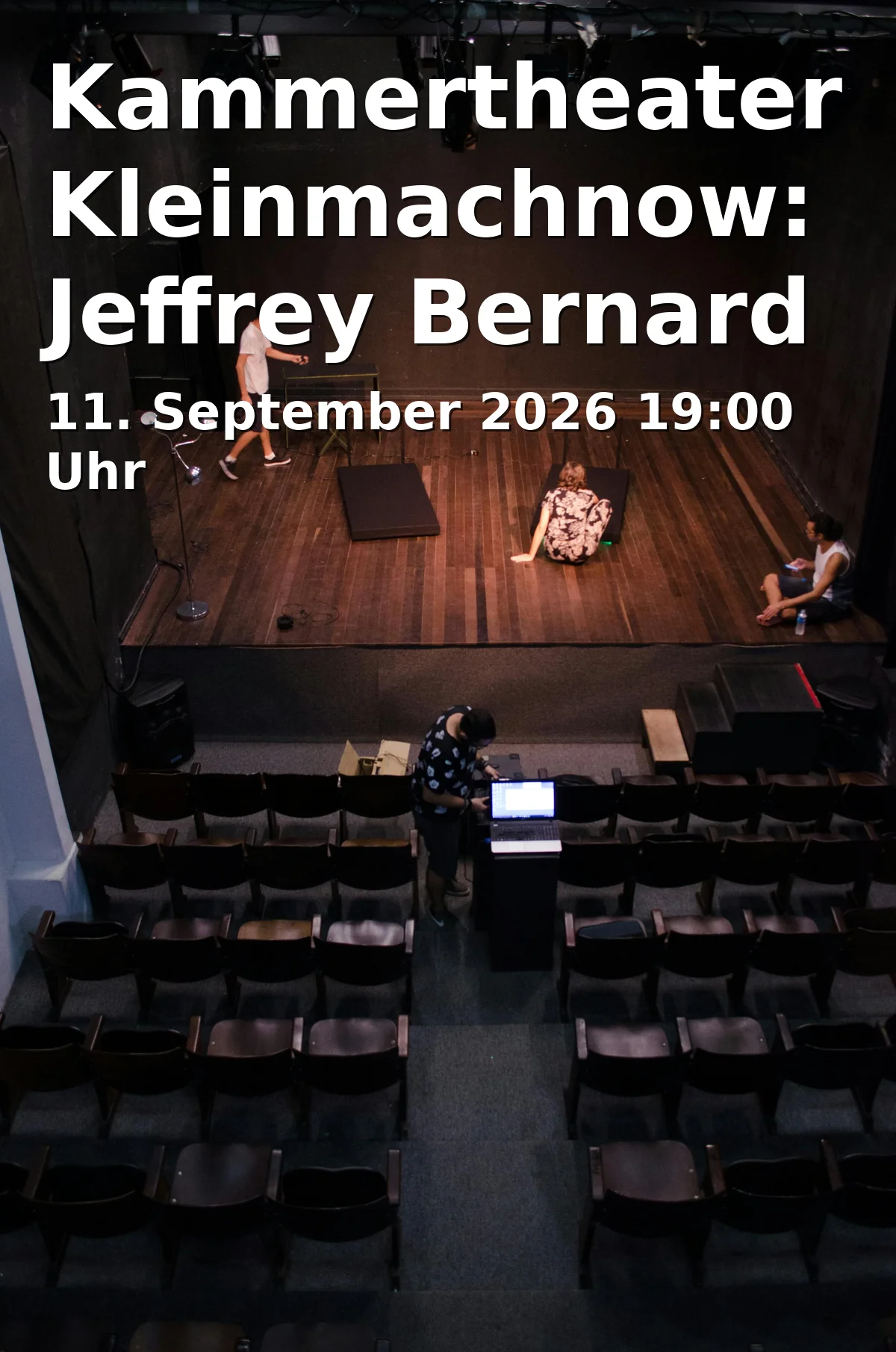
Kammertheater Kleinmachnow: Jeffrey Bernard Is Unwell
An evening between Soho myth and stage poetry: The Kammertheater Kleinmachnow tells Jeffrey Bernard with wit, tempo, and depth. 11.09.2026, admission free. #Theater
Kasper Mütze defeats the Giant and the Crocodile
A cheerful puppet theater adventure at the island stage in Potsdam: Janosch, humor, and family magic on 12.09.2026 at 14 o'clock. Admission free. #Potsdam

Late Night Shop at the Island Stage on Friendship Island
German-speaking pop, honest lyrics, and open-air atmosphere on Friendship Island: Late Night Shop live in Potsdam on 12.09.2026. Free entry. #Potsdam #OpenAir

Theaterverein Winternachtstraum: The Party
A sharp-tongued tragicomedy in the open air: The Party on Friendship Island combines wit, tension, and ensemble strength. 18.09.2026, 19:00, free entry. #Theater #Potsdam #FriendshipIsland
Improtheater Potsdam

UNESCO World Heritage Day 2026: Face Painting
Frequently Asked Questions
Reviews
No reviews found