
Tom van Hasselt
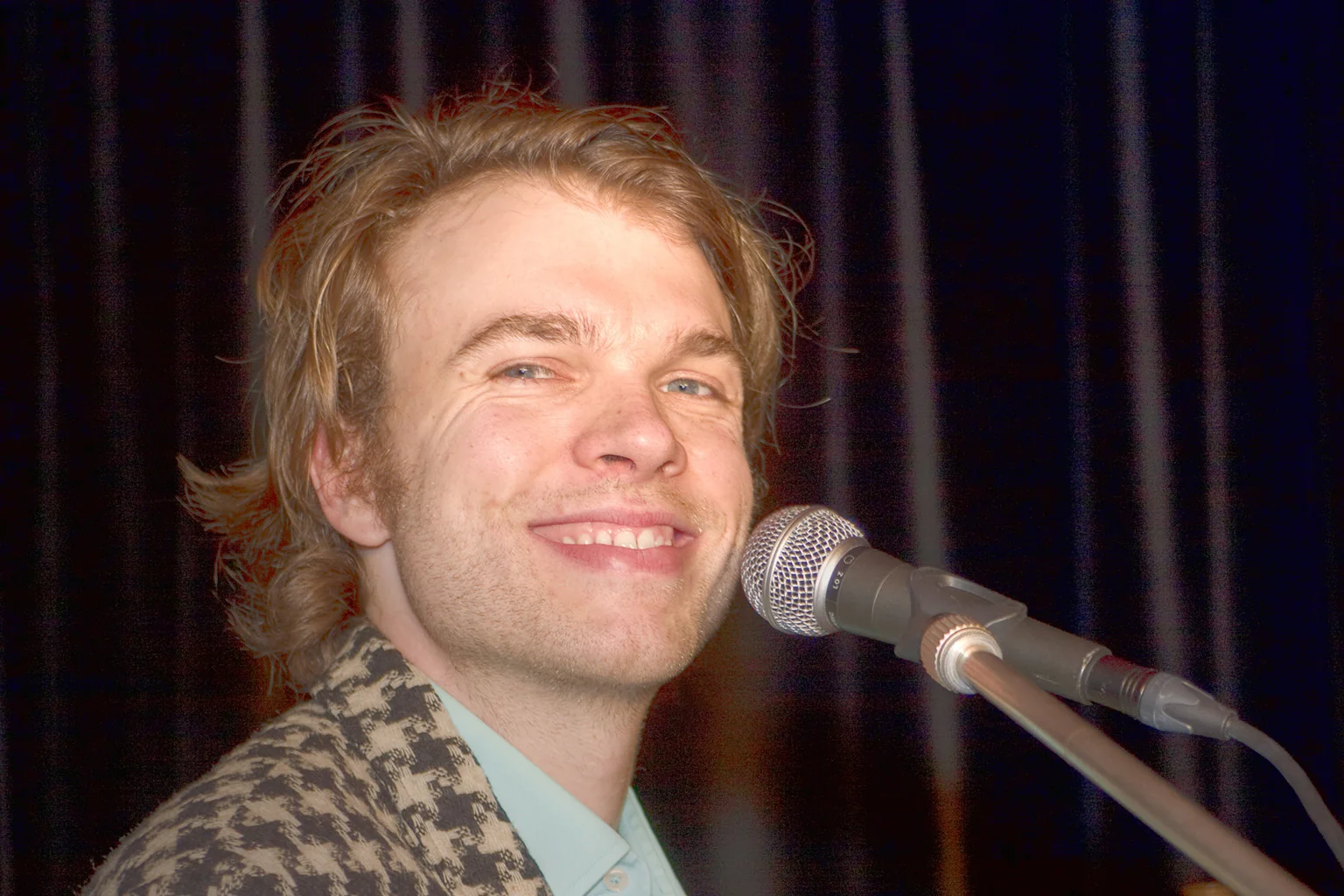
Image from Wikipedia
Image from Wikipedia
Tom van Hasselt: The Satirist at the Piano Who Reinvents German Musical Theatre
An Author, Composer, and Performer Bridging Cabaret, Chanson, and Musical
Tom van Hasselt is one of the most distinctive voices in German-language music theatre. Born in 1978 in Düsseldorf, the artist transitioned from piano cabaret to musical author and today works as an author, composer, and performer with a clear signature: satirical, eloquent, musically precise, and always close to societal tensions. His career merges cabaret, songwriting, and musical dramaturgy into an artistic development rarely pursued so consistently in the German-speaking world. ([tomvanhasselt.de](https://tomvanhasselt.de/))
His profile is that of a music theatre creator who does not separate text, composition, and stage presence but thinks them as one. This is exactly what makes his musical career appealing: van Hasselt does not just write songs; he designs complete stage evenings where wit, harmony, character development, and form work together. His own website describes him as an artist who usually takes responsibility for the book, composition, and lyrics, thus actively seeking to develop the musical genre in Germany. ([tomvanhasselt.de](https://tomvanhasselt.de/))
Biographical Roots: Early Influenced by the Piano and the Stage
According to his biography, van Hasselt grew up in Korschenbroich on the Lower Rhine and received piano lessons before starting school, followed later by drum lessons. He participated successfully in competitions such as Jugend komponiert and Jugend musiziert early on, which structured his professional development at a young age. This early musical socialization explains the technical security with which he later performs as a pianist, arranger, and composer. ([tomvanhasselt.de](https://tomvanhasselt.de/))
After completing his Abitur, he developed his first full-length cabaret programs and landed in Cologne with his civil service right in the creative tension between word and music. The program Am Arsch des Jahrtausends earned him early awards like the Bielefelder Kabarettpreis and the Kabarettkaktus München. Here, his hallmark was already visible: pointed satire, astute observation, and a piano style that not only accompanies but dramatically comments. ([tomvanhasselt.de](https://tomvanhasselt.de/))
The Breakthrough: From Cabaret to an Independent Musical Language
The next step took him through the Celler Schule, the Popkurs Hamburg, and the SAGO Songwriter School into an increasingly independent cosmos. With Jenseits von Tuten und Blasen, the song Die Philosoffen was created, which was covered by the Wise Guys and has reportedly reached over 1.5 million clicks on YouTube to date. This success shows how strongly van Hasselt's writing resonates outside his own stage. ([tomvanhasselt.de](https://tomvanhasselt.de/))
At the same time, he studied music and philosophy for teaching at the Hochschule für Musik Köln and the University of Cologne, graduating in 2006 with a music degree "very good." This combination of academic training, stage routine, and literary curiosity led to a music career that increasingly shaped itself towards musical theatre. With Die Welt ist nicht ganz dicht and the CD Lieder eines arbeitslosen Philosophen, he definitively left pure cabaret form and moved into a one-man musical aesthetic. ([tomvanhasselt.de](https://tomvanhasselt.de/))
Berlin as an Artistic Laboratory
In 2001, van Hasselt moved to Berlin, where the vibrant chanson and cabaret scene opened new possibilities. There, he created another successful program, Ich singe was, was du nicht singst, which solidified his position as a precise observer and musical storyteller. The Berlin years mark the transition from cabaret artist to music theatre author with greater dramaturgical scope. ([tomvanhasselt.de](https://tomvanhasselt.de/))
Especially important was the project Dr. Ich – das Darmfloratorium, which was presented as a reading in 2008 in the Robert Koch Auditorium of the Charité and later performed in Bern and Berlin. From this work, the Stammzellformation emerged, with which van Hasselt realized various satirical musicals. These include Drei – Ein Musical für Zwei, Mamma Macchiato, and Der Tod und die Mädchen – works that clearly demonstrate his preference for sharp timing, ironic disruptions, and musical character drawing. ([tomvanhasselt.de](https://tomvanhasselt.de/))
Discography and Works: Stage Music with Narrative Power
A classical album discography in the pop or rock sense is not central to Tom van Hasselt; his oeuvre thrives on stage works, song cycles, and musical productions. Early works include Am Arsch des Jahrtausends, Jenseits von Tuten und Blasen, Ich singe was, was du nicht singst, and Dr. Ich. Later, larger works followed such as Alma und das Genie, Amor läuft Amok, Trash Island, Hanf, Brigitte Bordeaux, ComeBack!, and Das Neinhorn. ([tomvanhasselt.de](https://tomvanhasselt.de/))
His overview of works demonstrates extraordinary productivity: van Hasselt writes for his own solo programs, for the Stammzellformation, for cabaret formats like Die Distel, and for theaters across the German-speaking world. Particularly noteworthy is the versatility of his roles: book, lyrics, music, musical direction, pianist, and performer often appear in the same production. This multiplicity makes him a true all-rounder of modern music theatre. ([tomvanhasselt.de](https://tomvanhasselt.de/))
Musical Development: Between Satire, Chanson, and Stage Pop
Musically, van Hasselt moves at the intersection of chanson, cabaret, Broadway references, and German-language musical tradition. His style is often piano-centered, lyrically strong, and dramaturgically conceived; the music serves not as a decorative frame but as the engine of the scene. His biography and reviews particularly highlight how he combines the emotionality of a song with the wit of cabaret and the precision of stage composition. ([tomvanhasselt.de](https://tomvanhasselt.de/))
This is exemplified in Alma und das Genie, a satirical musical about Alma Mahler-Werfel that was highly regarded by critics and audiences alike. The official history of the work refers to a German Musical Theatre Prize for the best lyrics, while reviews describe the evening as witty, musically diverse, and aesthetically distinctive. Bodo Wartke's praise, that it is the best German-language musical he has ever seen, underscores the authority of this work in van Hasselt's catalog. ([tomvanhasselt.de](https://tomvanhasselt.de/))
Critical Reception and Cultural Influence
The press takes Tom van Hasselt seriously because he combines entertainment with purpose. Die Deutsche Bühne described Hanf. Ein berauschender Abend as a "psychedelic journey," highlighting both the musical direction and the satirical approach to a socially charged topic. This type of reception shows that van Hasselt does not work in a vacuum but responds to contemporary debates with music theatre. ([die-deutsche-buehne.de](https://www.die-deutsche-buehne.de/kritiken/musical-schwedt-hanf/?utm_source=openai))
Also, Hans im Glück was perceived by the expert press as a clever, piano-based music theatre; the production shapes, according to reviews, narrative and emotional song highlights that support and connect the spoken scenes. In Trash Island, reviews emphasized the original, satirical structure and the unique form of entertainment. Van Hasselt's cultural influence lies not just in awards but in a continuous expansion of what is possible in German-language musicals. ([die-deutsche-buehne.de](https://www.die-deutsche-buehne.de/kritiken/tierisches-glueck/?utm_source=openai))
Authority in the Genre: Work for Theatre, Academia, and Emerging Talent
For years, van Hasselt has worked not only as an author but also as a supporter and organizer. He was a board member of the Deutsche Musical Akademie and helped shape the German Musical Theatre Prize; he is also active as a curator and moderator of the Schreib:maschine at the Neuköllner Oper. These positions make him a formative figure in the scene because he not only writes pieces but also builds structures for emerging talent and visibility. ([tomvanhasselt.de](https://tomvanhasselt.de/))
Since August 2021, he has been the musical director and house author for musicals at the Uckermärkische Bühnen Schwedt, where he has overseen numerous productions. His overview of works for 2024 and 2025 includes, among others, Trash Island, Hanf, Brigitte Bordeaux, Das Neinhorn, and Reise um die Erde in 80 Tagen. Thus, his artistic development remains highly relevant and closely linked with the programming of German-language theatre. ([tomvanhasselt.de](https://tomvanhasselt.de/))
Conclusion: Why Tom van Hasselt Remains So Exciting
Tom van Hasselt is fascinating because he understands musical theatre as a lively, thinking, and simultaneously highly entertaining genre. His musical career combines cabaret, composition, lyrical work, and stage presence into a distinctive signature that is intelligent, biting, and emotional at once. Those seeking German-language music theatre beyond routine will find a rare mix of ambition, wit, and craftsmanship in him. ([tomvanhasselt.de](https://tomvanhasselt.de/))
His ability to bring societal issues into satirical stage form makes him an important name of the present. His works thrive on strong language, clear arrangements, and a sense of timing that operates immediately in the theatre space. Anyone who has the chance to experience Tom van Hasselt live should seize it: here works an artist who not only entertains the audience but invites them to reflect with every scene and every song. ([tomvanhasselt.de](https://tomvanhasselt.de/))
Official Channels of Tom van Hasselt:
- Instagram: no official profile found
- Facebook: no official profile found
- YouTube: no official profile found
- Spotify: no official profile found
- TikTok: no official profile found
Sources:
- Tom van Hasselt | Composer · Lyricist · Actor - Official Website
- Uckermärkische Bühnen Schwedt - Tom van Hasselt
- Wikipedia - Tom van Hasselt
- Die Deutsche Bühne - Review: Tom van Hasselt: Hanf. Ein berauschender Abend
- Die Deutsche Bühne - Review: Tom van Hasselt: Hans im Glück / Szczęsliwy Jaś
- Hamburger Abendblatt - A Musical to Toss Away, How Does That Work, Tom van Hasselt?
- musicalzentrale.de - Alma und das Genie
- visitBerlin - Bühnenschwestern