
Sarah Willis (Hornistin)
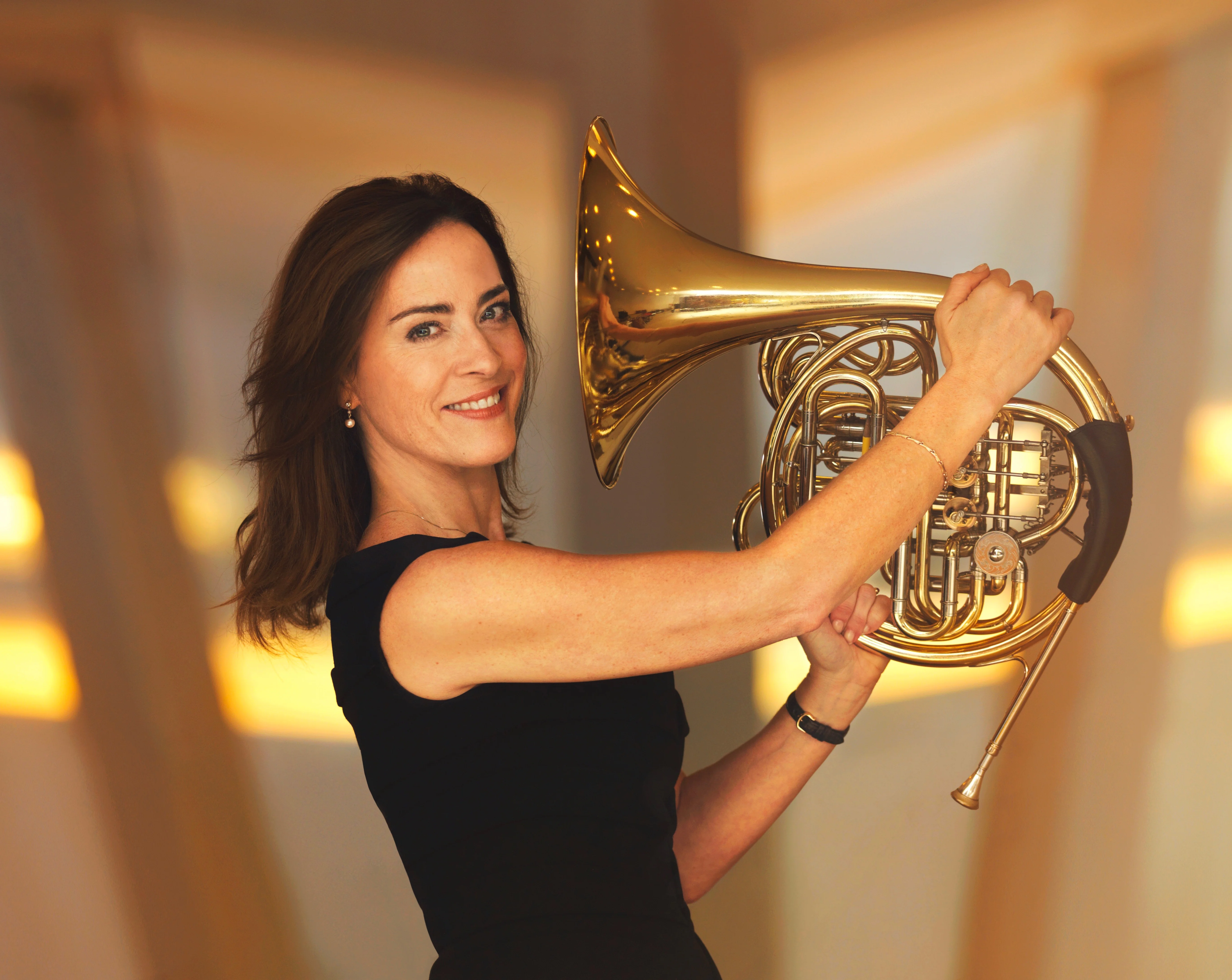
Image from Wikipedia
Image from Wikipedia
Sarah Willis – The Hornist Who Brings Together Classical Music, Cuba, and the Digital Stage
An Exceptional Artist Between Orchestral Tradition, Media Presence, and Musical Curiosity
Sarah Willis is an internationally renowned horn player, television and digital moderator, who has been a member of the Berlin Philharmonic since 2001 and has made her musical career impactful far beyond the classical concert hall. Born in 1968 in Bethesda, Maryland, she grew up in several countries, developing early on a sensitivity to cultural diversity that later became a hallmark of her artistic journey. Her career combines orchestral excellence, educational outreach, and the courage to connect classical music with new audiences. ([sarah-willis.com](https://sarah-willis.com/bio))
Biographical Roots: A Global Childhood as Artistic Shaping
Willis’ childhood was spent between the USA, Tokyo, Moscow, and England before she moved to Surrey at the age of 13; this international biography explains much of her later openness to musical boundaries. She began playing the horn at 14, initially studying at the Junior Department of the Royal College of Music and later at the Guildhall School of Music and Drama in London, where she was taught by Anthony Halstead and Jeff Bryant. She then deepened her training in Berlin with Fergus McWilliam. ([sarah-willis.com](https://sarah-willis.com/bio))
The early stages of her training show that she was not merely growing into a traditional orchestral musician in a narrow sense, but rather a sound artist with a keen sense of observation and an international perspective. The combination of British training, German orchestral practice, and worldwide travel became the foundation of a career that consistently balances discipline with a communicative gesture. This very mixture also shapes her stage presence and her profile as a musical storyteller. ([sarah-willis.com](https://sarah-willis.com/bio))
The Breakthrough in the Orchestra: From Berlin to All of Europe
After the fall of the Berlin Wall, Willis became the first Western professional musician to join the Staatskapelle Berlin in 1991; in 2001, she took the historic step to the Berlin Philharmonic, where she made history as the first woman in the brass section under the direction of Simon Rattle. This position marks not only a career milestone but also a cultural-historical signal for the opening of top orchestras. She has also performed as a guest musician with the Chicago Symphony Orchestra, the London Symphony Orchestra, and the Royal Philharmonic Orchestra. ([de.wikipedia.org](https://de.wikipedia.org/wiki/Sarah_Willis_%28Hornistin%29))
In the field of horn playing, presence is much more than mere volume: it involves color, breath economy, intonation, and the ability to create contours in complex orchestral passages. In this tension, Willis became a musician who combines technical precision with charisma. The official biography of the Berlin Philharmonic highlights her dream of joining the orchestra as a horn player in September 2001; the historical dimension of this moment continues to be part of her public perception. ([berliner-philharmoniker.de](https://www.berliner-philharmoniker.de/en/about-us/orchestra/musicians/sarah-willis/?utm_source=openai))
Solo Profile and Recording Projects: The Horn as a Narrative Instrument
Alongside her orchestral work, Willis established a notable solo profile and has recorded several acclaimed albums. Her repertoire includes Rosetti concertos, references to Brahms and Mozart, as well as chamber music formats that showcase the horn as a mobile, lyrical, and simultaneously brilliant instrument. Notable releases include the Brahms Horn Trio, Horn Discoveries, the Rosetti Double Concertos, and the widely praised albums Opera! and Four Corners! with the horn players of the Berlin Philharmonic. ([de.wikipedia.org](https://de.wikipedia.org/wiki/Sarah_Willis_%28Hornistin%29))
From a music journalistic perspective, the strength of these recordings lies in the controlled sound culture and the way the horn is liberated from its often underestimated supporting role. In Willis' hands, the instrument does not appear as a mere orchestral tool, but as a solo voice with character, humor, and a rich tonal palette. AllMusic describes her repertoire in the areas of Classical, Latin, Mambo, Orchestral, and Classical Crossover, which precisely reflects her aesthetic flexibility. ([allmusic.com](https://www.allmusic.com/artist/sarah-willis-mn0002197114))
Mozart y Mambo: When Classical Meets Cuban Energy
Sarah Willis achieved the greatest public resonance with the project Mozart y Mambo, which unusually elegantly combines classical horn literature with Cuban music. The recordings were made in Havana; the first album in the series entered the Classical Charts at No. 1 in January 2020 and also reached Pop and Latino charts. The accompanying video was reportedly viewed online over ten million times according to the official biography. ([sarah-willis.com](https://sarah-willis.com/bio))
This shows Willis as a concept artist who not only interprets repertoire but also curates, contextualizes, and opens it up for new listening habits. The success of the project is based on a clear idea: the classical substance is preserved while rhythm, danceability, and ensemble sound enhance the listening experience. Willis has thus become an important voice in the debate about education, crossover, and the future of classical music. ([sarah-willis.com](https://sarah-willis.com/bio))
Sarahbanda and Current Projects: The Musical Journey Continues
Out of the Cuban impulse, The Sarahbanda was born, a group described as a "Cuban band with a difference," which has already released two successful albums. In 2025, a new project, Cuban Christmas, will be released, blending Cuban tonal colors with Christmas classics and arrangements by Bach and Tchaikovsky. The album is set to be released digitally, on CD, and on vinyl, marking another expansion of her artistic cosmos. ([sarah-willis.com](https://sarah-willis.com/bio))
In 2026, Willis will continue to be present: on her official news page, she reports on performances with Sarahbanda in Doha and further tours in Germany that emphasize the live character of the project. At the same time, she serves as a podcast host for the Deutsche Grammophon International Podcast Series, remaining one of the most visible ambassadors of classical music in the digital space. This dual role as a stage artist and moderator strongly influences her current working style. ([sarah-willis.com](https://sarah-willis.com/sarahs-news?utm_source=openai))
Ambassador, Moderator, Impulse Giver: Classical Music in Dialogue with the Audience
Willis understood early on that classical music in the 21st century must not only be performed but also explained, narrated, and staged. With the Horn Hangouts, she created a popular online interview series where she questions musicians in a direct, accessible manner; this is complemented by TV formats like Sarah’s Music for Deutsche Welle TV and interviews for the Digital Concert Hall of the Berlin Philharmonic. Her work consistently navigates the space between specialized communication and popular culture. ([sarah-willis.com](https://sarah-willis.com/bio))
Her role as a musical communicator with international reach is particularly noteworthy. In 2011, she hosted the closing concert of the YouTube Symphony Orchestra live before 33 million viewers, underscoring the dimensions of her digital profile. Such moments show that her career is defined not only by repertoire but also by reach, format competence, and trust in the power of conversation. ([de.wikipedia.org](https://de.wikipedia.org/wiki/Sarah_Willis_%28Hornistin%29))
Style, Sound, and Cultural Influence
Sarah Willis’ style is marked by an extraordinarily clear tone, musical agility, and a strong sense of dramatic effect. In the classical orchestral context, she represents precision and stylistic discipline, while in the crossover area, she embodies openness and sonic imagination. This very combination makes her discography so interesting: it is neither purely academic nor purely popular but an example of productive intersections between tradition and modernity. ([allmusic.com](https://www.allmusic.com/artist/sarah-willis-mn0002197114))
Her cultural influence extends far beyond classical horn literature. As the first woman in the brass section of the Berlin Philharmonic, as a holder of the MBE title, and as a globally active mediator of classical music, she stands for visibility, diversity, and modern concert culture. The source landscape shows an artist who is both institutionally anchored and highly media-compatible. ([de.wikipedia.org](https://de.wikipedia.org/wiki/Sarah_Willis_%28Hornistin%29))
Critical Reception and Public Perception
The reception of her work repeatedly emphasizes the connection between musical authority and communicative ease. AllMusic places her in the fields of Classical, Latin, and Classical Crossover, while specialized and music media highlight her role as a bridge-builder between high and low art. The project Four Corners! was described as a recording that showcases the horn in a new sonic role, emphasizing its "bass suitability" and tonal versatility. ([allmusic.com](https://www.allmusic.com/artist/sarah-willis-mn0002197114))
Particularly, the Mozart y Mambo series attracted significant attention because it was perceived not merely as a marketing construct but as a substantively grounded, culturally sensitive encounter between two musical worlds. The collaboration with Deutsche Grammophon and the international airing of her documentaries further reinforce the image of an artist who does not play artistic quality against audience-friendly communication. This is precisely where her contemporary relevance lies. ([sarah-willis.com](https://sarah-willis.com/bio))
Conclusion: Why Sarah Willis Remains Exciting
Sarah Willis combines instrumental mastery, curatorial instinct, and media intelligence into an unusually complete artist profile. Her career tells of orchestral tradition, international experience, stylistic openness, and a commitment to making classical music vibrant and accessible. Those who follow her work not only experience a world-class horn player but also a cultural mediator with attitude, humor, and artistic curiosity. ([sarah-willis.com](https://sarah-willis.com/bio))
That’s precisely why attending a concert or following her projects through her official channels is worthwhile: Sarah Willis represents a classical music career that continually evolves and actively engages the audience. Her performances with The Sarahbanda, her orchestral work, and her digital formats show how exciting modern classical music can sound when technical mastery meets communicative energy. ([sarah-willis.com](https://sarah-willis.com/sarahs-news?utm_source=openai))
Official Channels of Sarah Willis:
- Instagram: https://www.instagram.com/hornsarahberlin/
- Facebook: https://www.facebook.com/SarahWillisHorn/
- YouTube: https://www.youtube.com/channel/UCB4-DH0O6p55FlmC2TaR4Og
- Spotify: No official profile found
- TikTok: No official profile found
Sources:
- Sarah Willis – Official Bio
- Berliner Philharmoniker – Sarah Willis
- Wikipedia – Sarah Willis (Hornistin)
- AllMusic – Sarah Willis Biography, Discography & Styles
- Decca Classics – Cuban Christmas
- Sarah Willis – Sarah’s News
- Linktree – TheSaraEWillis
- YouTube – Sarah Willis
- Facebook – SarahWillisHorn
- Instagram – hornsarahberlin