
Michael Succow
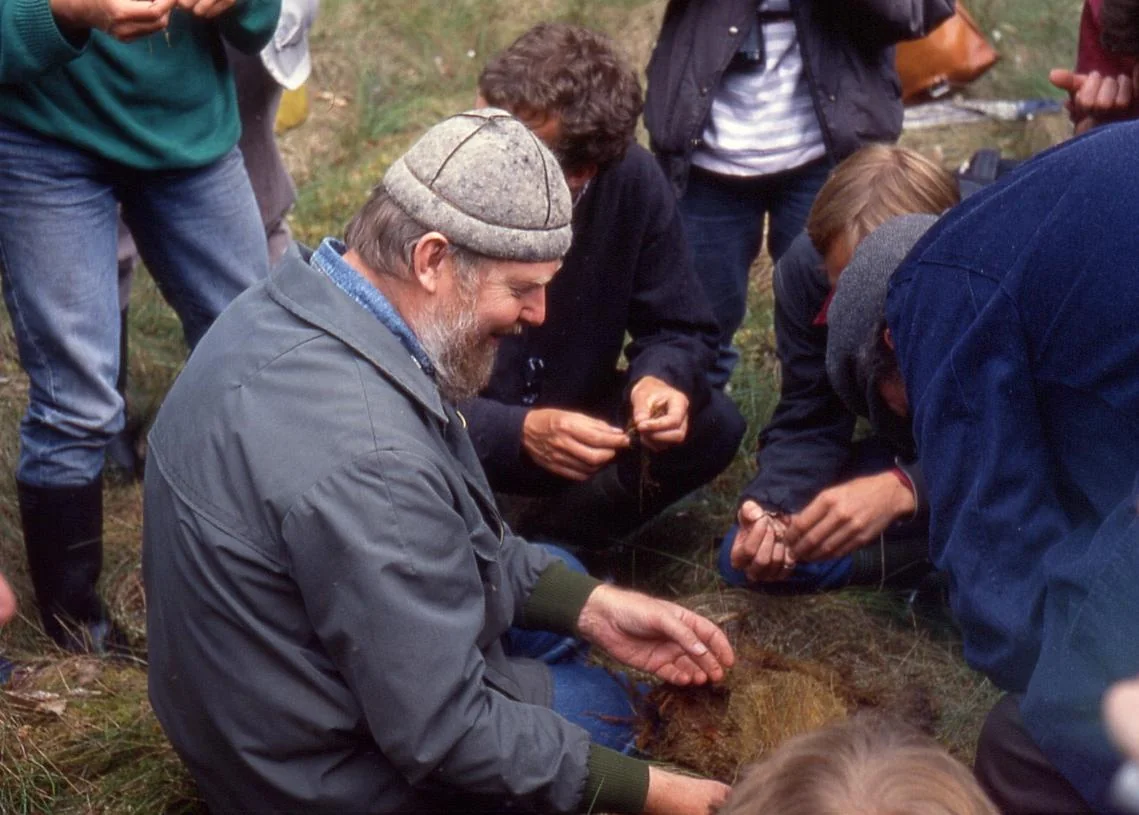
Image from Wikipedia
Image from Wikipedia
Michael Succow: The Peat Researcher, Environmentalist, and Pioneer of a New Environmental Ethic
A Life Dedicated to Peatlands, Protected Areas, and the Courage for a Scientific Stance
Michael Succow is not a musician, but rather one of the defining German biologists, agricultural scientists, and environmentalists of his generation. Born on April 21, 1941, in Lüdersdorf, he became known for his research on peatland ecology and his international work for the protection of sensitive ecosystems. His scientific career uniquely combines precise research, ecological thinking, and practical conservation policy. ([de.wikipedia.org](https://de.wikipedia.org/wiki/Michael_Succow?utm_source=openai))
Biography: From Scientific Interest to Ecological Life’s Mission
Succow studied biology at the University of Greifswald and initially remained connected to the university as a scientific assistant. Early on, he focused on the vegetation of peatlands and the question of how landscapes change due to human intervention. He completed his doctorate in 1970 with a thesis on the vegetation of the river valley peatlands of northern Mecklenburg, which is still regarded as foundational to his field. ([succow-stiftung.de](https://www.succow-stiftung.de/succow-stiftung/michael-succow?utm_source=openai))
His scientific path did not follow the protective confines of an apolitical ivory tower. During the Prague Spring, he openly sympathized with reform forces, which led to pressure from the authorities in East Germany, forcing him to temporarily leave the university. This experience sharpened his profile as a scientist with a stance: research, public responsibility, and conservation were never separate spheres for him. ([en.wikipedia.org](https://en.wikipedia.org/wiki/Michael_Succow?utm_source=openai))
Career: Peat Ecologist with International Impact
Succow subsequently worked at the Academy of Agricultural Sciences of the GDR and habilitated in the field of peat studies. In 1987, he became a professor, later taking a professorship in geobotany and landscape ecology at the University of Greifswald after the reunification of Germany. His scientific authority is based on a rare combination of systematics, fieldwork, and political efficacy. ([en.wikipedia.org](https://en.wikipedia.org/wiki/Michael_Succow?utm_source=openai))
His engagement during the turning point of history was particularly impactful: On September 12, 1990, he advocated for the protection of large areas as national parks and biosphere reserves during the last session of the Council of Ministers of the GDR. This intervention is considered one of the decisive moments of his public career as it concretely secured conservation during a historic phase of upheaval. Here, scientific expertise was turned into immediate environmental policy. ([en.wikipedia.org](https://en.wikipedia.org/wiki/Michael_Succow?utm_source=openai))
Breakthrough: The Right Livelihood Award and the Foundation as a Lasting Legacy
In 1997, Succow received the Right Livelihood Award, the so-called Alternative Nobel Prize. The award recognized his efforts in establishing several major conservation reserves in East Germany, Eastern Europe, and Asia. With the prize money, he founded the Michael Succow Foundation for the Protection of Nature in 1999, which continues to be one of the most important civil society actors in German and international conservation. ([succow-stiftung.de](https://www.succow-stiftung.de/succow-stiftung/michael-succow?utm_source=openai))
The foundation bears his hallmark not just symbolically, but also substantively. It engages in large protected areas, UNESCO biosphere reserves, World Heritage Sites, and the preservation of the National Natural Heritage. Succow's thinking extends far beyond his personal impact: as institutionalized conservation culture, as international consultancy practice, and as long-term ecological responsibility. ([succow-stiftung.de](https://www.succow-stiftung.de/succow-stiftung/aktuelles/detail/komm-in-unser-team?utm_source=openai))
Scientific Profile: Peat Research as a Standard Work
At the core of Succow's expertise is peatland ecology, a field that has become even more relevant in times of climate crisis and biodiversity loss. His ecological-hydrological typology of peatlands is regarded as a standard work in the field of peat studies. With this, he set benchmarks for the scientific description of peatlands, their formation, hydrological dynamics, and conservation value. ([de.wikipedia.org](https://de.wikipedia.org/wiki/Michael_Succow?utm_source=openai))
Even in his later work, the focus remained clear: he combined landscape ecology with concrete conservation management. The foundation still points to his significant development of peatland landscape ecology and projects that reach from Germany through the Caucasus to Central Asia. Science for Succow is not told as an abstract theory, but as a tool for concrete ecological resilience. ([succow-stiftung.de](https://www.succow-stiftung.de/en/peatland-climate?utm_source=openai))
Current Projects and Late Impact
Even in advanced age, Succow's name remains closely connected with ongoing conservation projects. The foundation works in Germany and internationally on peatland restoration, protected area development, and educational efforts; these include initiatives like “Peat4People” in Uganda and Rwanda, or consultancy processes in Georgia, Armenia, and Central Asia. His role as a founder and scientific instigator continues to shape these projects to this day. ([succow-stiftung.de](https://www.succow-stiftung.de/en/succow-stiftung/news/detail/michael-succow-foundation-strengthens-global-peatland-protection-launch-of-the-peat4people-project-in-uganda-and-rwanda?utm_source=openai))
To honor his 80th birthday, the foundation celebrated him with an event that made visible his life’s work as a public, scientific, and moral stance. The phrase “Preserve, Manage, and Appreciate” describes not only a guiding idea of the foundation but also the fundamental movement of his entire work. Succow's biography stands for continuity in a time of constant ecological disruptions. ([succow-stiftung.de](https://www.succow-stiftung.de/succow-stiftung/aktuelles/detail/80-jahre-michael-succow-ein-leben-fuer-die-natur?utm_source=openai))
Awards and Recognition
Succow has received multiple awards, including the Right Livelihood Award, the URANIA Medal, the Federal Cross of Merit, the Order of Merit of the State of Brandenburg, the Rubenow Medal of the City of Greifswald, and in 2015, the Honorary Award of the German Environmental Prize by the German Federal Environmental Foundation. These honors reflect a career that consistently combines scientific excellence with social impact. ([en.wikipedia.org](https://en.wikipedia.org/wiki/Michael_Succow?utm_source=openai))
The recognition from the worlds of science, politics, and the environmental movement underscores his authority as a conservation expert. Succow is one of those personalities whose work lives on not only in publications but also in institutions, protected areas, and educational programs. This connection of research, practice, and public efficacy makes him a key figure in modern conservation. ([succow-stiftung.de](https://www.succow-stiftung.de/succow-stiftung?utm_source=openai))
Cultural Influence: Why Michael Succow Remains Relevant Today
The cultural value of Succow's work lies in conveying a radical yet objective concept of the environment: nature is not a backdrop but a foundation of life. His peat research, his engagement for large protected areas, and his foundation work have contributed to thinking about conservation as an international responsibility. In this sense, Succow is a defining voice of ecological modernity. ([succow-stiftung.de](https://www.succow-stiftung.de/en/peatland-climate?utm_source=openai))
His influence extends far beyond Germany and is reflected in programs, protected areas, and scientific networks in Eastern Europe, Central Asia, and beyond. To music lovers, he would not be a stage figure but a personality of documentary magnitude: someone whose work tells stories of stance, persistence, and societal change. This is where his unusual fascination lies. ([en.wikipedia.org](https://en.wikipedia.org/wiki/Michael_Succow?utm_source=openai))
Conclusion: A Life that Translates Conservation into Responsibility
Michael Succow impresses with scientific precision, moral consistency, and ecological foresight. His career shows how research can become a societal force that protects landscapes and shapes the future. Anyone who wants to understand the history of modern conservation cannot overlook him. A visit to his projects, publications, and the foundation he established is worthwhile, as they demonstrate how effective engaged science can be. ([succow-stiftung.de](https://www.succow-stiftung.de/succow-stiftung/michael-succow?utm_source=openai))
Official Channels of Michael Succow:
- Instagram: no official profile found
- Facebook: no official profile found
- YouTube: no official profile found
- Spotify: no official profile found
- TikTok: no official profile found
Sources:
- Wikipedia - Michael Succow
- Michael Succow Foundation - Michael Succow
- Michael Succow Foundation - Succow Foundation
- Michael Succow Foundation - 80 Years of Michael Succow: A Life for Nature
- Michael Succow Foundation - World Congress of Biosphere Reserves
- German Federal Environmental Foundation - The Award Winners 2015
- German Federal Environmental Foundation - Curriculum Vitae Prof. Dr. Michael Succow
- Wikipedia: Image and text source
Upcoming Events
Christiane Grefe presents: Michael Succow: "The Adventure of Life"