
Karl Foerster
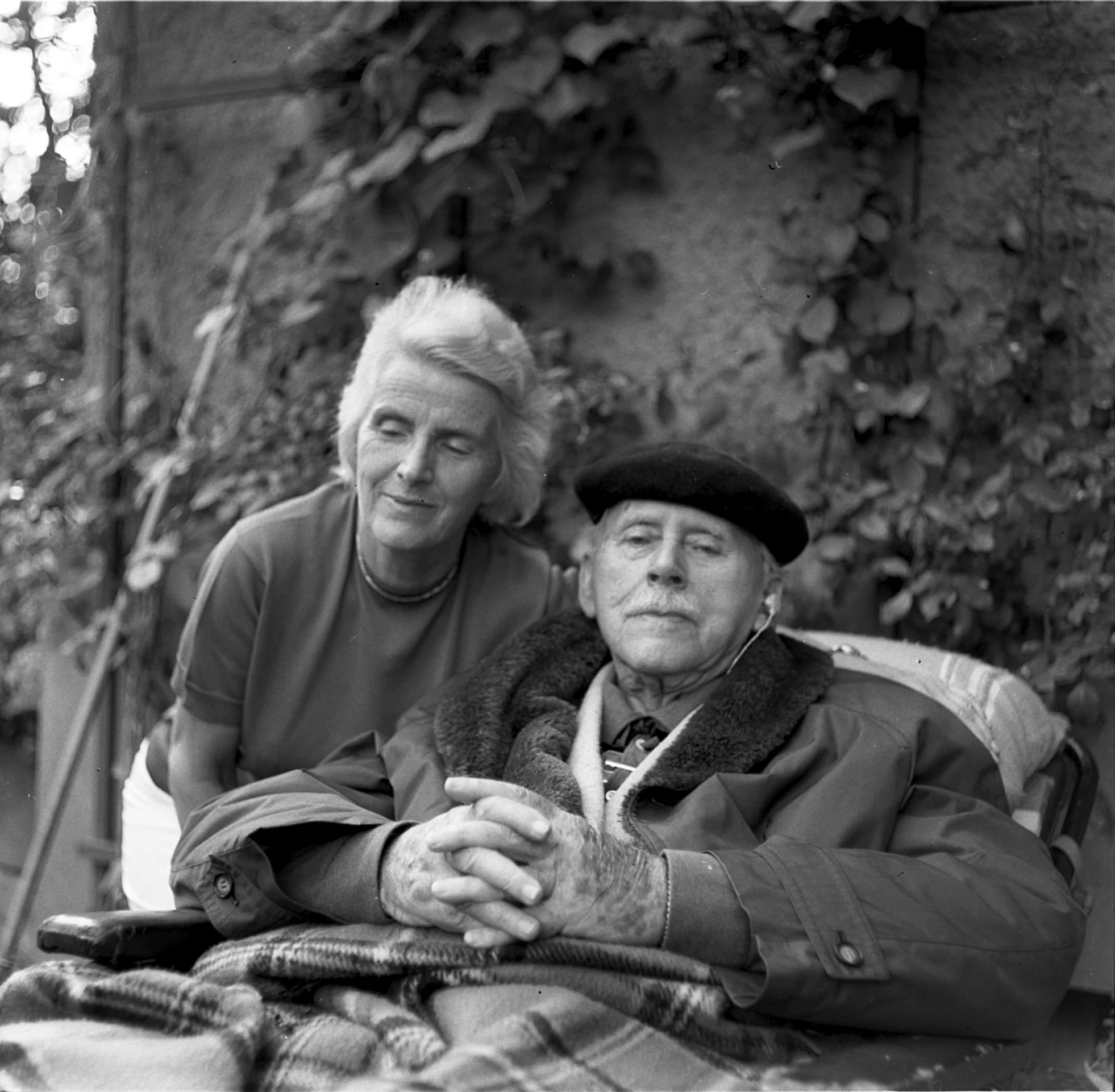
Image from Wikipedia
Image from Wikipedia
Karl Foerster – the great stylist of garden culture
A life dedicated to plants, a sense of form, and poetic garden art
Karl Foerster is one of the defining figures in German garden culture of the 20th century. Born on March 9, 1874, in Berlin, he evolved from a gardening apprentice to a perennial breeder, garden architect, and influential garden writer. His biography combines craftsmanship, creative vision, and journalistic impact into a body of work that extends far beyond ornamental gardens. ([karl-foerster-stiftung.de](https://karl-foerster-stiftung.de/lebenslauf/))
Today, when one considers Foerster, they encounter not just a breeder, but an author with a clear stance, an observer of seasonal changes, and a thinker of landscape order. His work in Bornim near Potsdam became a center of garden modernism, his books achieved enormous circulation, and his plantings influenced generations of gardening enthusiasts. To this day, his name is synonymous with hardy perennials, thoughtfully composed plant images, and an aesthetic language that closely connects nature and design. ([mdr.de](https://www.mdr.de/mdr-garten/karl-foerster-staudenzuechter-gartenpionier-100.html))
Biography: From Berlin to Bornim
Karl Foerster's journey began in the intellectual environment of Berlin: His father, Wilhelm Foerster, was the director of the royal observatory and a university professor, and the artistic and scientific influence of his family provided an early background. After his schooling and apprenticeship, he attended the Wildpark gardening school near Potsdam and subsequently gained practical experience at various locations, including Altenstein, Meiningen, Geisenheim, Bordighera, and Ahrensburg. These years of learning sharpened his perception of plants, climate, and site conditions. ([karl-foerster-stiftung.de](https://karl-foerster-stiftung.de/lebenslauf/))
From 1903 to 1907, Foerster established his first nursery at his parents' home in Berlin-Westend, before relocating the business to Bornim near Potsdam in 1910-1911. There, he created not only an enterprise but a garden realm with its own order, language, and ethos. In Bornim, Foerster’s life's work crystallized: breeding, design, journalism, and teaching intertwined, making the place a focal point of German perennial culture. ([karl-foerster-stiftung.de](https://karl-foerster-stiftung.de/lebenslauf/))
The breakthrough as a perennial breeder and garden author
Foerster's first literary success came in 1911 with Winter Hardy Flowering Perennials and Shrubs of Modern Times, an early testament to his mission of introducing robust yet attractive plants into gardening practice. In 1917, he followed with From the Flower Garden of the Future, a programmatic text that encapsulated his vision of the modern garden. These publications established him as the spokesperson of a new, accessible, yet poetic garden aesthetic. ([karl-foerster-stiftung.de](https://karl-foerster-stiftung.de/lebenslauf/))
The breeding breakthrough occurred in 1920 with the delphinium Berghimmel. From then on, numerous selections followed, solidifying Foerster's reputation as an astute observer and patient breeder. The MDR describes his “very good, selective eye for plants”; among thousands of seedlings, he expertly filtered out those that met his standards. This combination of perseverance, judgment, and creative will forms the core of his gardening career. ([mdr.de](https://www.mdr.de/mdr-garten/karl-foerster-staudenzuechter-gartenpionier-100.html))
The Bornim Circle, network, and cultural influence
Foerster's influence never confined itself to his own nursery. The Bornimer Circle formed around him, a meeting place for garden architects, architects, and cultural figures. Important names included Hermann Mattern, Herta Hammerbacher, and Otto Bartning; artists like Wilhelm Kempff also sought exchange. Thus, Bornim became a venue where design questions, plant knowledge, and cultural understanding converged in a tight space. ([mdr.de](https://www.mdr.de/mdr-garten/karl-foerster-staudenzuechter-gartenpionier-100.html))
Foerster's extensive impact was particularly facilitated by his journalistic work. He was co-editor of the magazine Gartenschönheit, published between 1920 and 1941, and tirelessly crafted a language that reached both professionals and amateurs alike. The foundation refers to an impressive series of books in his oeuvre, including The Garden as Magical Key, The Rock Garden of the Seven Seasonal Signs, Happily Interrupted Silence, and Blue Treasures of the Gardens. Foerster viewed publishing as part of his creative mission. ([karl-foerster-stiftung.de](https://karl-foerster-stiftung.de/lebenslauf/))
Discography in a broader sense: Works, books, and breeding
Since Karl Foerster was not a musician, there is no classical discography. However, his work represents a kind of bibliographical and garden artistic oeuvre that is comparable in significance to an artistic totality. Key titles include, alongside his early writings, From the Flower Garden of the Future (1917), Blue Treasures of the Gardens (1940), My Life's Work from 1907–1946 on the Breeding and Fortification of Winter Hardy Perennial Plants, as well as the still well-known It Will Bloom Through (1968). ([karl-foerster-stiftung.de](https://karl-foerster-stiftung.de/lebenslauf/))
His breeds can also be read like a lasting catalog. After the delphinium Berghimmel, phlox breeds such as Wennschondennschon and Eva Foerster emerged from 1932 onwards. After 1949, a second breeding period began, focusing on aster, chrysanthemum, delphinium, phlox, helenium, heliopsis, poppy, lupines, campanula, veronica, and yucca. This diversity shows how consistently Foerster worked on form, color, and durability. ([karl-foerster-stiftung.de](https://karl-foerster-stiftung.de/lebenslauf/))
Style, attitude, and artistic signature
Foerster's style was characterized by clarity, firmness, and an awareness of the seasons. He thought not in short-term effects, but in rhythms of vegetation, locations, and color dynamics. His plantings featured long-lived perennials, transitions instead of breaks, and a composition where structure and bloom worked equally. His modernity lies not in ornamentation, but in the sovereign organization of living diversity. ([mdr.de](https://www.mdr.de/mdr-garten/karl-foerster-staudenzuechter-gartenpionier-100.html))
His writings reflect the same attitude. Titles like Warning and Encouragement, Holiday from the Ouch, or Comfort Me – I Am So Happy reveal an author who combines gardening practice with reflection, wisdom of life, and a keen sense of language. For Foerster, the garden was never just a space, but a space for thought. In this, he resembles great cultural mediators: He translated expert knowledge into vivid, sensual, and precise language. ([denkmalschutz.de](https://www.denkmalschutz.de/fileadmin/media/Bilder/Objekte/BB/Eigenimmos/Foerstergarten/Fotos_f%C3%BCr_neue_Seite_150_Jahre/Bibliographie_Foerster.pdf))
Awards, recognition, and lasting influence
Foerster's life's work was recognized early and sustainably. In 1950, he received an honorary doctorate from Humboldt University in Berlin, in 1959 he was made an honorary citizen of the city of Potsdam, and in 1964, on the occasion of his 90th birthday, he was appointed a professor. In 1967, he was accepted as an extraordinary member of the Academy of Arts in Berlin-West. These honors document how much his work was regarded as a cultural achievement. ([karl-foerster-stiftung.de](https://karl-foerster-stiftung.de/lebenslauf/))
His posthumous reputation is also clearly visible: The public trial, teaching, and display garden in Bornim, as well as his residence, have been under monument protection since 1981, and the Karl Foerster Foundation preserves his memory. The MDR emphasizes that his books achieved millions in circulation and that his name remained well-known far beyond the German-speaking world, especially in England. Foerster thus represents not only garden history but also a living history of reception. ([de.wikipedia.org](https://de.wikipedia.org/wiki/Karl_Foerster?utm_source=openai))
Conclusion: Why Karl Foerster continues to fascinate today
Karl Foerster fascinates because he understood garden art as a way of life. His career combines breeding, design, writing, and cultural-historical impact into a rarely unified body of work. Those who read his books or look at his planting ideas discover an attitude that reconciles beauty, discipline, and a sense of permanence. This is where his greatness lies: He turned perennials into a language and a garden into a cultural statement. ([karl-foerster-stiftung.de](https://karl-foerster-stiftung.de/lebenslauf/))
Anyone wanting to get to know Karl Foerster should not settle for just the name, but should consciously experience his texts, plantings, and places. Bornim, Potsdam, and the preserved gardens still bear his signature. A visit to these sites opens a window to an extraordinary pioneer whose influence is still felt in garden architecture and gardening thought today. ([de.wikipedia.org](https://de.wikipedia.org/wiki/Karl_Foerster?utm_source=openai))
Official channels of Karl Foerster:
- Instagram: No official profile found
- Facebook: No official profile found
- YouTube: No official profile found
- Spotify: No official profile found
- TikTok: No official profile found