
Gaea Schoeters
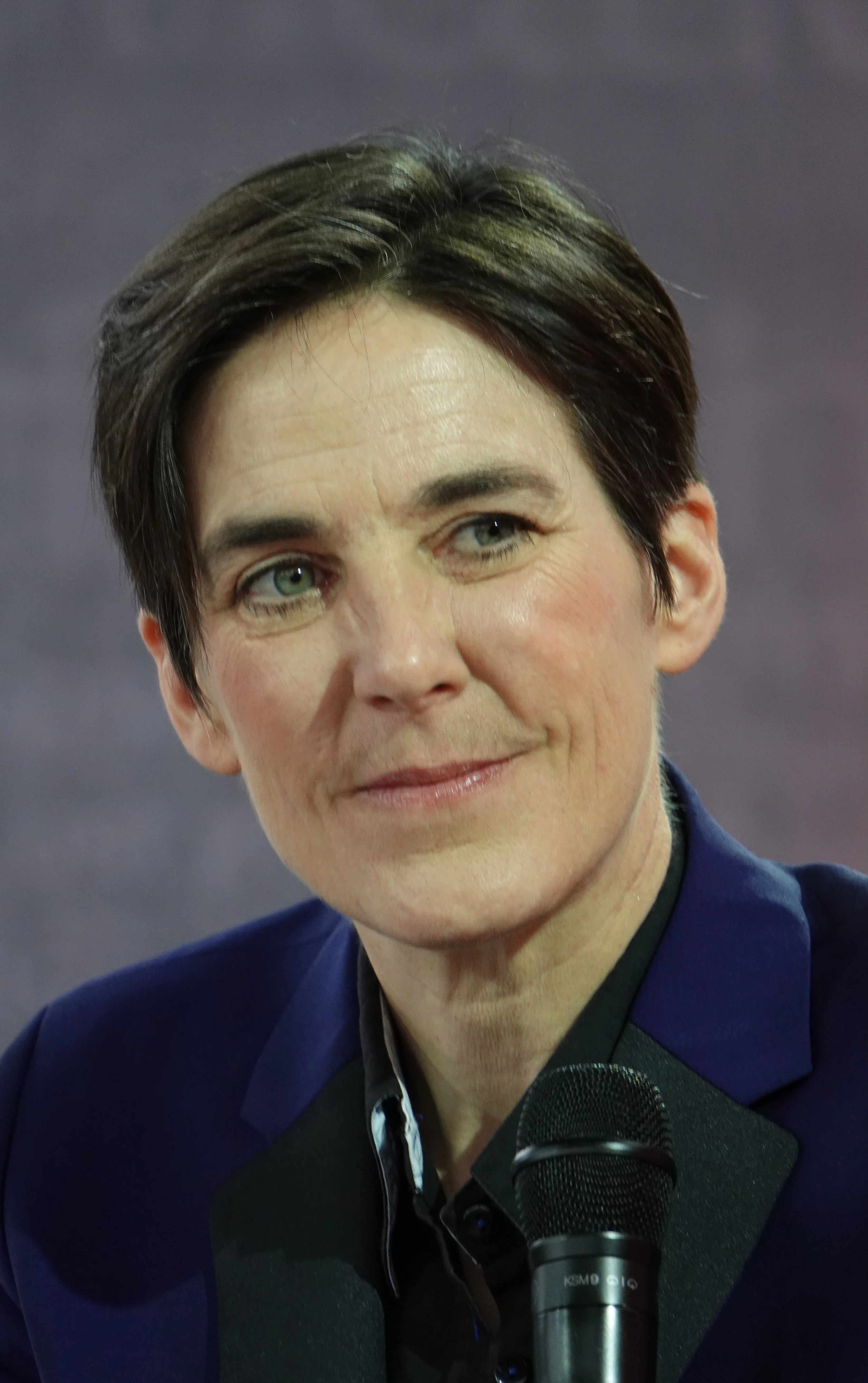
Image from Wikipedia
Image from Wikipedia
Gaea Schoeters: Language Art Between Literature, Libretto, and Musical Stage
An author who effortlessly dissolves the boundaries between literature and music theater
Gaea Schoeters, born on June 28, 1976, in Sint-Niklaas, is one of the most prominent voices in contemporary Dutch-language literature. She works as a writer, journalist, librettist, and screenwriter, merging narrative precision with political awareness and a penchant for formal experimentation in her work. Her proximity to the stage is particularly striking: in addition to novels and essays, she shapes an artistic profile with operatic and music theater works that extends far beyond classical literature.
Her work represents a rare combination of intellectual sharpness, social engagement, and stage experience. Schoeters writes with a keen eye for rhythm, dramaturgy, and dialogue, which makes her texts particularly suited for music theater, opera, and performative formats. This is precisely where her unique strength lies: she does not conceive literature as a silent archive, but as a vibrant, public art form.
Biography: From Journalism to Literary Polyphony
Schoeters initially studied translation and began her professional career in journalism. This background is still evident in her writing today: her texts are strong in observation, socially sensitive, and linguistically focused. Her journey led her from journalistic work to a literary oeuvre that includes travel writing, novels, theater texts, operatic librettos, and children’s books.
Her first book, Meisjes, Moslims & Motoren, arose from a seven-month motorcycle trip through the Middle East and Central Asia. This debut early on marked her thematic direction: a curiosity about other ways of life, a desire for boundary experiences, and a keen eye for cultural friction points. Here, the central constant of her music career in the broader sense of the stage becomes apparent: a sense of movement, tempo, and scenic condensation.
In the following years, Schoeters developed remarkable versatility. She published novels, essays, and theater texts and collaborated with artists from various disciplines. Of particular importance was her cooperation with composer Annelies Van Parys, with whom she realized several music theater and operatic projects. This collaboration clearly demonstrates how consistently Schoeters translates literary writing into audible, performative forms.
The Literary Breakthrough and Growing International Visibility
A pivotal moment in her career was the novel Trofee, which gained significant international attention. The book was nominated for various awards, won the Sabam Prize for Literature, and received a Special Mention from the European Union Prize for Literature. In the German-speaking world, the novel has developed into a particularly noted title since 2024 and has been prominently discussed in major book fairs and literary press.
Het Geschenk or The Gift also solidified her reputation as an author who combines existential and political questions with narrative elegance. Her works are not merely literarily ambitious but also audience-effective: they achieve high reach, are translated, and resonate well beyond Belgium. This international dissemination underscores her authority as an author with a European profile.
The recognition from renowned institutions like the European Union Prize for Literature is more than an accolade. It points to Schoeters' ability to open complex literary themes to a broad audience. Her texts combine formal discipline with narrative accessibility, which makes them particularly relevant in the current literary landscape.
Music Theater, Opera, and Libretto: When Literature Creates Resonant Spaces
A central chapter of her artistic development is music theater. With Annelies Van Parys, Schoeters wrote several award-winning operatic and music theater works, including Private View, Usher, The Channel, Holle Haven, and Notwehr. These works have been performed at significant venues such as the State Opera Unter den Linden, the Folkoperan Stockholm, the Opera Ballet Vlaanderen, the Deutsche Oper, the Operadagen Rotterdam, and the Biennale di Venezia.
Her particular expertise in dramaturgy is especially evident in her libretti. Schoeters develops characters, conflicts, and images with a clear awareness of scenic effect, pauses, and linguistic density. Her texts work not only as reading material but also as a score for voice, space, and musical movement. Thus, she belongs to those authors who intertwine literature and composition in a productive manner.
Even outside the grand opera stages, she seeks unusual formats. One example is the station opera Lost & Found, which regards public space as an artistic field. Such projects demonstrate an expanded sense of stage presence: Schoeters writes for situations where literature, music, and performance intersect and directly engage the audience.
Discography in a Broader Sense: An Overview of Works Between Novel, Stage, and Essay
Gaea Schoeters does not have a classic discography, but her work can be read as an artistic archive with clear milestones. Among her early and formative publications are Meisjes, Moslims & Motoren, Diggers, De kunst van het vallen, and Zonder Titel #1. In addition, essays and interview-based texts expand her literary range.
In the area of music theater and opera, particularly Private View, Usher, The Channel, Holle Haven, and Notwehr are central. Together with Annelies Van Parys, she developed works that operate at the intersection of music, social critique, and scene. These pieces are part of a consistent artistic development, where linguistic rhythm and musical structure are closely related.
The children’s book (N)Iets, which she created with Gerda Dendooven, also belongs to her profile. It shows how confident she is across different genres and how adeptly she switches tonalities, target audiences, and forms. This versatility makes her an author whose work cannot be defined by a single format but by an attitude: open, conscious of form, and experimental.
Style and Themes: Formally Experimental, Socially Attuned
Schoeters’ writing exists, based on her own description and the official biography's assessment, at the intersection of formal experimentation and social engagement. This is evident in both her novels and her music theater texts. She does not favor a linear one-way street but rather an art that shifts perspectives, reveals questions, and productively undermines cultural certainties.
Many of her works revolve around boundaries, power dynamics, strangeness, perception, and social responsibility. Her style is clear, precise, and simultaneously rich in imagery. Particularly in conjunction with music, this language unfolds a special effect, as it makes tension not only narratable but rhythmically perceptible.
Her journalistic background sharpens her view of reality, while her work as a librettist refines the art of condensation. This results in texts that work on stage while remaining literarily autonomous. This dual quality lends her work authority and recognizability.
Cultural Influence, Awards, and Public Relevance
Gaea Schoeters is not only productive but also culturally influential. Her works have been presented across Europe, her novels have been translated into several languages, and her books are among the bestsellers in Germany. The novel Trofee has also been adapted into theater material, further underscoring the overarching dramaturgy of her writing.
The awards affirm this status: the Sabam Prize for Literature, the Special Mention from the European Union Prize for Literature, and other international honors for The Gift. In 2025, she also served as the Friedrich Dürrenmatt Visiting Professor for World Literature at the University of Bern, where she focused on the connection between content, form, and the political significance of literature. This showcases an author whose influence is also recognized academically and discursively.
Additionally, her engagement in literary and cultural networks like Fixdit, an association of authors advocating for more equality in the literary sector, positions Schoeters not just as a strong individual voice but also as part of a broader cultural movement. Her work embodies presence, stance, and literary sovereignty.
Conclusion: Why Gaea Schoeters Remains So Fascinating
Gaea Schoeters is an author who connects literature, journalism, and music theater with remarkable consistency. Her work is intelligent, formally bold, and socially relevant, while being accessible and scenically vibrant. Those seeking modern European contemporary art will find in her a voice with profile, depth, and strong consciousness of form.
She is particularly intriguing because she cannot be confined to a single genre. Novels, operas, librettos, and essays form a cohesive artistic field that continually opens up new perspectives. A live experience of her stage works is worthwhile, as here language, music, and staging achieve the intensity that makes her art so distinctive.
Official Channels of Gaea Schoeters:
- Instagram: no official profile found
- Facebook: no official profile found
- YouTube: no official profile found
- Spotify: no official profile found
- TikTok: no official profile found
Sources:
- Gaea Schoeters – Official English Website
- Gaea Schoeters – Biography on the Official Website
- European Union Prize for Literature – Gaea Schoeters
- European Commission – European Union Prize for Literature 2022
- Sabam – Gaea Schoeters Wins the Sabam for Culture Literature Prize
- Wikipedia: Gaea Schoeters