
Fritz Lang
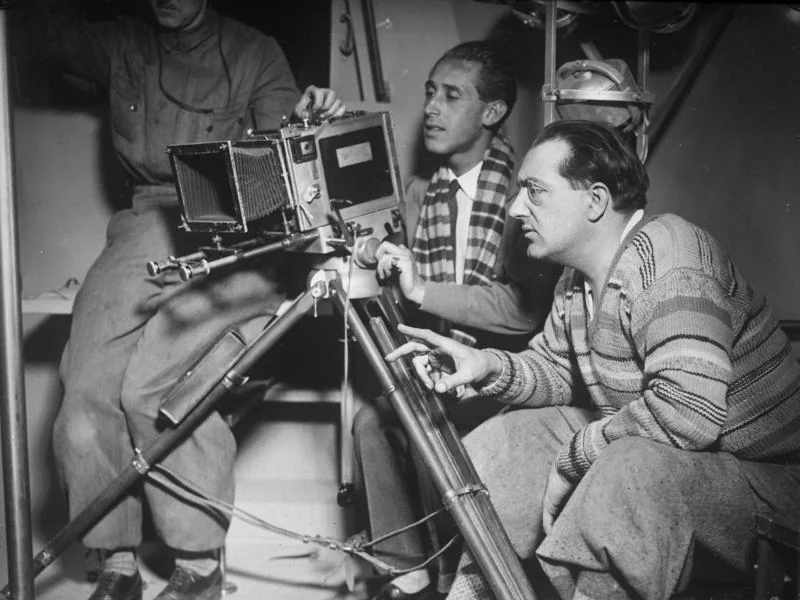
Image from Wikipedia
Image from Wikipedia
Fritz Lang: The Architect of the Modern Cinema Nightmare
A Director Who Shaped World Cinema with Shadows, Power, and Fate
Fritz Lang is one of the most influential film authors of the 20th century. Born on December 5, 1890, in Vienna and died on August 2, 1976, in Beverly Hills, he evolved from an art student and screenwriter into a visionary director who fundamentally renewed the aesthetics of silent and early sound films. His works combine expressionistic imagery, a dark atmosphere, and a precise dramaturgy that continues to influence cinema from Europe to Hollywood. ([dhm.de](https://www.dhm.de/lemo/biografie/fritz-lang))
Early Years: From Vienna to Munich and Paris to Film
Lang's artistic career did not begin in a studio, but in the worlds of painting, travel, and observation. After graduating from secondary school, he initially pursued a civil engineering degree in Vienna at his father's request, then switched to painting and performed as a cabaret artist on the side. Stints in Munich and Paris, along with intensive contact with French cinema, ultimately led him to the new medium of film. This early education explains his architectural perspective on space, light, and composition, which made his later films distinctive. ([dhm.de](https://www.dhm.de/lemo/biografie/fritz-lang))
World War I marked a biographical turning point. Lang was wounded, and while recovering, he wrote his first screenplays and worked for the first time as a director after sustaining further injuries. After moving to Berlin, he found his way into the film industry and began a career that rapidly elevated him to the forefront of European directing. Even his early projects show an extraordinary blend of wartime and crisis experiences, artistic discipline, and form-conscious storytelling. ([dhm.de](https://www.dhm.de/lemo/biografie/fritz-lang))
The Breakthrough in German Cinema
In 1919, Lang made his directorial debut with Halbblut, followed by the adventure cycle Die Spinnen, which he both wrote and directed. His actual international breakthrough came with Der müde Tod and especially Dr. Mabuse, der Spieler, which made him known beyond Germany in 1921/22. In these films, he condensed tension, symbolism, and social unrest into a visual language that transcended mere entertainment cinema. ([de.wikipedia.org](https://de.wikipedia.org/wiki/Fritz_Lang))
With the marriage to screenwriter Thea von Harbou in 1922, Lang uniquely intertwined his personal and creative life. Together, they created screenplays and stories that shaped German cinema in the 1920s. In Die Nibelungen, Lang transformed the medieval epic into a monumentally stylized cinematic world; the film became a box office success and solidified his reputation as a director of great, precisely constructed cinematic myths. ([dhm.de](https://www.dhm.de/lemo/biografie/fritz-lang))
Metropolis and M: Masterpieces Between Vision and Abyss
Metropolis from 1927 is considered one of the great centers of film history. The work was expensive, risky, and aesthetically radical, featuring a futuristic visual architecture that had rarely been seen before. Although the film financially pressured UFA, artistically it set standards for science fiction, production design, and visual storytelling. Lang thus established the genre of science fiction film in Germany and created a work that remains a symbol of the ambition of cinema to this day. ([dhm.de](https://www.dhm.de/lemo/biografie/fritz-lang))
In 1931, M – A City Seeks a Murderer followed as another milestone, this time in sound film. Lang shifted his focus more towards individual motives, everyday observations, and psychological precision. The film employs realism, social tension, and a stringent, almost documentary sound track that not only showcases horror but makes it audible. In doing so, Lang transitioned his dramaturgy from monumental myth to the inner turmoil of the individual. ([dhm.de](https://www.dhm.de/lemo/biografie/fritz-lang))
Exile and New Beginnings in Hollywood
After the Nazis came to power, Lang left Germany and moved to the United States in 1934. There began another formative phase of his cinematic career, if one views his filmmaking as a strictly composed art form: In Hollywood, he created significant film noirs such as Blinde Wut, Gefährliche Begegnung, Straße der Versuchung, and Heißes Eisen. These works solidified his reputation as a co-founder of the genre and demonstrated how flexible his artistic language remained between European expressionism and American genre cinema. ([britannica.com](https://www.britannica.com/biography/Fritz-Lang))
In his US films, Lang intensified his themes: persecution, guilt, ambivalence, and moral entanglement. His characters often appear driven, pressured by systems or marked by inner obsessions. Especially in his noir works, his sensitivity to stage presence, precise framing, and a dramaturgy that not only narrates tension but structurally generates it is evident. ([britannica.com](https://www.britannica.com/biography/Fritz-Lang))
Film Style, Themes, and Artistic Development
Lang’s style combines expressionistic spatial design with clear narrative architecture. The German Historical Museum describes how in the major silent films from 1921 to 1929, he connected issues of mass psychology and the mood of the times with graphic rigor. Britannica highlights that his films are characterized by fate, inner drives, and exceptional visual composition. This is where Lang's authority lies: he conceives film as a constructed system of image, rhythm, and meaning. ([dhm.de](https://www.dhm.de/lemo/biografie/fritz-lang))
His artistic development does not proceed linearly but in stages: from fantastic, utopian-dark silent films through socially charged crime stories to psychologically dense sound films and stylistically tough Hollywood noirs. Lang repeatedly returns to motifs such as power, surveillance, crime, technology, and fatal consequence. This makes his work significant not only from a film historical standpoint but also critically relevant for culture. ([dhm.de](https://www.dhm.de/lemo/biografie/fritz-lang))
Filmography of Cinema: Key Films and Their Impact
Although Fritz Lang did not leave behind a discography in the musical sense, his cinematic work possesses a canon quality comparable to a curated list of works. Central titles include Halbblut (1919), Die Spinnen, Der müde Tod (1921), Dr. Mabuse, der Spieler (1922), Die Nibelungen (1924), Metropolis (1927), Spione (1928), Frau im Mond (1929), and M – A City Seeks a Murderer (1931). His later American successes further anchored his name in international genre cinema. ([dhm.de](https://www.dhm.de/lemo/biografie/fritz-lang))
The critical reception of his works continues to revolve around the same strength: Lang can transform mass imagery and intimate threats into an almost musical dramaturgy. His films have become reference points for science fiction, thrillers, and film noir because they do not merely tell stories but create visual systems. Particularly, Metropolis and M are regarded as works that have permanently changed world cinema both formally and thematically. ([dhm.de](https://www.dhm.de/lemo/biografie/fritz-lang))
Cultural Influence and Legacy
Lang's influence extends far beyond German film history. He belongs to those directors who have linked genre thinking with a strict authorial signature. His films influenced later generations of directors by demonstrating how architecture, light, editing, and narrative pace can converge into an independent expression. It is this connection between form consciousness and existential tension that makes him a focal point of any serious film history. ([britannica.com](https://www.britannica.com/biography/Fritz-Lang))
His biography itself contributes to the fascination: his Viennese origins, artistic training, war, emigration, dual citizenship, and the journey from Europe to Hollywood. Lang thus embodies the 20th century in concentrated form. Those who watch his films experience not only great cinematic art but also the history of an era made visible in images. ([dhm.de](https://www.dhm.de/lemo/biografie/fritz-lang))
Conclusion: Why Fritz Lang Continues to Fascinate Today
Fritz Lang remains compelling because he understood cinema as a language of control, fear, and vision. His works possess the power of great narratives and, at the same time, the precision of a strictly composed arrangement of images, shadows, and psychological tensions. Those who want to understand how modern genre cinema emerged will find in Lang one of its decisive pioneers. His films are not only to be seen but experienced. ([dhm.de](https://www.dhm.de/lemo/biografie/fritz-lang))
A live experience with Fritz Lang is, of course, not possible, but every screening of his films unfolds the same urgency as a significant evening on stage: dark, focused, and timelessly powerful. Especially on the large screen, the impact of his image compositions, the precision of his mise-en-scène, and the modernity of his themes are most clearly displayed. Engaging with Fritz Lang means encountering one of the most sovereign stylists of world cinema. ([dhm.de](https://www.dhm.de/lemo/biografie/fritz-lang))
Official Channels of Fritz Lang:
- Instagram: no official profile found
- Facebook: no official profile found
- YouTube: no official profile found
- Spotify: no official profile found
- TikTok: no official profile found
Sources:
Upcoming Events
Film Screening: Metropolis by Fritz Lang
Experience Fritz Lang's masterpiece 'Metropolis' at the Kunsthalle Kempten. Free admission, an opportunity to connect art and film!
100 Years of Metropolis - Nikolaisaal Potsdam 2027
A century of film history at Nikolaisaal Potsdam: »Metropolis« as a grand art experience full of visual power and vision. 10.01.2027, 5 PM. #Metropolis #Potsdam