
Corinna Harfouch
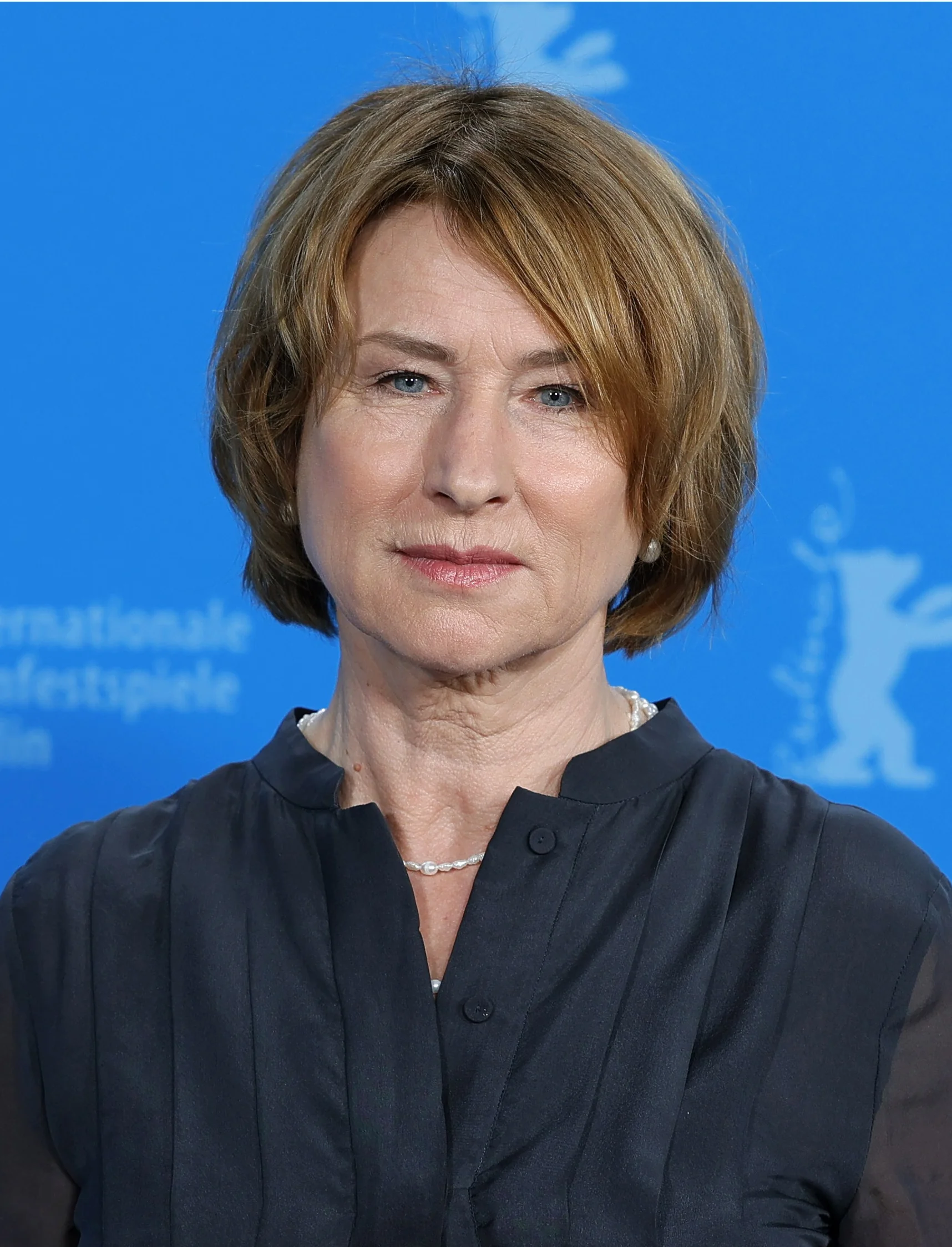
Image from Wikipedia
Image from Wikipedia
Corinna Harfouch: One of the Most Impressive Actresses of German Cinema and Theater
Corinna Harfouch Between Theater Art, Film, and Artistic Consistency
Corinna Harfouch has been one of the most prominent actresses in the German-speaking world for decades. Born on October 16, 1954, in Suhl, she grew up in the GDR and early developed that blend of precision, presence, and emotional depth that would later characterize her entire stage and film career. Her work encompasses more than 100 film and television productions as well as numerous theater productions; she has repeatedly been awarded for many of her roles. (en.wikipedia.org)
Early Years and Education: The Path to the Stage
Harfouch’s artistic biography does not begin with glamour but with disciplined theater work. The Academy of Arts lists stages at the Theater im Palast, at the Berliner Ensemble, and later at the Deutsches Theater; since 1990/1991, she has worked freelance, and since 2001, she has been a member of the Academy of Arts in Berlin. This early anchoring in the German-German theater landscape explains her unusually strong stage authority and the clarity of her performance. (adk.de)
As early as the 1980s, Harfouch displayed her adaptability as an actress. The Academy of Arts names roles such as Stella, Gretchen in Urfaust, and Polly in The Threepenny Opera; this documents her basis in the classical repertoire as well as her connection to political and literary theater tradition. It is this training that shaped her later ability to portray complex characters in film without exaggeration, yet with inner tension. (adk.de)
The Breakthrough in Film: From GDR Cinema to International Recognition
A significant highlight of her film career was the lead role in Siegfried Kühn's NS drama The Actress, which has been described in receptions as an important milestone of her early career. In the following years, she established herself as a serious character actress with roles in productions such as The House by the River, Fallada – The Last Chapter, and The Tango Player, showcasing her strong presence even in literary and historical materials. (umass.edu)
Over time, Harfouch expanded her scope far beyond East German cinema. In the 1990s and 2000s, she became an established figure in overall German cinema, with roles in The Mambo Game, The Great Bagarozy, Perfume – The Story of a Murderer, and Elementary Particles. The international and national reputation of her work is not based solely on quantity, but on the rare ability to create characters with psychological depth and controlled intensity. (fdb.cz)
Theater as an Artistic Center
Although cinema has cast many spotlights, theater has always remained an artistic center for Corinna Harfouch. After the turn of the millennium, she focused more on the stage and was seen in Berlin and Vienna in both classic and modern plays, including Who's Afraid of Virginia Woolf and A Midsummer Night's Dream. This theatrical work showcases an actress who does not rely on quick effects but on rhythmic precision, text comprehension, and the dramatic power of the moment. (filmstarts.de)
Her stage presence is closely linked to her reputation as a precise, composed, and yet highly condensed performer. Especially in theater, Harfouch displays that blend of authority and vulnerability that distinguishes her from many colleagues. Her long collaboration with renowned theaters and directors underscores her status as an actress whose work sets standards in both the classical canon and contemporary repertoire. (adk.de)
Successes, Awards, and Recognition
Corinna Harfouch has been honored many times for her achievements, including awards at festivals, by critics' panels, and within German film culture. Mentioned among the available sources are the International Film Festival prize in Karlovy Vary, the German Film Award for a supporting role, and later honors like the Hannelore Elsner Award. Such awards not only mark career milestones but also confirm an artistic consistency that is rare in the German acting scene. (fdb.cz)
The specialized press has also repeatedly acknowledged her work. Film reviews regularly highlight Harfouch's ability to create dramatic cores from seemingly quiet characters; one review describes her performance as an "intense event," while another explicitly emphasizes the impact of her acting. This resonance shows that Harfouch's authority does not arise from posing but from precision, condensation, and an exceptionally controlled range of expression. (moviepilot.de)
Current Projects and Late Glorious Roles
Even later in her career, Corinna Harfouch remains present. In recent years, she appeared in productions such as The Irony of Life and To Die; the latter film won Gold at the 2024 German Film Award, and Harfouch was nominated or considered for Best Actress. This showcases an actress who does not rest on past successes but also remains visible in current cinema with demanding materials. (de.wikipedia.org)
For the years 2024 and 2025, available sources also mention further film and festival references, including new projects and program notes. This continuity underscores Harfouch's role as a current, not just historical figure: she remains part of the ongoing German-speaking film and theater public. (majestic.de)
Style, Playfulness, and Cultural Influence
Corinna Harfouch represents an acting art that relies on inner tension rather than external effects. Her characters often appear controlled, but never cold; rather, there is an impression of deep emotional work behind every gesture, every look, and every pause. This is precisely where her cultural influence lies: she embodies a German acting tradition that combines psychological accuracy, literary sensitivity, and political awareness. (adk.de)
In roles such as Magda Goebbels in Downfall or in younger, complex female figures, her special strength in handling contradictory characters is evident. Harfouch can merge societal harshness, emotional vulnerability, and strategic coldness within a single performance. Thus, she belongs to the actresses whose work not only entertains but also prompts reflection on history, power, and identity. (en.wikipedia.org)
Discography in a Broader Sense: A Filmography that Mirrors an Era
Since Corinna Harfouch is not a musician but an actress, her "discography" in the context of art criticism consists of a remarkably dense filmography. Frequently listed titles include The House by the River, Fallada – The Last Chapter, The Tango Player, Bibi Blocksberg, Downfall, Perfume – The Story of a Murderer, Elementary Particles, Lara, and To Die. This selection illustrates how wide her spectrum is between auteur film, mainstream, literary adaptation, and contemporary cinema. (umass.edu)
Her most important constant remains the quality of the arrangement of her roles: Harfouch does not merely play characters; she dramaturgically constructs them. Each production is sharpened by her presence, whether on stage as a linguistically precise interpreter or in film as a concentrated, multi-layered performer. For cultural enthusiasts, this is precisely why her work endures beyond individual successes. (adk.de)
Conclusion: Why Corinna Harfouch Continues to Fascinate
Corinna Harfouch is an artist of rare consistency. Her career unites GDR theater history, German auteur cinema, major television roles, and late, powerful appearances in contemporary film. Those who wish to experience acting in its concentrated, intelligent, and profound form will find in Corinna Harfouch one of the most compelling personalities of her generation. Anyone who has the opportunity to see her on stage or on screen should seize that chance. (adk.de)
Official Channels of Corinna Harfouch:
- Instagram: No official profile found
- Facebook: No official profile found
- YouTube: No official profile found
- Spotify: No official profile found
- TikTok: No official profile found
Sources:
Upcoming Events
In the Mirror of My Mother