
Christophe Bourdoiseau
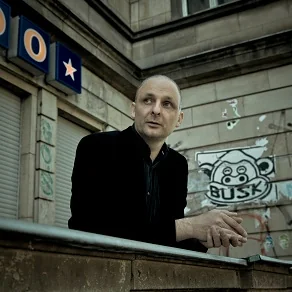
Image from Wikipedia
Image from Wikipedia
Christophe Bourdoiseau – Chanson, Berlin, and the Art of Poetic Observation
A French Chansonnier with a Berlin Perspective and Journalistic Precision
Christophe Bourdoiseau, born in 1967 in Schiedam, Netherlands, combines two disciplines in his career that rarely come together in the cultural sector: the analytical gaze of a journalist and the narrative sensitivity of a chansonnier. According to his official biography, he has been living and working in Berlin since 1994, a city that has become his artistic resonance space. His songs revolve around memory, migration, suburbs, longing, and urban disruptions, making him a distinctive voice of the French chanson tradition in Germany. ([christophebourdoiseau.com](https://christophebourdoiseau.com/fr/accueil/))
Biography: From Rotterdam through Milan and Paris to Berlin
The official biography outlines a European life path marked by early relocations: Rotterdam, Milan, Paris, and finally Berlin. Bourdoiseau studied at the Institut pratique de journalisme in Paris and began his professional career in journalism, including work as a reporter in Eastern Europe and later as a correspondent in Berlin. Since 1994, he has reported for media such as Le Journal de Genève, Les Echos, Le Parisien, and later Libération, L’Express, and Le Soir. This journalistic work also lends a documentary undertone to his songs, intertwining observation and emotion. ([christophebourdoiseau.com](https://christophebourdoiseau.com/fr/accueil/))
His own website further emphasizes that he appears not only as a journalist but also as a speaker, guide author, and expert in Franco-German relations. This sharpens the image of an artist who does not address his themes from a distance but develops them from a biographically and linguistically rich life. This anchoring between countries, languages, and cultural environments significantly shapes his artistic development. ([christophebourdoiseau.com](https://christophebourdoiseau.com/fr/accueil/))
The Path to Music: Chanson as Lived Literature
On his website, Bourdoiseau describes how he was influenced as a child by his father's record collection, which included not only Pink Floyd but also Georges Brassens. This early encounter with Brassens' language, poetry, and succinctness became an aesthetic impulse. On his way to Berlin, he found not only a new living environment but also the artistic freedom to write his own songs. His understanding of chanson remains firmly rooted in the tradition of Jacques Brel, Gilbert Bécaud, and Georges Brassens, while simultaneously opening up to observations of modern urban life. ([xn--franzsischechansons-u6b.de](https://xn--franzsischechansons-u6b.de/franzoesischer-saenger/))
The description of his work as "songs that reach souls" is not just a slogan but an apt summary of his musical dramaturgy. Bourdoiseau relies on melody, lyrics, and atmosphere; on small narrative scenes rather than grand gestures. In this manner, he connects to the classic French chanson art but translates it into a Berlin context rooted in the post-reunification era, in the suburbs, and in the everyday life of migration. ([xn--franzsischechansons-u6b.de](https://xn--franzsischechansons-u6b.de/franzoesischer-saenger/))
Career in Berlin: From Social Circles to the Stages
A central turning point in his music career was the decision to perform publicly in Berlin. The UFE Berlin states that he initially played only for friends in the back room of his favorite bar in Prenzlauer Berg before quickly establishing himself on stages in Berlin and later throughout Germany. This slow, organic growth suits an artist whose stage presence is based on intimacy, clarity of lyrics, and narrative accuracy. ([ufe-berlin.com](https://ufe-berlin.com/evenement/fete-de-lamitie-franco-allemande-2025/))
Especially noteworthy is his collaboration with a clarinetist who adds color to his romantic songs. The described concert formats also reflect stylistic openness: duo formations with accordion or clarinet, classical quartets with violin, double bass, and accordion, as well as larger ensembles with trumpet, trombone, and clarinet. This results in a flexible, chamber music-inspired production that balances between theater, song evening, and traditional chanson. ([ufe-berlin.com](https://ufe-berlin.com/evenement/fete-de-lamitie-franco-allemande-2025/))
Discography: Four Albums as Poetic Maps of Berlin and France
The official album page lists four central releases: Tant de saisons perdues, Constellation périphérique, La mort du loup, and Migrant. His debut album “Tant de saisons perdues” contains fifteen musical narratives about Berlin after the fall of the Wall and has been described in the Berlin press as existential and atmospheric; Deutschlandradio Kultur recognized the album as a classic. Here, Bourdoiseau's signature becomes evident: melancholic observations, poetic imagery, and a clear connection to the city of Berlin. ([xn--franzsischechansons-u6b.de](https://xn--franzsischechansons-u6b.de/musik/))
“Constellation périphérique” focuses on Paris and its suburbs, featuring original compositions, his own lyrics, and poems by Arthur Rimbaud. The album reflects the banlieues not as a peripheral zone, but as a social and cultural focal point that embodies both future and contradiction for Bourdoiseau. The recording and mixing in Berlin by Karsten Troyke also points to a close scene bridging French chanson and German-speaking song culture. ([xn--franzsischechansons-u6b.de](https://xn--franzsischechansons-u6b.de/musik/))
With “La mort du loup,” he places a stronger focus on French poetry. Here, he interprets poems by Louis Aragon, Charles Baudelaire, Arthur Rimbaud, and other authors song by song, creating a small anthology of set literature. The musical arrangement by Gerald Meier, who has also worked with Udo Jürgens, Klaus Hoffmann, and Barbara Schöneberger, underscores the professional standards in composition, arrangement, and production. ([xn--franzsischechansons-u6b.de](https://xn--franzsischechansons-u6b.de/musik/))
Finally, “Migrant,” the fourth album, encapsulates the thematic essence of his work. The record questions home, uprooting, and memory and connects these motifs with titles such as “Mon beau pays,” “La chanson du migrant,” “Ô ma banlieue!,” “Dans ce jardin,” “Adieu Polo,” “Cocaïne,” and “Sur ma barrière en bois.” The international roster of musicians involved from Germany, Greece, France, Italy, the Caribbean, India, Ukraine, and Russia highlights how consciously Bourdoiseau places his chanson in a transcultural sound space. ([xn--franzsischechansons-u6b.de](https://xn--franzsischechansons-u6b.de/musik/))
Musical Development: Between Tradition, Poetry, and Urban Realism
Bourdoiseau consciously situates himself within the French chanson tradition, clearly distancing himself from the quick access of the mainstream. His pieces incorporate literary references, evocative imagery, and a reduced but precise musical language. The result is not a pathetic retro space but a serious, reflective songwriting that takes Berlin and Paris as emotional stages equally seriously. ([xn--franzsischechansons-u6b.de](https://xn--franzsischechansons-u6b.de/musik/))
The Berlin reference is never merely a backdrop. His songs speak of Prenzlauer Berg after the fall of the Wall, of banlieues, of migration, and of the feeling of living between multiple concepts of home. By integrating French chanson tradition, literary sources, and chamber music instrumentation, his work occupies a distinctive position in the European song cosmos. ([ufe-berlin.com](https://ufe-berlin.com/evenement/fete-de-lamitie-franco-allemande-2025/))
Current Projects and Public Presence
Current verifiable activities include his performance at the Fête de l’Amitié Franco-Allemande 2025 in Berlin, where Bourdoiseau has been announced as a musical guest. The event page describes him as a representative of traditional French chanson in Germany while mentioning his recently released album “Migrant” from 2022. Thus, he remains an active ambassador of French song culture in the German-speaking world even in 2025. ([ufe-berlin.com](https://ufe-berlin.com/evenement/fete-de-lamitie-franco-allemande-2025/))
Another strong signal of his presence is his official website, which consolidates dates, stage programs, and music projects. Although no new album release for 2024 or 2025 is documented in the reviewed sources, the maintained concert and program page demonstrates ongoing artistic activity. For a chanson project like his, live presence remains a central part of the artistic identity. ([christophebourdoiseau.com](https://christophebourdoiseau.com/fr/accueil/))
Critical Reception and Cultural Influence
The documented press reactions portray the image of an artist with distinct handwriting. The Berliner Morgenpost described him as an "existentialist combo," while Deutschlandradio Kultur perceived his debut as a lasting listening opportunity. Saarländischer Rundfunk referred to Bourdoiseau in 2022 as one of the foremost representatives of French chanson art in Germany. This classification highlights that his influence operates less through charts than through cultural mediation and stylistic consistency. ([xn--franzsischechansons-u6b.de](https://xn--franzsischechansons-u6b.de/musik/))
In Germany, Bourdoiseau plays a special role: he presents French chanson not as nostalgic folklore, but as a vibrant European art form. His songs merge literary substance, urban experience, and musical finesse. In doing so, he appeals not only to lovers of classic chansons but also to listeners seeking a connection between language, biography, and society in song. ([ufe-berlin.com](https://ufe-berlin.com/evenement/fete-de-lamitie-franco-allemande-2025/))
Conclusion: A Chansonnier for Interspaces, Memory, and Stage
Christophe Bourdoiseau is compelling because he understands music not merely as entertainment but as a form of remembering, condensing, and storytelling. His music career connects journalism, European biography, and chanson tradition into a stance that is both intellectual and direct. Anyone who listens to his songs encounters not an interchangeable pop figure but an artist with linguistic precision, historical depth, and a palpable stage presence. ([christophebourdoiseau.com](https://christophebourdoiseau.com/fr/accueil/))
Especially live, this art unfolds its greatest power: in the interplay between song, moderation, poetic emphasis, and musical finesse. Christophe Bourdoiseau belongs to those chansonniers who create closeness without being obsequious. Those who wish to experience French chanson with Berlin experience, literary awareness, and European perspective should hear him on stage. ([ufe-berlin.com](https://ufe-berlin.com/evenement/fete-de-lamitie-franco-allemande-2025/))
Official Channels of Christophe Bourdoiseau:
- Instagram: https://www.instagram.com/franzoesischechansons/
- Facebook: https://www.facebook.com/cbourdoiseau/
- YouTube: https://www.youtube.com/@chansons
- Spotify: https://open.spotify.com/artist/1tiXY7W6lKCCiShTpyI565
- TikTok: No official profile found