
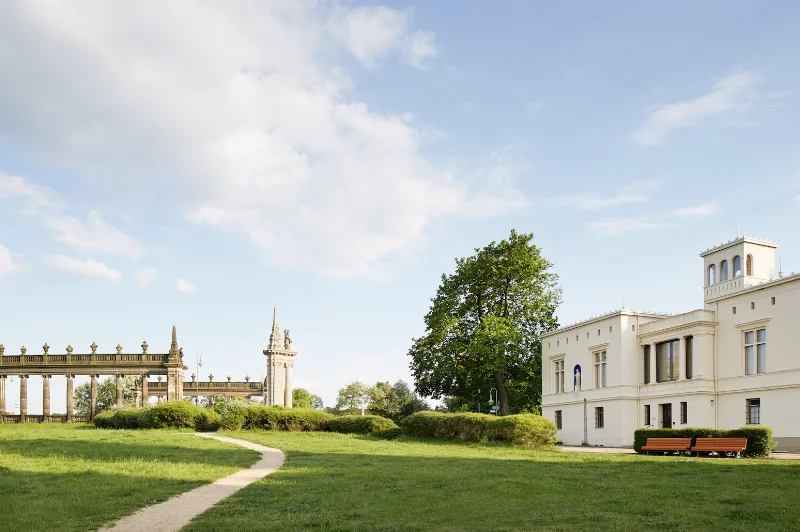
Berliner Str. 86, Potsdam-Nördliche Vorstadt
Berliner Str. 86, 14467 Potsdam, Germany
Villa Schöningen | Opening Hours & Program
Villa Schöningen is one of the special addresses in Potsdam, as it combines architecture, contemporary history, contemporary art, and a café with a park view in one place. The house is located directly at the Glienicke Bridge, one of the most famous crossings between Berlin and Potsdam, thus connecting the atmosphere of a historical site with a vibrant cultural program. Those searching for villa schöningen potsdam, villa schöningen history, or villa schöningen program usually want to experience this mixture of exhibition, memorial culture, and quality of stay. The villa is established as a place for art and remembrance, is used today for changing exhibitions, guided tours, readings, concerts, and drawing courses, and is also a café with a relaxed garden setting. This makes it interesting not only for art fans but also for visitors looking for a special stop at the Glienicke Bridge. ([villa-schoeningen.de](https://villa-schoeningen.de/en/about/))
Opening Hours, Admission, and Current Exhibition
The current visiting situation of Villa Schöningen is clearly aimed at a quiet, focused exhibition visit. The official visiting page states that the exhibition is open seasonally: In winter, it is open from Friday to Sunday from 11 AM to 5 PM, and in summer from Friday to Sunday from 12 PM to 6 PM. Additionally, the website regularly mentions an admission fee of 8 euros, reduced 5 euros, with free admission for under-18s, Kultür members, and recipients of citizen money. For all those searching for villa schöningen opening hours or villa schöningen current exhibition, this combination is important: The villa is not just a random transit point, but a consciously curated cultural site, whose times are oriented towards exhibition and season. The official website also recommends checking the current notices before visiting, as times and programs may change depending on the exhibition and season. ([villa-schoeningen.de](https://villa-schoeningen.de/en/visit/))
Currently, the exhibition Traces of the Body is the focus. Villa Schöningen describes it as the first solo exhibition of the American artist Kylie Manning in Germany. Her painting moves between figuration and abstraction; bodies appear as traces that dissolve in layers of color and light. Especially for visitors who expect not only beautiful impressions but also a content-rich art tour when searching for villa schöningen photos or villa schöningen program, this is a convincing anchor. The works enter into dialogue with historical positions such as Jan Brueghel II, Marina Abramović, or Anselm Kiefer. This creates not only a pure showcase of works but a space about visibility, memory, and the representation of the human body. This mixture of contemporary art and art-historical references is typical for the house and explains why Villa Schöningen is perceived so independently in the cultural landscape of Berlin and Potsdam. ([villa-schoeningen.de](https://villa-schoeningen.de/en/visit/))
Those who have more time can meaningfully combine their exhibition visit with a guided tour. The official website mentions historical tours lasting 30 to 45 minutes as well as curatorial tours. Additionally, a tour of Villa Schlieffen is offered monthly on weekends, showing that Villa Schöningen is not just a single house, but part of a larger historical and curatorial context. Especially for guests looking for a well-founded classification, this is an important detail: The house conveys history not only through display boards but through conversations, mediation, and program formats. In combination with the admission price, the offer remains deliberately low-threshold. So, those who want to see the current exhibition get not only a short stop but a thoughtful visit with optionality between free viewing and in-depth accompaniment. ([villa-schoeningen.de](https://villa-schoeningen.de/en/visit/))
Café in Villa Schöningen: Opening Hours, Offer, and Atmosphere
The café is a central part of the search interest around villa schöningen café and villa schöningen café opening hours, as many people come not only for the exhibition but also for the special break situation by the water and the park. According to the official visiting page, the café is operated by Pedales. It offers soups, salads, and a wide selection of homemade organic cakes throughout the day. The dishes are prepared daily fresh from natural ingredients, and the website emphasizes sustainability, organic quality, and regionality. The coffee is also consciously curated and comes from the Potsdam roastery die espressonisten. This is more than just practical catering: The café is intended as an independent place to stay, where exhibition, garden, and view of the landscape interact. For many guests, this relaxed combination of culture and gastronomy is the reason why they choose Villa Schöningen as a destination. ([villa-schoeningen.de](https://villa-schoeningen.de/en/visit/))
The café's opening hours are also organized seasonally. In summer, it is open from Tuesday to Sunday from 11 AM to 6 PM, and in winter from Friday to Sunday from 11 AM to 5 PM. This slightly differs from the exhibition and underscores that Villa Schöningen is embedded in the rhythms of the year. Visitors planning their trip around Glienicke Bridge, park, and exhibition should therefore keep an eye on the current season. It is also positive that the café is wheelchair accessible and leashed dogs are welcome. This makes the place attractive for very different target groups: for families, for walkers, for art visitors, and for people looking for a quiet place with a good view. The official site explicitly describes the café as a place to relax before or after the exhibition visit, which confirms exactly the function that many expect when searching for villa schöningen potsdam café. ([villa-schoeningen.de](https://villa-schoeningen.de/en/visit/))
In the perception of many guests, the atmosphere of the café is almost as important as the culinary offer itself. The view of the historic park, the immediate location at a historically significant site, and the connection to art and memorial culture create an unusually dense atmosphere. Villa Schöningen is thus not a classic museum café and not just a daytime gastronomy, but a place with quality of stay where one consciously stays longer. Especially on days with exhibitions, tours, or concerts, the café becomes a meeting point between the program points. Those who are on the way at Glienicke Bridge and only plan a short coffee often stay longer because the surroundings and the house itself tell so much. This combination of a quiet garden location, fresh cuisine, and cultural context is a key reason why the café plays such a strong role in the perception of the villa. ([villa-schoeningen.de](https://villa-schoeningen.de/en/visit/))
History of Villa Schöningen at Glienicke Bridge
The history of Villa Schöningen is closely linked to Potsdam's landscape and building history of the 19th century. According to the official history, the documented use of the property began in 1818 when the Potsdam shipbuilder Martin Nüssoll acquired a vacant lot at Glienicke Bridge. In 1826, he had a two-story house built there, which changed owners again in 1832. In 1843, Kurd Wolfgang Schöning, the court marshal of Prince Carl of Prussia, purchased the property with the house and expanded it with adjacent garden areas. Between 1843 and 1845, the building was converted into a villa by the architect Ludwig Persius, with King Friedrich Wilhelm IV. significantly influencing the design. This section is particularly important for the historical classification because it shows Villa Schöningen as part of that Potsdam cultural landscape that later became a UNESCO environment. The villa is therefore not just a beautiful house but a place consciously woven into garden and architectural history. ([villa-schoeningen.de](https://villa-schoeningen.de/en/history/))
Subsequently, the estate passed through various bourgeois and Jewish ownerships. After Schöning and his heirs, it came into other hands in 1864, Moritz Jacoby acquired the villa in 1871, and from 1877 the Wallich family lived there. Hermann Wallich expanded the grounds in 1881 and 1882 with neighboring parcels and had a larger stable building with a coachman's apartment constructed. From 1888 to 1889, the villa was redesigned by Ernst von Ihne, and later Paul and Hildegard Wallich moved in. The history is then painfully interrupted by the Nazi era: Paul Wallich transferred the villa to his non-Jewish wife Hildegard in 1931, he died in 1938 under the impression of the Reich pogrom night, and in 1939 Hildegard emigrated to the USA. During the war years, the villa served as quarters for personnel, NSDAP library, and military office; in 1945 it was confiscated by the Red Army and used as a hospital for wounded Russian soldiers. This sequence makes it clear how strongly the villa carries the political ruptures of the 20th century within it. ([villa-schoeningen.de](https://villa-schoeningen.de/en/history/))
After 1950, the function of the house changed again: The FDGB established a children's home, where around 100 children and adolescents lived at times. With the construction of the Wall in 1961, the villa was located in the Potsdam border protection area. In 1983, it became the property of the GDR, and in 1989, shortly after the fall of the Wall, the Glienicke Bridge was reopened for all persons and general vehicle traffic. The bridge thus became a symbol of German unity. In 1993, the children's home was dissolved, and in 1994, the villa returned to the Wallich heirs at the initiative of the city of Potsdam. After further decay, Dieter Graalfs acquired the house in 1995, but plans for city villas failed. In 2007, Mathias Döpfner and Leonhard Fischer bought the villa and had it renovated in accordance with monument protection. In 2009, Villa Schöningen opened as an exhibition house in the presence of Angela Merkel, Radoslaw Sikorski, Henry Kissinger, Mikhail Gorbachev, and Hans-Dietrich Genscher. The fact that the house has been on the monument list of the state of Brandenburg since 1977 and has been part of the UNESCO World Heritage Sites of Palaces and Parks of Potsdam and Berlin since 1996 finally classifies the place as international cultural heritage. ([villa-schoeningen.de](https://villa-schoeningen.de/en/history/))
Program, Concerts, and Jazz at Villa Schöningen
Those searching for villa schöningen program, villa schöningen concerts, or villa schöningen jazz will find a house that offers far more than classic exhibition spaces. The official mission describes Villa Schöningen as a place for changing exhibitions of contemporary art alongside works of old masters. Additionally, there are guided tours, readings, concerts, and drawing courses. What is crucial is not only the mixture of formats but also the idea behind it: The villa aims to be a lively place for art, social dialogue, and freedom, both nationally and internationally. The program is therefore not random but curatorially designed for exchange. The substantive work with the Döpfner Collection is also significant, as the collection includes around 650 works focusing on the female nude and ranges from sculpture, painting, and photography to video and performance. This creates a profile that is visually strong, art-historically grounded, and socially relevant. ([villa-schoeningen.de](https://villa-schoeningen.de/en/about/))
The calendar shows how versatile this claim is implemented in everyday life. In addition to current exhibitions, the villa lists curator-led tours, historical tours, figure drawing, readings, and salon evenings. For music enthusiasts, especially the formats that include jazz-related or improvisation-oriented ensembles are relevant. On the calendar page, there are evenings with Carmen Jaime and Michael Gechter Trio, where jazz, blues, and rock are played in their own arrangements, as well as other trio and salon formats. The website also emphasizes that admission to current exhibitions is included in the ticket price for some concerts. For visitors, this means: A concert at Villa Schöningen is rarely just a concert but almost always also a combined cultural evening with an exhibition visit and stay character. So, those specifically asking for villa schöningen jazz or villa schöningen concerts will find here not a pure music house but a versatile cultural address with a strong focus on atmosphere and context. ([villa-schoeningen.de](https://villa-schoeningen.de/en/kalender/?utm_source=openai))
It is precisely this intertwining of visual art and music that makes the program appealing. An evening at the villa can begin with a guided tour, lead through the exhibition, and end in a concert or salon. This is not only organizationally clever but also corresponds to the historical identity of the house: Villa Schöningen has always been a place of transitions, border experiences, and changing uses. That cultural programs, readings, and jazz evenings take place there today is therefore more than just an event strategy. It is a conscious continuation of the local history using contemporary means. For guests looking for a programmatic added value, this is a strong argument for a visit, as here art, conversation, and music do not stand side by side but reinforce each other. ([villa-schoeningen.de](https://villa-schoeningen.de/en/about/))
Directions, Public Transport, and Accessibility
The location of Villa Schöningen is one of its greatest advantages and at the same time an essential part of its identity. The address is Berliner Straße 86 in 14467 Potsdam, directly at the Glienicke Bridge. For public transport directions, the official visiting page provides clear guidance: From Berlin Central Station, take RE 1 or S 7 to S Wannsee and then bus 316 to Glienicke Bridge. From Potsdam Central Station, take tram 93 to Glienicke Bridge. For driving directions, the website explains from Berlin via the A115 to the Wannsee exit and then via Potsdamer Chaussee to Glienicke Bridge; from Brandenburg, it goes via the A115 to Dreieck Potsdam/Babelsberg and further via Berliner Straße. Those searching for villa schöningen berliner straße potsdam-nördliche vorstadt thus receive a precise location logic: The villa is exactly where Potsdam and Berlin meet at the historical crossing. ([villa-schoeningen.de](https://villa-schoeningen.de/en/visit/))
The accessibility is also clearly described. For reasons of monument protection, the exhibition house is not wheelchair accessible. At the same time, guide dogs and assistance dogs are welcome on the premises and in the art exhibition, and accompanying persons have free admission. The café, however, is wheelchair accessible according to the official website. For many visitors, this is important as they may need to plan their visit, exhibition, and café differently. Villa Schöningen is located in an area that is historically heavily burdened and at the same time very attractive in terms of landscape. Therefore, it is advisable to check the official site again before visiting and to plan additional time for guided tours or concert evenings. The place itself is compact, but due to its location in the bridge area and in the historical context of the former inner-German border strip, it has a very dense atmosphere. This mixture makes the journey not only practical but also a part of the visit experience in terms of content. ([villa-schoeningen.de](https://villa-schoeningen.de/en/visit/))
Owners, Event Location, Photos, and Weddings
For search queries like villa schöningen owner or villa schöningen wedding, it is helpful to understand the official ownership and usage situation precisely. The imprint names Villa Schöningen eGbR as the operator. The website also explains that the preservation and exhibition operation are made possible by private support from Mathias Döpfner. The history notes that Mathias Döpfner and Leonhard Fischer bought the villa in 2007 and had it renovated in accordance with monument protection. This information shows that Villa Schöningen does not function as a municipal large museum but as a privately supported cultural site. At the same time, the public orientation remains clear: Exhibitions, guided tours, readings, and concerts are at the center, and the place is explicitly designed for cultural mediation. So, those looking for a responsible operator or the structure behind the house will find here a mix of private responsibility, public accessibility, and curatorial ambition. ([villa-schoeningen.de](https://villa-schoeningen.de/impressum/?utm_source=openai))
The villa is indeed bookable for events, but with clear limits. The official visiting page states that Villa Schöningen can be rented for cultural events and corporate events, but is not available for weddings. This is particularly important for SEO searches related to weddings, as the place feels festive and exclusive but is not marketed as a classic wedding venue. On the other hand, those searching for villa schöningen photos will find many image galleries on the website related to exhibitions, artist positions, garden, house, and events. The site is strongly visually oriented and conveys the character of the place through photography and images of works. Together with the precise address on Berliner Straße and the proximity to Glienicke Bridge, a picture emerges that clearly targets culture, history, and atmosphere. This combination explains why Villa Schöningen is so often searched in Potsdam: It is not just a building but a place where one can see history, experience art, drink coffee, and absorb the special feeling of a border and garden space at the same time. ([villa-schoeningen.de](https://villa-schoeningen.de/en/visit/))
Sources:
Show moreShow less
Villa Schöningen | Opening Hours & Program
Villa Schöningen is one of the special addresses in Potsdam, as it combines architecture, contemporary history, contemporary art, and a café with a park view in one place. The house is located directly at the Glienicke Bridge, one of the most famous crossings between Berlin and Potsdam, thus connecting the atmosphere of a historical site with a vibrant cultural program. Those searching for villa schöningen potsdam, villa schöningen history, or villa schöningen program usually want to experience this mixture of exhibition, memorial culture, and quality of stay. The villa is established as a place for art and remembrance, is used today for changing exhibitions, guided tours, readings, concerts, and drawing courses, and is also a café with a relaxed garden setting. This makes it interesting not only for art fans but also for visitors looking for a special stop at the Glienicke Bridge. ([villa-schoeningen.de](https://villa-schoeningen.de/en/about/))
Opening Hours, Admission, and Current Exhibition
The current visiting situation of Villa Schöningen is clearly aimed at a quiet, focused exhibition visit. The official visiting page states that the exhibition is open seasonally: In winter, it is open from Friday to Sunday from 11 AM to 5 PM, and in summer from Friday to Sunday from 12 PM to 6 PM. Additionally, the website regularly mentions an admission fee of 8 euros, reduced 5 euros, with free admission for under-18s, Kultür members, and recipients of citizen money. For all those searching for villa schöningen opening hours or villa schöningen current exhibition, this combination is important: The villa is not just a random transit point, but a consciously curated cultural site, whose times are oriented towards exhibition and season. The official website also recommends checking the current notices before visiting, as times and programs may change depending on the exhibition and season. ([villa-schoeningen.de](https://villa-schoeningen.de/en/visit/))
Currently, the exhibition Traces of the Body is the focus. Villa Schöningen describes it as the first solo exhibition of the American artist Kylie Manning in Germany. Her painting moves between figuration and abstraction; bodies appear as traces that dissolve in layers of color and light. Especially for visitors who expect not only beautiful impressions but also a content-rich art tour when searching for villa schöningen photos or villa schöningen program, this is a convincing anchor. The works enter into dialogue with historical positions such as Jan Brueghel II, Marina Abramović, or Anselm Kiefer. This creates not only a pure showcase of works but a space about visibility, memory, and the representation of the human body. This mixture of contemporary art and art-historical references is typical for the house and explains why Villa Schöningen is perceived so independently in the cultural landscape of Berlin and Potsdam. ([villa-schoeningen.de](https://villa-schoeningen.de/en/visit/))
Those who have more time can meaningfully combine their exhibition visit with a guided tour. The official website mentions historical tours lasting 30 to 45 minutes as well as curatorial tours. Additionally, a tour of Villa Schlieffen is offered monthly on weekends, showing that Villa Schöningen is not just a single house, but part of a larger historical and curatorial context. Especially for guests looking for a well-founded classification, this is an important detail: The house conveys history not only through display boards but through conversations, mediation, and program formats. In combination with the admission price, the offer remains deliberately low-threshold. So, those who want to see the current exhibition get not only a short stop but a thoughtful visit with optionality between free viewing and in-depth accompaniment. ([villa-schoeningen.de](https://villa-schoeningen.de/en/visit/))
Café in Villa Schöningen: Opening Hours, Offer, and Atmosphere
The café is a central part of the search interest around villa schöningen café and villa schöningen café opening hours, as many people come not only for the exhibition but also for the special break situation by the water and the park. According to the official visiting page, the café is operated by Pedales. It offers soups, salads, and a wide selection of homemade organic cakes throughout the day. The dishes are prepared daily fresh from natural ingredients, and the website emphasizes sustainability, organic quality, and regionality. The coffee is also consciously curated and comes from the Potsdam roastery die espressonisten. This is more than just practical catering: The café is intended as an independent place to stay, where exhibition, garden, and view of the landscape interact. For many guests, this relaxed combination of culture and gastronomy is the reason why they choose Villa Schöningen as a destination. ([villa-schoeningen.de](https://villa-schoeningen.de/en/visit/))
The café's opening hours are also organized seasonally. In summer, it is open from Tuesday to Sunday from 11 AM to 6 PM, and in winter from Friday to Sunday from 11 AM to 5 PM. This slightly differs from the exhibition and underscores that Villa Schöningen is embedded in the rhythms of the year. Visitors planning their trip around Glienicke Bridge, park, and exhibition should therefore keep an eye on the current season. It is also positive that the café is wheelchair accessible and leashed dogs are welcome. This makes the place attractive for very different target groups: for families, for walkers, for art visitors, and for people looking for a quiet place with a good view. The official site explicitly describes the café as a place to relax before or after the exhibition visit, which confirms exactly the function that many expect when searching for villa schöningen potsdam café. ([villa-schoeningen.de](https://villa-schoeningen.de/en/visit/))
In the perception of many guests, the atmosphere of the café is almost as important as the culinary offer itself. The view of the historic park, the immediate location at a historically significant site, and the connection to art and memorial culture create an unusually dense atmosphere. Villa Schöningen is thus not a classic museum café and not just a daytime gastronomy, but a place with quality of stay where one consciously stays longer. Especially on days with exhibitions, tours, or concerts, the café becomes a meeting point between the program points. Those who are on the way at Glienicke Bridge and only plan a short coffee often stay longer because the surroundings and the house itself tell so much. This combination of a quiet garden location, fresh cuisine, and cultural context is a key reason why the café plays such a strong role in the perception of the villa. ([villa-schoeningen.de](https://villa-schoeningen.de/en/visit/))
History of Villa Schöningen at Glienicke Bridge
The history of Villa Schöningen is closely linked to Potsdam's landscape and building history of the 19th century. According to the official history, the documented use of the property began in 1818 when the Potsdam shipbuilder Martin Nüssoll acquired a vacant lot at Glienicke Bridge. In 1826, he had a two-story house built there, which changed owners again in 1832. In 1843, Kurd Wolfgang Schöning, the court marshal of Prince Carl of Prussia, purchased the property with the house and expanded it with adjacent garden areas. Between 1843 and 1845, the building was converted into a villa by the architect Ludwig Persius, with King Friedrich Wilhelm IV. significantly influencing the design. This section is particularly important for the historical classification because it shows Villa Schöningen as part of that Potsdam cultural landscape that later became a UNESCO environment. The villa is therefore not just a beautiful house but a place consciously woven into garden and architectural history. ([villa-schoeningen.de](https://villa-schoeningen.de/en/history/))
Subsequently, the estate passed through various bourgeois and Jewish ownerships. After Schöning and his heirs, it came into other hands in 1864, Moritz Jacoby acquired the villa in 1871, and from 1877 the Wallich family lived there. Hermann Wallich expanded the grounds in 1881 and 1882 with neighboring parcels and had a larger stable building with a coachman's apartment constructed. From 1888 to 1889, the villa was redesigned by Ernst von Ihne, and later Paul and Hildegard Wallich moved in. The history is then painfully interrupted by the Nazi era: Paul Wallich transferred the villa to his non-Jewish wife Hildegard in 1931, he died in 1938 under the impression of the Reich pogrom night, and in 1939 Hildegard emigrated to the USA. During the war years, the villa served as quarters for personnel, NSDAP library, and military office; in 1945 it was confiscated by the Red Army and used as a hospital for wounded Russian soldiers. This sequence makes it clear how strongly the villa carries the political ruptures of the 20th century within it. ([villa-schoeningen.de](https://villa-schoeningen.de/en/history/))
After 1950, the function of the house changed again: The FDGB established a children's home, where around 100 children and adolescents lived at times. With the construction of the Wall in 1961, the villa was located in the Potsdam border protection area. In 1983, it became the property of the GDR, and in 1989, shortly after the fall of the Wall, the Glienicke Bridge was reopened for all persons and general vehicle traffic. The bridge thus became a symbol of German unity. In 1993, the children's home was dissolved, and in 1994, the villa returned to the Wallich heirs at the initiative of the city of Potsdam. After further decay, Dieter Graalfs acquired the house in 1995, but plans for city villas failed. In 2007, Mathias Döpfner and Leonhard Fischer bought the villa and had it renovated in accordance with monument protection. In 2009, Villa Schöningen opened as an exhibition house in the presence of Angela Merkel, Radoslaw Sikorski, Henry Kissinger, Mikhail Gorbachev, and Hans-Dietrich Genscher. The fact that the house has been on the monument list of the state of Brandenburg since 1977 and has been part of the UNESCO World Heritage Sites of Palaces and Parks of Potsdam and Berlin since 1996 finally classifies the place as international cultural heritage. ([villa-schoeningen.de](https://villa-schoeningen.de/en/history/))
Program, Concerts, and Jazz at Villa Schöningen
Those searching for villa schöningen program, villa schöningen concerts, or villa schöningen jazz will find a house that offers far more than classic exhibition spaces. The official mission describes Villa Schöningen as a place for changing exhibitions of contemporary art alongside works of old masters. Additionally, there are guided tours, readings, concerts, and drawing courses. What is crucial is not only the mixture of formats but also the idea behind it: The villa aims to be a lively place for art, social dialogue, and freedom, both nationally and internationally. The program is therefore not random but curatorially designed for exchange. The substantive work with the Döpfner Collection is also significant, as the collection includes around 650 works focusing on the female nude and ranges from sculpture, painting, and photography to video and performance. This creates a profile that is visually strong, art-historically grounded, and socially relevant. ([villa-schoeningen.de](https://villa-schoeningen.de/en/about/))
The calendar shows how versatile this claim is implemented in everyday life. In addition to current exhibitions, the villa lists curator-led tours, historical tours, figure drawing, readings, and salon evenings. For music enthusiasts, especially the formats that include jazz-related or improvisation-oriented ensembles are relevant. On the calendar page, there are evenings with Carmen Jaime and Michael Gechter Trio, where jazz, blues, and rock are played in their own arrangements, as well as other trio and salon formats. The website also emphasizes that admission to current exhibitions is included in the ticket price for some concerts. For visitors, this means: A concert at Villa Schöningen is rarely just a concert but almost always also a combined cultural evening with an exhibition visit and stay character. So, those specifically asking for villa schöningen jazz or villa schöningen concerts will find here not a pure music house but a versatile cultural address with a strong focus on atmosphere and context. ([villa-schoeningen.de](https://villa-schoeningen.de/en/kalender/?utm_source=openai))
It is precisely this intertwining of visual art and music that makes the program appealing. An evening at the villa can begin with a guided tour, lead through the exhibition, and end in a concert or salon. This is not only organizationally clever but also corresponds to the historical identity of the house: Villa Schöningen has always been a place of transitions, border experiences, and changing uses. That cultural programs, readings, and jazz evenings take place there today is therefore more than just an event strategy. It is a conscious continuation of the local history using contemporary means. For guests looking for a programmatic added value, this is a strong argument for a visit, as here art, conversation, and music do not stand side by side but reinforce each other. ([villa-schoeningen.de](https://villa-schoeningen.de/en/about/))
Directions, Public Transport, and Accessibility
The location of Villa Schöningen is one of its greatest advantages and at the same time an essential part of its identity. The address is Berliner Straße 86 in 14467 Potsdam, directly at the Glienicke Bridge. For public transport directions, the official visiting page provides clear guidance: From Berlin Central Station, take RE 1 or S 7 to S Wannsee and then bus 316 to Glienicke Bridge. From Potsdam Central Station, take tram 93 to Glienicke Bridge. For driving directions, the website explains from Berlin via the A115 to the Wannsee exit and then via Potsdamer Chaussee to Glienicke Bridge; from Brandenburg, it goes via the A115 to Dreieck Potsdam/Babelsberg and further via Berliner Straße. Those searching for villa schöningen berliner straße potsdam-nördliche vorstadt thus receive a precise location logic: The villa is exactly where Potsdam and Berlin meet at the historical crossing. ([villa-schoeningen.de](https://villa-schoeningen.de/en/visit/))
The accessibility is also clearly described. For reasons of monument protection, the exhibition house is not wheelchair accessible. At the same time, guide dogs and assistance dogs are welcome on the premises and in the art exhibition, and accompanying persons have free admission. The café, however, is wheelchair accessible according to the official website. For many visitors, this is important as they may need to plan their visit, exhibition, and café differently. Villa Schöningen is located in an area that is historically heavily burdened and at the same time very attractive in terms of landscape. Therefore, it is advisable to check the official site again before visiting and to plan additional time for guided tours or concert evenings. The place itself is compact, but due to its location in the bridge area and in the historical context of the former inner-German border strip, it has a very dense atmosphere. This mixture makes the journey not only practical but also a part of the visit experience in terms of content. ([villa-schoeningen.de](https://villa-schoeningen.de/en/visit/))
Owners, Event Location, Photos, and Weddings
For search queries like villa schöningen owner or villa schöningen wedding, it is helpful to understand the official ownership and usage situation precisely. The imprint names Villa Schöningen eGbR as the operator. The website also explains that the preservation and exhibition operation are made possible by private support from Mathias Döpfner. The history notes that Mathias Döpfner and Leonhard Fischer bought the villa in 2007 and had it renovated in accordance with monument protection. This information shows that Villa Schöningen does not function as a municipal large museum but as a privately supported cultural site. At the same time, the public orientation remains clear: Exhibitions, guided tours, readings, and concerts are at the center, and the place is explicitly designed for cultural mediation. So, those looking for a responsible operator or the structure behind the house will find here a mix of private responsibility, public accessibility, and curatorial ambition. ([villa-schoeningen.de](https://villa-schoeningen.de/impressum/?utm_source=openai))
The villa is indeed bookable for events, but with clear limits. The official visiting page states that Villa Schöningen can be rented for cultural events and corporate events, but is not available for weddings. This is particularly important for SEO searches related to weddings, as the place feels festive and exclusive but is not marketed as a classic wedding venue. On the other hand, those searching for villa schöningen photos will find many image galleries on the website related to exhibitions, artist positions, garden, house, and events. The site is strongly visually oriented and conveys the character of the place through photography and images of works. Together with the precise address on Berliner Straße and the proximity to Glienicke Bridge, a picture emerges that clearly targets culture, history, and atmosphere. This combination explains why Villa Schöningen is so often searched in Potsdam: It is not just a building but a place where one can see history, experience art, drink coffee, and absorb the special feeling of a border and garden space at the same time. ([villa-schoeningen.de](https://villa-schoeningen.de/en/visit/))
Sources:
Villa Schöningen | Opening Hours & Program
Villa Schöningen is one of the special addresses in Potsdam, as it combines architecture, contemporary history, contemporary art, and a café with a park view in one place. The house is located directly at the Glienicke Bridge, one of the most famous crossings between Berlin and Potsdam, thus connecting the atmosphere of a historical site with a vibrant cultural program. Those searching for villa schöningen potsdam, villa schöningen history, or villa schöningen program usually want to experience this mixture of exhibition, memorial culture, and quality of stay. The villa is established as a place for art and remembrance, is used today for changing exhibitions, guided tours, readings, concerts, and drawing courses, and is also a café with a relaxed garden setting. This makes it interesting not only for art fans but also for visitors looking for a special stop at the Glienicke Bridge. ([villa-schoeningen.de](https://villa-schoeningen.de/en/about/))
Opening Hours, Admission, and Current Exhibition
The current visiting situation of Villa Schöningen is clearly aimed at a quiet, focused exhibition visit. The official visiting page states that the exhibition is open seasonally: In winter, it is open from Friday to Sunday from 11 AM to 5 PM, and in summer from Friday to Sunday from 12 PM to 6 PM. Additionally, the website regularly mentions an admission fee of 8 euros, reduced 5 euros, with free admission for under-18s, Kultür members, and recipients of citizen money. For all those searching for villa schöningen opening hours or villa schöningen current exhibition, this combination is important: The villa is not just a random transit point, but a consciously curated cultural site, whose times are oriented towards exhibition and season. The official website also recommends checking the current notices before visiting, as times and programs may change depending on the exhibition and season. ([villa-schoeningen.de](https://villa-schoeningen.de/en/visit/))
Currently, the exhibition Traces of the Body is the focus. Villa Schöningen describes it as the first solo exhibition of the American artist Kylie Manning in Germany. Her painting moves between figuration and abstraction; bodies appear as traces that dissolve in layers of color and light. Especially for visitors who expect not only beautiful impressions but also a content-rich art tour when searching for villa schöningen photos or villa schöningen program, this is a convincing anchor. The works enter into dialogue with historical positions such as Jan Brueghel II, Marina Abramović, or Anselm Kiefer. This creates not only a pure showcase of works but a space about visibility, memory, and the representation of the human body. This mixture of contemporary art and art-historical references is typical for the house and explains why Villa Schöningen is perceived so independently in the cultural landscape of Berlin and Potsdam. ([villa-schoeningen.de](https://villa-schoeningen.de/en/visit/))
Those who have more time can meaningfully combine their exhibition visit with a guided tour. The official website mentions historical tours lasting 30 to 45 minutes as well as curatorial tours. Additionally, a tour of Villa Schlieffen is offered monthly on weekends, showing that Villa Schöningen is not just a single house, but part of a larger historical and curatorial context. Especially for guests looking for a well-founded classification, this is an important detail: The house conveys history not only through display boards but through conversations, mediation, and program formats. In combination with the admission price, the offer remains deliberately low-threshold. So, those who want to see the current exhibition get not only a short stop but a thoughtful visit with optionality between free viewing and in-depth accompaniment. ([villa-schoeningen.de](https://villa-schoeningen.de/en/visit/))
Café in Villa Schöningen: Opening Hours, Offer, and Atmosphere
The café is a central part of the search interest around villa schöningen café and villa schöningen café opening hours, as many people come not only for the exhibition but also for the special break situation by the water and the park. According to the official visiting page, the café is operated by Pedales. It offers soups, salads, and a wide selection of homemade organic cakes throughout the day. The dishes are prepared daily fresh from natural ingredients, and the website emphasizes sustainability, organic quality, and regionality. The coffee is also consciously curated and comes from the Potsdam roastery die espressonisten. This is more than just practical catering: The café is intended as an independent place to stay, where exhibition, garden, and view of the landscape interact. For many guests, this relaxed combination of culture and gastronomy is the reason why they choose Villa Schöningen as a destination. ([villa-schoeningen.de](https://villa-schoeningen.de/en/visit/))
The café's opening hours are also organized seasonally. In summer, it is open from Tuesday to Sunday from 11 AM to 6 PM, and in winter from Friday to Sunday from 11 AM to 5 PM. This slightly differs from the exhibition and underscores that Villa Schöningen is embedded in the rhythms of the year. Visitors planning their trip around Glienicke Bridge, park, and exhibition should therefore keep an eye on the current season. It is also positive that the café is wheelchair accessible and leashed dogs are welcome. This makes the place attractive for very different target groups: for families, for walkers, for art visitors, and for people looking for a quiet place with a good view. The official site explicitly describes the café as a place to relax before or after the exhibition visit, which confirms exactly the function that many expect when searching for villa schöningen potsdam café. ([villa-schoeningen.de](https://villa-schoeningen.de/en/visit/))
In the perception of many guests, the atmosphere of the café is almost as important as the culinary offer itself. The view of the historic park, the immediate location at a historically significant site, and the connection to art and memorial culture create an unusually dense atmosphere. Villa Schöningen is thus not a classic museum café and not just a daytime gastronomy, but a place with quality of stay where one consciously stays longer. Especially on days with exhibitions, tours, or concerts, the café becomes a meeting point between the program points. Those who are on the way at Glienicke Bridge and only plan a short coffee often stay longer because the surroundings and the house itself tell so much. This combination of a quiet garden location, fresh cuisine, and cultural context is a key reason why the café plays such a strong role in the perception of the villa. ([villa-schoeningen.de](https://villa-schoeningen.de/en/visit/))
History of Villa Schöningen at Glienicke Bridge
The history of Villa Schöningen is closely linked to Potsdam's landscape and building history of the 19th century. According to the official history, the documented use of the property began in 1818 when the Potsdam shipbuilder Martin Nüssoll acquired a vacant lot at Glienicke Bridge. In 1826, he had a two-story house built there, which changed owners again in 1832. In 1843, Kurd Wolfgang Schöning, the court marshal of Prince Carl of Prussia, purchased the property with the house and expanded it with adjacent garden areas. Between 1843 and 1845, the building was converted into a villa by the architect Ludwig Persius, with King Friedrich Wilhelm IV. significantly influencing the design. This section is particularly important for the historical classification because it shows Villa Schöningen as part of that Potsdam cultural landscape that later became a UNESCO environment. The villa is therefore not just a beautiful house but a place consciously woven into garden and architectural history. ([villa-schoeningen.de](https://villa-schoeningen.de/en/history/))
Subsequently, the estate passed through various bourgeois and Jewish ownerships. After Schöning and his heirs, it came into other hands in 1864, Moritz Jacoby acquired the villa in 1871, and from 1877 the Wallich family lived there. Hermann Wallich expanded the grounds in 1881 and 1882 with neighboring parcels and had a larger stable building with a coachman's apartment constructed. From 1888 to 1889, the villa was redesigned by Ernst von Ihne, and later Paul and Hildegard Wallich moved in. The history is then painfully interrupted by the Nazi era: Paul Wallich transferred the villa to his non-Jewish wife Hildegard in 1931, he died in 1938 under the impression of the Reich pogrom night, and in 1939 Hildegard emigrated to the USA. During the war years, the villa served as quarters for personnel, NSDAP library, and military office; in 1945 it was confiscated by the Red Army and used as a hospital for wounded Russian soldiers. This sequence makes it clear how strongly the villa carries the political ruptures of the 20th century within it. ([villa-schoeningen.de](https://villa-schoeningen.de/en/history/))
After 1950, the function of the house changed again: The FDGB established a children's home, where around 100 children and adolescents lived at times. With the construction of the Wall in 1961, the villa was located in the Potsdam border protection area. In 1983, it became the property of the GDR, and in 1989, shortly after the fall of the Wall, the Glienicke Bridge was reopened for all persons and general vehicle traffic. The bridge thus became a symbol of German unity. In 1993, the children's home was dissolved, and in 1994, the villa returned to the Wallich heirs at the initiative of the city of Potsdam. After further decay, Dieter Graalfs acquired the house in 1995, but plans for city villas failed. In 2007, Mathias Döpfner and Leonhard Fischer bought the villa and had it renovated in accordance with monument protection. In 2009, Villa Schöningen opened as an exhibition house in the presence of Angela Merkel, Radoslaw Sikorski, Henry Kissinger, Mikhail Gorbachev, and Hans-Dietrich Genscher. The fact that the house has been on the monument list of the state of Brandenburg since 1977 and has been part of the UNESCO World Heritage Sites of Palaces and Parks of Potsdam and Berlin since 1996 finally classifies the place as international cultural heritage. ([villa-schoeningen.de](https://villa-schoeningen.de/en/history/))
Program, Concerts, and Jazz at Villa Schöningen
Those searching for villa schöningen program, villa schöningen concerts, or villa schöningen jazz will find a house that offers far more than classic exhibition spaces. The official mission describes Villa Schöningen as a place for changing exhibitions of contemporary art alongside works of old masters. Additionally, there are guided tours, readings, concerts, and drawing courses. What is crucial is not only the mixture of formats but also the idea behind it: The villa aims to be a lively place for art, social dialogue, and freedom, both nationally and internationally. The program is therefore not random but curatorially designed for exchange. The substantive work with the Döpfner Collection is also significant, as the collection includes around 650 works focusing on the female nude and ranges from sculpture, painting, and photography to video and performance. This creates a profile that is visually strong, art-historically grounded, and socially relevant. ([villa-schoeningen.de](https://villa-schoeningen.de/en/about/))
The calendar shows how versatile this claim is implemented in everyday life. In addition to current exhibitions, the villa lists curator-led tours, historical tours, figure drawing, readings, and salon evenings. For music enthusiasts, especially the formats that include jazz-related or improvisation-oriented ensembles are relevant. On the calendar page, there are evenings with Carmen Jaime and Michael Gechter Trio, where jazz, blues, and rock are played in their own arrangements, as well as other trio and salon formats. The website also emphasizes that admission to current exhibitions is included in the ticket price for some concerts. For visitors, this means: A concert at Villa Schöningen is rarely just a concert but almost always also a combined cultural evening with an exhibition visit and stay character. So, those specifically asking for villa schöningen jazz or villa schöningen concerts will find here not a pure music house but a versatile cultural address with a strong focus on atmosphere and context. ([villa-schoeningen.de](https://villa-schoeningen.de/en/kalender/?utm_source=openai))
It is precisely this intertwining of visual art and music that makes the program appealing. An evening at the villa can begin with a guided tour, lead through the exhibition, and end in a concert or salon. This is not only organizationally clever but also corresponds to the historical identity of the house: Villa Schöningen has always been a place of transitions, border experiences, and changing uses. That cultural programs, readings, and jazz evenings take place there today is therefore more than just an event strategy. It is a conscious continuation of the local history using contemporary means. For guests looking for a programmatic added value, this is a strong argument for a visit, as here art, conversation, and music do not stand side by side but reinforce each other. ([villa-schoeningen.de](https://villa-schoeningen.de/en/about/))
Directions, Public Transport, and Accessibility
The location of Villa Schöningen is one of its greatest advantages and at the same time an essential part of its identity. The address is Berliner Straße 86 in 14467 Potsdam, directly at the Glienicke Bridge. For public transport directions, the official visiting page provides clear guidance: From Berlin Central Station, take RE 1 or S 7 to S Wannsee and then bus 316 to Glienicke Bridge. From Potsdam Central Station, take tram 93 to Glienicke Bridge. For driving directions, the website explains from Berlin via the A115 to the Wannsee exit and then via Potsdamer Chaussee to Glienicke Bridge; from Brandenburg, it goes via the A115 to Dreieck Potsdam/Babelsberg and further via Berliner Straße. Those searching for villa schöningen berliner straße potsdam-nördliche vorstadt thus receive a precise location logic: The villa is exactly where Potsdam and Berlin meet at the historical crossing. ([villa-schoeningen.de](https://villa-schoeningen.de/en/visit/))
The accessibility is also clearly described. For reasons of monument protection, the exhibition house is not wheelchair accessible. At the same time, guide dogs and assistance dogs are welcome on the premises and in the art exhibition, and accompanying persons have free admission. The café, however, is wheelchair accessible according to the official website. For many visitors, this is important as they may need to plan their visit, exhibition, and café differently. Villa Schöningen is located in an area that is historically heavily burdened and at the same time very attractive in terms of landscape. Therefore, it is advisable to check the official site again before visiting and to plan additional time for guided tours or concert evenings. The place itself is compact, but due to its location in the bridge area and in the historical context of the former inner-German border strip, it has a very dense atmosphere. This mixture makes the journey not only practical but also a part of the visit experience in terms of content. ([villa-schoeningen.de](https://villa-schoeningen.de/en/visit/))
Owners, Event Location, Photos, and Weddings
For search queries like villa schöningen owner or villa schöningen wedding, it is helpful to understand the official ownership and usage situation precisely. The imprint names Villa Schöningen eGbR as the operator. The website also explains that the preservation and exhibition operation are made possible by private support from Mathias Döpfner. The history notes that Mathias Döpfner and Leonhard Fischer bought the villa in 2007 and had it renovated in accordance with monument protection. This information shows that Villa Schöningen does not function as a municipal large museum but as a privately supported cultural site. At the same time, the public orientation remains clear: Exhibitions, guided tours, readings, and concerts are at the center, and the place is explicitly designed for cultural mediation. So, those looking for a responsible operator or the structure behind the house will find here a mix of private responsibility, public accessibility, and curatorial ambition. ([villa-schoeningen.de](https://villa-schoeningen.de/impressum/?utm_source=openai))
The villa is indeed bookable for events, but with clear limits. The official visiting page states that Villa Schöningen can be rented for cultural events and corporate events, but is not available for weddings. This is particularly important for SEO searches related to weddings, as the place feels festive and exclusive but is not marketed as a classic wedding venue. On the other hand, those searching for villa schöningen photos will find many image galleries on the website related to exhibitions, artist positions, garden, house, and events. The site is strongly visually oriented and conveys the character of the place through photography and images of works. Together with the precise address on Berliner Straße and the proximity to Glienicke Bridge, a picture emerges that clearly targets culture, history, and atmosphere. This combination explains why Villa Schöningen is so often searched in Potsdam: It is not just a building but a place where one can see history, experience art, drink coffee, and absorb the special feeling of a border and garden space at the same time. ([villa-schoeningen.de](https://villa-schoeningen.de/en/visit/))
Sources:
Upcoming Events
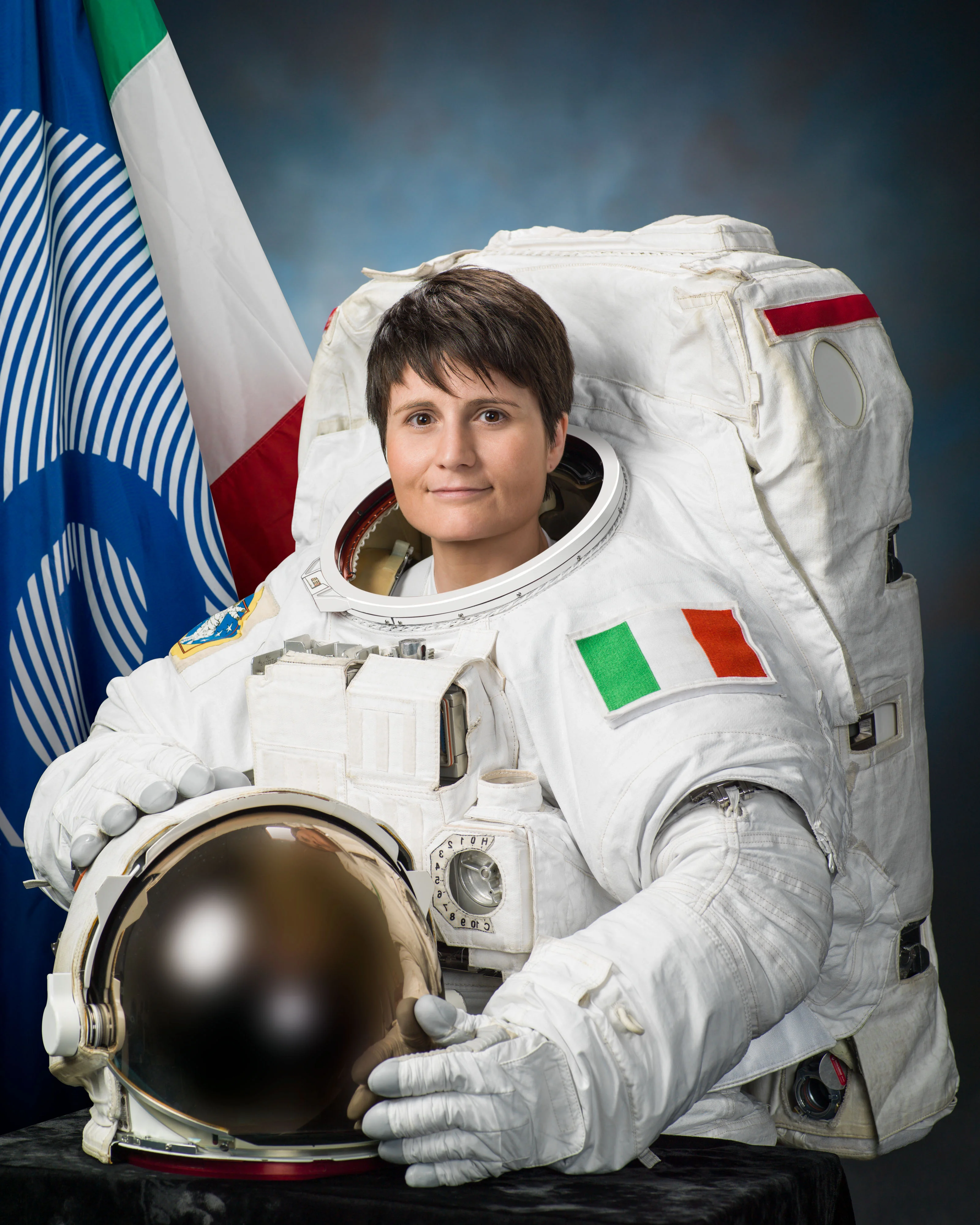
Literature Festival Potsdam: Europe in Space
Immerse yourself in the world of space and literature with Cristoforetti and Aschbacher.

Sibylle Anderl reads in Potsdam: The Philosophy of the Starry Sky
An evening for everyone who wants to not only see the starry sky but understand it. Sibylle Anderl reads in Potsdam about the cosmos, thinking, and wonder. #LitPotsdam #Potsdam
Samantha Cristoforetti and Josef Aschbacher in Potsdam: Europe in Space
An evening between stars, language, and strategy: Samantha Cristoforetti and Josef Aschbacher discuss Europe's path into space in Potsdam. #LITPotsdam
Frequently Asked Questions
Reviews
Katharina Vogt
2. January 2026
The villa is historically significant and it's nice that there is a cultural space, but for an ordinary visitor, it’s hard to connect with the exhibitions. The café is nice, but the crowds in the park and the limited visiting hours slightly spoil the experience. It might be fine for art lovers, but not for a relaxing day outdoors.
Zafer Tuncay
2. July 2025
A cafe in tranquility of a well decorated, shady garden. And somehow jazz concerts in the summer evenings and a cafe.
Z O L U
10. March 2024
Good place to take a break around the Glienicke Bridge. As for the cafe, one can sit inside or in the terrace, enjoy some cheesecakes and coffee and even a soup or quiche for the bigger appetite. Self service, with slow queues and our order of quiche and soup took some patience.
Divyasree S
7. September 2025
Absolutely wonderful cappuccino and cake! Topped it with lovely smiling faces serving coffee :)
Tom Beck
18. July 2021
Nice place to sit in the garden with a drink, some cake, and some jazz music. Okay, so the jazz music isn’t for me, but I appreciated it nonetheless.