
Potsdam
Große Weinmeisterstraße 46-47, 14469 Potsdam, Deutschland
Villa Quandt | Readings & Events
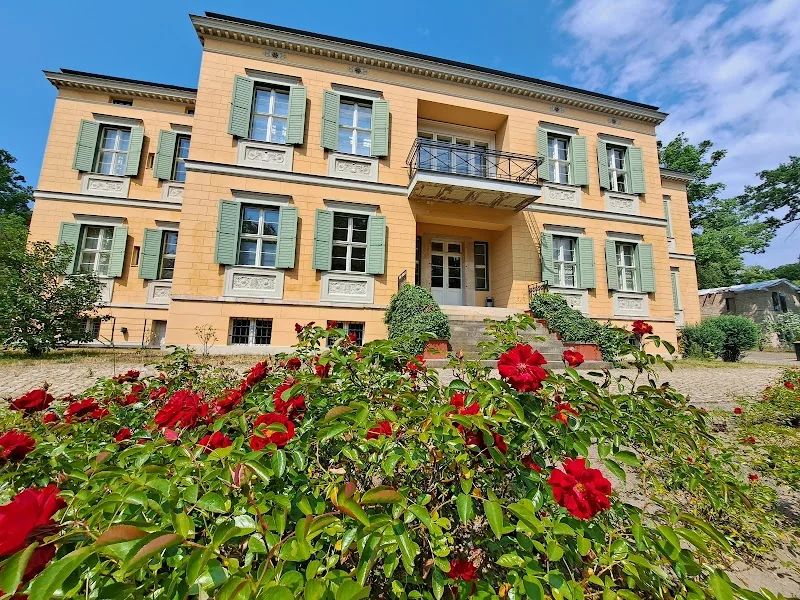
The Villa Quandt in Potsdam is much more than a beautiful name on a map. It is located at Große Weinmeisterstraße 46/47, embedded in the historic park landscape of Pfingstberg, and thus in an environment that is directly connected to the cultural and memory history of Potsdam. Nearby are, among others, the Lepsiushaus and the Memorial and Meeting Place Leistikowstraße; within walking distance are also the Russian Colony Alexandrowka with the Alexandrowka Museum and the historic Jewish Cemetery. Therefore, those searching for Villa Quandt Potsdam, Villa Quandt events, or Villa Quandt readings will not find an interchangeable event venue here, but rather a literary location with a developed profile that clearly distinguishes itself from classic event spaces through its location, history, and program. It is precisely this connection of historical substance, literary use, and landscape embedding that makes the place so special and explains why Villa Quandt in Potsdam keeps appearing in search queries. ([fontanearchiv.de](https://www.fontanearchiv.de/ueber-uns/villa-quandt/))
The character of the house is today closely linked to the Theodor Fontane Archive and the Brandenburg Literature Office. Both institutions shape the Villa Quandt not only as an address but as a vibrant place for research, readings, discussions, and journalistic work. This leads to a style that remains deliberately calm, focused, and literary. Instead of a large stage, the immediate contact with texts, authors, and the literary history of Brandenburg is at the forefront. At the same time, the Villa, due to its location on Pfingstberg, almost acts as a cultural viewpoint: those who come here experience Potsdam not just as a city but as a cultivated cultural landscape. For those seeking photos, programs, or directions, this is helpful because the Villa Quandt is a place that is best understood through its surroundings, its use, and its historical layers. ([fontanearchiv.de](https://www.fontanearchiv.de/ueber-uns/villa-quandt/))
Events, Readings, and Current Program
The strongest search intention surrounding Villa Quandt clearly lies in the area of events and readings. The official website displays a continuous calendar of readings, discussions, matinees, book premieres, and follow-up events. The Brandenburg Literature Office describes its program as a mix of prose and non-fiction and uses three event rooms on the ground floor of the villa for this purpose. If the weather permits, readings take place on the terrace, with a view up to Pfingstberg. This makes it clear that Villa Quandt does not function as an arbitrary multipurpose hall but as a literary space with a manageable, personal atmosphere. These formats fit the typical search terms Villa Quandt Potsdam events or Villa Quandt Potsdam reading, as here, carefully curated cultural work is at the forefront rather than mass operations. ([villa-quandt.de](https://villa-quandt.de/))
The thematic spectrum of the program is also significant. The events page features literary evenings with authors, thematic readings, discussion formats, and evening events with moderated discussions. For visitors, this means: those who visit Villa Quandt can expect a program that is broadly based in content but stylistically clearly focused on language, text, and exchange. This is particularly interesting for anyone looking for an alternative to large concert halls, classical theaters, or purely conference venues. Villa Quandt conveys closeness to the work and to the people behind the texts. This concentration on literature and conversation is both its unique selling point and the reason why the search volume for readings, events, and programs fits so well with its actual profile. Those seeking an atmospheric, quiet, and culturally demanding place in Potsdam will find here an address with a clear focus. ([villa-quandt.de](https://villa-quandt.de/))
Directions and Parking at Villa Quandt
For many visitors, practical accessibility is a central issue, which is why the search combination Villa Quandt directions or Villa Quandt parking is particularly relevant. The official directions from the Theodor Fontane Archive are very specific: parking spaces near Villa Quandt are limited, so the archive additionally recommends the parking lots at Volkspark, that is, at the BUGA Park Potsdam. Therefore, those arriving by car should not expect a large parking lot directly at the house but should plan their arrival early and possibly allow for a bit more walking distance. For an event venue in this location, this is typical, as the villa is situated in a historic park and villa area where the street and area structure is not designed for mass access. For this reason, the parking issue is one of the most important practical pieces of information for visitors. ([fontanearchiv.de](https://www.fontanearchiv.de/service/anfahrt))
Villa Quandt is easily accessible by public transport. From Potsdam Central Station, tram 92 or 96 goes towards Kirschallee or Campus Jungfernsee to the stop Puschkinallee; from there it is about a ten-minute walk via Beyerstraße. Alternatively, one can change at the stop Reiterweg/Alleestraße to bus 603 towards Höhenstraße and get off at Glumestraße; from there, the walk takes about five minutes. Additionally, the archive states opening hours from Monday to Friday between 9:00 AM and 3:00 PM and requests that visits be registered in advance, preferably by phone or email. For all those planning a visit, this means: Villa Quandt is easily accessible but not designed for spontaneous visits in the style of a large public operation. Those wishing to combine a reading, archive visit, or appointment should therefore plan their arrival consciously and relaxed. ([fontanearchiv.de](https://www.fontanearchiv.de/service/anfahrt))
History of Villa Quandt from Country House to Literary Venue
The history of Villa Quandt goes back significantly further than its current use as a literary and event venue. According to the Theodor Fontane Archive, it is not known who and when the villa was originally built; however, the oldest architectural evidence dates back to around 1800. Documented structural modifications are evidenced for the years between 1831 and 1833. The villa received its name from the war councilor Ulrike Augusta von Quandt, who acquired the property in 1833 but sold it again just two years later. These early stages show that while the current name has historical roots, the ownership and uses of the house have changed multiple times. Such layers make the place interesting: the villa is not only beautifully preserved but also an example of the multifaceted building and usage history of Potsdam. ([fontanearchiv.de](https://www.fontanearchiv.de/ueber-uns/villa-quandt/))
From 1841, the building was in royal possession, and in 1860 it was incorporated into the park facilities at Pfingstberg. Its current architectural form was acquired during a redesign carried out by Prince Oskar Karl Gustav Adolf of Prussia, who lived in the house with his family since his marriage in 1914. After the occupation of Potsdam by Soviet troops in 1945, Villa Quandt was in the military restricted area and later the headquarters of the military administration, known as Military Town No. 7. After the withdrawal of the Soviet army, the Prussian Palaces and Gardens Foundation Berlin-Brandenburg took over responsibility in 1993 or 1994; subsequently, extensive dismantling and securing measures followed. The rescue and restoration for later use by the Theodor Fontane Archive was achieved with funds from the Hermann Reemtsma Foundation and the European Regional Development Fund. In September 2007, the building could finally be occupied. ([fontanearchiv.de](https://www.fontanearchiv.de/ueber-uns/villa-quandt/))
Photos, Architecture, and the Setting at Pfingstberg
Those searching for Villa Quandt photos are often interested not only in a single building but in its effect in the urban and landscape context. Here, Villa Quandt provides a lot of material. The page of the Theodor Fontane Archive shows historical views of the front and garden view from August 5, 1929, as well as a photo of the villa with new side extensions from 1943. This is important because it shows the villa not only as a contemporary cultural house but also as an object with documented construction and redesign history. On the website of the city of Potsdam, the villa is also highlighted in connection with photos as the seat of the Fontane Archive and as part of the Potsdam World Heritage. Therefore, those who want to get to know the building visually will find not just decorative images on the relevant pages but historical evidence of a tumultuous development. ([fontanearchiv.de](https://www.fontanearchiv.de/ueber-uns/villa-quandt/))
Architecturally and atmospherically, Villa Quandt thrives on its embedding in the park landscape at Pfingstberg. The proximity to the Belvedere, to Schloss Cecilienhof, and to other historic places gives the house a setting that is rare in Potsdam: quiet, green, culturally rich, and open for walks. The Theodor Fontane Archive also emphasizes the immediate neighborhood to Lepsiushaus and Leistikowstraße, as well as the walkable Alexandrowka and the historic Jewish Cemetery. Those who connect such paths experience the villa not in isolation but as part of an ensemble. For visitors looking for photos, impressions, or a special place for a literary excursion, this is crucial. Villa Quandt is not a detached event building but an address that derives its effect from the interplay of house, hillside location, garden relation, and World Heritage environment. ([fontanearchiv.de](https://www.fontanearchiv.de/ueber-uns/villa-quandt/))
UNESCO World Heritage Pfingstberg and the Neighborhood
Villa Quandt is not randomly located in such a cultivated and historically significant environment. It lies in the historic park landscape of the Potsdam Pfingstberg, which, together with the Belvedere and the nearby Schloss Cecilienhof in the New Garden, is part of the UNESCO World Heritage ensemble. The Prussian Palaces and Gardens Foundation manages this ensemble, and it is precisely this connection that makes Villa Quandt so attractive to many visitors. When visiting the site, one does not only see a single building but a condensed interface of architecture, landscape, and cultural history. The city of Potsdam has also highlighted the site on UNESCO World Heritage Day and presented the villa as the seat of the Theodor Fontane Archive in the context of the World Heritage. Thus, Villa Quandt is not only a literary venue but also a building block of the Potsdam World Heritage landscape. ([fontanearchiv.de](https://www.fontanearchiv.de/ueber-uns/villa-quandt/))
The strength of this place also includes the neighborhood. In the immediate vicinity are the Lepsiushaus and the Memorial and Meeting Place Leistikowstraße, both also important memorial sites in Potsdam. Within walking distance are the Russian Colony Alexandrowka with the Alexandrowka Museum and the historic Jewish Cemetery. This density of places allows for very well combinable visits: a reading at Villa Quandt can be combined with a walk to Pfingstberg or a detour into the historic cultural landscape. For this reason, search queries like Villa Quandt Potsdam, Villa Quandt Berlin, or other location combinations often function as a search for a special cultural point in a larger regional network. The villa represents a Potsdam that does not think of literature, memory, and landscape separately but together. ([fontanearchiv.de](https://www.fontanearchiv.de/ueber-uns/villa-quandt/))
Theodor Fontane Archive and Brandenburg Literature Office
Since September 2007, Villa Quandt has housed the Theodor Fontane Archive and the Brandenburg Literature Office. This dual use explains the strong literary orientation of the house and makes the villa one of the most significant cultural workplaces in Potsdam. The Theodor Fontane Archive is closely associated with the engagement with Fontane as a scientific and documentary institution, while the Brandenburg Literature Office primarily organizes events, exhibitions, and journalistic formats. The city of Potsdam describes the literature office as an institution dedicated to the literary heritage of the Mark Brandenburg, conceptualizing exhibitions and publishing books and audiobooks. This makes it clear that Villa Quandt is not only a reception venue but also a place for the production and dissemination of literature. ([fontanearchiv.de](https://www.fontanearchiv.de/ueber-uns/villa-quandt/))
This connection is particularly interesting for visitors because it directly explains the use of the house. The three event rooms on the ground floor, which the city refers to, form the framework for a program that consciously remains close to text, conversation, and reading. If the weather permits, readings on the terrace are added, with a view up to Pfingstberg. This creates an atmosphere where content and place belong together. At the same time, the villa, with its historical references and documented restoration, provides a credible backdrop for cultural work that relies not only on the present but also on memory. Those searching for Villa Quandt events, readings, photos, or directions ultimately end up at a place that does not stage culture but develops it from its history. This is precisely what makes Villa Quandt in Potsdam an address with its own radiance and sustainable recognition value. ([potsdam.de](https://www.potsdam.de/de/content/brandenburgisches-literaturbuero-1))
Sources:
- Theodor Fontane Archive: Villa Quandt and Historical Context ([fontanearchiv.de](https://www.fontanearchiv.de/ueber-uns/villa-quandt/))
- Theodor Fontane Archive: Directions and Route Description ([fontanearchiv.de](https://www.fontanearchiv.de/service/anfahrt))
- State Capital Potsdam: Brandenburg Literature Office in Villa Quandt ([potsdam.de](https://www.potsdam.de/de/content/brandenburgisches-literaturbuero-1))
- State Capital Potsdam: UNESCO World Heritage Day with Villa Quandt ([potsdam.de](https://www.potsdam.de/de/unesco-welterbetag-2019-mit-fontane-und-effi-briest-ins-welterbe?utm_source=openai))
- Official Event Page of Villa Quandt: Current Program and Formats ([villa-quandt.de](https://villa-quandt.de/))
Show moreShow less
Villa Quandt | Readings & Events
The Villa Quandt in Potsdam is much more than a beautiful name on a map. It is located at Große Weinmeisterstraße 46/47, embedded in the historic park landscape of Pfingstberg, and thus in an environment that is directly connected to the cultural and memory history of Potsdam. Nearby are, among others, the Lepsiushaus and the Memorial and Meeting Place Leistikowstraße; within walking distance are also the Russian Colony Alexandrowka with the Alexandrowka Museum and the historic Jewish Cemetery. Therefore, those searching for Villa Quandt Potsdam, Villa Quandt events, or Villa Quandt readings will not find an interchangeable event venue here, but rather a literary location with a developed profile that clearly distinguishes itself from classic event spaces through its location, history, and program. It is precisely this connection of historical substance, literary use, and landscape embedding that makes the place so special and explains why Villa Quandt in Potsdam keeps appearing in search queries. ([fontanearchiv.de](https://www.fontanearchiv.de/ueber-uns/villa-quandt/))
The character of the house is today closely linked to the Theodor Fontane Archive and the Brandenburg Literature Office. Both institutions shape the Villa Quandt not only as an address but as a vibrant place for research, readings, discussions, and journalistic work. This leads to a style that remains deliberately calm, focused, and literary. Instead of a large stage, the immediate contact with texts, authors, and the literary history of Brandenburg is at the forefront. At the same time, the Villa, due to its location on Pfingstberg, almost acts as a cultural viewpoint: those who come here experience Potsdam not just as a city but as a cultivated cultural landscape. For those seeking photos, programs, or directions, this is helpful because the Villa Quandt is a place that is best understood through its surroundings, its use, and its historical layers. ([fontanearchiv.de](https://www.fontanearchiv.de/ueber-uns/villa-quandt/))
Events, Readings, and Current Program
The strongest search intention surrounding Villa Quandt clearly lies in the area of events and readings. The official website displays a continuous calendar of readings, discussions, matinees, book premieres, and follow-up events. The Brandenburg Literature Office describes its program as a mix of prose and non-fiction and uses three event rooms on the ground floor of the villa for this purpose. If the weather permits, readings take place on the terrace, with a view up to Pfingstberg. This makes it clear that Villa Quandt does not function as an arbitrary multipurpose hall but as a literary space with a manageable, personal atmosphere. These formats fit the typical search terms Villa Quandt Potsdam events or Villa Quandt Potsdam reading, as here, carefully curated cultural work is at the forefront rather than mass operations. ([villa-quandt.de](https://villa-quandt.de/))
The thematic spectrum of the program is also significant. The events page features literary evenings with authors, thematic readings, discussion formats, and evening events with moderated discussions. For visitors, this means: those who visit Villa Quandt can expect a program that is broadly based in content but stylistically clearly focused on language, text, and exchange. This is particularly interesting for anyone looking for an alternative to large concert halls, classical theaters, or purely conference venues. Villa Quandt conveys closeness to the work and to the people behind the texts. This concentration on literature and conversation is both its unique selling point and the reason why the search volume for readings, events, and programs fits so well with its actual profile. Those seeking an atmospheric, quiet, and culturally demanding place in Potsdam will find here an address with a clear focus. ([villa-quandt.de](https://villa-quandt.de/))
Directions and Parking at Villa Quandt
For many visitors, practical accessibility is a central issue, which is why the search combination Villa Quandt directions or Villa Quandt parking is particularly relevant. The official directions from the Theodor Fontane Archive are very specific: parking spaces near Villa Quandt are limited, so the archive additionally recommends the parking lots at Volkspark, that is, at the BUGA Park Potsdam. Therefore, those arriving by car should not expect a large parking lot directly at the house but should plan their arrival early and possibly allow for a bit more walking distance. For an event venue in this location, this is typical, as the villa is situated in a historic park and villa area where the street and area structure is not designed for mass access. For this reason, the parking issue is one of the most important practical pieces of information for visitors. ([fontanearchiv.de](https://www.fontanearchiv.de/service/anfahrt))
Villa Quandt is easily accessible by public transport. From Potsdam Central Station, tram 92 or 96 goes towards Kirschallee or Campus Jungfernsee to the stop Puschkinallee; from there it is about a ten-minute walk via Beyerstraße. Alternatively, one can change at the stop Reiterweg/Alleestraße to bus 603 towards Höhenstraße and get off at Glumestraße; from there, the walk takes about five minutes. Additionally, the archive states opening hours from Monday to Friday between 9:00 AM and 3:00 PM and requests that visits be registered in advance, preferably by phone or email. For all those planning a visit, this means: Villa Quandt is easily accessible but not designed for spontaneous visits in the style of a large public operation. Those wishing to combine a reading, archive visit, or appointment should therefore plan their arrival consciously and relaxed. ([fontanearchiv.de](https://www.fontanearchiv.de/service/anfahrt))
History of Villa Quandt from Country House to Literary Venue
The history of Villa Quandt goes back significantly further than its current use as a literary and event venue. According to the Theodor Fontane Archive, it is not known who and when the villa was originally built; however, the oldest architectural evidence dates back to around 1800. Documented structural modifications are evidenced for the years between 1831 and 1833. The villa received its name from the war councilor Ulrike Augusta von Quandt, who acquired the property in 1833 but sold it again just two years later. These early stages show that while the current name has historical roots, the ownership and uses of the house have changed multiple times. Such layers make the place interesting: the villa is not only beautifully preserved but also an example of the multifaceted building and usage history of Potsdam. ([fontanearchiv.de](https://www.fontanearchiv.de/ueber-uns/villa-quandt/))
From 1841, the building was in royal possession, and in 1860 it was incorporated into the park facilities at Pfingstberg. Its current architectural form was acquired during a redesign carried out by Prince Oskar Karl Gustav Adolf of Prussia, who lived in the house with his family since his marriage in 1914. After the occupation of Potsdam by Soviet troops in 1945, Villa Quandt was in the military restricted area and later the headquarters of the military administration, known as Military Town No. 7. After the withdrawal of the Soviet army, the Prussian Palaces and Gardens Foundation Berlin-Brandenburg took over responsibility in 1993 or 1994; subsequently, extensive dismantling and securing measures followed. The rescue and restoration for later use by the Theodor Fontane Archive was achieved with funds from the Hermann Reemtsma Foundation and the European Regional Development Fund. In September 2007, the building could finally be occupied. ([fontanearchiv.de](https://www.fontanearchiv.de/ueber-uns/villa-quandt/))
Photos, Architecture, and the Setting at Pfingstberg
Those searching for Villa Quandt photos are often interested not only in a single building but in its effect in the urban and landscape context. Here, Villa Quandt provides a lot of material. The page of the Theodor Fontane Archive shows historical views of the front and garden view from August 5, 1929, as well as a photo of the villa with new side extensions from 1943. This is important because it shows the villa not only as a contemporary cultural house but also as an object with documented construction and redesign history. On the website of the city of Potsdam, the villa is also highlighted in connection with photos as the seat of the Fontane Archive and as part of the Potsdam World Heritage. Therefore, those who want to get to know the building visually will find not just decorative images on the relevant pages but historical evidence of a tumultuous development. ([fontanearchiv.de](https://www.fontanearchiv.de/ueber-uns/villa-quandt/))
Architecturally and atmospherically, Villa Quandt thrives on its embedding in the park landscape at Pfingstberg. The proximity to the Belvedere, to Schloss Cecilienhof, and to other historic places gives the house a setting that is rare in Potsdam: quiet, green, culturally rich, and open for walks. The Theodor Fontane Archive also emphasizes the immediate neighborhood to Lepsiushaus and Leistikowstraße, as well as the walkable Alexandrowka and the historic Jewish Cemetery. Those who connect such paths experience the villa not in isolation but as part of an ensemble. For visitors looking for photos, impressions, or a special place for a literary excursion, this is crucial. Villa Quandt is not a detached event building but an address that derives its effect from the interplay of house, hillside location, garden relation, and World Heritage environment. ([fontanearchiv.de](https://www.fontanearchiv.de/ueber-uns/villa-quandt/))
UNESCO World Heritage Pfingstberg and the Neighborhood
Villa Quandt is not randomly located in such a cultivated and historically significant environment. It lies in the historic park landscape of the Potsdam Pfingstberg, which, together with the Belvedere and the nearby Schloss Cecilienhof in the New Garden, is part of the UNESCO World Heritage ensemble. The Prussian Palaces and Gardens Foundation manages this ensemble, and it is precisely this connection that makes Villa Quandt so attractive to many visitors. When visiting the site, one does not only see a single building but a condensed interface of architecture, landscape, and cultural history. The city of Potsdam has also highlighted the site on UNESCO World Heritage Day and presented the villa as the seat of the Theodor Fontane Archive in the context of the World Heritage. Thus, Villa Quandt is not only a literary venue but also a building block of the Potsdam World Heritage landscape. ([fontanearchiv.de](https://www.fontanearchiv.de/ueber-uns/villa-quandt/))
The strength of this place also includes the neighborhood. In the immediate vicinity are the Lepsiushaus and the Memorial and Meeting Place Leistikowstraße, both also important memorial sites in Potsdam. Within walking distance are the Russian Colony Alexandrowka with the Alexandrowka Museum and the historic Jewish Cemetery. This density of places allows for very well combinable visits: a reading at Villa Quandt can be combined with a walk to Pfingstberg or a detour into the historic cultural landscape. For this reason, search queries like Villa Quandt Potsdam, Villa Quandt Berlin, or other location combinations often function as a search for a special cultural point in a larger regional network. The villa represents a Potsdam that does not think of literature, memory, and landscape separately but together. ([fontanearchiv.de](https://www.fontanearchiv.de/ueber-uns/villa-quandt/))
Theodor Fontane Archive and Brandenburg Literature Office
Since September 2007, Villa Quandt has housed the Theodor Fontane Archive and the Brandenburg Literature Office. This dual use explains the strong literary orientation of the house and makes the villa one of the most significant cultural workplaces in Potsdam. The Theodor Fontane Archive is closely associated with the engagement with Fontane as a scientific and documentary institution, while the Brandenburg Literature Office primarily organizes events, exhibitions, and journalistic formats. The city of Potsdam describes the literature office as an institution dedicated to the literary heritage of the Mark Brandenburg, conceptualizing exhibitions and publishing books and audiobooks. This makes it clear that Villa Quandt is not only a reception venue but also a place for the production and dissemination of literature. ([fontanearchiv.de](https://www.fontanearchiv.de/ueber-uns/villa-quandt/))
This connection is particularly interesting for visitors because it directly explains the use of the house. The three event rooms on the ground floor, which the city refers to, form the framework for a program that consciously remains close to text, conversation, and reading. If the weather permits, readings on the terrace are added, with a view up to Pfingstberg. This creates an atmosphere where content and place belong together. At the same time, the villa, with its historical references and documented restoration, provides a credible backdrop for cultural work that relies not only on the present but also on memory. Those searching for Villa Quandt events, readings, photos, or directions ultimately end up at a place that does not stage culture but develops it from its history. This is precisely what makes Villa Quandt in Potsdam an address with its own radiance and sustainable recognition value. ([potsdam.de](https://www.potsdam.de/de/content/brandenburgisches-literaturbuero-1))
Sources:
- Theodor Fontane Archive: Villa Quandt and Historical Context ([fontanearchiv.de](https://www.fontanearchiv.de/ueber-uns/villa-quandt/))
- Theodor Fontane Archive: Directions and Route Description ([fontanearchiv.de](https://www.fontanearchiv.de/service/anfahrt))
- State Capital Potsdam: Brandenburg Literature Office in Villa Quandt ([potsdam.de](https://www.potsdam.de/de/content/brandenburgisches-literaturbuero-1))
- State Capital Potsdam: UNESCO World Heritage Day with Villa Quandt ([potsdam.de](https://www.potsdam.de/de/unesco-welterbetag-2019-mit-fontane-und-effi-briest-ins-welterbe?utm_source=openai))
- Official Event Page of Villa Quandt: Current Program and Formats ([villa-quandt.de](https://villa-quandt.de/))
Villa Quandt | Readings & Events
The Villa Quandt in Potsdam is much more than a beautiful name on a map. It is located at Große Weinmeisterstraße 46/47, embedded in the historic park landscape of Pfingstberg, and thus in an environment that is directly connected to the cultural and memory history of Potsdam. Nearby are, among others, the Lepsiushaus and the Memorial and Meeting Place Leistikowstraße; within walking distance are also the Russian Colony Alexandrowka with the Alexandrowka Museum and the historic Jewish Cemetery. Therefore, those searching for Villa Quandt Potsdam, Villa Quandt events, or Villa Quandt readings will not find an interchangeable event venue here, but rather a literary location with a developed profile that clearly distinguishes itself from classic event spaces through its location, history, and program. It is precisely this connection of historical substance, literary use, and landscape embedding that makes the place so special and explains why Villa Quandt in Potsdam keeps appearing in search queries. ([fontanearchiv.de](https://www.fontanearchiv.de/ueber-uns/villa-quandt/))
The character of the house is today closely linked to the Theodor Fontane Archive and the Brandenburg Literature Office. Both institutions shape the Villa Quandt not only as an address but as a vibrant place for research, readings, discussions, and journalistic work. This leads to a style that remains deliberately calm, focused, and literary. Instead of a large stage, the immediate contact with texts, authors, and the literary history of Brandenburg is at the forefront. At the same time, the Villa, due to its location on Pfingstberg, almost acts as a cultural viewpoint: those who come here experience Potsdam not just as a city but as a cultivated cultural landscape. For those seeking photos, programs, or directions, this is helpful because the Villa Quandt is a place that is best understood through its surroundings, its use, and its historical layers. ([fontanearchiv.de](https://www.fontanearchiv.de/ueber-uns/villa-quandt/))
Events, Readings, and Current Program
The strongest search intention surrounding Villa Quandt clearly lies in the area of events and readings. The official website displays a continuous calendar of readings, discussions, matinees, book premieres, and follow-up events. The Brandenburg Literature Office describes its program as a mix of prose and non-fiction and uses three event rooms on the ground floor of the villa for this purpose. If the weather permits, readings take place on the terrace, with a view up to Pfingstberg. This makes it clear that Villa Quandt does not function as an arbitrary multipurpose hall but as a literary space with a manageable, personal atmosphere. These formats fit the typical search terms Villa Quandt Potsdam events or Villa Quandt Potsdam reading, as here, carefully curated cultural work is at the forefront rather than mass operations. ([villa-quandt.de](https://villa-quandt.de/))
The thematic spectrum of the program is also significant. The events page features literary evenings with authors, thematic readings, discussion formats, and evening events with moderated discussions. For visitors, this means: those who visit Villa Quandt can expect a program that is broadly based in content but stylistically clearly focused on language, text, and exchange. This is particularly interesting for anyone looking for an alternative to large concert halls, classical theaters, or purely conference venues. Villa Quandt conveys closeness to the work and to the people behind the texts. This concentration on literature and conversation is both its unique selling point and the reason why the search volume for readings, events, and programs fits so well with its actual profile. Those seeking an atmospheric, quiet, and culturally demanding place in Potsdam will find here an address with a clear focus. ([villa-quandt.de](https://villa-quandt.de/))
Directions and Parking at Villa Quandt
For many visitors, practical accessibility is a central issue, which is why the search combination Villa Quandt directions or Villa Quandt parking is particularly relevant. The official directions from the Theodor Fontane Archive are very specific: parking spaces near Villa Quandt are limited, so the archive additionally recommends the parking lots at Volkspark, that is, at the BUGA Park Potsdam. Therefore, those arriving by car should not expect a large parking lot directly at the house but should plan their arrival early and possibly allow for a bit more walking distance. For an event venue in this location, this is typical, as the villa is situated in a historic park and villa area where the street and area structure is not designed for mass access. For this reason, the parking issue is one of the most important practical pieces of information for visitors. ([fontanearchiv.de](https://www.fontanearchiv.de/service/anfahrt))
Villa Quandt is easily accessible by public transport. From Potsdam Central Station, tram 92 or 96 goes towards Kirschallee or Campus Jungfernsee to the stop Puschkinallee; from there it is about a ten-minute walk via Beyerstraße. Alternatively, one can change at the stop Reiterweg/Alleestraße to bus 603 towards Höhenstraße and get off at Glumestraße; from there, the walk takes about five minutes. Additionally, the archive states opening hours from Monday to Friday between 9:00 AM and 3:00 PM and requests that visits be registered in advance, preferably by phone or email. For all those planning a visit, this means: Villa Quandt is easily accessible but not designed for spontaneous visits in the style of a large public operation. Those wishing to combine a reading, archive visit, or appointment should therefore plan their arrival consciously and relaxed. ([fontanearchiv.de](https://www.fontanearchiv.de/service/anfahrt))
History of Villa Quandt from Country House to Literary Venue
The history of Villa Quandt goes back significantly further than its current use as a literary and event venue. According to the Theodor Fontane Archive, it is not known who and when the villa was originally built; however, the oldest architectural evidence dates back to around 1800. Documented structural modifications are evidenced for the years between 1831 and 1833. The villa received its name from the war councilor Ulrike Augusta von Quandt, who acquired the property in 1833 but sold it again just two years later. These early stages show that while the current name has historical roots, the ownership and uses of the house have changed multiple times. Such layers make the place interesting: the villa is not only beautifully preserved but also an example of the multifaceted building and usage history of Potsdam. ([fontanearchiv.de](https://www.fontanearchiv.de/ueber-uns/villa-quandt/))
From 1841, the building was in royal possession, and in 1860 it was incorporated into the park facilities at Pfingstberg. Its current architectural form was acquired during a redesign carried out by Prince Oskar Karl Gustav Adolf of Prussia, who lived in the house with his family since his marriage in 1914. After the occupation of Potsdam by Soviet troops in 1945, Villa Quandt was in the military restricted area and later the headquarters of the military administration, known as Military Town No. 7. After the withdrawal of the Soviet army, the Prussian Palaces and Gardens Foundation Berlin-Brandenburg took over responsibility in 1993 or 1994; subsequently, extensive dismantling and securing measures followed. The rescue and restoration for later use by the Theodor Fontane Archive was achieved with funds from the Hermann Reemtsma Foundation and the European Regional Development Fund. In September 2007, the building could finally be occupied. ([fontanearchiv.de](https://www.fontanearchiv.de/ueber-uns/villa-quandt/))
Photos, Architecture, and the Setting at Pfingstberg
Those searching for Villa Quandt photos are often interested not only in a single building but in its effect in the urban and landscape context. Here, Villa Quandt provides a lot of material. The page of the Theodor Fontane Archive shows historical views of the front and garden view from August 5, 1929, as well as a photo of the villa with new side extensions from 1943. This is important because it shows the villa not only as a contemporary cultural house but also as an object with documented construction and redesign history. On the website of the city of Potsdam, the villa is also highlighted in connection with photos as the seat of the Fontane Archive and as part of the Potsdam World Heritage. Therefore, those who want to get to know the building visually will find not just decorative images on the relevant pages but historical evidence of a tumultuous development. ([fontanearchiv.de](https://www.fontanearchiv.de/ueber-uns/villa-quandt/))
Architecturally and atmospherically, Villa Quandt thrives on its embedding in the park landscape at Pfingstberg. The proximity to the Belvedere, to Schloss Cecilienhof, and to other historic places gives the house a setting that is rare in Potsdam: quiet, green, culturally rich, and open for walks. The Theodor Fontane Archive also emphasizes the immediate neighborhood to Lepsiushaus and Leistikowstraße, as well as the walkable Alexandrowka and the historic Jewish Cemetery. Those who connect such paths experience the villa not in isolation but as part of an ensemble. For visitors looking for photos, impressions, or a special place for a literary excursion, this is crucial. Villa Quandt is not a detached event building but an address that derives its effect from the interplay of house, hillside location, garden relation, and World Heritage environment. ([fontanearchiv.de](https://www.fontanearchiv.de/ueber-uns/villa-quandt/))
UNESCO World Heritage Pfingstberg and the Neighborhood
Villa Quandt is not randomly located in such a cultivated and historically significant environment. It lies in the historic park landscape of the Potsdam Pfingstberg, which, together with the Belvedere and the nearby Schloss Cecilienhof in the New Garden, is part of the UNESCO World Heritage ensemble. The Prussian Palaces and Gardens Foundation manages this ensemble, and it is precisely this connection that makes Villa Quandt so attractive to many visitors. When visiting the site, one does not only see a single building but a condensed interface of architecture, landscape, and cultural history. The city of Potsdam has also highlighted the site on UNESCO World Heritage Day and presented the villa as the seat of the Theodor Fontane Archive in the context of the World Heritage. Thus, Villa Quandt is not only a literary venue but also a building block of the Potsdam World Heritage landscape. ([fontanearchiv.de](https://www.fontanearchiv.de/ueber-uns/villa-quandt/))
The strength of this place also includes the neighborhood. In the immediate vicinity are the Lepsiushaus and the Memorial and Meeting Place Leistikowstraße, both also important memorial sites in Potsdam. Within walking distance are the Russian Colony Alexandrowka with the Alexandrowka Museum and the historic Jewish Cemetery. This density of places allows for very well combinable visits: a reading at Villa Quandt can be combined with a walk to Pfingstberg or a detour into the historic cultural landscape. For this reason, search queries like Villa Quandt Potsdam, Villa Quandt Berlin, or other location combinations often function as a search for a special cultural point in a larger regional network. The villa represents a Potsdam that does not think of literature, memory, and landscape separately but together. ([fontanearchiv.de](https://www.fontanearchiv.de/ueber-uns/villa-quandt/))
Theodor Fontane Archive and Brandenburg Literature Office
Since September 2007, Villa Quandt has housed the Theodor Fontane Archive and the Brandenburg Literature Office. This dual use explains the strong literary orientation of the house and makes the villa one of the most significant cultural workplaces in Potsdam. The Theodor Fontane Archive is closely associated with the engagement with Fontane as a scientific and documentary institution, while the Brandenburg Literature Office primarily organizes events, exhibitions, and journalistic formats. The city of Potsdam describes the literature office as an institution dedicated to the literary heritage of the Mark Brandenburg, conceptualizing exhibitions and publishing books and audiobooks. This makes it clear that Villa Quandt is not only a reception venue but also a place for the production and dissemination of literature. ([fontanearchiv.de](https://www.fontanearchiv.de/ueber-uns/villa-quandt/))
This connection is particularly interesting for visitors because it directly explains the use of the house. The three event rooms on the ground floor, which the city refers to, form the framework for a program that consciously remains close to text, conversation, and reading. If the weather permits, readings on the terrace are added, with a view up to Pfingstberg. This creates an atmosphere where content and place belong together. At the same time, the villa, with its historical references and documented restoration, provides a credible backdrop for cultural work that relies not only on the present but also on memory. Those searching for Villa Quandt events, readings, photos, or directions ultimately end up at a place that does not stage culture but develops it from its history. This is precisely what makes Villa Quandt in Potsdam an address with its own radiance and sustainable recognition value. ([potsdam.de](https://www.potsdam.de/de/content/brandenburgisches-literaturbuero-1))
Sources:
- Theodor Fontane Archive: Villa Quandt and Historical Context ([fontanearchiv.de](https://www.fontanearchiv.de/ueber-uns/villa-quandt/))
- Theodor Fontane Archive: Directions and Route Description ([fontanearchiv.de](https://www.fontanearchiv.de/service/anfahrt))
- State Capital Potsdam: Brandenburg Literature Office in Villa Quandt ([potsdam.de](https://www.potsdam.de/de/content/brandenburgisches-literaturbuero-1))
- State Capital Potsdam: UNESCO World Heritage Day with Villa Quandt ([potsdam.de](https://www.potsdam.de/de/unesco-welterbetag-2019-mit-fontane-und-effi-briest-ins-welterbe?utm_source=openai))
- Official Event Page of Villa Quandt: Current Program and Formats ([villa-quandt.de](https://villa-quandt.de/))
Upcoming Events
No events found
Frequently Asked Questions
Reviews
Frank Goyke
17. November 2024
For the 200th birthday of Emilie Fontane, the Theodor Fontane Archive hosted a celebration. Letters from the birthday girl were read, along with poems that Fontane gifted to his wife for her birthday. The absolute highlight was the lecture by the tireless Fontane researcher Gotthard Erler, who spoke about his approach to a woman who was more, much more than "just" the poet's wife. A wonderful evening - as always at this magical place of literature.
James Bond
26. February 2024
Very nice, but I couldn't find a sign about the historical background of the house; an event board reveals that literary readings take place here.
Matthias Quaißer
21. December 2025
One of the magnificent villas in the park, lovely to look at, especially with many details to discover.
Christian Goerke
24. October 2022
Pretty neighborhood and house. Inside, photographs hang on the walls showing life in the 20s. Aside from that, just white walls, making it a bit boring. Restrooms and a lockable wardrobe are available, which adds some points.
Roland Berbig
24. April 2025
... especially when Christian Brückner reads texts by Peter Huchel and Lutz Seiler gives an essay about this wonderful poet ...