
Potsdam
Bertiniweg 2, 14469 Potsdam, Deutschland
Villa Jacobs | Wine Festival 2026 & Opening Hours
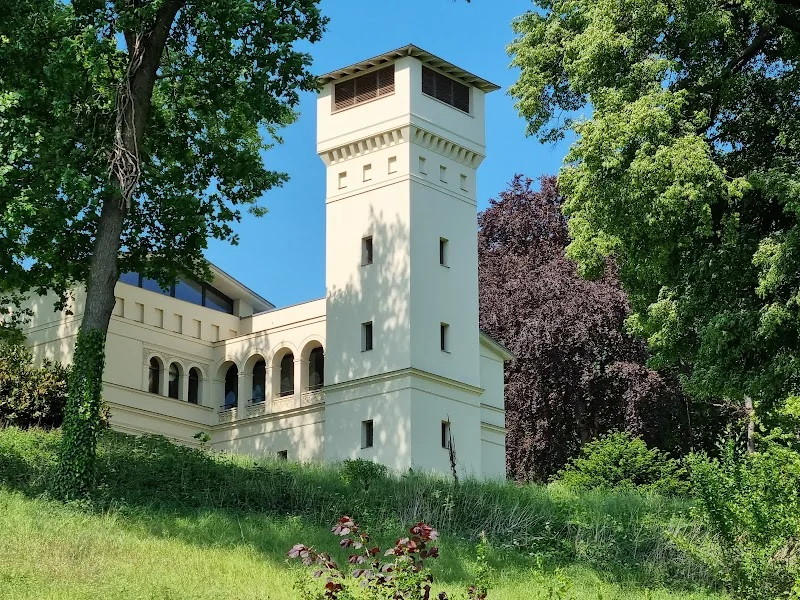
The Villa Jacobs in Potsdam is a place where history, landscape, wine, and culture are consciously brought together. Those searching for Villa Jacobs Potsdam, Villa Jacobs Wine Festival, Villa Jacobs History, or Villa Jacobs at Jungfernsee will not find an ordinary event address, but rather a historical ensemble with a reconstructed building, a large landscape park, and a clear profile as a cultural venue. The estate is located at Bertiniweg 2 in 14469 Potsdam, on the high bank of Jungfernsee and near the historic parks of Neuer Garten, Schloss Cecilienhof, and Marmorpalais. The current character of the place is the result of a long development that began in the 19th century, was later interrupted several times, and has been deliberately made visible again since 2005. This is precisely why the search queries are so diverse: from opening hours to photos to history and wine festivals, it is always about the same special place. ([villa-jacobs.de](https://villa-jacobs.de/geschichte/?utm_source=openai))
Wine Festival in the Park of Villa Jacobs
The wine festival is one of the strongest reasons to come to Potsdam because of Villa Jacobs. For 2026, the official website announces the park of Villa Jacobs on May 30 and 31 from 11:00 AM to 6:00 PM as an open-air event venue. Additionally, another wine festival is planned for September 12 and 13, 2026, as part of the Open Monument Day, also open from 11:00 AM to 6:00 PM. Both dates are more than just a pure enjoyment format: they connect culture, historical surroundings, and views of Jungfernsee with a consciously open invitation to visitors. Admission is free, and guided tours will also be offered on the event days. ([villa-jacobs.de](https://villa-jacobs.de/events/weinfest-im-park-30-und-31-mai-2026/?utm_source=openai))
What is particularly characteristic is that Villa Jacobs not only serves wine at these festivals but also presents its own Préludes from the Villa Jacobs vineyard as well as selected Mosel wines. The website describes the atmosphere very specifically: enjoyment can take place in the historic park, in the orchard, in the lime grove, or with a view of Jungfernsee. For the tours, 11:00 AM and 2:00 PM are mentioned for the May date, without registration and at no additional cost. Also important for the search intent around Villa Jacobs Potsdam Wine Festival or Villa Jacobs Wine Festival 2026: no own food and drinks should be brought, and no parking spaces are available for these event days. This makes travel planning an integral part of the visit, especially if the wine festival is to be combined with an excursion to Potsdam. ([villa-jacobs.de](https://villa-jacobs.de/events/weinfest-im-park-30-und-31-mai-2026/?utm_source=openai))
Opening Hours, Tickets, and Tours
Villa Jacobs does not have traditional daily opening hours like a museum or a restaurant with continuous operation. Instead, the official website shows a seasonal, event-related model: the park opens for selected events, and visits are also possible upon request. The page for the sculpture park explicitly states that the park and sculptures can also be viewed outside of public events upon request. Separate opening hours are also mentioned for exhibitions, for example, Sundays from 11:00 AM to 5:00 PM or Sundays 11:00 AM to 5:00 PM as well as upon request. This fits perfectly with the frequent search terms Villa Jacobs Opening Hours and Villa Jacobs Potsdam Opening Hours: those looking for specific times must always check the respective date. ([villa-jacobs.de](https://villa-jacobs.de/park/skulpturenpark/?utm_source=openai))
The topic of tickets is also not uniform but event-dependent. For the wine festival in May 2026, admission is free, while for the exhibition Karl Hartung: Questions about Nature, admission prices and tickets are mentioned; tickets are available on-site and through Reservix. For the opening of an exhibition, participation was also mentioned only after prior registration via an email address of the Ludes Foundation. This shows that Villa Jacobs does not operate like a normal leisure venue, but rather as a well-maintained cultural site with a changing program. Therefore, those searching for tickets, opening hours, or tours should always check the respective event entry, as that is where the binding information is found. For visitors, this means more planning, but also more exclusivity and less standard operation. This structure makes the place interesting for events, tours, and special occasions. ([villa-jacobs.de](https://villa-jacobs.de/events/vernissage-karl-hartung-fragen-zur-natur/?utm_source=openai))
History of Villa Jacobs at Jungfernsee
The history of Villa Jacobs goes back a long way and explains why the place receives so much attention today. The official history page describes that Ludwig Persius built the villa in 1835 for the sugar manufacturer Ludwig Jacobs. The building was constructed in the Tuscan country house style as a tower villa and was complemented by Peter Joseph Lenné with an approximately 8 ha large landscape park. Previously, Alberto Bertini operated an inn on the site, which was already considered a popular excursion destination. From this combination of landscape, water location, and representation, a place emerged that was early understood as a romantic model estate. This historical depth is exactly the reason why search terms like Villa Jacobs History or Villa Jacobs Wikipedia appear so frequently: the villa is not an anonymous new building, but a significant part of the Potsdam park and villa culture. ([villa-jacobs.de](https://villa-jacobs.de/geschichte/?utm_source=openai))
After the death of the Jacobs couple, the estate passed to Kaiser Wilhelm II and remained in the possession of the Hohenzollern until 1948. During World War II, parts of the park served the Wehrmacht, and after the war, the area became Soviet military territory. In 1981, the villa was demolished, so that later a small garden area was created and hardly any of the original substance was recognizable. Only after the reunification was the area put out to tender by the city of Potsdam for restoration; since 2005, the villa and park have been being recultivated. The current facility is therefore not only historical but also an example of reclamation and careful reconstruction. The fact that the park is now part of the UNESCO World Heritage underscores the significance of this place once again. ([villa-jacobs.de](https://villa-jacobs.de/geschichte/?utm_source=openai))
Access, Parking, and Location in Potsdam
The location of Villa Jacobs is a crucial point for many visitors because the place is deliberately somewhat secluded yet well situated. The official address is Bertiniweg 2, 14469 Potsdam. The event information additionally points out that the park of Villa Jacobs is used as an open-air venue and that the entrance for some exhibitions is located at the orangery. For individual events, access by car is described via Fritz-von-der-Lancken-Straße. Therefore, those searching for Villa Jacobs Potsdam, Villa Jacobs Berlin, or the exact access should prepare for the fact that the access is not associated with a large parking offer but with a historically grown park location by the water. ([villa-jacobs.de](https://www.villa-jacobs.de/kontakt/?utm_source=openai))
Parking is an important search topic because the place is not designed for mass traffic. For the wine festival dates in 2026, the website explicitly states that no parking spaces are available. This suggests planning the arrival and return early and understanding the event more as a walking, cultural, or excursion destination rather than a classic arrival with direct parking space search. The location by Jungfernsee, near Neuer Garten and the Prussian palaces, makes the journey appealing: one does not just visit an event location but enters a landscape and culturally historical charged environment. Those arriving on foot, by public transport, or by a combination of transfer and walk experience Villa Jacobs exactly as it is intended: as part of the Potsdam park landscape and not as an isolated event box. ([villa-jacobs.de](https://villa-jacobs.de/geschichte/?utm_source=openai))
Wine from Villa Jacobs and the Vineyard at Pfingstberg
A central unique feature of Villa Jacobs is the connection between architecture and its own viticulture. On the wine page, the website explains that Alberto Bertini already grew wine on the site, primarily table grapes at that time. Ludwig Jacobs continued this tradition. The area around Pfingstberg is described as an old wine-growing region, where numerous traces are still preserved today. The existing clay soil provides good conditions, especially for Burgundy grape varieties. In 2011, the vineyard was replanted, and the selected old, rare grape variety is expected to produce elegant and high-quality red wines. Vineyard work is done exclusively by hand, which significantly distinguishes the production from industrial standards and puts the search queries for Villa Jacobs Wine or Villa Jacobs Potsdam Wine Festival into a real context. ([villa-jacobs.de](https://villa-jacobs.de/shop/weine/?utm_source=openai))
The aging of the wines is also part of the special concept: it is taken over by a friend winemaker on the Mosel. There, Villa Jacobs owns land in the Erdener Prälat, one of the best Mosel locations, where rare and high-quality Grosses Gewächs wines are produced. Additionally, the team compiles an edition each year, selecting the best wines from the partner's offerings. Therefore, the own Préludes from the vineyard of Villa Jacobs repeatedly appear in the event texts, complemented by exquisite Mosel wines. This interplay of local vineyard, Mosel partnership, and careful selection shapes the character of the Villa Jacobs brand. Therefore, those searching for Villa Jacobs Wine are not just looking for a product but the entire concept of a cultivated place with origin, craftsmanship, and landscape reference. ([villa-jacobs.de](https://villa-jacobs.de/shop/weine/?utm_source=openai))
Sculpture Park, Art, and Nature at Jungfernsee
Villa Jacobs is not only a place for wine and history but also a place for outdoor art. The page for the sculpture park describes that numerous artworks can be found in the picturesque landscape of the park, some of which are deliberately hidden. This creates a constant interplay between nature, architecture, and visual art. Sculptures by Bernhard Heiliger, Hermann Blumenthal, Bernhard Hoetger, Dietrich Klinge, Stefan Ludes, Alexander Polzin, Tisa von der Schulenburg, Emil Sutor, Rolf Szymanski, and Carl Constantin Weber are mentioned. The park thus serves as a resonance space where Lenné's garden art enters into dialogue with contemporary and modern sculpture. This mixture also explains why searches for Villa Jacobs photos or Villa Jacobs reviews occur: visitors want to see in advance how strongly landscape and art interact here. ([villa-jacobs.de](https://villa-jacobs.de/park/skulpturenpark/?utm_source=openai))
The official foundation describes the facility as a romantic model estate on the banks of Jungfernsee and emphasizes that the garden is the venue for numerous cultural events in the fields of visual arts, literature, and music. The park is experienced as a garden monument and is understood as a cultural site that should enable interdisciplinary exchange. At the same time, there is the possibility to visit the park and sculptures outside of public events upon request. This makes Villa Jacobs a place that does not exhaust itself in a single visit pattern. One can come to the wine festival, attend a tour, see an exhibition, or specifically experience the sculpture park. For people looking for images, impressions, and a first visual impression, this is particularly exciting because the facility does not rely on flashy staging but on landscape depth, sight lines, and changing perspectives. ([villa-jacobs.de](https://villa-jacobs.de/stiftung/?utm_source=openai))
Photos, Reviews, and Why Villa Jacobs is Searched So Often
The fact that Villa Jacobs is searched so frequently is also due to the strong imagery of the place. The history already makes it clear that a tower villa with a wide view, a Lenné park with sight relationships, and a waterfront area at Jungfernsee come together here. The history page states that the prominently visible tower stands in close visual relationship to the Potsdam park landscape. This is exactly why photos of Villa Jacobs are so popular: the villa is not an isolated building but part of a composition of water, slope location, park, and architecture. Those searching for images, reviews, or Wikipedia references usually want to understand how this place feels in real life. The answer is: historical, calm, scenic, artistic, and significantly less arbitrary than many modern event locations. ([villa-jacobs.de](https://villa-jacobs.de/geschichte/?utm_source=openai))
The official reconstruction and the current use as a cultural site reinforce this impression. Since 2005, Villa and Park have been recultivated; today, events, wine festivals, and exhibitions invite one to not only view the area but to experience it. Those searching the internet for Villa Jacobs Berlin usually mean quick access from the Berlin area, while those searching for Villa Jacobs Potsdam want location and history, and those searching for Villa Jacobs Ludes encounter the foundation and the reconstruction. These search patterns show that Villa Jacobs functions on multiple levels: as a historical monument, as a wine location, as an art park, and as an event address with limited but very specific openings. This makes the location particularly interesting for seekers because it cannot be reduced to a single keyword. ([villa-jacobs.de](https://villa-jacobs.de/stiftung/?utm_source=openai))
Sources:
Mehr anzeigenWeniger anzeigen
Villa Jacobs | Wine Festival 2026 & Opening Hours
The Villa Jacobs in Potsdam is a place where history, landscape, wine, and culture are consciously brought together. Those searching for Villa Jacobs Potsdam, Villa Jacobs Wine Festival, Villa Jacobs History, or Villa Jacobs at Jungfernsee will not find an ordinary event address, but rather a historical ensemble with a reconstructed building, a large landscape park, and a clear profile as a cultural venue. The estate is located at Bertiniweg 2 in 14469 Potsdam, on the high bank of Jungfernsee and near the historic parks of Neuer Garten, Schloss Cecilienhof, and Marmorpalais. The current character of the place is the result of a long development that began in the 19th century, was later interrupted several times, and has been deliberately made visible again since 2005. This is precisely why the search queries are so diverse: from opening hours to photos to history and wine festivals, it is always about the same special place. ([villa-jacobs.de](https://villa-jacobs.de/geschichte/?utm_source=openai))
Wine Festival in the Park of Villa Jacobs
The wine festival is one of the strongest reasons to come to Potsdam because of Villa Jacobs. For 2026, the official website announces the park of Villa Jacobs on May 30 and 31 from 11:00 AM to 6:00 PM as an open-air event venue. Additionally, another wine festival is planned for September 12 and 13, 2026, as part of the Open Monument Day, also open from 11:00 AM to 6:00 PM. Both dates are more than just a pure enjoyment format: they connect culture, historical surroundings, and views of Jungfernsee with a consciously open invitation to visitors. Admission is free, and guided tours will also be offered on the event days. ([villa-jacobs.de](https://villa-jacobs.de/events/weinfest-im-park-30-und-31-mai-2026/?utm_source=openai))
What is particularly characteristic is that Villa Jacobs not only serves wine at these festivals but also presents its own Préludes from the Villa Jacobs vineyard as well as selected Mosel wines. The website describes the atmosphere very specifically: enjoyment can take place in the historic park, in the orchard, in the lime grove, or with a view of Jungfernsee. For the tours, 11:00 AM and 2:00 PM are mentioned for the May date, without registration and at no additional cost. Also important for the search intent around Villa Jacobs Potsdam Wine Festival or Villa Jacobs Wine Festival 2026: no own food and drinks should be brought, and no parking spaces are available for these event days. This makes travel planning an integral part of the visit, especially if the wine festival is to be combined with an excursion to Potsdam. ([villa-jacobs.de](https://villa-jacobs.de/events/weinfest-im-park-30-und-31-mai-2026/?utm_source=openai))
Opening Hours, Tickets, and Tours
Villa Jacobs does not have traditional daily opening hours like a museum or a restaurant with continuous operation. Instead, the official website shows a seasonal, event-related model: the park opens for selected events, and visits are also possible upon request. The page for the sculpture park explicitly states that the park and sculptures can also be viewed outside of public events upon request. Separate opening hours are also mentioned for exhibitions, for example, Sundays from 11:00 AM to 5:00 PM or Sundays 11:00 AM to 5:00 PM as well as upon request. This fits perfectly with the frequent search terms Villa Jacobs Opening Hours and Villa Jacobs Potsdam Opening Hours: those looking for specific times must always check the respective date. ([villa-jacobs.de](https://villa-jacobs.de/park/skulpturenpark/?utm_source=openai))
The topic of tickets is also not uniform but event-dependent. For the wine festival in May 2026, admission is free, while for the exhibition Karl Hartung: Questions about Nature, admission prices and tickets are mentioned; tickets are available on-site and through Reservix. For the opening of an exhibition, participation was also mentioned only after prior registration via an email address of the Ludes Foundation. This shows that Villa Jacobs does not operate like a normal leisure venue, but rather as a well-maintained cultural site with a changing program. Therefore, those searching for tickets, opening hours, or tours should always check the respective event entry, as that is where the binding information is found. For visitors, this means more planning, but also more exclusivity and less standard operation. This structure makes the place interesting for events, tours, and special occasions. ([villa-jacobs.de](https://villa-jacobs.de/events/vernissage-karl-hartung-fragen-zur-natur/?utm_source=openai))
History of Villa Jacobs at Jungfernsee
The history of Villa Jacobs goes back a long way and explains why the place receives so much attention today. The official history page describes that Ludwig Persius built the villa in 1835 for the sugar manufacturer Ludwig Jacobs. The building was constructed in the Tuscan country house style as a tower villa and was complemented by Peter Joseph Lenné with an approximately 8 ha large landscape park. Previously, Alberto Bertini operated an inn on the site, which was already considered a popular excursion destination. From this combination of landscape, water location, and representation, a place emerged that was early understood as a romantic model estate. This historical depth is exactly the reason why search terms like Villa Jacobs History or Villa Jacobs Wikipedia appear so frequently: the villa is not an anonymous new building, but a significant part of the Potsdam park and villa culture. ([villa-jacobs.de](https://villa-jacobs.de/geschichte/?utm_source=openai))
After the death of the Jacobs couple, the estate passed to Kaiser Wilhelm II and remained in the possession of the Hohenzollern until 1948. During World War II, parts of the park served the Wehrmacht, and after the war, the area became Soviet military territory. In 1981, the villa was demolished, so that later a small garden area was created and hardly any of the original substance was recognizable. Only after the reunification was the area put out to tender by the city of Potsdam for restoration; since 2005, the villa and park have been being recultivated. The current facility is therefore not only historical but also an example of reclamation and careful reconstruction. The fact that the park is now part of the UNESCO World Heritage underscores the significance of this place once again. ([villa-jacobs.de](https://villa-jacobs.de/geschichte/?utm_source=openai))
Access, Parking, and Location in Potsdam
The location of Villa Jacobs is a crucial point for many visitors because the place is deliberately somewhat secluded yet well situated. The official address is Bertiniweg 2, 14469 Potsdam. The event information additionally points out that the park of Villa Jacobs is used as an open-air venue and that the entrance for some exhibitions is located at the orangery. For individual events, access by car is described via Fritz-von-der-Lancken-Straße. Therefore, those searching for Villa Jacobs Potsdam, Villa Jacobs Berlin, or the exact access should prepare for the fact that the access is not associated with a large parking offer but with a historically grown park location by the water. ([villa-jacobs.de](https://www.villa-jacobs.de/kontakt/?utm_source=openai))
Parking is an important search topic because the place is not designed for mass traffic. For the wine festival dates in 2026, the website explicitly states that no parking spaces are available. This suggests planning the arrival and return early and understanding the event more as a walking, cultural, or excursion destination rather than a classic arrival with direct parking space search. The location by Jungfernsee, near Neuer Garten and the Prussian palaces, makes the journey appealing: one does not just visit an event location but enters a landscape and culturally historical charged environment. Those arriving on foot, by public transport, or by a combination of transfer and walk experience Villa Jacobs exactly as it is intended: as part of the Potsdam park landscape and not as an isolated event box. ([villa-jacobs.de](https://villa-jacobs.de/geschichte/?utm_source=openai))
Wine from Villa Jacobs and the Vineyard at Pfingstberg
A central unique feature of Villa Jacobs is the connection between architecture and its own viticulture. On the wine page, the website explains that Alberto Bertini already grew wine on the site, primarily table grapes at that time. Ludwig Jacobs continued this tradition. The area around Pfingstberg is described as an old wine-growing region, where numerous traces are still preserved today. The existing clay soil provides good conditions, especially for Burgundy grape varieties. In 2011, the vineyard was replanted, and the selected old, rare grape variety is expected to produce elegant and high-quality red wines. Vineyard work is done exclusively by hand, which significantly distinguishes the production from industrial standards and puts the search queries for Villa Jacobs Wine or Villa Jacobs Potsdam Wine Festival into a real context. ([villa-jacobs.de](https://villa-jacobs.de/shop/weine/?utm_source=openai))
The aging of the wines is also part of the special concept: it is taken over by a friend winemaker on the Mosel. There, Villa Jacobs owns land in the Erdener Prälat, one of the best Mosel locations, where rare and high-quality Grosses Gewächs wines are produced. Additionally, the team compiles an edition each year, selecting the best wines from the partner's offerings. Therefore, the own Préludes from the vineyard of Villa Jacobs repeatedly appear in the event texts, complemented by exquisite Mosel wines. This interplay of local vineyard, Mosel partnership, and careful selection shapes the character of the Villa Jacobs brand. Therefore, those searching for Villa Jacobs Wine are not just looking for a product but the entire concept of a cultivated place with origin, craftsmanship, and landscape reference. ([villa-jacobs.de](https://villa-jacobs.de/shop/weine/?utm_source=openai))
Sculpture Park, Art, and Nature at Jungfernsee
Villa Jacobs is not only a place for wine and history but also a place for outdoor art. The page for the sculpture park describes that numerous artworks can be found in the picturesque landscape of the park, some of which are deliberately hidden. This creates a constant interplay between nature, architecture, and visual art. Sculptures by Bernhard Heiliger, Hermann Blumenthal, Bernhard Hoetger, Dietrich Klinge, Stefan Ludes, Alexander Polzin, Tisa von der Schulenburg, Emil Sutor, Rolf Szymanski, and Carl Constantin Weber are mentioned. The park thus serves as a resonance space where Lenné's garden art enters into dialogue with contemporary and modern sculpture. This mixture also explains why searches for Villa Jacobs photos or Villa Jacobs reviews occur: visitors want to see in advance how strongly landscape and art interact here. ([villa-jacobs.de](https://villa-jacobs.de/park/skulpturenpark/?utm_source=openai))
The official foundation describes the facility as a romantic model estate on the banks of Jungfernsee and emphasizes that the garden is the venue for numerous cultural events in the fields of visual arts, literature, and music. The park is experienced as a garden monument and is understood as a cultural site that should enable interdisciplinary exchange. At the same time, there is the possibility to visit the park and sculptures outside of public events upon request. This makes Villa Jacobs a place that does not exhaust itself in a single visit pattern. One can come to the wine festival, attend a tour, see an exhibition, or specifically experience the sculpture park. For people looking for images, impressions, and a first visual impression, this is particularly exciting because the facility does not rely on flashy staging but on landscape depth, sight lines, and changing perspectives. ([villa-jacobs.de](https://villa-jacobs.de/stiftung/?utm_source=openai))
Photos, Reviews, and Why Villa Jacobs is Searched So Often
The fact that Villa Jacobs is searched so frequently is also due to the strong imagery of the place. The history already makes it clear that a tower villa with a wide view, a Lenné park with sight relationships, and a waterfront area at Jungfernsee come together here. The history page states that the prominently visible tower stands in close visual relationship to the Potsdam park landscape. This is exactly why photos of Villa Jacobs are so popular: the villa is not an isolated building but part of a composition of water, slope location, park, and architecture. Those searching for images, reviews, or Wikipedia references usually want to understand how this place feels in real life. The answer is: historical, calm, scenic, artistic, and significantly less arbitrary than many modern event locations. ([villa-jacobs.de](https://villa-jacobs.de/geschichte/?utm_source=openai))
The official reconstruction and the current use as a cultural site reinforce this impression. Since 2005, Villa and Park have been recultivated; today, events, wine festivals, and exhibitions invite one to not only view the area but to experience it. Those searching the internet for Villa Jacobs Berlin usually mean quick access from the Berlin area, while those searching for Villa Jacobs Potsdam want location and history, and those searching for Villa Jacobs Ludes encounter the foundation and the reconstruction. These search patterns show that Villa Jacobs functions on multiple levels: as a historical monument, as a wine location, as an art park, and as an event address with limited but very specific openings. This makes the location particularly interesting for seekers because it cannot be reduced to a single keyword. ([villa-jacobs.de](https://villa-jacobs.de/stiftung/?utm_source=openai))
Sources:
Villa Jacobs | Wine Festival 2026 & Opening Hours
The Villa Jacobs in Potsdam is a place where history, landscape, wine, and culture are consciously brought together. Those searching for Villa Jacobs Potsdam, Villa Jacobs Wine Festival, Villa Jacobs History, or Villa Jacobs at Jungfernsee will not find an ordinary event address, but rather a historical ensemble with a reconstructed building, a large landscape park, and a clear profile as a cultural venue. The estate is located at Bertiniweg 2 in 14469 Potsdam, on the high bank of Jungfernsee and near the historic parks of Neuer Garten, Schloss Cecilienhof, and Marmorpalais. The current character of the place is the result of a long development that began in the 19th century, was later interrupted several times, and has been deliberately made visible again since 2005. This is precisely why the search queries are so diverse: from opening hours to photos to history and wine festivals, it is always about the same special place. ([villa-jacobs.de](https://villa-jacobs.de/geschichte/?utm_source=openai))
Wine Festival in the Park of Villa Jacobs
The wine festival is one of the strongest reasons to come to Potsdam because of Villa Jacobs. For 2026, the official website announces the park of Villa Jacobs on May 30 and 31 from 11:00 AM to 6:00 PM as an open-air event venue. Additionally, another wine festival is planned for September 12 and 13, 2026, as part of the Open Monument Day, also open from 11:00 AM to 6:00 PM. Both dates are more than just a pure enjoyment format: they connect culture, historical surroundings, and views of Jungfernsee with a consciously open invitation to visitors. Admission is free, and guided tours will also be offered on the event days. ([villa-jacobs.de](https://villa-jacobs.de/events/weinfest-im-park-30-und-31-mai-2026/?utm_source=openai))
What is particularly characteristic is that Villa Jacobs not only serves wine at these festivals but also presents its own Préludes from the Villa Jacobs vineyard as well as selected Mosel wines. The website describes the atmosphere very specifically: enjoyment can take place in the historic park, in the orchard, in the lime grove, or with a view of Jungfernsee. For the tours, 11:00 AM and 2:00 PM are mentioned for the May date, without registration and at no additional cost. Also important for the search intent around Villa Jacobs Potsdam Wine Festival or Villa Jacobs Wine Festival 2026: no own food and drinks should be brought, and no parking spaces are available for these event days. This makes travel planning an integral part of the visit, especially if the wine festival is to be combined with an excursion to Potsdam. ([villa-jacobs.de](https://villa-jacobs.de/events/weinfest-im-park-30-und-31-mai-2026/?utm_source=openai))
Opening Hours, Tickets, and Tours
Villa Jacobs does not have traditional daily opening hours like a museum or a restaurant with continuous operation. Instead, the official website shows a seasonal, event-related model: the park opens for selected events, and visits are also possible upon request. The page for the sculpture park explicitly states that the park and sculptures can also be viewed outside of public events upon request. Separate opening hours are also mentioned for exhibitions, for example, Sundays from 11:00 AM to 5:00 PM or Sundays 11:00 AM to 5:00 PM as well as upon request. This fits perfectly with the frequent search terms Villa Jacobs Opening Hours and Villa Jacobs Potsdam Opening Hours: those looking for specific times must always check the respective date. ([villa-jacobs.de](https://villa-jacobs.de/park/skulpturenpark/?utm_source=openai))
The topic of tickets is also not uniform but event-dependent. For the wine festival in May 2026, admission is free, while for the exhibition Karl Hartung: Questions about Nature, admission prices and tickets are mentioned; tickets are available on-site and through Reservix. For the opening of an exhibition, participation was also mentioned only after prior registration via an email address of the Ludes Foundation. This shows that Villa Jacobs does not operate like a normal leisure venue, but rather as a well-maintained cultural site with a changing program. Therefore, those searching for tickets, opening hours, or tours should always check the respective event entry, as that is where the binding information is found. For visitors, this means more planning, but also more exclusivity and less standard operation. This structure makes the place interesting for events, tours, and special occasions. ([villa-jacobs.de](https://villa-jacobs.de/events/vernissage-karl-hartung-fragen-zur-natur/?utm_source=openai))
History of Villa Jacobs at Jungfernsee
The history of Villa Jacobs goes back a long way and explains why the place receives so much attention today. The official history page describes that Ludwig Persius built the villa in 1835 for the sugar manufacturer Ludwig Jacobs. The building was constructed in the Tuscan country house style as a tower villa and was complemented by Peter Joseph Lenné with an approximately 8 ha large landscape park. Previously, Alberto Bertini operated an inn on the site, which was already considered a popular excursion destination. From this combination of landscape, water location, and representation, a place emerged that was early understood as a romantic model estate. This historical depth is exactly the reason why search terms like Villa Jacobs History or Villa Jacobs Wikipedia appear so frequently: the villa is not an anonymous new building, but a significant part of the Potsdam park and villa culture. ([villa-jacobs.de](https://villa-jacobs.de/geschichte/?utm_source=openai))
After the death of the Jacobs couple, the estate passed to Kaiser Wilhelm II and remained in the possession of the Hohenzollern until 1948. During World War II, parts of the park served the Wehrmacht, and after the war, the area became Soviet military territory. In 1981, the villa was demolished, so that later a small garden area was created and hardly any of the original substance was recognizable. Only after the reunification was the area put out to tender by the city of Potsdam for restoration; since 2005, the villa and park have been being recultivated. The current facility is therefore not only historical but also an example of reclamation and careful reconstruction. The fact that the park is now part of the UNESCO World Heritage underscores the significance of this place once again. ([villa-jacobs.de](https://villa-jacobs.de/geschichte/?utm_source=openai))
Access, Parking, and Location in Potsdam
The location of Villa Jacobs is a crucial point for many visitors because the place is deliberately somewhat secluded yet well situated. The official address is Bertiniweg 2, 14469 Potsdam. The event information additionally points out that the park of Villa Jacobs is used as an open-air venue and that the entrance for some exhibitions is located at the orangery. For individual events, access by car is described via Fritz-von-der-Lancken-Straße. Therefore, those searching for Villa Jacobs Potsdam, Villa Jacobs Berlin, or the exact access should prepare for the fact that the access is not associated with a large parking offer but with a historically grown park location by the water. ([villa-jacobs.de](https://www.villa-jacobs.de/kontakt/?utm_source=openai))
Parking is an important search topic because the place is not designed for mass traffic. For the wine festival dates in 2026, the website explicitly states that no parking spaces are available. This suggests planning the arrival and return early and understanding the event more as a walking, cultural, or excursion destination rather than a classic arrival with direct parking space search. The location by Jungfernsee, near Neuer Garten and the Prussian palaces, makes the journey appealing: one does not just visit an event location but enters a landscape and culturally historical charged environment. Those arriving on foot, by public transport, or by a combination of transfer and walk experience Villa Jacobs exactly as it is intended: as part of the Potsdam park landscape and not as an isolated event box. ([villa-jacobs.de](https://villa-jacobs.de/geschichte/?utm_source=openai))
Wine from Villa Jacobs and the Vineyard at Pfingstberg
A central unique feature of Villa Jacobs is the connection between architecture and its own viticulture. On the wine page, the website explains that Alberto Bertini already grew wine on the site, primarily table grapes at that time. Ludwig Jacobs continued this tradition. The area around Pfingstberg is described as an old wine-growing region, where numerous traces are still preserved today. The existing clay soil provides good conditions, especially for Burgundy grape varieties. In 2011, the vineyard was replanted, and the selected old, rare grape variety is expected to produce elegant and high-quality red wines. Vineyard work is done exclusively by hand, which significantly distinguishes the production from industrial standards and puts the search queries for Villa Jacobs Wine or Villa Jacobs Potsdam Wine Festival into a real context. ([villa-jacobs.de](https://villa-jacobs.de/shop/weine/?utm_source=openai))
The aging of the wines is also part of the special concept: it is taken over by a friend winemaker on the Mosel. There, Villa Jacobs owns land in the Erdener Prälat, one of the best Mosel locations, where rare and high-quality Grosses Gewächs wines are produced. Additionally, the team compiles an edition each year, selecting the best wines from the partner's offerings. Therefore, the own Préludes from the vineyard of Villa Jacobs repeatedly appear in the event texts, complemented by exquisite Mosel wines. This interplay of local vineyard, Mosel partnership, and careful selection shapes the character of the Villa Jacobs brand. Therefore, those searching for Villa Jacobs Wine are not just looking for a product but the entire concept of a cultivated place with origin, craftsmanship, and landscape reference. ([villa-jacobs.de](https://villa-jacobs.de/shop/weine/?utm_source=openai))
Sculpture Park, Art, and Nature at Jungfernsee
Villa Jacobs is not only a place for wine and history but also a place for outdoor art. The page for the sculpture park describes that numerous artworks can be found in the picturesque landscape of the park, some of which are deliberately hidden. This creates a constant interplay between nature, architecture, and visual art. Sculptures by Bernhard Heiliger, Hermann Blumenthal, Bernhard Hoetger, Dietrich Klinge, Stefan Ludes, Alexander Polzin, Tisa von der Schulenburg, Emil Sutor, Rolf Szymanski, and Carl Constantin Weber are mentioned. The park thus serves as a resonance space where Lenné's garden art enters into dialogue with contemporary and modern sculpture. This mixture also explains why searches for Villa Jacobs photos or Villa Jacobs reviews occur: visitors want to see in advance how strongly landscape and art interact here. ([villa-jacobs.de](https://villa-jacobs.de/park/skulpturenpark/?utm_source=openai))
The official foundation describes the facility as a romantic model estate on the banks of Jungfernsee and emphasizes that the garden is the venue for numerous cultural events in the fields of visual arts, literature, and music. The park is experienced as a garden monument and is understood as a cultural site that should enable interdisciplinary exchange. At the same time, there is the possibility to visit the park and sculptures outside of public events upon request. This makes Villa Jacobs a place that does not exhaust itself in a single visit pattern. One can come to the wine festival, attend a tour, see an exhibition, or specifically experience the sculpture park. For people looking for images, impressions, and a first visual impression, this is particularly exciting because the facility does not rely on flashy staging but on landscape depth, sight lines, and changing perspectives. ([villa-jacobs.de](https://villa-jacobs.de/stiftung/?utm_source=openai))
Photos, Reviews, and Why Villa Jacobs is Searched So Often
The fact that Villa Jacobs is searched so frequently is also due to the strong imagery of the place. The history already makes it clear that a tower villa with a wide view, a Lenné park with sight relationships, and a waterfront area at Jungfernsee come together here. The history page states that the prominently visible tower stands in close visual relationship to the Potsdam park landscape. This is exactly why photos of Villa Jacobs are so popular: the villa is not an isolated building but part of a composition of water, slope location, park, and architecture. Those searching for images, reviews, or Wikipedia references usually want to understand how this place feels in real life. The answer is: historical, calm, scenic, artistic, and significantly less arbitrary than many modern event locations. ([villa-jacobs.de](https://villa-jacobs.de/geschichte/?utm_source=openai))
The official reconstruction and the current use as a cultural site reinforce this impression. Since 2005, Villa and Park have been recultivated; today, events, wine festivals, and exhibitions invite one to not only view the area but to experience it. Those searching the internet for Villa Jacobs Berlin usually mean quick access from the Berlin area, while those searching for Villa Jacobs Potsdam want location and history, and those searching for Villa Jacobs Ludes encounter the foundation and the reconstruction. These search patterns show that Villa Jacobs functions on multiple levels: as a historical monument, as a wine location, as an art park, and as an event address with limited but very specific openings. This makes the location particularly interesting for seekers because it cannot be reduced to a single keyword. ([villa-jacobs.de](https://villa-jacobs.de/stiftung/?utm_source=openai))
Sources:
Upcoming Events
No events found
Frequently Asked Questions
Reviews
Yvonne Beck
14. September 2020
Beautiful well-kept grounds and views over the lake.
Dirk Haro
22. May 2022
Great hangout with a lot of inspiration … great settings.
Gabriele
16. June 2025
Wunderschöne Parklandschaft, die aufwändig und mit viel Liebe gepflegt wird. Beeindruckende Sichtachsen. Villa, Park, Skulpturen: alles sehr sehenswert! Interessante Geschichte der gesamten Anlage. Und die alljährlichen Weinfeste sind legendär und immer wieder ein tolles Erlebnis!
Ulrich Zimmermann
15. September 2025
Always a wonderful event when the park is open.
Pippi Langstrumpf
11. September 2022
Beautifully located on the high bank of Lake Jungfern, near the historic park of the New Gardens with Schloss Cecilienhof and the Marble Palace, you can relax at the wine festival. Villa Jacob was built by Friedrich Ludwig Persius in Tuscan country house style in 1835. Here, you can picnic among the vineyards and orchards during the annual wine festival and enjoy the wonderful view of Lake Jungfern. The park was designed by Peter Joseph Lenné and is now a UNESCO World Heritage site. It's really a shame that the park is only open for the wine festival. At the wine festival, there’s not only delicious chilled wine but also good cheese and grilled food to satisfy your hunger. Highly recommended: The author of the book “Ludwig Jacobs oder Das verschwundene Leben” Marianne Ludes offers a completely different insight into the history of the house. The tours are usually twice daily on the wine festival days!