
Potsdam
Lennestraße 32A, 14469 Potsdam, Deutschland
Sanssouci Palace Park | Admission & Opening Hours
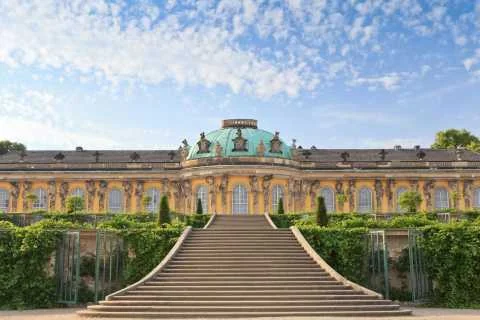
The Sanssouci Palace Park is much more than just the green backdrop of a famous palace. It is a historic landscape park of international significance, a UNESCO World Heritage site, and a place where garden art, power history, architecture, and walking culture meet in a unique way. Those who enter the park do not simply experience a park facility, but a carefully composed world of sight lines, terraces, water features, sculptures, and tree populations that have been maintained and developed for over 250 years. With its famous terraced layout, central fountain, and extensive pathways, Sanssouci is one of the most impressive park facilities in Germany. The Prussian Palaces and Gardens Foundation describes the park as a world-class work of garden art that is open daily and whose use requires respect for the monument. For visitors, this is an invitation to slow down in Potsdam, and for those seeking information, it is a place with many practical questions regarding admission, opening hours, access, parking, dogs, bicycles, and maps. This overview answers these questions based on official information and the park's special features. ([spsg.de](https://www.spsg.de/schloesser-gaerten/objekt/park-sanssouci/))
Opening Hours, Admission, and Park Regulations at Sanssouci Palace Park
The most important basic information is pleasantly straightforward: The Sanssouci Park is open daily from 8:00 AM until dusk, and admission is free. This makes the park suitable for both a short walk and a longer stay without needing an admission ticket for the outdoor area. At the same time, it is important to note that entry is at one's own risk, as it is a historic park facility, not a randomly paved city park. The SPSG also emphasizes that the park is a world-class work of garden art and should be preserved as a place of culture and recreation. Accordingly, some rules are formulated quite strictly. Without special permission, no motor vehicles may drive or be parked in the park, bicycles may only be used, ridden, or parked on designated bike paths, and pathways should not be left. Additionally, camping, tenting, barbecuing, open fires, climbing on structures or sculptures, loud music, sports games, and navigating the waters with boats or model boats are prohibited. Dogs are allowed but must be kept on a short leash, and dog waste must be disposed of immediately. The fountains and water features do not contain drinking water, which is an important practical note in warm weather. Drones and unmanned aerial systems are also not permitted in the park. Those who observe these rules will experience Sanssouci as a calm, well-maintained, and impressively protected cultural space that preserves its historical atmosphere precisely through this order. ([spsg.de](https://www.spsg.de/schloesser-gaerten/objekt/park-sanssouci/))
Access, Parking, and the Park Map for Sanssouci
Access to Sanssouci Palace Park is well organized and prepared for various types of visits. Officially, the SPSG lists the address for Sanssouci Park as Zur Historischen Mühle, 14469 Potsdam. For public transport, several stops are important: “Potsdam, Schloss Sanssouci,” “Potsdam, Neues Palais,” “Potsdam, Schloss Charlottenhof,” and “Potsdam, Luisenplatz-Nord/Park Sanssouci.” This is especially convenient if you want to explore the park from different sides or target a specific area, such as the New Palace or the surroundings of the Historical Mill. For drivers, the SPSG indicates paid parking spaces for cars and buses in parking lot P1 at the Historical Mill and P3 at the New Palace. Additionally, the institution refers to current traffic information, which can be helpful on days with high visitor numbers. The official park map is also very useful: The State Surveying Office of Brandenburg and the SPSG provide a map of Sanssouci at a scale of 1:5,000, also available in an English edition. The map shows the locations of palaces, important trees, and sculptures, serving not only for orientation but also for a better understanding of the park's structure. On-site, the visitor centers at the Historical Mill and the New Palace also assist, where tickets, information, and additional services are available. Those who want to discover Sanssouci not just by strolling but systematically should definitely use this map, as the area is large, the sight lines are long, and the individual areas often reveal their charm only in interplay. ([spsg.de](https://www.spsg.de/schloesser-gaerten/objekt/park-sanssouci/))
Dogs, Bicycles, and Camping: What is Allowed in the Park
Many inquiries regarding Sanssouci Palace Park do not revolve around classic sights but rather around practical rules for everyday life. Questions about dogs are particularly common. Here, the answer is clear: Dogs are allowed in the park but must remain on a short leash, and their waste must be disposed of immediately. This is not just a formal requirement but protects the facility, the visitors, and the historical use of the park as a cultural and recreational space. The topic of bicycles is also clearly regulated. Bicycles are not generally prohibited in the park but may only be used on the designated bike paths. Those exploring the park on foot will find it much more relaxing since the paths and sight lines are oriented towards walkers. For many users, the question of camping, picnicking, and leisure behavior is particularly relevant. Camping, tenting, barbecuing, and open fires are not permitted. Likewise, sports games, skates, skateboards, or horseback riding are prohibited in the park. Swimming, fishing, boating, and model boating in the waters are also forbidden. These rules show that Sanssouci is not a recreational park in the modern sense but a listed facility with clear protection needs. Those who use the park respectfully can experience extraordinarily much: quiet meadows, geometric parterres, wide paths, shaded avenues, and continually new perspectives on palaces, sculptures, and water axes. For this reason, it is worthwhile to see the rules not as restrictions but as part of the visitor experience. They preserve the tranquility that makes Sanssouci so special. ([spsg.de](https://www.spsg.de/schloesser-gaerten/unterwegs-im-gartendenkmal/parkordnung/parkordnung-park-sanssouci/))
Cafés, Breaks, and Services around Sanssouci Palace Park
An extensive visit to Sanssouci Palace Park is best combined with sufficient time, a clear plan, and a good break in between. For this, there are several gastronomic offerings and service points around the park. Particularly important is the visitor center at the New Palace, which prepares or concludes the visit to the park and the palace. There, tickets, combination tickets, annual passes, event tickets, a museum shop, lockers, mobile charging stations, free Wi-Fi, informational materials, toilets, and a barrier-free toilet are available. At the back of the building, Café Caroline invites you to enjoy coffee and snacks. There is also a tactile model of the park on-site, which is helpful for initial orientation. In the vicinity, the SPSG also mentions the Drachenhaus Restaurant & Café in Sanssouci Park, Café Repin near the Picture Gallery and Sanssouci Palace, the Theaterklaus near the entrance Grünes Gitter, Augustiner in Bürgerbahnhof next to Park Sanssouci station, Lottenhof / Bill's Kitchen near Schloss Charlottenhof, and Zur Historischen Mühle near Sanssouci Palace. For many visitors, this density of break options is pleasant because the park is large, and a tour can be easily combined with coffee, lunch, or a short stop. Additionally, the SPSG offers the free app SANSSOUCI, which serves as a digital companion through the palaces and parks and includes various tours and language versions for the park. Therefore, those who want to experience the park in a relaxed manner benefit from a very good infrastructure that ranges from ticket counters to toilets to gastronomy. This makes Sanssouci also pleasantly planable for families, older visitors, and day guests. ([spsg.de](https://www.spsg.de/en/palaces-gardens/object/besuchszentrum-neues-palais))
History, Terraced Layout, and UNESCO World Heritage
The historical significance of Sanssouci is closely linked to Frederick the Great. According to the SPSG, he planned his palace with a terraced layout dedicated to viticulture as early as 1743 and had his burial site established there. Later, Frederick William IV significantly expanded the garden between the private Sanssouci Palace and the New Palace. Thus, a French-influenced pleasure garden of the 18th century evolved into a multifaceted landscape park, which in the 19th century was complemented by natural stagings, neoclassical and romantic buildings, and new spatial sequences. Today, the park connects these different epochs in a compact space. Visitors encounter not only the famous terrace and the fountain at the center but also more than 1,000 sculptures, wide meadow areas, formal gardens, and architectural accents that make the garden art of the respective time visible. The park covers around 300 hectares and extends over more than two kilometers in an east-west direction. This makes it clear that a meaningful tour takes time. Sanssouci was added to the UNESCO World Heritage List in 1990 and is part of the large cultural landscape of the palaces and parks of Potsdam and Berlin. UNESCO describes this site as a significant cultural landscape; in Potsdam, Sanssouci Park itself is one of the central components of the World Heritage site. This classification is important because Sanssouci should not be viewed in isolation. The park is connected with the New Palace, the Orangery Palace, the New Chambers, and many other parts of the ensemble. It is precisely in this connection that its strength lies: It is not a backdrop but a historically grown narrative space where politics, representation, art, and gardening become visible. ([spsg.de](https://www.spsg.de/schloesser-gaerten/objekt/park-sanssouci/))
Accessibility, Map, and the Best Photo Opportunities in Sanssouci Palace Park
Although the park is historically not barrier-free in all areas, the SPSG has described a barrier-reduced route for Sanssouci and established practical aids. For visitors with mobility impairments, blind and visually impaired guests, the foundation recommends a special route because the historic facility is not well accessible everywhere. In the area of the New Chambers and the mill ramp, there are partly paved, uneven, and sometimes steep paths; at the Historical Mill, folding wheelchairs can be rented. There is also a public parking lot, a barrier-free bus stop with direct connection to Potsdam main station, a toilet, and the Mövenpick restaurant with barrier-free access and WC. Particularly helpful are also the bronze model in front of the visitor center and the official park map, both of which help to spatially understand the park before exploring it. For photo opportunities, Sanssouci is a stroke of luck: The terraced layout at the palace, the central fountain, the sight line to the Ruinenberg, the historical sculptures, the wide meadows, and the paths along the mulberry avenue provide strong perspectives time and again. Those looking for photos will find no artificial staging in the park but real historical image spaces that change with light, season, and viewpoint. Early in the morning and late in the afternoon, the facility appears particularly soft and atmospheric; during the main time of day, the strict lines of garden art become more apparent. This interplay of strictness and poetry makes Sanssouci so photogenic and so popular. So, for those seeking a map, good access, clear paths, and strong motifs, everything is available in one place. Sanssouci is thus not only a destination for history fans but also a very well-planned excursion destination for all who want to consciously experience Potsdam's most famous park landscape. ([spsg.de](https://www.spsg.de/schloesser-gaerten/barrierefreiheit-park-sanssouci))
Sources:
Show moreShow less
Sanssouci Palace Park | Admission & Opening Hours
The Sanssouci Palace Park is much more than just the green backdrop of a famous palace. It is a historic landscape park of international significance, a UNESCO World Heritage site, and a place where garden art, power history, architecture, and walking culture meet in a unique way. Those who enter the park do not simply experience a park facility, but a carefully composed world of sight lines, terraces, water features, sculptures, and tree populations that have been maintained and developed for over 250 years. With its famous terraced layout, central fountain, and extensive pathways, Sanssouci is one of the most impressive park facilities in Germany. The Prussian Palaces and Gardens Foundation describes the park as a world-class work of garden art that is open daily and whose use requires respect for the monument. For visitors, this is an invitation to slow down in Potsdam, and for those seeking information, it is a place with many practical questions regarding admission, opening hours, access, parking, dogs, bicycles, and maps. This overview answers these questions based on official information and the park's special features. ([spsg.de](https://www.spsg.de/schloesser-gaerten/objekt/park-sanssouci/))
Opening Hours, Admission, and Park Regulations at Sanssouci Palace Park
The most important basic information is pleasantly straightforward: The Sanssouci Park is open daily from 8:00 AM until dusk, and admission is free. This makes the park suitable for both a short walk and a longer stay without needing an admission ticket for the outdoor area. At the same time, it is important to note that entry is at one's own risk, as it is a historic park facility, not a randomly paved city park. The SPSG also emphasizes that the park is a world-class work of garden art and should be preserved as a place of culture and recreation. Accordingly, some rules are formulated quite strictly. Without special permission, no motor vehicles may drive or be parked in the park, bicycles may only be used, ridden, or parked on designated bike paths, and pathways should not be left. Additionally, camping, tenting, barbecuing, open fires, climbing on structures or sculptures, loud music, sports games, and navigating the waters with boats or model boats are prohibited. Dogs are allowed but must be kept on a short leash, and dog waste must be disposed of immediately. The fountains and water features do not contain drinking water, which is an important practical note in warm weather. Drones and unmanned aerial systems are also not permitted in the park. Those who observe these rules will experience Sanssouci as a calm, well-maintained, and impressively protected cultural space that preserves its historical atmosphere precisely through this order. ([spsg.de](https://www.spsg.de/schloesser-gaerten/objekt/park-sanssouci/))
Access, Parking, and the Park Map for Sanssouci
Access to Sanssouci Palace Park is well organized and prepared for various types of visits. Officially, the SPSG lists the address for Sanssouci Park as Zur Historischen Mühle, 14469 Potsdam. For public transport, several stops are important: “Potsdam, Schloss Sanssouci,” “Potsdam, Neues Palais,” “Potsdam, Schloss Charlottenhof,” and “Potsdam, Luisenplatz-Nord/Park Sanssouci.” This is especially convenient if you want to explore the park from different sides or target a specific area, such as the New Palace or the surroundings of the Historical Mill. For drivers, the SPSG indicates paid parking spaces for cars and buses in parking lot P1 at the Historical Mill and P3 at the New Palace. Additionally, the institution refers to current traffic information, which can be helpful on days with high visitor numbers. The official park map is also very useful: The State Surveying Office of Brandenburg and the SPSG provide a map of Sanssouci at a scale of 1:5,000, also available in an English edition. The map shows the locations of palaces, important trees, and sculptures, serving not only for orientation but also for a better understanding of the park's structure. On-site, the visitor centers at the Historical Mill and the New Palace also assist, where tickets, information, and additional services are available. Those who want to discover Sanssouci not just by strolling but systematically should definitely use this map, as the area is large, the sight lines are long, and the individual areas often reveal their charm only in interplay. ([spsg.de](https://www.spsg.de/schloesser-gaerten/objekt/park-sanssouci/))
Dogs, Bicycles, and Camping: What is Allowed in the Park
Many inquiries regarding Sanssouci Palace Park do not revolve around classic sights but rather around practical rules for everyday life. Questions about dogs are particularly common. Here, the answer is clear: Dogs are allowed in the park but must remain on a short leash, and their waste must be disposed of immediately. This is not just a formal requirement but protects the facility, the visitors, and the historical use of the park as a cultural and recreational space. The topic of bicycles is also clearly regulated. Bicycles are not generally prohibited in the park but may only be used on the designated bike paths. Those exploring the park on foot will find it much more relaxing since the paths and sight lines are oriented towards walkers. For many users, the question of camping, picnicking, and leisure behavior is particularly relevant. Camping, tenting, barbecuing, and open fires are not permitted. Likewise, sports games, skates, skateboards, or horseback riding are prohibited in the park. Swimming, fishing, boating, and model boating in the waters are also forbidden. These rules show that Sanssouci is not a recreational park in the modern sense but a listed facility with clear protection needs. Those who use the park respectfully can experience extraordinarily much: quiet meadows, geometric parterres, wide paths, shaded avenues, and continually new perspectives on palaces, sculptures, and water axes. For this reason, it is worthwhile to see the rules not as restrictions but as part of the visitor experience. They preserve the tranquility that makes Sanssouci so special. ([spsg.de](https://www.spsg.de/schloesser-gaerten/unterwegs-im-gartendenkmal/parkordnung/parkordnung-park-sanssouci/))
Cafés, Breaks, and Services around Sanssouci Palace Park
An extensive visit to Sanssouci Palace Park is best combined with sufficient time, a clear plan, and a good break in between. For this, there are several gastronomic offerings and service points around the park. Particularly important is the visitor center at the New Palace, which prepares or concludes the visit to the park and the palace. There, tickets, combination tickets, annual passes, event tickets, a museum shop, lockers, mobile charging stations, free Wi-Fi, informational materials, toilets, and a barrier-free toilet are available. At the back of the building, Café Caroline invites you to enjoy coffee and snacks. There is also a tactile model of the park on-site, which is helpful for initial orientation. In the vicinity, the SPSG also mentions the Drachenhaus Restaurant & Café in Sanssouci Park, Café Repin near the Picture Gallery and Sanssouci Palace, the Theaterklaus near the entrance Grünes Gitter, Augustiner in Bürgerbahnhof next to Park Sanssouci station, Lottenhof / Bill's Kitchen near Schloss Charlottenhof, and Zur Historischen Mühle near Sanssouci Palace. For many visitors, this density of break options is pleasant because the park is large, and a tour can be easily combined with coffee, lunch, or a short stop. Additionally, the SPSG offers the free app SANSSOUCI, which serves as a digital companion through the palaces and parks and includes various tours and language versions for the park. Therefore, those who want to experience the park in a relaxed manner benefit from a very good infrastructure that ranges from ticket counters to toilets to gastronomy. This makes Sanssouci also pleasantly planable for families, older visitors, and day guests. ([spsg.de](https://www.spsg.de/en/palaces-gardens/object/besuchszentrum-neues-palais))
History, Terraced Layout, and UNESCO World Heritage
The historical significance of Sanssouci is closely linked to Frederick the Great. According to the SPSG, he planned his palace with a terraced layout dedicated to viticulture as early as 1743 and had his burial site established there. Later, Frederick William IV significantly expanded the garden between the private Sanssouci Palace and the New Palace. Thus, a French-influenced pleasure garden of the 18th century evolved into a multifaceted landscape park, which in the 19th century was complemented by natural stagings, neoclassical and romantic buildings, and new spatial sequences. Today, the park connects these different epochs in a compact space. Visitors encounter not only the famous terrace and the fountain at the center but also more than 1,000 sculptures, wide meadow areas, formal gardens, and architectural accents that make the garden art of the respective time visible. The park covers around 300 hectares and extends over more than two kilometers in an east-west direction. This makes it clear that a meaningful tour takes time. Sanssouci was added to the UNESCO World Heritage List in 1990 and is part of the large cultural landscape of the palaces and parks of Potsdam and Berlin. UNESCO describes this site as a significant cultural landscape; in Potsdam, Sanssouci Park itself is one of the central components of the World Heritage site. This classification is important because Sanssouci should not be viewed in isolation. The park is connected with the New Palace, the Orangery Palace, the New Chambers, and many other parts of the ensemble. It is precisely in this connection that its strength lies: It is not a backdrop but a historically grown narrative space where politics, representation, art, and gardening become visible. ([spsg.de](https://www.spsg.de/schloesser-gaerten/objekt/park-sanssouci/))
Accessibility, Map, and the Best Photo Opportunities in Sanssouci Palace Park
Although the park is historically not barrier-free in all areas, the SPSG has described a barrier-reduced route for Sanssouci and established practical aids. For visitors with mobility impairments, blind and visually impaired guests, the foundation recommends a special route because the historic facility is not well accessible everywhere. In the area of the New Chambers and the mill ramp, there are partly paved, uneven, and sometimes steep paths; at the Historical Mill, folding wheelchairs can be rented. There is also a public parking lot, a barrier-free bus stop with direct connection to Potsdam main station, a toilet, and the Mövenpick restaurant with barrier-free access and WC. Particularly helpful are also the bronze model in front of the visitor center and the official park map, both of which help to spatially understand the park before exploring it. For photo opportunities, Sanssouci is a stroke of luck: The terraced layout at the palace, the central fountain, the sight line to the Ruinenberg, the historical sculptures, the wide meadows, and the paths along the mulberry avenue provide strong perspectives time and again. Those looking for photos will find no artificial staging in the park but real historical image spaces that change with light, season, and viewpoint. Early in the morning and late in the afternoon, the facility appears particularly soft and atmospheric; during the main time of day, the strict lines of garden art become more apparent. This interplay of strictness and poetry makes Sanssouci so photogenic and so popular. So, for those seeking a map, good access, clear paths, and strong motifs, everything is available in one place. Sanssouci is thus not only a destination for history fans but also a very well-planned excursion destination for all who want to consciously experience Potsdam's most famous park landscape. ([spsg.de](https://www.spsg.de/schloesser-gaerten/barrierefreiheit-park-sanssouci))
Sources:
Sanssouci Palace Park | Admission & Opening Hours
The Sanssouci Palace Park is much more than just the green backdrop of a famous palace. It is a historic landscape park of international significance, a UNESCO World Heritage site, and a place where garden art, power history, architecture, and walking culture meet in a unique way. Those who enter the park do not simply experience a park facility, but a carefully composed world of sight lines, terraces, water features, sculptures, and tree populations that have been maintained and developed for over 250 years. With its famous terraced layout, central fountain, and extensive pathways, Sanssouci is one of the most impressive park facilities in Germany. The Prussian Palaces and Gardens Foundation describes the park as a world-class work of garden art that is open daily and whose use requires respect for the monument. For visitors, this is an invitation to slow down in Potsdam, and for those seeking information, it is a place with many practical questions regarding admission, opening hours, access, parking, dogs, bicycles, and maps. This overview answers these questions based on official information and the park's special features. ([spsg.de](https://www.spsg.de/schloesser-gaerten/objekt/park-sanssouci/))
Opening Hours, Admission, and Park Regulations at Sanssouci Palace Park
The most important basic information is pleasantly straightforward: The Sanssouci Park is open daily from 8:00 AM until dusk, and admission is free. This makes the park suitable for both a short walk and a longer stay without needing an admission ticket for the outdoor area. At the same time, it is important to note that entry is at one's own risk, as it is a historic park facility, not a randomly paved city park. The SPSG also emphasizes that the park is a world-class work of garden art and should be preserved as a place of culture and recreation. Accordingly, some rules are formulated quite strictly. Without special permission, no motor vehicles may drive or be parked in the park, bicycles may only be used, ridden, or parked on designated bike paths, and pathways should not be left. Additionally, camping, tenting, barbecuing, open fires, climbing on structures or sculptures, loud music, sports games, and navigating the waters with boats or model boats are prohibited. Dogs are allowed but must be kept on a short leash, and dog waste must be disposed of immediately. The fountains and water features do not contain drinking water, which is an important practical note in warm weather. Drones and unmanned aerial systems are also not permitted in the park. Those who observe these rules will experience Sanssouci as a calm, well-maintained, and impressively protected cultural space that preserves its historical atmosphere precisely through this order. ([spsg.de](https://www.spsg.de/schloesser-gaerten/objekt/park-sanssouci/))
Access, Parking, and the Park Map for Sanssouci
Access to Sanssouci Palace Park is well organized and prepared for various types of visits. Officially, the SPSG lists the address for Sanssouci Park as Zur Historischen Mühle, 14469 Potsdam. For public transport, several stops are important: “Potsdam, Schloss Sanssouci,” “Potsdam, Neues Palais,” “Potsdam, Schloss Charlottenhof,” and “Potsdam, Luisenplatz-Nord/Park Sanssouci.” This is especially convenient if you want to explore the park from different sides or target a specific area, such as the New Palace or the surroundings of the Historical Mill. For drivers, the SPSG indicates paid parking spaces for cars and buses in parking lot P1 at the Historical Mill and P3 at the New Palace. Additionally, the institution refers to current traffic information, which can be helpful on days with high visitor numbers. The official park map is also very useful: The State Surveying Office of Brandenburg and the SPSG provide a map of Sanssouci at a scale of 1:5,000, also available in an English edition. The map shows the locations of palaces, important trees, and sculptures, serving not only for orientation but also for a better understanding of the park's structure. On-site, the visitor centers at the Historical Mill and the New Palace also assist, where tickets, information, and additional services are available. Those who want to discover Sanssouci not just by strolling but systematically should definitely use this map, as the area is large, the sight lines are long, and the individual areas often reveal their charm only in interplay. ([spsg.de](https://www.spsg.de/schloesser-gaerten/objekt/park-sanssouci/))
Dogs, Bicycles, and Camping: What is Allowed in the Park
Many inquiries regarding Sanssouci Palace Park do not revolve around classic sights but rather around practical rules for everyday life. Questions about dogs are particularly common. Here, the answer is clear: Dogs are allowed in the park but must remain on a short leash, and their waste must be disposed of immediately. This is not just a formal requirement but protects the facility, the visitors, and the historical use of the park as a cultural and recreational space. The topic of bicycles is also clearly regulated. Bicycles are not generally prohibited in the park but may only be used on the designated bike paths. Those exploring the park on foot will find it much more relaxing since the paths and sight lines are oriented towards walkers. For many users, the question of camping, picnicking, and leisure behavior is particularly relevant. Camping, tenting, barbecuing, and open fires are not permitted. Likewise, sports games, skates, skateboards, or horseback riding are prohibited in the park. Swimming, fishing, boating, and model boating in the waters are also forbidden. These rules show that Sanssouci is not a recreational park in the modern sense but a listed facility with clear protection needs. Those who use the park respectfully can experience extraordinarily much: quiet meadows, geometric parterres, wide paths, shaded avenues, and continually new perspectives on palaces, sculptures, and water axes. For this reason, it is worthwhile to see the rules not as restrictions but as part of the visitor experience. They preserve the tranquility that makes Sanssouci so special. ([spsg.de](https://www.spsg.de/schloesser-gaerten/unterwegs-im-gartendenkmal/parkordnung/parkordnung-park-sanssouci/))
Cafés, Breaks, and Services around Sanssouci Palace Park
An extensive visit to Sanssouci Palace Park is best combined with sufficient time, a clear plan, and a good break in between. For this, there are several gastronomic offerings and service points around the park. Particularly important is the visitor center at the New Palace, which prepares or concludes the visit to the park and the palace. There, tickets, combination tickets, annual passes, event tickets, a museum shop, lockers, mobile charging stations, free Wi-Fi, informational materials, toilets, and a barrier-free toilet are available. At the back of the building, Café Caroline invites you to enjoy coffee and snacks. There is also a tactile model of the park on-site, which is helpful for initial orientation. In the vicinity, the SPSG also mentions the Drachenhaus Restaurant & Café in Sanssouci Park, Café Repin near the Picture Gallery and Sanssouci Palace, the Theaterklaus near the entrance Grünes Gitter, Augustiner in Bürgerbahnhof next to Park Sanssouci station, Lottenhof / Bill's Kitchen near Schloss Charlottenhof, and Zur Historischen Mühle near Sanssouci Palace. For many visitors, this density of break options is pleasant because the park is large, and a tour can be easily combined with coffee, lunch, or a short stop. Additionally, the SPSG offers the free app SANSSOUCI, which serves as a digital companion through the palaces and parks and includes various tours and language versions for the park. Therefore, those who want to experience the park in a relaxed manner benefit from a very good infrastructure that ranges from ticket counters to toilets to gastronomy. This makes Sanssouci also pleasantly planable for families, older visitors, and day guests. ([spsg.de](https://www.spsg.de/en/palaces-gardens/object/besuchszentrum-neues-palais))
History, Terraced Layout, and UNESCO World Heritage
The historical significance of Sanssouci is closely linked to Frederick the Great. According to the SPSG, he planned his palace with a terraced layout dedicated to viticulture as early as 1743 and had his burial site established there. Later, Frederick William IV significantly expanded the garden between the private Sanssouci Palace and the New Palace. Thus, a French-influenced pleasure garden of the 18th century evolved into a multifaceted landscape park, which in the 19th century was complemented by natural stagings, neoclassical and romantic buildings, and new spatial sequences. Today, the park connects these different epochs in a compact space. Visitors encounter not only the famous terrace and the fountain at the center but also more than 1,000 sculptures, wide meadow areas, formal gardens, and architectural accents that make the garden art of the respective time visible. The park covers around 300 hectares and extends over more than two kilometers in an east-west direction. This makes it clear that a meaningful tour takes time. Sanssouci was added to the UNESCO World Heritage List in 1990 and is part of the large cultural landscape of the palaces and parks of Potsdam and Berlin. UNESCO describes this site as a significant cultural landscape; in Potsdam, Sanssouci Park itself is one of the central components of the World Heritage site. This classification is important because Sanssouci should not be viewed in isolation. The park is connected with the New Palace, the Orangery Palace, the New Chambers, and many other parts of the ensemble. It is precisely in this connection that its strength lies: It is not a backdrop but a historically grown narrative space where politics, representation, art, and gardening become visible. ([spsg.de](https://www.spsg.de/schloesser-gaerten/objekt/park-sanssouci/))
Accessibility, Map, and the Best Photo Opportunities in Sanssouci Palace Park
Although the park is historically not barrier-free in all areas, the SPSG has described a barrier-reduced route for Sanssouci and established practical aids. For visitors with mobility impairments, blind and visually impaired guests, the foundation recommends a special route because the historic facility is not well accessible everywhere. In the area of the New Chambers and the mill ramp, there are partly paved, uneven, and sometimes steep paths; at the Historical Mill, folding wheelchairs can be rented. There is also a public parking lot, a barrier-free bus stop with direct connection to Potsdam main station, a toilet, and the Mövenpick restaurant with barrier-free access and WC. Particularly helpful are also the bronze model in front of the visitor center and the official park map, both of which help to spatially understand the park before exploring it. For photo opportunities, Sanssouci is a stroke of luck: The terraced layout at the palace, the central fountain, the sight line to the Ruinenberg, the historical sculptures, the wide meadows, and the paths along the mulberry avenue provide strong perspectives time and again. Those looking for photos will find no artificial staging in the park but real historical image spaces that change with light, season, and viewpoint. Early in the morning and late in the afternoon, the facility appears particularly soft and atmospheric; during the main time of day, the strict lines of garden art become more apparent. This interplay of strictness and poetry makes Sanssouci so photogenic and so popular. So, for those seeking a map, good access, clear paths, and strong motifs, everything is available in one place. Sanssouci is thus not only a destination for history fans but also a very well-planned excursion destination for all who want to consciously experience Potsdam's most famous park landscape. ([spsg.de](https://www.spsg.de/schloesser-gaerten/barrierefreiheit-park-sanssouci))
Sources:
Upcoming Events
No events found
Frequently Asked Questions
Reviews
Sweet Sinay's Reviews
1. December 2025
If your travels bring you to Berlin, find your way to Potsdam. When you reach Potsdam, find your way to the Schlosspark. And be prepared to spend some time here. Gilded palaces. Romantic windmills. Rococo statuary. Enchanting fountains. Manicured gardens. And horseback Frederick the Great overlooking it all. Be prepared to spend a day or more here and expect to see the amazing in the details. You won't be disappointed. Sinay says: Consider coming here in November when crowds are low, views are wide and the weather is not so intensely cold yet. Highly recommended
Patrick
11. December 2025
Beautiful park with endless pathways to explore and sights to see. Was super cool seeing mistletoe and holly among all of the bushes and trees. Worth walking around, especially late afternoon before it gets dark - it feels like you have the whole park to yourself.
Katja R.
14. September 2025
One of my favorite places to visit. We did the Castle tour this time and enjoyed it very much. The park is so beautiful. I always love to come back here.
Steven Cheng
18. December 2024
The “small” summer palace for the emperor Frederick the Great! This 12 rooms summer Palace is really small considering its size but no less grand and luxurious! Each and every room is filled with paintings and beautiful furniture! The Garden in the back also very beautiful just looking at it how it was designed even at the dead winter when we visited! I will be happy to come back to Berlin and Potsdam again in the summer time to enjoy the different face of the palace!
Hakan
22. August 2025
Sanssouci, which means ‘without worries,’ is truly an amazing place. The beautiful gardens and the elegant buildings create a peaceful and unforgettable atmosphere.