
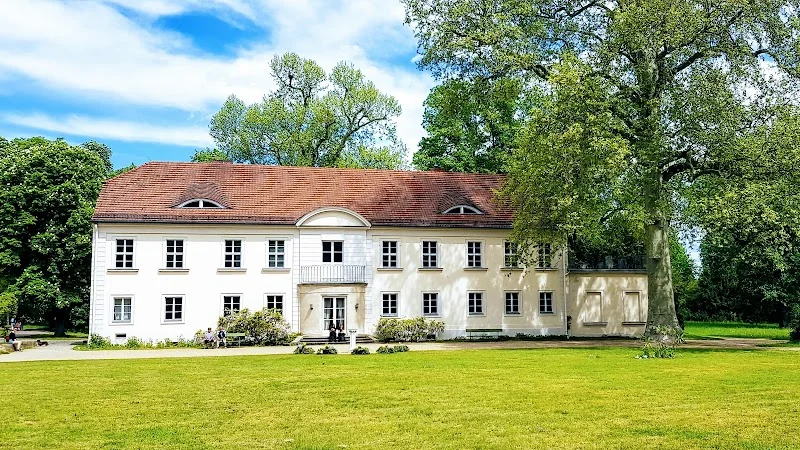
Potsdam
Krampnitzer Str. 33, 14469 Potsdam, Deutschland
Schloss Sacrow | Exhibitions & Opening Hours
Schloss Sacrow is one of the places in Potsdam where history, landscape, and culture come together in a compact space. Between the Havel, Jungfernsee, and the Sacrow Park, the ensemble appears quiet and almost hidden, but it is precisely this seclusion that has given it a special allure. Today, the castle does not stand in the spotlight as a classic year-round museum, but as a changing venue for special exhibitions, concerts, readings, and film formats. This makes the visit interesting for people who want to connect art and history, as well as for anyone planning a walk through one of the most impressive park spaces of the Potsdam cultural landscape. The fact that the castle, park, and Heilandskirche are part of the UNESCO World Heritage continues to shape perceptions to this day. ([spsg.de](https://www.spsg.de/schloesser-gaerten/objekt/schloss-sacrow))
Current Exhibition and Opening Hours at Schloss Sacrow
Those looking for the current exhibition at Schloss Sacrow will find a place that consciously works with changing formats. The SPSG does not operate Schloss Sacrow as a daily open permanent museum, but as an event venue accessible within the framework of exhibitions and special events. For 2026, the official exhibition overview names the show DYSTOPIA Wolfgang Petrick & friends, running from July 4 to September 13, 2026. On the same castle page, accompanying events such as the exhibition opening with music and snacks, a tribute to Wolfgang Petrick, a film screening with discussion, and a reading with Nina Petrick are also listed. This mix of exhibition, discussion, and music is what makes Schloss Sacrow appealing: the house is not only shown but is continually re-staged. ([spsg.de](https://www.spsg.de/schloesser-gaerten/objekt/schloss-sacrow))
For planning, it is also important to note that the castle and park behave differently in terms of time. According to SPSG, the Sacrow Park is open daily from 8 AM until dusk and is freely accessible, while the castle itself is only open during exhibitions and special events. This makes the location very suitable for a combined visit: first the walk through the park, then the view of the current art or cultural event in the castle. The temporary use is no coincidence but part of the concept, as Schloss Sacrow is an infrastructurally and conservationally sensitive place that has consciously not been converted into a permanent mass operation. Therefore, anyone searching for Schloss Sacrow opening hours or Schloss Sacrow exhibition opening hours should always check the current program data and align their visit with the respective duration. ([spsg.de](https://www.spsg.de/schloesser-gaerten/objekt/park-sacrow))
Events, Cinema, and the Program of Ars Sacrow
The current events at Schloss Sacrow are strongly linked to Ars Sacrow. The association has been working since 2002 to fill the Heilandskirche, Schloss Sacrow, and Sacrow Park with life and make them accessible to the public. On the official homepage, Ars Sacrow describes a program of exhibitions, concerts, readings, and encounters; particularly noteworthy are the monthly film screenings, which take place outdoors in the castle's courtyard during the summer and in the Spiegel-Saal during the cooler months. This also explains why the search interest in Schloss Sacrow cinema, Schloss Sacrow events, and Schloss Sacrow exhibition is so closely related: the use is not limited to a single format but is consciously versatile. ([ars-sacrow.de](https://ars-sacrow.de/?utm_source=openai))
Current and past program points show this diversity very concretely. For 2026, the SPSG not only announces the exhibition DYSTOPIA but also a series of accompanying formats such as an exhibition opening with music and snacks, a film and discussion evening, a reading, and a tribute to Wolfgang Petrick. In 2025, Schloss Sacrow was the focus of War and Peace? 100 Years of Bernhard Heisig, a jubilee exhibition on Bernhard Heisig, which according to Ars Sacrow included around 60 paintings and 100 drawings or graphics. Also in 2025, the Miettinen Collection presented around 130 works by more than 50 artists under the title Exit Paradise, making Schloss Sacrow a special art space for an entire season. Therefore, anyone searching for Schloss Sacrow Heisig, Schloss Sacrow Bernhard Heisig, or Schloss Sacrow Heisig exhibition will find no random reference here, but a clearly recognizable exhibition pattern with art-historical significance. ([ars-sacrow.de](https://www.ars-sacrow.de/aktuelles/event/314-krieg-und-frieden-100-jahre-bernhard-heisig.html))
History of Schloss Sacrow in Potsdam
The history of Schloss Sacrow dates back long before its current cultural use. The manor was first mentioned in the 14th century. In 1764, the Swedish-Prussian General Johann Ludwig Graf von Hordt acquired the southern tip of the Sacrow peninsula and had a new manor house built there in 1773. Later, the estate came into the possession of Heinrich August Karl de la Motte Fouqué; his son Friedrich de la Motte Fouqué spent parts of his youth here. This early phase makes it clear that Schloss Sacrow is not only a Prussian architectural monument but is also linked to literary and family history. The official city page also reminds us that Theodor Fontane described the place as remote and difficult to reach, which vividly illustrates the peripheral location of Sacrow in the 19th century. ([potsdam.de](https://www.potsdam.de/de/schloss-sacrow))
The decisive turning point came in 1840 when King Friedrich Wilhelm IV acquired the estate and manor house. He commissioned Ludwig Persius to build the Heilandskirche and simultaneously had the manor house expanded; Peter Joseph Lenné designed the park with sight lines to Pfaueninsel, Glienicke, Babelsberg, and Cecilienhof. Since that time, the manor house has been referred to as a castle, although the king himself never lived in it. In 1938, the complex was converted into the residence and service seat of the Prussian chief forester; after World War II, it served temporarily as a children's and writers' home for those persecuted by the Nazi regime, and later, with the construction of the wall, the National People's Army initially moved in, followed by the GDR customs authorities in 1973. Since 1992, the castle, park, and Heilandskirche have been part of the UNESCO World Heritage; in 1993, the castle became part of the Prussian Palaces and Gardens Foundation Berlin-Brandenburg, and from 2003, the interim use as a museum for a summer began with Ars Sacrow. ([potsdam.de](https://www.potsdam.de/de/schloss-sacrow))
Interiors, Photos, and Special Architecture
Those interested in the interior of Schloss Sacrow encounter a house with visible traces of time. The original manor house was laid out symmetrically and received a large greenhouse on the south gable during its construction. When the conversion to the residence and service seat of the chief forester took place in 1938, the building largely lost its baroque form inside: representative rooms were moved to the ground floor, the apartment was located on the upper floor, the roof ridge was extended, and part of the Persius extension on the north wing was incorporated into the new structure. The banquet hall with floor-to-ceiling windows and the large roof terrace, which gave the house a different, more representative function, is also remarkable. Today, this layering of baroque, repurposing, and restoration is an essential part of the experience. ([ars-sacrow.de](https://www.ars-sacrow.de/einblicke/schloss.html?utm_source=openai))
Schloss Sacrow is particularly grateful for photos because the official representation not only makes the building itself visible but also its landscape relationships. The SPSG shows motifs such as the building view, light through the trees, aerial shots of Sacrow Park, or the view from the Heilandskirche over the cross towards Glienicke. The park side also describes the famous viewpoint fan, which opens the view from the garden side of the castle to the Jägerhof, the Große Neugierde in Glienicke, the Flatow Tower in Babelsberg, and the silhouette of Potsdam. Additionally, there is a detail that surprises many visitors: west of the castle stands the oldest oak in Potsdam, right next to it is a more than one hundred-year-old orchard. A classic seating plan logic like in large event halls plays hardly any role here because Schloss Sacrow is not a permanent multipurpose house but a historical place with changing exhibition scenarios and always new perspectives. ([spsg.de](https://www.spsg.de/schloesser-gaerten/objekt/park-sacrow))
Access, Parking, and Location on the Havel River
The access to Schloss Sacrow is officially well described. The address is Krampnitzer Straße 33 in 14469 Potsdam. For public transport, the SPSG names the stop Potsdam, Schloss Sacrow. Those arriving by car will find a public parking lot at the entrance to Sacrow; from there, it is about 300 meters on foot to the castle. The Sacrow Park itself is located at Krampnitzer Straße 34. This makes it clear: the ensemble is not located in the city center but is deliberately situated on the edge of a landscape-dominated zone, which shapes both the atmosphere and accessibility. ([spsg.de](https://www.spsg.de/schloesser-gaerten/objekt/schloss-sacrow))
For visitors with bicycles, there are also practical tips: the park side refers to a park plan with designated bicycle racks. At the same time, one should not underestimate the location, as the paths through the park and around the castle are part of the experience. Those visiting Schloss Sacrow do not just experience an address but a landscape sequence of access, park path, and view of the Havel. Especially in conjunction with the Heilandskirche, which is located nearby, a very unique walk is created that differs significantly from urban museums. The surroundings are designed so that the path itself is already part of the visit. Therefore, for search terms like Schloss Sacrow Potsdam, Schloss Sacrow opening hours, or Schloss Sacrow exhibition opening hours, not only the time but also the location is crucial. ([spsg.de](https://www.spsg.de/schloesser-gaerten/objekt/park-sacrow))
Café, Rentals, and Practical Visitor Tips
Those looking to rent Schloss Sacrow usually mean a use for cultural, private, or special event formats. On the official pages, Schloss Sacrow is primarily visible as an exhibition and event venue; therefore, direct contact through Ars Sacrow e.V. is the most sensible point of contact. The SPSG provides the contact details with email and phone number, and the Ars-Sacrow pages simultaneously show how versatile the use already is: from exhibitions to readings to film screenings and smaller encounter formats. Practically, this means: for individual inquiries, it is worthwhile to check early whether the desired date fits into the ongoing program. Therefore, those interested in a rental or special use should not assume a standard rental offer but rather a historically sensitive individual assessment. ([spsg.de](https://www.spsg.de/schloesser-gaerten/objekt/schloss-sacrow))
A permanent Schloss Sacrow café is not listed as a standard offering on the official pages; catering appears more likely at individual events, such as openings or the Kladow Supper Club. Therefore, for planning a visit, it makes sense to organize the coffee or meal stop independently of the castle visit or to check the respective event closely. At the same time, it is worth taking a look at the practical restrictions: the exhibition rooms are not wheelchair accessible according to SPSG, and for conservation reasons, strollers are not allowed in the exhibition rooms. This sounds strict but explains why the place is used so carefully and selectively. Those who plan their visit well will receive an impressive mix of park walk, cultural program, and historical atmosphere. Especially because Schloss Sacrow is not designed for quick throughput, it unfolds its charm most strongly when one brings enough time for the park, house, and program. ([spsg.de](https://www.spsg.de/schloesser-gaerten/objekt/schloss-sacrow))
Sources:
Show moreShow less
Schloss Sacrow | Exhibitions & Opening Hours
Schloss Sacrow is one of the places in Potsdam where history, landscape, and culture come together in a compact space. Between the Havel, Jungfernsee, and the Sacrow Park, the ensemble appears quiet and almost hidden, but it is precisely this seclusion that has given it a special allure. Today, the castle does not stand in the spotlight as a classic year-round museum, but as a changing venue for special exhibitions, concerts, readings, and film formats. This makes the visit interesting for people who want to connect art and history, as well as for anyone planning a walk through one of the most impressive park spaces of the Potsdam cultural landscape. The fact that the castle, park, and Heilandskirche are part of the UNESCO World Heritage continues to shape perceptions to this day. ([spsg.de](https://www.spsg.de/schloesser-gaerten/objekt/schloss-sacrow))
Current Exhibition and Opening Hours at Schloss Sacrow
Those looking for the current exhibition at Schloss Sacrow will find a place that consciously works with changing formats. The SPSG does not operate Schloss Sacrow as a daily open permanent museum, but as an event venue accessible within the framework of exhibitions and special events. For 2026, the official exhibition overview names the show DYSTOPIA Wolfgang Petrick & friends, running from July 4 to September 13, 2026. On the same castle page, accompanying events such as the exhibition opening with music and snacks, a tribute to Wolfgang Petrick, a film screening with discussion, and a reading with Nina Petrick are also listed. This mix of exhibition, discussion, and music is what makes Schloss Sacrow appealing: the house is not only shown but is continually re-staged. ([spsg.de](https://www.spsg.de/schloesser-gaerten/objekt/schloss-sacrow))
For planning, it is also important to note that the castle and park behave differently in terms of time. According to SPSG, the Sacrow Park is open daily from 8 AM until dusk and is freely accessible, while the castle itself is only open during exhibitions and special events. This makes the location very suitable for a combined visit: first the walk through the park, then the view of the current art or cultural event in the castle. The temporary use is no coincidence but part of the concept, as Schloss Sacrow is an infrastructurally and conservationally sensitive place that has consciously not been converted into a permanent mass operation. Therefore, anyone searching for Schloss Sacrow opening hours or Schloss Sacrow exhibition opening hours should always check the current program data and align their visit with the respective duration. ([spsg.de](https://www.spsg.de/schloesser-gaerten/objekt/park-sacrow))
Events, Cinema, and the Program of Ars Sacrow
The current events at Schloss Sacrow are strongly linked to Ars Sacrow. The association has been working since 2002 to fill the Heilandskirche, Schloss Sacrow, and Sacrow Park with life and make them accessible to the public. On the official homepage, Ars Sacrow describes a program of exhibitions, concerts, readings, and encounters; particularly noteworthy are the monthly film screenings, which take place outdoors in the castle's courtyard during the summer and in the Spiegel-Saal during the cooler months. This also explains why the search interest in Schloss Sacrow cinema, Schloss Sacrow events, and Schloss Sacrow exhibition is so closely related: the use is not limited to a single format but is consciously versatile. ([ars-sacrow.de](https://ars-sacrow.de/?utm_source=openai))
Current and past program points show this diversity very concretely. For 2026, the SPSG not only announces the exhibition DYSTOPIA but also a series of accompanying formats such as an exhibition opening with music and snacks, a film and discussion evening, a reading, and a tribute to Wolfgang Petrick. In 2025, Schloss Sacrow was the focus of War and Peace? 100 Years of Bernhard Heisig, a jubilee exhibition on Bernhard Heisig, which according to Ars Sacrow included around 60 paintings and 100 drawings or graphics. Also in 2025, the Miettinen Collection presented around 130 works by more than 50 artists under the title Exit Paradise, making Schloss Sacrow a special art space for an entire season. Therefore, anyone searching for Schloss Sacrow Heisig, Schloss Sacrow Bernhard Heisig, or Schloss Sacrow Heisig exhibition will find no random reference here, but a clearly recognizable exhibition pattern with art-historical significance. ([ars-sacrow.de](https://www.ars-sacrow.de/aktuelles/event/314-krieg-und-frieden-100-jahre-bernhard-heisig.html))
History of Schloss Sacrow in Potsdam
The history of Schloss Sacrow dates back long before its current cultural use. The manor was first mentioned in the 14th century. In 1764, the Swedish-Prussian General Johann Ludwig Graf von Hordt acquired the southern tip of the Sacrow peninsula and had a new manor house built there in 1773. Later, the estate came into the possession of Heinrich August Karl de la Motte Fouqué; his son Friedrich de la Motte Fouqué spent parts of his youth here. This early phase makes it clear that Schloss Sacrow is not only a Prussian architectural monument but is also linked to literary and family history. The official city page also reminds us that Theodor Fontane described the place as remote and difficult to reach, which vividly illustrates the peripheral location of Sacrow in the 19th century. ([potsdam.de](https://www.potsdam.de/de/schloss-sacrow))
The decisive turning point came in 1840 when King Friedrich Wilhelm IV acquired the estate and manor house. He commissioned Ludwig Persius to build the Heilandskirche and simultaneously had the manor house expanded; Peter Joseph Lenné designed the park with sight lines to Pfaueninsel, Glienicke, Babelsberg, and Cecilienhof. Since that time, the manor house has been referred to as a castle, although the king himself never lived in it. In 1938, the complex was converted into the residence and service seat of the Prussian chief forester; after World War II, it served temporarily as a children's and writers' home for those persecuted by the Nazi regime, and later, with the construction of the wall, the National People's Army initially moved in, followed by the GDR customs authorities in 1973. Since 1992, the castle, park, and Heilandskirche have been part of the UNESCO World Heritage; in 1993, the castle became part of the Prussian Palaces and Gardens Foundation Berlin-Brandenburg, and from 2003, the interim use as a museum for a summer began with Ars Sacrow. ([potsdam.de](https://www.potsdam.de/de/schloss-sacrow))
Interiors, Photos, and Special Architecture
Those interested in the interior of Schloss Sacrow encounter a house with visible traces of time. The original manor house was laid out symmetrically and received a large greenhouse on the south gable during its construction. When the conversion to the residence and service seat of the chief forester took place in 1938, the building largely lost its baroque form inside: representative rooms were moved to the ground floor, the apartment was located on the upper floor, the roof ridge was extended, and part of the Persius extension on the north wing was incorporated into the new structure. The banquet hall with floor-to-ceiling windows and the large roof terrace, which gave the house a different, more representative function, is also remarkable. Today, this layering of baroque, repurposing, and restoration is an essential part of the experience. ([ars-sacrow.de](https://www.ars-sacrow.de/einblicke/schloss.html?utm_source=openai))
Schloss Sacrow is particularly grateful for photos because the official representation not only makes the building itself visible but also its landscape relationships. The SPSG shows motifs such as the building view, light through the trees, aerial shots of Sacrow Park, or the view from the Heilandskirche over the cross towards Glienicke. The park side also describes the famous viewpoint fan, which opens the view from the garden side of the castle to the Jägerhof, the Große Neugierde in Glienicke, the Flatow Tower in Babelsberg, and the silhouette of Potsdam. Additionally, there is a detail that surprises many visitors: west of the castle stands the oldest oak in Potsdam, right next to it is a more than one hundred-year-old orchard. A classic seating plan logic like in large event halls plays hardly any role here because Schloss Sacrow is not a permanent multipurpose house but a historical place with changing exhibition scenarios and always new perspectives. ([spsg.de](https://www.spsg.de/schloesser-gaerten/objekt/park-sacrow))
Access, Parking, and Location on the Havel River
The access to Schloss Sacrow is officially well described. The address is Krampnitzer Straße 33 in 14469 Potsdam. For public transport, the SPSG names the stop Potsdam, Schloss Sacrow. Those arriving by car will find a public parking lot at the entrance to Sacrow; from there, it is about 300 meters on foot to the castle. The Sacrow Park itself is located at Krampnitzer Straße 34. This makes it clear: the ensemble is not located in the city center but is deliberately situated on the edge of a landscape-dominated zone, which shapes both the atmosphere and accessibility. ([spsg.de](https://www.spsg.de/schloesser-gaerten/objekt/schloss-sacrow))
For visitors with bicycles, there are also practical tips: the park side refers to a park plan with designated bicycle racks. At the same time, one should not underestimate the location, as the paths through the park and around the castle are part of the experience. Those visiting Schloss Sacrow do not just experience an address but a landscape sequence of access, park path, and view of the Havel. Especially in conjunction with the Heilandskirche, which is located nearby, a very unique walk is created that differs significantly from urban museums. The surroundings are designed so that the path itself is already part of the visit. Therefore, for search terms like Schloss Sacrow Potsdam, Schloss Sacrow opening hours, or Schloss Sacrow exhibition opening hours, not only the time but also the location is crucial. ([spsg.de](https://www.spsg.de/schloesser-gaerten/objekt/park-sacrow))
Café, Rentals, and Practical Visitor Tips
Those looking to rent Schloss Sacrow usually mean a use for cultural, private, or special event formats. On the official pages, Schloss Sacrow is primarily visible as an exhibition and event venue; therefore, direct contact through Ars Sacrow e.V. is the most sensible point of contact. The SPSG provides the contact details with email and phone number, and the Ars-Sacrow pages simultaneously show how versatile the use already is: from exhibitions to readings to film screenings and smaller encounter formats. Practically, this means: for individual inquiries, it is worthwhile to check early whether the desired date fits into the ongoing program. Therefore, those interested in a rental or special use should not assume a standard rental offer but rather a historically sensitive individual assessment. ([spsg.de](https://www.spsg.de/schloesser-gaerten/objekt/schloss-sacrow))
A permanent Schloss Sacrow café is not listed as a standard offering on the official pages; catering appears more likely at individual events, such as openings or the Kladow Supper Club. Therefore, for planning a visit, it makes sense to organize the coffee or meal stop independently of the castle visit or to check the respective event closely. At the same time, it is worth taking a look at the practical restrictions: the exhibition rooms are not wheelchair accessible according to SPSG, and for conservation reasons, strollers are not allowed in the exhibition rooms. This sounds strict but explains why the place is used so carefully and selectively. Those who plan their visit well will receive an impressive mix of park walk, cultural program, and historical atmosphere. Especially because Schloss Sacrow is not designed for quick throughput, it unfolds its charm most strongly when one brings enough time for the park, house, and program. ([spsg.de](https://www.spsg.de/schloesser-gaerten/objekt/schloss-sacrow))
Sources:
Schloss Sacrow | Exhibitions & Opening Hours
Schloss Sacrow is one of the places in Potsdam where history, landscape, and culture come together in a compact space. Between the Havel, Jungfernsee, and the Sacrow Park, the ensemble appears quiet and almost hidden, but it is precisely this seclusion that has given it a special allure. Today, the castle does not stand in the spotlight as a classic year-round museum, but as a changing venue for special exhibitions, concerts, readings, and film formats. This makes the visit interesting for people who want to connect art and history, as well as for anyone planning a walk through one of the most impressive park spaces of the Potsdam cultural landscape. The fact that the castle, park, and Heilandskirche are part of the UNESCO World Heritage continues to shape perceptions to this day. ([spsg.de](https://www.spsg.de/schloesser-gaerten/objekt/schloss-sacrow))
Current Exhibition and Opening Hours at Schloss Sacrow
Those looking for the current exhibition at Schloss Sacrow will find a place that consciously works with changing formats. The SPSG does not operate Schloss Sacrow as a daily open permanent museum, but as an event venue accessible within the framework of exhibitions and special events. For 2026, the official exhibition overview names the show DYSTOPIA Wolfgang Petrick & friends, running from July 4 to September 13, 2026. On the same castle page, accompanying events such as the exhibition opening with music and snacks, a tribute to Wolfgang Petrick, a film screening with discussion, and a reading with Nina Petrick are also listed. This mix of exhibition, discussion, and music is what makes Schloss Sacrow appealing: the house is not only shown but is continually re-staged. ([spsg.de](https://www.spsg.de/schloesser-gaerten/objekt/schloss-sacrow))
For planning, it is also important to note that the castle and park behave differently in terms of time. According to SPSG, the Sacrow Park is open daily from 8 AM until dusk and is freely accessible, while the castle itself is only open during exhibitions and special events. This makes the location very suitable for a combined visit: first the walk through the park, then the view of the current art or cultural event in the castle. The temporary use is no coincidence but part of the concept, as Schloss Sacrow is an infrastructurally and conservationally sensitive place that has consciously not been converted into a permanent mass operation. Therefore, anyone searching for Schloss Sacrow opening hours or Schloss Sacrow exhibition opening hours should always check the current program data and align their visit with the respective duration. ([spsg.de](https://www.spsg.de/schloesser-gaerten/objekt/park-sacrow))
Events, Cinema, and the Program of Ars Sacrow
The current events at Schloss Sacrow are strongly linked to Ars Sacrow. The association has been working since 2002 to fill the Heilandskirche, Schloss Sacrow, and Sacrow Park with life and make them accessible to the public. On the official homepage, Ars Sacrow describes a program of exhibitions, concerts, readings, and encounters; particularly noteworthy are the monthly film screenings, which take place outdoors in the castle's courtyard during the summer and in the Spiegel-Saal during the cooler months. This also explains why the search interest in Schloss Sacrow cinema, Schloss Sacrow events, and Schloss Sacrow exhibition is so closely related: the use is not limited to a single format but is consciously versatile. ([ars-sacrow.de](https://ars-sacrow.de/?utm_source=openai))
Current and past program points show this diversity very concretely. For 2026, the SPSG not only announces the exhibition DYSTOPIA but also a series of accompanying formats such as an exhibition opening with music and snacks, a film and discussion evening, a reading, and a tribute to Wolfgang Petrick. In 2025, Schloss Sacrow was the focus of War and Peace? 100 Years of Bernhard Heisig, a jubilee exhibition on Bernhard Heisig, which according to Ars Sacrow included around 60 paintings and 100 drawings or graphics. Also in 2025, the Miettinen Collection presented around 130 works by more than 50 artists under the title Exit Paradise, making Schloss Sacrow a special art space for an entire season. Therefore, anyone searching for Schloss Sacrow Heisig, Schloss Sacrow Bernhard Heisig, or Schloss Sacrow Heisig exhibition will find no random reference here, but a clearly recognizable exhibition pattern with art-historical significance. ([ars-sacrow.de](https://www.ars-sacrow.de/aktuelles/event/314-krieg-und-frieden-100-jahre-bernhard-heisig.html))
History of Schloss Sacrow in Potsdam
The history of Schloss Sacrow dates back long before its current cultural use. The manor was first mentioned in the 14th century. In 1764, the Swedish-Prussian General Johann Ludwig Graf von Hordt acquired the southern tip of the Sacrow peninsula and had a new manor house built there in 1773. Later, the estate came into the possession of Heinrich August Karl de la Motte Fouqué; his son Friedrich de la Motte Fouqué spent parts of his youth here. This early phase makes it clear that Schloss Sacrow is not only a Prussian architectural monument but is also linked to literary and family history. The official city page also reminds us that Theodor Fontane described the place as remote and difficult to reach, which vividly illustrates the peripheral location of Sacrow in the 19th century. ([potsdam.de](https://www.potsdam.de/de/schloss-sacrow))
The decisive turning point came in 1840 when King Friedrich Wilhelm IV acquired the estate and manor house. He commissioned Ludwig Persius to build the Heilandskirche and simultaneously had the manor house expanded; Peter Joseph Lenné designed the park with sight lines to Pfaueninsel, Glienicke, Babelsberg, and Cecilienhof. Since that time, the manor house has been referred to as a castle, although the king himself never lived in it. In 1938, the complex was converted into the residence and service seat of the Prussian chief forester; after World War II, it served temporarily as a children's and writers' home for those persecuted by the Nazi regime, and later, with the construction of the wall, the National People's Army initially moved in, followed by the GDR customs authorities in 1973. Since 1992, the castle, park, and Heilandskirche have been part of the UNESCO World Heritage; in 1993, the castle became part of the Prussian Palaces and Gardens Foundation Berlin-Brandenburg, and from 2003, the interim use as a museum for a summer began with Ars Sacrow. ([potsdam.de](https://www.potsdam.de/de/schloss-sacrow))
Interiors, Photos, and Special Architecture
Those interested in the interior of Schloss Sacrow encounter a house with visible traces of time. The original manor house was laid out symmetrically and received a large greenhouse on the south gable during its construction. When the conversion to the residence and service seat of the chief forester took place in 1938, the building largely lost its baroque form inside: representative rooms were moved to the ground floor, the apartment was located on the upper floor, the roof ridge was extended, and part of the Persius extension on the north wing was incorporated into the new structure. The banquet hall with floor-to-ceiling windows and the large roof terrace, which gave the house a different, more representative function, is also remarkable. Today, this layering of baroque, repurposing, and restoration is an essential part of the experience. ([ars-sacrow.de](https://www.ars-sacrow.de/einblicke/schloss.html?utm_source=openai))
Schloss Sacrow is particularly grateful for photos because the official representation not only makes the building itself visible but also its landscape relationships. The SPSG shows motifs such as the building view, light through the trees, aerial shots of Sacrow Park, or the view from the Heilandskirche over the cross towards Glienicke. The park side also describes the famous viewpoint fan, which opens the view from the garden side of the castle to the Jägerhof, the Große Neugierde in Glienicke, the Flatow Tower in Babelsberg, and the silhouette of Potsdam. Additionally, there is a detail that surprises many visitors: west of the castle stands the oldest oak in Potsdam, right next to it is a more than one hundred-year-old orchard. A classic seating plan logic like in large event halls plays hardly any role here because Schloss Sacrow is not a permanent multipurpose house but a historical place with changing exhibition scenarios and always new perspectives. ([spsg.de](https://www.spsg.de/schloesser-gaerten/objekt/park-sacrow))
Access, Parking, and Location on the Havel River
The access to Schloss Sacrow is officially well described. The address is Krampnitzer Straße 33 in 14469 Potsdam. For public transport, the SPSG names the stop Potsdam, Schloss Sacrow. Those arriving by car will find a public parking lot at the entrance to Sacrow; from there, it is about 300 meters on foot to the castle. The Sacrow Park itself is located at Krampnitzer Straße 34. This makes it clear: the ensemble is not located in the city center but is deliberately situated on the edge of a landscape-dominated zone, which shapes both the atmosphere and accessibility. ([spsg.de](https://www.spsg.de/schloesser-gaerten/objekt/schloss-sacrow))
For visitors with bicycles, there are also practical tips: the park side refers to a park plan with designated bicycle racks. At the same time, one should not underestimate the location, as the paths through the park and around the castle are part of the experience. Those visiting Schloss Sacrow do not just experience an address but a landscape sequence of access, park path, and view of the Havel. Especially in conjunction with the Heilandskirche, which is located nearby, a very unique walk is created that differs significantly from urban museums. The surroundings are designed so that the path itself is already part of the visit. Therefore, for search terms like Schloss Sacrow Potsdam, Schloss Sacrow opening hours, or Schloss Sacrow exhibition opening hours, not only the time but also the location is crucial. ([spsg.de](https://www.spsg.de/schloesser-gaerten/objekt/park-sacrow))
Café, Rentals, and Practical Visitor Tips
Those looking to rent Schloss Sacrow usually mean a use for cultural, private, or special event formats. On the official pages, Schloss Sacrow is primarily visible as an exhibition and event venue; therefore, direct contact through Ars Sacrow e.V. is the most sensible point of contact. The SPSG provides the contact details with email and phone number, and the Ars-Sacrow pages simultaneously show how versatile the use already is: from exhibitions to readings to film screenings and smaller encounter formats. Practically, this means: for individual inquiries, it is worthwhile to check early whether the desired date fits into the ongoing program. Therefore, those interested in a rental or special use should not assume a standard rental offer but rather a historically sensitive individual assessment. ([spsg.de](https://www.spsg.de/schloesser-gaerten/objekt/schloss-sacrow))
A permanent Schloss Sacrow café is not listed as a standard offering on the official pages; catering appears more likely at individual events, such as openings or the Kladow Supper Club. Therefore, for planning a visit, it makes sense to organize the coffee or meal stop independently of the castle visit or to check the respective event closely. At the same time, it is worth taking a look at the practical restrictions: the exhibition rooms are not wheelchair accessible according to SPSG, and for conservation reasons, strollers are not allowed in the exhibition rooms. This sounds strict but explains why the place is used so carefully and selectively. Those who plan their visit well will receive an impressive mix of park walk, cultural program, and historical atmosphere. Especially because Schloss Sacrow is not designed for quick throughput, it unfolds its charm most strongly when one brings enough time for the park, house, and program. ([spsg.de](https://www.spsg.de/schloesser-gaerten/objekt/schloss-sacrow))
Sources:
Upcoming Events

Opening: DYSTOPIA - Wolfgang Petrick & Friends
Experience the exhibition DYSTOPIA by Wolfgang Petrick at Sacrow Castle. Open from July 4, 2026.
Museum for a Summer: DYSTOPIA - Wolfgang Petrick & Friends - VERNISSAGE
A summer of strong imagery in Schloss Sacrow: Wolfgang Petrick & friends showcase dystopia, figure, and memory. Vernissage on 04.07.2026. #Potsdam #Art
Conversation 'I Work in Free Fall' – Tribute to Wolfgang Petrick
An atmospheric afternoon for art lovers: Tribute to Wolfgang Petrick at Schloss Sacrow. 07.05.2026, 3 PM, 10 € / 6 €. #Potsdam #Art

Sacrow Encounter - Angela Zumpe - TIME SPIRITS
A special summer afternoon at Schloss Sacrow: TIME SPIRITS with Angela Zumpe combines film, art, and memory. 12.07.2026, 3:00 PM, 10 Euros. #Potsdam #Culture
Curator Tour - DYSTOPIA - Wolfgang Petrick, HELMA & Friends
An intensive curator tour at Schloss Sacrow: DYSTOPIA with Wolfgang Petrick, HELMA & Friends connects art, history, and the present. #PotsdamArt
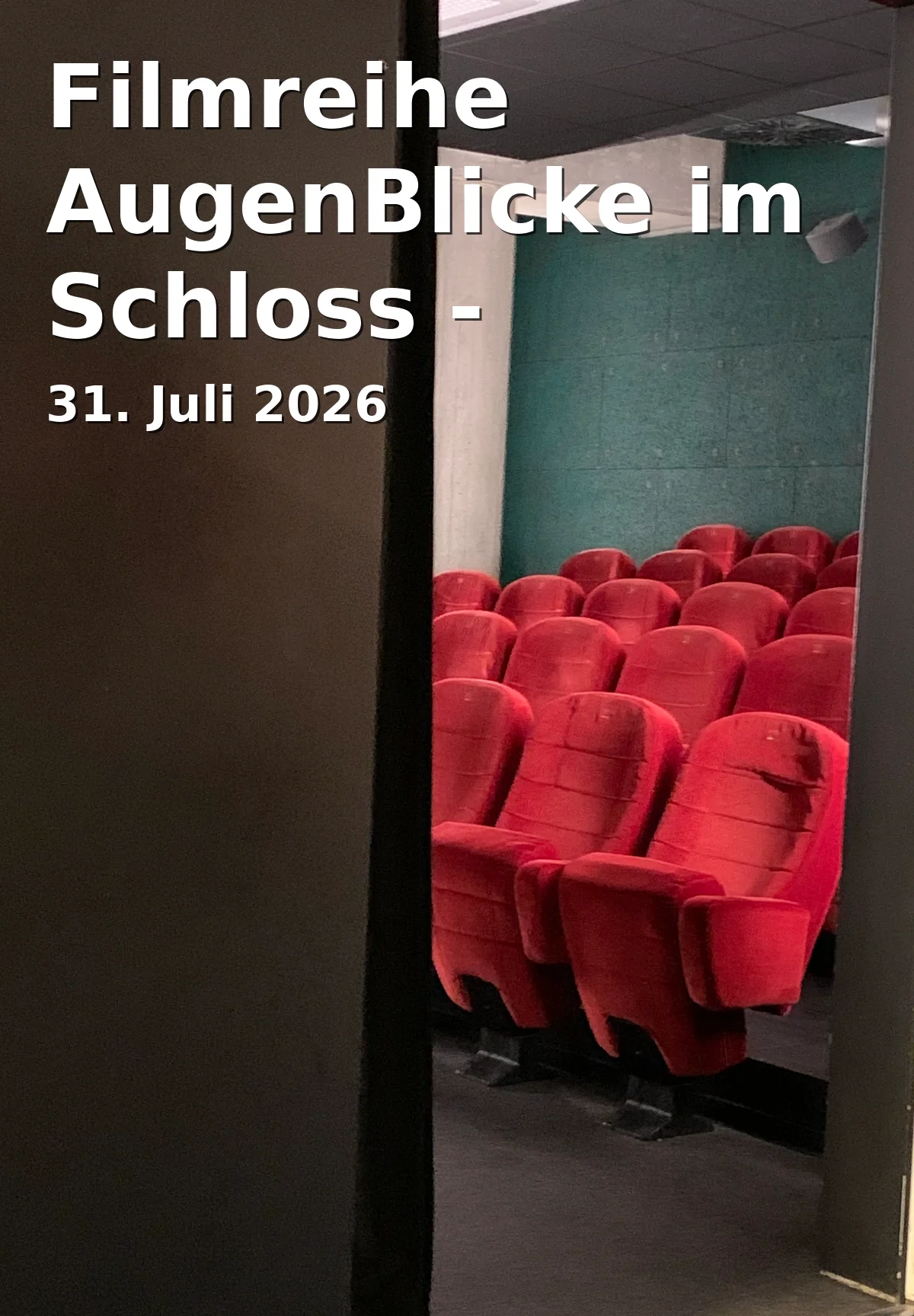
Film Series Moments in the Castle - TRAINSPOTTING
Experience the cult film Trainspotting in the film series Moments in the Castle on July 31 at Schloss Sacrow, Potsdam.
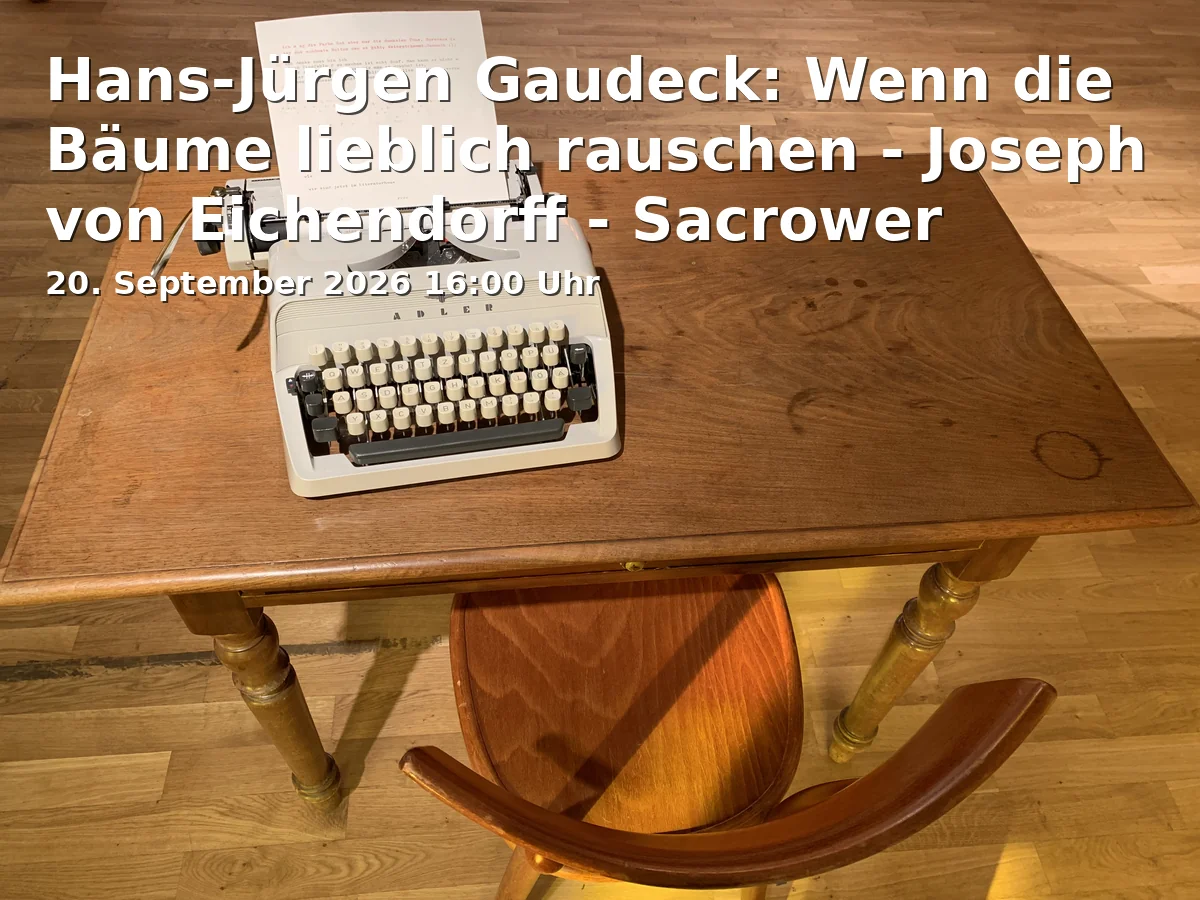
Hans-Jürgen Gaudeck: When the Trees Rustle Lovingly - Joseph von Eichendorff - Sacrow Encounter
A poetic afternoon in Sacrow: Hans-Jürgen Gaudeck brings Eichendorff to life. Romance, watercolors, and a historical atmosphere on September 20, 2026. #Literature

A CLOCKWORK ORANGE - Film Series EyesOn at the Castle
Dystopia, Beethoven, and Castle Atmosphere: A CLOCKWORK ORANGE at Schloss Sacrow Becomes an Unforgettable Cinema Evening. 25.09.2026, 20:30. #Potsdam #Culture

Film Series Moments in the Castle - HEAVEN OVER THE DESERT
A special film evening at Sacrow Castle: HEAVEN OVER THE DESERT combines arthouse cinema, history, and expanse. 30.10.2026, 20:30, 10 euros. #Potsdam #Cinema
Frequently Asked Questions
Reviews
Bernd Kumar (Tron)
29. July 2022
A nice place for events, concerts, and marriage ceremonies......,, The rooms can be converted to a dance floor 💃. The surroundings are also beautiful 😍
Steven Dewhirst
13. July 2025
Great contemporary art exhibition and a good calendar of events all year. The grounds are beautiful and the walk through them to the water to discover the church was a pleasure. The garden design was rewarding and easy with lots of places to sit and contemplate the vistas of sailing boats and forest areas, and of course back at the delightful Sarcow itself.
Enmanuel Ortega
22. October 2022
Very nice place to sit and take some sun during autumn. Best place to relax in the sun :). Beautiful flowers.
Chris _
18. April 2023
Wonderful place to visit. Great 1/2 hour walk around with the church at the lake, statue, and old oak.
Marina Robert
11. July 2019
Stunning place. Lovely setting. Really lovely church.