
Potsdam
Park Babelsberg 10, 14482 Potsdam, Deutschland
Schloss Babelsberg | Opening Hours & Tours
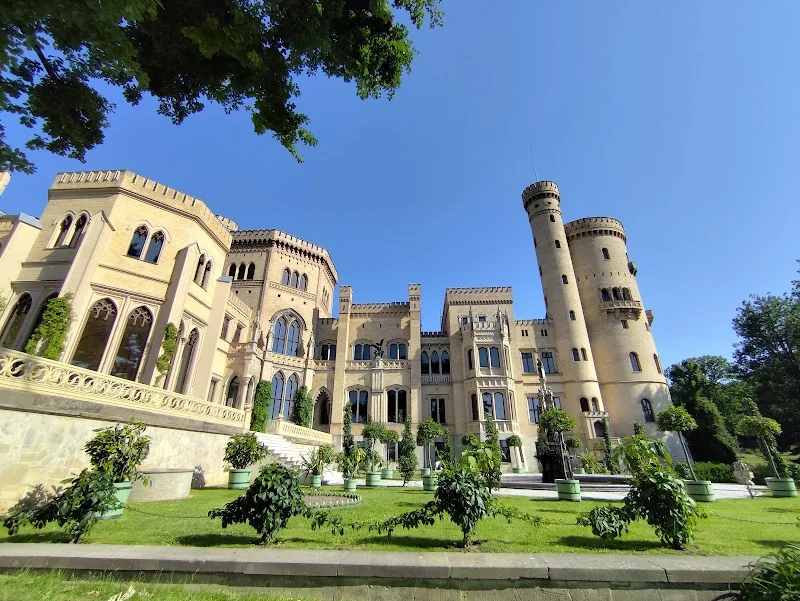
Schloss Babelsberg is one of the most impressive sites in Potsdam, as architecture, landscape, and Prussian history come together here. The castle, built in the style of English Gothic Revival, overlooks the banks of the Havel and is closely associated with Prince Wilhelm of Prussia, later Emperor Wilhelm I, and his wife Augusta. The complex was established in 1833 as a summer residence, which for many decades was a central place of courtly life. Today, Schloss Babelsberg fascinates especially with its restored facades, the terraces overlooking the Havel, and the adjacent park, which is one of the most famous landscape gardens in the region. Those looking for a castle in Potsdam with a strong presence will find here not an ordinary visit, but a place with a special aura, changing events, and a strong connection to art, politics, and garden art. The complex is part of a cultural landscape that is not just to be viewed but is meant to be experienced while walking, guiding, and discovering. This mixture of historical significance, landscape staging, and rare accessibility makes Schloss Babelsberg a search term that evokes romantic images and practical questions for visitors alike. ([spsg.de](https://www.spsg.de/schloesser-gaerten/objekt/schloss-babelsberg))
Opening Hours, Visits, and Special Tours
Those looking for the opening hours of Schloss Babelsberg should first know that the castle is not open daily like a classic museum. The SPSG explicitly points out that Schloss Babelsberg is opened as part of special events. This means: The visit is tied to specific dates, and those who wish to see the interior should inform themselves in advance about current tours or event formats. This limitation is not a disadvantage but part of the special character of the place, as the castle is not marketed as a permanent attraction but as a historical space with curated access. Current notices also show that in certain tours, not only the restored facades and terraces play a role, but also the still unrenovated rooms of the main floor. This creates a rare visitor experience that goes far beyond a short castle tour and makes the history of the house directly tangible. For guests, it is therefore important to pay attention to the appointment character of the offer: Those who come spontaneously can experience the park, but the interior of the castle only if a tour or event is currently taking place. This limitation creates demand because it makes the castle something special that cannot be consumed arbitrarily but is meant to be visited consciously. ([spsg.de](https://www.spsg.de/schloesser-gaerten/objekt/schloss-babelsberg))
The special tour format Schloss Babelsberg: Time(ge)stories particularly illustrates how the SPSG engages with the site. According to the current event description, selected topics will be presented in the context of this tour in 2026, although the renovation of the interior is still pending. Visitors will gain insights into several historical layers: traces from afar linked to Prussian-German foreign, colonial, and trade policy; the protection of art treasures, as Schloss Babelsberg served as a large storage depot during World War II; and the post-war use of the rooms, which were shaped by the People's Judge School, the University of Film Arts, and the Museum of Prehistory and Early History. This is particularly relevant for search queries like tour, visit, or interior, as it shows that the visit is not just a glance into a hall but a historically dense narrative. The tours are conducted by the castle management itself, which reinforces the impression that here not standardized mass goods are offered, but a professionally guided approach to the site. Therefore, those interested in Schloss Babelsberg should not only look for a date but also for the specific event format. ([spsg.de](https://www.spsg.de/en/news/events-single?cHash=9afa8fb0a47dad333716275651873b34&tx_cbspsgobjects_eventshow%5Baction%5D=showEventtime&tx_cbspsgobjects_eventshow%5Bcontroller%5D=Event&tx_cbspsgobjects_eventshow%5Bevent%5D=3479&tx_cbspsgobjects_eventshow%5Beventtime%5D=12999))
Access, Parking, and Barrier-Free Paths
The address of Schloss Babelsberg is clear and easy to remember: Park Babelsberg 10, 14482 Potsdam. For arrival by public transport, the SPSG mentions the stop Potsdam, Alt Nowawes. This is the most important orientation for many visitors, as the castle and park are integrated into a vast, partly hilly area and do not lie directly on a main traffic axis like a city center attraction. Regarding parking, the SPSG points out paid parking spaces for cars near the castle. The BBFC adds that the castle complex has its own parking lot about 750 meters away. Therefore, those looking for parking should plan enough time for the last footpath. This is particularly sensible on event days, as the area and surrounding paths can quickly become busier. For guests who prepare with maps or directions, the connection between the stop, parking options, and footpath is the most practical combination. This is especially true if one wants to combine the visit with a walk through the park and not just go directly to the castle. The official orientation shows that Schloss Babelsberg is easily accessible but is deliberately not designed as a place for a quick car stop. ([spsg.de](https://www.spsg.de/schloesser-gaerten/objekt/schloss-babelsberg))
A second important point concerns the paths in the park. Park Babelsberg consists mostly of hilly terrain, which is why the SPSG recommends the riverside path to the machine house for visitors with mobility impairments. One can reach it without inclines through the entrance Mühlentor. This note is more than a technical side remark, as it explains why the entire complex thrives on viewpoints, gradations, and path layouts. At the same time, there are clear rules in the park: It is open from 8 AM until dusk, entry is at one's own risk, and motorized vehicles, bicycles outside designated paths, and many other uses are restricted or prohibited. This is important for all those who inform themselves in advance about park, access, or maps and also think about safety, tranquility, and monument protection. The park is not a recreational area in the usual sense but a garden monument that requires protection and consideration. However, these rules help preserve the special atmosphere. Those who know them can plan more relaxed and can arrange their visit so that arrival, tour, and return fit together harmoniously. ([spsg.de](https://www.spsg.de/schloesser-gaerten/angebote-fuer-gaeste-mit-handicap/barrierefreiheit/mobilitaetseinschraenkungen/park-babelsberg))
The History of Schloss Babelsberg
The history of Schloss Babelsberg begins in 1833 with the decision to create a summer residence for Prince Wilhelm of Prussia and his wife Augusta on the banks of the Havel. The first castle building was designed by Karl Friedrich Schinkel and was originally intended only as a comparatively small cottage. Only with the political and representative elevation of Wilhelm was the building expanded between 1844 and 1849 by Ludwig Persius and Johann Heinrich Strack. This development is central to understanding Schloss Babelsberg, as it shows how closely architecture and hierarchy were connected in the Prussian court. The castle was not merely a residence but an expression of status, self-representation, and power. The complex grew with the demands of its builder and with the role of the later king and emperor. According to the SPSG, Wilhelm and Augusta took an active interest in the design and furnishing of their summer residence, which further personalizes the place. Thus, a non-anonymous palace was created, but a very consciously shaped representative castle that combined romantic ideas with courtly function in its neo-Gothic form. Therefore, those researching the history of Schloss Babelsberg today encounter a building that is not only interesting from a stylistic perspective but also translates a political self-image into stone. ([spsg.de](https://www.spsg.de/schloesser-gaerten/objekt/schloss-babelsberg))
In the 1860s to 1880s, Babelsberg was one of the most important places of social and political life in Prussia, with a peak during the time of the imperial proclamation in 1871, according to the SPSG. This is an important classification, as it removes the castle from pure architectural history and places it in the political history of the 19th century. After World War II, the use changed fundamentally. The SPSG describes the castle as the largest storage depot of the Prussian castle administration; paintings, furniture, and other art treasures from Berlin and Potsdam castles were stored here. At the same time, after 1945, original room shells were partially destroyed to accommodate other institutions. In the castle rooms, among others, the People's Judge School, the University of Film Arts, and the Museum of Prehistory and Early History were later active. These subsequent uses are exciting for visitors today because they explain why the interior can only be gradually opened up and why the historical condition is not fully restored in all areas. The history of Schloss Babelsberg is thus a story of courtly splendor, war-related protection, post-war conversions, and current restoration. ([spsg.de](https://www.spsg.de/schloesser-gaerten/objekt/schloss-babelsberg))
Interior Rooms, Dance Hall, and Current Events
The interest in the interior rooms of Schloss Babelsberg is great, but the official situation is clear: The interior is not regularly open to visitor traffic. This is precisely why the few event formats that allow insights into individual rooms gain significance. Particularly important is the historical dance hall, which appears not only as an image motif on the SPSG site but is also used as a venue for the Babelsberg Castle Concerts. The German Film Orchestra Babelsberg will continue its collaboration with the SPSG there in 2026 and present chamber music concerts that make the space acoustically tangible. Thus, a historical hall becomes not a static showcase but an acoustic experience space. For search queries like interior or events, this is a central point: Those who want to experience Schloss Babelsberg should pay attention to formats that explicitly include the dance hall, the castle kitchen, or the castle terraces in the program. The current event page also states that the concerts are not wheelchair accessible and that admission and ticket conditions vary depending on the format. This again shows that Babelsberg is a place for consciously planned visits, not for random walkthroughs. ([spsg.de](https://www.spsg.de/aktuelles/veranstaltung/babelsberger-schlosskonzerte/event/tid/13249))
A second strong format is the garden festival at Schloss Babelsberg. The SPSG describes it as a musical-literary program with jazz, acrobatics, readings for children and adults, and a historical illumination of the castle terraces with hundreds of colorful glass lanterns. Particularly interesting is that the castle opens for a visit of the still unrenovated rooms. This connects the festival's outdoor atmosphere with a rare glimpse into the interior. The rooms themselves are also meaningfully used: At various locations in the ensemble, such as at the castle kitchen, the Michael monument, on the castle terrace, or at the Black Sea, small program points are created that stage the park as a stage. Therefore, those looking for events at Schloss Babelsberg will find not just a concert venue but a historical setting where readings, music, and tours intertwine. This is important for SEO relevance because the term events is not just a calendar word but describes a clear experiential value. Particularly impressive is that the festival is not reduced to a single hall but includes the entire ensemble with terraces, paths, and sight axes. Schloss Babelsberg thus remains a place of movement, voices, and light. ([spsg.de](https://www.spsg.de/aktuelles/veranstaltung/gartenfest-am-schloss-babelsberg))
Park Babelsberg, Terraces, and Views
Park Babelsberg is the natural frame of Schloss Babelsberg, and without it, the impression of the place would be incomplete. The SPSG describes the park as a scenic landscape park on the banks of the Havel with spectacular views of the Glienicke Bridge and over to the Glienicke Park. The complex was created from 1833 on the orders of Prince Wilhelm and Augusta and owes its design to two of the most important garden artists of their time: Peter Joseph Lenné and Prince Hermann von Pückler-Muskau. This combination is crucial for the reception of the place because here stands not only a castle but a multi-layered composed landscape space that connects sight axes, paths, terraces, and water areas. The park is thus not merely an accessory but the stage on which Schloss Babelsberg unfolds its full effect. Particularly the location on the Havel defines the character of the place: water, elevation differences, wide views, and dense garden space alternate. Those looking for images, views, or Potsdam will find here a backdrop that is both historical and photogenic. At the same time, the official park regulations explain why this impression is preserved: Motorized vehicles, open fires, camping, or leaving the paths are prohibited. It becomes clear that the park is not intended as an event space but as a monument and recreational area at the same time. ([spsg.de](https://www.spsg.de/schloesser-gaerten/objekt/park-babelsberg?no_cache=1))
Around the neo-Gothic castle, richly decorated garden terraces, the pleasure ground with ornamental shrubs, flower gardens, and water features, as well as an artificial water system characterize the complex. According to the SPSG, numerous footpaths open up new views of the Havelland landscape and the silhouette of the city of Potsdam. Additionally, the artificial water system not only nourishes the plants but also artificial lakes, waterfalls, and streams. This is enormously important for the impression on site, as it makes the park recognizable as staged nature. The statement that the terraces should appear like castle rooms in the open air also clarifies the intention of the designers: interior and exterior are not strictly separated but aesthetically related. For visitors interested in history or garden art, this point is particularly appealing because it explains why a walk here is never just a walk. Even individual monuments in the park tell of Prussian memory culture and political symbolism. Therefore, those searching for Schloss Babelsberg images, history, or film set will receive more than just a photo motif: They receive a landscape architectural text that wants to be read. This makes the park one of the strongest arguments for a visit to the entire ensemble. ([spsg.de](https://www.spsg.de/schloesser-gaerten/objekt/park-babelsberg?no_cache=1))
Restaurant in Park Babelsberg and Practical Information
Regarding the restaurant and café at Schloss Babelsberg, a precise classification is important. On the official SPSG pages, no regular café operation is described for the castle itself, as the place does not function as a permanently open gastronomic location in everyday life. The gastronomic use explicitly mentioned by the foundation is located in the Kleine Schloss in Park Babelsberg. There, on the ground floor of the main building, there is a restaurant that will be secured and further developed in the long term. For guests who want to combine their visit with a break, this is the relevant address in the ensemble. Those searching for café or restaurant should not expect to dine directly in Schloss Babelsberg but should focus on the park ensemble. This distinction is important for the user experience as it avoids disappointments and makes planning more realistic. Especially when walking through the expansive park, a stop in the vicinity of the Kleine Schloss can be pleasant after experiencing the paths, views, and terraces. This also fits the character of the place: historical but not overly staged; monumental but embedded in the landscape. ([spsg.de](https://www.spsg.de/schloesser-gaerten/masterplan/sip2-projekte/kleines-schloss-gesamtsanierung))
Those who want to inform themselves in advance will find not only facts but also impressions and images on the SPSG site. The castle page shows impressions and a 360-degree panorama of the dance hall, allowing a first impression of the atmosphere to be gained online. This is particularly helpful for search queries like images or maps, as visitors can thus adjust to the dimensions and sight axes. In summary, Schloss Babelsberg today is a place for targeted visits: The castle itself opens only for special dates, the park is accessible daily, and current tours and events create access to the interior and history. This mixture of rarity, authenticity, and landscape beauty is what makes it appealing. Those looking for a quiet yet impressive place in Potsdam will find here an ensemble that goes far beyond a normal castle visit. It connects the splendor of the 19th century with the fractures of the 20th century and the current forms of mediation. Thus, Schloss Babelsberg is a strong destination for both those interested in cultural history and for day-trippers. ([spsg.de](https://www.spsg.de/schloesser-gaerten/objekt/schloss-babelsberg))
Sources:
Mehr anzeigenWeniger anzeigen
Schloss Babelsberg | Opening Hours & Tours
Schloss Babelsberg is one of the most impressive sites in Potsdam, as architecture, landscape, and Prussian history come together here. The castle, built in the style of English Gothic Revival, overlooks the banks of the Havel and is closely associated with Prince Wilhelm of Prussia, later Emperor Wilhelm I, and his wife Augusta. The complex was established in 1833 as a summer residence, which for many decades was a central place of courtly life. Today, Schloss Babelsberg fascinates especially with its restored facades, the terraces overlooking the Havel, and the adjacent park, which is one of the most famous landscape gardens in the region. Those looking for a castle in Potsdam with a strong presence will find here not an ordinary visit, but a place with a special aura, changing events, and a strong connection to art, politics, and garden art. The complex is part of a cultural landscape that is not just to be viewed but is meant to be experienced while walking, guiding, and discovering. This mixture of historical significance, landscape staging, and rare accessibility makes Schloss Babelsberg a search term that evokes romantic images and practical questions for visitors alike. ([spsg.de](https://www.spsg.de/schloesser-gaerten/objekt/schloss-babelsberg))
Opening Hours, Visits, and Special Tours
Those looking for the opening hours of Schloss Babelsberg should first know that the castle is not open daily like a classic museum. The SPSG explicitly points out that Schloss Babelsberg is opened as part of special events. This means: The visit is tied to specific dates, and those who wish to see the interior should inform themselves in advance about current tours or event formats. This limitation is not a disadvantage but part of the special character of the place, as the castle is not marketed as a permanent attraction but as a historical space with curated access. Current notices also show that in certain tours, not only the restored facades and terraces play a role, but also the still unrenovated rooms of the main floor. This creates a rare visitor experience that goes far beyond a short castle tour and makes the history of the house directly tangible. For guests, it is therefore important to pay attention to the appointment character of the offer: Those who come spontaneously can experience the park, but the interior of the castle only if a tour or event is currently taking place. This limitation creates demand because it makes the castle something special that cannot be consumed arbitrarily but is meant to be visited consciously. ([spsg.de](https://www.spsg.de/schloesser-gaerten/objekt/schloss-babelsberg))
The special tour format Schloss Babelsberg: Time(ge)stories particularly illustrates how the SPSG engages with the site. According to the current event description, selected topics will be presented in the context of this tour in 2026, although the renovation of the interior is still pending. Visitors will gain insights into several historical layers: traces from afar linked to Prussian-German foreign, colonial, and trade policy; the protection of art treasures, as Schloss Babelsberg served as a large storage depot during World War II; and the post-war use of the rooms, which were shaped by the People's Judge School, the University of Film Arts, and the Museum of Prehistory and Early History. This is particularly relevant for search queries like tour, visit, or interior, as it shows that the visit is not just a glance into a hall but a historically dense narrative. The tours are conducted by the castle management itself, which reinforces the impression that here not standardized mass goods are offered, but a professionally guided approach to the site. Therefore, those interested in Schloss Babelsberg should not only look for a date but also for the specific event format. ([spsg.de](https://www.spsg.de/en/news/events-single?cHash=9afa8fb0a47dad333716275651873b34&tx_cbspsgobjects_eventshow%5Baction%5D=showEventtime&tx_cbspsgobjects_eventshow%5Bcontroller%5D=Event&tx_cbspsgobjects_eventshow%5Bevent%5D=3479&tx_cbspsgobjects_eventshow%5Beventtime%5D=12999))
Access, Parking, and Barrier-Free Paths
The address of Schloss Babelsberg is clear and easy to remember: Park Babelsberg 10, 14482 Potsdam. For arrival by public transport, the SPSG mentions the stop Potsdam, Alt Nowawes. This is the most important orientation for many visitors, as the castle and park are integrated into a vast, partly hilly area and do not lie directly on a main traffic axis like a city center attraction. Regarding parking, the SPSG points out paid parking spaces for cars near the castle. The BBFC adds that the castle complex has its own parking lot about 750 meters away. Therefore, those looking for parking should plan enough time for the last footpath. This is particularly sensible on event days, as the area and surrounding paths can quickly become busier. For guests who prepare with maps or directions, the connection between the stop, parking options, and footpath is the most practical combination. This is especially true if one wants to combine the visit with a walk through the park and not just go directly to the castle. The official orientation shows that Schloss Babelsberg is easily accessible but is deliberately not designed as a place for a quick car stop. ([spsg.de](https://www.spsg.de/schloesser-gaerten/objekt/schloss-babelsberg))
A second important point concerns the paths in the park. Park Babelsberg consists mostly of hilly terrain, which is why the SPSG recommends the riverside path to the machine house for visitors with mobility impairments. One can reach it without inclines through the entrance Mühlentor. This note is more than a technical side remark, as it explains why the entire complex thrives on viewpoints, gradations, and path layouts. At the same time, there are clear rules in the park: It is open from 8 AM until dusk, entry is at one's own risk, and motorized vehicles, bicycles outside designated paths, and many other uses are restricted or prohibited. This is important for all those who inform themselves in advance about park, access, or maps and also think about safety, tranquility, and monument protection. The park is not a recreational area in the usual sense but a garden monument that requires protection and consideration. However, these rules help preserve the special atmosphere. Those who know them can plan more relaxed and can arrange their visit so that arrival, tour, and return fit together harmoniously. ([spsg.de](https://www.spsg.de/schloesser-gaerten/angebote-fuer-gaeste-mit-handicap/barrierefreiheit/mobilitaetseinschraenkungen/park-babelsberg))
The History of Schloss Babelsberg
The history of Schloss Babelsberg begins in 1833 with the decision to create a summer residence for Prince Wilhelm of Prussia and his wife Augusta on the banks of the Havel. The first castle building was designed by Karl Friedrich Schinkel and was originally intended only as a comparatively small cottage. Only with the political and representative elevation of Wilhelm was the building expanded between 1844 and 1849 by Ludwig Persius and Johann Heinrich Strack. This development is central to understanding Schloss Babelsberg, as it shows how closely architecture and hierarchy were connected in the Prussian court. The castle was not merely a residence but an expression of status, self-representation, and power. The complex grew with the demands of its builder and with the role of the later king and emperor. According to the SPSG, Wilhelm and Augusta took an active interest in the design and furnishing of their summer residence, which further personalizes the place. Thus, a non-anonymous palace was created, but a very consciously shaped representative castle that combined romantic ideas with courtly function in its neo-Gothic form. Therefore, those researching the history of Schloss Babelsberg today encounter a building that is not only interesting from a stylistic perspective but also translates a political self-image into stone. ([spsg.de](https://www.spsg.de/schloesser-gaerten/objekt/schloss-babelsberg))
In the 1860s to 1880s, Babelsberg was one of the most important places of social and political life in Prussia, with a peak during the time of the imperial proclamation in 1871, according to the SPSG. This is an important classification, as it removes the castle from pure architectural history and places it in the political history of the 19th century. After World War II, the use changed fundamentally. The SPSG describes the castle as the largest storage depot of the Prussian castle administration; paintings, furniture, and other art treasures from Berlin and Potsdam castles were stored here. At the same time, after 1945, original room shells were partially destroyed to accommodate other institutions. In the castle rooms, among others, the People's Judge School, the University of Film Arts, and the Museum of Prehistory and Early History were later active. These subsequent uses are exciting for visitors today because they explain why the interior can only be gradually opened up and why the historical condition is not fully restored in all areas. The history of Schloss Babelsberg is thus a story of courtly splendor, war-related protection, post-war conversions, and current restoration. ([spsg.de](https://www.spsg.de/schloesser-gaerten/objekt/schloss-babelsberg))
Interior Rooms, Dance Hall, and Current Events
The interest in the interior rooms of Schloss Babelsberg is great, but the official situation is clear: The interior is not regularly open to visitor traffic. This is precisely why the few event formats that allow insights into individual rooms gain significance. Particularly important is the historical dance hall, which appears not only as an image motif on the SPSG site but is also used as a venue for the Babelsberg Castle Concerts. The German Film Orchestra Babelsberg will continue its collaboration with the SPSG there in 2026 and present chamber music concerts that make the space acoustically tangible. Thus, a historical hall becomes not a static showcase but an acoustic experience space. For search queries like interior or events, this is a central point: Those who want to experience Schloss Babelsberg should pay attention to formats that explicitly include the dance hall, the castle kitchen, or the castle terraces in the program. The current event page also states that the concerts are not wheelchair accessible and that admission and ticket conditions vary depending on the format. This again shows that Babelsberg is a place for consciously planned visits, not for random walkthroughs. ([spsg.de](https://www.spsg.de/aktuelles/veranstaltung/babelsberger-schlosskonzerte/event/tid/13249))
A second strong format is the garden festival at Schloss Babelsberg. The SPSG describes it as a musical-literary program with jazz, acrobatics, readings for children and adults, and a historical illumination of the castle terraces with hundreds of colorful glass lanterns. Particularly interesting is that the castle opens for a visit of the still unrenovated rooms. This connects the festival's outdoor atmosphere with a rare glimpse into the interior. The rooms themselves are also meaningfully used: At various locations in the ensemble, such as at the castle kitchen, the Michael monument, on the castle terrace, or at the Black Sea, small program points are created that stage the park as a stage. Therefore, those looking for events at Schloss Babelsberg will find not just a concert venue but a historical setting where readings, music, and tours intertwine. This is important for SEO relevance because the term events is not just a calendar word but describes a clear experiential value. Particularly impressive is that the festival is not reduced to a single hall but includes the entire ensemble with terraces, paths, and sight axes. Schloss Babelsberg thus remains a place of movement, voices, and light. ([spsg.de](https://www.spsg.de/aktuelles/veranstaltung/gartenfest-am-schloss-babelsberg))
Park Babelsberg, Terraces, and Views
Park Babelsberg is the natural frame of Schloss Babelsberg, and without it, the impression of the place would be incomplete. The SPSG describes the park as a scenic landscape park on the banks of the Havel with spectacular views of the Glienicke Bridge and over to the Glienicke Park. The complex was created from 1833 on the orders of Prince Wilhelm and Augusta and owes its design to two of the most important garden artists of their time: Peter Joseph Lenné and Prince Hermann von Pückler-Muskau. This combination is crucial for the reception of the place because here stands not only a castle but a multi-layered composed landscape space that connects sight axes, paths, terraces, and water areas. The park is thus not merely an accessory but the stage on which Schloss Babelsberg unfolds its full effect. Particularly the location on the Havel defines the character of the place: water, elevation differences, wide views, and dense garden space alternate. Those looking for images, views, or Potsdam will find here a backdrop that is both historical and photogenic. At the same time, the official park regulations explain why this impression is preserved: Motorized vehicles, open fires, camping, or leaving the paths are prohibited. It becomes clear that the park is not intended as an event space but as a monument and recreational area at the same time. ([spsg.de](https://www.spsg.de/schloesser-gaerten/objekt/park-babelsberg?no_cache=1))
Around the neo-Gothic castle, richly decorated garden terraces, the pleasure ground with ornamental shrubs, flower gardens, and water features, as well as an artificial water system characterize the complex. According to the SPSG, numerous footpaths open up new views of the Havelland landscape and the silhouette of the city of Potsdam. Additionally, the artificial water system not only nourishes the plants but also artificial lakes, waterfalls, and streams. This is enormously important for the impression on site, as it makes the park recognizable as staged nature. The statement that the terraces should appear like castle rooms in the open air also clarifies the intention of the designers: interior and exterior are not strictly separated but aesthetically related. For visitors interested in history or garden art, this point is particularly appealing because it explains why a walk here is never just a walk. Even individual monuments in the park tell of Prussian memory culture and political symbolism. Therefore, those searching for Schloss Babelsberg images, history, or film set will receive more than just a photo motif: They receive a landscape architectural text that wants to be read. This makes the park one of the strongest arguments for a visit to the entire ensemble. ([spsg.de](https://www.spsg.de/schloesser-gaerten/objekt/park-babelsberg?no_cache=1))
Restaurant in Park Babelsberg and Practical Information
Regarding the restaurant and café at Schloss Babelsberg, a precise classification is important. On the official SPSG pages, no regular café operation is described for the castle itself, as the place does not function as a permanently open gastronomic location in everyday life. The gastronomic use explicitly mentioned by the foundation is located in the Kleine Schloss in Park Babelsberg. There, on the ground floor of the main building, there is a restaurant that will be secured and further developed in the long term. For guests who want to combine their visit with a break, this is the relevant address in the ensemble. Those searching for café or restaurant should not expect to dine directly in Schloss Babelsberg but should focus on the park ensemble. This distinction is important for the user experience as it avoids disappointments and makes planning more realistic. Especially when walking through the expansive park, a stop in the vicinity of the Kleine Schloss can be pleasant after experiencing the paths, views, and terraces. This also fits the character of the place: historical but not overly staged; monumental but embedded in the landscape. ([spsg.de](https://www.spsg.de/schloesser-gaerten/masterplan/sip2-projekte/kleines-schloss-gesamtsanierung))
Those who want to inform themselves in advance will find not only facts but also impressions and images on the SPSG site. The castle page shows impressions and a 360-degree panorama of the dance hall, allowing a first impression of the atmosphere to be gained online. This is particularly helpful for search queries like images or maps, as visitors can thus adjust to the dimensions and sight axes. In summary, Schloss Babelsberg today is a place for targeted visits: The castle itself opens only for special dates, the park is accessible daily, and current tours and events create access to the interior and history. This mixture of rarity, authenticity, and landscape beauty is what makes it appealing. Those looking for a quiet yet impressive place in Potsdam will find here an ensemble that goes far beyond a normal castle visit. It connects the splendor of the 19th century with the fractures of the 20th century and the current forms of mediation. Thus, Schloss Babelsberg is a strong destination for both those interested in cultural history and for day-trippers. ([spsg.de](https://www.spsg.de/schloesser-gaerten/objekt/schloss-babelsberg))
Sources:
Schloss Babelsberg | Opening Hours & Tours
Schloss Babelsberg is one of the most impressive sites in Potsdam, as architecture, landscape, and Prussian history come together here. The castle, built in the style of English Gothic Revival, overlooks the banks of the Havel and is closely associated with Prince Wilhelm of Prussia, later Emperor Wilhelm I, and his wife Augusta. The complex was established in 1833 as a summer residence, which for many decades was a central place of courtly life. Today, Schloss Babelsberg fascinates especially with its restored facades, the terraces overlooking the Havel, and the adjacent park, which is one of the most famous landscape gardens in the region. Those looking for a castle in Potsdam with a strong presence will find here not an ordinary visit, but a place with a special aura, changing events, and a strong connection to art, politics, and garden art. The complex is part of a cultural landscape that is not just to be viewed but is meant to be experienced while walking, guiding, and discovering. This mixture of historical significance, landscape staging, and rare accessibility makes Schloss Babelsberg a search term that evokes romantic images and practical questions for visitors alike. ([spsg.de](https://www.spsg.de/schloesser-gaerten/objekt/schloss-babelsberg))
Opening Hours, Visits, and Special Tours
Those looking for the opening hours of Schloss Babelsberg should first know that the castle is not open daily like a classic museum. The SPSG explicitly points out that Schloss Babelsberg is opened as part of special events. This means: The visit is tied to specific dates, and those who wish to see the interior should inform themselves in advance about current tours or event formats. This limitation is not a disadvantage but part of the special character of the place, as the castle is not marketed as a permanent attraction but as a historical space with curated access. Current notices also show that in certain tours, not only the restored facades and terraces play a role, but also the still unrenovated rooms of the main floor. This creates a rare visitor experience that goes far beyond a short castle tour and makes the history of the house directly tangible. For guests, it is therefore important to pay attention to the appointment character of the offer: Those who come spontaneously can experience the park, but the interior of the castle only if a tour or event is currently taking place. This limitation creates demand because it makes the castle something special that cannot be consumed arbitrarily but is meant to be visited consciously. ([spsg.de](https://www.spsg.de/schloesser-gaerten/objekt/schloss-babelsberg))
The special tour format Schloss Babelsberg: Time(ge)stories particularly illustrates how the SPSG engages with the site. According to the current event description, selected topics will be presented in the context of this tour in 2026, although the renovation of the interior is still pending. Visitors will gain insights into several historical layers: traces from afar linked to Prussian-German foreign, colonial, and trade policy; the protection of art treasures, as Schloss Babelsberg served as a large storage depot during World War II; and the post-war use of the rooms, which were shaped by the People's Judge School, the University of Film Arts, and the Museum of Prehistory and Early History. This is particularly relevant for search queries like tour, visit, or interior, as it shows that the visit is not just a glance into a hall but a historically dense narrative. The tours are conducted by the castle management itself, which reinforces the impression that here not standardized mass goods are offered, but a professionally guided approach to the site. Therefore, those interested in Schloss Babelsberg should not only look for a date but also for the specific event format. ([spsg.de](https://www.spsg.de/en/news/events-single?cHash=9afa8fb0a47dad333716275651873b34&tx_cbspsgobjects_eventshow%5Baction%5D=showEventtime&tx_cbspsgobjects_eventshow%5Bcontroller%5D=Event&tx_cbspsgobjects_eventshow%5Bevent%5D=3479&tx_cbspsgobjects_eventshow%5Beventtime%5D=12999))
Access, Parking, and Barrier-Free Paths
The address of Schloss Babelsberg is clear and easy to remember: Park Babelsberg 10, 14482 Potsdam. For arrival by public transport, the SPSG mentions the stop Potsdam, Alt Nowawes. This is the most important orientation for many visitors, as the castle and park are integrated into a vast, partly hilly area and do not lie directly on a main traffic axis like a city center attraction. Regarding parking, the SPSG points out paid parking spaces for cars near the castle. The BBFC adds that the castle complex has its own parking lot about 750 meters away. Therefore, those looking for parking should plan enough time for the last footpath. This is particularly sensible on event days, as the area and surrounding paths can quickly become busier. For guests who prepare with maps or directions, the connection between the stop, parking options, and footpath is the most practical combination. This is especially true if one wants to combine the visit with a walk through the park and not just go directly to the castle. The official orientation shows that Schloss Babelsberg is easily accessible but is deliberately not designed as a place for a quick car stop. ([spsg.de](https://www.spsg.de/schloesser-gaerten/objekt/schloss-babelsberg))
A second important point concerns the paths in the park. Park Babelsberg consists mostly of hilly terrain, which is why the SPSG recommends the riverside path to the machine house for visitors with mobility impairments. One can reach it without inclines through the entrance Mühlentor. This note is more than a technical side remark, as it explains why the entire complex thrives on viewpoints, gradations, and path layouts. At the same time, there are clear rules in the park: It is open from 8 AM until dusk, entry is at one's own risk, and motorized vehicles, bicycles outside designated paths, and many other uses are restricted or prohibited. This is important for all those who inform themselves in advance about park, access, or maps and also think about safety, tranquility, and monument protection. The park is not a recreational area in the usual sense but a garden monument that requires protection and consideration. However, these rules help preserve the special atmosphere. Those who know them can plan more relaxed and can arrange their visit so that arrival, tour, and return fit together harmoniously. ([spsg.de](https://www.spsg.de/schloesser-gaerten/angebote-fuer-gaeste-mit-handicap/barrierefreiheit/mobilitaetseinschraenkungen/park-babelsberg))
The History of Schloss Babelsberg
The history of Schloss Babelsberg begins in 1833 with the decision to create a summer residence for Prince Wilhelm of Prussia and his wife Augusta on the banks of the Havel. The first castle building was designed by Karl Friedrich Schinkel and was originally intended only as a comparatively small cottage. Only with the political and representative elevation of Wilhelm was the building expanded between 1844 and 1849 by Ludwig Persius and Johann Heinrich Strack. This development is central to understanding Schloss Babelsberg, as it shows how closely architecture and hierarchy were connected in the Prussian court. The castle was not merely a residence but an expression of status, self-representation, and power. The complex grew with the demands of its builder and with the role of the later king and emperor. According to the SPSG, Wilhelm and Augusta took an active interest in the design and furnishing of their summer residence, which further personalizes the place. Thus, a non-anonymous palace was created, but a very consciously shaped representative castle that combined romantic ideas with courtly function in its neo-Gothic form. Therefore, those researching the history of Schloss Babelsberg today encounter a building that is not only interesting from a stylistic perspective but also translates a political self-image into stone. ([spsg.de](https://www.spsg.de/schloesser-gaerten/objekt/schloss-babelsberg))
In the 1860s to 1880s, Babelsberg was one of the most important places of social and political life in Prussia, with a peak during the time of the imperial proclamation in 1871, according to the SPSG. This is an important classification, as it removes the castle from pure architectural history and places it in the political history of the 19th century. After World War II, the use changed fundamentally. The SPSG describes the castle as the largest storage depot of the Prussian castle administration; paintings, furniture, and other art treasures from Berlin and Potsdam castles were stored here. At the same time, after 1945, original room shells were partially destroyed to accommodate other institutions. In the castle rooms, among others, the People's Judge School, the University of Film Arts, and the Museum of Prehistory and Early History were later active. These subsequent uses are exciting for visitors today because they explain why the interior can only be gradually opened up and why the historical condition is not fully restored in all areas. The history of Schloss Babelsberg is thus a story of courtly splendor, war-related protection, post-war conversions, and current restoration. ([spsg.de](https://www.spsg.de/schloesser-gaerten/objekt/schloss-babelsberg))
Interior Rooms, Dance Hall, and Current Events
The interest in the interior rooms of Schloss Babelsberg is great, but the official situation is clear: The interior is not regularly open to visitor traffic. This is precisely why the few event formats that allow insights into individual rooms gain significance. Particularly important is the historical dance hall, which appears not only as an image motif on the SPSG site but is also used as a venue for the Babelsberg Castle Concerts. The German Film Orchestra Babelsberg will continue its collaboration with the SPSG there in 2026 and present chamber music concerts that make the space acoustically tangible. Thus, a historical hall becomes not a static showcase but an acoustic experience space. For search queries like interior or events, this is a central point: Those who want to experience Schloss Babelsberg should pay attention to formats that explicitly include the dance hall, the castle kitchen, or the castle terraces in the program. The current event page also states that the concerts are not wheelchair accessible and that admission and ticket conditions vary depending on the format. This again shows that Babelsberg is a place for consciously planned visits, not for random walkthroughs. ([spsg.de](https://www.spsg.de/aktuelles/veranstaltung/babelsberger-schlosskonzerte/event/tid/13249))
A second strong format is the garden festival at Schloss Babelsberg. The SPSG describes it as a musical-literary program with jazz, acrobatics, readings for children and adults, and a historical illumination of the castle terraces with hundreds of colorful glass lanterns. Particularly interesting is that the castle opens for a visit of the still unrenovated rooms. This connects the festival's outdoor atmosphere with a rare glimpse into the interior. The rooms themselves are also meaningfully used: At various locations in the ensemble, such as at the castle kitchen, the Michael monument, on the castle terrace, or at the Black Sea, small program points are created that stage the park as a stage. Therefore, those looking for events at Schloss Babelsberg will find not just a concert venue but a historical setting where readings, music, and tours intertwine. This is important for SEO relevance because the term events is not just a calendar word but describes a clear experiential value. Particularly impressive is that the festival is not reduced to a single hall but includes the entire ensemble with terraces, paths, and sight axes. Schloss Babelsberg thus remains a place of movement, voices, and light. ([spsg.de](https://www.spsg.de/aktuelles/veranstaltung/gartenfest-am-schloss-babelsberg))
Park Babelsberg, Terraces, and Views
Park Babelsberg is the natural frame of Schloss Babelsberg, and without it, the impression of the place would be incomplete. The SPSG describes the park as a scenic landscape park on the banks of the Havel with spectacular views of the Glienicke Bridge and over to the Glienicke Park. The complex was created from 1833 on the orders of Prince Wilhelm and Augusta and owes its design to two of the most important garden artists of their time: Peter Joseph Lenné and Prince Hermann von Pückler-Muskau. This combination is crucial for the reception of the place because here stands not only a castle but a multi-layered composed landscape space that connects sight axes, paths, terraces, and water areas. The park is thus not merely an accessory but the stage on which Schloss Babelsberg unfolds its full effect. Particularly the location on the Havel defines the character of the place: water, elevation differences, wide views, and dense garden space alternate. Those looking for images, views, or Potsdam will find here a backdrop that is both historical and photogenic. At the same time, the official park regulations explain why this impression is preserved: Motorized vehicles, open fires, camping, or leaving the paths are prohibited. It becomes clear that the park is not intended as an event space but as a monument and recreational area at the same time. ([spsg.de](https://www.spsg.de/schloesser-gaerten/objekt/park-babelsberg?no_cache=1))
Around the neo-Gothic castle, richly decorated garden terraces, the pleasure ground with ornamental shrubs, flower gardens, and water features, as well as an artificial water system characterize the complex. According to the SPSG, numerous footpaths open up new views of the Havelland landscape and the silhouette of the city of Potsdam. Additionally, the artificial water system not only nourishes the plants but also artificial lakes, waterfalls, and streams. This is enormously important for the impression on site, as it makes the park recognizable as staged nature. The statement that the terraces should appear like castle rooms in the open air also clarifies the intention of the designers: interior and exterior are not strictly separated but aesthetically related. For visitors interested in history or garden art, this point is particularly appealing because it explains why a walk here is never just a walk. Even individual monuments in the park tell of Prussian memory culture and political symbolism. Therefore, those searching for Schloss Babelsberg images, history, or film set will receive more than just a photo motif: They receive a landscape architectural text that wants to be read. This makes the park one of the strongest arguments for a visit to the entire ensemble. ([spsg.de](https://www.spsg.de/schloesser-gaerten/objekt/park-babelsberg?no_cache=1))
Restaurant in Park Babelsberg and Practical Information
Regarding the restaurant and café at Schloss Babelsberg, a precise classification is important. On the official SPSG pages, no regular café operation is described for the castle itself, as the place does not function as a permanently open gastronomic location in everyday life. The gastronomic use explicitly mentioned by the foundation is located in the Kleine Schloss in Park Babelsberg. There, on the ground floor of the main building, there is a restaurant that will be secured and further developed in the long term. For guests who want to combine their visit with a break, this is the relevant address in the ensemble. Those searching for café or restaurant should not expect to dine directly in Schloss Babelsberg but should focus on the park ensemble. This distinction is important for the user experience as it avoids disappointments and makes planning more realistic. Especially when walking through the expansive park, a stop in the vicinity of the Kleine Schloss can be pleasant after experiencing the paths, views, and terraces. This also fits the character of the place: historical but not overly staged; monumental but embedded in the landscape. ([spsg.de](https://www.spsg.de/schloesser-gaerten/masterplan/sip2-projekte/kleines-schloss-gesamtsanierung))
Those who want to inform themselves in advance will find not only facts but also impressions and images on the SPSG site. The castle page shows impressions and a 360-degree panorama of the dance hall, allowing a first impression of the atmosphere to be gained online. This is particularly helpful for search queries like images or maps, as visitors can thus adjust to the dimensions and sight axes. In summary, Schloss Babelsberg today is a place for targeted visits: The castle itself opens only for special dates, the park is accessible daily, and current tours and events create access to the interior and history. This mixture of rarity, authenticity, and landscape beauty is what makes it appealing. Those looking for a quiet yet impressive place in Potsdam will find here an ensemble that goes far beyond a normal castle visit. It connects the splendor of the 19th century with the fractures of the 20th century and the current forms of mediation. Thus, Schloss Babelsberg is a strong destination for both those interested in cultural history and for day-trippers. ([spsg.de](https://www.spsg.de/schloesser-gaerten/objekt/schloss-babelsberg))
Sources:
Upcoming Events
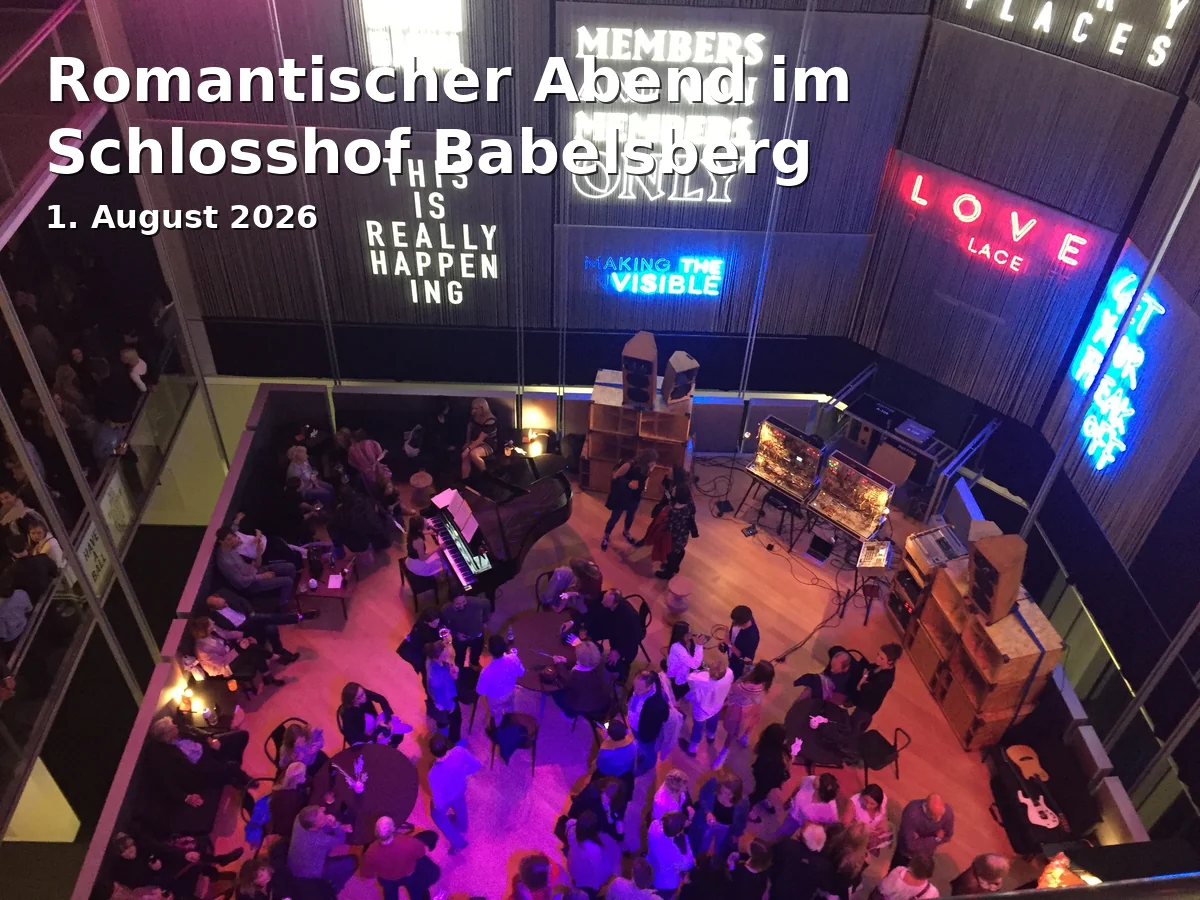
Romantic Evening in the Courtyard of Babelsberg Castle
Experience a delightful evening at Babelsberg Castle with music and string quartet.
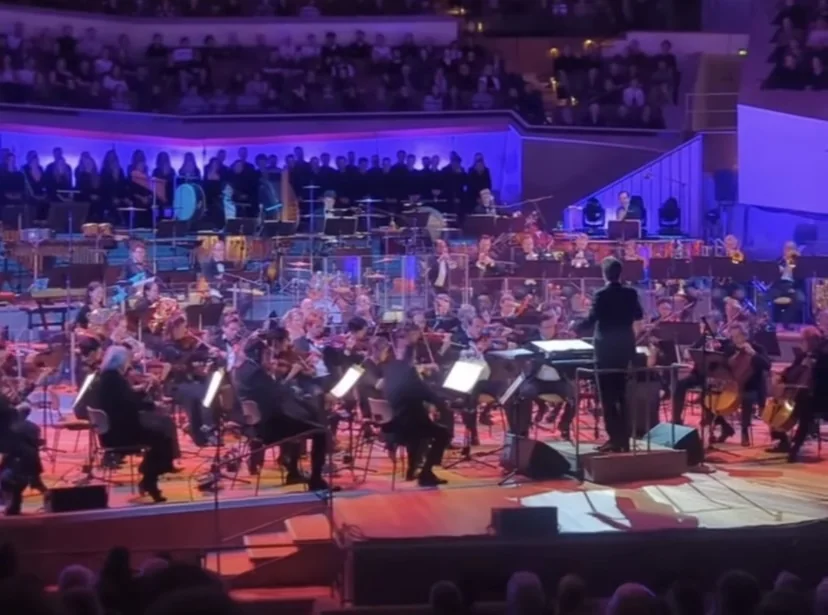
Babelsberg Castle Concerts: Film Orchestra & Selke Brothers
Experience the German Film Orchestra Babelsberg and the Selke Brothers live at Babelsberg Castle on August 23, 2026.
Babelsberg Castle Concerts
A summer evening full of sound cinema at Babelsberg Castle: Percussion, soprano, and historical backdrop create an intense concert experience. 30.08.2026, 27 Euro. #Potsdam #Classical
Frequently Asked Questions
Reviews
Atita Arora
7. September 2025
Cute castle with such a romantic vibe. We loved the landscaping and the views. Perfect place for a day trip :)
Katharina Vogt
22. December 2025
From the breathtaking architecture, through the lavish halls, to the peaceful park by the Havel River – everything is perfectly combined. Visiting here gives a sense of elegance and historical significance, but without excessive pomp, which I particularly appreciated.
Andreas Ludwig
8. September 2020
Nice castle in a wonderful park. Not very old, but very well renovated. With view to Glieniker Brücke. Lovely garden surrounding the castle. Interior is currently not open for visitors.
Nusaibh Alamrani
4. June 2025
Wonderful place to visit in Potsdam. This is an exceptional castle for sure.
Cathy Diez
6. May 2023
A bit far from the bus station but definitely worth it. There are shops in the area for some snacks, drinks, or ice cream.