
Maulbeerallee, Potsdam
Maulbeerallee, 14469 Potsdam, Germany
Sanssouci Palace | Tickets & Events
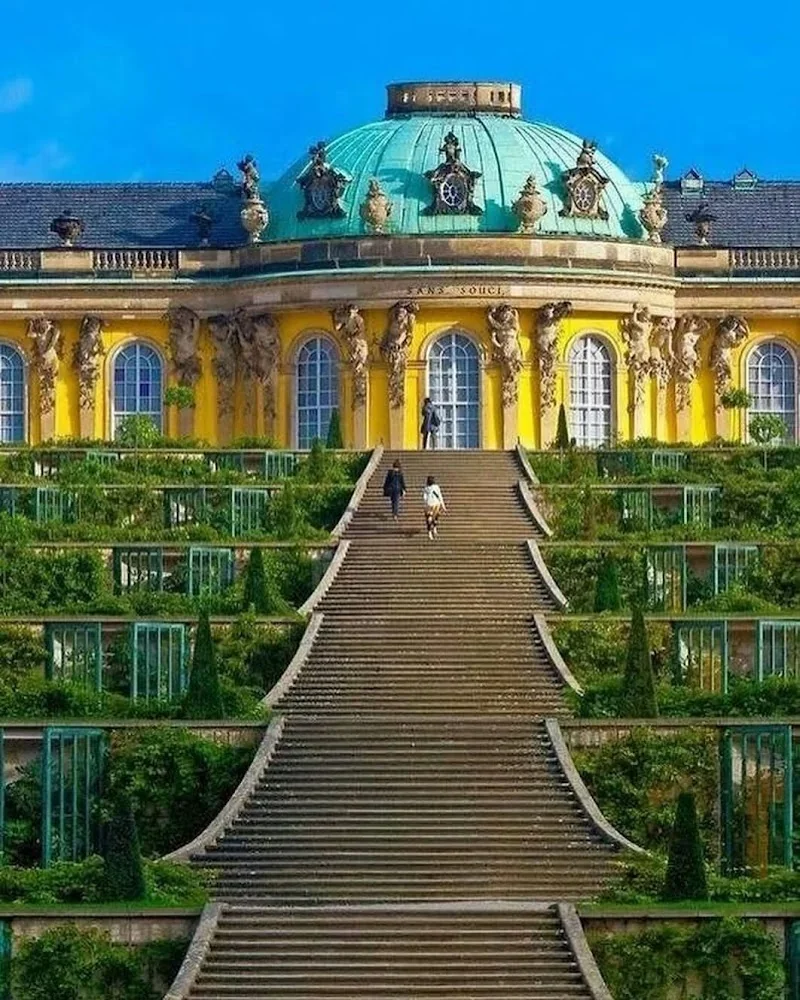
Sanssouci Palace is one of those destinations where history, garden art, and the desire for tranquility come together in a particularly impressive way. The palace in Potsdam is closely associated with Frederick the Great and was built from 1745 to 1747 as a summer residence on a terraced vineyard. The name Sanssouci, meaning without worry, reveals the program: retreat instead of pressure to represent, lightness instead of courtly overload, a place for leisure, nature, and personal preferences. The Prussian Palaces and Gardens Foundation describes the building as a refuge of the king on the famous vineyard terraces with original furnishings from the 18th century. Together with the terraces and the surrounding park, the ensemble is part of the large cultural landscape of Potsdam and Berlin, which has been a UNESCO World Heritage Site since 1990. This mixture of an intimate palace complex, precisely staged surroundings, and genuine historical substance makes Sanssouci Palace one of the most famous places in Potsdam to this day. ([spsg.de](https://www.spsg.de/schloesser-gaerten/objekt/schloss-sanssouci))
Those planning a visit today primarily look for tickets, opening hours, parking, and events. Here, Sanssouci Palace is remarkably well-structured: entry is at fixed times, day tickets are only available in limited numbers, and the combination ticket sanssouci+ makes planning easier if other palaces in the park are to be visited as well. For many guests, the palace is not a classic event venue in the sense of an arena or concert hall, but a museum-like experience space with special tours, audio guides, seasonal visiting windows, and a strong integration into the Sanssouci Park. Those who understand the location correctly experience not just a single building, but a historical ensemble with paths, sightlines, terraces, neighboring buildings, and cultural connections that stretch from the palace through the picture gallery to the New Chambers. This creates a special allure for visitors seeking authentic Prussian history. ([spsg.de](https://www.spsg.de/schloesser-gaerten/objekt/schloss-sanssouci))
Tickets for Sanssouci Palace: fixed entry times and sanssouci+
The most important search topic around Sanssouci Palace is clearly the tickets. The SPSG points out that visiting the palace is tied to fixed entry times and that tickets for the respective day can be purchased at the visitor center Historical Mill starting 30 minutes before the palace opens, provided that there are still allocations available. Those who want to avoid waiting times should book the ticket online in advance. This note is particularly important for planning because the number of admission tickets per day is limited, and access can be in high demand during peak season. The regular individual price is currently 14 euros, reduced to 10 euros. Thus, Sanssouci Palace is not only a cultural-historical destination but also a place whose visit is consciously controlled to protect the monument and sensibly direct visitor flows. For SEO relevance, this is ideal, as terms like tickets, admission, booking, and fixed entry time are central intent signals for users. ([spsg.de](https://www.spsg.de/schloesser-gaerten/objekt/schloss-sanssouci))
Especially relevant is the combination ticket sanssouci+, which allows for a one-time visit to all open SPSG palaces in Potsdam in one day and already includes the fixed entry time at Sanssouci Palace. Additionally, the New Palace can be booked at the time of purchase. This is particularly interesting for visitors planning a whole day at Sanssouci, as it allows several highlights to be combined in one visit. The ticket currently costs 22 euros, reduced to 17 euros, and in the family variant, it is valid for up to two adults and up to four children. Important is the distinction: Schloss Sacrow and Jagdschloss Stern are not included, nor are special exhibitions. These details are not only practical but also SEO-strong because many search queries specifically target combination tickets, admission prices, and included attractions. Therefore, those visiting Sanssouci Palace do not simply buy a museum ticket but plan a day route through the entire park landscape. ([spsg.de](https://www.spsg.de/schloesser-gaerten/kombitickets-ermaessigungen/ticket-sanssouci))
For groups, the ticket topic is also well-structured. The SPSG offers Sanssouci Palace as a group offer with an audio guide, available year-round and lasting 60 minutes. For adults, the group flat rate is 240 euros, for school and student groups, it is 168 euros, each with defined surcharges for larger numbers of people. This is relevant for travel groups, school classes, and cultural associations because it allows for reliable cost calculation for the visit. Additionally, there is digital support through the free SANSSOUCI app, which can be conveniently downloaded before the visit and offers tours in many languages. Therefore, those searching for tickets to Sanssouci Palace should not only pay attention to the individual price but also to the combination ticket, group offer, audio guide, and digital tour, as this combination makes the visit particularly manageable. ([spsg.de](https://www.spsg.de/en/group-offers/group-offers-at-a-glance/single-view-objects/sanssouci-palace))
Directions and Parking at Sanssouci Palace
Getting to Sanssouci Palace is relatively easy if the official visitor information is followed. The SPSG states the address as Maulbeerallee, 14469 Potsdam. For public transport, the stop Potsdam, Schloss Sanssouci is provided. Those who want to check the current traffic situation are referred to the relevant schedule and traffic information. This is important for visitors because Sanssouci Palace is located in the middle of the expansive park, and one does not arrive directly at the entrance as one would at a city hall. Arriving via the stop and the short walk through the park landscape is part of the experience itself. From an SEO perspective, this is also a core point: directions, address, public transport, and stop are classic search terms that are frequently entered by traveling users. ([spsg.de](https://www.spsg.de/schloesser-gaerten/objekt/schloss-sanssouci))
Regarding parking, the SPSG explicitly mentions paid parking spaces for cars and buses at parking lot P1 near the Historical Mill. This is an important practical anchor, as many guests specifically inquire about parking and parking spaces at Sanssouci Palace. Therefore, those planning to visit by car should use the Historical Mill as a reference point. Additionally, from April to October, the SPSG offers a free shuttle service between the Green Gate and the New Palace daily from 11 a.m. to 5:30 p.m. This service is very helpful for longer visits to Sanssouci Park, as it means that not every destination needs to be covered on foot. The shuttle is organized by volunteers and may be canceled in case of heavy rain, which should be considered when planning the day. This results in a practical overall picture: arriving by train and bus, parking at P1, then either walking or taking the shuttle through the grounds. ([spsg.de](https://www.spsg.de/schloesser-gaerten/objekt/schloss-sanssouci))
Practical orientation also includes other service points around the palace. In the visitor area, there is the Historical Mill as a central reference point for tickets, information, and refreshments. The SPSG also refers to gastronomic offerings in the immediate vicinity, such as Café Repin near the picture gallery and Sanssouci Palace or Zur Historischen Mühle in close proximity. For many guests, this is important because a visit to the palace is usually combined with walks through the park, and one wants to plan the route accordingly. Those searching for directions and parking do not just want to know the address but also how the palace, visitor center, parking lots, and walking paths relate to each other. That is why it is worthwhile to use the official infrastructure and not to plan the day too tightly. Sanssouci is not a place for haste but for a well-timed yet relaxed cultural walk. ([spsg.de](https://www.spsg.de/schloesser-gaerten/objekt/schloss-sanssouci))
The History of Sanssouci: Frederick the Great and the Vineyard
The history of Sanssouci Palace is closely linked to Frederick the Great, and the SPSG emphasizes this on the official object page. The palace was built from 1745 to 1747 under the direction of Georg Wenzeslaus von Knobelsdorff according to the king's specifications. It is a single-story little palace in the style of a French maison de plaisance, meaning a pleasure and summer palace, which was deliberately designed not as monumental power architecture but as a private retreat. The king liked to retreat here with his dogs, and Sanssouci became his preferred place in difficult times. This initial situation makes it clear why the palace feels so different from many other residences: it is smaller, more personal, and more focused on landscape and interior life. For inquiries about history, year of construction, and the person of Frederick the Great, this is the central information. ([spsg.de](https://www.spsg.de/schloesser-gaerten/objekt/schloss-sanssouci))
The palace is not isolated but situated on the well-known vineyard terraces, which were laid out in 1744 and later glazed in full length. The SPSG describes the palace, vineyard terraces, and parterre as a unit and as the main work of the Frederician Rococo. This is a crucial point because Sanssouci must be understood not only as a building but as a designed overall composition. The terrace, the view over the park, and the position on the slope are therefore not incidental but part of the concept. Also noteworthy is the grave of Frederick the Great on the upper terrace: the king wanted to be buried there, and this wish was only fulfilled in 1991. This makes the emotional bond to the place visible even in the topography. Thus, those interested in history and special features find in Sanssouci a rare connection of power architecture, personal retreat, and memorial culture that is still visible today. ([spsg.de](https://www.spsg.de/schloesser-gaerten/objekt/schloss-sanssouci))
The official representation also makes it clear that the palace is closely embedded in a larger cultural landscape, often described in Potsdam as Prussian Arcadia. This image is helpful because it explains why Sanssouci has such a strong impact on visitors not only because of the interiors but also because of the surroundings. The SPSG also names the picture gallery and the New Chambers as components of the ensemble. This gives rise to further SEO-relevant terms such as the picture gallery of Sanssouci and the New Chambers of Sanssouci, which are directly linked to the palace. Therefore, those researching the history of Sanssouci will also inevitably encounter questions about the adjacent buildings, the terraces, garden art, and the role of Frederick the Great. The palace is thus less a standalone object than a historical center of a whole staging of nature, architecture, and self-presentation. ([spsg.de](https://www.spsg.de/schloesser-gaerten/objekt/schloss-sanssouci))
Rooms, App, and Palace Kitchen Inside Sanssouci
Inside Sanssouci Palace, one does not encounter an abstract museum but a deliberately preserved world of living and representation. The SPSG speaks of original furnishings from the 18th century and refers in the image areas, among other things, to bedrooms, studies, marble hall, concert room, small gallery, and library of Frederick II. This mixture of private and representative rooms explains why visitors experience the palace as so atmospheric. The tour conveys not only furniture, pictures, and decor but also the king's attitude towards art, music, and self-presentation. For seekers looking for interiors, furnishings, or audio guides, this variety is particularly relevant. The palace does not show empty architecture but a carefully curated sequence of rooms that makes the personality of Frederick the Great and the taste of the 18th century palpable. ([spsg.de](https://www.spsg.de/schloesser-gaerten/objekt/schloss-sanssouci))
For the visit, the digital companion SANSSOUCI is an important component. The free app offers tours for Sanssouci Palace in many languages, including German, English, French, Italian, Spanish, Dutch, Polish, Ukrainian, Russian, Japanese, Chinese, and Korean. Additionally, there are child-friendly offerings for younger visitors. The SPSG recommends downloading the app before the visit and bringing your own headphones, as no headphones are available for loan. This is a small but practical tip that often answers exactly what users are looking for: How do I get understandable information on the go without relying on a guided group? This is a significant advantage, especially for international guests. Those who want to explore the rooms of Sanssouci alone still receive a content-rich, multimedia tour of the palace and its history. ([spsg.de](https://www.spsg.de/schloesser-gaerten/digitale-angebote/app))
The palace complex also includes the Sanssouci Palace Kitchen, which is open during the summer season and meaningfully complements the visitor profile. The SPSG also operates a museum shop in the palace and another shop in the area of the palace kitchen. Such details may initially seem secondary but are often crucial for the search intent surrounding practical visits and on-site services. Visitors often want to know if they can buy something in the palace, whether there are additional seasonal offerings, and how the tour can be organized. In Sanssouci, this is well resolved, as the museum shop, palace kitchen, and digital app extend the museum visit into a complete day stay. The combination of room art, audio guidance, and additional service points makes the place interesting for both first-time visitors and returning guests. ([spsg.de](https://www.spsg.de/schloesser-gaerten/objekt/schloss-sanssouci))
Park Sanssouci, UNESCO World Heritage, and Nearby Attractions
Sanssouci Palace cannot be imagined without the Sanssouci Park. The SPSG describes the park as open daily from 8:00 a.m. until dusk and accessible free of charge. This makes the site a place where culture and walking ideally combine. Visitors can experience the park independently of the palace, see the terraces from various angles, and perceive the paths between the buildings as part of the historical ensemble. The garden art, sightlines, and terraces form the spatial framework for the palace and give it the lightness that resonates in many search queries for Sanssouci Park and Sanssouci Palace. Especially in the changing seasons, it becomes clear why the park often impresses even more than the building itself. Spring, summer, and golden autumn significantly change the effect of the site and quickly turn a palace visit into a longer stay in the greenery. ([spsg.de](https://www.spsg.de/schloesser-gaerten/objekt/schloss-sanssouci))
As a UNESCO World Heritage Site, the place is also of international cultural-historical significance. UNESCO describes the Palaces and Parks of Potsdam and Berlin as an ensemble of architecture and landscape design with exceptional artistic rank. In the area of Potsdam, the World Heritage Site includes, among other things, Sanssouci Park as well as the pathways and landscape connections that link the site with other parts of the historical park. The SPSG also refers to the World Heritage site and emphasizes the historical and architectural embedding of the park. This is important for content planning because search queries often cover not only the palace itself but also the UNESCO context, garden art, and connections to other attractions. Sanssouci Palace is therefore not just a single museum but part of one of the largest and most impressive historical park landscapes in Europe. ([whc.unesco.org](https://whc.unesco.org/en/list/532/?utm_source=openai))
In the immediate vicinity of the palace, there are several other places that round off the visit: the picture gallery, the New Chambers, the Historical Mill, the New Palace, the Sanssouci Palace Kitchen, the Chinese House, and other buildings in the park. The SPSG directly lists these neighboring places as interesting destinations nearby, making it clear that Sanssouci should be thought of as a network of places. Therefore, those searching for events, attractions, or the best way through the park should not focus solely on the main palace. The free shuttle between the Green Gate and the New Palace also supports this type of visit. This way, a single ticket quickly becomes a whole day full of paths, perspectives, and discoveries. This expansion of perspective is one of the reasons why Sanssouci remains popular among travelers, culture enthusiasts, and families alike. ([spsg.de](https://www.spsg.de/schloesser-gaerten/objekt/schloss-sanssouci))
Events at Sanssouci: Tours, Evening Walks, and Practical Tips
Those searching for events at Sanssouci Palace usually end up with special tours and thematic walks. The current event overview from the SPSG shows, for example, the scenic tour Chats in Sanssouci, offered on the occasion of Frederick the Great's 306th birthday, as well as the evening walk Without Worries. These formats demonstrate how the palace is used in the present: not as a classic event hall but as a place for historical communication, narrative formats, and special visitor experiences. For 2026, the SPSG names specific dates in May, June, and July, which increases planability and meets the search intent for current events. Therefore, those looking for not just tickets but a real program will find in Sanssouci primarily curated tours with a strong historical reference. ([spsg.de](https://www.spsg.de/schloesser-gaerten/objekt/schloss-sanssouci))
Practically important is that these events are also tied to the arrival and access logic of the palace. The address remains Maulbeerallee 14469 Potsdam, the stop is Potsdam, Schloss Sanssouci, and parking is at P1 near the Historical Mill. For groups, there are audio-guided offers available year-round with a duration of 60 minutes and a variety of languages that also cater well to international travel groups. The SPSG also points out that for security reasons, the house does not offer luggage storage in the entrance area and that luggage cannot be stored in the listed rooms. Those traveling with strollers should know that these cannot be used in the exhibition rooms for conservation reasons. Such information is invaluable in practice as it saves time on-site and avoids unpleasant surprises. ([spsg.de](https://www.spsg.de/en/group-offers/group-offers-at-a-glance/single-view-objects/sanssouci-palace))
Another tip for the visit is the combination of palace, park, and digital accompaniment. The SANSSOUCI app is free, contains several tours, and can be downloaded at home. Those traveling with children benefit from the child-friendly tours, while international travelers benefit from the broad language coverage. Seasonal offerings such as the palace kitchen, museum educational formats, and the shuttle service that operates in the summer between important points in the park also come into play. In total, this creates a visit that goes far beyond a single ticket. Sanssouci Palace is a place for history, architecture, walks, and carefully organized communication. Those who consider the official information experience not just a palace but a perfectly readable cultural space that responds remarkably well to modern visitor needs. ([spsg.de](https://www.spsg.de/schloesser-gaerten/digitale-angebote/app))
Sources:
Show moreShow less
Sanssouci Palace | Tickets & Events
Sanssouci Palace is one of those destinations where history, garden art, and the desire for tranquility come together in a particularly impressive way. The palace in Potsdam is closely associated with Frederick the Great and was built from 1745 to 1747 as a summer residence on a terraced vineyard. The name Sanssouci, meaning without worry, reveals the program: retreat instead of pressure to represent, lightness instead of courtly overload, a place for leisure, nature, and personal preferences. The Prussian Palaces and Gardens Foundation describes the building as a refuge of the king on the famous vineyard terraces with original furnishings from the 18th century. Together with the terraces and the surrounding park, the ensemble is part of the large cultural landscape of Potsdam and Berlin, which has been a UNESCO World Heritage Site since 1990. This mixture of an intimate palace complex, precisely staged surroundings, and genuine historical substance makes Sanssouci Palace one of the most famous places in Potsdam to this day. ([spsg.de](https://www.spsg.de/schloesser-gaerten/objekt/schloss-sanssouci))
Those planning a visit today primarily look for tickets, opening hours, parking, and events. Here, Sanssouci Palace is remarkably well-structured: entry is at fixed times, day tickets are only available in limited numbers, and the combination ticket sanssouci+ makes planning easier if other palaces in the park are to be visited as well. For many guests, the palace is not a classic event venue in the sense of an arena or concert hall, but a museum-like experience space with special tours, audio guides, seasonal visiting windows, and a strong integration into the Sanssouci Park. Those who understand the location correctly experience not just a single building, but a historical ensemble with paths, sightlines, terraces, neighboring buildings, and cultural connections that stretch from the palace through the picture gallery to the New Chambers. This creates a special allure for visitors seeking authentic Prussian history. ([spsg.de](https://www.spsg.de/schloesser-gaerten/objekt/schloss-sanssouci))
Tickets for Sanssouci Palace: fixed entry times and sanssouci+
The most important search topic around Sanssouci Palace is clearly the tickets. The SPSG points out that visiting the palace is tied to fixed entry times and that tickets for the respective day can be purchased at the visitor center Historical Mill starting 30 minutes before the palace opens, provided that there are still allocations available. Those who want to avoid waiting times should book the ticket online in advance. This note is particularly important for planning because the number of admission tickets per day is limited, and access can be in high demand during peak season. The regular individual price is currently 14 euros, reduced to 10 euros. Thus, Sanssouci Palace is not only a cultural-historical destination but also a place whose visit is consciously controlled to protect the monument and sensibly direct visitor flows. For SEO relevance, this is ideal, as terms like tickets, admission, booking, and fixed entry time are central intent signals for users. ([spsg.de](https://www.spsg.de/schloesser-gaerten/objekt/schloss-sanssouci))
Especially relevant is the combination ticket sanssouci+, which allows for a one-time visit to all open SPSG palaces in Potsdam in one day and already includes the fixed entry time at Sanssouci Palace. Additionally, the New Palace can be booked at the time of purchase. This is particularly interesting for visitors planning a whole day at Sanssouci, as it allows several highlights to be combined in one visit. The ticket currently costs 22 euros, reduced to 17 euros, and in the family variant, it is valid for up to two adults and up to four children. Important is the distinction: Schloss Sacrow and Jagdschloss Stern are not included, nor are special exhibitions. These details are not only practical but also SEO-strong because many search queries specifically target combination tickets, admission prices, and included attractions. Therefore, those visiting Sanssouci Palace do not simply buy a museum ticket but plan a day route through the entire park landscape. ([spsg.de](https://www.spsg.de/schloesser-gaerten/kombitickets-ermaessigungen/ticket-sanssouci))
For groups, the ticket topic is also well-structured. The SPSG offers Sanssouci Palace as a group offer with an audio guide, available year-round and lasting 60 minutes. For adults, the group flat rate is 240 euros, for school and student groups, it is 168 euros, each with defined surcharges for larger numbers of people. This is relevant for travel groups, school classes, and cultural associations because it allows for reliable cost calculation for the visit. Additionally, there is digital support through the free SANSSOUCI app, which can be conveniently downloaded before the visit and offers tours in many languages. Therefore, those searching for tickets to Sanssouci Palace should not only pay attention to the individual price but also to the combination ticket, group offer, audio guide, and digital tour, as this combination makes the visit particularly manageable. ([spsg.de](https://www.spsg.de/en/group-offers/group-offers-at-a-glance/single-view-objects/sanssouci-palace))
Directions and Parking at Sanssouci Palace
Getting to Sanssouci Palace is relatively easy if the official visitor information is followed. The SPSG states the address as Maulbeerallee, 14469 Potsdam. For public transport, the stop Potsdam, Schloss Sanssouci is provided. Those who want to check the current traffic situation are referred to the relevant schedule and traffic information. This is important for visitors because Sanssouci Palace is located in the middle of the expansive park, and one does not arrive directly at the entrance as one would at a city hall. Arriving via the stop and the short walk through the park landscape is part of the experience itself. From an SEO perspective, this is also a core point: directions, address, public transport, and stop are classic search terms that are frequently entered by traveling users. ([spsg.de](https://www.spsg.de/schloesser-gaerten/objekt/schloss-sanssouci))
Regarding parking, the SPSG explicitly mentions paid parking spaces for cars and buses at parking lot P1 near the Historical Mill. This is an important practical anchor, as many guests specifically inquire about parking and parking spaces at Sanssouci Palace. Therefore, those planning to visit by car should use the Historical Mill as a reference point. Additionally, from April to October, the SPSG offers a free shuttle service between the Green Gate and the New Palace daily from 11 a.m. to 5:30 p.m. This service is very helpful for longer visits to Sanssouci Park, as it means that not every destination needs to be covered on foot. The shuttle is organized by volunteers and may be canceled in case of heavy rain, which should be considered when planning the day. This results in a practical overall picture: arriving by train and bus, parking at P1, then either walking or taking the shuttle through the grounds. ([spsg.de](https://www.spsg.de/schloesser-gaerten/objekt/schloss-sanssouci))
Practical orientation also includes other service points around the palace. In the visitor area, there is the Historical Mill as a central reference point for tickets, information, and refreshments. The SPSG also refers to gastronomic offerings in the immediate vicinity, such as Café Repin near the picture gallery and Sanssouci Palace or Zur Historischen Mühle in close proximity. For many guests, this is important because a visit to the palace is usually combined with walks through the park, and one wants to plan the route accordingly. Those searching for directions and parking do not just want to know the address but also how the palace, visitor center, parking lots, and walking paths relate to each other. That is why it is worthwhile to use the official infrastructure and not to plan the day too tightly. Sanssouci is not a place for haste but for a well-timed yet relaxed cultural walk. ([spsg.de](https://www.spsg.de/schloesser-gaerten/objekt/schloss-sanssouci))
The History of Sanssouci: Frederick the Great and the Vineyard
The history of Sanssouci Palace is closely linked to Frederick the Great, and the SPSG emphasizes this on the official object page. The palace was built from 1745 to 1747 under the direction of Georg Wenzeslaus von Knobelsdorff according to the king's specifications. It is a single-story little palace in the style of a French maison de plaisance, meaning a pleasure and summer palace, which was deliberately designed not as monumental power architecture but as a private retreat. The king liked to retreat here with his dogs, and Sanssouci became his preferred place in difficult times. This initial situation makes it clear why the palace feels so different from many other residences: it is smaller, more personal, and more focused on landscape and interior life. For inquiries about history, year of construction, and the person of Frederick the Great, this is the central information. ([spsg.de](https://www.spsg.de/schloesser-gaerten/objekt/schloss-sanssouci))
The palace is not isolated but situated on the well-known vineyard terraces, which were laid out in 1744 and later glazed in full length. The SPSG describes the palace, vineyard terraces, and parterre as a unit and as the main work of the Frederician Rococo. This is a crucial point because Sanssouci must be understood not only as a building but as a designed overall composition. The terrace, the view over the park, and the position on the slope are therefore not incidental but part of the concept. Also noteworthy is the grave of Frederick the Great on the upper terrace: the king wanted to be buried there, and this wish was only fulfilled in 1991. This makes the emotional bond to the place visible even in the topography. Thus, those interested in history and special features find in Sanssouci a rare connection of power architecture, personal retreat, and memorial culture that is still visible today. ([spsg.de](https://www.spsg.de/schloesser-gaerten/objekt/schloss-sanssouci))
The official representation also makes it clear that the palace is closely embedded in a larger cultural landscape, often described in Potsdam as Prussian Arcadia. This image is helpful because it explains why Sanssouci has such a strong impact on visitors not only because of the interiors but also because of the surroundings. The SPSG also names the picture gallery and the New Chambers as components of the ensemble. This gives rise to further SEO-relevant terms such as the picture gallery of Sanssouci and the New Chambers of Sanssouci, which are directly linked to the palace. Therefore, those researching the history of Sanssouci will also inevitably encounter questions about the adjacent buildings, the terraces, garden art, and the role of Frederick the Great. The palace is thus less a standalone object than a historical center of a whole staging of nature, architecture, and self-presentation. ([spsg.de](https://www.spsg.de/schloesser-gaerten/objekt/schloss-sanssouci))
Rooms, App, and Palace Kitchen Inside Sanssouci
Inside Sanssouci Palace, one does not encounter an abstract museum but a deliberately preserved world of living and representation. The SPSG speaks of original furnishings from the 18th century and refers in the image areas, among other things, to bedrooms, studies, marble hall, concert room, small gallery, and library of Frederick II. This mixture of private and representative rooms explains why visitors experience the palace as so atmospheric. The tour conveys not only furniture, pictures, and decor but also the king's attitude towards art, music, and self-presentation. For seekers looking for interiors, furnishings, or audio guides, this variety is particularly relevant. The palace does not show empty architecture but a carefully curated sequence of rooms that makes the personality of Frederick the Great and the taste of the 18th century palpable. ([spsg.de](https://www.spsg.de/schloesser-gaerten/objekt/schloss-sanssouci))
For the visit, the digital companion SANSSOUCI is an important component. The free app offers tours for Sanssouci Palace in many languages, including German, English, French, Italian, Spanish, Dutch, Polish, Ukrainian, Russian, Japanese, Chinese, and Korean. Additionally, there are child-friendly offerings for younger visitors. The SPSG recommends downloading the app before the visit and bringing your own headphones, as no headphones are available for loan. This is a small but practical tip that often answers exactly what users are looking for: How do I get understandable information on the go without relying on a guided group? This is a significant advantage, especially for international guests. Those who want to explore the rooms of Sanssouci alone still receive a content-rich, multimedia tour of the palace and its history. ([spsg.de](https://www.spsg.de/schloesser-gaerten/digitale-angebote/app))
The palace complex also includes the Sanssouci Palace Kitchen, which is open during the summer season and meaningfully complements the visitor profile. The SPSG also operates a museum shop in the palace and another shop in the area of the palace kitchen. Such details may initially seem secondary but are often crucial for the search intent surrounding practical visits and on-site services. Visitors often want to know if they can buy something in the palace, whether there are additional seasonal offerings, and how the tour can be organized. In Sanssouci, this is well resolved, as the museum shop, palace kitchen, and digital app extend the museum visit into a complete day stay. The combination of room art, audio guidance, and additional service points makes the place interesting for both first-time visitors and returning guests. ([spsg.de](https://www.spsg.de/schloesser-gaerten/objekt/schloss-sanssouci))
Park Sanssouci, UNESCO World Heritage, and Nearby Attractions
Sanssouci Palace cannot be imagined without the Sanssouci Park. The SPSG describes the park as open daily from 8:00 a.m. until dusk and accessible free of charge. This makes the site a place where culture and walking ideally combine. Visitors can experience the park independently of the palace, see the terraces from various angles, and perceive the paths between the buildings as part of the historical ensemble. The garden art, sightlines, and terraces form the spatial framework for the palace and give it the lightness that resonates in many search queries for Sanssouci Park and Sanssouci Palace. Especially in the changing seasons, it becomes clear why the park often impresses even more than the building itself. Spring, summer, and golden autumn significantly change the effect of the site and quickly turn a palace visit into a longer stay in the greenery. ([spsg.de](https://www.spsg.de/schloesser-gaerten/objekt/schloss-sanssouci))
As a UNESCO World Heritage Site, the place is also of international cultural-historical significance. UNESCO describes the Palaces and Parks of Potsdam and Berlin as an ensemble of architecture and landscape design with exceptional artistic rank. In the area of Potsdam, the World Heritage Site includes, among other things, Sanssouci Park as well as the pathways and landscape connections that link the site with other parts of the historical park. The SPSG also refers to the World Heritage site and emphasizes the historical and architectural embedding of the park. This is important for content planning because search queries often cover not only the palace itself but also the UNESCO context, garden art, and connections to other attractions. Sanssouci Palace is therefore not just a single museum but part of one of the largest and most impressive historical park landscapes in Europe. ([whc.unesco.org](https://whc.unesco.org/en/list/532/?utm_source=openai))
In the immediate vicinity of the palace, there are several other places that round off the visit: the picture gallery, the New Chambers, the Historical Mill, the New Palace, the Sanssouci Palace Kitchen, the Chinese House, and other buildings in the park. The SPSG directly lists these neighboring places as interesting destinations nearby, making it clear that Sanssouci should be thought of as a network of places. Therefore, those searching for events, attractions, or the best way through the park should not focus solely on the main palace. The free shuttle between the Green Gate and the New Palace also supports this type of visit. This way, a single ticket quickly becomes a whole day full of paths, perspectives, and discoveries. This expansion of perspective is one of the reasons why Sanssouci remains popular among travelers, culture enthusiasts, and families alike. ([spsg.de](https://www.spsg.de/schloesser-gaerten/objekt/schloss-sanssouci))
Events at Sanssouci: Tours, Evening Walks, and Practical Tips
Those searching for events at Sanssouci Palace usually end up with special tours and thematic walks. The current event overview from the SPSG shows, for example, the scenic tour Chats in Sanssouci, offered on the occasion of Frederick the Great's 306th birthday, as well as the evening walk Without Worries. These formats demonstrate how the palace is used in the present: not as a classic event hall but as a place for historical communication, narrative formats, and special visitor experiences. For 2026, the SPSG names specific dates in May, June, and July, which increases planability and meets the search intent for current events. Therefore, those looking for not just tickets but a real program will find in Sanssouci primarily curated tours with a strong historical reference. ([spsg.de](https://www.spsg.de/schloesser-gaerten/objekt/schloss-sanssouci))
Practically important is that these events are also tied to the arrival and access logic of the palace. The address remains Maulbeerallee 14469 Potsdam, the stop is Potsdam, Schloss Sanssouci, and parking is at P1 near the Historical Mill. For groups, there are audio-guided offers available year-round with a duration of 60 minutes and a variety of languages that also cater well to international travel groups. The SPSG also points out that for security reasons, the house does not offer luggage storage in the entrance area and that luggage cannot be stored in the listed rooms. Those traveling with strollers should know that these cannot be used in the exhibition rooms for conservation reasons. Such information is invaluable in practice as it saves time on-site and avoids unpleasant surprises. ([spsg.de](https://www.spsg.de/en/group-offers/group-offers-at-a-glance/single-view-objects/sanssouci-palace))
Another tip for the visit is the combination of palace, park, and digital accompaniment. The SANSSOUCI app is free, contains several tours, and can be downloaded at home. Those traveling with children benefit from the child-friendly tours, while international travelers benefit from the broad language coverage. Seasonal offerings such as the palace kitchen, museum educational formats, and the shuttle service that operates in the summer between important points in the park also come into play. In total, this creates a visit that goes far beyond a single ticket. Sanssouci Palace is a place for history, architecture, walks, and carefully organized communication. Those who consider the official information experience not just a palace but a perfectly readable cultural space that responds remarkably well to modern visitor needs. ([spsg.de](https://www.spsg.de/schloesser-gaerten/digitale-angebote/app))
Sources:
Sanssouci Palace | Tickets & Events
Sanssouci Palace is one of those destinations where history, garden art, and the desire for tranquility come together in a particularly impressive way. The palace in Potsdam is closely associated with Frederick the Great and was built from 1745 to 1747 as a summer residence on a terraced vineyard. The name Sanssouci, meaning without worry, reveals the program: retreat instead of pressure to represent, lightness instead of courtly overload, a place for leisure, nature, and personal preferences. The Prussian Palaces and Gardens Foundation describes the building as a refuge of the king on the famous vineyard terraces with original furnishings from the 18th century. Together with the terraces and the surrounding park, the ensemble is part of the large cultural landscape of Potsdam and Berlin, which has been a UNESCO World Heritage Site since 1990. This mixture of an intimate palace complex, precisely staged surroundings, and genuine historical substance makes Sanssouci Palace one of the most famous places in Potsdam to this day. ([spsg.de](https://www.spsg.de/schloesser-gaerten/objekt/schloss-sanssouci))
Those planning a visit today primarily look for tickets, opening hours, parking, and events. Here, Sanssouci Palace is remarkably well-structured: entry is at fixed times, day tickets are only available in limited numbers, and the combination ticket sanssouci+ makes planning easier if other palaces in the park are to be visited as well. For many guests, the palace is not a classic event venue in the sense of an arena or concert hall, but a museum-like experience space with special tours, audio guides, seasonal visiting windows, and a strong integration into the Sanssouci Park. Those who understand the location correctly experience not just a single building, but a historical ensemble with paths, sightlines, terraces, neighboring buildings, and cultural connections that stretch from the palace through the picture gallery to the New Chambers. This creates a special allure for visitors seeking authentic Prussian history. ([spsg.de](https://www.spsg.de/schloesser-gaerten/objekt/schloss-sanssouci))
Tickets for Sanssouci Palace: fixed entry times and sanssouci+
The most important search topic around Sanssouci Palace is clearly the tickets. The SPSG points out that visiting the palace is tied to fixed entry times and that tickets for the respective day can be purchased at the visitor center Historical Mill starting 30 minutes before the palace opens, provided that there are still allocations available. Those who want to avoid waiting times should book the ticket online in advance. This note is particularly important for planning because the number of admission tickets per day is limited, and access can be in high demand during peak season. The regular individual price is currently 14 euros, reduced to 10 euros. Thus, Sanssouci Palace is not only a cultural-historical destination but also a place whose visit is consciously controlled to protect the monument and sensibly direct visitor flows. For SEO relevance, this is ideal, as terms like tickets, admission, booking, and fixed entry time are central intent signals for users. ([spsg.de](https://www.spsg.de/schloesser-gaerten/objekt/schloss-sanssouci))
Especially relevant is the combination ticket sanssouci+, which allows for a one-time visit to all open SPSG palaces in Potsdam in one day and already includes the fixed entry time at Sanssouci Palace. Additionally, the New Palace can be booked at the time of purchase. This is particularly interesting for visitors planning a whole day at Sanssouci, as it allows several highlights to be combined in one visit. The ticket currently costs 22 euros, reduced to 17 euros, and in the family variant, it is valid for up to two adults and up to four children. Important is the distinction: Schloss Sacrow and Jagdschloss Stern are not included, nor are special exhibitions. These details are not only practical but also SEO-strong because many search queries specifically target combination tickets, admission prices, and included attractions. Therefore, those visiting Sanssouci Palace do not simply buy a museum ticket but plan a day route through the entire park landscape. ([spsg.de](https://www.spsg.de/schloesser-gaerten/kombitickets-ermaessigungen/ticket-sanssouci))
For groups, the ticket topic is also well-structured. The SPSG offers Sanssouci Palace as a group offer with an audio guide, available year-round and lasting 60 minutes. For adults, the group flat rate is 240 euros, for school and student groups, it is 168 euros, each with defined surcharges for larger numbers of people. This is relevant for travel groups, school classes, and cultural associations because it allows for reliable cost calculation for the visit. Additionally, there is digital support through the free SANSSOUCI app, which can be conveniently downloaded before the visit and offers tours in many languages. Therefore, those searching for tickets to Sanssouci Palace should not only pay attention to the individual price but also to the combination ticket, group offer, audio guide, and digital tour, as this combination makes the visit particularly manageable. ([spsg.de](https://www.spsg.de/en/group-offers/group-offers-at-a-glance/single-view-objects/sanssouci-palace))
Directions and Parking at Sanssouci Palace
Getting to Sanssouci Palace is relatively easy if the official visitor information is followed. The SPSG states the address as Maulbeerallee, 14469 Potsdam. For public transport, the stop Potsdam, Schloss Sanssouci is provided. Those who want to check the current traffic situation are referred to the relevant schedule and traffic information. This is important for visitors because Sanssouci Palace is located in the middle of the expansive park, and one does not arrive directly at the entrance as one would at a city hall. Arriving via the stop and the short walk through the park landscape is part of the experience itself. From an SEO perspective, this is also a core point: directions, address, public transport, and stop are classic search terms that are frequently entered by traveling users. ([spsg.de](https://www.spsg.de/schloesser-gaerten/objekt/schloss-sanssouci))
Regarding parking, the SPSG explicitly mentions paid parking spaces for cars and buses at parking lot P1 near the Historical Mill. This is an important practical anchor, as many guests specifically inquire about parking and parking spaces at Sanssouci Palace. Therefore, those planning to visit by car should use the Historical Mill as a reference point. Additionally, from April to October, the SPSG offers a free shuttle service between the Green Gate and the New Palace daily from 11 a.m. to 5:30 p.m. This service is very helpful for longer visits to Sanssouci Park, as it means that not every destination needs to be covered on foot. The shuttle is organized by volunteers and may be canceled in case of heavy rain, which should be considered when planning the day. This results in a practical overall picture: arriving by train and bus, parking at P1, then either walking or taking the shuttle through the grounds. ([spsg.de](https://www.spsg.de/schloesser-gaerten/objekt/schloss-sanssouci))
Practical orientation also includes other service points around the palace. In the visitor area, there is the Historical Mill as a central reference point for tickets, information, and refreshments. The SPSG also refers to gastronomic offerings in the immediate vicinity, such as Café Repin near the picture gallery and Sanssouci Palace or Zur Historischen Mühle in close proximity. For many guests, this is important because a visit to the palace is usually combined with walks through the park, and one wants to plan the route accordingly. Those searching for directions and parking do not just want to know the address but also how the palace, visitor center, parking lots, and walking paths relate to each other. That is why it is worthwhile to use the official infrastructure and not to plan the day too tightly. Sanssouci is not a place for haste but for a well-timed yet relaxed cultural walk. ([spsg.de](https://www.spsg.de/schloesser-gaerten/objekt/schloss-sanssouci))
The History of Sanssouci: Frederick the Great and the Vineyard
The history of Sanssouci Palace is closely linked to Frederick the Great, and the SPSG emphasizes this on the official object page. The palace was built from 1745 to 1747 under the direction of Georg Wenzeslaus von Knobelsdorff according to the king's specifications. It is a single-story little palace in the style of a French maison de plaisance, meaning a pleasure and summer palace, which was deliberately designed not as monumental power architecture but as a private retreat. The king liked to retreat here with his dogs, and Sanssouci became his preferred place in difficult times. This initial situation makes it clear why the palace feels so different from many other residences: it is smaller, more personal, and more focused on landscape and interior life. For inquiries about history, year of construction, and the person of Frederick the Great, this is the central information. ([spsg.de](https://www.spsg.de/schloesser-gaerten/objekt/schloss-sanssouci))
The palace is not isolated but situated on the well-known vineyard terraces, which were laid out in 1744 and later glazed in full length. The SPSG describes the palace, vineyard terraces, and parterre as a unit and as the main work of the Frederician Rococo. This is a crucial point because Sanssouci must be understood not only as a building but as a designed overall composition. The terrace, the view over the park, and the position on the slope are therefore not incidental but part of the concept. Also noteworthy is the grave of Frederick the Great on the upper terrace: the king wanted to be buried there, and this wish was only fulfilled in 1991. This makes the emotional bond to the place visible even in the topography. Thus, those interested in history and special features find in Sanssouci a rare connection of power architecture, personal retreat, and memorial culture that is still visible today. ([spsg.de](https://www.spsg.de/schloesser-gaerten/objekt/schloss-sanssouci))
The official representation also makes it clear that the palace is closely embedded in a larger cultural landscape, often described in Potsdam as Prussian Arcadia. This image is helpful because it explains why Sanssouci has such a strong impact on visitors not only because of the interiors but also because of the surroundings. The SPSG also names the picture gallery and the New Chambers as components of the ensemble. This gives rise to further SEO-relevant terms such as the picture gallery of Sanssouci and the New Chambers of Sanssouci, which are directly linked to the palace. Therefore, those researching the history of Sanssouci will also inevitably encounter questions about the adjacent buildings, the terraces, garden art, and the role of Frederick the Great. The palace is thus less a standalone object than a historical center of a whole staging of nature, architecture, and self-presentation. ([spsg.de](https://www.spsg.de/schloesser-gaerten/objekt/schloss-sanssouci))
Rooms, App, and Palace Kitchen Inside Sanssouci
Inside Sanssouci Palace, one does not encounter an abstract museum but a deliberately preserved world of living and representation. The SPSG speaks of original furnishings from the 18th century and refers in the image areas, among other things, to bedrooms, studies, marble hall, concert room, small gallery, and library of Frederick II. This mixture of private and representative rooms explains why visitors experience the palace as so atmospheric. The tour conveys not only furniture, pictures, and decor but also the king's attitude towards art, music, and self-presentation. For seekers looking for interiors, furnishings, or audio guides, this variety is particularly relevant. The palace does not show empty architecture but a carefully curated sequence of rooms that makes the personality of Frederick the Great and the taste of the 18th century palpable. ([spsg.de](https://www.spsg.de/schloesser-gaerten/objekt/schloss-sanssouci))
For the visit, the digital companion SANSSOUCI is an important component. The free app offers tours for Sanssouci Palace in many languages, including German, English, French, Italian, Spanish, Dutch, Polish, Ukrainian, Russian, Japanese, Chinese, and Korean. Additionally, there are child-friendly offerings for younger visitors. The SPSG recommends downloading the app before the visit and bringing your own headphones, as no headphones are available for loan. This is a small but practical tip that often answers exactly what users are looking for: How do I get understandable information on the go without relying on a guided group? This is a significant advantage, especially for international guests. Those who want to explore the rooms of Sanssouci alone still receive a content-rich, multimedia tour of the palace and its history. ([spsg.de](https://www.spsg.de/schloesser-gaerten/digitale-angebote/app))
The palace complex also includes the Sanssouci Palace Kitchen, which is open during the summer season and meaningfully complements the visitor profile. The SPSG also operates a museum shop in the palace and another shop in the area of the palace kitchen. Such details may initially seem secondary but are often crucial for the search intent surrounding practical visits and on-site services. Visitors often want to know if they can buy something in the palace, whether there are additional seasonal offerings, and how the tour can be organized. In Sanssouci, this is well resolved, as the museum shop, palace kitchen, and digital app extend the museum visit into a complete day stay. The combination of room art, audio guidance, and additional service points makes the place interesting for both first-time visitors and returning guests. ([spsg.de](https://www.spsg.de/schloesser-gaerten/objekt/schloss-sanssouci))
Park Sanssouci, UNESCO World Heritage, and Nearby Attractions
Sanssouci Palace cannot be imagined without the Sanssouci Park. The SPSG describes the park as open daily from 8:00 a.m. until dusk and accessible free of charge. This makes the site a place where culture and walking ideally combine. Visitors can experience the park independently of the palace, see the terraces from various angles, and perceive the paths between the buildings as part of the historical ensemble. The garden art, sightlines, and terraces form the spatial framework for the palace and give it the lightness that resonates in many search queries for Sanssouci Park and Sanssouci Palace. Especially in the changing seasons, it becomes clear why the park often impresses even more than the building itself. Spring, summer, and golden autumn significantly change the effect of the site and quickly turn a palace visit into a longer stay in the greenery. ([spsg.de](https://www.spsg.de/schloesser-gaerten/objekt/schloss-sanssouci))
As a UNESCO World Heritage Site, the place is also of international cultural-historical significance. UNESCO describes the Palaces and Parks of Potsdam and Berlin as an ensemble of architecture and landscape design with exceptional artistic rank. In the area of Potsdam, the World Heritage Site includes, among other things, Sanssouci Park as well as the pathways and landscape connections that link the site with other parts of the historical park. The SPSG also refers to the World Heritage site and emphasizes the historical and architectural embedding of the park. This is important for content planning because search queries often cover not only the palace itself but also the UNESCO context, garden art, and connections to other attractions. Sanssouci Palace is therefore not just a single museum but part of one of the largest and most impressive historical park landscapes in Europe. ([whc.unesco.org](https://whc.unesco.org/en/list/532/?utm_source=openai))
In the immediate vicinity of the palace, there are several other places that round off the visit: the picture gallery, the New Chambers, the Historical Mill, the New Palace, the Sanssouci Palace Kitchen, the Chinese House, and other buildings in the park. The SPSG directly lists these neighboring places as interesting destinations nearby, making it clear that Sanssouci should be thought of as a network of places. Therefore, those searching for events, attractions, or the best way through the park should not focus solely on the main palace. The free shuttle between the Green Gate and the New Palace also supports this type of visit. This way, a single ticket quickly becomes a whole day full of paths, perspectives, and discoveries. This expansion of perspective is one of the reasons why Sanssouci remains popular among travelers, culture enthusiasts, and families alike. ([spsg.de](https://www.spsg.de/schloesser-gaerten/objekt/schloss-sanssouci))
Events at Sanssouci: Tours, Evening Walks, and Practical Tips
Those searching for events at Sanssouci Palace usually end up with special tours and thematic walks. The current event overview from the SPSG shows, for example, the scenic tour Chats in Sanssouci, offered on the occasion of Frederick the Great's 306th birthday, as well as the evening walk Without Worries. These formats demonstrate how the palace is used in the present: not as a classic event hall but as a place for historical communication, narrative formats, and special visitor experiences. For 2026, the SPSG names specific dates in May, June, and July, which increases planability and meets the search intent for current events. Therefore, those looking for not just tickets but a real program will find in Sanssouci primarily curated tours with a strong historical reference. ([spsg.de](https://www.spsg.de/schloesser-gaerten/objekt/schloss-sanssouci))
Practically important is that these events are also tied to the arrival and access logic of the palace. The address remains Maulbeerallee 14469 Potsdam, the stop is Potsdam, Schloss Sanssouci, and parking is at P1 near the Historical Mill. For groups, there are audio-guided offers available year-round with a duration of 60 minutes and a variety of languages that also cater well to international travel groups. The SPSG also points out that for security reasons, the house does not offer luggage storage in the entrance area and that luggage cannot be stored in the listed rooms. Those traveling with strollers should know that these cannot be used in the exhibition rooms for conservation reasons. Such information is invaluable in practice as it saves time on-site and avoids unpleasant surprises. ([spsg.de](https://www.spsg.de/en/group-offers/group-offers-at-a-glance/single-view-objects/sanssouci-palace))
Another tip for the visit is the combination of palace, park, and digital accompaniment. The SANSSOUCI app is free, contains several tours, and can be downloaded at home. Those traveling with children benefit from the child-friendly tours, while international travelers benefit from the broad language coverage. Seasonal offerings such as the palace kitchen, museum educational formats, and the shuttle service that operates in the summer between important points in the park also come into play. In total, this creates a visit that goes far beyond a single ticket. Sanssouci Palace is a place for history, architecture, walks, and carefully organized communication. Those who consider the official information experience not just a palace but a perfectly readable cultural space that responds remarkably well to modern visitor needs. ([spsg.de](https://www.spsg.de/schloesser-gaerten/digitale-angebote/app))
Sources:

Frequently Asked Questions
Reviews
Sensei Mili
7. March 2026
Adult tickets cost 22€ and include the old windmill, Sanssouci Palace, and the New Palace. However, the New Palace cannot be visited independently – only through an organized guided tour due to structural issues with the floor, which could potentially collapse. Until May, these tours are available only in German. The palaces themselves are similar to many others influenced by the French court style, very ornate, with countless decorated rooms. Personally, I found the surrounding park more impressive. In spring, it is probably even more beautiful and definitely worth visiting.
oded ee2
8. January 2026
It's a very small palace... which isn't a disadvantage. I'm tired of visiting monstrous castles with hundreds of rooms where one may spend three hours, quickly getting tired of everything. This palace has 12 rooms. Each is impressive and unique. You get an audioguide in your preferred language and off you go. You do need to book your entry time, which in a freezing January day with very few visitors seemed excessive. I'm sure the park outside is lovely in spring, but in winter it's just a big patch of snow. Staff were punctual to extreme: arriving at 11:22 with 11:30 tickets, we were told to wait outside. It was snowing and well below freezing. At 11:30 we were let inside and there were very few visitors. Could you really not be a bit flexible? There's a small souvenir shop but no Caffè, regrettably.
Tales Pádua
14. February 2026
Really beautiful place, both outside and inside. Don't miss going to the kitchen and the staff area. One of the few palaces that I've been to where you get to see when the palace staff worked. Also, don't miss the gallery outside, amazing pieces of art there, and the place itself is wonderful.
Andreea Olariu
1. December 2025
Sanssouci Palace Sanssouci Palace is undeniably beautiful, with elegant rooms and lovely details throughout. It’s smaller than I expected, but still charming and worth seeing for its architecture and history. However, the entrance ticket felt too expensive for the size of the visit. While the palace is impressive, the value for money could be better. Overall, a beautiful place to see, but be prepared for a high ticket price relative to the experience. Consider you need to pay for the parking also.
Jovan
8. February 2026
Sanssouci is a historical building in Potsdam, near Berlin. Built by Prussian King Frederick the Great as his summer palace, it is often counted among the German rivals of Versailles. While Sanssouci is in the more intimate Rococo style and is far smaller than its French Baroque counterpart, it is similarly notable for the numerous temples and follies in the surrounding park. The palace was designed and built by Georg Wenzeslaus von Knobelsdorff between 1745 and 1747 to meet Frederick's need for a private residence where he could escape the pomp and ceremony of the royal court. The palace's name is a French phrase (sans souci) meaning "without worries" or "carefree," emphasizing that the palace was meant as a place of relaxation rather than a seat of power. An absolutely enchanting place of such refined harmony at the same time exudes grandiosity and opulence in such a fine and delicate way that it is incredible and if the visit was in the winter time nothing was missing from the comprehensiveness of the impression, the thing is even more incredible knowing that you are in the place where he cultivated and nurtured his quiet and personal thoughts no less and no more than Frederick the Great, a real historical gem.