

Potsdam
Russische Kolonie 2, 14469 Potsdam, Deutschland
Russian Colony 2 | Events & Tickets
The Russian Colony 2 in Potsdam is the official address of the Alexandrowka Museum in House No. 2. Those looking for events, tickets, and practical visitor information will find here not a large multipurpose hall, but a privately operated museum in one of the historic colonist houses of the Russian Colony Alexandrowka. The ensemble has been part of the UNESCO World Heritage since 1999 and is one of the characteristic monuments of the Potsdam cultural landscape. The museum's website therefore consolidates a variety of topics: current dates, admission prices, guided tours, travel information, accessibility, garden café, and the history of a place that is among the most well-known traces of Prussian-Russian relations in Potsdam. This is helpful for visitors because the stay is not limited to a short museum tour but can be extended to a historic ensemble with a garden, pathway system, and adjacent attractions. ([alexandrowka.de](https://alexandrowka.de/informationen-kontakt/oeffnungszeiten-und-preise/))
Events and Calendar in the Russian Colony 2
The most important information for anyone looking for events is clear: The Alexandrowka Museum maintains its own event calendar. On the official page, dates are presented in a monthly view, and additionally, calendar data can be subscribed to, among others via Google Calendar, iCalendar, Outlook 365, Outlook Live, or an exportable .ics file. This shows that the location does not only function as a silent monument but as a vibrant cultural place with regularly changing events and seasonal program points. In April 2026, for example, the date The Arrival of the Sheep was listed, where 13 mother sheep and 18 lambs were to move into the Alexandrowka Colony. Such entries make it clear that the colony also presents itself with local, nature-oriented, and historical formats and not exclusively with classic museum tours. ([alexandrowka.de](https://alexandrowka.de/veranstaltungen/))
For SEO analysis, not only the words events and tickets are relevant, but also terms like calendar, dates, exhibitions, seasonal program, and museum event. The official website provides the dates clearly and links them to the character of the place: Alexandrowka is a historical facility, but at the same time a place for encounters and communication. This mix is important for search queries because users often want to know not only if a place exists but what is happening there specifically and how they can plan a visit in terms of timing. Therefore, anyone visiting the colony should always check if there is a special date, a museum event, a thematic garden afternoon, or another program point taking place. The calendar offerings are a strong indication that the Alexandrowka Colony is more than a monument to look at; it is actively used and integrated into the cultural life of Potsdam. ([alexandrowka.de](https://alexandrowka.de/veranstaltungen/))
Tickets, Admission Prices, and Guided Tours at the Alexandrowka Museum
Regarding tickets, the website provides very concrete data. Regular admission costs 3.50 euros, and reduced admission costs 3.00 euros. Children under 14 years receive free admission when accompanied by parents, and for kindergarten and school groups under 14 years, a price of 1.50 euros per person applies. This makes the museum very accessible compared to many other cultural venues. For groups, there is also an extensive guided tour offer that varies by target group and duration. 45- and 90-minute tours are mentioned for adults, seniors, students, and pupils, as well as bilingual tours for larger groups. For adults, the price per person starts at 11.00 euros for 45 minutes and at 15.00 euros for 90 minutes; for groups of 15 or more, cheaper tiered prices apply. The site also notes that tours are offered starting at 60.00 euros. ([alexandrowka.de](https://alexandrowka.de/informationen-kontakt/oeffnungszeiten-und-preise/))
A special feature that is often underestimated in the search intent for tickets is free admission on one's birthday. According to the website, those who come on their birthday pay no admission. This is a charming, easily memorable detail and is excellent for social snippets, visitor questions, and local search queries. For planning, it is also important that the museum does not present itself as a ticket shop with complicated advance sales but rather as a manageable cultural location with clear prices, spontaneous visiting opportunities, and personal contact options via the provided phone number. For school classes, inquiries are explicitly handled separately. Overall, it shows that those looking for tickets for the Russian Colony 2 are actually looking for admission prices, guided tours, and visiting rules. These terms should therefore be included in the SEO strategy because they better reflect the real user intent than a generic ticket keyword alone. ([alexandrowka.de](https://alexandrowka.de/informationen-kontakt/oeffnungszeiten-und-preise/))
Access, Parking, and Accessibility in Potsdam
Access is a central theme for this location because the Alexandrowka Museum is not located in the middle of a large parking area but in a historic colony with an established network of paths and buildings. The official museum site states the postal address as Russische Kolonie Nr. 2, 14469 Potsdam, and describes the location as about 700 meters north of the city center. For public transport access, bus lines 604, 609, and 629 from the main train station to the stop Am Schragen are mentioned. Additionally, the website refers to accessible travel information via VBB travel info and the city works Potsdam. This is important for visitors arriving by train, bus, or regional mobility who do not want to spend a long time searching. The location in the north of the city center is well established, but historically grown and not developed as a modern event address with classic access. ([alexandrowka.de](https://alexandrowka.de/informationen-kontakt/anfahrt/?utm_source=openai))
When it comes to parking, there is a small but important difference between the museum site and the city site. The museum itself states that parking directly in front of the museum house is possible. The city of Potsdam simultaneously points out that there are no general parking spaces on site in the colony. For a search page about tickets and events, one should not play these two statements against each other but rather combine them sensibly: Those visiting the museum can park directly at the house depending on the situation, but should not assume that the colony has a classic parking offer. This is particularly relevant for event days, guided tours, or family visits. Also, regarding accessibility, a closer look is worthwhile: The website describes the museum as accessible, but also refers to limited accessibility in the price area. The accompanying museum PDF also mentions that the garden, café, and permanent exhibition rooms are accessible with wheelchairs and strollers, and two spacious toilets are available. Therefore, it is always advisable to make a short call before the visit for safe planning. ([alexandrowka.de](https://alexandrowka.de/?utm_source=openai))
History of the Russian Colony Alexandrowka and its UNESCO Context
Historically, the Russian Colony Alexandrowka is one of the most remarkable projects in Potsdam. It was established from 1826 to 1827 at the request of Friedrich Wilhelm III. as a lasting monument to his deceased friend Tsar Alexander I. The planning was undertaken by Peter Joseph Lenné. The colony received a hippodrome-shaped layout with an embedded St. Andrew's cross and consists of twelve farms, a foreman's house, and the Chapel Hill in the north with a chapel and associated supervisor's house. The first inhabitants were Russian singers who remained after returning from the war at the royal court. This historical background makes Alexandrowka not just any colony, but a politically, culturally, and urbanistically consciously designed memorial site. The city of Potsdam also describes that the garden design was intended to provide the singers with a special atmosphere for music and leisure and that hundreds of fruit varieties were also planned for display and as part of a new agricultural policy. ([potsdam.de](https://www.potsdam.de/de/russische-kolonie-alexandrowka))
The UNESCO designation is particularly important for the perception of the site. The colony has been part of the World Heritage Site of Palaces and Parks of Potsdam and Berlin since 1999. The official informational material of the Foundation for Prussian Palaces and Gardens also makes it clear that the facility has been restored over decades: from open space and maintenance work to the reconstruction of historical fruit avenues to the restoration of the farm complex No. 2, which today houses the private museum. Since the late 1990s, historical fruit varieties have been gradually replanted; the city currently mentions around 600 different historical varieties in its inventory or replanted. This is not just pretty side information but an essential part of the character of the place. Those visiting the colony do not move through a decorative open-air picture but through a historically grown, restored cultural landscape where architecture, garden art, and memory politics come together. For search engines and visitors, this combination is precisely the reason why Alexandrowka must be described as a UNESCO site, museum, and garden facility at the same time. ([potsdam.de](https://www.potsdam.de/de/content/ein-pomologischer-fuehrer-durch-die-russische-kolonie-alexandrowka?utm_source=openai))
Museum House No. 2, Garden Café, and Visitor Experience
The museum itself is located in House No. 2, which was restored from 2003 to 2005 and subsequently set up as a private museum. According to the museum's website, the house originally consisted of two apartments and belonged to the buildings with two floors; the upper living area was accessible via an outdoor staircase. The permanent exhibition is intended to represent the many aspects of the Alexandrowka colony, illuminate historical backgrounds to its creation, and make one of the houses accessible. The exhibition includes, among other things, a fire extinguisher, the nameplate of the Jablokoff family from House No. 8, and an engraving of the Alexander Nevsky Church. These tangible objects are important for the visitor because they break down the grand historical narrative into concrete testimonies. The house is thus not an abstract information center but a place where building history, everyday history, and monument preservation come together vividly. In the immediate vicinity are also the Chapel Hill with the Alexander Nevsky Church and the Jewish Cemetery, which meaningfully expands the cultural tour on site. ([alexandrowka.de](https://alexandrowka.de/restaurierung-haus-2-8/haus-2/?utm_source=openai))
Particularly attractive for many visitors is the garden area with the garden café. According to the website, the museum has nearly 2000 square meters of garden, divided by paths and fruit trees of historical varieties. The garden café offers hot and cold drinks, cakes, and ice cream during opening hours. This makes the visit not only informative but also atmospheric: those dealing with history and architecture can sit outside in between and experience the special location of the colony. This transition between museum, garden, and café strengthens the search terms events and tickets because it shows that the location is suitable for short visits as well as for relaxed stays with a guided tour or family outing. When the official information is combined, a clear picture emerges: Alexandrowka is not a loud event center but a quiet, very characterful cultural place with exhibitions, seasonal dates, a gastronomic break, and a historical framework that is unique in Potsdam. For content planning, this means thinking of the terms museum, garden café, UNESCO World Heritage, guided tours, and events together. ([alexandrowka.de](https://alexandrowka.de/museum-alexandrowka/gartencafe/?utm_source=openai))
Sources:
Show moreShow less
Russian Colony 2 | Events & Tickets
The Russian Colony 2 in Potsdam is the official address of the Alexandrowka Museum in House No. 2. Those looking for events, tickets, and practical visitor information will find here not a large multipurpose hall, but a privately operated museum in one of the historic colonist houses of the Russian Colony Alexandrowka. The ensemble has been part of the UNESCO World Heritage since 1999 and is one of the characteristic monuments of the Potsdam cultural landscape. The museum's website therefore consolidates a variety of topics: current dates, admission prices, guided tours, travel information, accessibility, garden café, and the history of a place that is among the most well-known traces of Prussian-Russian relations in Potsdam. This is helpful for visitors because the stay is not limited to a short museum tour but can be extended to a historic ensemble with a garden, pathway system, and adjacent attractions. ([alexandrowka.de](https://alexandrowka.de/informationen-kontakt/oeffnungszeiten-und-preise/))
Events and Calendar in the Russian Colony 2
The most important information for anyone looking for events is clear: The Alexandrowka Museum maintains its own event calendar. On the official page, dates are presented in a monthly view, and additionally, calendar data can be subscribed to, among others via Google Calendar, iCalendar, Outlook 365, Outlook Live, or an exportable .ics file. This shows that the location does not only function as a silent monument but as a vibrant cultural place with regularly changing events and seasonal program points. In April 2026, for example, the date The Arrival of the Sheep was listed, where 13 mother sheep and 18 lambs were to move into the Alexandrowka Colony. Such entries make it clear that the colony also presents itself with local, nature-oriented, and historical formats and not exclusively with classic museum tours. ([alexandrowka.de](https://alexandrowka.de/veranstaltungen/))
For SEO analysis, not only the words events and tickets are relevant, but also terms like calendar, dates, exhibitions, seasonal program, and museum event. The official website provides the dates clearly and links them to the character of the place: Alexandrowka is a historical facility, but at the same time a place for encounters and communication. This mix is important for search queries because users often want to know not only if a place exists but what is happening there specifically and how they can plan a visit in terms of timing. Therefore, anyone visiting the colony should always check if there is a special date, a museum event, a thematic garden afternoon, or another program point taking place. The calendar offerings are a strong indication that the Alexandrowka Colony is more than a monument to look at; it is actively used and integrated into the cultural life of Potsdam. ([alexandrowka.de](https://alexandrowka.de/veranstaltungen/))
Tickets, Admission Prices, and Guided Tours at the Alexandrowka Museum
Regarding tickets, the website provides very concrete data. Regular admission costs 3.50 euros, and reduced admission costs 3.00 euros. Children under 14 years receive free admission when accompanied by parents, and for kindergarten and school groups under 14 years, a price of 1.50 euros per person applies. This makes the museum very accessible compared to many other cultural venues. For groups, there is also an extensive guided tour offer that varies by target group and duration. 45- and 90-minute tours are mentioned for adults, seniors, students, and pupils, as well as bilingual tours for larger groups. For adults, the price per person starts at 11.00 euros for 45 minutes and at 15.00 euros for 90 minutes; for groups of 15 or more, cheaper tiered prices apply. The site also notes that tours are offered starting at 60.00 euros. ([alexandrowka.de](https://alexandrowka.de/informationen-kontakt/oeffnungszeiten-und-preise/))
A special feature that is often underestimated in the search intent for tickets is free admission on one's birthday. According to the website, those who come on their birthday pay no admission. This is a charming, easily memorable detail and is excellent for social snippets, visitor questions, and local search queries. For planning, it is also important that the museum does not present itself as a ticket shop with complicated advance sales but rather as a manageable cultural location with clear prices, spontaneous visiting opportunities, and personal contact options via the provided phone number. For school classes, inquiries are explicitly handled separately. Overall, it shows that those looking for tickets for the Russian Colony 2 are actually looking for admission prices, guided tours, and visiting rules. These terms should therefore be included in the SEO strategy because they better reflect the real user intent than a generic ticket keyword alone. ([alexandrowka.de](https://alexandrowka.de/informationen-kontakt/oeffnungszeiten-und-preise/))
Access, Parking, and Accessibility in Potsdam
Access is a central theme for this location because the Alexandrowka Museum is not located in the middle of a large parking area but in a historic colony with an established network of paths and buildings. The official museum site states the postal address as Russische Kolonie Nr. 2, 14469 Potsdam, and describes the location as about 700 meters north of the city center. For public transport access, bus lines 604, 609, and 629 from the main train station to the stop Am Schragen are mentioned. Additionally, the website refers to accessible travel information via VBB travel info and the city works Potsdam. This is important for visitors arriving by train, bus, or regional mobility who do not want to spend a long time searching. The location in the north of the city center is well established, but historically grown and not developed as a modern event address with classic access. ([alexandrowka.de](https://alexandrowka.de/informationen-kontakt/anfahrt/?utm_source=openai))
When it comes to parking, there is a small but important difference between the museum site and the city site. The museum itself states that parking directly in front of the museum house is possible. The city of Potsdam simultaneously points out that there are no general parking spaces on site in the colony. For a search page about tickets and events, one should not play these two statements against each other but rather combine them sensibly: Those visiting the museum can park directly at the house depending on the situation, but should not assume that the colony has a classic parking offer. This is particularly relevant for event days, guided tours, or family visits. Also, regarding accessibility, a closer look is worthwhile: The website describes the museum as accessible, but also refers to limited accessibility in the price area. The accompanying museum PDF also mentions that the garden, café, and permanent exhibition rooms are accessible with wheelchairs and strollers, and two spacious toilets are available. Therefore, it is always advisable to make a short call before the visit for safe planning. ([alexandrowka.de](https://alexandrowka.de/?utm_source=openai))
History of the Russian Colony Alexandrowka and its UNESCO Context
Historically, the Russian Colony Alexandrowka is one of the most remarkable projects in Potsdam. It was established from 1826 to 1827 at the request of Friedrich Wilhelm III. as a lasting monument to his deceased friend Tsar Alexander I. The planning was undertaken by Peter Joseph Lenné. The colony received a hippodrome-shaped layout with an embedded St. Andrew's cross and consists of twelve farms, a foreman's house, and the Chapel Hill in the north with a chapel and associated supervisor's house. The first inhabitants were Russian singers who remained after returning from the war at the royal court. This historical background makes Alexandrowka not just any colony, but a politically, culturally, and urbanistically consciously designed memorial site. The city of Potsdam also describes that the garden design was intended to provide the singers with a special atmosphere for music and leisure and that hundreds of fruit varieties were also planned for display and as part of a new agricultural policy. ([potsdam.de](https://www.potsdam.de/de/russische-kolonie-alexandrowka))
The UNESCO designation is particularly important for the perception of the site. The colony has been part of the World Heritage Site of Palaces and Parks of Potsdam and Berlin since 1999. The official informational material of the Foundation for Prussian Palaces and Gardens also makes it clear that the facility has been restored over decades: from open space and maintenance work to the reconstruction of historical fruit avenues to the restoration of the farm complex No. 2, which today houses the private museum. Since the late 1990s, historical fruit varieties have been gradually replanted; the city currently mentions around 600 different historical varieties in its inventory or replanted. This is not just pretty side information but an essential part of the character of the place. Those visiting the colony do not move through a decorative open-air picture but through a historically grown, restored cultural landscape where architecture, garden art, and memory politics come together. For search engines and visitors, this combination is precisely the reason why Alexandrowka must be described as a UNESCO site, museum, and garden facility at the same time. ([potsdam.de](https://www.potsdam.de/de/content/ein-pomologischer-fuehrer-durch-die-russische-kolonie-alexandrowka?utm_source=openai))
Museum House No. 2, Garden Café, and Visitor Experience
The museum itself is located in House No. 2, which was restored from 2003 to 2005 and subsequently set up as a private museum. According to the museum's website, the house originally consisted of two apartments and belonged to the buildings with two floors; the upper living area was accessible via an outdoor staircase. The permanent exhibition is intended to represent the many aspects of the Alexandrowka colony, illuminate historical backgrounds to its creation, and make one of the houses accessible. The exhibition includes, among other things, a fire extinguisher, the nameplate of the Jablokoff family from House No. 8, and an engraving of the Alexander Nevsky Church. These tangible objects are important for the visitor because they break down the grand historical narrative into concrete testimonies. The house is thus not an abstract information center but a place where building history, everyday history, and monument preservation come together vividly. In the immediate vicinity are also the Chapel Hill with the Alexander Nevsky Church and the Jewish Cemetery, which meaningfully expands the cultural tour on site. ([alexandrowka.de](https://alexandrowka.de/restaurierung-haus-2-8/haus-2/?utm_source=openai))
Particularly attractive for many visitors is the garden area with the garden café. According to the website, the museum has nearly 2000 square meters of garden, divided by paths and fruit trees of historical varieties. The garden café offers hot and cold drinks, cakes, and ice cream during opening hours. This makes the visit not only informative but also atmospheric: those dealing with history and architecture can sit outside in between and experience the special location of the colony. This transition between museum, garden, and café strengthens the search terms events and tickets because it shows that the location is suitable for short visits as well as for relaxed stays with a guided tour or family outing. When the official information is combined, a clear picture emerges: Alexandrowka is not a loud event center but a quiet, very characterful cultural place with exhibitions, seasonal dates, a gastronomic break, and a historical framework that is unique in Potsdam. For content planning, this means thinking of the terms museum, garden café, UNESCO World Heritage, guided tours, and events together. ([alexandrowka.de](https://alexandrowka.de/museum-alexandrowka/gartencafe/?utm_source=openai))
Sources:
Russian Colony 2 | Events & Tickets
The Russian Colony 2 in Potsdam is the official address of the Alexandrowka Museum in House No. 2. Those looking for events, tickets, and practical visitor information will find here not a large multipurpose hall, but a privately operated museum in one of the historic colonist houses of the Russian Colony Alexandrowka. The ensemble has been part of the UNESCO World Heritage since 1999 and is one of the characteristic monuments of the Potsdam cultural landscape. The museum's website therefore consolidates a variety of topics: current dates, admission prices, guided tours, travel information, accessibility, garden café, and the history of a place that is among the most well-known traces of Prussian-Russian relations in Potsdam. This is helpful for visitors because the stay is not limited to a short museum tour but can be extended to a historic ensemble with a garden, pathway system, and adjacent attractions. ([alexandrowka.de](https://alexandrowka.de/informationen-kontakt/oeffnungszeiten-und-preise/))
Events and Calendar in the Russian Colony 2
The most important information for anyone looking for events is clear: The Alexandrowka Museum maintains its own event calendar. On the official page, dates are presented in a monthly view, and additionally, calendar data can be subscribed to, among others via Google Calendar, iCalendar, Outlook 365, Outlook Live, or an exportable .ics file. This shows that the location does not only function as a silent monument but as a vibrant cultural place with regularly changing events and seasonal program points. In April 2026, for example, the date The Arrival of the Sheep was listed, where 13 mother sheep and 18 lambs were to move into the Alexandrowka Colony. Such entries make it clear that the colony also presents itself with local, nature-oriented, and historical formats and not exclusively with classic museum tours. ([alexandrowka.de](https://alexandrowka.de/veranstaltungen/))
For SEO analysis, not only the words events and tickets are relevant, but also terms like calendar, dates, exhibitions, seasonal program, and museum event. The official website provides the dates clearly and links them to the character of the place: Alexandrowka is a historical facility, but at the same time a place for encounters and communication. This mix is important for search queries because users often want to know not only if a place exists but what is happening there specifically and how they can plan a visit in terms of timing. Therefore, anyone visiting the colony should always check if there is a special date, a museum event, a thematic garden afternoon, or another program point taking place. The calendar offerings are a strong indication that the Alexandrowka Colony is more than a monument to look at; it is actively used and integrated into the cultural life of Potsdam. ([alexandrowka.de](https://alexandrowka.de/veranstaltungen/))
Tickets, Admission Prices, and Guided Tours at the Alexandrowka Museum
Regarding tickets, the website provides very concrete data. Regular admission costs 3.50 euros, and reduced admission costs 3.00 euros. Children under 14 years receive free admission when accompanied by parents, and for kindergarten and school groups under 14 years, a price of 1.50 euros per person applies. This makes the museum very accessible compared to many other cultural venues. For groups, there is also an extensive guided tour offer that varies by target group and duration. 45- and 90-minute tours are mentioned for adults, seniors, students, and pupils, as well as bilingual tours for larger groups. For adults, the price per person starts at 11.00 euros for 45 minutes and at 15.00 euros for 90 minutes; for groups of 15 or more, cheaper tiered prices apply. The site also notes that tours are offered starting at 60.00 euros. ([alexandrowka.de](https://alexandrowka.de/informationen-kontakt/oeffnungszeiten-und-preise/))
A special feature that is often underestimated in the search intent for tickets is free admission on one's birthday. According to the website, those who come on their birthday pay no admission. This is a charming, easily memorable detail and is excellent for social snippets, visitor questions, and local search queries. For planning, it is also important that the museum does not present itself as a ticket shop with complicated advance sales but rather as a manageable cultural location with clear prices, spontaneous visiting opportunities, and personal contact options via the provided phone number. For school classes, inquiries are explicitly handled separately. Overall, it shows that those looking for tickets for the Russian Colony 2 are actually looking for admission prices, guided tours, and visiting rules. These terms should therefore be included in the SEO strategy because they better reflect the real user intent than a generic ticket keyword alone. ([alexandrowka.de](https://alexandrowka.de/informationen-kontakt/oeffnungszeiten-und-preise/))
Access, Parking, and Accessibility in Potsdam
Access is a central theme for this location because the Alexandrowka Museum is not located in the middle of a large parking area but in a historic colony with an established network of paths and buildings. The official museum site states the postal address as Russische Kolonie Nr. 2, 14469 Potsdam, and describes the location as about 700 meters north of the city center. For public transport access, bus lines 604, 609, and 629 from the main train station to the stop Am Schragen are mentioned. Additionally, the website refers to accessible travel information via VBB travel info and the city works Potsdam. This is important for visitors arriving by train, bus, or regional mobility who do not want to spend a long time searching. The location in the north of the city center is well established, but historically grown and not developed as a modern event address with classic access. ([alexandrowka.de](https://alexandrowka.de/informationen-kontakt/anfahrt/?utm_source=openai))
When it comes to parking, there is a small but important difference between the museum site and the city site. The museum itself states that parking directly in front of the museum house is possible. The city of Potsdam simultaneously points out that there are no general parking spaces on site in the colony. For a search page about tickets and events, one should not play these two statements against each other but rather combine them sensibly: Those visiting the museum can park directly at the house depending on the situation, but should not assume that the colony has a classic parking offer. This is particularly relevant for event days, guided tours, or family visits. Also, regarding accessibility, a closer look is worthwhile: The website describes the museum as accessible, but also refers to limited accessibility in the price area. The accompanying museum PDF also mentions that the garden, café, and permanent exhibition rooms are accessible with wheelchairs and strollers, and two spacious toilets are available. Therefore, it is always advisable to make a short call before the visit for safe planning. ([alexandrowka.de](https://alexandrowka.de/?utm_source=openai))
History of the Russian Colony Alexandrowka and its UNESCO Context
Historically, the Russian Colony Alexandrowka is one of the most remarkable projects in Potsdam. It was established from 1826 to 1827 at the request of Friedrich Wilhelm III. as a lasting monument to his deceased friend Tsar Alexander I. The planning was undertaken by Peter Joseph Lenné. The colony received a hippodrome-shaped layout with an embedded St. Andrew's cross and consists of twelve farms, a foreman's house, and the Chapel Hill in the north with a chapel and associated supervisor's house. The first inhabitants were Russian singers who remained after returning from the war at the royal court. This historical background makes Alexandrowka not just any colony, but a politically, culturally, and urbanistically consciously designed memorial site. The city of Potsdam also describes that the garden design was intended to provide the singers with a special atmosphere for music and leisure and that hundreds of fruit varieties were also planned for display and as part of a new agricultural policy. ([potsdam.de](https://www.potsdam.de/de/russische-kolonie-alexandrowka))
The UNESCO designation is particularly important for the perception of the site. The colony has been part of the World Heritage Site of Palaces and Parks of Potsdam and Berlin since 1999. The official informational material of the Foundation for Prussian Palaces and Gardens also makes it clear that the facility has been restored over decades: from open space and maintenance work to the reconstruction of historical fruit avenues to the restoration of the farm complex No. 2, which today houses the private museum. Since the late 1990s, historical fruit varieties have been gradually replanted; the city currently mentions around 600 different historical varieties in its inventory or replanted. This is not just pretty side information but an essential part of the character of the place. Those visiting the colony do not move through a decorative open-air picture but through a historically grown, restored cultural landscape where architecture, garden art, and memory politics come together. For search engines and visitors, this combination is precisely the reason why Alexandrowka must be described as a UNESCO site, museum, and garden facility at the same time. ([potsdam.de](https://www.potsdam.de/de/content/ein-pomologischer-fuehrer-durch-die-russische-kolonie-alexandrowka?utm_source=openai))
Museum House No. 2, Garden Café, and Visitor Experience
The museum itself is located in House No. 2, which was restored from 2003 to 2005 and subsequently set up as a private museum. According to the museum's website, the house originally consisted of two apartments and belonged to the buildings with two floors; the upper living area was accessible via an outdoor staircase. The permanent exhibition is intended to represent the many aspects of the Alexandrowka colony, illuminate historical backgrounds to its creation, and make one of the houses accessible. The exhibition includes, among other things, a fire extinguisher, the nameplate of the Jablokoff family from House No. 8, and an engraving of the Alexander Nevsky Church. These tangible objects are important for the visitor because they break down the grand historical narrative into concrete testimonies. The house is thus not an abstract information center but a place where building history, everyday history, and monument preservation come together vividly. In the immediate vicinity are also the Chapel Hill with the Alexander Nevsky Church and the Jewish Cemetery, which meaningfully expands the cultural tour on site. ([alexandrowka.de](https://alexandrowka.de/restaurierung-haus-2-8/haus-2/?utm_source=openai))
Particularly attractive for many visitors is the garden area with the garden café. According to the website, the museum has nearly 2000 square meters of garden, divided by paths and fruit trees of historical varieties. The garden café offers hot and cold drinks, cakes, and ice cream during opening hours. This makes the visit not only informative but also atmospheric: those dealing with history and architecture can sit outside in between and experience the special location of the colony. This transition between museum, garden, and café strengthens the search terms events and tickets because it shows that the location is suitable for short visits as well as for relaxed stays with a guided tour or family outing. When the official information is combined, a clear picture emerges: Alexandrowka is not a loud event center but a quiet, very characterful cultural place with exhibitions, seasonal dates, a gastronomic break, and a historical framework that is unique in Potsdam. For content planning, this means thinking of the terms museum, garden café, UNESCO World Heritage, guided tours, and events together. ([alexandrowka.de](https://alexandrowka.de/museum-alexandrowka/gartencafe/?utm_source=openai))
Sources:
Upcoming Events

Cultural Garden
9th Night of Poetry at Potsdam's Alexandrowka
A summer evening for literature enthusiasts: The 9th Night of Poetry at Alexandrowka combines historical backdrop, poetry, and encounters. 08.08.2026 in Potsdam. #Poetry
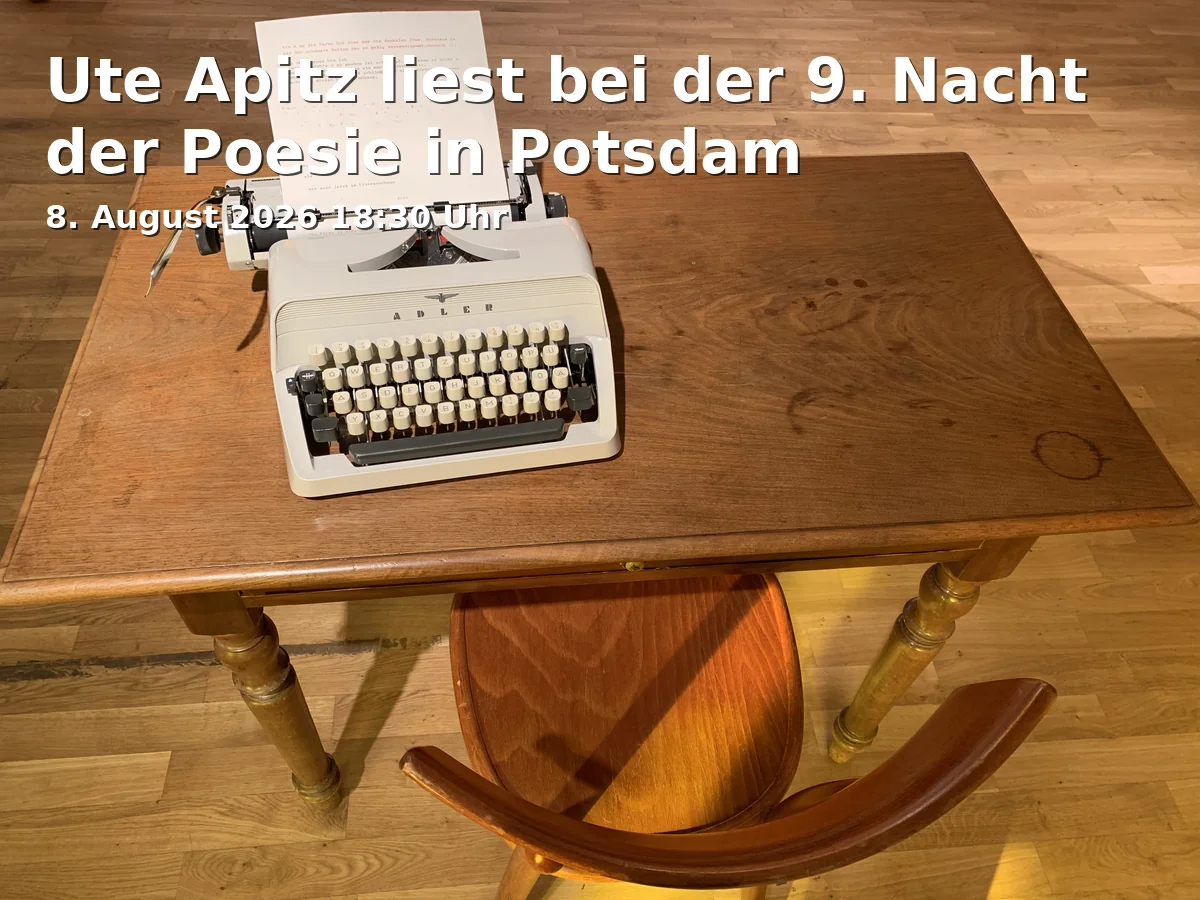
Ute Apitz reads at the 9th Night of Poetry in Potsdam
A summer evening for poetry lovers in Alexandrowka: Ute Apitz reads at the 9th Night of Poetry. Poetic, close, unforgettable. #Potsdam #Poetry
Frequently Asked Questions
Reviews
No reviews found