
Potsdam
Henning-von-Tresckow-Straße 13, 14467 Potsdam, Deutschland
New Lustgarten, City Square | Events & Parking
The New Lustgarten is one of the most distinctive public spaces in the center of Potsdam: historically evolved, reimagined after the Federal Garden Show 2001, and today used as a mix of city square, green space, and event area. Located between the Havel riverbank, the Film Museum, and Breite Straße, it combines quality of stay with urban openness and serves as a venue for city festivals, markets, concerts, and seasonal formats. Visitors to the square experience Potsdam not just as a pure monument space, but as a vibrant urban area with history, open sightlines, and a location that elegantly connects strolls, events, and city visits. The official city description emphasizes this versatility: recreation, movement, temporary events, and direct integration into the city center coexist here. ([potsdam.de](https://www.potsdam.de/de/neuer-lustgarten))
History of the New Lustgarten in Potsdam
The history of the New Lustgarten dates back deep into the development of Potsdam as a residence city. The state capital describes the Lustgarten as the oldest garden facility in Potsdam, created around 1660 under the Great Elector Frederick William of Brandenburg as part of the overall ensemble of the City Palace, Old Market, and Havel riverbank. Its final form was given to the garden in the early 19th century, specifically in 1829, by Peter Joseph Lenné. This historical line is important because it explains why the square continues to mediate so strongly between representative history and public use. The Lustgarten was never just an ornament, but always part of a larger urban context in which court, city, and water were interconnected. The fact that the location is so present in today's city center is therefore not only related to its size but also to its centuries-long role as an interface between power, landscape, and urban space. ([potsdam.de](https://www.potsdam.de/de/neuer-lustgarten))
After World War II, the area changed drastically: a stadium and a hotel high-rise were temporarily built on the site. It was only in connection with the Federal Garden Show 2001 that the Lustgarten was newly designed in a modern form. The city deliberately speaks of an approach to the historical layout, not a complete reconstruction. This is exactly where the special quality of the place lies: historical references remain readable without the square appearing museum-like. The Ringerkolonnade and the Neptunbassin were restored, and the city square and garden areas were newly created. On plans and in today's square design, it is evident how strongly the area at Breite Straße, by the Havel, and next to the Film Museum continues to function as an urban bridge. To understand the New Lustgarten, one should therefore not only see it as an open space but as the result of many layers: baroque origins, Lenné's landscape thinking, war destruction, post-war reconstruction, and a reinterpretation in the spirit of the BUGA 2001. ([potsdam.de](https://www.potsdam.de/de/neuer-lustgarten))
Events, Markets, and Use on the City Square
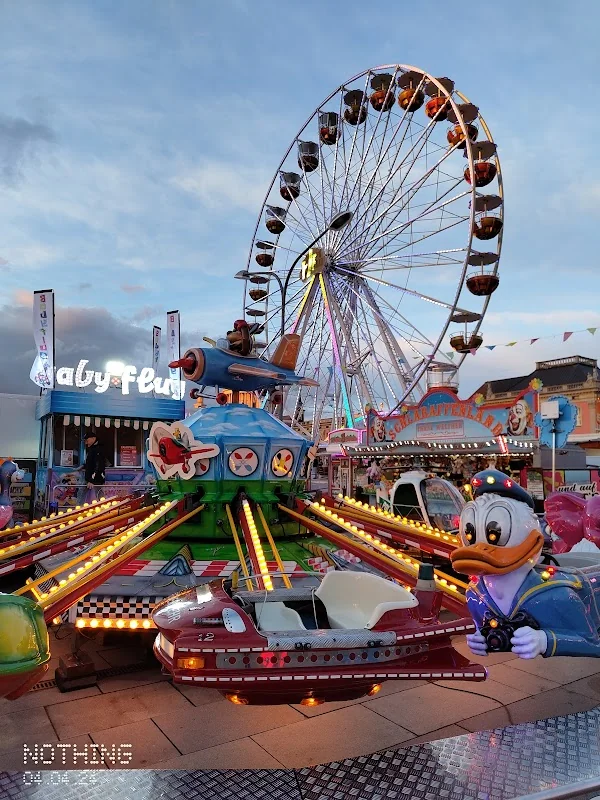
For today's use, the versatility of the area is crucial. The city's official event page describes the New Lustgarten as a large area by the harbor, divided into a lawn area and a paved event area. This very division makes it interesting for different formats: larger city festivals like the Stadtwerkefest, concerts, flea and fabric markets, showman events, children's festivals, and sports events are explicitly mentioned. The paving is also practically relevant, as the city refers to slabs without weight limits. For organizers, this means flexibility; for visitors, an area that can not only be well used for events but also easily walked on and used seasonally in different ways. The administration is with Pro Potsdam GmbH, which additionally designates the square as a professionally organized event location. ([potsdam.de](https://www.potsdam.de/de/neuer-lustgarten-als-veranstaltungsort))
The search queries surrounding the New Lustgarten show what kind of events people expect there: October and folk festival formats, Christmas circus or Christmas arena, fabric market, and photo spots. This very mix fits the logic of the place, as the New Lustgarten is not a concert hall but an urban outdoor area with changing programming. The city describes it as a place where play, sports, and recreation have as much space as festive large events. This is more than just a nice additional piece of information: it explains why the square can appear open, green, and quiet on many days and at other times becomes a stage for audiences and showmen. Recent developments also underscore this dual role. In 2024, the state capital began creating a tree-planted bed and seating options to make the stay more attractive and ecologically valuable. Thus, the New Lustgarten is not only becoming an event area but also an urban space that aims to create lasting quality of stay. ([potsdam.de](https://www.potsdam.de/de/neuer-lustgarten))
Access, Public Transport, and Parking at the New Lustgarten
Visitors to the New Lustgarten benefit from its location in the city center. The city mentions the site directly at the tram stop; there are also bus stops in the immediate vicinity, including for intercity connections. This is particularly convenient for visitors, as the square can be easily integrated into a city stroll and does not have to be accessed through a peripheral area or a large exhibition area. Especially during events, this is a real advantage: one can arrive by public transport, walk a few steps, and be immediately at the square. For many event formats, this is more attractive than a remote location, as arrival and departure remain relaxed, and the city center simultaneously serves as a framework. The official description also emphasizes that the New Lustgarten is located in the historic city center next to the Mercure Hotel, which further facilitates orientation. ([potsdam.de](https://www.potsdam.de/de/neuer-lustgarten-als-veranstaltungsort))
The city also provides concrete information about parking. Mentioned are the parking garage at the main train station about five minutes away, the underground garage at Werner-Seelenbinder-Straße about three minutes away, and the underground garage at IHK Schlossstraße about two minutes away. These details show that the New Lustgarten remains relatively easy to reach by car despite its central location, without the need for parking directly at the square. This is important for visitors to markets, fairs, or seasonal festivals, as it keeps the choice between car and public transport open. Those coming from the main train station also reach their destination quickly, making the location interesting for both regional and non-regional guests. From an SEO perspective, terms like parking, access, and public transport are therefore among the strongest topics surrounding the location. Practically speaking, the New Lustgarten is an example of an urban event location where mobility is not considered a secondary issue but is part of the use. ([potsdam.de](https://www.potsdam.de/de/neuer-lustgarten-als-veranstaltungsort))
Ringerkolonnade, Neptunbassin, and the Special Design
The character of the New Lustgarten arises not only from its use but also from its distinctive design elements. Particularly important are the Ringerkolonnade and the Neptunbassin, which were restored during the reorganization for the BUGA 2001. The Ringerkolonnade itself has a complex history: it was created in the 18th century as a colonnade between the Marstall and the palace, was later relocated, and has been back in its historical place since 2016. The Neptunbassin, on the other hand, was built in 1701 as a harbor for the royal pleasure boats and was only separated from the Havel in 1750. Today, remnants of the Neptun group can be seen there. These elements give the square a significant historical depth and make it particularly rewarding for visitors interested in Potsdam's urban history. The New Lustgarten is therefore not just a large area but an ensemble of memory, water reference, and landscape order. ([potsdam.de](https://www.potsdam.de/de/content/der-breiten-strasse))
Today's design also includes garden rooms, linden groves, and a hop gallery as a replacement for the former southern-ending orangery. The city thus describes the area as a conscious mix of festival space and garden landscape. The Karl-Liebknecht-Forum with the sculpture Heart and Flame of the Revolution is also located in the area of the Lustgarten and belongs to the cultural environment of the square. Additionally, there is the proximity to the harbor of the Weisse Flotte Potsdam, which was redesigned for the BUGA 2001. This creates a spatial structure that connects the New Lustgarten with several other inner-city locations: Breite Straße, Film Museum, Havel riverbank, and the axis towards the Old Market and City Palace. For visitors, this means much more than just a single square. Those who stroll here experience several levels simultaneously: urban order, water location, historical memory, and contemporary use. This is precisely why the location is so photogenic and suitable for both short and longer stays. ([potsdam.de](https://www.potsdam.de/de/content/der-breiten-strasse))
Photos, Walks, and Practical Tips for Visiting
The keyword photos is no coincidence at the New Lustgarten, as the place indeed offers strong motifs. Particularly interesting are sightlines to the palace, to the Ringerkolonnaden, to the Film Museum, and towards the water area at the Havel. The city describes these sight relationships in connection with the new tree bed and the planned seating options. This is practical for visitors, as the square can thus be understood not only as an event area but also as a place to stay with perspectives. Those who photograph will find here the mix of green, stone, water, and historical backdrop that makes Potsdam so distinctive. Additionally, the square appears open and spacious, allowing one to capture motifs from different distances. Therefore, the location is well-suited for social media images as well as classic city photography. ([potsdam.de](https://www.potsdam.de/de/512-neue-pflanzen-und-sitzmoeglichkeiten-am-lustgarten-entsteht-ein-baumbeet))
It is also practical that the New Lustgarten can be excellently combined with a walk through the city center. The city recommends in the city tour the route from the Old Market to the New Market with a detour to the New Lustgarten and further to the Dutch Quarter or along Brandenburger Straße. So, those who not only visit an event but want to discover the entire urban space can use the square as part of a larger route. This is ideal for people looking for a suitable place for a walk before or after an event. A classic hall plan is not relevant here, as it is an open city square; orientation occurs more through sections of the square, event setups, and the respective use of the outdoor space. This is exactly what makes the location flexible. It is neither just a park nor just a festival area, but an urban space that can change depending on the occasion while remaining clearly readable. ([potsdam.de](https://www.potsdam.de/de/neuer-lustgarten))
Those visiting the New Lustgarten should also keep an eye on the growing quality of stay. In 2024, the city began creating a tree bed of about 70 square meters between the Mercure hotel wall and Breite Straße. The area will be unsealed, designed with seating walls, cordon trees, and underplanting, and aims to improve the stay in the very wide street space. This shows that the Lustgarten is not understood as a completed project but as a living urban space that is being further developed. For visitors, this means: today, the place is worthwhile not only because of its history or individual events but also because of its everyday qualities. One can arrive here, look around, pause, photograph, and continue. Those who keep an eye on event times experience the square in its full range: sometimes quiet and green, sometimes densely visited and festive, sometimes as a passageway, sometimes as a stage. This very adaptability makes the New Lustgarten one of the most interesting city squares in Potsdam. ([potsdam.de](https://www.potsdam.de/de/512-neue-pflanzen-und-sitzmoeglichkeiten-am-lustgarten-entsteht-ein-baumbeet))
Sources:
Show moreShow less
New Lustgarten, City Square | Events & Parking
The New Lustgarten is one of the most distinctive public spaces in the center of Potsdam: historically evolved, reimagined after the Federal Garden Show 2001, and today used as a mix of city square, green space, and event area. Located between the Havel riverbank, the Film Museum, and Breite Straße, it combines quality of stay with urban openness and serves as a venue for city festivals, markets, concerts, and seasonal formats. Visitors to the square experience Potsdam not just as a pure monument space, but as a vibrant urban area with history, open sightlines, and a location that elegantly connects strolls, events, and city visits. The official city description emphasizes this versatility: recreation, movement, temporary events, and direct integration into the city center coexist here. ([potsdam.de](https://www.potsdam.de/de/neuer-lustgarten))
History of the New Lustgarten in Potsdam
The history of the New Lustgarten dates back deep into the development of Potsdam as a residence city. The state capital describes the Lustgarten as the oldest garden facility in Potsdam, created around 1660 under the Great Elector Frederick William of Brandenburg as part of the overall ensemble of the City Palace, Old Market, and Havel riverbank. Its final form was given to the garden in the early 19th century, specifically in 1829, by Peter Joseph Lenné. This historical line is important because it explains why the square continues to mediate so strongly between representative history and public use. The Lustgarten was never just an ornament, but always part of a larger urban context in which court, city, and water were interconnected. The fact that the location is so present in today's city center is therefore not only related to its size but also to its centuries-long role as an interface between power, landscape, and urban space. ([potsdam.de](https://www.potsdam.de/de/neuer-lustgarten))
After World War II, the area changed drastically: a stadium and a hotel high-rise were temporarily built on the site. It was only in connection with the Federal Garden Show 2001 that the Lustgarten was newly designed in a modern form. The city deliberately speaks of an approach to the historical layout, not a complete reconstruction. This is exactly where the special quality of the place lies: historical references remain readable without the square appearing museum-like. The Ringerkolonnade and the Neptunbassin were restored, and the city square and garden areas were newly created. On plans and in today's square design, it is evident how strongly the area at Breite Straße, by the Havel, and next to the Film Museum continues to function as an urban bridge. To understand the New Lustgarten, one should therefore not only see it as an open space but as the result of many layers: baroque origins, Lenné's landscape thinking, war destruction, post-war reconstruction, and a reinterpretation in the spirit of the BUGA 2001. ([potsdam.de](https://www.potsdam.de/de/neuer-lustgarten))
Events, Markets, and Use on the City Square
For today's use, the versatility of the area is crucial. The city's official event page describes the New Lustgarten as a large area by the harbor, divided into a lawn area and a paved event area. This very division makes it interesting for different formats: larger city festivals like the Stadtwerkefest, concerts, flea and fabric markets, showman events, children's festivals, and sports events are explicitly mentioned. The paving is also practically relevant, as the city refers to slabs without weight limits. For organizers, this means flexibility; for visitors, an area that can not only be well used for events but also easily walked on and used seasonally in different ways. The administration is with Pro Potsdam GmbH, which additionally designates the square as a professionally organized event location. ([potsdam.de](https://www.potsdam.de/de/neuer-lustgarten-als-veranstaltungsort))
The search queries surrounding the New Lustgarten show what kind of events people expect there: October and folk festival formats, Christmas circus or Christmas arena, fabric market, and photo spots. This very mix fits the logic of the place, as the New Lustgarten is not a concert hall but an urban outdoor area with changing programming. The city describes it as a place where play, sports, and recreation have as much space as festive large events. This is more than just a nice additional piece of information: it explains why the square can appear open, green, and quiet on many days and at other times becomes a stage for audiences and showmen. Recent developments also underscore this dual role. In 2024, the state capital began creating a tree-planted bed and seating options to make the stay more attractive and ecologically valuable. Thus, the New Lustgarten is not only becoming an event area but also an urban space that aims to create lasting quality of stay. ([potsdam.de](https://www.potsdam.de/de/neuer-lustgarten))
Access, Public Transport, and Parking at the New Lustgarten
Visitors to the New Lustgarten benefit from its location in the city center. The city mentions the site directly at the tram stop; there are also bus stops in the immediate vicinity, including for intercity connections. This is particularly convenient for visitors, as the square can be easily integrated into a city stroll and does not have to be accessed through a peripheral area or a large exhibition area. Especially during events, this is a real advantage: one can arrive by public transport, walk a few steps, and be immediately at the square. For many event formats, this is more attractive than a remote location, as arrival and departure remain relaxed, and the city center simultaneously serves as a framework. The official description also emphasizes that the New Lustgarten is located in the historic city center next to the Mercure Hotel, which further facilitates orientation. ([potsdam.de](https://www.potsdam.de/de/neuer-lustgarten-als-veranstaltungsort))
The city also provides concrete information about parking. Mentioned are the parking garage at the main train station about five minutes away, the underground garage at Werner-Seelenbinder-Straße about three minutes away, and the underground garage at IHK Schlossstraße about two minutes away. These details show that the New Lustgarten remains relatively easy to reach by car despite its central location, without the need for parking directly at the square. This is important for visitors to markets, fairs, or seasonal festivals, as it keeps the choice between car and public transport open. Those coming from the main train station also reach their destination quickly, making the location interesting for both regional and non-regional guests. From an SEO perspective, terms like parking, access, and public transport are therefore among the strongest topics surrounding the location. Practically speaking, the New Lustgarten is an example of an urban event location where mobility is not considered a secondary issue but is part of the use. ([potsdam.de](https://www.potsdam.de/de/neuer-lustgarten-als-veranstaltungsort))
Ringerkolonnade, Neptunbassin, and the Special Design
The character of the New Lustgarten arises not only from its use but also from its distinctive design elements. Particularly important are the Ringerkolonnade and the Neptunbassin, which were restored during the reorganization for the BUGA 2001. The Ringerkolonnade itself has a complex history: it was created in the 18th century as a colonnade between the Marstall and the palace, was later relocated, and has been back in its historical place since 2016. The Neptunbassin, on the other hand, was built in 1701 as a harbor for the royal pleasure boats and was only separated from the Havel in 1750. Today, remnants of the Neptun group can be seen there. These elements give the square a significant historical depth and make it particularly rewarding for visitors interested in Potsdam's urban history. The New Lustgarten is therefore not just a large area but an ensemble of memory, water reference, and landscape order. ([potsdam.de](https://www.potsdam.de/de/content/der-breiten-strasse))
Today's design also includes garden rooms, linden groves, and a hop gallery as a replacement for the former southern-ending orangery. The city thus describes the area as a conscious mix of festival space and garden landscape. The Karl-Liebknecht-Forum with the sculpture Heart and Flame of the Revolution is also located in the area of the Lustgarten and belongs to the cultural environment of the square. Additionally, there is the proximity to the harbor of the Weisse Flotte Potsdam, which was redesigned for the BUGA 2001. This creates a spatial structure that connects the New Lustgarten with several other inner-city locations: Breite Straße, Film Museum, Havel riverbank, and the axis towards the Old Market and City Palace. For visitors, this means much more than just a single square. Those who stroll here experience several levels simultaneously: urban order, water location, historical memory, and contemporary use. This is precisely why the location is so photogenic and suitable for both short and longer stays. ([potsdam.de](https://www.potsdam.de/de/content/der-breiten-strasse))
Photos, Walks, and Practical Tips for Visiting
The keyword photos is no coincidence at the New Lustgarten, as the place indeed offers strong motifs. Particularly interesting are sightlines to the palace, to the Ringerkolonnaden, to the Film Museum, and towards the water area at the Havel. The city describes these sight relationships in connection with the new tree bed and the planned seating options. This is practical for visitors, as the square can thus be understood not only as an event area but also as a place to stay with perspectives. Those who photograph will find here the mix of green, stone, water, and historical backdrop that makes Potsdam so distinctive. Additionally, the square appears open and spacious, allowing one to capture motifs from different distances. Therefore, the location is well-suited for social media images as well as classic city photography. ([potsdam.de](https://www.potsdam.de/de/512-neue-pflanzen-und-sitzmoeglichkeiten-am-lustgarten-entsteht-ein-baumbeet))
It is also practical that the New Lustgarten can be excellently combined with a walk through the city center. The city recommends in the city tour the route from the Old Market to the New Market with a detour to the New Lustgarten and further to the Dutch Quarter or along Brandenburger Straße. So, those who not only visit an event but want to discover the entire urban space can use the square as part of a larger route. This is ideal for people looking for a suitable place for a walk before or after an event. A classic hall plan is not relevant here, as it is an open city square; orientation occurs more through sections of the square, event setups, and the respective use of the outdoor space. This is exactly what makes the location flexible. It is neither just a park nor just a festival area, but an urban space that can change depending on the occasion while remaining clearly readable. ([potsdam.de](https://www.potsdam.de/de/neuer-lustgarten))
Those visiting the New Lustgarten should also keep an eye on the growing quality of stay. In 2024, the city began creating a tree bed of about 70 square meters between the Mercure hotel wall and Breite Straße. The area will be unsealed, designed with seating walls, cordon trees, and underplanting, and aims to improve the stay in the very wide street space. This shows that the Lustgarten is not understood as a completed project but as a living urban space that is being further developed. For visitors, this means: today, the place is worthwhile not only because of its history or individual events but also because of its everyday qualities. One can arrive here, look around, pause, photograph, and continue. Those who keep an eye on event times experience the square in its full range: sometimes quiet and green, sometimes densely visited and festive, sometimes as a passageway, sometimes as a stage. This very adaptability makes the New Lustgarten one of the most interesting city squares in Potsdam. ([potsdam.de](https://www.potsdam.de/de/512-neue-pflanzen-und-sitzmoeglichkeiten-am-lustgarten-entsteht-ein-baumbeet))
Sources:
New Lustgarten, City Square | Events & Parking
The New Lustgarten is one of the most distinctive public spaces in the center of Potsdam: historically evolved, reimagined after the Federal Garden Show 2001, and today used as a mix of city square, green space, and event area. Located between the Havel riverbank, the Film Museum, and Breite Straße, it combines quality of stay with urban openness and serves as a venue for city festivals, markets, concerts, and seasonal formats. Visitors to the square experience Potsdam not just as a pure monument space, but as a vibrant urban area with history, open sightlines, and a location that elegantly connects strolls, events, and city visits. The official city description emphasizes this versatility: recreation, movement, temporary events, and direct integration into the city center coexist here. ([potsdam.de](https://www.potsdam.de/de/neuer-lustgarten))
History of the New Lustgarten in Potsdam
The history of the New Lustgarten dates back deep into the development of Potsdam as a residence city. The state capital describes the Lustgarten as the oldest garden facility in Potsdam, created around 1660 under the Great Elector Frederick William of Brandenburg as part of the overall ensemble of the City Palace, Old Market, and Havel riverbank. Its final form was given to the garden in the early 19th century, specifically in 1829, by Peter Joseph Lenné. This historical line is important because it explains why the square continues to mediate so strongly between representative history and public use. The Lustgarten was never just an ornament, but always part of a larger urban context in which court, city, and water were interconnected. The fact that the location is so present in today's city center is therefore not only related to its size but also to its centuries-long role as an interface between power, landscape, and urban space. ([potsdam.de](https://www.potsdam.de/de/neuer-lustgarten))
After World War II, the area changed drastically: a stadium and a hotel high-rise were temporarily built on the site. It was only in connection with the Federal Garden Show 2001 that the Lustgarten was newly designed in a modern form. The city deliberately speaks of an approach to the historical layout, not a complete reconstruction. This is exactly where the special quality of the place lies: historical references remain readable without the square appearing museum-like. The Ringerkolonnade and the Neptunbassin were restored, and the city square and garden areas were newly created. On plans and in today's square design, it is evident how strongly the area at Breite Straße, by the Havel, and next to the Film Museum continues to function as an urban bridge. To understand the New Lustgarten, one should therefore not only see it as an open space but as the result of many layers: baroque origins, Lenné's landscape thinking, war destruction, post-war reconstruction, and a reinterpretation in the spirit of the BUGA 2001. ([potsdam.de](https://www.potsdam.de/de/neuer-lustgarten))
Events, Markets, and Use on the City Square
For today's use, the versatility of the area is crucial. The city's official event page describes the New Lustgarten as a large area by the harbor, divided into a lawn area and a paved event area. This very division makes it interesting for different formats: larger city festivals like the Stadtwerkefest, concerts, flea and fabric markets, showman events, children's festivals, and sports events are explicitly mentioned. The paving is also practically relevant, as the city refers to slabs without weight limits. For organizers, this means flexibility; for visitors, an area that can not only be well used for events but also easily walked on and used seasonally in different ways. The administration is with Pro Potsdam GmbH, which additionally designates the square as a professionally organized event location. ([potsdam.de](https://www.potsdam.de/de/neuer-lustgarten-als-veranstaltungsort))
The search queries surrounding the New Lustgarten show what kind of events people expect there: October and folk festival formats, Christmas circus or Christmas arena, fabric market, and photo spots. This very mix fits the logic of the place, as the New Lustgarten is not a concert hall but an urban outdoor area with changing programming. The city describes it as a place where play, sports, and recreation have as much space as festive large events. This is more than just a nice additional piece of information: it explains why the square can appear open, green, and quiet on many days and at other times becomes a stage for audiences and showmen. Recent developments also underscore this dual role. In 2024, the state capital began creating a tree-planted bed and seating options to make the stay more attractive and ecologically valuable. Thus, the New Lustgarten is not only becoming an event area but also an urban space that aims to create lasting quality of stay. ([potsdam.de](https://www.potsdam.de/de/neuer-lustgarten))
Access, Public Transport, and Parking at the New Lustgarten
Visitors to the New Lustgarten benefit from its location in the city center. The city mentions the site directly at the tram stop; there are also bus stops in the immediate vicinity, including for intercity connections. This is particularly convenient for visitors, as the square can be easily integrated into a city stroll and does not have to be accessed through a peripheral area or a large exhibition area. Especially during events, this is a real advantage: one can arrive by public transport, walk a few steps, and be immediately at the square. For many event formats, this is more attractive than a remote location, as arrival and departure remain relaxed, and the city center simultaneously serves as a framework. The official description also emphasizes that the New Lustgarten is located in the historic city center next to the Mercure Hotel, which further facilitates orientation. ([potsdam.de](https://www.potsdam.de/de/neuer-lustgarten-als-veranstaltungsort))
The city also provides concrete information about parking. Mentioned are the parking garage at the main train station about five minutes away, the underground garage at Werner-Seelenbinder-Straße about three minutes away, and the underground garage at IHK Schlossstraße about two minutes away. These details show that the New Lustgarten remains relatively easy to reach by car despite its central location, without the need for parking directly at the square. This is important for visitors to markets, fairs, or seasonal festivals, as it keeps the choice between car and public transport open. Those coming from the main train station also reach their destination quickly, making the location interesting for both regional and non-regional guests. From an SEO perspective, terms like parking, access, and public transport are therefore among the strongest topics surrounding the location. Practically speaking, the New Lustgarten is an example of an urban event location where mobility is not considered a secondary issue but is part of the use. ([potsdam.de](https://www.potsdam.de/de/neuer-lustgarten-als-veranstaltungsort))
Ringerkolonnade, Neptunbassin, and the Special Design
The character of the New Lustgarten arises not only from its use but also from its distinctive design elements. Particularly important are the Ringerkolonnade and the Neptunbassin, which were restored during the reorganization for the BUGA 2001. The Ringerkolonnade itself has a complex history: it was created in the 18th century as a colonnade between the Marstall and the palace, was later relocated, and has been back in its historical place since 2016. The Neptunbassin, on the other hand, was built in 1701 as a harbor for the royal pleasure boats and was only separated from the Havel in 1750. Today, remnants of the Neptun group can be seen there. These elements give the square a significant historical depth and make it particularly rewarding for visitors interested in Potsdam's urban history. The New Lustgarten is therefore not just a large area but an ensemble of memory, water reference, and landscape order. ([potsdam.de](https://www.potsdam.de/de/content/der-breiten-strasse))
Today's design also includes garden rooms, linden groves, and a hop gallery as a replacement for the former southern-ending orangery. The city thus describes the area as a conscious mix of festival space and garden landscape. The Karl-Liebknecht-Forum with the sculpture Heart and Flame of the Revolution is also located in the area of the Lustgarten and belongs to the cultural environment of the square. Additionally, there is the proximity to the harbor of the Weisse Flotte Potsdam, which was redesigned for the BUGA 2001. This creates a spatial structure that connects the New Lustgarten with several other inner-city locations: Breite Straße, Film Museum, Havel riverbank, and the axis towards the Old Market and City Palace. For visitors, this means much more than just a single square. Those who stroll here experience several levels simultaneously: urban order, water location, historical memory, and contemporary use. This is precisely why the location is so photogenic and suitable for both short and longer stays. ([potsdam.de](https://www.potsdam.de/de/content/der-breiten-strasse))
Photos, Walks, and Practical Tips for Visiting
The keyword photos is no coincidence at the New Lustgarten, as the place indeed offers strong motifs. Particularly interesting are sightlines to the palace, to the Ringerkolonnaden, to the Film Museum, and towards the water area at the Havel. The city describes these sight relationships in connection with the new tree bed and the planned seating options. This is practical for visitors, as the square can thus be understood not only as an event area but also as a place to stay with perspectives. Those who photograph will find here the mix of green, stone, water, and historical backdrop that makes Potsdam so distinctive. Additionally, the square appears open and spacious, allowing one to capture motifs from different distances. Therefore, the location is well-suited for social media images as well as classic city photography. ([potsdam.de](https://www.potsdam.de/de/512-neue-pflanzen-und-sitzmoeglichkeiten-am-lustgarten-entsteht-ein-baumbeet))
It is also practical that the New Lustgarten can be excellently combined with a walk through the city center. The city recommends in the city tour the route from the Old Market to the New Market with a detour to the New Lustgarten and further to the Dutch Quarter or along Brandenburger Straße. So, those who not only visit an event but want to discover the entire urban space can use the square as part of a larger route. This is ideal for people looking for a suitable place for a walk before or after an event. A classic hall plan is not relevant here, as it is an open city square; orientation occurs more through sections of the square, event setups, and the respective use of the outdoor space. This is exactly what makes the location flexible. It is neither just a park nor just a festival area, but an urban space that can change depending on the occasion while remaining clearly readable. ([potsdam.de](https://www.potsdam.de/de/neuer-lustgarten))
Those visiting the New Lustgarten should also keep an eye on the growing quality of stay. In 2024, the city began creating a tree bed of about 70 square meters between the Mercure hotel wall and Breite Straße. The area will be unsealed, designed with seating walls, cordon trees, and underplanting, and aims to improve the stay in the very wide street space. This shows that the Lustgarten is not understood as a completed project but as a living urban space that is being further developed. For visitors, this means: today, the place is worthwhile not only because of its history or individual events but also because of its everyday qualities. One can arrive here, look around, pause, photograph, and continue. Those who keep an eye on event times experience the square in its full range: sometimes quiet and green, sometimes densely visited and festive, sometimes as a passageway, sometimes as a stage. This very adaptability makes the New Lustgarten one of the most interesting city squares in Potsdam. ([potsdam.de](https://www.potsdam.de/de/512-neue-pflanzen-und-sitzmoeglichkeiten-am-lustgarten-entsteht-ein-baumbeet))
Sources:

Frequently Asked Questions
Reviews
M T
27. March 2024
I always love this place next to the river side. Beautiful place to spend summer time.
Amarok Sh
11. November 2025
When there is nothing it is nothing.
Sumanta Chakraborty
6. April 2024
Enjoyed the market beside the river in Potsdam.
Glenn Wolter
13. August 2018
Street Food Festival
Robert Utecht
26. June 2022
Super Geilllllll