
Potsdam
Friedrich-Ebert-Straße, 14469 Potsdam, Deutschland
Nauener Tor Potsdam | Weekly Market & Neo-Gothic
The Nauener Tor is one of the places in Potsdam where city history, architecture, and everyday life meet in close proximity. Those searching for Nauener Tor Potsdam, Nauener Tor Market, Nauener Tor Photos, or even Nauener Tor Berlin will actually find themselves in Potsdam, right at one of the most prominent historical urban spaces of the city. The gate is located at the edge of the Dutch Quarter and is one of three preserved city gates of Potsdam. This blend of monument, landmark, meeting point, and vibrant urban space makes the place so interesting for visitors, residents, and anyone interested in architectural style, monument protection, access, or parking. The Nauener Tor is not an isolated monument but a piece of urban culture that is still in use today: as a point of orientation on the city map, as a backdrop for photos, as an address for restaurants, and as a space for the weekly market. Those who want to understand the atmosphere of the city center get a quick and very authentic introduction to historical Potsdam here. ([potsdam.de](https://www.potsdam.de/de/nauener-tor))
History, Architectural Style, and Monument Protection at Nauener Tor
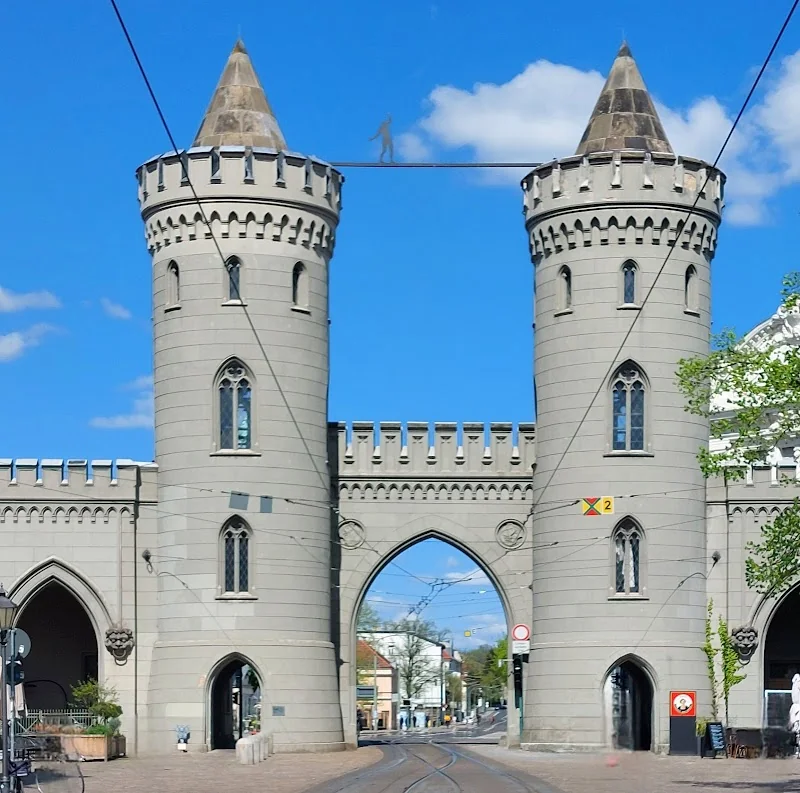
The historical depth of the Nauener Tor does not begin with the visible structure today, but with a longer sequence of city expansions and gate constructions. As early as 1722, a first Nauener Tor stood at another location, and in 1733, a new city gate was built during the second Baroque city expansion. The current ensemble was created in 1755 based on a sketch by Frederick the Great by the architect Johann Gottfried Büring. The conscious reference to Gothic forms is crucial: the king wanted to give the gate a medieval character so that it appeared representative and older in distant views. This is precisely where the architectural-historical significance of the building lies. The Nauener Tor is considered one of the earliest structures on the European continent that is oriented towards the model of English Neo-Gothic and is described in the history of Potsdam as a special rarity. For users searching for Nauener Tor Potsdam architectural style or Nauener Tor Potsdam Neo-Gothic, this is the central point: it is not just about a city gate, but about an early, deliberately staged architectural statement. ([potsdam.de](https://www.potsdam.de/de/nauener-tor))
Its current form was only achieved after several renovations. In the 19th century, the city wall was gradually demolished, and in 1867, the Baroque gate that originally lay between the towers also disappeared. In its place, a larger pointed arch-shaped opening was created, which better matched the neo-Gothic design language. The final form of the gate was established after this change between 1867 and 1869. Another significant turning point was the comprehensive renovation of the gate and forecourt in 1996 and 1997, during which the building regained its historical appearance. This maintenance is not coincidental: Potsdam has an exceptionally high density of historical monuments, and the Nauener Tor is part of this urban heritage. As a monument, it connects urban planning function, historical symbolism, and the representative idea language of Frederick II. In today's perception, it therefore stands not only for the past but also for the city's willingness to visibly preserve and continue to use its most important historical spaces. ([potsdam.de](https://www.potsdam.de/de/nauener-tor))
Weekly Market, Cafés, and Restaurants at Nauener Tor
The Nauener Tor is not only a monument but also a functioning space in urban life. The forecourt has been defined as an event venue and is suitable for markets, information stands, promotional activities, and smaller city festivals. Particularly important for those searching for Nauener Tor Potsdam Market is the clear regulation: Wednesdays and Saturdays are reserved for the weekly market. With a usable area of around 700 square meters, the space offers enough room for market stalls and short stays without losing its open effect. This creates precisely the mix that makes the Nauener Tor so attractive: historical backdrop, short distances, and everyday use. The square is therefore relevant not only for tourists but also for people looking for fresh products, small events, or a lively city stroll. Those who visit the gate on market days experience Potsdam in a particularly dense form, as architecture, movement, and trade come together in one place. For search queries like Nauener Tor Potsdam event venue or Nauener Tor Market, this is a central unique feature. ([potsdam.de](https://www.potsdam.de/de/nauener-tor-vorplatz-als-veranstaltungsort))
Culinarily, the Nauener Tor is also closely connected to the city center. The two wings of the gate today house two restaurants, and the official tourism description points out that especially in summer, cafés and restaurants in and around the gate invite you to linger. Directly adjacent is the Dutch Quarter, which has been a popular attraction for years with its shops, cafés, and restaurants. This makes the Nauener Tor a good starting point for a break between city strolls, market visits, and sightseeing. Those searching for Nauener Tor Potsdam restaurant or Nauener Tor Potsdam café will find here not just a single isolated address, but an entire environment of gastronomic offerings. This is precisely what makes the place so pleasant for visitors: one can stop briefly, eat something, observe the square, and then continue on the way through the city center or into the Dutch Quarter. The gate thus functions as a monument, meeting point, and urban hinge between history and the present. ([potsdam.de](https://www.potsdam.de/de/nauener-tor))
Access, Parking, and Maps to Nauener Tor
In terms of access, the Nauener Tor scores with its central location. The forecourt is located in the historic city center, directly adjacent to the Dutch Quarter, making it very well integrated into the city center. For public transport, the location is particularly convenient, as tram and bus stops are only about a minute away. Therefore, those searching for Nauener Tor Potsdam access or Nauener Tor Potsdam maps will find a location that can be easily reached without a long detour. The official tourism site also emphasizes the good accessibility by public transport and names the Nauener Tor as a conveniently reachable point in the city center. This is especially advantageous for day visitors and city walkers, as the historical surroundings can be reached without complicated navigation. The address of the forecourt is given in the city information as Friedrich-Ebert-Straße 32, 14469 Potsdam. Thus, the gate is located in the middle of an area that is ideal for walking, city tours, and market visits. ([potsdam.de](https://www.potsdam.de/de/nauener-tor-vorplatz-als-veranstaltungsort))
Parking is also relatively straightforward. The city mentions the parking garage Stadtpalais on Hegelallee as a nearby option; it is only about a two-minute walk from there. This makes the Nauener Tor suitable for a short visit as well as for a longer stay in the city center. Those approaching by car can therefore park nearby and complete the rest comfortably on foot. At the same time, the square itself remains spared from much traffic noise and large parking areas due to its urban location, which benefits its historical character. For search terms like Nauener Tor Potsdam parking, maps, or access, it is important to know that the location does not function as an isolated event hall but as an open urban space. The focus is therefore less on large parking areas directly at the site, but rather on short walking distances, well-visible stops, and a clear, centrally located position. This is particularly pleasant for visitors, as the Nauener Tor can easily be integrated into a walk through Potsdam's city center. ([potsdam.de](https://www.potsdam.de/de/nauener-tor-vorplatz-als-veranstaltungsort))
Dutch Quarter, Photos, and City Strolls around Nauener Tor
The Nauener Tor also thrives on its neighborhood. Directly adjacent is the Dutch Quarter, which is considered one of the most well-known and characteristic districts of Potsdam. The official city description highlights that the quarter, with its exclusive shops, cozy cafés, and restaurants, possesses a special flair and has become a vibrant neighborhood after its renovation. For users searching for Nauener Tor Potsdam photos or the surrounding area, this connection is important: the gate is not a single image but part of an entire urban ensemble that has a strong photographic impact. The red bricks, the closed street layout, the proximity to the historical house fronts, and the striking gate structure create a backdrop that is quickly recognized in Potsdam. Because the Nauener Tor is simultaneously an entrance, passage, and meeting point, very different motifs arise here: from a quick documentation photo to an atmospheric shot in the evening light. This also explains why the place is equally popular with locals and guests. Those visiting the Dutch Quarter practically cannot pass by the Nauener Tor. ([potsdam.de](https://www.potsdam.de/de/nauener-tor))
For city strolls, the surroundings offer several levels. In the Dutch Quarter, there are shops, restaurants, pubs, cafés, and galleries that make the walk varied. The Nauener Tor marks a particularly good starting or ending point, as it visibly consolidates the historical axis and simultaneously functions as an urban transition. The tourism site describes it as a popular meeting point in the city center, especially in summer when one can linger there comfortably. Additionally, the gate can be viewed from the outside at any time, which facilitates spontaneous visits. Those who want to connect the theme of Nauener Tor Potsdam photos with an actual visit can simply come by without an entrance fee or fixed opening hours and let the historical effect work on them in peace. Especially in conjunction with the Dutch Quarter, a very clear picture of Potsdam's historical center emerges: dense, walkable, lively, and architecturally significant. Thus, a single sight quickly turns into a small city tour with a lot of recognition value. ([potsdamtourismus.de](https://www.potsdamtourismus.de/poi/nauener-tor?utm_source=openai))
Monument Protection, Renovation, and Special Features of the Nauener Tor
The special value of the Nauener Tor lies not only in its form but also in its status as a monument. In Potsdam, it is part of a city landscape with more than 3,000 historical monuments and protected gardens, and the city has emphasized for years the importance of monument protection for the historical cityscape. The Nauener Tor stands in this tradition as a visible sign of how Baroque city planning, neo-Gothic redesign, and modern maintenance can come together. Those searching for Nauener Tor Potsdam monument protection will therefore encounter a building that is not simply old but has been consciously preserved and repeatedly treated professionally. Especially the renovation in 1996/97 shows that the place is not only thought of as a museum. Its historical appearance was restored at that time, and the forecourt also received a comprehensive upgrade. The result is a facility that appears authentic and remains open for daily use. This balance is precisely what makes the place appealing: it should not be frozen but remain readable in its historical individuality. ([potsdam.de](https://www.potsdam.de/de/nauener-tor))
Among the special features are the early neo-Gothic design language, the two round towers with their additions, and the distant effect that Frederick II deliberately aimed for. The city describes the Nauener Tor as an extraordinary rarity in European architectural history; the official tourism information also calls it a popular meeting point with good access for visitors. Practically important are also the notes on usage: the flooring is partially restricted in accessibility, while comfortable access and sufficient seating are available. For a visit, this means that one does not have to adjust to a classic museum logic but to an open urban place with protected substance. Therefore, those searching for Nauener Tor Potsdam architectural style, monument protection, or maps will find here a very good example of how historical architecture functions in everyday life today. It is a place for looking, passing through, lingering, and moving on. This is precisely where its strength lies: the Nauener Tor is not only a symbol of city history but also a practical, vibrant part of the Potsdam urban space. ([potsdam.de](https://www.potsdam.de/de/nauener-tor))
Practical Information: Exterior Viewing, Seating, and Use of the Forecourt
Those who wish to visit the Nauener Tor do not need extensive planning. The building can be viewed from the outside at any time, making it ideal for spontaneous city visits. For many guests, this openness is particularly attractive because they can experience the gate at their own pace: briefly during a walk, longer during the weekly market, or as a stop on the way through the city center. The tourism site also points out that comfortable access by public transport is possible and sufficient seating is available. This way, the Nauener Tor meets several expectations of an inner-city meeting point: it is pleasant to look at, easily accessible, and practically usable. Those searching for Nauener Tor Potsdam photos, market, or access quickly realize that the use cannot be reduced to a single purpose. The gate is simultaneously a monument, backdrop, and place to stay. This everyday usability makes it a place where history is not only explained but experienced. For a short stay, often just a glance at the architecture, a coffee in the surroundings, or a walk across the square is enough. ([potsdam.de](https://www.potsdam.de/de/nauener-tor))
The place is also well suited for the combination of city strolls and stays. The forecourt can be used for markets and smaller festivals, and on Wednesdays and Saturdays, the weekly market is the focus there. Additionally, the proximity to restaurants and cafés in the gate wings and in the neighboring Dutch Quarter makes the Nauener Tor a suitable destination for the morning, afternoon stroll, or a short evening walk. When considering the location, architectural style, and use together, a classic Potsdam pattern emerges: historical backdrop, short distances, and a vibrant urban space. This is precisely why search queries like Nauener Tor Potsdam restaurant, café, market, or event venue work so well together. The gate is not just a monument for photos but a place where one can actually linger. And this explains its lasting popularity among visitors, locals, and anyone wanting to get to know Potsdam through its most distinctive places. ([potsdam.de](https://www.potsdam.de/de/nauener-tor))
Sources:
- State Capital Potsdam - Nauener Tor ([potsdam.de](https://www.potsdam.de/de/nauener-tor))
- State Capital Potsdam - Nauener Tor, Forecourt as Event Venue ([potsdam.de](https://www.potsdam.de/de/nauener-tor-vorplatz-als-veranstaltungsort))
- Potsdam Tourism - Nauener Tor ([potsdamtourismus.de](https://www.potsdamtourismus.de/poi/nauener-tor?utm_source=openai))
- State Capital Potsdam - Dutch Quarter ([potsdam.de](https://www.potsdam.de/de/hollaendisches-viertel?utm_source=openai))
- State Capital Potsdam - Frederick William I and His Potsdam ([potsdam.de](https://www.potsdam.de/de/content/friedrich-wilhelm-i-der-soldatenkoenig-und-sein-potsdam))
Mehr anzeigenWeniger anzeigen
Nauener Tor Potsdam | Weekly Market & Neo-Gothic
The Nauener Tor is one of the places in Potsdam where city history, architecture, and everyday life meet in close proximity. Those searching for Nauener Tor Potsdam, Nauener Tor Market, Nauener Tor Photos, or even Nauener Tor Berlin will actually find themselves in Potsdam, right at one of the most prominent historical urban spaces of the city. The gate is located at the edge of the Dutch Quarter and is one of three preserved city gates of Potsdam. This blend of monument, landmark, meeting point, and vibrant urban space makes the place so interesting for visitors, residents, and anyone interested in architectural style, monument protection, access, or parking. The Nauener Tor is not an isolated monument but a piece of urban culture that is still in use today: as a point of orientation on the city map, as a backdrop for photos, as an address for restaurants, and as a space for the weekly market. Those who want to understand the atmosphere of the city center get a quick and very authentic introduction to historical Potsdam here. ([potsdam.de](https://www.potsdam.de/de/nauener-tor))
History, Architectural Style, and Monument Protection at Nauener Tor
The historical depth of the Nauener Tor does not begin with the visible structure today, but with a longer sequence of city expansions and gate constructions. As early as 1722, a first Nauener Tor stood at another location, and in 1733, a new city gate was built during the second Baroque city expansion. The current ensemble was created in 1755 based on a sketch by Frederick the Great by the architect Johann Gottfried Büring. The conscious reference to Gothic forms is crucial: the king wanted to give the gate a medieval character so that it appeared representative and older in distant views. This is precisely where the architectural-historical significance of the building lies. The Nauener Tor is considered one of the earliest structures on the European continent that is oriented towards the model of English Neo-Gothic and is described in the history of Potsdam as a special rarity. For users searching for Nauener Tor Potsdam architectural style or Nauener Tor Potsdam Neo-Gothic, this is the central point: it is not just about a city gate, but about an early, deliberately staged architectural statement. ([potsdam.de](https://www.potsdam.de/de/nauener-tor))
Its current form was only achieved after several renovations. In the 19th century, the city wall was gradually demolished, and in 1867, the Baroque gate that originally lay between the towers also disappeared. In its place, a larger pointed arch-shaped opening was created, which better matched the neo-Gothic design language. The final form of the gate was established after this change between 1867 and 1869. Another significant turning point was the comprehensive renovation of the gate and forecourt in 1996 and 1997, during which the building regained its historical appearance. This maintenance is not coincidental: Potsdam has an exceptionally high density of historical monuments, and the Nauener Tor is part of this urban heritage. As a monument, it connects urban planning function, historical symbolism, and the representative idea language of Frederick II. In today's perception, it therefore stands not only for the past but also for the city's willingness to visibly preserve and continue to use its most important historical spaces. ([potsdam.de](https://www.potsdam.de/de/nauener-tor))
Weekly Market, Cafés, and Restaurants at Nauener Tor
The Nauener Tor is not only a monument but also a functioning space in urban life. The forecourt has been defined as an event venue and is suitable for markets, information stands, promotional activities, and smaller city festivals. Particularly important for those searching for Nauener Tor Potsdam Market is the clear regulation: Wednesdays and Saturdays are reserved for the weekly market. With a usable area of around 700 square meters, the space offers enough room for market stalls and short stays without losing its open effect. This creates precisely the mix that makes the Nauener Tor so attractive: historical backdrop, short distances, and everyday use. The square is therefore relevant not only for tourists but also for people looking for fresh products, small events, or a lively city stroll. Those who visit the gate on market days experience Potsdam in a particularly dense form, as architecture, movement, and trade come together in one place. For search queries like Nauener Tor Potsdam event venue or Nauener Tor Market, this is a central unique feature. ([potsdam.de](https://www.potsdam.de/de/nauener-tor-vorplatz-als-veranstaltungsort))
Culinarily, the Nauener Tor is also closely connected to the city center. The two wings of the gate today house two restaurants, and the official tourism description points out that especially in summer, cafés and restaurants in and around the gate invite you to linger. Directly adjacent is the Dutch Quarter, which has been a popular attraction for years with its shops, cafés, and restaurants. This makes the Nauener Tor a good starting point for a break between city strolls, market visits, and sightseeing. Those searching for Nauener Tor Potsdam restaurant or Nauener Tor Potsdam café will find here not just a single isolated address, but an entire environment of gastronomic offerings. This is precisely what makes the place so pleasant for visitors: one can stop briefly, eat something, observe the square, and then continue on the way through the city center or into the Dutch Quarter. The gate thus functions as a monument, meeting point, and urban hinge between history and the present. ([potsdam.de](https://www.potsdam.de/de/nauener-tor))
Access, Parking, and Maps to Nauener Tor
In terms of access, the Nauener Tor scores with its central location. The forecourt is located in the historic city center, directly adjacent to the Dutch Quarter, making it very well integrated into the city center. For public transport, the location is particularly convenient, as tram and bus stops are only about a minute away. Therefore, those searching for Nauener Tor Potsdam access or Nauener Tor Potsdam maps will find a location that can be easily reached without a long detour. The official tourism site also emphasizes the good accessibility by public transport and names the Nauener Tor as a conveniently reachable point in the city center. This is especially advantageous for day visitors and city walkers, as the historical surroundings can be reached without complicated navigation. The address of the forecourt is given in the city information as Friedrich-Ebert-Straße 32, 14469 Potsdam. Thus, the gate is located in the middle of an area that is ideal for walking, city tours, and market visits. ([potsdam.de](https://www.potsdam.de/de/nauener-tor-vorplatz-als-veranstaltungsort))
Parking is also relatively straightforward. The city mentions the parking garage Stadtpalais on Hegelallee as a nearby option; it is only about a two-minute walk from there. This makes the Nauener Tor suitable for a short visit as well as for a longer stay in the city center. Those approaching by car can therefore park nearby and complete the rest comfortably on foot. At the same time, the square itself remains spared from much traffic noise and large parking areas due to its urban location, which benefits its historical character. For search terms like Nauener Tor Potsdam parking, maps, or access, it is important to know that the location does not function as an isolated event hall but as an open urban space. The focus is therefore less on large parking areas directly at the site, but rather on short walking distances, well-visible stops, and a clear, centrally located position. This is particularly pleasant for visitors, as the Nauener Tor can easily be integrated into a walk through Potsdam's city center. ([potsdam.de](https://www.potsdam.de/de/nauener-tor-vorplatz-als-veranstaltungsort))
Dutch Quarter, Photos, and City Strolls around Nauener Tor
The Nauener Tor also thrives on its neighborhood. Directly adjacent is the Dutch Quarter, which is considered one of the most well-known and characteristic districts of Potsdam. The official city description highlights that the quarter, with its exclusive shops, cozy cafés, and restaurants, possesses a special flair and has become a vibrant neighborhood after its renovation. For users searching for Nauener Tor Potsdam photos or the surrounding area, this connection is important: the gate is not a single image but part of an entire urban ensemble that has a strong photographic impact. The red bricks, the closed street layout, the proximity to the historical house fronts, and the striking gate structure create a backdrop that is quickly recognized in Potsdam. Because the Nauener Tor is simultaneously an entrance, passage, and meeting point, very different motifs arise here: from a quick documentation photo to an atmospheric shot in the evening light. This also explains why the place is equally popular with locals and guests. Those visiting the Dutch Quarter practically cannot pass by the Nauener Tor. ([potsdam.de](https://www.potsdam.de/de/nauener-tor))
For city strolls, the surroundings offer several levels. In the Dutch Quarter, there are shops, restaurants, pubs, cafés, and galleries that make the walk varied. The Nauener Tor marks a particularly good starting or ending point, as it visibly consolidates the historical axis and simultaneously functions as an urban transition. The tourism site describes it as a popular meeting point in the city center, especially in summer when one can linger there comfortably. Additionally, the gate can be viewed from the outside at any time, which facilitates spontaneous visits. Those who want to connect the theme of Nauener Tor Potsdam photos with an actual visit can simply come by without an entrance fee or fixed opening hours and let the historical effect work on them in peace. Especially in conjunction with the Dutch Quarter, a very clear picture of Potsdam's historical center emerges: dense, walkable, lively, and architecturally significant. Thus, a single sight quickly turns into a small city tour with a lot of recognition value. ([potsdamtourismus.de](https://www.potsdamtourismus.de/poi/nauener-tor?utm_source=openai))
Monument Protection, Renovation, and Special Features of the Nauener Tor
The special value of the Nauener Tor lies not only in its form but also in its status as a monument. In Potsdam, it is part of a city landscape with more than 3,000 historical monuments and protected gardens, and the city has emphasized for years the importance of monument protection for the historical cityscape. The Nauener Tor stands in this tradition as a visible sign of how Baroque city planning, neo-Gothic redesign, and modern maintenance can come together. Those searching for Nauener Tor Potsdam monument protection will therefore encounter a building that is not simply old but has been consciously preserved and repeatedly treated professionally. Especially the renovation in 1996/97 shows that the place is not only thought of as a museum. Its historical appearance was restored at that time, and the forecourt also received a comprehensive upgrade. The result is a facility that appears authentic and remains open for daily use. This balance is precisely what makes the place appealing: it should not be frozen but remain readable in its historical individuality. ([potsdam.de](https://www.potsdam.de/de/nauener-tor))
Among the special features are the early neo-Gothic design language, the two round towers with their additions, and the distant effect that Frederick II deliberately aimed for. The city describes the Nauener Tor as an extraordinary rarity in European architectural history; the official tourism information also calls it a popular meeting point with good access for visitors. Practically important are also the notes on usage: the flooring is partially restricted in accessibility, while comfortable access and sufficient seating are available. For a visit, this means that one does not have to adjust to a classic museum logic but to an open urban place with protected substance. Therefore, those searching for Nauener Tor Potsdam architectural style, monument protection, or maps will find here a very good example of how historical architecture functions in everyday life today. It is a place for looking, passing through, lingering, and moving on. This is precisely where its strength lies: the Nauener Tor is not only a symbol of city history but also a practical, vibrant part of the Potsdam urban space. ([potsdam.de](https://www.potsdam.de/de/nauener-tor))
Practical Information: Exterior Viewing, Seating, and Use of the Forecourt
Those who wish to visit the Nauener Tor do not need extensive planning. The building can be viewed from the outside at any time, making it ideal for spontaneous city visits. For many guests, this openness is particularly attractive because they can experience the gate at their own pace: briefly during a walk, longer during the weekly market, or as a stop on the way through the city center. The tourism site also points out that comfortable access by public transport is possible and sufficient seating is available. This way, the Nauener Tor meets several expectations of an inner-city meeting point: it is pleasant to look at, easily accessible, and practically usable. Those searching for Nauener Tor Potsdam photos, market, or access quickly realize that the use cannot be reduced to a single purpose. The gate is simultaneously a monument, backdrop, and place to stay. This everyday usability makes it a place where history is not only explained but experienced. For a short stay, often just a glance at the architecture, a coffee in the surroundings, or a walk across the square is enough. ([potsdam.de](https://www.potsdam.de/de/nauener-tor))
The place is also well suited for the combination of city strolls and stays. The forecourt can be used for markets and smaller festivals, and on Wednesdays and Saturdays, the weekly market is the focus there. Additionally, the proximity to restaurants and cafés in the gate wings and in the neighboring Dutch Quarter makes the Nauener Tor a suitable destination for the morning, afternoon stroll, or a short evening walk. When considering the location, architectural style, and use together, a classic Potsdam pattern emerges: historical backdrop, short distances, and a vibrant urban space. This is precisely why search queries like Nauener Tor Potsdam restaurant, café, market, or event venue work so well together. The gate is not just a monument for photos but a place where one can actually linger. And this explains its lasting popularity among visitors, locals, and anyone wanting to get to know Potsdam through its most distinctive places. ([potsdam.de](https://www.potsdam.de/de/nauener-tor))
Sources:
- State Capital Potsdam - Nauener Tor ([potsdam.de](https://www.potsdam.de/de/nauener-tor))
- State Capital Potsdam - Nauener Tor, Forecourt as Event Venue ([potsdam.de](https://www.potsdam.de/de/nauener-tor-vorplatz-als-veranstaltungsort))
- Potsdam Tourism - Nauener Tor ([potsdamtourismus.de](https://www.potsdamtourismus.de/poi/nauener-tor?utm_source=openai))
- State Capital Potsdam - Dutch Quarter ([potsdam.de](https://www.potsdam.de/de/hollaendisches-viertel?utm_source=openai))
- State Capital Potsdam - Frederick William I and His Potsdam ([potsdam.de](https://www.potsdam.de/de/content/friedrich-wilhelm-i-der-soldatenkoenig-und-sein-potsdam))
Nauener Tor Potsdam | Weekly Market & Neo-Gothic
The Nauener Tor is one of the places in Potsdam where city history, architecture, and everyday life meet in close proximity. Those searching for Nauener Tor Potsdam, Nauener Tor Market, Nauener Tor Photos, or even Nauener Tor Berlin will actually find themselves in Potsdam, right at one of the most prominent historical urban spaces of the city. The gate is located at the edge of the Dutch Quarter and is one of three preserved city gates of Potsdam. This blend of monument, landmark, meeting point, and vibrant urban space makes the place so interesting for visitors, residents, and anyone interested in architectural style, monument protection, access, or parking. The Nauener Tor is not an isolated monument but a piece of urban culture that is still in use today: as a point of orientation on the city map, as a backdrop for photos, as an address for restaurants, and as a space for the weekly market. Those who want to understand the atmosphere of the city center get a quick and very authentic introduction to historical Potsdam here. ([potsdam.de](https://www.potsdam.de/de/nauener-tor))
History, Architectural Style, and Monument Protection at Nauener Tor
The historical depth of the Nauener Tor does not begin with the visible structure today, but with a longer sequence of city expansions and gate constructions. As early as 1722, a first Nauener Tor stood at another location, and in 1733, a new city gate was built during the second Baroque city expansion. The current ensemble was created in 1755 based on a sketch by Frederick the Great by the architect Johann Gottfried Büring. The conscious reference to Gothic forms is crucial: the king wanted to give the gate a medieval character so that it appeared representative and older in distant views. This is precisely where the architectural-historical significance of the building lies. The Nauener Tor is considered one of the earliest structures on the European continent that is oriented towards the model of English Neo-Gothic and is described in the history of Potsdam as a special rarity. For users searching for Nauener Tor Potsdam architectural style or Nauener Tor Potsdam Neo-Gothic, this is the central point: it is not just about a city gate, but about an early, deliberately staged architectural statement. ([potsdam.de](https://www.potsdam.de/de/nauener-tor))
Its current form was only achieved after several renovations. In the 19th century, the city wall was gradually demolished, and in 1867, the Baroque gate that originally lay between the towers also disappeared. In its place, a larger pointed arch-shaped opening was created, which better matched the neo-Gothic design language. The final form of the gate was established after this change between 1867 and 1869. Another significant turning point was the comprehensive renovation of the gate and forecourt in 1996 and 1997, during which the building regained its historical appearance. This maintenance is not coincidental: Potsdam has an exceptionally high density of historical monuments, and the Nauener Tor is part of this urban heritage. As a monument, it connects urban planning function, historical symbolism, and the representative idea language of Frederick II. In today's perception, it therefore stands not only for the past but also for the city's willingness to visibly preserve and continue to use its most important historical spaces. ([potsdam.de](https://www.potsdam.de/de/nauener-tor))
Weekly Market, Cafés, and Restaurants at Nauener Tor
The Nauener Tor is not only a monument but also a functioning space in urban life. The forecourt has been defined as an event venue and is suitable for markets, information stands, promotional activities, and smaller city festivals. Particularly important for those searching for Nauener Tor Potsdam Market is the clear regulation: Wednesdays and Saturdays are reserved for the weekly market. With a usable area of around 700 square meters, the space offers enough room for market stalls and short stays without losing its open effect. This creates precisely the mix that makes the Nauener Tor so attractive: historical backdrop, short distances, and everyday use. The square is therefore relevant not only for tourists but also for people looking for fresh products, small events, or a lively city stroll. Those who visit the gate on market days experience Potsdam in a particularly dense form, as architecture, movement, and trade come together in one place. For search queries like Nauener Tor Potsdam event venue or Nauener Tor Market, this is a central unique feature. ([potsdam.de](https://www.potsdam.de/de/nauener-tor-vorplatz-als-veranstaltungsort))
Culinarily, the Nauener Tor is also closely connected to the city center. The two wings of the gate today house two restaurants, and the official tourism description points out that especially in summer, cafés and restaurants in and around the gate invite you to linger. Directly adjacent is the Dutch Quarter, which has been a popular attraction for years with its shops, cafés, and restaurants. This makes the Nauener Tor a good starting point for a break between city strolls, market visits, and sightseeing. Those searching for Nauener Tor Potsdam restaurant or Nauener Tor Potsdam café will find here not just a single isolated address, but an entire environment of gastronomic offerings. This is precisely what makes the place so pleasant for visitors: one can stop briefly, eat something, observe the square, and then continue on the way through the city center or into the Dutch Quarter. The gate thus functions as a monument, meeting point, and urban hinge between history and the present. ([potsdam.de](https://www.potsdam.de/de/nauener-tor))
Access, Parking, and Maps to Nauener Tor
In terms of access, the Nauener Tor scores with its central location. The forecourt is located in the historic city center, directly adjacent to the Dutch Quarter, making it very well integrated into the city center. For public transport, the location is particularly convenient, as tram and bus stops are only about a minute away. Therefore, those searching for Nauener Tor Potsdam access or Nauener Tor Potsdam maps will find a location that can be easily reached without a long detour. The official tourism site also emphasizes the good accessibility by public transport and names the Nauener Tor as a conveniently reachable point in the city center. This is especially advantageous for day visitors and city walkers, as the historical surroundings can be reached without complicated navigation. The address of the forecourt is given in the city information as Friedrich-Ebert-Straße 32, 14469 Potsdam. Thus, the gate is located in the middle of an area that is ideal for walking, city tours, and market visits. ([potsdam.de](https://www.potsdam.de/de/nauener-tor-vorplatz-als-veranstaltungsort))
Parking is also relatively straightforward. The city mentions the parking garage Stadtpalais on Hegelallee as a nearby option; it is only about a two-minute walk from there. This makes the Nauener Tor suitable for a short visit as well as for a longer stay in the city center. Those approaching by car can therefore park nearby and complete the rest comfortably on foot. At the same time, the square itself remains spared from much traffic noise and large parking areas due to its urban location, which benefits its historical character. For search terms like Nauener Tor Potsdam parking, maps, or access, it is important to know that the location does not function as an isolated event hall but as an open urban space. The focus is therefore less on large parking areas directly at the site, but rather on short walking distances, well-visible stops, and a clear, centrally located position. This is particularly pleasant for visitors, as the Nauener Tor can easily be integrated into a walk through Potsdam's city center. ([potsdam.de](https://www.potsdam.de/de/nauener-tor-vorplatz-als-veranstaltungsort))
Dutch Quarter, Photos, and City Strolls around Nauener Tor
The Nauener Tor also thrives on its neighborhood. Directly adjacent is the Dutch Quarter, which is considered one of the most well-known and characteristic districts of Potsdam. The official city description highlights that the quarter, with its exclusive shops, cozy cafés, and restaurants, possesses a special flair and has become a vibrant neighborhood after its renovation. For users searching for Nauener Tor Potsdam photos or the surrounding area, this connection is important: the gate is not a single image but part of an entire urban ensemble that has a strong photographic impact. The red bricks, the closed street layout, the proximity to the historical house fronts, and the striking gate structure create a backdrop that is quickly recognized in Potsdam. Because the Nauener Tor is simultaneously an entrance, passage, and meeting point, very different motifs arise here: from a quick documentation photo to an atmospheric shot in the evening light. This also explains why the place is equally popular with locals and guests. Those visiting the Dutch Quarter practically cannot pass by the Nauener Tor. ([potsdam.de](https://www.potsdam.de/de/nauener-tor))
For city strolls, the surroundings offer several levels. In the Dutch Quarter, there are shops, restaurants, pubs, cafés, and galleries that make the walk varied. The Nauener Tor marks a particularly good starting or ending point, as it visibly consolidates the historical axis and simultaneously functions as an urban transition. The tourism site describes it as a popular meeting point in the city center, especially in summer when one can linger there comfortably. Additionally, the gate can be viewed from the outside at any time, which facilitates spontaneous visits. Those who want to connect the theme of Nauener Tor Potsdam photos with an actual visit can simply come by without an entrance fee or fixed opening hours and let the historical effect work on them in peace. Especially in conjunction with the Dutch Quarter, a very clear picture of Potsdam's historical center emerges: dense, walkable, lively, and architecturally significant. Thus, a single sight quickly turns into a small city tour with a lot of recognition value. ([potsdamtourismus.de](https://www.potsdamtourismus.de/poi/nauener-tor?utm_source=openai))
Monument Protection, Renovation, and Special Features of the Nauener Tor
The special value of the Nauener Tor lies not only in its form but also in its status as a monument. In Potsdam, it is part of a city landscape with more than 3,000 historical monuments and protected gardens, and the city has emphasized for years the importance of monument protection for the historical cityscape. The Nauener Tor stands in this tradition as a visible sign of how Baroque city planning, neo-Gothic redesign, and modern maintenance can come together. Those searching for Nauener Tor Potsdam monument protection will therefore encounter a building that is not simply old but has been consciously preserved and repeatedly treated professionally. Especially the renovation in 1996/97 shows that the place is not only thought of as a museum. Its historical appearance was restored at that time, and the forecourt also received a comprehensive upgrade. The result is a facility that appears authentic and remains open for daily use. This balance is precisely what makes the place appealing: it should not be frozen but remain readable in its historical individuality. ([potsdam.de](https://www.potsdam.de/de/nauener-tor))
Among the special features are the early neo-Gothic design language, the two round towers with their additions, and the distant effect that Frederick II deliberately aimed for. The city describes the Nauener Tor as an extraordinary rarity in European architectural history; the official tourism information also calls it a popular meeting point with good access for visitors. Practically important are also the notes on usage: the flooring is partially restricted in accessibility, while comfortable access and sufficient seating are available. For a visit, this means that one does not have to adjust to a classic museum logic but to an open urban place with protected substance. Therefore, those searching for Nauener Tor Potsdam architectural style, monument protection, or maps will find here a very good example of how historical architecture functions in everyday life today. It is a place for looking, passing through, lingering, and moving on. This is precisely where its strength lies: the Nauener Tor is not only a symbol of city history but also a practical, vibrant part of the Potsdam urban space. ([potsdam.de](https://www.potsdam.de/de/nauener-tor))
Practical Information: Exterior Viewing, Seating, and Use of the Forecourt
Those who wish to visit the Nauener Tor do not need extensive planning. The building can be viewed from the outside at any time, making it ideal for spontaneous city visits. For many guests, this openness is particularly attractive because they can experience the gate at their own pace: briefly during a walk, longer during the weekly market, or as a stop on the way through the city center. The tourism site also points out that comfortable access by public transport is possible and sufficient seating is available. This way, the Nauener Tor meets several expectations of an inner-city meeting point: it is pleasant to look at, easily accessible, and practically usable. Those searching for Nauener Tor Potsdam photos, market, or access quickly realize that the use cannot be reduced to a single purpose. The gate is simultaneously a monument, backdrop, and place to stay. This everyday usability makes it a place where history is not only explained but experienced. For a short stay, often just a glance at the architecture, a coffee in the surroundings, or a walk across the square is enough. ([potsdam.de](https://www.potsdam.de/de/nauener-tor))
The place is also well suited for the combination of city strolls and stays. The forecourt can be used for markets and smaller festivals, and on Wednesdays and Saturdays, the weekly market is the focus there. Additionally, the proximity to restaurants and cafés in the gate wings and in the neighboring Dutch Quarter makes the Nauener Tor a suitable destination for the morning, afternoon stroll, or a short evening walk. When considering the location, architectural style, and use together, a classic Potsdam pattern emerges: historical backdrop, short distances, and a vibrant urban space. This is precisely why search queries like Nauener Tor Potsdam restaurant, café, market, or event venue work so well together. The gate is not just a monument for photos but a place where one can actually linger. And this explains its lasting popularity among visitors, locals, and anyone wanting to get to know Potsdam through its most distinctive places. ([potsdam.de](https://www.potsdam.de/de/nauener-tor))
Sources:
- State Capital Potsdam - Nauener Tor ([potsdam.de](https://www.potsdam.de/de/nauener-tor))
- State Capital Potsdam - Nauener Tor, Forecourt as Event Venue ([potsdam.de](https://www.potsdam.de/de/nauener-tor-vorplatz-als-veranstaltungsort))
- Potsdam Tourism - Nauener Tor ([potsdamtourismus.de](https://www.potsdamtourismus.de/poi/nauener-tor?utm_source=openai))
- State Capital Potsdam - Dutch Quarter ([potsdam.de](https://www.potsdam.de/de/hollaendisches-viertel?utm_source=openai))
- State Capital Potsdam - Frederick William I and His Potsdam ([potsdam.de](https://www.potsdam.de/de/content/friedrich-wilhelm-i-der-soldatenkoenig-und-sein-potsdam))
Upcoming Events
No events found
Frequently Asked Questions
Reviews
Paul Toh
10. August 2025
No tickets required. Interesting looking gate. Built in the style of English Gothic Revival architecture. Nearby Dutch quarter is also camera-worthy.
hamed kian
15. December 2025
The Nauener Tor is one of the three preserved historic gates of Potsdam, built in the 18th century in the English Gothic Revival style. It served as a city gate and remains a notable landmark in the old town.
Maciej Polakowski
13. September 2025
Located at the north end of the old city center, stands a totally different city gate than the Brandenburg one, with a tram passing through it. Not as grand in my opinion but still worth seeing.
UK Photo Journey
9. January 2024
Nauener Tor is one of the three preserved gates of Potsdam. It was built in 1755 and is the first example of the influence of English Gothic Revival architecture in Continental Europe. Many cafes, restaurants and shops around.
F Sheerin
3. August 2023
Lots of cute little cafes and shops all around. The landmark itself is stunning! There is a small park nearby where I sat & enjoyed my lunch.