
Potsdam
Breite Str. 13, 14467 Potsdam, Deutschland
Naturkundemuseum Potsdam | Opening Hours & Admission
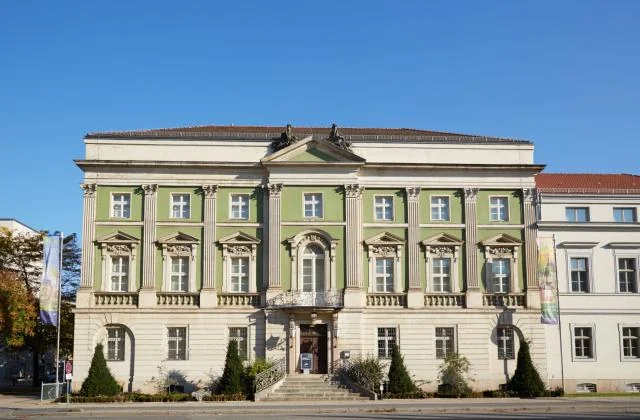
The Naturkundemuseum Potsdam is one of the most exciting addresses for anyone who wants not just to see, but to truly understand Brandenburg's nature. Located at Breiten Straße 13, in the heart of Potsdam, the building combines historical architecture with modern nature education and a very family-friendly orientation. Those who enter here encounter not an anonymous exhibition hall, but a municipal museum with a clear mission: to awaken interest, enthusiasm, and understanding for animals, plants, and habitats right outside their door. The permanent exhibitions on local wildlife, the cold-water aquarium with over 40 fish species, and the changing special exhibitions that address nature topics beyond Brandenburg are particularly formative. The building is also closely linked to the city's history, as it is located in the former Ständehaus of Zauche, a historic building from the 18th century. For visitors, the museum is not only a destination but also a place where natural history, city history, and family experiences come together. ([naturkundemuseum-potsdam.de](https://www.naturkundemuseum-potsdam.de/de/ueber-uns-0))
When is the Naturkundemuseum Potsdam open and what does admission cost?
The most important inquiries clearly revolve around opening hours, admission, and prices, and this is exactly where the museum provides very concrete information. The exhibitions are regularly open from Tuesday to Sunday between 9 AM and 5 PM. Additionally, every 1st Monday of the month is Museum Monday: it is also open from 9 AM to 5 PM, but admission is reduced. This is a practical option, especially for families, school classes, or visitors who want to plan their outing flexibly. The official visitor page also lists individual holiday openings and closure days for 2026, making a quick look at the current page sensible before visiting. This is especially important if you are planning to travel with children or a larger group and rely on stable times. ([naturkundemuseum-potsdam.de](https://www.naturkundemuseum-potsdam.de/de/ihr-besuch))
The museum is also transparent about prices. Admission costs 4 euros for adults, 3 euros reduced, and 2 euros for children and teenagers aged 6 to 18 years. An annual pass is available for 18 euros. In addition, there are family and group rates, such as the family ticket for 10 euros or the MUSEUMKombikarte, which connects several Potsdam museums. Particularly important for those searching with the keyword “free admission”: certain groups receive free admission, including children up to 5 years, daycare and school groups, several accompanying persons, and members of various museum associations. Payment can be made in cash, with EC card, and contactless; credit cards are also accepted. This makes the museum not only attractive in terms of pricing but also very straightforward in practical handling. ([naturkundemuseum-potsdam.de](https://www.naturkundemuseum-potsdam.de/de/preise))
Those looking for additional savings opportunities will also find real anchors. Museum Monday brings a 50 percent discount, and the Potsdam cultural calendar regularly features free formats such as the “Four Free Fridays” of the Potsdam museums or the International Museum Day with free admission. For SEO planning, this is a central point because the search for “naturkundemuseum potsdam free admission” does not only refer to one-time actions but shows a general interest in affordable visiting times. The museum responds with a pricing structure that clearly combines discounts, annual passes, and group offers. This mix makes the location equally attractive for families, children's groups, school classes, and spontaneous weekend trips. ([naturkundemuseum-potsdam.de](https://www.naturkundemuseum-potsdam.de/de/veranstaltung/vier-kostenfreie-freitage-vier-potsdamer-museen-0?utm_source=openai))
How do I get to the Naturkundemuseum Potsdam and where can I park?
The topics of access and parking are also among the most searched terms related to the Naturkundemuseum Potsdam. The museum is very well accessible by public transport: According to the official site, it is about a 20-minute walk from Potsdam Central Station. Additionally, connections by train, tram, and bus are mentioned, including stops like Alter Markt/Landtag, Feuerbachstraße, and the bus stop Naturkundemuseum. For those arriving by car, the museum also describes the main access routes via the A115 and A10. Those coming from the region or using Potsdam as a day destination thus receive clear orientation for route planning. The location in the city center is a plus because the museum can be easily combined with a walk through the Potsdam Mitte. ([naturkundemuseum-potsdam.de](https://www.naturkundemuseum-potsdam.de/de/anfahrt-und-parken))
When it comes to parking, it is important to know that paid parking options are available directly in the vicinity. Mentioned are parking spaces immediately in front of the museum as well as the parking garages at Markt-Center and Luisenplatz. For tour buses, additional parking spaces are designated in Lustgarten, in front of the Filmmuseum Potsdam, and on Bassinplatz. This is relevant for group trips, school trips, and family outings with multiple vehicles. At the same time, access for wheelchairs and larger strollers is better resolved through the back entrance in the museum courtyard than through the main entrance, which is not barrier-free. There is a lift that leads to the barrier-free access to the building. A free loan buggy at the ticket counter makes visiting with small children easier. Thus, it becomes clear: The Naturkundemuseum Potsdam is centrally located, well-connected, and sensibly prepared for different mobility needs. ([naturkundemuseum-potsdam.de](https://www.naturkundemuseum-potsdam.de/de/anfahrt-und-parken))
What exhibitions and animal worlds does the Naturkundemuseum Potsdam show?
Content-wise, the museum clearly stands for nature right outside the door. The official description emphasizes the biodiversity of Brandenburg and Germany, and this profile shapes the permanent exhibitions. Topics include the aquarium, animals in the garden, animal life in UNESCO World Heritage, the wildlife of Brandenburg, and In the Footsteps of Humans. The aquarium introduces visitors to Brandenburg's underwater world, while other areas show how animals live in nature-friendly gardens, parks, or human-influenced habitats. This is particularly attractive for visitors because the exhibition does not remain abstract but focuses on concrete habitats and familiar animals such as wolves, beavers, moose, or sea eagles. According to the museum, over 40 native fish species live in the cold-water aquarium, from roach to catfish. Those interested in nature in Brandenburg will find here not distant exoticism, but a very approachable, regionally anchored museum offer. ([naturkundemuseum-potsdam.de](https://www.naturkundemuseum-potsdam.de/de/ueber-uns-0))
At the same time, the museum works with changing special exhibitions that expand the natural history profile. For example, the current exhibition page highlights “Attention Owl! A Sign for Nature Conservation,” a showcase about the inventor couple Erna and Kurt Kretschmann and the now-famous protection symbol of the black owl on a yellow background. This is important for the search intent “events” as well as for “photos” or “reviews,” because changing presentations generate stronger visitor interest than a purely static permanent exhibition. The museum is thus not only a place for animal specimens and aquariums but also for topics that connect nature conservation, education, and regional history. Those looking for a location that combines learning, wonder, and family time will find a very clear profile here. ([naturkundemuseum-potsdam.de](https://www.naturkundemuseum-potsdam.de/de/ausstellungen))
The history of the house also includes the building itself. The Naturkundemuseum Potsdam is located in the former Ständehaus of Zauche, which was built in 1770 according to plans by Georg Christian Unger and was heavily damaged in World War II. The development of the museum is closely linked to the current Potsdam Museum: both buildings were founded in 1909 as the Municipal Museum Potsdam, later worked together as a local museum and district museum, and were separated after 1989. Since November 14, 2001, the Naturkundemuseum Potsdam has been an independent museum. This development explains why the house is so clearly focused on natural history today and fits so well into the museum landscape of the city. The historic building, the regional collection, and the educational mission form a coherent unit here. ([naturkundemuseum-potsdam.de](https://www.naturkundemuseum-potsdam.de/de/ueber-uns-0))
Dinosaur, Fossils, and Geology: What can visitors really expect?
The keyword “dinosaur” is exciting from an SEO perspective because many users search for a classic dino exhibition. However, the official pages of the Naturkundemuseum Potsdam set a different focus: native wildlife, aquarium, nature observation, and scientific collections. Therefore, those searching for “Naturkundemuseum Potsdam Dinosaur” should understand the offer more as a natural history context. The museum does not show a classically staged dinosaur exhibition on the visible exhibition pages but works with themes such as fossils, geology, and the diversity of native species. This is precisely where the strength lies: the house explains nature not spectacularly through a single megafauna but through habitats, collections, and scientific connections. This classification is important so that the search intent is answered cleanly and no false expectations arise. ([naturkundemuseum-potsdam.de](https://www.naturkundemuseum-potsdam.de/de/ausstellungen))
The geoscientific collection includes crystalline sediments and gravel from Brandenburg's gravel pits, rocks from top areas of Brandenburg's salt structures, regional rock collections, and sediments with fossil content, according to the official description. This is supplemented by a stratigraphic collection with minerals, ores, gemstones, and semi-precious stones. This makes the area particularly interesting for anyone interested in earth history, rock formation, or fossil content. Those coming with children and asking about dinosaurs can thus steer the visit in a broader natural history direction: not the “dino kick” is in the foreground, but understanding time periods, layers, sediments, and extinct life forms. This scientific depth is an important added value for the museum and helps to correctly classify the search term “dinosaur.” ([naturkundemuseum-potsdam.de](https://www.naturkundemuseum-potsdam.de/de/fossilien-und-geologie?utm_source=openai))
The other collections also show how strongly the museum focuses on documented biodiversity and research. The collection pages describe, among other things, mammals, birds, insects, amphibians, and reptiles; among the birds, more than 3,500 bird specimens, 3,000 skeletons, and 14,000 bird eggs are mentioned, with around 300,000 insect specimens. These numbers explain why the museum is so rich in content despite its manageable format. This is relevant for visitors looking for more than just a short showcase. Therefore, those searching for a place for natural history discoveries, fossil content, and factually sound science will find a convincing offer at the Naturkundemuseum Potsdam. The combination of exhibition, collection, and educational work makes the location equally interesting for adults, families, and school classes. ([naturkundemuseum-potsdam.de](https://www.naturkundemuseum-potsdam.de/de/sammlungen-des-naturkundemuseums-potsdam?utm_source=openai))
Children's birthday, flashlight tours, and family offers at the Naturkundemuseum Potsdam
For many search queries, the Naturkundemuseum Potsdam is primarily a family place. Children's birthdays are a particularly strong example of this: the museum offers themes such as “Animal Treasure Hunt” for children aged 5 to 7 years, “Seven Animal Wonders” for children aged 7 to 11 years, “Exploration Journey Underwater” for 7 to 11 years, and the “Birthday Tour for Animal Friends” for children aged 5 to 11 years. A separate room is prepared with a birthday table and children's dishes, and cake and snacks can be brought along. The celebration lasts 2 to 2.5 hours, is suitable for ten children and two accompanying persons, and costs 75 euros. The official date page also mentions that weekend and weekday dates are already fully booked until the end of May 2026, and new dates will only be offered again from June 2026. This shows how popular the format is and why the search for “children's birthday” remains so relevant. ([naturkundemuseum-potsdam.de](https://www.naturkundemuseum-potsdam.de/de/kindergeburtstag-0))
For those looking for a special evening format, the flashlight tours “Nachtaktiv” are quickly found. They are aimed at children aged 6 and older and take place on Fridays from 5:30 PM to 6:15 PM. The children explore the animals of the night with their own flashlight, follow glowing animal tracks, and experience the dark exhibition rooms in a completely different way. Participation costs an additional 7 euros on top of the admission fee, and for children, the museum admission of 2 euros is added. Important for planning: registration is necessary because only a few places are available. This mix of adventure, learning moments, and limited availability makes the tour so attractive for families searching for “events” or “from what age.” Additionally, the museum offers free rallies in the foyer, such as the museum rally for “Experienced Spring,” which is particularly recommended for children aged 5 and older. This creates a diverse program that ranges from the classic exhibition to playful participation. ([naturkundemuseum-potsdam.de](https://www.naturkundemuseum-potsdam.de/de/veranstaltung/nachtaktiv-taschenlampenfuehrungen-fuer-kinder-ab-6-jahren-1))
The family logic of the house is also remarkably clear. The official communication connects real participation formats with practical details: meeting point in the foyer, parents may stay there during the tour, supervision responsibility lies with the guardians, and latecomers unfortunately cannot participate anymore. While this is organizationally strict, it ensures a smooth process and reliable quality. For families looking for a location for a children's birthday, a holiday outing, or a small natural history evening, this is a strong argument. The museum is thus not just an exhibition but a pedagogically thought-out place of experience. This combination of knowledge, play, and clear structure makes it very suitable for search queries related to children, birthdays, and family events. ([naturkundemuseum-potsdam.de](https://www.naturkundemuseum-potsdam.de/de/veranstaltung/nachtaktiv-taschenlampenfuehrungen-fuer-kinder-ab-6-jahren-1))
Jobs, Service, and Practical Tips for the Visit
Those searching for “jobs” will find a dedicated job offers page at the Naturkundemuseum Potsdam. It currently explains that the museum will offer various forms of employment in the coming years or will reintroduce them: student internships starting in the winter semester 2026/27, freelance workers for children's birthdays and events expected from mid or late 2026, and a scientific volunteer position starting in 2028. For applications and inquiries, the official site provides the museum's email address. This is important for SEO planning because the search interest does not only refer to visitors but also to potential employees, interns, and people interested in museum education or scientific work. In a municipal museum with collection, education, and event relevance, this is a comprehensible traffic arm. ([naturkundemuseum-potsdam.de](https://www.naturkundemuseum-potsdam.de/de/jobangebote))
For the actual visit, the service is also clearly structured. The museum service is available from Tuesday to Sunday from 9 AM to 5 PM, and on the 1st Monday of the month also from 9 AM to 5 PM. Questions about tours, events, accessibility, and access are answered there. In the foyer, there is also the museum shop, where not only souvenirs are sold but also current program brochures, house-specific information flyers, and folders with museum educational offers can be taken for free. Particularly practical: the foyer can also be visited without a tour of the exhibitions. This is ideal for spontaneous pickups of information, for short visits with children, or for people who want to orient themselves in advance. Groups of 8 or more should register their visit by phone or email; this helps the museum to better coordinate tours and processes. ([naturkundemuseum-potsdam.de](https://www.naturkundemuseum-potsdam.de/de/ihr-besuch))
In summary, the Naturkundemuseum Potsdam presents itself as a very well-structured, family-friendly, and content-wise solid location. It scores with clear opening hours, fair prices, well-described access, barrier-free entrances, and a program ranging from children's birthdays to flashlight tours to special exhibitions. Additionally, the historic location in the Potsdam Mitte makes the museum interesting as a city location. Therefore, those looking for not just an exhibition but a reliable destination with a connection to nature will find a convincing mix of education, experience, and practical planning here. ([naturkundemuseum-potsdam.de](https://www.naturkundemuseum-potsdam.de/de/ueber-uns-0))
Sources:
Show moreShow less
Naturkundemuseum Potsdam | Opening Hours & Admission
The Naturkundemuseum Potsdam is one of the most exciting addresses for anyone who wants not just to see, but to truly understand Brandenburg's nature. Located at Breiten Straße 13, in the heart of Potsdam, the building combines historical architecture with modern nature education and a very family-friendly orientation. Those who enter here encounter not an anonymous exhibition hall, but a municipal museum with a clear mission: to awaken interest, enthusiasm, and understanding for animals, plants, and habitats right outside their door. The permanent exhibitions on local wildlife, the cold-water aquarium with over 40 fish species, and the changing special exhibitions that address nature topics beyond Brandenburg are particularly formative. The building is also closely linked to the city's history, as it is located in the former Ständehaus of Zauche, a historic building from the 18th century. For visitors, the museum is not only a destination but also a place where natural history, city history, and family experiences come together. ([naturkundemuseum-potsdam.de](https://www.naturkundemuseum-potsdam.de/de/ueber-uns-0))
When is the Naturkundemuseum Potsdam open and what does admission cost?
The most important inquiries clearly revolve around opening hours, admission, and prices, and this is exactly where the museum provides very concrete information. The exhibitions are regularly open from Tuesday to Sunday between 9 AM and 5 PM. Additionally, every 1st Monday of the month is Museum Monday: it is also open from 9 AM to 5 PM, but admission is reduced. This is a practical option, especially for families, school classes, or visitors who want to plan their outing flexibly. The official visitor page also lists individual holiday openings and closure days for 2026, making a quick look at the current page sensible before visiting. This is especially important if you are planning to travel with children or a larger group and rely on stable times. ([naturkundemuseum-potsdam.de](https://www.naturkundemuseum-potsdam.de/de/ihr-besuch))
The museum is also transparent about prices. Admission costs 4 euros for adults, 3 euros reduced, and 2 euros for children and teenagers aged 6 to 18 years. An annual pass is available for 18 euros. In addition, there are family and group rates, such as the family ticket for 10 euros or the MUSEUMKombikarte, which connects several Potsdam museums. Particularly important for those searching with the keyword “free admission”: certain groups receive free admission, including children up to 5 years, daycare and school groups, several accompanying persons, and members of various museum associations. Payment can be made in cash, with EC card, and contactless; credit cards are also accepted. This makes the museum not only attractive in terms of pricing but also very straightforward in practical handling. ([naturkundemuseum-potsdam.de](https://www.naturkundemuseum-potsdam.de/de/preise))
Those looking for additional savings opportunities will also find real anchors. Museum Monday brings a 50 percent discount, and the Potsdam cultural calendar regularly features free formats such as the “Four Free Fridays” of the Potsdam museums or the International Museum Day with free admission. For SEO planning, this is a central point because the search for “naturkundemuseum potsdam free admission” does not only refer to one-time actions but shows a general interest in affordable visiting times. The museum responds with a pricing structure that clearly combines discounts, annual passes, and group offers. This mix makes the location equally attractive for families, children's groups, school classes, and spontaneous weekend trips. ([naturkundemuseum-potsdam.de](https://www.naturkundemuseum-potsdam.de/de/veranstaltung/vier-kostenfreie-freitage-vier-potsdamer-museen-0?utm_source=openai))
How do I get to the Naturkundemuseum Potsdam and where can I park?
The topics of access and parking are also among the most searched terms related to the Naturkundemuseum Potsdam. The museum is very well accessible by public transport: According to the official site, it is about a 20-minute walk from Potsdam Central Station. Additionally, connections by train, tram, and bus are mentioned, including stops like Alter Markt/Landtag, Feuerbachstraße, and the bus stop Naturkundemuseum. For those arriving by car, the museum also describes the main access routes via the A115 and A10. Those coming from the region or using Potsdam as a day destination thus receive clear orientation for route planning. The location in the city center is a plus because the museum can be easily combined with a walk through the Potsdam Mitte. ([naturkundemuseum-potsdam.de](https://www.naturkundemuseum-potsdam.de/de/anfahrt-und-parken))
When it comes to parking, it is important to know that paid parking options are available directly in the vicinity. Mentioned are parking spaces immediately in front of the museum as well as the parking garages at Markt-Center and Luisenplatz. For tour buses, additional parking spaces are designated in Lustgarten, in front of the Filmmuseum Potsdam, and on Bassinplatz. This is relevant for group trips, school trips, and family outings with multiple vehicles. At the same time, access for wheelchairs and larger strollers is better resolved through the back entrance in the museum courtyard than through the main entrance, which is not barrier-free. There is a lift that leads to the barrier-free access to the building. A free loan buggy at the ticket counter makes visiting with small children easier. Thus, it becomes clear: The Naturkundemuseum Potsdam is centrally located, well-connected, and sensibly prepared for different mobility needs. ([naturkundemuseum-potsdam.de](https://www.naturkundemuseum-potsdam.de/de/anfahrt-und-parken))
What exhibitions and animal worlds does the Naturkundemuseum Potsdam show?
Content-wise, the museum clearly stands for nature right outside the door. The official description emphasizes the biodiversity of Brandenburg and Germany, and this profile shapes the permanent exhibitions. Topics include the aquarium, animals in the garden, animal life in UNESCO World Heritage, the wildlife of Brandenburg, and In the Footsteps of Humans. The aquarium introduces visitors to Brandenburg's underwater world, while other areas show how animals live in nature-friendly gardens, parks, or human-influenced habitats. This is particularly attractive for visitors because the exhibition does not remain abstract but focuses on concrete habitats and familiar animals such as wolves, beavers, moose, or sea eagles. According to the museum, over 40 native fish species live in the cold-water aquarium, from roach to catfish. Those interested in nature in Brandenburg will find here not distant exoticism, but a very approachable, regionally anchored museum offer. ([naturkundemuseum-potsdam.de](https://www.naturkundemuseum-potsdam.de/de/ueber-uns-0))
At the same time, the museum works with changing special exhibitions that expand the natural history profile. For example, the current exhibition page highlights “Attention Owl! A Sign for Nature Conservation,” a showcase about the inventor couple Erna and Kurt Kretschmann and the now-famous protection symbol of the black owl on a yellow background. This is important for the search intent “events” as well as for “photos” or “reviews,” because changing presentations generate stronger visitor interest than a purely static permanent exhibition. The museum is thus not only a place for animal specimens and aquariums but also for topics that connect nature conservation, education, and regional history. Those looking for a location that combines learning, wonder, and family time will find a very clear profile here. ([naturkundemuseum-potsdam.de](https://www.naturkundemuseum-potsdam.de/de/ausstellungen))
The history of the house also includes the building itself. The Naturkundemuseum Potsdam is located in the former Ständehaus of Zauche, which was built in 1770 according to plans by Georg Christian Unger and was heavily damaged in World War II. The development of the museum is closely linked to the current Potsdam Museum: both buildings were founded in 1909 as the Municipal Museum Potsdam, later worked together as a local museum and district museum, and were separated after 1989. Since November 14, 2001, the Naturkundemuseum Potsdam has been an independent museum. This development explains why the house is so clearly focused on natural history today and fits so well into the museum landscape of the city. The historic building, the regional collection, and the educational mission form a coherent unit here. ([naturkundemuseum-potsdam.de](https://www.naturkundemuseum-potsdam.de/de/ueber-uns-0))
Dinosaur, Fossils, and Geology: What can visitors really expect?
The keyword “dinosaur” is exciting from an SEO perspective because many users search for a classic dino exhibition. However, the official pages of the Naturkundemuseum Potsdam set a different focus: native wildlife, aquarium, nature observation, and scientific collections. Therefore, those searching for “Naturkundemuseum Potsdam Dinosaur” should understand the offer more as a natural history context. The museum does not show a classically staged dinosaur exhibition on the visible exhibition pages but works with themes such as fossils, geology, and the diversity of native species. This is precisely where the strength lies: the house explains nature not spectacularly through a single megafauna but through habitats, collections, and scientific connections. This classification is important so that the search intent is answered cleanly and no false expectations arise. ([naturkundemuseum-potsdam.de](https://www.naturkundemuseum-potsdam.de/de/ausstellungen))
The geoscientific collection includes crystalline sediments and gravel from Brandenburg's gravel pits, rocks from top areas of Brandenburg's salt structures, regional rock collections, and sediments with fossil content, according to the official description. This is supplemented by a stratigraphic collection with minerals, ores, gemstones, and semi-precious stones. This makes the area particularly interesting for anyone interested in earth history, rock formation, or fossil content. Those coming with children and asking about dinosaurs can thus steer the visit in a broader natural history direction: not the “dino kick” is in the foreground, but understanding time periods, layers, sediments, and extinct life forms. This scientific depth is an important added value for the museum and helps to correctly classify the search term “dinosaur.” ([naturkundemuseum-potsdam.de](https://www.naturkundemuseum-potsdam.de/de/fossilien-und-geologie?utm_source=openai))
The other collections also show how strongly the museum focuses on documented biodiversity and research. The collection pages describe, among other things, mammals, birds, insects, amphibians, and reptiles; among the birds, more than 3,500 bird specimens, 3,000 skeletons, and 14,000 bird eggs are mentioned, with around 300,000 insect specimens. These numbers explain why the museum is so rich in content despite its manageable format. This is relevant for visitors looking for more than just a short showcase. Therefore, those searching for a place for natural history discoveries, fossil content, and factually sound science will find a convincing offer at the Naturkundemuseum Potsdam. The combination of exhibition, collection, and educational work makes the location equally interesting for adults, families, and school classes. ([naturkundemuseum-potsdam.de](https://www.naturkundemuseum-potsdam.de/de/sammlungen-des-naturkundemuseums-potsdam?utm_source=openai))
Children's birthday, flashlight tours, and family offers at the Naturkundemuseum Potsdam
For many search queries, the Naturkundemuseum Potsdam is primarily a family place. Children's birthdays are a particularly strong example of this: the museum offers themes such as “Animal Treasure Hunt” for children aged 5 to 7 years, “Seven Animal Wonders” for children aged 7 to 11 years, “Exploration Journey Underwater” for 7 to 11 years, and the “Birthday Tour for Animal Friends” for children aged 5 to 11 years. A separate room is prepared with a birthday table and children's dishes, and cake and snacks can be brought along. The celebration lasts 2 to 2.5 hours, is suitable for ten children and two accompanying persons, and costs 75 euros. The official date page also mentions that weekend and weekday dates are already fully booked until the end of May 2026, and new dates will only be offered again from June 2026. This shows how popular the format is and why the search for “children's birthday” remains so relevant. ([naturkundemuseum-potsdam.de](https://www.naturkundemuseum-potsdam.de/de/kindergeburtstag-0))
For those looking for a special evening format, the flashlight tours “Nachtaktiv” are quickly found. They are aimed at children aged 6 and older and take place on Fridays from 5:30 PM to 6:15 PM. The children explore the animals of the night with their own flashlight, follow glowing animal tracks, and experience the dark exhibition rooms in a completely different way. Participation costs an additional 7 euros on top of the admission fee, and for children, the museum admission of 2 euros is added. Important for planning: registration is necessary because only a few places are available. This mix of adventure, learning moments, and limited availability makes the tour so attractive for families searching for “events” or “from what age.” Additionally, the museum offers free rallies in the foyer, such as the museum rally for “Experienced Spring,” which is particularly recommended for children aged 5 and older. This creates a diverse program that ranges from the classic exhibition to playful participation. ([naturkundemuseum-potsdam.de](https://www.naturkundemuseum-potsdam.de/de/veranstaltung/nachtaktiv-taschenlampenfuehrungen-fuer-kinder-ab-6-jahren-1))
The family logic of the house is also remarkably clear. The official communication connects real participation formats with practical details: meeting point in the foyer, parents may stay there during the tour, supervision responsibility lies with the guardians, and latecomers unfortunately cannot participate anymore. While this is organizationally strict, it ensures a smooth process and reliable quality. For families looking for a location for a children's birthday, a holiday outing, or a small natural history evening, this is a strong argument. The museum is thus not just an exhibition but a pedagogically thought-out place of experience. This combination of knowledge, play, and clear structure makes it very suitable for search queries related to children, birthdays, and family events. ([naturkundemuseum-potsdam.de](https://www.naturkundemuseum-potsdam.de/de/veranstaltung/nachtaktiv-taschenlampenfuehrungen-fuer-kinder-ab-6-jahren-1))
Jobs, Service, and Practical Tips for the Visit
Those searching for “jobs” will find a dedicated job offers page at the Naturkundemuseum Potsdam. It currently explains that the museum will offer various forms of employment in the coming years or will reintroduce them: student internships starting in the winter semester 2026/27, freelance workers for children's birthdays and events expected from mid or late 2026, and a scientific volunteer position starting in 2028. For applications and inquiries, the official site provides the museum's email address. This is important for SEO planning because the search interest does not only refer to visitors but also to potential employees, interns, and people interested in museum education or scientific work. In a municipal museum with collection, education, and event relevance, this is a comprehensible traffic arm. ([naturkundemuseum-potsdam.de](https://www.naturkundemuseum-potsdam.de/de/jobangebote))
For the actual visit, the service is also clearly structured. The museum service is available from Tuesday to Sunday from 9 AM to 5 PM, and on the 1st Monday of the month also from 9 AM to 5 PM. Questions about tours, events, accessibility, and access are answered there. In the foyer, there is also the museum shop, where not only souvenirs are sold but also current program brochures, house-specific information flyers, and folders with museum educational offers can be taken for free. Particularly practical: the foyer can also be visited without a tour of the exhibitions. This is ideal for spontaneous pickups of information, for short visits with children, or for people who want to orient themselves in advance. Groups of 8 or more should register their visit by phone or email; this helps the museum to better coordinate tours and processes. ([naturkundemuseum-potsdam.de](https://www.naturkundemuseum-potsdam.de/de/ihr-besuch))
In summary, the Naturkundemuseum Potsdam presents itself as a very well-structured, family-friendly, and content-wise solid location. It scores with clear opening hours, fair prices, well-described access, barrier-free entrances, and a program ranging from children's birthdays to flashlight tours to special exhibitions. Additionally, the historic location in the Potsdam Mitte makes the museum interesting as a city location. Therefore, those looking for not just an exhibition but a reliable destination with a connection to nature will find a convincing mix of education, experience, and practical planning here. ([naturkundemuseum-potsdam.de](https://www.naturkundemuseum-potsdam.de/de/ueber-uns-0))
Sources:
Naturkundemuseum Potsdam | Opening Hours & Admission
The Naturkundemuseum Potsdam is one of the most exciting addresses for anyone who wants not just to see, but to truly understand Brandenburg's nature. Located at Breiten Straße 13, in the heart of Potsdam, the building combines historical architecture with modern nature education and a very family-friendly orientation. Those who enter here encounter not an anonymous exhibition hall, but a municipal museum with a clear mission: to awaken interest, enthusiasm, and understanding for animals, plants, and habitats right outside their door. The permanent exhibitions on local wildlife, the cold-water aquarium with over 40 fish species, and the changing special exhibitions that address nature topics beyond Brandenburg are particularly formative. The building is also closely linked to the city's history, as it is located in the former Ständehaus of Zauche, a historic building from the 18th century. For visitors, the museum is not only a destination but also a place where natural history, city history, and family experiences come together. ([naturkundemuseum-potsdam.de](https://www.naturkundemuseum-potsdam.de/de/ueber-uns-0))
When is the Naturkundemuseum Potsdam open and what does admission cost?
The most important inquiries clearly revolve around opening hours, admission, and prices, and this is exactly where the museum provides very concrete information. The exhibitions are regularly open from Tuesday to Sunday between 9 AM and 5 PM. Additionally, every 1st Monday of the month is Museum Monday: it is also open from 9 AM to 5 PM, but admission is reduced. This is a practical option, especially for families, school classes, or visitors who want to plan their outing flexibly. The official visitor page also lists individual holiday openings and closure days for 2026, making a quick look at the current page sensible before visiting. This is especially important if you are planning to travel with children or a larger group and rely on stable times. ([naturkundemuseum-potsdam.de](https://www.naturkundemuseum-potsdam.de/de/ihr-besuch))
The museum is also transparent about prices. Admission costs 4 euros for adults, 3 euros reduced, and 2 euros for children and teenagers aged 6 to 18 years. An annual pass is available for 18 euros. In addition, there are family and group rates, such as the family ticket for 10 euros or the MUSEUMKombikarte, which connects several Potsdam museums. Particularly important for those searching with the keyword “free admission”: certain groups receive free admission, including children up to 5 years, daycare and school groups, several accompanying persons, and members of various museum associations. Payment can be made in cash, with EC card, and contactless; credit cards are also accepted. This makes the museum not only attractive in terms of pricing but also very straightforward in practical handling. ([naturkundemuseum-potsdam.de](https://www.naturkundemuseum-potsdam.de/de/preise))
Those looking for additional savings opportunities will also find real anchors. Museum Monday brings a 50 percent discount, and the Potsdam cultural calendar regularly features free formats such as the “Four Free Fridays” of the Potsdam museums or the International Museum Day with free admission. For SEO planning, this is a central point because the search for “naturkundemuseum potsdam free admission” does not only refer to one-time actions but shows a general interest in affordable visiting times. The museum responds with a pricing structure that clearly combines discounts, annual passes, and group offers. This mix makes the location equally attractive for families, children's groups, school classes, and spontaneous weekend trips. ([naturkundemuseum-potsdam.de](https://www.naturkundemuseum-potsdam.de/de/veranstaltung/vier-kostenfreie-freitage-vier-potsdamer-museen-0?utm_source=openai))
How do I get to the Naturkundemuseum Potsdam and where can I park?
The topics of access and parking are also among the most searched terms related to the Naturkundemuseum Potsdam. The museum is very well accessible by public transport: According to the official site, it is about a 20-minute walk from Potsdam Central Station. Additionally, connections by train, tram, and bus are mentioned, including stops like Alter Markt/Landtag, Feuerbachstraße, and the bus stop Naturkundemuseum. For those arriving by car, the museum also describes the main access routes via the A115 and A10. Those coming from the region or using Potsdam as a day destination thus receive clear orientation for route planning. The location in the city center is a plus because the museum can be easily combined with a walk through the Potsdam Mitte. ([naturkundemuseum-potsdam.de](https://www.naturkundemuseum-potsdam.de/de/anfahrt-und-parken))
When it comes to parking, it is important to know that paid parking options are available directly in the vicinity. Mentioned are parking spaces immediately in front of the museum as well as the parking garages at Markt-Center and Luisenplatz. For tour buses, additional parking spaces are designated in Lustgarten, in front of the Filmmuseum Potsdam, and on Bassinplatz. This is relevant for group trips, school trips, and family outings with multiple vehicles. At the same time, access for wheelchairs and larger strollers is better resolved through the back entrance in the museum courtyard than through the main entrance, which is not barrier-free. There is a lift that leads to the barrier-free access to the building. A free loan buggy at the ticket counter makes visiting with small children easier. Thus, it becomes clear: The Naturkundemuseum Potsdam is centrally located, well-connected, and sensibly prepared for different mobility needs. ([naturkundemuseum-potsdam.de](https://www.naturkundemuseum-potsdam.de/de/anfahrt-und-parken))
What exhibitions and animal worlds does the Naturkundemuseum Potsdam show?
Content-wise, the museum clearly stands for nature right outside the door. The official description emphasizes the biodiversity of Brandenburg and Germany, and this profile shapes the permanent exhibitions. Topics include the aquarium, animals in the garden, animal life in UNESCO World Heritage, the wildlife of Brandenburg, and In the Footsteps of Humans. The aquarium introduces visitors to Brandenburg's underwater world, while other areas show how animals live in nature-friendly gardens, parks, or human-influenced habitats. This is particularly attractive for visitors because the exhibition does not remain abstract but focuses on concrete habitats and familiar animals such as wolves, beavers, moose, or sea eagles. According to the museum, over 40 native fish species live in the cold-water aquarium, from roach to catfish. Those interested in nature in Brandenburg will find here not distant exoticism, but a very approachable, regionally anchored museum offer. ([naturkundemuseum-potsdam.de](https://www.naturkundemuseum-potsdam.de/de/ueber-uns-0))
At the same time, the museum works with changing special exhibitions that expand the natural history profile. For example, the current exhibition page highlights “Attention Owl! A Sign for Nature Conservation,” a showcase about the inventor couple Erna and Kurt Kretschmann and the now-famous protection symbol of the black owl on a yellow background. This is important for the search intent “events” as well as for “photos” or “reviews,” because changing presentations generate stronger visitor interest than a purely static permanent exhibition. The museum is thus not only a place for animal specimens and aquariums but also for topics that connect nature conservation, education, and regional history. Those looking for a location that combines learning, wonder, and family time will find a very clear profile here. ([naturkundemuseum-potsdam.de](https://www.naturkundemuseum-potsdam.de/de/ausstellungen))
The history of the house also includes the building itself. The Naturkundemuseum Potsdam is located in the former Ständehaus of Zauche, which was built in 1770 according to plans by Georg Christian Unger and was heavily damaged in World War II. The development of the museum is closely linked to the current Potsdam Museum: both buildings were founded in 1909 as the Municipal Museum Potsdam, later worked together as a local museum and district museum, and were separated after 1989. Since November 14, 2001, the Naturkundemuseum Potsdam has been an independent museum. This development explains why the house is so clearly focused on natural history today and fits so well into the museum landscape of the city. The historic building, the regional collection, and the educational mission form a coherent unit here. ([naturkundemuseum-potsdam.de](https://www.naturkundemuseum-potsdam.de/de/ueber-uns-0))
Dinosaur, Fossils, and Geology: What can visitors really expect?
The keyword “dinosaur” is exciting from an SEO perspective because many users search for a classic dino exhibition. However, the official pages of the Naturkundemuseum Potsdam set a different focus: native wildlife, aquarium, nature observation, and scientific collections. Therefore, those searching for “Naturkundemuseum Potsdam Dinosaur” should understand the offer more as a natural history context. The museum does not show a classically staged dinosaur exhibition on the visible exhibition pages but works with themes such as fossils, geology, and the diversity of native species. This is precisely where the strength lies: the house explains nature not spectacularly through a single megafauna but through habitats, collections, and scientific connections. This classification is important so that the search intent is answered cleanly and no false expectations arise. ([naturkundemuseum-potsdam.de](https://www.naturkundemuseum-potsdam.de/de/ausstellungen))
The geoscientific collection includes crystalline sediments and gravel from Brandenburg's gravel pits, rocks from top areas of Brandenburg's salt structures, regional rock collections, and sediments with fossil content, according to the official description. This is supplemented by a stratigraphic collection with minerals, ores, gemstones, and semi-precious stones. This makes the area particularly interesting for anyone interested in earth history, rock formation, or fossil content. Those coming with children and asking about dinosaurs can thus steer the visit in a broader natural history direction: not the “dino kick” is in the foreground, but understanding time periods, layers, sediments, and extinct life forms. This scientific depth is an important added value for the museum and helps to correctly classify the search term “dinosaur.” ([naturkundemuseum-potsdam.de](https://www.naturkundemuseum-potsdam.de/de/fossilien-und-geologie?utm_source=openai))
The other collections also show how strongly the museum focuses on documented biodiversity and research. The collection pages describe, among other things, mammals, birds, insects, amphibians, and reptiles; among the birds, more than 3,500 bird specimens, 3,000 skeletons, and 14,000 bird eggs are mentioned, with around 300,000 insect specimens. These numbers explain why the museum is so rich in content despite its manageable format. This is relevant for visitors looking for more than just a short showcase. Therefore, those searching for a place for natural history discoveries, fossil content, and factually sound science will find a convincing offer at the Naturkundemuseum Potsdam. The combination of exhibition, collection, and educational work makes the location equally interesting for adults, families, and school classes. ([naturkundemuseum-potsdam.de](https://www.naturkundemuseum-potsdam.de/de/sammlungen-des-naturkundemuseums-potsdam?utm_source=openai))
Children's birthday, flashlight tours, and family offers at the Naturkundemuseum Potsdam
For many search queries, the Naturkundemuseum Potsdam is primarily a family place. Children's birthdays are a particularly strong example of this: the museum offers themes such as “Animal Treasure Hunt” for children aged 5 to 7 years, “Seven Animal Wonders” for children aged 7 to 11 years, “Exploration Journey Underwater” for 7 to 11 years, and the “Birthday Tour for Animal Friends” for children aged 5 to 11 years. A separate room is prepared with a birthday table and children's dishes, and cake and snacks can be brought along. The celebration lasts 2 to 2.5 hours, is suitable for ten children and two accompanying persons, and costs 75 euros. The official date page also mentions that weekend and weekday dates are already fully booked until the end of May 2026, and new dates will only be offered again from June 2026. This shows how popular the format is and why the search for “children's birthday” remains so relevant. ([naturkundemuseum-potsdam.de](https://www.naturkundemuseum-potsdam.de/de/kindergeburtstag-0))
For those looking for a special evening format, the flashlight tours “Nachtaktiv” are quickly found. They are aimed at children aged 6 and older and take place on Fridays from 5:30 PM to 6:15 PM. The children explore the animals of the night with their own flashlight, follow glowing animal tracks, and experience the dark exhibition rooms in a completely different way. Participation costs an additional 7 euros on top of the admission fee, and for children, the museum admission of 2 euros is added. Important for planning: registration is necessary because only a few places are available. This mix of adventure, learning moments, and limited availability makes the tour so attractive for families searching for “events” or “from what age.” Additionally, the museum offers free rallies in the foyer, such as the museum rally for “Experienced Spring,” which is particularly recommended for children aged 5 and older. This creates a diverse program that ranges from the classic exhibition to playful participation. ([naturkundemuseum-potsdam.de](https://www.naturkundemuseum-potsdam.de/de/veranstaltung/nachtaktiv-taschenlampenfuehrungen-fuer-kinder-ab-6-jahren-1))
The family logic of the house is also remarkably clear. The official communication connects real participation formats with practical details: meeting point in the foyer, parents may stay there during the tour, supervision responsibility lies with the guardians, and latecomers unfortunately cannot participate anymore. While this is organizationally strict, it ensures a smooth process and reliable quality. For families looking for a location for a children's birthday, a holiday outing, or a small natural history evening, this is a strong argument. The museum is thus not just an exhibition but a pedagogically thought-out place of experience. This combination of knowledge, play, and clear structure makes it very suitable for search queries related to children, birthdays, and family events. ([naturkundemuseum-potsdam.de](https://www.naturkundemuseum-potsdam.de/de/veranstaltung/nachtaktiv-taschenlampenfuehrungen-fuer-kinder-ab-6-jahren-1))
Jobs, Service, and Practical Tips for the Visit
Those searching for “jobs” will find a dedicated job offers page at the Naturkundemuseum Potsdam. It currently explains that the museum will offer various forms of employment in the coming years or will reintroduce them: student internships starting in the winter semester 2026/27, freelance workers for children's birthdays and events expected from mid or late 2026, and a scientific volunteer position starting in 2028. For applications and inquiries, the official site provides the museum's email address. This is important for SEO planning because the search interest does not only refer to visitors but also to potential employees, interns, and people interested in museum education or scientific work. In a municipal museum with collection, education, and event relevance, this is a comprehensible traffic arm. ([naturkundemuseum-potsdam.de](https://www.naturkundemuseum-potsdam.de/de/jobangebote))
For the actual visit, the service is also clearly structured. The museum service is available from Tuesday to Sunday from 9 AM to 5 PM, and on the 1st Monday of the month also from 9 AM to 5 PM. Questions about tours, events, accessibility, and access are answered there. In the foyer, there is also the museum shop, where not only souvenirs are sold but also current program brochures, house-specific information flyers, and folders with museum educational offers can be taken for free. Particularly practical: the foyer can also be visited without a tour of the exhibitions. This is ideal for spontaneous pickups of information, for short visits with children, or for people who want to orient themselves in advance. Groups of 8 or more should register their visit by phone or email; this helps the museum to better coordinate tours and processes. ([naturkundemuseum-potsdam.de](https://www.naturkundemuseum-potsdam.de/de/ihr-besuch))
In summary, the Naturkundemuseum Potsdam presents itself as a very well-structured, family-friendly, and content-wise solid location. It scores with clear opening hours, fair prices, well-described access, barrier-free entrances, and a program ranging from children's birthdays to flashlight tours to special exhibitions. Additionally, the historic location in the Potsdam Mitte makes the museum interesting as a city location. Therefore, those looking for not just an exhibition but a reliable destination with a connection to nature will find a convincing mix of education, experience, and practical planning here. ([naturkundemuseum-potsdam.de](https://www.naturkundemuseum-potsdam.de/de/ueber-uns-0))
Sources:
Upcoming Events
Special Exhibition "Attention Owl! A Sign for Nature Conservation"
A small sign with a big impact: Discover Attention Owl! at the Natural History Museum Potsdam. History, design, and nature until 13.09.2026. #Potsdam #NatureConservation
Attention Owl! Natural History Museum Potsdam Shows Conservation History
A small owl, a big symbol: In Potsdam, this exhibition tells 75 years of conservation history. Discover and experience now. #Potsdam #Exhibition

Special Exhibition "Attention Owl! A Sign for Nature Conservation"
A strong owl, clear signs, a great history: The special exhibition at the Natural History Museum Potsdam connects design and nature conservation. #Potsdam #Museum
The Owl Calls for Nature Conservation – Family Guided Tour
Experience an unforgettable tour of the biodiversity of Brandenburg and learn more about the protection of endangered animals.
Summer Vacation Program: The Stars of the Night
Introduce your children to the fascinating world of nocturnal animals at the Natural History Museum Potsdam.
Summer Vacation Program for Families: The Stars of the Night
Spend an exciting day with your family and discover owls and fireflies at night.
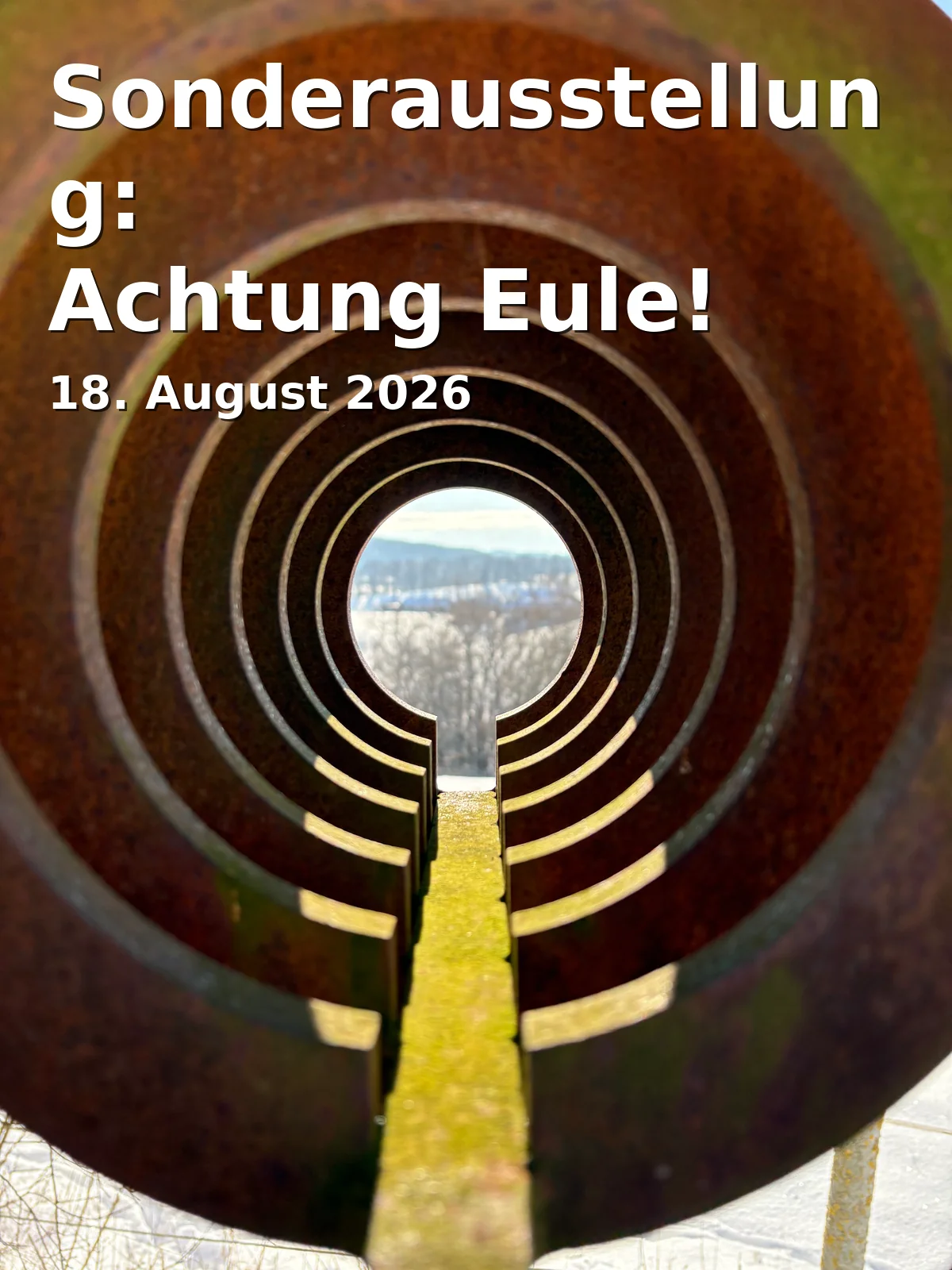
Special Exhibition: Attention Owl!
Discover the exciting history of the black owl as a conservation symbol. A must for nature and history enthusiasts.
Permanent Exhibitions of the Natural History Museum Potsdam
Experience Nature of Brandenburg Up Close: The permanent exhibitions at the Natural History Museum Potsdam showcase animals, habitats, and UNESCO World Heritage. 15.11.2026, 9–17 Uhr, 4 €. #Potsdam #Museum
Frequently Asked Questions
Reviews
Gamze David
2. August 2025
Very fun museum for kids in the heart of Potsdam city. Had a lot of fun with my son. Very affordable ticket prices for like a quality hour of visit. You can take even longer if your child can/likes to read the descriptions. The fish tank area had a fun little game we played with as well. Recommended for those bad weather days.
Fatma Hassan
11. October 2022
Although it is relatively small, however a wide scale of informations is beautifully displayed here, the tickets price is impressively not expensive in comparison with other Museums.. However more interactive ways of display would have been more fun, unfortunately the Aquarium was closed during our visit, which was a big disappointment! But maybe we would see it at some time in the future.
nadav goren
17. November 2018
I was surprised by how much the museum has to offer for such a low fair. Everything seemed authentic and you can definitely tell much work was put into this place. We took our time and we spent about two hours there. Enjoyed every moment.
Wolfgang Bremer
24. June 2025
It’s a nice place with interesting animals and things to look it - they also have a small aquarium area with real fish downstairs. It’s overall well curated and child-friendly. Some of the provided background information is really interesting and made me intrigued. The staff is friendly, too. A good place to spend 1-2 hours.
Alexandra Jacobsen
13. November 2019
This was a lot of fun for our 2.5 year old. He got to see so many animals up close that he recognizes from books and nature.