
Potsdam
Wilhelm-Staab-Straße 10, 14467 Potsdam, Deutschland
Nikolaisaal Potsdam | Program & Tickets 2026
The Nikolaisaal Potsdam is the concert and event venue of the state capital Potsdam located at Wilhelm-Staab-Straße 10/11. It is operated by the Musikfestspiele Sanssouci and Nikolaisaal Potsdam gGmbH, which is also responsible for the Musikfestspiele Potsdam Sanssouci. The venue combines a central location in Potsdam-Mitte with a diverse cultural program, modern technology, its own ticket gallery, and a building that remarkably brings together historical depth and contemporary use. For visitors, the Nikolaisaal is not just a place for individual concerts, but a whole cultural site where festivals, seasonal operations, services, and event activities complement each other. ([nikolaisaal.de](https://www.nikolaisaal.de/?utm_source=openai))
Anyone searching for the significance of this place quickly realizes: it's not just about a hall, but about a house with character. The Nikolaisaal is the stage for a program that ranges from classical and chamber music to crossover and jazz, as well as children's and youth formats. At the same time, it is closely linked to the Musikfestspiele Potsdam Sanssouci, which has been one of the renowned early music festivals for years and takes place in historically significant venues in Potsdam and the surrounding area. This makes the location equally interesting for concert fans, families, festival guests, cultural travelers, and people specifically looking for tickets, seating plans, directions, parking, or photos. ([musikfestspiele-potsdam.de](https://www.musikfestspiele-potsdam.de/musikfestspiele/profil.html?utm_source=openai))
Program, Concerts, and Festival Formats in Potsdam
The greatest strength of the Nikolaisaal lies in its programmatic diversity. Officially, the venue is described as a place where not only its own events take place but also numerous other concerts and formats from partners and external organizers. The range includes symphonic evenings and chamber music, film music, crossover and jazz, as well as singer-songwriter formats, baby concerts, children's concerts, and youth offerings. Thus, the Nikolaisaal is not limited to a single type of audience but is open to different age groups and musical interests. This mix is a central reason why the venue has established itself as a reliable address for diverse cultural events in Potsdam. ([nikolaisaal.de](https://www.nikolaisaal.de/fileadmin/content_nikolaisaal/files/stellenausschreibungen/240913_nikolaisaal_musikfe_stspiele_stellenausschreibung_Ticketing.pdf?utm_source=openai))
The Musikfestspiele Potsdam Sanssouci complement this year-round operation with a summer festival profile. Officially, the festival describes itself as a classical music festival focusing on early music and historically informed performance practice. Every June, a dense program is created over a period of about three weeks in the UNESCO World Heritage site of the Prussian palaces and gardens, in the historic center of Potsdam and the surrounding area. The festival works with changing thematic focuses and has consciously broadened its scope over the years: in addition to music from the Middle Ages, Renaissance, Baroque, Classical, and Romantic periods, jazz, world music, and contemporary music now also play a role. This mixture makes the festival a place where historical sound spaces and modern listening expectations meet productively. ([musikfestspiele-potsdam.de](https://www.musikfestspiele-potsdam.de/musikfestspiele/profil.html?utm_source=openai))
For practical searches for dates, it is important that the venue understands itself as both an event location and a program platform. Those looking at the autocomplete keywords often search for specific concerts, date entries, and images of individual events. This fits perfectly with the official profile: the gGmbH itself programs and produces many formats and simultaneously organizes the annual Musikfestspiele. The connection between the venue and the festival explains why seasonal concerts, children's and family offerings, as well as festive summer events come together in the same environment. This makes the Nikolaisaal a place where the search interest for programs, event names, and photos meets a very real, continuously maintained event structure. ([nikolaisaal.de](https://www.nikolaisaal.de/kontakt.html?utm_source=openai))
Tickets, Pre-Sale, and Ticket Gallery at Nikolaisaal
The ticket question is very clearly organized at the Nikolaisaal. Inside the venue is the ticket gallery, which serves as a central ticket sales and information point. There, visitors not only receive tickets but also information regarding events and service questions. For in-house events and cooperation partners, no pre-sale fees are charged according to the official website; however, system fees apply for external events. This is important for planning cultural visits as it makes ticket purchases transparent and strengthens the Nikolaisaal as a direct point of contact. So, if you are looking for tickets, pre-sale, or a reliable booking point, you will find a clearly defined service point within the venue. ([nikolaisaal.de](https://www.nikolaisaal.de/kontakt.html?utm_source=openai))
The opening hours are also officially set: Monday to Friday, the ticket gallery is open from 11 AM to 6 PM, Saturdays from 11 AM to 2 PM; it is closed on Sundays and public holidays. Additionally, the box office usually opens one hour before the start of the performance and sells tickets only for that evening's event. Vouchers can be purchased online and in the ticket gallery, and many offers are also available via telephone or digital means. This combination of on-site service and online sales makes ticket purchasing flexible, which is particularly practical for last-minute concert visits or when planning family and group visits. ([nikolaisaal.de](https://www.nikolaisaal.de/kontakt.html?utm_source=openai))
The service aspect is also clearly emphasized on the website. For many in-house events, tickets are available free of charge, while for external offers, different conditions may apply depending on the format. The venue also points out that order confirmations serve as proof of purchase and tickets can be picked up at the box office or used via print@home, depending on the payment method. So, if you are looking for a secure and well-structured ticket solution, you will find in the Nikolaisaal a classic cultural distribution that combines service, transparency, and event practice. This provides very clear guidance for search queries related to tickets, box office, booking, and vouchers. ([nikolaisaal.de](https://www.nikolaisaal.de/service-abos/service.html?utm_source=openai))
Seating Plan, Main Hall, Foyer, and Studio Hall
The Nikolaisaal Potsdam is not only well-organized but also spatially very versatile. Officially, the Main Hall, Foyer, and Studio Hall are available for events. In the technical description, the Nikolaisaal is presented as a venue with modern event technology for various types of events. This is important for concerts, readings, conferences, receptions, or mixed formats because the spaces can be used flexibly. Those looking for a seating plan will also encounter a system that clearly structures the seating arrangement and room layout. ([nikolaisaal.de](https://www.nikolaisaal.de/vermietung/technische-ausstattung.html?utm_source=openai))
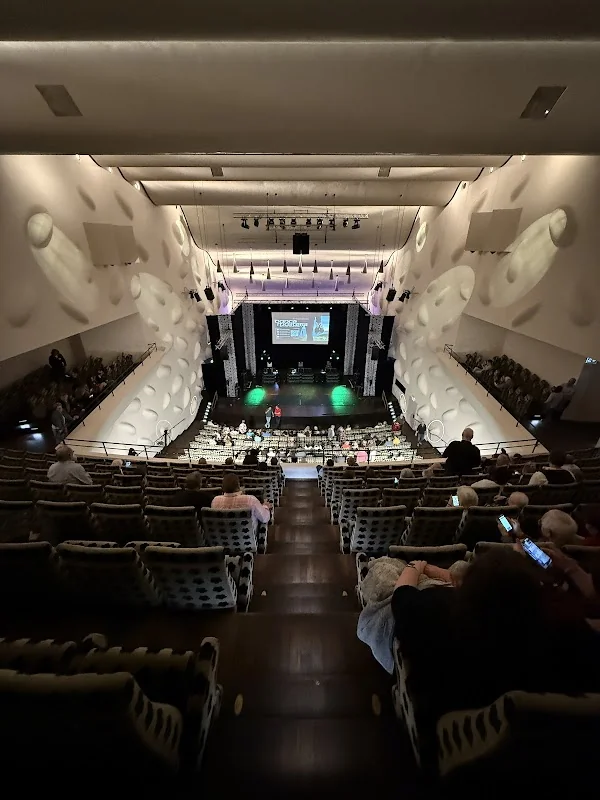
For the Main Hall, the official technical specifications state a maximum audience capacity of 725 seats. Of these, 475 seats are in the orchestra and 250 seats are in the balcony. The provided floor plan and hall information also indicate that the balcony rises steeply. These numbers are particularly relevant for SEO searches related to seating plans, seats, and capacity, as they give visitors a concrete idea of size and spatial experience. The Nikolaisaal is thus large enough for a wide concert audience while remaining small enough that music and sightlines in the hall retain an important role. ([nikolaisaal.de](https://www.nikolaisaal.de/vermietung/technische-ausstattung.html?utm_source=openai))
The combination of the Main Hall, Foyer, and Studio Hall opens up a wide range of applications for the venue. While the Main Hall serves as the classic concert address, the Foyer and Studio Hall can be used for complementary formats, smaller events, or special event settings. Additionally, the download and technical sections of the website provide seating plans, floor plans, inventory lists, and directions. This shows that the Nikolaisaal thinks not only of the audience but also of the organizers. For SEO inquiries related to seating plans, seating, room layout, and technology, the official service area is therefore a particularly important source of information. ([nikolaisaal.de](https://www.nikolaisaal.de/vermietung/technische-ausstattung.html?utm_source=openai))
Directions, Parking, and Accessibility
When arriving, the Nikolaisaal recommends realistic planning. Officially, it is pointed out that only limited parking spaces are available and that these are subject to charges. Additionally, the venue refers to the municipal parking overview so that visitors can check the current situation in the city area. For cultural venues in the center of Potsdam, this is an important note, as the demand for parking spaces can vary significantly depending on the event. Those who want to be safe should therefore better use public transport or plan enough time for parking search. ([nikolaisaal.de](https://www.nikolaisaal.de/kontakt.html?utm_source=openai))
The venue's documents also clearly recommend using public transport. In older but still official travel documents, it is explicitly pointed out that there are no direct parking spaces available at the Nikolaisaal. Regardless of individual detail maps, the basic message of the same line remains true: arriving by public transport is the more relaxing solution, while parking in the city center is only limited and subject to charges. This clarity helps visitors who make inquiries such as parking, directions, or parking situation, as they know exactly what to expect before attending the concert. ([nikolaisaal.de](https://www.nikolaisaal.de/fileadmin/content_nikolaisaal/files/downloads/NSP-stadtplan-anfahrt.pdf?utm_source=openai))
Regarding accessibility, the venue has set up a comprehensive information page. In the courtyard of the Nikolaisaal, there is an elevator available for wheelchair users, which allows for barrier-free access to the ticket gallery as well as the concert and event venue. Additionally, since the 2013/14 season, there have been fixed offerings for people with hearing impairments, including workshops and concerts with sign language, as well as technical aids such as induction loops and feelbelt belts. Assistance dogs are also welcome but must be registered in advance with the ticket service. For wheelchair users without pre-ordered tickets, it is recommended to arrive 30 minutes before the event starts to allow for necessary adjustments. ([nikolaisaal.de](https://www.nikolaisaal.de/barrierefreiheit.html?utm_source=openai))
This combination of clear travel information and specific accessibility details is particularly valuable for visitors. Anyone planning an event can check early on whether travel, entry, and seating wishes can be well combined. This is a real added value, especially for families, older guests, people with limited mobility, or visitors with hearing impairments. The Nikolaisaal thus shows that cultural visits are not only defined by programs and tickets but also by accessibility, orientation, and good preparation. ([nikolaisaal.de](https://www.nikolaisaal.de/barrierefreiheit.html?utm_source=openai))
History, Architecture, and Cultural Profile
The history of the place goes back long before today's concert operations. On the property at the former Kleine Jägerstraße, a manufactory was built in the 18th century, followed later by a baroque residential building. In 1743, the property was gifted by Frederick II to the shoemaker master Joachim Friedrich Spring, and in 1777, a representative building was constructed according to plans by Georg Christian Unger. The place was used differently over time and gained new significance in the 20th century as a concert venue and media location. From 1946, the Nikolaisaal served not only as a replacement for the destroyed Nikolaikirche but also as the main broadcasting hall of the state broadcaster Potsdam. This gives the current building an extraordinary cultural-historical layering. ([nikolaisaal.de](https://www.nikolaisaal.de/geschichte.html?utm_source=openai))
Particularly formative is the new beginning around the turn of the millennium. After a longer phase of interim use and several construction considerations, the third Nikolaisaal was opened on August 27, 2000, designed by the French architect Rudy Ricciotti. The official historical presentation describes this step as the most spectacular chapter of the place. Ricciotti's redesign combines different styles into a striking synthesis that does not oppose tradition and modernity but makes them visible side by side. This architecture fits ideally with the current use as a house of artistic diversity. The Nikolaisaal does not see itself as a museum space but as a lively concert hall that connects historical depth with contemporary demands for technology, comfort, and programming. ([nikolaisaal.de](https://www.nikolaisaal.de/geschichte.html?utm_source=openai))
The cultural profile of the house is additionally shaped by the Musikfestspiele Potsdam Sanssouci. The festival was newly founded in 1991, having its roots in the Parkfestspiele Sanssouci held since 1954. It is funded by the state capital Potsdam and the state of Brandenburg and organized in cooperation with the Prussian Palaces and Gardens Foundation Berlin-Brandenburg. The operating company is the Musikfestspiele Sanssouci and Nikolaisaal Potsdam gGmbH, a company of the state capital Potsdam. Since 2018, Dorothee Oberlinger as artistic director and Heike Bohmann in management have shaped the profile of the institution. This creates a clearly municipal but at the same time artistically very independent cultural model. ([musikfestspiele-potsdam.de](https://www.musikfestspiele-potsdam.de/musikfestspiele/profil.html?utm_source=openai))
The official representation of the festival also shows how broad the profile has become. While the focus remains on early music and historically informed performance practice, the festival language is open to new contexts, other genres, and special formats. Music cultural education, promotion of young talent, and the connection of space, sound, and audience are among the recognizable guiding ideas. This also explains why the gGmbH repeatedly speaks of more than just a concert operation in job advertisements and profile texts. The Nikolaisaal is embedded in a cultural structure that considers music education, festival organization, venue operation, and digital development together. ([musikfestspiele-potsdam.de](https://www.musikfestspiele-potsdam.de/musikfestspiele/profil.html?utm_source=openai))
Photos, Atmosphere, and Special Impressions
Those looking for images will find plenty of visual material on the official website. The homepage of the Nikolaisaal already features current event graphics, photo productions, and images that make concerts, audience, and stage visible. Individual event pages also regularly showcase large press images and clear imagery. This is particularly relevant for search queries related to photos, images, and impressions, as it allows one to get a good sense of the atmosphere, hall effect, and event context before the visit. The visual presence of the website is therefore not only decorative but also part of user guidance. ([nikolaisaal.de](https://www.nikolaisaal.de/?utm_source=openai))
In terms of content, the special effect of the venue arises from the combination of architecture, location, and program. The Nikolaisaal is located in the heart of Potsdam, is historically charged, and is technically oriented towards contemporary cultural operations. This mixture is immediately apparent in photos: clear stage situations, versatile concert moments, and a house that feels alive rather than sterile. For visitors who want to orient themselves in advance, such images are often decisive, as they convey not only the sober capacity but also the feeling for the place. This feeling plays a significant role in choosing a location, especially when planning tickets for concerts, festivals, or family offerings. ([nikolaisaal.de](https://www.nikolaisaal.de/vermietung/technische-ausstattung.html?utm_source=openai))
In the end, the Nikolaisaal Potsdam presents itself as a location that meaningfully brings together many search intentions: program, tickets, seating plan, parking, accessibility, history, and photos. The venue is musically diverse, organizationally well accessible, and architecturally striking. For the Musikfestspiele Potsdam Sanssouci, it is also a central anchor point that connects the festival profile with daily concert operations. So, if you are looking for a reliable cultural address in Potsdam, you will find here not just a performance venue but a well-established institution with a strong identity and understandable service offerings. ([nikolaisaal.de](https://www.nikolaisaal.de/kontakt.html?utm_source=openai))
Sources:
Mehr anzeigenWeniger anzeigen
Nikolaisaal Potsdam | Program & Tickets 2026
The Nikolaisaal Potsdam is the concert and event venue of the state capital Potsdam located at Wilhelm-Staab-Straße 10/11. It is operated by the Musikfestspiele Sanssouci and Nikolaisaal Potsdam gGmbH, which is also responsible for the Musikfestspiele Potsdam Sanssouci. The venue combines a central location in Potsdam-Mitte with a diverse cultural program, modern technology, its own ticket gallery, and a building that remarkably brings together historical depth and contemporary use. For visitors, the Nikolaisaal is not just a place for individual concerts, but a whole cultural site where festivals, seasonal operations, services, and event activities complement each other. ([nikolaisaal.de](https://www.nikolaisaal.de/?utm_source=openai))
Anyone searching for the significance of this place quickly realizes: it's not just about a hall, but about a house with character. The Nikolaisaal is the stage for a program that ranges from classical and chamber music to crossover and jazz, as well as children's and youth formats. At the same time, it is closely linked to the Musikfestspiele Potsdam Sanssouci, which has been one of the renowned early music festivals for years and takes place in historically significant venues in Potsdam and the surrounding area. This makes the location equally interesting for concert fans, families, festival guests, cultural travelers, and people specifically looking for tickets, seating plans, directions, parking, or photos. ([musikfestspiele-potsdam.de](https://www.musikfestspiele-potsdam.de/musikfestspiele/profil.html?utm_source=openai))
Program, Concerts, and Festival Formats in Potsdam
The greatest strength of the Nikolaisaal lies in its programmatic diversity. Officially, the venue is described as a place where not only its own events take place but also numerous other concerts and formats from partners and external organizers. The range includes symphonic evenings and chamber music, film music, crossover and jazz, as well as singer-songwriter formats, baby concerts, children's concerts, and youth offerings. Thus, the Nikolaisaal is not limited to a single type of audience but is open to different age groups and musical interests. This mix is a central reason why the venue has established itself as a reliable address for diverse cultural events in Potsdam. ([nikolaisaal.de](https://www.nikolaisaal.de/fileadmin/content_nikolaisaal/files/stellenausschreibungen/240913_nikolaisaal_musikfe_stspiele_stellenausschreibung_Ticketing.pdf?utm_source=openai))
The Musikfestspiele Potsdam Sanssouci complement this year-round operation with a summer festival profile. Officially, the festival describes itself as a classical music festival focusing on early music and historically informed performance practice. Every June, a dense program is created over a period of about three weeks in the UNESCO World Heritage site of the Prussian palaces and gardens, in the historic center of Potsdam and the surrounding area. The festival works with changing thematic focuses and has consciously broadened its scope over the years: in addition to music from the Middle Ages, Renaissance, Baroque, Classical, and Romantic periods, jazz, world music, and contemporary music now also play a role. This mixture makes the festival a place where historical sound spaces and modern listening expectations meet productively. ([musikfestspiele-potsdam.de](https://www.musikfestspiele-potsdam.de/musikfestspiele/profil.html?utm_source=openai))
For practical searches for dates, it is important that the venue understands itself as both an event location and a program platform. Those looking at the autocomplete keywords often search for specific concerts, date entries, and images of individual events. This fits perfectly with the official profile: the gGmbH itself programs and produces many formats and simultaneously organizes the annual Musikfestspiele. The connection between the venue and the festival explains why seasonal concerts, children's and family offerings, as well as festive summer events come together in the same environment. This makes the Nikolaisaal a place where the search interest for programs, event names, and photos meets a very real, continuously maintained event structure. ([nikolaisaal.de](https://www.nikolaisaal.de/kontakt.html?utm_source=openai))
Tickets, Pre-Sale, and Ticket Gallery at Nikolaisaal
The ticket question is very clearly organized at the Nikolaisaal. Inside the venue is the ticket gallery, which serves as a central ticket sales and information point. There, visitors not only receive tickets but also information regarding events and service questions. For in-house events and cooperation partners, no pre-sale fees are charged according to the official website; however, system fees apply for external events. This is important for planning cultural visits as it makes ticket purchases transparent and strengthens the Nikolaisaal as a direct point of contact. So, if you are looking for tickets, pre-sale, or a reliable booking point, you will find a clearly defined service point within the venue. ([nikolaisaal.de](https://www.nikolaisaal.de/kontakt.html?utm_source=openai))
The opening hours are also officially set: Monday to Friday, the ticket gallery is open from 11 AM to 6 PM, Saturdays from 11 AM to 2 PM; it is closed on Sundays and public holidays. Additionally, the box office usually opens one hour before the start of the performance and sells tickets only for that evening's event. Vouchers can be purchased online and in the ticket gallery, and many offers are also available via telephone or digital means. This combination of on-site service and online sales makes ticket purchasing flexible, which is particularly practical for last-minute concert visits or when planning family and group visits. ([nikolaisaal.de](https://www.nikolaisaal.de/kontakt.html?utm_source=openai))
The service aspect is also clearly emphasized on the website. For many in-house events, tickets are available free of charge, while for external offers, different conditions may apply depending on the format. The venue also points out that order confirmations serve as proof of purchase and tickets can be picked up at the box office or used via print@home, depending on the payment method. So, if you are looking for a secure and well-structured ticket solution, you will find in the Nikolaisaal a classic cultural distribution that combines service, transparency, and event practice. This provides very clear guidance for search queries related to tickets, box office, booking, and vouchers. ([nikolaisaal.de](https://www.nikolaisaal.de/service-abos/service.html?utm_source=openai))
Seating Plan, Main Hall, Foyer, and Studio Hall
The Nikolaisaal Potsdam is not only well-organized but also spatially very versatile. Officially, the Main Hall, Foyer, and Studio Hall are available for events. In the technical description, the Nikolaisaal is presented as a venue with modern event technology for various types of events. This is important for concerts, readings, conferences, receptions, or mixed formats because the spaces can be used flexibly. Those looking for a seating plan will also encounter a system that clearly structures the seating arrangement and room layout. ([nikolaisaal.de](https://www.nikolaisaal.de/vermietung/technische-ausstattung.html?utm_source=openai))
For the Main Hall, the official technical specifications state a maximum audience capacity of 725 seats. Of these, 475 seats are in the orchestra and 250 seats are in the balcony. The provided floor plan and hall information also indicate that the balcony rises steeply. These numbers are particularly relevant for SEO searches related to seating plans, seats, and capacity, as they give visitors a concrete idea of size and spatial experience. The Nikolaisaal is thus large enough for a wide concert audience while remaining small enough that music and sightlines in the hall retain an important role. ([nikolaisaal.de](https://www.nikolaisaal.de/vermietung/technische-ausstattung.html?utm_source=openai))
The combination of the Main Hall, Foyer, and Studio Hall opens up a wide range of applications for the venue. While the Main Hall serves as the classic concert address, the Foyer and Studio Hall can be used for complementary formats, smaller events, or special event settings. Additionally, the download and technical sections of the website provide seating plans, floor plans, inventory lists, and directions. This shows that the Nikolaisaal thinks not only of the audience but also of the organizers. For SEO inquiries related to seating plans, seating, room layout, and technology, the official service area is therefore a particularly important source of information. ([nikolaisaal.de](https://www.nikolaisaal.de/vermietung/technische-ausstattung.html?utm_source=openai))
Directions, Parking, and Accessibility
When arriving, the Nikolaisaal recommends realistic planning. Officially, it is pointed out that only limited parking spaces are available and that these are subject to charges. Additionally, the venue refers to the municipal parking overview so that visitors can check the current situation in the city area. For cultural venues in the center of Potsdam, this is an important note, as the demand for parking spaces can vary significantly depending on the event. Those who want to be safe should therefore better use public transport or plan enough time for parking search. ([nikolaisaal.de](https://www.nikolaisaal.de/kontakt.html?utm_source=openai))
The venue's documents also clearly recommend using public transport. In older but still official travel documents, it is explicitly pointed out that there are no direct parking spaces available at the Nikolaisaal. Regardless of individual detail maps, the basic message of the same line remains true: arriving by public transport is the more relaxing solution, while parking in the city center is only limited and subject to charges. This clarity helps visitors who make inquiries such as parking, directions, or parking situation, as they know exactly what to expect before attending the concert. ([nikolaisaal.de](https://www.nikolaisaal.de/fileadmin/content_nikolaisaal/files/downloads/NSP-stadtplan-anfahrt.pdf?utm_source=openai))
Regarding accessibility, the venue has set up a comprehensive information page. In the courtyard of the Nikolaisaal, there is an elevator available for wheelchair users, which allows for barrier-free access to the ticket gallery as well as the concert and event venue. Additionally, since the 2013/14 season, there have been fixed offerings for people with hearing impairments, including workshops and concerts with sign language, as well as technical aids such as induction loops and feelbelt belts. Assistance dogs are also welcome but must be registered in advance with the ticket service. For wheelchair users without pre-ordered tickets, it is recommended to arrive 30 minutes before the event starts to allow for necessary adjustments. ([nikolaisaal.de](https://www.nikolaisaal.de/barrierefreiheit.html?utm_source=openai))
This combination of clear travel information and specific accessibility details is particularly valuable for visitors. Anyone planning an event can check early on whether travel, entry, and seating wishes can be well combined. This is a real added value, especially for families, older guests, people with limited mobility, or visitors with hearing impairments. The Nikolaisaal thus shows that cultural visits are not only defined by programs and tickets but also by accessibility, orientation, and good preparation. ([nikolaisaal.de](https://www.nikolaisaal.de/barrierefreiheit.html?utm_source=openai))
History, Architecture, and Cultural Profile
The history of the place goes back long before today's concert operations. On the property at the former Kleine Jägerstraße, a manufactory was built in the 18th century, followed later by a baroque residential building. In 1743, the property was gifted by Frederick II to the shoemaker master Joachim Friedrich Spring, and in 1777, a representative building was constructed according to plans by Georg Christian Unger. The place was used differently over time and gained new significance in the 20th century as a concert venue and media location. From 1946, the Nikolaisaal served not only as a replacement for the destroyed Nikolaikirche but also as the main broadcasting hall of the state broadcaster Potsdam. This gives the current building an extraordinary cultural-historical layering. ([nikolaisaal.de](https://www.nikolaisaal.de/geschichte.html?utm_source=openai))
Particularly formative is the new beginning around the turn of the millennium. After a longer phase of interim use and several construction considerations, the third Nikolaisaal was opened on August 27, 2000, designed by the French architect Rudy Ricciotti. The official historical presentation describes this step as the most spectacular chapter of the place. Ricciotti's redesign combines different styles into a striking synthesis that does not oppose tradition and modernity but makes them visible side by side. This architecture fits ideally with the current use as a house of artistic diversity. The Nikolaisaal does not see itself as a museum space but as a lively concert hall that connects historical depth with contemporary demands for technology, comfort, and programming. ([nikolaisaal.de](https://www.nikolaisaal.de/geschichte.html?utm_source=openai))
The cultural profile of the house is additionally shaped by the Musikfestspiele Potsdam Sanssouci. The festival was newly founded in 1991, having its roots in the Parkfestspiele Sanssouci held since 1954. It is funded by the state capital Potsdam and the state of Brandenburg and organized in cooperation with the Prussian Palaces and Gardens Foundation Berlin-Brandenburg. The operating company is the Musikfestspiele Sanssouci and Nikolaisaal Potsdam gGmbH, a company of the state capital Potsdam. Since 2018, Dorothee Oberlinger as artistic director and Heike Bohmann in management have shaped the profile of the institution. This creates a clearly municipal but at the same time artistically very independent cultural model. ([musikfestspiele-potsdam.de](https://www.musikfestspiele-potsdam.de/musikfestspiele/profil.html?utm_source=openai))
The official representation of the festival also shows how broad the profile has become. While the focus remains on early music and historically informed performance practice, the festival language is open to new contexts, other genres, and special formats. Music cultural education, promotion of young talent, and the connection of space, sound, and audience are among the recognizable guiding ideas. This also explains why the gGmbH repeatedly speaks of more than just a concert operation in job advertisements and profile texts. The Nikolaisaal is embedded in a cultural structure that considers music education, festival organization, venue operation, and digital development together. ([musikfestspiele-potsdam.de](https://www.musikfestspiele-potsdam.de/musikfestspiele/profil.html?utm_source=openai))
Photos, Atmosphere, and Special Impressions
Those looking for images will find plenty of visual material on the official website. The homepage of the Nikolaisaal already features current event graphics, photo productions, and images that make concerts, audience, and stage visible. Individual event pages also regularly showcase large press images and clear imagery. This is particularly relevant for search queries related to photos, images, and impressions, as it allows one to get a good sense of the atmosphere, hall effect, and event context before the visit. The visual presence of the website is therefore not only decorative but also part of user guidance. ([nikolaisaal.de](https://www.nikolaisaal.de/?utm_source=openai))
In terms of content, the special effect of the venue arises from the combination of architecture, location, and program. The Nikolaisaal is located in the heart of Potsdam, is historically charged, and is technically oriented towards contemporary cultural operations. This mixture is immediately apparent in photos: clear stage situations, versatile concert moments, and a house that feels alive rather than sterile. For visitors who want to orient themselves in advance, such images are often decisive, as they convey not only the sober capacity but also the feeling for the place. This feeling plays a significant role in choosing a location, especially when planning tickets for concerts, festivals, or family offerings. ([nikolaisaal.de](https://www.nikolaisaal.de/vermietung/technische-ausstattung.html?utm_source=openai))
In the end, the Nikolaisaal Potsdam presents itself as a location that meaningfully brings together many search intentions: program, tickets, seating plan, parking, accessibility, history, and photos. The venue is musically diverse, organizationally well accessible, and architecturally striking. For the Musikfestspiele Potsdam Sanssouci, it is also a central anchor point that connects the festival profile with daily concert operations. So, if you are looking for a reliable cultural address in Potsdam, you will find here not just a performance venue but a well-established institution with a strong identity and understandable service offerings. ([nikolaisaal.de](https://www.nikolaisaal.de/kontakt.html?utm_source=openai))
Sources:
Nikolaisaal Potsdam | Program & Tickets 2026
The Nikolaisaal Potsdam is the concert and event venue of the state capital Potsdam located at Wilhelm-Staab-Straße 10/11. It is operated by the Musikfestspiele Sanssouci and Nikolaisaal Potsdam gGmbH, which is also responsible for the Musikfestspiele Potsdam Sanssouci. The venue combines a central location in Potsdam-Mitte with a diverse cultural program, modern technology, its own ticket gallery, and a building that remarkably brings together historical depth and contemporary use. For visitors, the Nikolaisaal is not just a place for individual concerts, but a whole cultural site where festivals, seasonal operations, services, and event activities complement each other. ([nikolaisaal.de](https://www.nikolaisaal.de/?utm_source=openai))
Anyone searching for the significance of this place quickly realizes: it's not just about a hall, but about a house with character. The Nikolaisaal is the stage for a program that ranges from classical and chamber music to crossover and jazz, as well as children's and youth formats. At the same time, it is closely linked to the Musikfestspiele Potsdam Sanssouci, which has been one of the renowned early music festivals for years and takes place in historically significant venues in Potsdam and the surrounding area. This makes the location equally interesting for concert fans, families, festival guests, cultural travelers, and people specifically looking for tickets, seating plans, directions, parking, or photos. ([musikfestspiele-potsdam.de](https://www.musikfestspiele-potsdam.de/musikfestspiele/profil.html?utm_source=openai))
Program, Concerts, and Festival Formats in Potsdam
The greatest strength of the Nikolaisaal lies in its programmatic diversity. Officially, the venue is described as a place where not only its own events take place but also numerous other concerts and formats from partners and external organizers. The range includes symphonic evenings and chamber music, film music, crossover and jazz, as well as singer-songwriter formats, baby concerts, children's concerts, and youth offerings. Thus, the Nikolaisaal is not limited to a single type of audience but is open to different age groups and musical interests. This mix is a central reason why the venue has established itself as a reliable address for diverse cultural events in Potsdam. ([nikolaisaal.de](https://www.nikolaisaal.de/fileadmin/content_nikolaisaal/files/stellenausschreibungen/240913_nikolaisaal_musikfe_stspiele_stellenausschreibung_Ticketing.pdf?utm_source=openai))
The Musikfestspiele Potsdam Sanssouci complement this year-round operation with a summer festival profile. Officially, the festival describes itself as a classical music festival focusing on early music and historically informed performance practice. Every June, a dense program is created over a period of about three weeks in the UNESCO World Heritage site of the Prussian palaces and gardens, in the historic center of Potsdam and the surrounding area. The festival works with changing thematic focuses and has consciously broadened its scope over the years: in addition to music from the Middle Ages, Renaissance, Baroque, Classical, and Romantic periods, jazz, world music, and contemporary music now also play a role. This mixture makes the festival a place where historical sound spaces and modern listening expectations meet productively. ([musikfestspiele-potsdam.de](https://www.musikfestspiele-potsdam.de/musikfestspiele/profil.html?utm_source=openai))
For practical searches for dates, it is important that the venue understands itself as both an event location and a program platform. Those looking at the autocomplete keywords often search for specific concerts, date entries, and images of individual events. This fits perfectly with the official profile: the gGmbH itself programs and produces many formats and simultaneously organizes the annual Musikfestspiele. The connection between the venue and the festival explains why seasonal concerts, children's and family offerings, as well as festive summer events come together in the same environment. This makes the Nikolaisaal a place where the search interest for programs, event names, and photos meets a very real, continuously maintained event structure. ([nikolaisaal.de](https://www.nikolaisaal.de/kontakt.html?utm_source=openai))
Tickets, Pre-Sale, and Ticket Gallery at Nikolaisaal
The ticket question is very clearly organized at the Nikolaisaal. Inside the venue is the ticket gallery, which serves as a central ticket sales and information point. There, visitors not only receive tickets but also information regarding events and service questions. For in-house events and cooperation partners, no pre-sale fees are charged according to the official website; however, system fees apply for external events. This is important for planning cultural visits as it makes ticket purchases transparent and strengthens the Nikolaisaal as a direct point of contact. So, if you are looking for tickets, pre-sale, or a reliable booking point, you will find a clearly defined service point within the venue. ([nikolaisaal.de](https://www.nikolaisaal.de/kontakt.html?utm_source=openai))
The opening hours are also officially set: Monday to Friday, the ticket gallery is open from 11 AM to 6 PM, Saturdays from 11 AM to 2 PM; it is closed on Sundays and public holidays. Additionally, the box office usually opens one hour before the start of the performance and sells tickets only for that evening's event. Vouchers can be purchased online and in the ticket gallery, and many offers are also available via telephone or digital means. This combination of on-site service and online sales makes ticket purchasing flexible, which is particularly practical for last-minute concert visits or when planning family and group visits. ([nikolaisaal.de](https://www.nikolaisaal.de/kontakt.html?utm_source=openai))
The service aspect is also clearly emphasized on the website. For many in-house events, tickets are available free of charge, while for external offers, different conditions may apply depending on the format. The venue also points out that order confirmations serve as proof of purchase and tickets can be picked up at the box office or used via print@home, depending on the payment method. So, if you are looking for a secure and well-structured ticket solution, you will find in the Nikolaisaal a classic cultural distribution that combines service, transparency, and event practice. This provides very clear guidance for search queries related to tickets, box office, booking, and vouchers. ([nikolaisaal.de](https://www.nikolaisaal.de/service-abos/service.html?utm_source=openai))
Seating Plan, Main Hall, Foyer, and Studio Hall
The Nikolaisaal Potsdam is not only well-organized but also spatially very versatile. Officially, the Main Hall, Foyer, and Studio Hall are available for events. In the technical description, the Nikolaisaal is presented as a venue with modern event technology for various types of events. This is important for concerts, readings, conferences, receptions, or mixed formats because the spaces can be used flexibly. Those looking for a seating plan will also encounter a system that clearly structures the seating arrangement and room layout. ([nikolaisaal.de](https://www.nikolaisaal.de/vermietung/technische-ausstattung.html?utm_source=openai))
For the Main Hall, the official technical specifications state a maximum audience capacity of 725 seats. Of these, 475 seats are in the orchestra and 250 seats are in the balcony. The provided floor plan and hall information also indicate that the balcony rises steeply. These numbers are particularly relevant for SEO searches related to seating plans, seats, and capacity, as they give visitors a concrete idea of size and spatial experience. The Nikolaisaal is thus large enough for a wide concert audience while remaining small enough that music and sightlines in the hall retain an important role. ([nikolaisaal.de](https://www.nikolaisaal.de/vermietung/technische-ausstattung.html?utm_source=openai))
The combination of the Main Hall, Foyer, and Studio Hall opens up a wide range of applications for the venue. While the Main Hall serves as the classic concert address, the Foyer and Studio Hall can be used for complementary formats, smaller events, or special event settings. Additionally, the download and technical sections of the website provide seating plans, floor plans, inventory lists, and directions. This shows that the Nikolaisaal thinks not only of the audience but also of the organizers. For SEO inquiries related to seating plans, seating, room layout, and technology, the official service area is therefore a particularly important source of information. ([nikolaisaal.de](https://www.nikolaisaal.de/vermietung/technische-ausstattung.html?utm_source=openai))
Directions, Parking, and Accessibility
When arriving, the Nikolaisaal recommends realistic planning. Officially, it is pointed out that only limited parking spaces are available and that these are subject to charges. Additionally, the venue refers to the municipal parking overview so that visitors can check the current situation in the city area. For cultural venues in the center of Potsdam, this is an important note, as the demand for parking spaces can vary significantly depending on the event. Those who want to be safe should therefore better use public transport or plan enough time for parking search. ([nikolaisaal.de](https://www.nikolaisaal.de/kontakt.html?utm_source=openai))
The venue's documents also clearly recommend using public transport. In older but still official travel documents, it is explicitly pointed out that there are no direct parking spaces available at the Nikolaisaal. Regardless of individual detail maps, the basic message of the same line remains true: arriving by public transport is the more relaxing solution, while parking in the city center is only limited and subject to charges. This clarity helps visitors who make inquiries such as parking, directions, or parking situation, as they know exactly what to expect before attending the concert. ([nikolaisaal.de](https://www.nikolaisaal.de/fileadmin/content_nikolaisaal/files/downloads/NSP-stadtplan-anfahrt.pdf?utm_source=openai))
Regarding accessibility, the venue has set up a comprehensive information page. In the courtyard of the Nikolaisaal, there is an elevator available for wheelchair users, which allows for barrier-free access to the ticket gallery as well as the concert and event venue. Additionally, since the 2013/14 season, there have been fixed offerings for people with hearing impairments, including workshops and concerts with sign language, as well as technical aids such as induction loops and feelbelt belts. Assistance dogs are also welcome but must be registered in advance with the ticket service. For wheelchair users without pre-ordered tickets, it is recommended to arrive 30 minutes before the event starts to allow for necessary adjustments. ([nikolaisaal.de](https://www.nikolaisaal.de/barrierefreiheit.html?utm_source=openai))
This combination of clear travel information and specific accessibility details is particularly valuable for visitors. Anyone planning an event can check early on whether travel, entry, and seating wishes can be well combined. This is a real added value, especially for families, older guests, people with limited mobility, or visitors with hearing impairments. The Nikolaisaal thus shows that cultural visits are not only defined by programs and tickets but also by accessibility, orientation, and good preparation. ([nikolaisaal.de](https://www.nikolaisaal.de/barrierefreiheit.html?utm_source=openai))
History, Architecture, and Cultural Profile
The history of the place goes back long before today's concert operations. On the property at the former Kleine Jägerstraße, a manufactory was built in the 18th century, followed later by a baroque residential building. In 1743, the property was gifted by Frederick II to the shoemaker master Joachim Friedrich Spring, and in 1777, a representative building was constructed according to plans by Georg Christian Unger. The place was used differently over time and gained new significance in the 20th century as a concert venue and media location. From 1946, the Nikolaisaal served not only as a replacement for the destroyed Nikolaikirche but also as the main broadcasting hall of the state broadcaster Potsdam. This gives the current building an extraordinary cultural-historical layering. ([nikolaisaal.de](https://www.nikolaisaal.de/geschichte.html?utm_source=openai))
Particularly formative is the new beginning around the turn of the millennium. After a longer phase of interim use and several construction considerations, the third Nikolaisaal was opened on August 27, 2000, designed by the French architect Rudy Ricciotti. The official historical presentation describes this step as the most spectacular chapter of the place. Ricciotti's redesign combines different styles into a striking synthesis that does not oppose tradition and modernity but makes them visible side by side. This architecture fits ideally with the current use as a house of artistic diversity. The Nikolaisaal does not see itself as a museum space but as a lively concert hall that connects historical depth with contemporary demands for technology, comfort, and programming. ([nikolaisaal.de](https://www.nikolaisaal.de/geschichte.html?utm_source=openai))
The cultural profile of the house is additionally shaped by the Musikfestspiele Potsdam Sanssouci. The festival was newly founded in 1991, having its roots in the Parkfestspiele Sanssouci held since 1954. It is funded by the state capital Potsdam and the state of Brandenburg and organized in cooperation with the Prussian Palaces and Gardens Foundation Berlin-Brandenburg. The operating company is the Musikfestspiele Sanssouci and Nikolaisaal Potsdam gGmbH, a company of the state capital Potsdam. Since 2018, Dorothee Oberlinger as artistic director and Heike Bohmann in management have shaped the profile of the institution. This creates a clearly municipal but at the same time artistically very independent cultural model. ([musikfestspiele-potsdam.de](https://www.musikfestspiele-potsdam.de/musikfestspiele/profil.html?utm_source=openai))
The official representation of the festival also shows how broad the profile has become. While the focus remains on early music and historically informed performance practice, the festival language is open to new contexts, other genres, and special formats. Music cultural education, promotion of young talent, and the connection of space, sound, and audience are among the recognizable guiding ideas. This also explains why the gGmbH repeatedly speaks of more than just a concert operation in job advertisements and profile texts. The Nikolaisaal is embedded in a cultural structure that considers music education, festival organization, venue operation, and digital development together. ([musikfestspiele-potsdam.de](https://www.musikfestspiele-potsdam.de/musikfestspiele/profil.html?utm_source=openai))
Photos, Atmosphere, and Special Impressions
Those looking for images will find plenty of visual material on the official website. The homepage of the Nikolaisaal already features current event graphics, photo productions, and images that make concerts, audience, and stage visible. Individual event pages also regularly showcase large press images and clear imagery. This is particularly relevant for search queries related to photos, images, and impressions, as it allows one to get a good sense of the atmosphere, hall effect, and event context before the visit. The visual presence of the website is therefore not only decorative but also part of user guidance. ([nikolaisaal.de](https://www.nikolaisaal.de/?utm_source=openai))
In terms of content, the special effect of the venue arises from the combination of architecture, location, and program. The Nikolaisaal is located in the heart of Potsdam, is historically charged, and is technically oriented towards contemporary cultural operations. This mixture is immediately apparent in photos: clear stage situations, versatile concert moments, and a house that feels alive rather than sterile. For visitors who want to orient themselves in advance, such images are often decisive, as they convey not only the sober capacity but also the feeling for the place. This feeling plays a significant role in choosing a location, especially when planning tickets for concerts, festivals, or family offerings. ([nikolaisaal.de](https://www.nikolaisaal.de/vermietung/technische-ausstattung.html?utm_source=openai))
In the end, the Nikolaisaal Potsdam presents itself as a location that meaningfully brings together many search intentions: program, tickets, seating plan, parking, accessibility, history, and photos. The venue is musically diverse, organizationally well accessible, and architecturally striking. For the Musikfestspiele Potsdam Sanssouci, it is also a central anchor point that connects the festival profile with daily concert operations. So, if you are looking for a reliable cultural address in Potsdam, you will find here not just a performance venue but a well-established institution with a strong identity and understandable service offerings. ([nikolaisaal.de](https://www.nikolaisaal.de/kontakt.html?utm_source=openai))
Sources:
Upcoming Events
No events found
Frequently Asked Questions
Reviews
No reviews found