
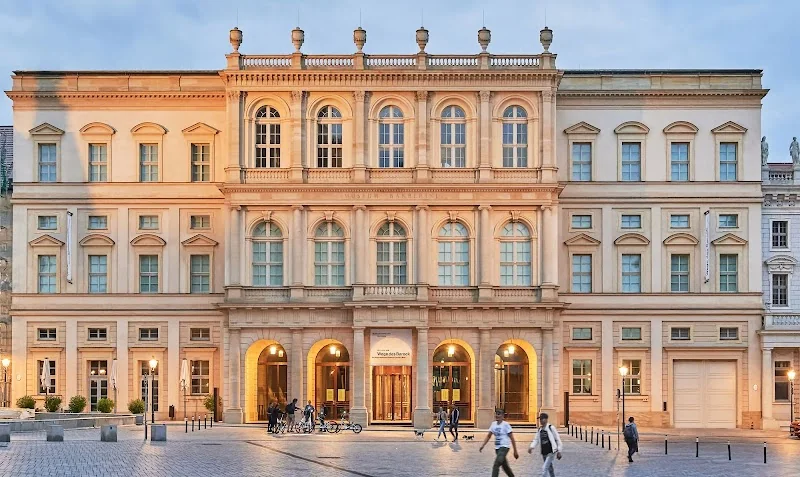
Humboldtstraße 5-6, Potsdam
Humboldtstraße 5-6, 14467 Potsdam, Germany
Museum Barberini | Tickets & current exhibition 2026
The Museum Barberini is one of the most important art museums in the historic center of Potsdam and has been a defining place for international exhibitions and the Hasso Plattner collection since its opening in 2017. The museum uniquely connects contemporary art and art history: changing special exhibitions, a significant permanent collection of Impressionism, and a versatile educational program make the visit attractive for art lovers, families, groups, and city travelers alike. Those searching for museum barberini current exhibition, museum barberini opening hours, museum barberini tickets, or museum barberini in Potsdam will find not only practical visitor information here but also a house with a clear curatorial signature and a strong profile. The central idea is to not only show art but to research it, communicate it, and continuously open new perspectives. Thus, the Museum Barberini becomes a place where historical painting, modern themes, and the special light of Potsdam come together. ([museum-barberini.de](https://www.museum-barberini.de/museum-barberini/))
In 2026, the Museum Barberini is particularly interesting for visitors because the current exhibition Avantgarde. Max Liebermann and Impressionism in Germany runs until June 7, 2026, and the annual program thereafter already announces further major themes in art history. So, those interested in museum barberini exhibitions 2026, museum barberini liebermann, or museum barberini max liebermann will experience a mix of famous names and exciting new discoveries. Additionally, the exhibition Unicorn. The Mythical Creature in Art shaped the museum winter 2025/2026 and was on view until February 1, 2026. The focus on these themes shows how consistently the Museum Barberini works with grand narratives: from mythical image worlds to Impressionism to the social and aesthetic upheavals of modernity. ([museum-barberini.de](https://www.museum-barberini.de/de/ausstellungen/21120/avant-garde-max-liebermann-and-impressionism-in-germany))
Current exhibition, tickets, and opening hours 2026
The current exhibition at the Museum Barberini is called Avantgarde. Max Liebermann and Impressionism in Germany and is on view from February 28 to June 7, 2026. The exhibition brings over 110 works from more than 60 international collections to Potsdam and shows how German Impressionism developed under the influence of French modernity. The focus is on Max Liebermann as an artist, collector, and president of the Berlin Secession, who provided crucial impulses for the internationalization of the art scene. The panorama is complemented by works from Lovis Corinth, Max Slevogt, Fritz von Uhde, and other artists such as Philipp Franck, Dora Hitz, Gotthardt Kuehl, Sabine Lepsius, Maria Slavona, and Lesser Ury. Thus, the search impulse museum barberini current exhibition meets a curatorially strong, scientifically grounded presentation here. ([museum-barberini.de](https://www.museum-barberini.de/de/ausstellungen/21120/avant-garde-max-liebermann-and-impressionism-in-germany))
The visit planning at the Museum Barberini is deliberately clearly structured. The museum is open on Mondays and Wednesdays to Sundays from 10 AM to 7 PM, and it is closed on Tuesdays. The ticket sales close at 6:15 PM. For 2026, fixed closing days and holiday openings have also been published, including a closure from February 23 to 27 due to exhibition setup and open museum days on Good Friday, Easter, Ascension Day, Pentecost, and German Unity Day. Admission prices start at 16 euros regularly from Monday to Friday and 18 euros on weekends and holidays, each with a reduced late visit from 5:30 PM. Additionally, there are reduced tickets, free admission for eligible groups, and combination tickets for the Museum Barberini and DAS MINSK Art House in Potsdam. Because the museum limits visitor numbers, a free time-slot ticket is required even for free admission, except for a few exceptions. This is important for all those specifically searching for museum barberini tickets or museum barberini opening hours. ([museum-barberini.de](https://www.museum-barberini.de/de/besuch/692/plan-your-visit))
Those informing themselves about museum barberini exhibitions 2026 should also keep an eye on the outlook for the coming months. The official exhibition overview lists for summer 2026 Symphony of Colors. Paul Signac and Neo-Impressionism and for autumn and winter Networks of Impressionism. Artists, Dealers, Collectors. This shows once again that the Museum Barberini does not understand Impressionism as a rigid chapter but as a living network of ideas, people, and places. The Berlin and Potsdam connection remains central, but the perspective is international. This is precisely what makes the charm of the museum: Those who book tickets for the current exhibition not only experience a solo exhibition but also gain access to an annual program that ranges from French Impressionism to German avant-garde to further facets of modernity. For visitors, this means high planning security and at the same time the prospect of always new content. ([museum-barberini.de](https://www.museum-barberini.de/de/ausstellungen/?utm_source=openai))
Directions, parking, and accessible visit
The Museum Barberini is located at Alten Markt in Humboldtstraße 5–6 in Potsdam, right in the historic center and in direct proximity to other significant places in the city. Those arriving by public transport can reach the museum from Berlin via IC, RB, RE, HBX, or S7; in Potsdam itself, tram lines 91 to 93, 96, and 99 as well as bus lines 604, 614, and 650 go to the stop Potsdam, Alter Markt/Landtag. Those coming by car will find parking options according to the official visitor page in the P+R Bahnhofspassagen parking garage, the parking lot Am Lustgarten, and the Wilhelm-Galerie parking garage. Additionally, a water taxi with the stop Lange Brücke 6 is mentioned, and there are parking spaces for tour buses at Bassinplatz, in Charlottenstraße, and at Lustgarten. For all those searching for museum barberini parking or museum barberini directions, these are the central data for stress-free planning. ([museum-barberini.de](https://www.museum-barberini.de/de/besuch/692/plan-your-visit))
Accessibility is also comprehensively considered at the Museum Barberini. The entire building is wheelchair accessible, with elevators, an accessible restroom, wheelchair-friendly paths, a lowered ticket counter, and seating in the entrance area. For people with disabilities, there are nearby public disabled parking spaces; additional accessible parking spaces at the museum can be reserved at least three working days in advance upon request. The accessible stops Potsdam Hauptbahnhof, Alter Markt/Landtag, and Am Bassinplatz facilitate arrival by local transport. From a visitor's perspective, this is particularly valuable because the Museum Barberini focuses not only on content but also on infrastructure accessibility. So, those planning an outing with family, elderly relatives, or limited mobility will find a well-documented and practical solution here. For inquiries regarding museum barberini parking or museum barberini photos of the premises, it is important to know: The location at Alten Markt is urban, well-connected, and yet easily accessible. ([museum-barberini.de](https://www.museum-barberini.de/de/besuch/689/barrierefreiheit?utm_source=openai))
Max Liebermann and German Impressionism
The current exhibition Avantgarde highlights Max Liebermann as a pioneer of a new artistic attitude in Germany. This is historically well-founded, as Liebermann early on drew impulses from France, making German Impressionism a movement that distanced itself from the conservative understanding of art of the Empire. The exhibition shows how this renewal manifested in motifs and painterly attitudes: in light-filled landscapes, city views, leisure motifs, figure paintings, and quiet moments of modern life. Liebermann appears not only as a painter but also as a collector and as president of the Berlin Secession, thus as an actor in the art scene of his time. This is precisely where the strength of the museum lies: It tells not just images but contexts, networks, and debates. Those searching for museum barberini liebermann or museum barberini max liebermann will therefore not find a mere name exhibition here but a panorama of artistic modernity. ([museum-barberini.de](https://www.museum-barberini.de/de/ausstellungen/21120/avant-garde-max-liebermann-and-impressionism-in-germany))
The exhibition also makes it clear that German Impressionism was much broader than just the well-known names. Alongside Max Liebermann, Lovis Corinth, Max Slevogt, and Fritz von Uhde stand out, but also female artists like Dora Hitz, Sabine Lepsius, Maria Slavona, Charlotte Berend-Corinth, or Emilie von Hallavanya, whose contributions have long been underestimated. This perspective is important because it broadens the view of art history and does not narrate the development of modernity as a purely male story. Additionally, the loans come from more than 60 international and German collections, including significant institutions in Berlin, Dresden, Essen, Frankfurt, Munich, Madrid, Paris, and Vienna. Thus, the visit to the Museum Barberini becomes a dense journey through the cultural networking of Europe. The question of how French impulses were received and further developed in Germany is also placed at the center. This makes the exhibition exciting for all those interested in museum barberini exhibition, museum barberini 2026, and the history of modernity. ([museum-barberini.de](https://www.museum-barberini.de/de/ausstellungen/21120/avant-garde-max-liebermann-and-impressionism-in-germany))
The Hasso Plattner Collection: Impressionism in Potsdam
Alongside the changing exhibitions, the Museum Barberini permanently presents the Hasso Plattner collection, which is one of the most significant Impressionist collections in Europe. Currently, it comprises 115 works by 23 artists and traces the development of French Impressionism from its beginnings in the 19th century through Pointillism and Fauvism to Classical Modernism. Particularly impressive is the collection of 40 paintings by Claude Monet, making the museum the largest holder of this artist's work complex in Europe outside of Paris. Other represented artists include Pierre-Auguste Renoir, Berthe Morisot, Alfred Sisley, Camille Pissarro, Henri-Edmond Cross, Paul Signac, and Gustave Caillebotte. For visitors searching for museum barberini impressionism, this permanent exhibition is a central argument for the visit. ([museum-barberini.de](https://www.museum-barberini.de/geschichte/))
The collection is not coincidentally so strongly anchored in Potsdam. Hasso Plattner's focus on French Impressionism has existed since 2000; in 2020 he transferred 103 works from his private collection and the Hasso Plattner Foundation as a permanent loan to the museum. In 2022 and 2023, the collection was complemented by a total of ten new acquisitions. This made the presentation even more coherent and thematically dense. The museum itself emphasizes that the landscape painting of French Impressionism becomes uniquely comprehensible here and that Potsdam is one of the world's most important centers of Impressionist landscape painting. So, those looking for not just a single exhibition event but a consistently high level will find in the Museum Barberini a collection that is exceptional in Germany. This also explains why many visitors return: The combination of changing special exhibitions and a strong permanent collection makes the museum a place where one gains new perspectives on well-known masterpieces. ([museum-barberini.de](https://www.museum-barberini.de/geschichte/))
Shop, café, photos, and digital offerings
A visit to the Museum Barberini includes not only the art on the walls but also the surrounding experience. The Barberini Shop offers selected art books, museum merchandise, stylish products from international manufacturers, young designs from art schools, and gift ideas for many occasions. The range is complemented by children's and youth books, catalogs, and posters; the shop is open daily except Tuesdays from 10 AM to 7 PM, and many products are also available online. Those searching for museum barberini shop will find a classic museum shop with content proximity to the exhibitions and at the same time a good destination for souvenirs or specialist literature. The café and restaurant, on the other hand, focuses on small dishes, quiches, salads, and cakes. In the warm months, the pavilion café in the museum courtyard invites guests with a view of the Alte Fahrt and Friendship Island. This place is not only practical but also atmospherically very strong, as it connects the museum visit with the special water and city feeling of Potsdam. ([museum-barberini.de](https://www.museum-barberini.de/de/besuch/692/plan-your-visit))
Another plus is the Barberini App, which is available for free and offers audio guides for adults and children, city walks through Potsdam, short films about the exhibitions, and background knowledge about the history of the Palais Barberini. Free Wi-Fi is available in the museum under the name Barberini Guest. For visitors interested in museum barberini photos, the photo policy is also important: Private photo and film recordings in the exhibition rooms are generally allowed but may be restricted for copyright reasons; publication on social media does not count as private use, and professional or commercial recordings require written permission from the museum. This clarity helps to plan the visit without uncertainty. Thus, the Museum Barberini presents itself not only as an exhibition venue but as a service house with an app, shop, café, digital support, and a clear visitor guidance that makes the stay pleasant and informative. ([museum-barberini.de](https://www.museum-barberini.de/de/besuch/692/plan-your-visit))
History of the Palais Barberini in Potsdam
The history of the house begins long before the Museum Barberini of today. Frederick the Great had the Palais Barberini built at Alten Markt in 1771/72; the baroque Palazzo Barberini in Rome served as a model. The building was intended as a stately townhouse and was remodeled and expanded in the mid-19th century at the request of Frederick William IV. New living spaces and representative halls were created, which were intended for cultural associations. The Palais thus became a place of bourgeois life, where exhibitions, art lotteries, readings, and concerts took place. Well-known musicians such as Clara Schumann, Anton Rubinstein, and Wilhelm Furtwängler also performed there. Later, the first cinema in the city of Potsdam, the Clou Potsdams, was even housed in the building. This varied usage makes the building an important bearer of urban memory. ([museum-barberini.de](https://www.museum-barberini.de/museum-barberini/))
After its destruction in April 1945, the ruins were demolished in 1948; during the GDR period, the site served as a green area and parking lot, later a makeshift theater was built there, which disappeared again after the reunification. Only with the reconstruction of the historic center of Potsdam decided in 2005 and the construction from 2013 to 2016 did the Alten Markt regain its strong cultural center. The Museum Barberini was initiated by the Hasso Plattner Foundation and opened in 2017. Since then, it has consciously connected to the historical role of the place as a cultural meeting point. Today, those visiting the museum experience not only art but also a regained piece of city history. This connection between architecture, memory, and current exhibition makes the Barberini so distinctive. It is a museum that does not stand in an arbitrary place but in a location that is itself part of the narrative. ([museum-barberini.de](https://www.museum-barberini.de/museum-barberini/))
Sources:
Show moreShow less
Museum Barberini | Tickets & current exhibition 2026
The Museum Barberini is one of the most important art museums in the historic center of Potsdam and has been a defining place for international exhibitions and the Hasso Plattner collection since its opening in 2017. The museum uniquely connects contemporary art and art history: changing special exhibitions, a significant permanent collection of Impressionism, and a versatile educational program make the visit attractive for art lovers, families, groups, and city travelers alike. Those searching for museum barberini current exhibition, museum barberini opening hours, museum barberini tickets, or museum barberini in Potsdam will find not only practical visitor information here but also a house with a clear curatorial signature and a strong profile. The central idea is to not only show art but to research it, communicate it, and continuously open new perspectives. Thus, the Museum Barberini becomes a place where historical painting, modern themes, and the special light of Potsdam come together. ([museum-barberini.de](https://www.museum-barberini.de/museum-barberini/))
In 2026, the Museum Barberini is particularly interesting for visitors because the current exhibition Avantgarde. Max Liebermann and Impressionism in Germany runs until June 7, 2026, and the annual program thereafter already announces further major themes in art history. So, those interested in museum barberini exhibitions 2026, museum barberini liebermann, or museum barberini max liebermann will experience a mix of famous names and exciting new discoveries. Additionally, the exhibition Unicorn. The Mythical Creature in Art shaped the museum winter 2025/2026 and was on view until February 1, 2026. The focus on these themes shows how consistently the Museum Barberini works with grand narratives: from mythical image worlds to Impressionism to the social and aesthetic upheavals of modernity. ([museum-barberini.de](https://www.museum-barberini.de/de/ausstellungen/21120/avant-garde-max-liebermann-and-impressionism-in-germany))
Current exhibition, tickets, and opening hours 2026
The current exhibition at the Museum Barberini is called Avantgarde. Max Liebermann and Impressionism in Germany and is on view from February 28 to June 7, 2026. The exhibition brings over 110 works from more than 60 international collections to Potsdam and shows how German Impressionism developed under the influence of French modernity. The focus is on Max Liebermann as an artist, collector, and president of the Berlin Secession, who provided crucial impulses for the internationalization of the art scene. The panorama is complemented by works from Lovis Corinth, Max Slevogt, Fritz von Uhde, and other artists such as Philipp Franck, Dora Hitz, Gotthardt Kuehl, Sabine Lepsius, Maria Slavona, and Lesser Ury. Thus, the search impulse museum barberini current exhibition meets a curatorially strong, scientifically grounded presentation here. ([museum-barberini.de](https://www.museum-barberini.de/de/ausstellungen/21120/avant-garde-max-liebermann-and-impressionism-in-germany))
The visit planning at the Museum Barberini is deliberately clearly structured. The museum is open on Mondays and Wednesdays to Sundays from 10 AM to 7 PM, and it is closed on Tuesdays. The ticket sales close at 6:15 PM. For 2026, fixed closing days and holiday openings have also been published, including a closure from February 23 to 27 due to exhibition setup and open museum days on Good Friday, Easter, Ascension Day, Pentecost, and German Unity Day. Admission prices start at 16 euros regularly from Monday to Friday and 18 euros on weekends and holidays, each with a reduced late visit from 5:30 PM. Additionally, there are reduced tickets, free admission for eligible groups, and combination tickets for the Museum Barberini and DAS MINSK Art House in Potsdam. Because the museum limits visitor numbers, a free time-slot ticket is required even for free admission, except for a few exceptions. This is important for all those specifically searching for museum barberini tickets or museum barberini opening hours. ([museum-barberini.de](https://www.museum-barberini.de/de/besuch/692/plan-your-visit))
Those informing themselves about museum barberini exhibitions 2026 should also keep an eye on the outlook for the coming months. The official exhibition overview lists for summer 2026 Symphony of Colors. Paul Signac and Neo-Impressionism and for autumn and winter Networks of Impressionism. Artists, Dealers, Collectors. This shows once again that the Museum Barberini does not understand Impressionism as a rigid chapter but as a living network of ideas, people, and places. The Berlin and Potsdam connection remains central, but the perspective is international. This is precisely what makes the charm of the museum: Those who book tickets for the current exhibition not only experience a solo exhibition but also gain access to an annual program that ranges from French Impressionism to German avant-garde to further facets of modernity. For visitors, this means high planning security and at the same time the prospect of always new content. ([museum-barberini.de](https://www.museum-barberini.de/de/ausstellungen/?utm_source=openai))
Directions, parking, and accessible visit
The Museum Barberini is located at Alten Markt in Humboldtstraße 5–6 in Potsdam, right in the historic center and in direct proximity to other significant places in the city. Those arriving by public transport can reach the museum from Berlin via IC, RB, RE, HBX, or S7; in Potsdam itself, tram lines 91 to 93, 96, and 99 as well as bus lines 604, 614, and 650 go to the stop Potsdam, Alter Markt/Landtag. Those coming by car will find parking options according to the official visitor page in the P+R Bahnhofspassagen parking garage, the parking lot Am Lustgarten, and the Wilhelm-Galerie parking garage. Additionally, a water taxi with the stop Lange Brücke 6 is mentioned, and there are parking spaces for tour buses at Bassinplatz, in Charlottenstraße, and at Lustgarten. For all those searching for museum barberini parking or museum barberini directions, these are the central data for stress-free planning. ([museum-barberini.de](https://www.museum-barberini.de/de/besuch/692/plan-your-visit))
Accessibility is also comprehensively considered at the Museum Barberini. The entire building is wheelchair accessible, with elevators, an accessible restroom, wheelchair-friendly paths, a lowered ticket counter, and seating in the entrance area. For people with disabilities, there are nearby public disabled parking spaces; additional accessible parking spaces at the museum can be reserved at least three working days in advance upon request. The accessible stops Potsdam Hauptbahnhof, Alter Markt/Landtag, and Am Bassinplatz facilitate arrival by local transport. From a visitor's perspective, this is particularly valuable because the Museum Barberini focuses not only on content but also on infrastructure accessibility. So, those planning an outing with family, elderly relatives, or limited mobility will find a well-documented and practical solution here. For inquiries regarding museum barberini parking or museum barberini photos of the premises, it is important to know: The location at Alten Markt is urban, well-connected, and yet easily accessible. ([museum-barberini.de](https://www.museum-barberini.de/de/besuch/689/barrierefreiheit?utm_source=openai))
Max Liebermann and German Impressionism
The current exhibition Avantgarde highlights Max Liebermann as a pioneer of a new artistic attitude in Germany. This is historically well-founded, as Liebermann early on drew impulses from France, making German Impressionism a movement that distanced itself from the conservative understanding of art of the Empire. The exhibition shows how this renewal manifested in motifs and painterly attitudes: in light-filled landscapes, city views, leisure motifs, figure paintings, and quiet moments of modern life. Liebermann appears not only as a painter but also as a collector and as president of the Berlin Secession, thus as an actor in the art scene of his time. This is precisely where the strength of the museum lies: It tells not just images but contexts, networks, and debates. Those searching for museum barberini liebermann or museum barberini max liebermann will therefore not find a mere name exhibition here but a panorama of artistic modernity. ([museum-barberini.de](https://www.museum-barberini.de/de/ausstellungen/21120/avant-garde-max-liebermann-and-impressionism-in-germany))
The exhibition also makes it clear that German Impressionism was much broader than just the well-known names. Alongside Max Liebermann, Lovis Corinth, Max Slevogt, and Fritz von Uhde stand out, but also female artists like Dora Hitz, Sabine Lepsius, Maria Slavona, Charlotte Berend-Corinth, or Emilie von Hallavanya, whose contributions have long been underestimated. This perspective is important because it broadens the view of art history and does not narrate the development of modernity as a purely male story. Additionally, the loans come from more than 60 international and German collections, including significant institutions in Berlin, Dresden, Essen, Frankfurt, Munich, Madrid, Paris, and Vienna. Thus, the visit to the Museum Barberini becomes a dense journey through the cultural networking of Europe. The question of how French impulses were received and further developed in Germany is also placed at the center. This makes the exhibition exciting for all those interested in museum barberini exhibition, museum barberini 2026, and the history of modernity. ([museum-barberini.de](https://www.museum-barberini.de/de/ausstellungen/21120/avant-garde-max-liebermann-and-impressionism-in-germany))
The Hasso Plattner Collection: Impressionism in Potsdam
Alongside the changing exhibitions, the Museum Barberini permanently presents the Hasso Plattner collection, which is one of the most significant Impressionist collections in Europe. Currently, it comprises 115 works by 23 artists and traces the development of French Impressionism from its beginnings in the 19th century through Pointillism and Fauvism to Classical Modernism. Particularly impressive is the collection of 40 paintings by Claude Monet, making the museum the largest holder of this artist's work complex in Europe outside of Paris. Other represented artists include Pierre-Auguste Renoir, Berthe Morisot, Alfred Sisley, Camille Pissarro, Henri-Edmond Cross, Paul Signac, and Gustave Caillebotte. For visitors searching for museum barberini impressionism, this permanent exhibition is a central argument for the visit. ([museum-barberini.de](https://www.museum-barberini.de/geschichte/))
The collection is not coincidentally so strongly anchored in Potsdam. Hasso Plattner's focus on French Impressionism has existed since 2000; in 2020 he transferred 103 works from his private collection and the Hasso Plattner Foundation as a permanent loan to the museum. In 2022 and 2023, the collection was complemented by a total of ten new acquisitions. This made the presentation even more coherent and thematically dense. The museum itself emphasizes that the landscape painting of French Impressionism becomes uniquely comprehensible here and that Potsdam is one of the world's most important centers of Impressionist landscape painting. So, those looking for not just a single exhibition event but a consistently high level will find in the Museum Barberini a collection that is exceptional in Germany. This also explains why many visitors return: The combination of changing special exhibitions and a strong permanent collection makes the museum a place where one gains new perspectives on well-known masterpieces. ([museum-barberini.de](https://www.museum-barberini.de/geschichte/))
Shop, café, photos, and digital offerings
A visit to the Museum Barberini includes not only the art on the walls but also the surrounding experience. The Barberini Shop offers selected art books, museum merchandise, stylish products from international manufacturers, young designs from art schools, and gift ideas for many occasions. The range is complemented by children's and youth books, catalogs, and posters; the shop is open daily except Tuesdays from 10 AM to 7 PM, and many products are also available online. Those searching for museum barberini shop will find a classic museum shop with content proximity to the exhibitions and at the same time a good destination for souvenirs or specialist literature. The café and restaurant, on the other hand, focuses on small dishes, quiches, salads, and cakes. In the warm months, the pavilion café in the museum courtyard invites guests with a view of the Alte Fahrt and Friendship Island. This place is not only practical but also atmospherically very strong, as it connects the museum visit with the special water and city feeling of Potsdam. ([museum-barberini.de](https://www.museum-barberini.de/de/besuch/692/plan-your-visit))
Another plus is the Barberini App, which is available for free and offers audio guides for adults and children, city walks through Potsdam, short films about the exhibitions, and background knowledge about the history of the Palais Barberini. Free Wi-Fi is available in the museum under the name Barberini Guest. For visitors interested in museum barberini photos, the photo policy is also important: Private photo and film recordings in the exhibition rooms are generally allowed but may be restricted for copyright reasons; publication on social media does not count as private use, and professional or commercial recordings require written permission from the museum. This clarity helps to plan the visit without uncertainty. Thus, the Museum Barberini presents itself not only as an exhibition venue but as a service house with an app, shop, café, digital support, and a clear visitor guidance that makes the stay pleasant and informative. ([museum-barberini.de](https://www.museum-barberini.de/de/besuch/692/plan-your-visit))
History of the Palais Barberini in Potsdam
The history of the house begins long before the Museum Barberini of today. Frederick the Great had the Palais Barberini built at Alten Markt in 1771/72; the baroque Palazzo Barberini in Rome served as a model. The building was intended as a stately townhouse and was remodeled and expanded in the mid-19th century at the request of Frederick William IV. New living spaces and representative halls were created, which were intended for cultural associations. The Palais thus became a place of bourgeois life, where exhibitions, art lotteries, readings, and concerts took place. Well-known musicians such as Clara Schumann, Anton Rubinstein, and Wilhelm Furtwängler also performed there. Later, the first cinema in the city of Potsdam, the Clou Potsdams, was even housed in the building. This varied usage makes the building an important bearer of urban memory. ([museum-barberini.de](https://www.museum-barberini.de/museum-barberini/))
After its destruction in April 1945, the ruins were demolished in 1948; during the GDR period, the site served as a green area and parking lot, later a makeshift theater was built there, which disappeared again after the reunification. Only with the reconstruction of the historic center of Potsdam decided in 2005 and the construction from 2013 to 2016 did the Alten Markt regain its strong cultural center. The Museum Barberini was initiated by the Hasso Plattner Foundation and opened in 2017. Since then, it has consciously connected to the historical role of the place as a cultural meeting point. Today, those visiting the museum experience not only art but also a regained piece of city history. This connection between architecture, memory, and current exhibition makes the Barberini so distinctive. It is a museum that does not stand in an arbitrary place but in a location that is itself part of the narrative. ([museum-barberini.de](https://www.museum-barberini.de/museum-barberini/))
Sources:
Museum Barberini | Tickets & current exhibition 2026
The Museum Barberini is one of the most important art museums in the historic center of Potsdam and has been a defining place for international exhibitions and the Hasso Plattner collection since its opening in 2017. The museum uniquely connects contemporary art and art history: changing special exhibitions, a significant permanent collection of Impressionism, and a versatile educational program make the visit attractive for art lovers, families, groups, and city travelers alike. Those searching for museum barberini current exhibition, museum barberini opening hours, museum barberini tickets, or museum barberini in Potsdam will find not only practical visitor information here but also a house with a clear curatorial signature and a strong profile. The central idea is to not only show art but to research it, communicate it, and continuously open new perspectives. Thus, the Museum Barberini becomes a place where historical painting, modern themes, and the special light of Potsdam come together. ([museum-barberini.de](https://www.museum-barberini.de/museum-barberini/))
In 2026, the Museum Barberini is particularly interesting for visitors because the current exhibition Avantgarde. Max Liebermann and Impressionism in Germany runs until June 7, 2026, and the annual program thereafter already announces further major themes in art history. So, those interested in museum barberini exhibitions 2026, museum barberini liebermann, or museum barberini max liebermann will experience a mix of famous names and exciting new discoveries. Additionally, the exhibition Unicorn. The Mythical Creature in Art shaped the museum winter 2025/2026 and was on view until February 1, 2026. The focus on these themes shows how consistently the Museum Barberini works with grand narratives: from mythical image worlds to Impressionism to the social and aesthetic upheavals of modernity. ([museum-barberini.de](https://www.museum-barberini.de/de/ausstellungen/21120/avant-garde-max-liebermann-and-impressionism-in-germany))
Current exhibition, tickets, and opening hours 2026
The current exhibition at the Museum Barberini is called Avantgarde. Max Liebermann and Impressionism in Germany and is on view from February 28 to June 7, 2026. The exhibition brings over 110 works from more than 60 international collections to Potsdam and shows how German Impressionism developed under the influence of French modernity. The focus is on Max Liebermann as an artist, collector, and president of the Berlin Secession, who provided crucial impulses for the internationalization of the art scene. The panorama is complemented by works from Lovis Corinth, Max Slevogt, Fritz von Uhde, and other artists such as Philipp Franck, Dora Hitz, Gotthardt Kuehl, Sabine Lepsius, Maria Slavona, and Lesser Ury. Thus, the search impulse museum barberini current exhibition meets a curatorially strong, scientifically grounded presentation here. ([museum-barberini.de](https://www.museum-barberini.de/de/ausstellungen/21120/avant-garde-max-liebermann-and-impressionism-in-germany))
The visit planning at the Museum Barberini is deliberately clearly structured. The museum is open on Mondays and Wednesdays to Sundays from 10 AM to 7 PM, and it is closed on Tuesdays. The ticket sales close at 6:15 PM. For 2026, fixed closing days and holiday openings have also been published, including a closure from February 23 to 27 due to exhibition setup and open museum days on Good Friday, Easter, Ascension Day, Pentecost, and German Unity Day. Admission prices start at 16 euros regularly from Monday to Friday and 18 euros on weekends and holidays, each with a reduced late visit from 5:30 PM. Additionally, there are reduced tickets, free admission for eligible groups, and combination tickets for the Museum Barberini and DAS MINSK Art House in Potsdam. Because the museum limits visitor numbers, a free time-slot ticket is required even for free admission, except for a few exceptions. This is important for all those specifically searching for museum barberini tickets or museum barberini opening hours. ([museum-barberini.de](https://www.museum-barberini.de/de/besuch/692/plan-your-visit))
Those informing themselves about museum barberini exhibitions 2026 should also keep an eye on the outlook for the coming months. The official exhibition overview lists for summer 2026 Symphony of Colors. Paul Signac and Neo-Impressionism and for autumn and winter Networks of Impressionism. Artists, Dealers, Collectors. This shows once again that the Museum Barberini does not understand Impressionism as a rigid chapter but as a living network of ideas, people, and places. The Berlin and Potsdam connection remains central, but the perspective is international. This is precisely what makes the charm of the museum: Those who book tickets for the current exhibition not only experience a solo exhibition but also gain access to an annual program that ranges from French Impressionism to German avant-garde to further facets of modernity. For visitors, this means high planning security and at the same time the prospect of always new content. ([museum-barberini.de](https://www.museum-barberini.de/de/ausstellungen/?utm_source=openai))
Directions, parking, and accessible visit
The Museum Barberini is located at Alten Markt in Humboldtstraße 5–6 in Potsdam, right in the historic center and in direct proximity to other significant places in the city. Those arriving by public transport can reach the museum from Berlin via IC, RB, RE, HBX, or S7; in Potsdam itself, tram lines 91 to 93, 96, and 99 as well as bus lines 604, 614, and 650 go to the stop Potsdam, Alter Markt/Landtag. Those coming by car will find parking options according to the official visitor page in the P+R Bahnhofspassagen parking garage, the parking lot Am Lustgarten, and the Wilhelm-Galerie parking garage. Additionally, a water taxi with the stop Lange Brücke 6 is mentioned, and there are parking spaces for tour buses at Bassinplatz, in Charlottenstraße, and at Lustgarten. For all those searching for museum barberini parking or museum barberini directions, these are the central data for stress-free planning. ([museum-barberini.de](https://www.museum-barberini.de/de/besuch/692/plan-your-visit))
Accessibility is also comprehensively considered at the Museum Barberini. The entire building is wheelchair accessible, with elevators, an accessible restroom, wheelchair-friendly paths, a lowered ticket counter, and seating in the entrance area. For people with disabilities, there are nearby public disabled parking spaces; additional accessible parking spaces at the museum can be reserved at least three working days in advance upon request. The accessible stops Potsdam Hauptbahnhof, Alter Markt/Landtag, and Am Bassinplatz facilitate arrival by local transport. From a visitor's perspective, this is particularly valuable because the Museum Barberini focuses not only on content but also on infrastructure accessibility. So, those planning an outing with family, elderly relatives, or limited mobility will find a well-documented and practical solution here. For inquiries regarding museum barberini parking or museum barberini photos of the premises, it is important to know: The location at Alten Markt is urban, well-connected, and yet easily accessible. ([museum-barberini.de](https://www.museum-barberini.de/de/besuch/689/barrierefreiheit?utm_source=openai))
Max Liebermann and German Impressionism
The current exhibition Avantgarde highlights Max Liebermann as a pioneer of a new artistic attitude in Germany. This is historically well-founded, as Liebermann early on drew impulses from France, making German Impressionism a movement that distanced itself from the conservative understanding of art of the Empire. The exhibition shows how this renewal manifested in motifs and painterly attitudes: in light-filled landscapes, city views, leisure motifs, figure paintings, and quiet moments of modern life. Liebermann appears not only as a painter but also as a collector and as president of the Berlin Secession, thus as an actor in the art scene of his time. This is precisely where the strength of the museum lies: It tells not just images but contexts, networks, and debates. Those searching for museum barberini liebermann or museum barberini max liebermann will therefore not find a mere name exhibition here but a panorama of artistic modernity. ([museum-barberini.de](https://www.museum-barberini.de/de/ausstellungen/21120/avant-garde-max-liebermann-and-impressionism-in-germany))
The exhibition also makes it clear that German Impressionism was much broader than just the well-known names. Alongside Max Liebermann, Lovis Corinth, Max Slevogt, and Fritz von Uhde stand out, but also female artists like Dora Hitz, Sabine Lepsius, Maria Slavona, Charlotte Berend-Corinth, or Emilie von Hallavanya, whose contributions have long been underestimated. This perspective is important because it broadens the view of art history and does not narrate the development of modernity as a purely male story. Additionally, the loans come from more than 60 international and German collections, including significant institutions in Berlin, Dresden, Essen, Frankfurt, Munich, Madrid, Paris, and Vienna. Thus, the visit to the Museum Barberini becomes a dense journey through the cultural networking of Europe. The question of how French impulses were received and further developed in Germany is also placed at the center. This makes the exhibition exciting for all those interested in museum barberini exhibition, museum barberini 2026, and the history of modernity. ([museum-barberini.de](https://www.museum-barberini.de/de/ausstellungen/21120/avant-garde-max-liebermann-and-impressionism-in-germany))
The Hasso Plattner Collection: Impressionism in Potsdam
Alongside the changing exhibitions, the Museum Barberini permanently presents the Hasso Plattner collection, which is one of the most significant Impressionist collections in Europe. Currently, it comprises 115 works by 23 artists and traces the development of French Impressionism from its beginnings in the 19th century through Pointillism and Fauvism to Classical Modernism. Particularly impressive is the collection of 40 paintings by Claude Monet, making the museum the largest holder of this artist's work complex in Europe outside of Paris. Other represented artists include Pierre-Auguste Renoir, Berthe Morisot, Alfred Sisley, Camille Pissarro, Henri-Edmond Cross, Paul Signac, and Gustave Caillebotte. For visitors searching for museum barberini impressionism, this permanent exhibition is a central argument for the visit. ([museum-barberini.de](https://www.museum-barberini.de/geschichte/))
The collection is not coincidentally so strongly anchored in Potsdam. Hasso Plattner's focus on French Impressionism has existed since 2000; in 2020 he transferred 103 works from his private collection and the Hasso Plattner Foundation as a permanent loan to the museum. In 2022 and 2023, the collection was complemented by a total of ten new acquisitions. This made the presentation even more coherent and thematically dense. The museum itself emphasizes that the landscape painting of French Impressionism becomes uniquely comprehensible here and that Potsdam is one of the world's most important centers of Impressionist landscape painting. So, those looking for not just a single exhibition event but a consistently high level will find in the Museum Barberini a collection that is exceptional in Germany. This also explains why many visitors return: The combination of changing special exhibitions and a strong permanent collection makes the museum a place where one gains new perspectives on well-known masterpieces. ([museum-barberini.de](https://www.museum-barberini.de/geschichte/))
Shop, café, photos, and digital offerings
A visit to the Museum Barberini includes not only the art on the walls but also the surrounding experience. The Barberini Shop offers selected art books, museum merchandise, stylish products from international manufacturers, young designs from art schools, and gift ideas for many occasions. The range is complemented by children's and youth books, catalogs, and posters; the shop is open daily except Tuesdays from 10 AM to 7 PM, and many products are also available online. Those searching for museum barberini shop will find a classic museum shop with content proximity to the exhibitions and at the same time a good destination for souvenirs or specialist literature. The café and restaurant, on the other hand, focuses on small dishes, quiches, salads, and cakes. In the warm months, the pavilion café in the museum courtyard invites guests with a view of the Alte Fahrt and Friendship Island. This place is not only practical but also atmospherically very strong, as it connects the museum visit with the special water and city feeling of Potsdam. ([museum-barberini.de](https://www.museum-barberini.de/de/besuch/692/plan-your-visit))
Another plus is the Barberini App, which is available for free and offers audio guides for adults and children, city walks through Potsdam, short films about the exhibitions, and background knowledge about the history of the Palais Barberini. Free Wi-Fi is available in the museum under the name Barberini Guest. For visitors interested in museum barberini photos, the photo policy is also important: Private photo and film recordings in the exhibition rooms are generally allowed but may be restricted for copyright reasons; publication on social media does not count as private use, and professional or commercial recordings require written permission from the museum. This clarity helps to plan the visit without uncertainty. Thus, the Museum Barberini presents itself not only as an exhibition venue but as a service house with an app, shop, café, digital support, and a clear visitor guidance that makes the stay pleasant and informative. ([museum-barberini.de](https://www.museum-barberini.de/de/besuch/692/plan-your-visit))
History of the Palais Barberini in Potsdam
The history of the house begins long before the Museum Barberini of today. Frederick the Great had the Palais Barberini built at Alten Markt in 1771/72; the baroque Palazzo Barberini in Rome served as a model. The building was intended as a stately townhouse and was remodeled and expanded in the mid-19th century at the request of Frederick William IV. New living spaces and representative halls were created, which were intended for cultural associations. The Palais thus became a place of bourgeois life, where exhibitions, art lotteries, readings, and concerts took place. Well-known musicians such as Clara Schumann, Anton Rubinstein, and Wilhelm Furtwängler also performed there. Later, the first cinema in the city of Potsdam, the Clou Potsdams, was even housed in the building. This varied usage makes the building an important bearer of urban memory. ([museum-barberini.de](https://www.museum-barberini.de/museum-barberini/))
After its destruction in April 1945, the ruins were demolished in 1948; during the GDR period, the site served as a green area and parking lot, later a makeshift theater was built there, which disappeared again after the reunification. Only with the reconstruction of the historic center of Potsdam decided in 2005 and the construction from 2013 to 2016 did the Alten Markt regain its strong cultural center. The Museum Barberini was initiated by the Hasso Plattner Foundation and opened in 2017. Since then, it has consciously connected to the historical role of the place as a cultural meeting point. Today, those visiting the museum experience not only art but also a regained piece of city history. This connection between architecture, memory, and current exhibition makes the Barberini so distinctive. It is a museum that does not stand in an arbitrary place but in a location that is itself part of the narrative. ([museum-barberini.de](https://www.museum-barberini.de/museum-barberini/))
Sources:
Upcoming Events
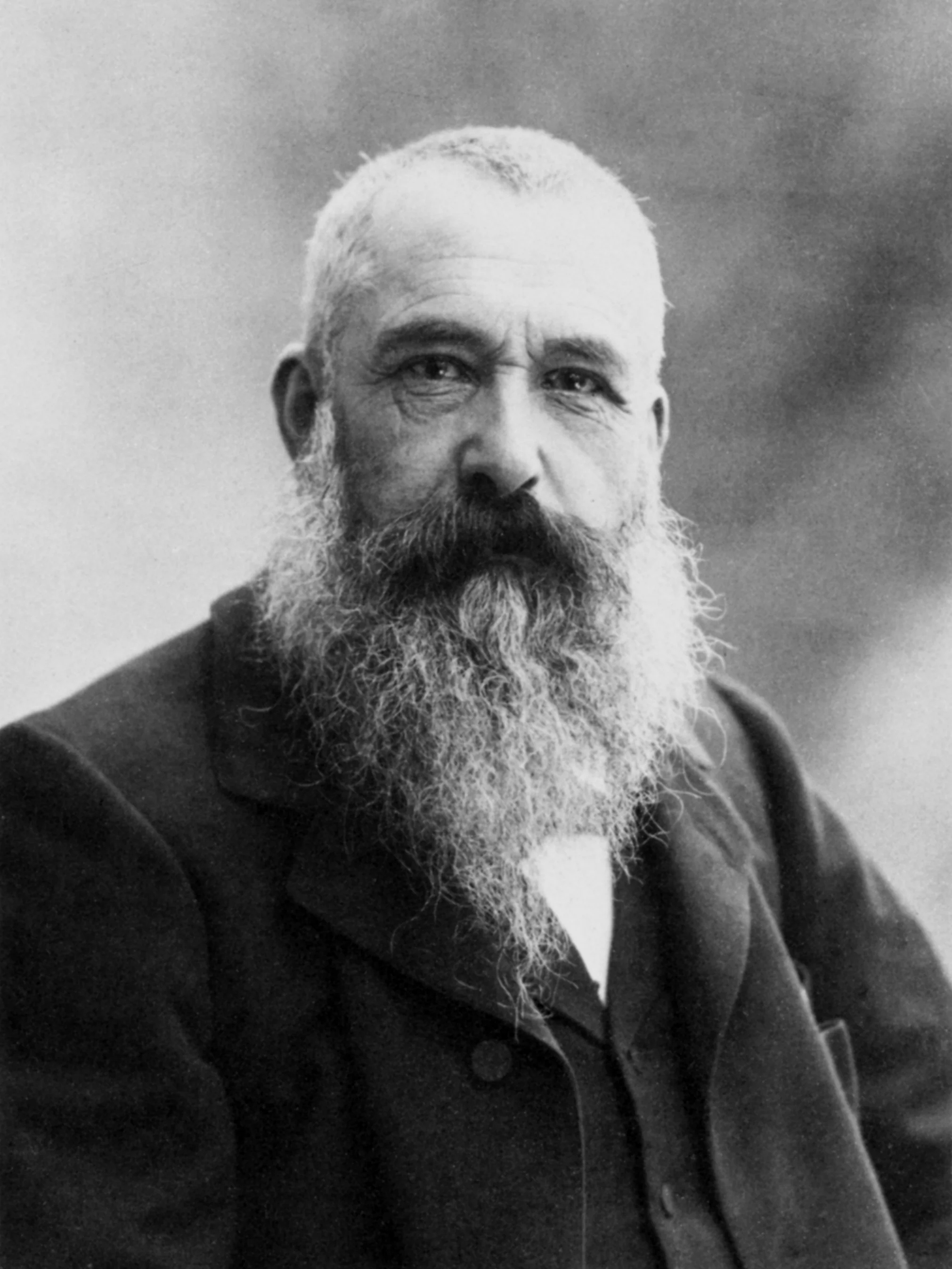
Impressionism – Masterpieces from the Hasso Plattner Collection
Experience famous works by Impressionists and Post-Impressionists at the Museum Barberini in Potsdam.
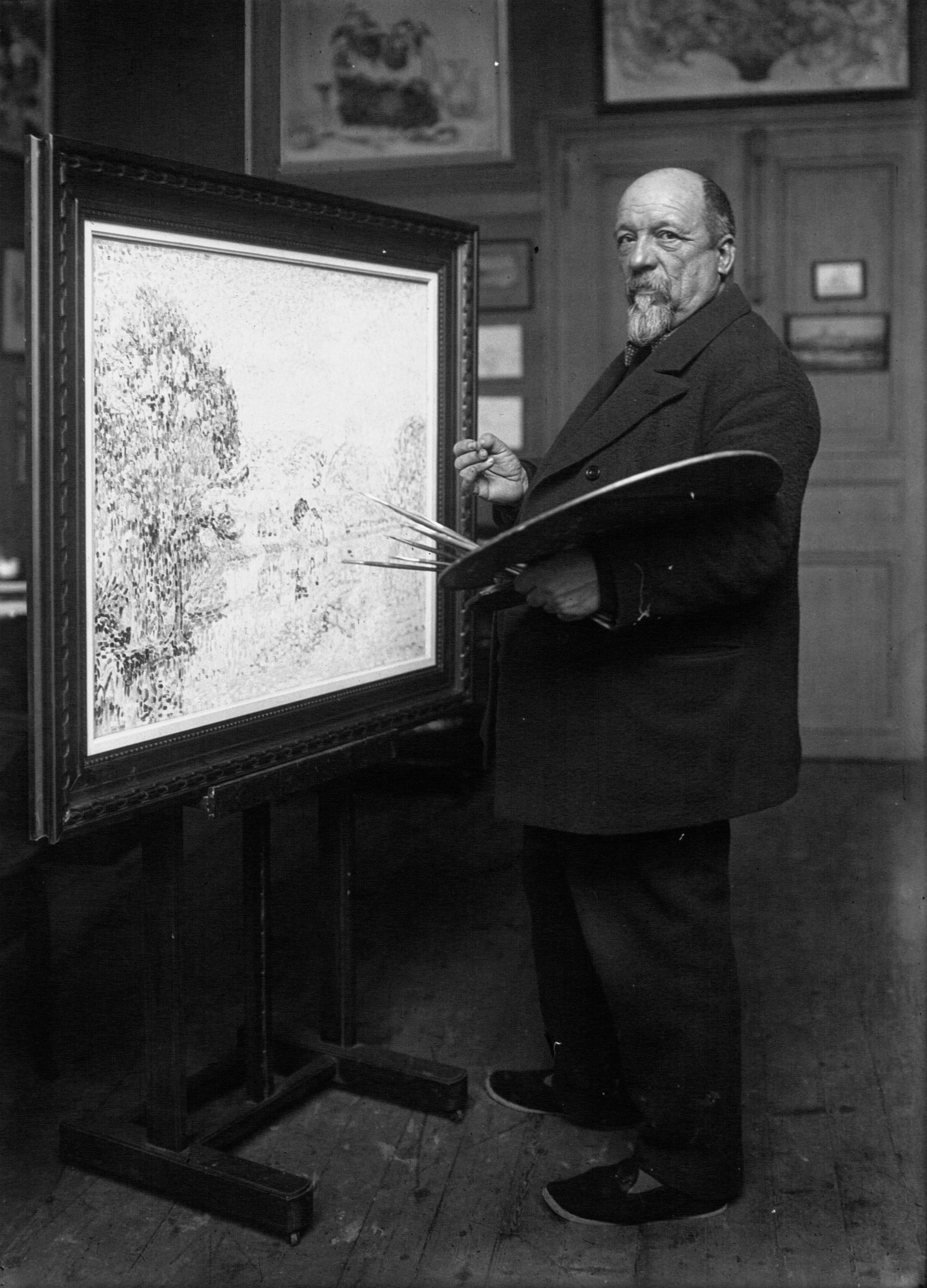
Paul Signac. Symphony of Colors
Immerse yourself in the colorful world of Paul Signac and Neoimpressionism at Museum Barberini.
Symphony of Colors. Paul Signac and Neo-Impressionism
Visit the exhibition „Symphony of Colors“ featuring about 30 works by Paul Signac at the Museum Barberini from July 4, 2026.
Networks of Impressionism. Artists, Dealers, Collectors
A fascinating look behind the scenes of Impressionism at the Barberini Museum: Art, dealers, and collectors in dialogue. Discover now! #Impressionism #MuseumBarberini
Frequently Asked Questions
Reviews
Karl Nygard
20. January 2026
A slightly from downtown gem. Definitely worth a quick s-bahn ride. They have some REALLY nice impressionist works here. A ton of top notch Monet, Sibley, Pissaro, and others. All done in the artists' prime. Also have a current exhibit on unicorns that was nicely done. Small crowds so you're not fighting to see things like at other places.
Polly
21. February 2026
What a great and exceptional collection of impressionism! Very friendly team, beautiful exposition, perfect location, will be back again.
Edwin Karlsson
6. August 2025
Very impressive collection overall, especially if you like impressionism, Monet is everywhere in the museum. Overall there are many ways to get a reduced or even free admission, whether a student or anything else of a number of things. Definitely a great stop!
Angelina Bünning
27. January 2026
Fantastic museum! I really enjoyed the unicorn exhibition and the collection of impressionist paintings! They have a sizeable collection of them and the museum puts the paintings in a beautiful light.
Daniela RP
12. May 2025
Museum Barberini: A Must-Visit Day Trip from Berlin Barberini never ceases to impress! Just a short and scenic day trip from Berlin, the museum is perfectly situated right across from Potsdam’s main train station—making it incredibly easy to access. The short walk to the museum offers lovely views that set the tone for the experience ahead. The museum itself is impeccable. Every exhibition is thoughtfully curated with both care and expertise, offering a deep yet accessible insight into the art. The audio tour is especially well done—concise, engaging, offering interesting details and relevant context. They also plan talks; conversations and other events. Last but not least the museum has a patio toward the river which only adds to the entire experience. ☞ Pro Tips: Be sure to download the Museum Barberini app before your visit. It gives you access to the audio guide (many languages), curatorial commentary, interviews, and more—all right at your fingertips. 🎫 Buy your Museum tickets in advance (online) 🔑 You will be asked to leave your bags and coats stored: Bring a 1 or 2 Eur coin 📚 Don't forget the gift shop ☕ 🍰Cakes at the coffee shop are TOP! 🚂 If you come from Berlin buy ABC train ticket.