
Russische Kolonie 2, Potsdam-Nördliche Vorstadt
Russische Kolonie 2, 14469 Potsdam, Germany
Museum Alexandrowka | Opening Hours & Parking
Museum Alexandrowka is in Potsdam much more than just a single exhibition building. The site combines a historical Russian colony, a walkable monument in House No. 2, a garden café, a large orchard, and a place where history, landscape, and everyday life naturally intersect. Those searching for Museum Alexandrowka opening hours, museum alexandrowka parking, museum alexandrowka photos, or museum alexandrowka reviews usually want to find not just an address but to understand why this place attracts so many visitors. This is precisely the special charm: The colony appears calm, green, and almost rural, yet is situated in the cultural-historical fabric of Potsdam and has been a destination for years for people who want to combine architecture, history, garden atmosphere, and small cultural formats. The official website describes the museum as a place of communication and information, and this feeling also shapes the visit: One does not come merely to view exhibits but to experience a historical space as a whole ensemble. This makes Alexandrowka a good destination for a short stroll as well as for a conscious half-day trip. The combination of UNESCO World Heritage, museum, café, and garden is not artificially assembled but has historically grown and is closely connected to the history of the colony. ([alexandrowka.de](https://alexandrowka.de/))
Opening Hours, Admission Prices, and Tickets for Museum Alexandrowka
For the search for museum alexandrowka opening hours, the official site is the most important orientation. According to the website, the museum is open on selected days in March 2026, and then from April 1 to October 31, 2026, on Mondays, Tuesdays, and Thursdays to Sundays from 10:00 AM to 6:00 PM; Wednesdays are a day of rest. Additionally, the site notes that the museum will remain closed on June 22, 2026. Those planning their visit should not only look at the general season but always check the current calendar, as special dates and individual closing days can play a role, especially in smaller, privately shaped houses. Admission prices are pleasantly low, making the visit easily accessible for spontaneous guests: Adults pay a regular fee of 3.50 euros, reduced 3.00 euros, and children under 14 years have free admission when accompanied by parents. For daycare and school groups under 14 years, a group price of 1.50 euros per person is mentioned. There is also a price list for guided tours, which varies depending on duration and target group. For seniors, students, and pupils, 45- and 90-minute tours are offered; for adults, there are also 45- and 90-minute rates, and there are bilingual tours for groups of 15 or more. A special detail that often appears charming in practice is free admission on one’s birthday. So, if someone is planning a personal route through Potsdam, they can certainly incorporate Alexandrowka as a small birthday stop. The charm of the house lies not in the spectacle but in the combination of manageable admission, calm atmosphere, and an exhibition that does not overwhelm but opens access to the colony step by step. This is precisely why inquiries about admission prices, opening hours, and tickets are so relevant here. ([alexandrowka.de](https://alexandrowka.de/informationen-kontakt/oeffnungszeiten-und-preise/))
Directions, Parking, and Accessibility in Potsdam
Those searching for museum alexandrowka parking or museum alexandrowka directions will find very concrete information on the official site. The postal address is Russische Kolonie Nr. 2 or Alexandrowka 2 in 14469 Potsdam. The colony is located about 700 meters north of Potsdam city center, making it close enough for a well-planned city walk, yet so embedded that it retains its quiet character. The museum is also easily accessible by public transport: From the main train station, bus lines 604, 609, and 629 go to the stop Am Schragen; additionally, tram lines 92 or 96 from the main station are mentioned to the same stop. For drivers, the website refers to the location within the Berlin Ring A10 and mentions the exits Potsdam-Nord, Potsdam-Süd, or Potsdam-Babelsberg depending on the direction of travel; the colony is signposted in the city center. Particularly practical is the note that parking is possible directly in front of the museum house. This is not self-evident for a historical site and is a clear advantage for families, older guests, or people with limited mobility. The museum describes itself as fully accessible; elsewhere it is stated that the museum is partially accessible, but the garden, café, and exhibition rooms are accessible with wheelchairs and strollers. Additionally, two accessible toilets are available. For accessible travel, the site refers to VBB travel information and the city services of Potsdam, which further facilitates practical planning. In the immediate vicinity are also the Kapellenberg with the Alexander-Newski Church, the Jewish Cemetery, and a bit further the Belvedere on the Pfingstberg. So, those who cleverly combine travel, parking, and sightseeing can easily incorporate Alexandrowka into a larger Potsdam tour. Especially for inquiries about directions and parking, it is worthwhile to take a look at the official planning, as it neatly combines the historical location with modern visitor needs. ([alexandrowka.de](https://alexandrowka.de/informationen-kontakt/anfahrt/))
Russian Colony Alexandrowka and UNESCO World Heritage
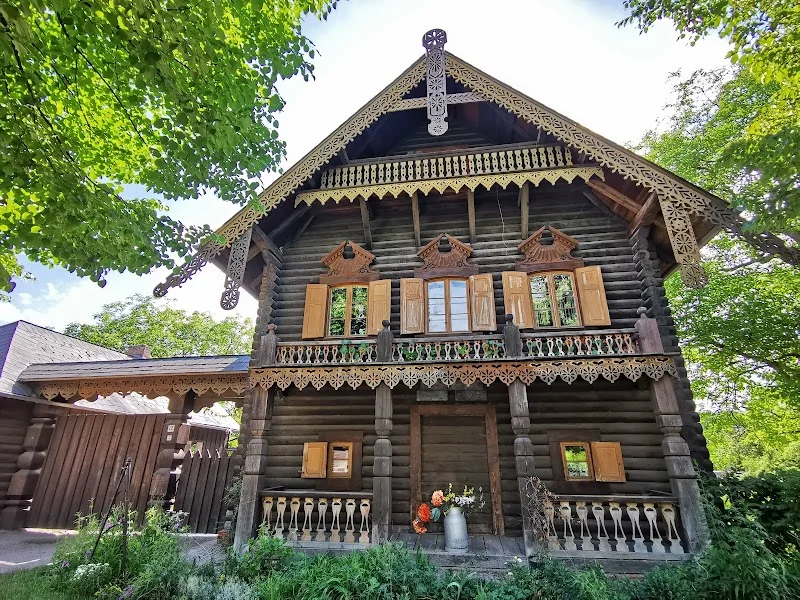
The history of Museum Alexandrowka does not begin with the museum itself but with the colony itself. According to the official account, the Russian Colony Alexandrowka was established in 1826 at the request of Friedrich Wilhelm III in Potsdam, as a lasting monument to the deceased Tsar Alexander I. The colony consists of thirteen wooden houses in the Russian style, built between 1826 and 1827. Originally, it was intended as a residence for Russian singers of the First Prussian Guard Regiment. This historical connection between Prussian and Russian history shapes the place to this day and explains why visitors see not just a pretty row of houses but a carefully reconstructed memory backdrop. The site was planned after the model of a Russian village near St. Petersburg; the official website cites the village Glasovo or Glosovo as a model. Furthermore, north of the colony lies the Kapellenberg with the Alexander-Newski Church, which was specifically built for the Russian colonists. This spatial order is important because it makes the colony visible not as a detached museum but as part of a larger cultural-historical ensemble. In 1999, Alexandrowka was recognized as part of the UNESCO World Heritage of the Palaces and Parks of Potsdam and Berlin. UNESCO explicitly lists the Russian Colony Alexandrowka with Kapellenberg as part of the World Heritage, and the city of Potsdam also names the colony as part of its UNESCO heritage. Additionally, the current museum in House No. 2 was opened in 2005, making a historical core of the colony accessible to visitors. For SEO titles, descriptions, and content related to museum alexandrowka russian colony potsdam or museum alexandrowka world heritage, this connection is crucial: It is not the individual house that creates the effect, but the interplay of 13 houses, gardens, a sacred reference point, historical memory, and modern museum use. This also explains why Alexandrowka is perceived today as one of the most characteristic places in Potsdam. ([alexandrowka.de](https://alexandrowka.de/english/))
The Museum in House No. 2: Exhibitions, Café, and Rooms for Celebrations
Museum Alexandrowka itself is located in House No. 2 and is thus directly embedded in the historical structure of the colony. According to the official description, the museum was opened in January 2005 and is a walkable monument from 1826. The rooms are furnished in the Biedermeier style and have been restored according to monument preservation criteria. Particularly interesting for visitors is the exhibition concept: All six rooms are equipped with display boards, supplemented by exhibits such as a fire extinguisher, the nameplate of the Jablokoff family from House No. 8, and an engraving of the Alexander-Newski Church. Additionally, two films of 30 minutes each are shown, so that the historical context is not only read but also vividly conveyed. In the annex, there is the museum shop and the café, and this is often where the visit becomes particularly pleasant. The café is embedded in the courtyard and garden, offers around 40 seats, and creates a place where one can quietly reflect on the impressions after the tour. The website also describes a garden of almost 2000 square meters, divided by paths and fruit trees of historical varieties. This is not only decorative but a central element of the overall experience: Alexandrowka is not a sober exhibition but a garden and cultural space where history transitions into landscape. For guests searching for alexandrowka museum café, it is also important that admission to the museum café is free and that the café can be used independently of the museum visit. This makes the place open and accessible. At the same time, the museum can be used for family celebrations, weddings, and corporate events; in the evenings or on weekends, rooms can be rented including catering. So, if someone is looking for a location with historical ambiance, garden, gastronomy, and an unusual setting for private events, they will find a credible, charming alternative to classic event spaces here. The special value of House No. 2 lies in the fact that it was not artificially turned into a museum but has retained a contemporary use as a historical building. This authenticity distinguishes Alexandrowka from many other small museums. ([alexandrowka.de](https://alexandrowka.de/))
Photos, Reviews, and What Visitors Appreciate Most
The searches for museum alexandrowka photos and museum alexandrowka reviews show very well how visitors perceive this place. Alexandrowka thrives strongly on atmosphere, perspective, and light. The Russian wooden houses, the spacious gardens, the paths between the fruit trees, and the historic House No. 2 form an ensemble that is particularly photogenic. Especially because the site does not rely on mass staging, many viewpoints appear calm and almost picturesque. From the official descriptions, one can derive why this is the case: The colony consists of 13 houses with generous gardens, the museum is surrounded by a garden of almost 2000 square meters, and the café is situated in the midst of this scenic backdrop. Those who photograph here capture not only architecture but also a form of cultivated tranquility that is very typical of Potsdam but is particularly concentrated here. Reviews also reflect this: the mix of historical uniqueness, walking character, and garden atmosphere. This fits well with the search intentions behind images and reviews, as many guests want to know before their visit whether the place is more of a short stop or a longer stay. The answer is usually: both are possible. One can, for example, simply stroll through the colony, take a break in the café, visit the museum, or combine the stay with the neighboring attractions on the Pfingstberg and Kapellenberg. For photo fans, the interplay between open paths, wooden houses, garden areas, and details like the historical facades is particularly interesting. From the visitors' perspective, Alexandrowka has exactly the kind of motifs that do not appear loud but work with many small impressions. Therefore, the place is often described in reviews as peaceful, special, and almost fairy-tale-like. From an SEO perspective, it is worthwhile not to exaggerate this perception but to explain it as a result of the real architectural and landscape situation. Those taking photos or reading reviews are not looking for the big event moment here but the special micro-moment: a quiet path, a wooden facade, an apple tree, a café in the green, a building with history. This is the strength of the site and also the reason why it is so often searched for online with images. ([alexandrowka.de](https://alexandrowka.de/english/))
Guided Tours, Events, and Special Dates like Poetry & Music
Those searching for museum alexandrowka events or poetry music alexandrowka quickly land on the museum's event calendar. This makes sense, as Alexandrowka uses its garden and historical setting not only for quiet visits but also for cultural formats. According to the official website, guided tours are offered, including bilingual tours for groups of 15 or more. This is particularly interesting for school classes, clubs, family groups, and travel groups, as the colony truly unfolds in conversation. History, architecture, and garden education closely intertwine here, and a guided tour can make these connections visible. Furthermore, the event calendar shows that the museum regularly organizes festivals and cultural evenings. These include apple festivals, the Fête de la musique, and formats like Poetry & Music. Especially Poetry & Music is a good example of how the place still functions today as a vibrant cultural space: The museum garden becomes a stage for language, music, and encounters, without losing its tranquility. For visitors, this means that Alexandrowka is not only interesting during the day but can also create a special atmosphere in the evenings depending on the program. This fits the character of the colony, as the garden, paths, and wooden houses provide an intimate, almost personal backdrop for cultural events. Private celebrations can also take place here, as rooms and gardens can be rented for family, wedding, or corporate celebrations. So, if someone is looking for a location that does not look like a standardized event hall but connects historical depth and nature, they will find a credible offer here. The search for dates is particularly worthwhile around the warm months when the garden café is open and the orchard is at its most appealing. The museum's event practice shows that Alexandrowka is not a dormant monument but a place where culture, memory, and the present actively come together. This is precisely what makes the location so interesting for visitors, guests, and event planners. ([alexandrowka.de](https://alexandrowka.de/informationen-kontakt/oeffnungszeiten-und-preise/))
Sources:
Show moreShow less
Museum Alexandrowka | Opening Hours & Parking
Museum Alexandrowka is in Potsdam much more than just a single exhibition building. The site combines a historical Russian colony, a walkable monument in House No. 2, a garden café, a large orchard, and a place where history, landscape, and everyday life naturally intersect. Those searching for Museum Alexandrowka opening hours, museum alexandrowka parking, museum alexandrowka photos, or museum alexandrowka reviews usually want to find not just an address but to understand why this place attracts so many visitors. This is precisely the special charm: The colony appears calm, green, and almost rural, yet is situated in the cultural-historical fabric of Potsdam and has been a destination for years for people who want to combine architecture, history, garden atmosphere, and small cultural formats. The official website describes the museum as a place of communication and information, and this feeling also shapes the visit: One does not come merely to view exhibits but to experience a historical space as a whole ensemble. This makes Alexandrowka a good destination for a short stroll as well as for a conscious half-day trip. The combination of UNESCO World Heritage, museum, café, and garden is not artificially assembled but has historically grown and is closely connected to the history of the colony. ([alexandrowka.de](https://alexandrowka.de/))
Opening Hours, Admission Prices, and Tickets for Museum Alexandrowka
For the search for museum alexandrowka opening hours, the official site is the most important orientation. According to the website, the museum is open on selected days in March 2026, and then from April 1 to October 31, 2026, on Mondays, Tuesdays, and Thursdays to Sundays from 10:00 AM to 6:00 PM; Wednesdays are a day of rest. Additionally, the site notes that the museum will remain closed on June 22, 2026. Those planning their visit should not only look at the general season but always check the current calendar, as special dates and individual closing days can play a role, especially in smaller, privately shaped houses. Admission prices are pleasantly low, making the visit easily accessible for spontaneous guests: Adults pay a regular fee of 3.50 euros, reduced 3.00 euros, and children under 14 years have free admission when accompanied by parents. For daycare and school groups under 14 years, a group price of 1.50 euros per person is mentioned. There is also a price list for guided tours, which varies depending on duration and target group. For seniors, students, and pupils, 45- and 90-minute tours are offered; for adults, there are also 45- and 90-minute rates, and there are bilingual tours for groups of 15 or more. A special detail that often appears charming in practice is free admission on one’s birthday. So, if someone is planning a personal route through Potsdam, they can certainly incorporate Alexandrowka as a small birthday stop. The charm of the house lies not in the spectacle but in the combination of manageable admission, calm atmosphere, and an exhibition that does not overwhelm but opens access to the colony step by step. This is precisely why inquiries about admission prices, opening hours, and tickets are so relevant here. ([alexandrowka.de](https://alexandrowka.de/informationen-kontakt/oeffnungszeiten-und-preise/))
Directions, Parking, and Accessibility in Potsdam
Those searching for museum alexandrowka parking or museum alexandrowka directions will find very concrete information on the official site. The postal address is Russische Kolonie Nr. 2 or Alexandrowka 2 in 14469 Potsdam. The colony is located about 700 meters north of Potsdam city center, making it close enough for a well-planned city walk, yet so embedded that it retains its quiet character. The museum is also easily accessible by public transport: From the main train station, bus lines 604, 609, and 629 go to the stop Am Schragen; additionally, tram lines 92 or 96 from the main station are mentioned to the same stop. For drivers, the website refers to the location within the Berlin Ring A10 and mentions the exits Potsdam-Nord, Potsdam-Süd, or Potsdam-Babelsberg depending on the direction of travel; the colony is signposted in the city center. Particularly practical is the note that parking is possible directly in front of the museum house. This is not self-evident for a historical site and is a clear advantage for families, older guests, or people with limited mobility. The museum describes itself as fully accessible; elsewhere it is stated that the museum is partially accessible, but the garden, café, and exhibition rooms are accessible with wheelchairs and strollers. Additionally, two accessible toilets are available. For accessible travel, the site refers to VBB travel information and the city services of Potsdam, which further facilitates practical planning. In the immediate vicinity are also the Kapellenberg with the Alexander-Newski Church, the Jewish Cemetery, and a bit further the Belvedere on the Pfingstberg. So, those who cleverly combine travel, parking, and sightseeing can easily incorporate Alexandrowka into a larger Potsdam tour. Especially for inquiries about directions and parking, it is worthwhile to take a look at the official planning, as it neatly combines the historical location with modern visitor needs. ([alexandrowka.de](https://alexandrowka.de/informationen-kontakt/anfahrt/))
Russian Colony Alexandrowka and UNESCO World Heritage
The history of Museum Alexandrowka does not begin with the museum itself but with the colony itself. According to the official account, the Russian Colony Alexandrowka was established in 1826 at the request of Friedrich Wilhelm III in Potsdam, as a lasting monument to the deceased Tsar Alexander I. The colony consists of thirteen wooden houses in the Russian style, built between 1826 and 1827. Originally, it was intended as a residence for Russian singers of the First Prussian Guard Regiment. This historical connection between Prussian and Russian history shapes the place to this day and explains why visitors see not just a pretty row of houses but a carefully reconstructed memory backdrop. The site was planned after the model of a Russian village near St. Petersburg; the official website cites the village Glasovo or Glosovo as a model. Furthermore, north of the colony lies the Kapellenberg with the Alexander-Newski Church, which was specifically built for the Russian colonists. This spatial order is important because it makes the colony visible not as a detached museum but as part of a larger cultural-historical ensemble. In 1999, Alexandrowka was recognized as part of the UNESCO World Heritage of the Palaces and Parks of Potsdam and Berlin. UNESCO explicitly lists the Russian Colony Alexandrowka with Kapellenberg as part of the World Heritage, and the city of Potsdam also names the colony as part of its UNESCO heritage. Additionally, the current museum in House No. 2 was opened in 2005, making a historical core of the colony accessible to visitors. For SEO titles, descriptions, and content related to museum alexandrowka russian colony potsdam or museum alexandrowka world heritage, this connection is crucial: It is not the individual house that creates the effect, but the interplay of 13 houses, gardens, a sacred reference point, historical memory, and modern museum use. This also explains why Alexandrowka is perceived today as one of the most characteristic places in Potsdam. ([alexandrowka.de](https://alexandrowka.de/english/))
The Museum in House No. 2: Exhibitions, Café, and Rooms for Celebrations
Museum Alexandrowka itself is located in House No. 2 and is thus directly embedded in the historical structure of the colony. According to the official description, the museum was opened in January 2005 and is a walkable monument from 1826. The rooms are furnished in the Biedermeier style and have been restored according to monument preservation criteria. Particularly interesting for visitors is the exhibition concept: All six rooms are equipped with display boards, supplemented by exhibits such as a fire extinguisher, the nameplate of the Jablokoff family from House No. 8, and an engraving of the Alexander-Newski Church. Additionally, two films of 30 minutes each are shown, so that the historical context is not only read but also vividly conveyed. In the annex, there is the museum shop and the café, and this is often where the visit becomes particularly pleasant. The café is embedded in the courtyard and garden, offers around 40 seats, and creates a place where one can quietly reflect on the impressions after the tour. The website also describes a garden of almost 2000 square meters, divided by paths and fruit trees of historical varieties. This is not only decorative but a central element of the overall experience: Alexandrowka is not a sober exhibition but a garden and cultural space where history transitions into landscape. For guests searching for alexandrowka museum café, it is also important that admission to the museum café is free and that the café can be used independently of the museum visit. This makes the place open and accessible. At the same time, the museum can be used for family celebrations, weddings, and corporate events; in the evenings or on weekends, rooms can be rented including catering. So, if someone is looking for a location with historical ambiance, garden, gastronomy, and an unusual setting for private events, they will find a credible, charming alternative to classic event spaces here. The special value of House No. 2 lies in the fact that it was not artificially turned into a museum but has retained a contemporary use as a historical building. This authenticity distinguishes Alexandrowka from many other small museums. ([alexandrowka.de](https://alexandrowka.de/))
Photos, Reviews, and What Visitors Appreciate Most
The searches for museum alexandrowka photos and museum alexandrowka reviews show very well how visitors perceive this place. Alexandrowka thrives strongly on atmosphere, perspective, and light. The Russian wooden houses, the spacious gardens, the paths between the fruit trees, and the historic House No. 2 form an ensemble that is particularly photogenic. Especially because the site does not rely on mass staging, many viewpoints appear calm and almost picturesque. From the official descriptions, one can derive why this is the case: The colony consists of 13 houses with generous gardens, the museum is surrounded by a garden of almost 2000 square meters, and the café is situated in the midst of this scenic backdrop. Those who photograph here capture not only architecture but also a form of cultivated tranquility that is very typical of Potsdam but is particularly concentrated here. Reviews also reflect this: the mix of historical uniqueness, walking character, and garden atmosphere. This fits well with the search intentions behind images and reviews, as many guests want to know before their visit whether the place is more of a short stop or a longer stay. The answer is usually: both are possible. One can, for example, simply stroll through the colony, take a break in the café, visit the museum, or combine the stay with the neighboring attractions on the Pfingstberg and Kapellenberg. For photo fans, the interplay between open paths, wooden houses, garden areas, and details like the historical facades is particularly interesting. From the visitors' perspective, Alexandrowka has exactly the kind of motifs that do not appear loud but work with many small impressions. Therefore, the place is often described in reviews as peaceful, special, and almost fairy-tale-like. From an SEO perspective, it is worthwhile not to exaggerate this perception but to explain it as a result of the real architectural and landscape situation. Those taking photos or reading reviews are not looking for the big event moment here but the special micro-moment: a quiet path, a wooden facade, an apple tree, a café in the green, a building with history. This is the strength of the site and also the reason why it is so often searched for online with images. ([alexandrowka.de](https://alexandrowka.de/english/))
Guided Tours, Events, and Special Dates like Poetry & Music
Those searching for museum alexandrowka events or poetry music alexandrowka quickly land on the museum's event calendar. This makes sense, as Alexandrowka uses its garden and historical setting not only for quiet visits but also for cultural formats. According to the official website, guided tours are offered, including bilingual tours for groups of 15 or more. This is particularly interesting for school classes, clubs, family groups, and travel groups, as the colony truly unfolds in conversation. History, architecture, and garden education closely intertwine here, and a guided tour can make these connections visible. Furthermore, the event calendar shows that the museum regularly organizes festivals and cultural evenings. These include apple festivals, the Fête de la musique, and formats like Poetry & Music. Especially Poetry & Music is a good example of how the place still functions today as a vibrant cultural space: The museum garden becomes a stage for language, music, and encounters, without losing its tranquility. For visitors, this means that Alexandrowka is not only interesting during the day but can also create a special atmosphere in the evenings depending on the program. This fits the character of the colony, as the garden, paths, and wooden houses provide an intimate, almost personal backdrop for cultural events. Private celebrations can also take place here, as rooms and gardens can be rented for family, wedding, or corporate celebrations. So, if someone is looking for a location that does not look like a standardized event hall but connects historical depth and nature, they will find a credible offer here. The search for dates is particularly worthwhile around the warm months when the garden café is open and the orchard is at its most appealing. The museum's event practice shows that Alexandrowka is not a dormant monument but a place where culture, memory, and the present actively come together. This is precisely what makes the location so interesting for visitors, guests, and event planners. ([alexandrowka.de](https://alexandrowka.de/informationen-kontakt/oeffnungszeiten-und-preise/))
Sources:
Museum Alexandrowka | Opening Hours & Parking
Museum Alexandrowka is in Potsdam much more than just a single exhibition building. The site combines a historical Russian colony, a walkable monument in House No. 2, a garden café, a large orchard, and a place where history, landscape, and everyday life naturally intersect. Those searching for Museum Alexandrowka opening hours, museum alexandrowka parking, museum alexandrowka photos, or museum alexandrowka reviews usually want to find not just an address but to understand why this place attracts so many visitors. This is precisely the special charm: The colony appears calm, green, and almost rural, yet is situated in the cultural-historical fabric of Potsdam and has been a destination for years for people who want to combine architecture, history, garden atmosphere, and small cultural formats. The official website describes the museum as a place of communication and information, and this feeling also shapes the visit: One does not come merely to view exhibits but to experience a historical space as a whole ensemble. This makes Alexandrowka a good destination for a short stroll as well as for a conscious half-day trip. The combination of UNESCO World Heritage, museum, café, and garden is not artificially assembled but has historically grown and is closely connected to the history of the colony. ([alexandrowka.de](https://alexandrowka.de/))
Opening Hours, Admission Prices, and Tickets for Museum Alexandrowka
For the search for museum alexandrowka opening hours, the official site is the most important orientation. According to the website, the museum is open on selected days in March 2026, and then from April 1 to October 31, 2026, on Mondays, Tuesdays, and Thursdays to Sundays from 10:00 AM to 6:00 PM; Wednesdays are a day of rest. Additionally, the site notes that the museum will remain closed on June 22, 2026. Those planning their visit should not only look at the general season but always check the current calendar, as special dates and individual closing days can play a role, especially in smaller, privately shaped houses. Admission prices are pleasantly low, making the visit easily accessible for spontaneous guests: Adults pay a regular fee of 3.50 euros, reduced 3.00 euros, and children under 14 years have free admission when accompanied by parents. For daycare and school groups under 14 years, a group price of 1.50 euros per person is mentioned. There is also a price list for guided tours, which varies depending on duration and target group. For seniors, students, and pupils, 45- and 90-minute tours are offered; for adults, there are also 45- and 90-minute rates, and there are bilingual tours for groups of 15 or more. A special detail that often appears charming in practice is free admission on one’s birthday. So, if someone is planning a personal route through Potsdam, they can certainly incorporate Alexandrowka as a small birthday stop. The charm of the house lies not in the spectacle but in the combination of manageable admission, calm atmosphere, and an exhibition that does not overwhelm but opens access to the colony step by step. This is precisely why inquiries about admission prices, opening hours, and tickets are so relevant here. ([alexandrowka.de](https://alexandrowka.de/informationen-kontakt/oeffnungszeiten-und-preise/))
Directions, Parking, and Accessibility in Potsdam
Those searching for museum alexandrowka parking or museum alexandrowka directions will find very concrete information on the official site. The postal address is Russische Kolonie Nr. 2 or Alexandrowka 2 in 14469 Potsdam. The colony is located about 700 meters north of Potsdam city center, making it close enough for a well-planned city walk, yet so embedded that it retains its quiet character. The museum is also easily accessible by public transport: From the main train station, bus lines 604, 609, and 629 go to the stop Am Schragen; additionally, tram lines 92 or 96 from the main station are mentioned to the same stop. For drivers, the website refers to the location within the Berlin Ring A10 and mentions the exits Potsdam-Nord, Potsdam-Süd, or Potsdam-Babelsberg depending on the direction of travel; the colony is signposted in the city center. Particularly practical is the note that parking is possible directly in front of the museum house. This is not self-evident for a historical site and is a clear advantage for families, older guests, or people with limited mobility. The museum describes itself as fully accessible; elsewhere it is stated that the museum is partially accessible, but the garden, café, and exhibition rooms are accessible with wheelchairs and strollers. Additionally, two accessible toilets are available. For accessible travel, the site refers to VBB travel information and the city services of Potsdam, which further facilitates practical planning. In the immediate vicinity are also the Kapellenberg with the Alexander-Newski Church, the Jewish Cemetery, and a bit further the Belvedere on the Pfingstberg. So, those who cleverly combine travel, parking, and sightseeing can easily incorporate Alexandrowka into a larger Potsdam tour. Especially for inquiries about directions and parking, it is worthwhile to take a look at the official planning, as it neatly combines the historical location with modern visitor needs. ([alexandrowka.de](https://alexandrowka.de/informationen-kontakt/anfahrt/))
Russian Colony Alexandrowka and UNESCO World Heritage
The history of Museum Alexandrowka does not begin with the museum itself but with the colony itself. According to the official account, the Russian Colony Alexandrowka was established in 1826 at the request of Friedrich Wilhelm III in Potsdam, as a lasting monument to the deceased Tsar Alexander I. The colony consists of thirteen wooden houses in the Russian style, built between 1826 and 1827. Originally, it was intended as a residence for Russian singers of the First Prussian Guard Regiment. This historical connection between Prussian and Russian history shapes the place to this day and explains why visitors see not just a pretty row of houses but a carefully reconstructed memory backdrop. The site was planned after the model of a Russian village near St. Petersburg; the official website cites the village Glasovo or Glosovo as a model. Furthermore, north of the colony lies the Kapellenberg with the Alexander-Newski Church, which was specifically built for the Russian colonists. This spatial order is important because it makes the colony visible not as a detached museum but as part of a larger cultural-historical ensemble. In 1999, Alexandrowka was recognized as part of the UNESCO World Heritage of the Palaces and Parks of Potsdam and Berlin. UNESCO explicitly lists the Russian Colony Alexandrowka with Kapellenberg as part of the World Heritage, and the city of Potsdam also names the colony as part of its UNESCO heritage. Additionally, the current museum in House No. 2 was opened in 2005, making a historical core of the colony accessible to visitors. For SEO titles, descriptions, and content related to museum alexandrowka russian colony potsdam or museum alexandrowka world heritage, this connection is crucial: It is not the individual house that creates the effect, but the interplay of 13 houses, gardens, a sacred reference point, historical memory, and modern museum use. This also explains why Alexandrowka is perceived today as one of the most characteristic places in Potsdam. ([alexandrowka.de](https://alexandrowka.de/english/))
The Museum in House No. 2: Exhibitions, Café, and Rooms for Celebrations
Museum Alexandrowka itself is located in House No. 2 and is thus directly embedded in the historical structure of the colony. According to the official description, the museum was opened in January 2005 and is a walkable monument from 1826. The rooms are furnished in the Biedermeier style and have been restored according to monument preservation criteria. Particularly interesting for visitors is the exhibition concept: All six rooms are equipped with display boards, supplemented by exhibits such as a fire extinguisher, the nameplate of the Jablokoff family from House No. 8, and an engraving of the Alexander-Newski Church. Additionally, two films of 30 minutes each are shown, so that the historical context is not only read but also vividly conveyed. In the annex, there is the museum shop and the café, and this is often where the visit becomes particularly pleasant. The café is embedded in the courtyard and garden, offers around 40 seats, and creates a place where one can quietly reflect on the impressions after the tour. The website also describes a garden of almost 2000 square meters, divided by paths and fruit trees of historical varieties. This is not only decorative but a central element of the overall experience: Alexandrowka is not a sober exhibition but a garden and cultural space where history transitions into landscape. For guests searching for alexandrowka museum café, it is also important that admission to the museum café is free and that the café can be used independently of the museum visit. This makes the place open and accessible. At the same time, the museum can be used for family celebrations, weddings, and corporate events; in the evenings or on weekends, rooms can be rented including catering. So, if someone is looking for a location with historical ambiance, garden, gastronomy, and an unusual setting for private events, they will find a credible, charming alternative to classic event spaces here. The special value of House No. 2 lies in the fact that it was not artificially turned into a museum but has retained a contemporary use as a historical building. This authenticity distinguishes Alexandrowka from many other small museums. ([alexandrowka.de](https://alexandrowka.de/))
Photos, Reviews, and What Visitors Appreciate Most
The searches for museum alexandrowka photos and museum alexandrowka reviews show very well how visitors perceive this place. Alexandrowka thrives strongly on atmosphere, perspective, and light. The Russian wooden houses, the spacious gardens, the paths between the fruit trees, and the historic House No. 2 form an ensemble that is particularly photogenic. Especially because the site does not rely on mass staging, many viewpoints appear calm and almost picturesque. From the official descriptions, one can derive why this is the case: The colony consists of 13 houses with generous gardens, the museum is surrounded by a garden of almost 2000 square meters, and the café is situated in the midst of this scenic backdrop. Those who photograph here capture not only architecture but also a form of cultivated tranquility that is very typical of Potsdam but is particularly concentrated here. Reviews also reflect this: the mix of historical uniqueness, walking character, and garden atmosphere. This fits well with the search intentions behind images and reviews, as many guests want to know before their visit whether the place is more of a short stop or a longer stay. The answer is usually: both are possible. One can, for example, simply stroll through the colony, take a break in the café, visit the museum, or combine the stay with the neighboring attractions on the Pfingstberg and Kapellenberg. For photo fans, the interplay between open paths, wooden houses, garden areas, and details like the historical facades is particularly interesting. From the visitors' perspective, Alexandrowka has exactly the kind of motifs that do not appear loud but work with many small impressions. Therefore, the place is often described in reviews as peaceful, special, and almost fairy-tale-like. From an SEO perspective, it is worthwhile not to exaggerate this perception but to explain it as a result of the real architectural and landscape situation. Those taking photos or reading reviews are not looking for the big event moment here but the special micro-moment: a quiet path, a wooden facade, an apple tree, a café in the green, a building with history. This is the strength of the site and also the reason why it is so often searched for online with images. ([alexandrowka.de](https://alexandrowka.de/english/))
Guided Tours, Events, and Special Dates like Poetry & Music
Those searching for museum alexandrowka events or poetry music alexandrowka quickly land on the museum's event calendar. This makes sense, as Alexandrowka uses its garden and historical setting not only for quiet visits but also for cultural formats. According to the official website, guided tours are offered, including bilingual tours for groups of 15 or more. This is particularly interesting for school classes, clubs, family groups, and travel groups, as the colony truly unfolds in conversation. History, architecture, and garden education closely intertwine here, and a guided tour can make these connections visible. Furthermore, the event calendar shows that the museum regularly organizes festivals and cultural evenings. These include apple festivals, the Fête de la musique, and formats like Poetry & Music. Especially Poetry & Music is a good example of how the place still functions today as a vibrant cultural space: The museum garden becomes a stage for language, music, and encounters, without losing its tranquility. For visitors, this means that Alexandrowka is not only interesting during the day but can also create a special atmosphere in the evenings depending on the program. This fits the character of the colony, as the garden, paths, and wooden houses provide an intimate, almost personal backdrop for cultural events. Private celebrations can also take place here, as rooms and gardens can be rented for family, wedding, or corporate celebrations. So, if someone is looking for a location that does not look like a standardized event hall but connects historical depth and nature, they will find a credible offer here. The search for dates is particularly worthwhile around the warm months when the garden café is open and the orchard is at its most appealing. The museum's event practice shows that Alexandrowka is not a dormant monument but a place where culture, memory, and the present actively come together. This is precisely what makes the location so interesting for visitors, guests, and event planners. ([alexandrowka.de](https://alexandrowka.de/informationen-kontakt/oeffnungszeiten-und-preise/))
Sources:
Upcoming Events
Cultural Garden
Culture, garden charm, and Potsdam history in a special open-air moment. Cultural Garden in Alexandrowka on 06.09.2026 starting at 15:00. #Potsdam #Culture
Apple Festival 2026 in Potsdam: Live Music, Market and Colony History
Autumn magic in Alexandrowka: The Apple Festival entices with music, market, and tours in Potsdam. Experience on 09/19/2026 for €3. #Potsdam #AppleFestival
Frequently Asked Questions
Reviews
Luka Grgurić
20. January 2026
We didn’t actually visit the museum itself, but we stopped by the area, grabbed a coffee and some apples, and sat in the orchard nearby. It was absolutely magical — enjoying the sun, surrounded by nature, felt like being transported into a fairytale. Such a beautiful and peaceful place to relax and unwind.
Almila Çiftçi
7. July 2018
I didn't see inside of the museum but this is a very cute little village in Potsdam. The lady at Berlin tourist info recommended it, and it turned out we were staying close by so we just give it a try. And found out she was wrong, this place is not nice, it's gorgeous! We loved the Russian type little houses, it suddenly gets you to somewhere else, you should visit for sure. Not five stars because I don't know what's inside the museum so don't want to make a false impression.
Magda L
20. February 2024
Few wooden houses that date back to Russian colony in Potsdam. On the UNECO heritages list. Looks like people still leave there. There is also a museum you can visit.
Paweł Kumosinski
12. September 2023
Very nice place, worth seeing, with good meal.
Maik Geers
13. February 2024
Very nice place walking distance from city centre. Unfortunately closed and will open in March. Google was not informing about ... Anyhow, the contrast in architecture is amazing. Would love to visit again in summer time.