
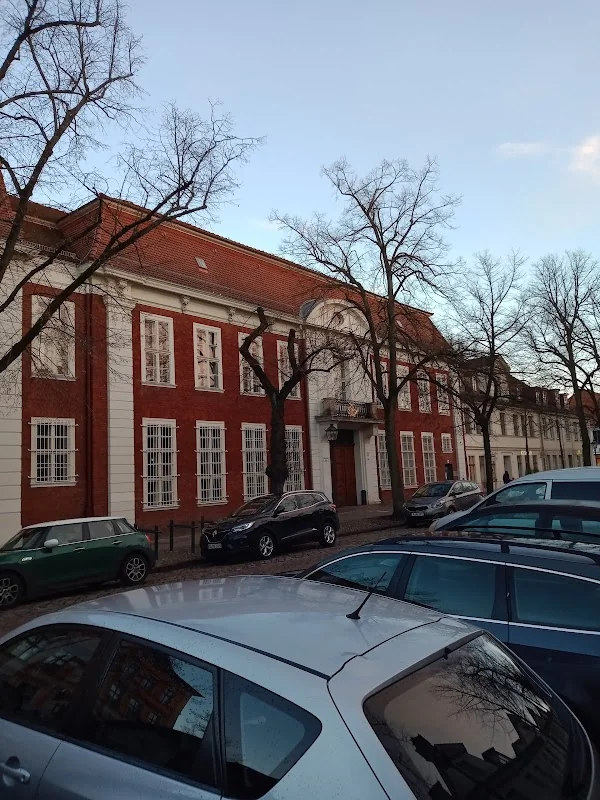
Potsdam
Lindenstraße 54, 14467 Potsdam, Deutschland
Lindenstraße 54 | Opening Hours & Directions
Those searching for Lindenstraße 54 in Potsdam are often looking for more than just an address; they seek orientation: What kind of place is this, why is it historically significant, how do you get there, and what can visitors expect on-site? These questions are answered by the Lindenstraße Memorial, located in the center of Potsdam in a former court and prison complex, which today serves as a site of remembrance and education. The grounds are closely linked to the political history of the 20th century, but their significance dates back much further. The front building dates back to the 18th century, while the courtyard and prison complex were built in later phases. Entering the area means not just walking through an exhibition but moving through a place where architecture, administration, detention, dictatorship, and democratic renewal intersect. For a visit, opening hours, tours, directions, and parking are particularly important, as the location in the city center is very central, yet it is not a classic site with its own parking or event character. The official foundation describes Lindenstraße 54 as a place for learning and remembrance with exhibitions, guided tours, witness talks, and events. ([potsdam.de](https://www.potsdam.de/de/stiftung-gedenkstaette-lindenstrasse?utm_source=openai))
History and Significance of Lindenstraße 54
The history of Lindenstraße 54 begins long before the site became known as a memorial. According to the official foundation, the front building was constructed between 1734 and 1737 on the orders of King Friedrich Wilhelm I as a Baroque city palace in Dutch style. The building was considered one of the most representative residences in Potsdam, alongside the City Palace, and later became known as the “Great Dutch House.” This early construction history makes it clear that the address was not just any functional building in the city but was early on among the prominent houses in the city center. With the Prussian reforms and the city order of 1808, the site acquired a new political function: From 1809, the first Potsdam city council convened here. In 1820, the city court and prison moved in, and from 1879, the district court was located here. Thus, the current significance of the address arises from the layering of representation, administration, law, and detention over more than two centuries. ([gedenkstaette-lindenstrasse.de](https://www.gedenkstaette-lindenstrasse.de/historischer-ort/?utm_source=openai))
Particularly formative for today’s memorial profile is the site’s handling of the dictatorships of the 20th century. According to the official account, the house served as a prison for politically and racially persecuted individuals during the Nazi era; from 1934, it also housed an hereditary health court. After World War II, the Soviet secret police NKVD used the area as a central prison in the state of Brandenburg and as a site for Soviet military tribunals. From 1952, Lindenstraße 54/55 became the regional remand prison of the Ministry for State Security of the GDR. With the Peaceful Revolution of 1989/90, the site transformed symbolically and practically: People who were politically and socially engaged moved into the complex, and a place of detention became a house of democracy. The foundation emphasizes that the area has been a memorial since 1995. This development explains why Lindenstraße 54 is perceived today not only as a historical address but as a place of political remembrance and democratic education. ([gedenkstaette-lindenstrasse.de](https://www.gedenkstaette-lindenstrasse.de/en/about-us/?utm_source=openai))
Opening Hours, Tours, and Admission
The official visiting hours for the Lindenstraße Memorial are clearly regulated and intentionally kept accessible. The foundation’s visiting page states that it is open from Tuesday to Sunday from 10:00 AM to 6:00 PM; the last admission is at 5:30 PM. For those who prefer to come as part of a guided tour, Saturdays are a good option: Every Saturday at 2:00 PM, a public tour takes place, and no registration is required. This is particularly helpful for spontaneous visits, as it allows for a quick decision without lengthy planning while still providing a professionally guided introduction to the site. This combination of reliable hours and open offerings is important for people coming from search queries like “lindenstraße 54 opening hours” or “lindenstraße 54 tour.” The foundation explicitly understands the area as an open learning place where one can experience history individually or as part of guided tours, witness talks, project days, workshops, and public events. ([gedenkstaette-lindenstrasse.de](https://www.gedenkstaette-lindenstrasse.de/ihr-besuch/?utm_source=openai))
The public tour on Saturday is more than just a simple walk. It provides visitors with an introduction to the complex history of the house and helps to understand the different phases of use: Baroque city palace, city court, prison, site of Nazi persecution, Soviet prison, Stasi detention center, and finally, memorial. For those who are only briefly in Potsdam, this tour offers a compact form of context. The official communication logic of the site is also aimed at not only conveying knowledge but placing the historical experience within a contemporary educational framework. Therefore, the foundation does not merely speak of exhibitions but also of witness talks, project days, and events related to the connected themes. For the search intent around “program,” “tour,” or “public tour,” this is important because it shows: Lindenstraße 54 is not a static museum but an active learning and event venue with regular offerings. ([gedenkstaette-lindenstrasse.de](https://www.gedenkstaette-lindenstrasse.de/ihr-besuch/?utm_source=openai))
Directions by Tram, Bus, and Train
Getting to Lindenstraße 54 is straightforward if you take advantage of its central location in Potsdam’s city center. The official directions page lists “Dortustraße” and “Brandenburger Straße” as stops for local transport. Tram lines 91, 94, and 98 as well as bus lines 605, 614, 692, and 695 serve these stops; additionally, tram lines 92 and 96 reach the Brandenburger Straße stop. According to the foundation, it is about a five to ten-minute walk from both stops to the memorial. This short distance is a clear advantage for visitors coming from search terms like “lindenstraße 54 directions” or “lindenstraße 54 potsdam,” as the destination is located in the city center and can easily be incorporated into a city tour. Those traveling from Berlin can use S7, RE 1, or regional trains RB 21 and RB 22 to Potsdam Hauptbahnhof and transfer to tram or bus from there. ([gedenkstaette-lindenstrasse.de](https://www.gedenkstaette-lindenstrasse.de/ihr-besuch/anfahrt/?utm_source=openai))
The classification of the location also aids in planning: The memorial is located in the city center of Potsdam and can thus be easily integrated into a program with museums, old town walks, or visits to other historical sites. The official city page describes the site as a central place of remembrance in the middle of Potsdam and emphasizes that the historical ensemble today combines exhibition and educational work. Those traveling on foot benefit from the proximity to the stops and the fact that the address is also very precisely located geographically within the city. This is especially relevant for travelers who are not only looking for the building itself but also want to inform themselves about the surroundings, pathways, and connection options. For an SEO strategy, this is an important point: The search intent for an address like Lindenstraße 54 is usually not purely navigational but combines navigation with an interest in history, accessibility, and visitor experience. The memorial provides a clear answer to this because it is located in the city center and is very well connected by public transport. ([potsdam.de](https://www.potsdam.de/de/stiftung-gedenkstaette-lindenstrasse?utm_source=openai))
Parking, Tour Buses, and Location in the City Center
Those arriving by car should know that the memorial does not have its own parking spaces. This is important and honest information as it avoids unnecessary detours or false expectations. Instead, the official visiting page mentions nearby options such as the Luisenplatz underground garage and the Hegelallee parking garage, which is located by Karstadt. Both parking options are located in the city center and are thus practical for visiting Lindenstraße 54. For people with limited mobility, public disabled parking spaces nearby are also important: According to the accessibility page, such parking spaces are located on Gutenbergstraße at the corner of Lindenstraße. This shows that the foundation describes the location not only as a historical site but also from a practical visitor perspective. For search queries like “lindenstraße 54 parking” or “lindenstraße 54 potsdam parking,” this information is crucial as it makes the difference between a spontaneous and a frustrating visit. ([gedenkstaette-lindenstrasse.de](https://www.gedenkstaette-lindenstrasse.de/ihr-besuch/anfahrt/?utm_source=openai))
There are also clear regulations for tour buses: They can stop at Bassinplatz. This is particularly relevant for school classes, group trips, or educational excursions arriving in larger vehicles. The proximity of Bassinplatz to the memorial facilitates the transfer on foot and fits well with the character of the site as an educational and memorial place. At the same time, the location in the city center is part of the experience, as Lindenstraße 54 is not an isolated facility outside the city but a historical site amidst urban structure. Those planning to arrive by car or bus can thus decide relatively early whether to explore the city center on foot or focus their visit specifically on the memorial. The official visitor guide for directions also informs that a short walk is sufficient from the public transport stops. This creates an overall picture of good accessibility, limited parking resources, and sensible use of the existing urban infrastructure. ([gedenkstaette-lindenstrasse.de](https://www.gedenkstaette-lindenstrasse.de/ihr-besuch/anfahrt/?utm_source=openai))
Exhibitions, Witness Talks, and Educational Offers
The Lindenstraße Memorial is not only a place of remembrance but explicitly also a place of education. The foundation describes itself as an open learning place and offers exhibitions on all phases of the house's history. This is important because the historical site is not reduced to a single era. Instead, the different functions of the building are made visible: the Baroque city palace, its use as a court and prison, the persecution during the Nazi era, the Soviet post-war period, Stasi detention, and the democratic reinterpretation after 1989/90. This creates a multifaceted narrative for visitors, in which architecture and political history are closely intertwined. Particularly in the SEO context, this covers the search intent behind terms like “history,” “exhibition,” or “lindenstraße memorial” very well, as the site is meant to be not only visited but understood. ([potsdam.de](https://www.potsdam.de/de/stiftung-gedenkstaette-lindenstrasse?utm_source=openai))
According to the official page, the educational work includes guided tours, witness talks, project days, workshops, and public events. This mix makes Lindenstraße 54 particularly attractive for schools, groups, and historically interested individual visitors. The foundation also refers to inclusive and barrier-free offerings, a media station in the entrance area, and an audio guide in easy language. This makes it clear that remembrance is not only archived here but also conveyed. In Potsdam, the area is therefore more than a museum: it is a place where historical experience and democratic present are related. The state capital also regards the memorial as an important site of remembrance and education and highlights the exhibition history in the former court and prison complex. So, for those looking for an informative, emotionally relatable, and didactically clear location, Lindenstraße 54 is a place that does not treat the past abstractly but makes it tangible and experienceable on-site. ([gedenkstaette-lindenstrasse.de](https://www.gedenkstaette-lindenstrasse.de/ihr-besuch/?utm_source=openai))
Accessibility and Practical Tips for Visiting
The accessibility of the memorial is an important topic because the historical building complex naturally has structural limitations. The official accessibility page describes the situation openly: Access to the courtyard is only partially wheelchair accessible due to cobblestones, and many areas of the permanent exhibition can only be reached via stairs and narrow corridors. This transparency is helpful for visit planning as it prevents false expectations. At the same time, the foundation shows that it reduces barriers wherever possible. In the event hall on the ground floor of the front building, there is a barrier-free access via ramps, and there is a barrier-free restroom in the front building that can be accessed via a lift. This is relevant for people with mobility restrictions, for groups with mixed needs, and for families with practical planning requirements. ([gedenkstaette-lindenstrasse.de](https://www.gedenkstaette-lindenstrasse.de/barrierefreiheit/?utm_source=openai))
Additionally, there are further aids that make the visit more pleasant. In the entrance area, there is an accessible media station through which one can virtually navigate through the memorial and listen to the audio guide. An audio guide in easy language is available at the entrance at any time; mobile seating can be borrowed for the tour. At the same time, the foundation points out that there is no changing room and that the special exhibitions and administration are only accessible via stairs. Therefore, those planning a visit should allow enough time and, if in doubt, inquire in advance by phone or email if special needs exist. For the search intent around “accessibility memorial lindenstraße,” this honest, concrete information is particularly important as it shows: The site is open and strives for accessibility but remains a historical ensemble with structural limitations. This mix of sensitivity and authenticity shapes the visit. ([gedenkstaette-lindenstrasse.de](https://www.gedenkstaette-lindenstrasse.de/barrierefreiheit/?utm_source=openai))
Sources:
- Foundation Memorial Lindenstraße – Historical Site ([gedenkstaette-lindenstrasse.de](https://www.gedenkstaette-lindenstrasse.de/historischer-ort/?utm_source=openai))
- Foundation Memorial Lindenstraße – Your Visit ([gedenkstaette-lindenstrasse.de](https://www.gedenkstaette-lindenstrasse.de/ihr-besuch/?utm_source=openai))
- Foundation Memorial Lindenstraße – Directions ([gedenkstaette-lindenstrasse.de](https://www.gedenkstaette-lindenstrasse.de/ihr-besuch/anfahrt/?utm_source=openai))
- Foundation Memorial Lindenstraße – Accessibility ([gedenkstaette-lindenstrasse.de](https://www.gedenkstaette-lindenstrasse.de/barrierefreiheit/?utm_source=openai))
- State Capital Potsdam – Foundation Memorial Lindenstraße ([potsdam.de](https://www.potsdam.de/de/stiftung-gedenkstaette-lindenstrasse?utm_source=openai))
Show moreShow less
Lindenstraße 54 | Opening Hours & Directions
Those searching for Lindenstraße 54 in Potsdam are often looking for more than just an address; they seek orientation: What kind of place is this, why is it historically significant, how do you get there, and what can visitors expect on-site? These questions are answered by the Lindenstraße Memorial, located in the center of Potsdam in a former court and prison complex, which today serves as a site of remembrance and education. The grounds are closely linked to the political history of the 20th century, but their significance dates back much further. The front building dates back to the 18th century, while the courtyard and prison complex were built in later phases. Entering the area means not just walking through an exhibition but moving through a place where architecture, administration, detention, dictatorship, and democratic renewal intersect. For a visit, opening hours, tours, directions, and parking are particularly important, as the location in the city center is very central, yet it is not a classic site with its own parking or event character. The official foundation describes Lindenstraße 54 as a place for learning and remembrance with exhibitions, guided tours, witness talks, and events. ([potsdam.de](https://www.potsdam.de/de/stiftung-gedenkstaette-lindenstrasse?utm_source=openai))
History and Significance of Lindenstraße 54
The history of Lindenstraße 54 begins long before the site became known as a memorial. According to the official foundation, the front building was constructed between 1734 and 1737 on the orders of King Friedrich Wilhelm I as a Baroque city palace in Dutch style. The building was considered one of the most representative residences in Potsdam, alongside the City Palace, and later became known as the “Great Dutch House.” This early construction history makes it clear that the address was not just any functional building in the city but was early on among the prominent houses in the city center. With the Prussian reforms and the city order of 1808, the site acquired a new political function: From 1809, the first Potsdam city council convened here. In 1820, the city court and prison moved in, and from 1879, the district court was located here. Thus, the current significance of the address arises from the layering of representation, administration, law, and detention over more than two centuries. ([gedenkstaette-lindenstrasse.de](https://www.gedenkstaette-lindenstrasse.de/historischer-ort/?utm_source=openai))
Particularly formative for today’s memorial profile is the site’s handling of the dictatorships of the 20th century. According to the official account, the house served as a prison for politically and racially persecuted individuals during the Nazi era; from 1934, it also housed an hereditary health court. After World War II, the Soviet secret police NKVD used the area as a central prison in the state of Brandenburg and as a site for Soviet military tribunals. From 1952, Lindenstraße 54/55 became the regional remand prison of the Ministry for State Security of the GDR. With the Peaceful Revolution of 1989/90, the site transformed symbolically and practically: People who were politically and socially engaged moved into the complex, and a place of detention became a house of democracy. The foundation emphasizes that the area has been a memorial since 1995. This development explains why Lindenstraße 54 is perceived today not only as a historical address but as a place of political remembrance and democratic education. ([gedenkstaette-lindenstrasse.de](https://www.gedenkstaette-lindenstrasse.de/en/about-us/?utm_source=openai))
Opening Hours, Tours, and Admission
The official visiting hours for the Lindenstraße Memorial are clearly regulated and intentionally kept accessible. The foundation’s visiting page states that it is open from Tuesday to Sunday from 10:00 AM to 6:00 PM; the last admission is at 5:30 PM. For those who prefer to come as part of a guided tour, Saturdays are a good option: Every Saturday at 2:00 PM, a public tour takes place, and no registration is required. This is particularly helpful for spontaneous visits, as it allows for a quick decision without lengthy planning while still providing a professionally guided introduction to the site. This combination of reliable hours and open offerings is important for people coming from search queries like “lindenstraße 54 opening hours” or “lindenstraße 54 tour.” The foundation explicitly understands the area as an open learning place where one can experience history individually or as part of guided tours, witness talks, project days, workshops, and public events. ([gedenkstaette-lindenstrasse.de](https://www.gedenkstaette-lindenstrasse.de/ihr-besuch/?utm_source=openai))
The public tour on Saturday is more than just a simple walk. It provides visitors with an introduction to the complex history of the house and helps to understand the different phases of use: Baroque city palace, city court, prison, site of Nazi persecution, Soviet prison, Stasi detention center, and finally, memorial. For those who are only briefly in Potsdam, this tour offers a compact form of context. The official communication logic of the site is also aimed at not only conveying knowledge but placing the historical experience within a contemporary educational framework. Therefore, the foundation does not merely speak of exhibitions but also of witness talks, project days, and events related to the connected themes. For the search intent around “program,” “tour,” or “public tour,” this is important because it shows: Lindenstraße 54 is not a static museum but an active learning and event venue with regular offerings. ([gedenkstaette-lindenstrasse.de](https://www.gedenkstaette-lindenstrasse.de/ihr-besuch/?utm_source=openai))
Directions by Tram, Bus, and Train
Getting to Lindenstraße 54 is straightforward if you take advantage of its central location in Potsdam’s city center. The official directions page lists “Dortustraße” and “Brandenburger Straße” as stops for local transport. Tram lines 91, 94, and 98 as well as bus lines 605, 614, 692, and 695 serve these stops; additionally, tram lines 92 and 96 reach the Brandenburger Straße stop. According to the foundation, it is about a five to ten-minute walk from both stops to the memorial. This short distance is a clear advantage for visitors coming from search terms like “lindenstraße 54 directions” or “lindenstraße 54 potsdam,” as the destination is located in the city center and can easily be incorporated into a city tour. Those traveling from Berlin can use S7, RE 1, or regional trains RB 21 and RB 22 to Potsdam Hauptbahnhof and transfer to tram or bus from there. ([gedenkstaette-lindenstrasse.de](https://www.gedenkstaette-lindenstrasse.de/ihr-besuch/anfahrt/?utm_source=openai))
The classification of the location also aids in planning: The memorial is located in the city center of Potsdam and can thus be easily integrated into a program with museums, old town walks, or visits to other historical sites. The official city page describes the site as a central place of remembrance in the middle of Potsdam and emphasizes that the historical ensemble today combines exhibition and educational work. Those traveling on foot benefit from the proximity to the stops and the fact that the address is also very precisely located geographically within the city. This is especially relevant for travelers who are not only looking for the building itself but also want to inform themselves about the surroundings, pathways, and connection options. For an SEO strategy, this is an important point: The search intent for an address like Lindenstraße 54 is usually not purely navigational but combines navigation with an interest in history, accessibility, and visitor experience. The memorial provides a clear answer to this because it is located in the city center and is very well connected by public transport. ([potsdam.de](https://www.potsdam.de/de/stiftung-gedenkstaette-lindenstrasse?utm_source=openai))
Parking, Tour Buses, and Location in the City Center
Those arriving by car should know that the memorial does not have its own parking spaces. This is important and honest information as it avoids unnecessary detours or false expectations. Instead, the official visiting page mentions nearby options such as the Luisenplatz underground garage and the Hegelallee parking garage, which is located by Karstadt. Both parking options are located in the city center and are thus practical for visiting Lindenstraße 54. For people with limited mobility, public disabled parking spaces nearby are also important: According to the accessibility page, such parking spaces are located on Gutenbergstraße at the corner of Lindenstraße. This shows that the foundation describes the location not only as a historical site but also from a practical visitor perspective. For search queries like “lindenstraße 54 parking” or “lindenstraße 54 potsdam parking,” this information is crucial as it makes the difference between a spontaneous and a frustrating visit. ([gedenkstaette-lindenstrasse.de](https://www.gedenkstaette-lindenstrasse.de/ihr-besuch/anfahrt/?utm_source=openai))
There are also clear regulations for tour buses: They can stop at Bassinplatz. This is particularly relevant for school classes, group trips, or educational excursions arriving in larger vehicles. The proximity of Bassinplatz to the memorial facilitates the transfer on foot and fits well with the character of the site as an educational and memorial place. At the same time, the location in the city center is part of the experience, as Lindenstraße 54 is not an isolated facility outside the city but a historical site amidst urban structure. Those planning to arrive by car or bus can thus decide relatively early whether to explore the city center on foot or focus their visit specifically on the memorial. The official visitor guide for directions also informs that a short walk is sufficient from the public transport stops. This creates an overall picture of good accessibility, limited parking resources, and sensible use of the existing urban infrastructure. ([gedenkstaette-lindenstrasse.de](https://www.gedenkstaette-lindenstrasse.de/ihr-besuch/anfahrt/?utm_source=openai))
Exhibitions, Witness Talks, and Educational Offers
The Lindenstraße Memorial is not only a place of remembrance but explicitly also a place of education. The foundation describes itself as an open learning place and offers exhibitions on all phases of the house's history. This is important because the historical site is not reduced to a single era. Instead, the different functions of the building are made visible: the Baroque city palace, its use as a court and prison, the persecution during the Nazi era, the Soviet post-war period, Stasi detention, and the democratic reinterpretation after 1989/90. This creates a multifaceted narrative for visitors, in which architecture and political history are closely intertwined. Particularly in the SEO context, this covers the search intent behind terms like “history,” “exhibition,” or “lindenstraße memorial” very well, as the site is meant to be not only visited but understood. ([potsdam.de](https://www.potsdam.de/de/stiftung-gedenkstaette-lindenstrasse?utm_source=openai))
According to the official page, the educational work includes guided tours, witness talks, project days, workshops, and public events. This mix makes Lindenstraße 54 particularly attractive for schools, groups, and historically interested individual visitors. The foundation also refers to inclusive and barrier-free offerings, a media station in the entrance area, and an audio guide in easy language. This makes it clear that remembrance is not only archived here but also conveyed. In Potsdam, the area is therefore more than a museum: it is a place where historical experience and democratic present are related. The state capital also regards the memorial as an important site of remembrance and education and highlights the exhibition history in the former court and prison complex. So, for those looking for an informative, emotionally relatable, and didactically clear location, Lindenstraße 54 is a place that does not treat the past abstractly but makes it tangible and experienceable on-site. ([gedenkstaette-lindenstrasse.de](https://www.gedenkstaette-lindenstrasse.de/ihr-besuch/?utm_source=openai))
Accessibility and Practical Tips for Visiting
The accessibility of the memorial is an important topic because the historical building complex naturally has structural limitations. The official accessibility page describes the situation openly: Access to the courtyard is only partially wheelchair accessible due to cobblestones, and many areas of the permanent exhibition can only be reached via stairs and narrow corridors. This transparency is helpful for visit planning as it prevents false expectations. At the same time, the foundation shows that it reduces barriers wherever possible. In the event hall on the ground floor of the front building, there is a barrier-free access via ramps, and there is a barrier-free restroom in the front building that can be accessed via a lift. This is relevant for people with mobility restrictions, for groups with mixed needs, and for families with practical planning requirements. ([gedenkstaette-lindenstrasse.de](https://www.gedenkstaette-lindenstrasse.de/barrierefreiheit/?utm_source=openai))
Additionally, there are further aids that make the visit more pleasant. In the entrance area, there is an accessible media station through which one can virtually navigate through the memorial and listen to the audio guide. An audio guide in easy language is available at the entrance at any time; mobile seating can be borrowed for the tour. At the same time, the foundation points out that there is no changing room and that the special exhibitions and administration are only accessible via stairs. Therefore, those planning a visit should allow enough time and, if in doubt, inquire in advance by phone or email if special needs exist. For the search intent around “accessibility memorial lindenstraße,” this honest, concrete information is particularly important as it shows: The site is open and strives for accessibility but remains a historical ensemble with structural limitations. This mix of sensitivity and authenticity shapes the visit. ([gedenkstaette-lindenstrasse.de](https://www.gedenkstaette-lindenstrasse.de/barrierefreiheit/?utm_source=openai))
Sources:
- Foundation Memorial Lindenstraße – Historical Site ([gedenkstaette-lindenstrasse.de](https://www.gedenkstaette-lindenstrasse.de/historischer-ort/?utm_source=openai))
- Foundation Memorial Lindenstraße – Your Visit ([gedenkstaette-lindenstrasse.de](https://www.gedenkstaette-lindenstrasse.de/ihr-besuch/?utm_source=openai))
- Foundation Memorial Lindenstraße – Directions ([gedenkstaette-lindenstrasse.de](https://www.gedenkstaette-lindenstrasse.de/ihr-besuch/anfahrt/?utm_source=openai))
- Foundation Memorial Lindenstraße – Accessibility ([gedenkstaette-lindenstrasse.de](https://www.gedenkstaette-lindenstrasse.de/barrierefreiheit/?utm_source=openai))
- State Capital Potsdam – Foundation Memorial Lindenstraße ([potsdam.de](https://www.potsdam.de/de/stiftung-gedenkstaette-lindenstrasse?utm_source=openai))
Lindenstraße 54 | Opening Hours & Directions
Those searching for Lindenstraße 54 in Potsdam are often looking for more than just an address; they seek orientation: What kind of place is this, why is it historically significant, how do you get there, and what can visitors expect on-site? These questions are answered by the Lindenstraße Memorial, located in the center of Potsdam in a former court and prison complex, which today serves as a site of remembrance and education. The grounds are closely linked to the political history of the 20th century, but their significance dates back much further. The front building dates back to the 18th century, while the courtyard and prison complex were built in later phases. Entering the area means not just walking through an exhibition but moving through a place where architecture, administration, detention, dictatorship, and democratic renewal intersect. For a visit, opening hours, tours, directions, and parking are particularly important, as the location in the city center is very central, yet it is not a classic site with its own parking or event character. The official foundation describes Lindenstraße 54 as a place for learning and remembrance with exhibitions, guided tours, witness talks, and events. ([potsdam.de](https://www.potsdam.de/de/stiftung-gedenkstaette-lindenstrasse?utm_source=openai))
History and Significance of Lindenstraße 54
The history of Lindenstraße 54 begins long before the site became known as a memorial. According to the official foundation, the front building was constructed between 1734 and 1737 on the orders of King Friedrich Wilhelm I as a Baroque city palace in Dutch style. The building was considered one of the most representative residences in Potsdam, alongside the City Palace, and later became known as the “Great Dutch House.” This early construction history makes it clear that the address was not just any functional building in the city but was early on among the prominent houses in the city center. With the Prussian reforms and the city order of 1808, the site acquired a new political function: From 1809, the first Potsdam city council convened here. In 1820, the city court and prison moved in, and from 1879, the district court was located here. Thus, the current significance of the address arises from the layering of representation, administration, law, and detention over more than two centuries. ([gedenkstaette-lindenstrasse.de](https://www.gedenkstaette-lindenstrasse.de/historischer-ort/?utm_source=openai))
Particularly formative for today’s memorial profile is the site’s handling of the dictatorships of the 20th century. According to the official account, the house served as a prison for politically and racially persecuted individuals during the Nazi era; from 1934, it also housed an hereditary health court. After World War II, the Soviet secret police NKVD used the area as a central prison in the state of Brandenburg and as a site for Soviet military tribunals. From 1952, Lindenstraße 54/55 became the regional remand prison of the Ministry for State Security of the GDR. With the Peaceful Revolution of 1989/90, the site transformed symbolically and practically: People who were politically and socially engaged moved into the complex, and a place of detention became a house of democracy. The foundation emphasizes that the area has been a memorial since 1995. This development explains why Lindenstraße 54 is perceived today not only as a historical address but as a place of political remembrance and democratic education. ([gedenkstaette-lindenstrasse.de](https://www.gedenkstaette-lindenstrasse.de/en/about-us/?utm_source=openai))
Opening Hours, Tours, and Admission
The official visiting hours for the Lindenstraße Memorial are clearly regulated and intentionally kept accessible. The foundation’s visiting page states that it is open from Tuesday to Sunday from 10:00 AM to 6:00 PM; the last admission is at 5:30 PM. For those who prefer to come as part of a guided tour, Saturdays are a good option: Every Saturday at 2:00 PM, a public tour takes place, and no registration is required. This is particularly helpful for spontaneous visits, as it allows for a quick decision without lengthy planning while still providing a professionally guided introduction to the site. This combination of reliable hours and open offerings is important for people coming from search queries like “lindenstraße 54 opening hours” or “lindenstraße 54 tour.” The foundation explicitly understands the area as an open learning place where one can experience history individually or as part of guided tours, witness talks, project days, workshops, and public events. ([gedenkstaette-lindenstrasse.de](https://www.gedenkstaette-lindenstrasse.de/ihr-besuch/?utm_source=openai))
The public tour on Saturday is more than just a simple walk. It provides visitors with an introduction to the complex history of the house and helps to understand the different phases of use: Baroque city palace, city court, prison, site of Nazi persecution, Soviet prison, Stasi detention center, and finally, memorial. For those who are only briefly in Potsdam, this tour offers a compact form of context. The official communication logic of the site is also aimed at not only conveying knowledge but placing the historical experience within a contemporary educational framework. Therefore, the foundation does not merely speak of exhibitions but also of witness talks, project days, and events related to the connected themes. For the search intent around “program,” “tour,” or “public tour,” this is important because it shows: Lindenstraße 54 is not a static museum but an active learning and event venue with regular offerings. ([gedenkstaette-lindenstrasse.de](https://www.gedenkstaette-lindenstrasse.de/ihr-besuch/?utm_source=openai))
Directions by Tram, Bus, and Train
Getting to Lindenstraße 54 is straightforward if you take advantage of its central location in Potsdam’s city center. The official directions page lists “Dortustraße” and “Brandenburger Straße” as stops for local transport. Tram lines 91, 94, and 98 as well as bus lines 605, 614, 692, and 695 serve these stops; additionally, tram lines 92 and 96 reach the Brandenburger Straße stop. According to the foundation, it is about a five to ten-minute walk from both stops to the memorial. This short distance is a clear advantage for visitors coming from search terms like “lindenstraße 54 directions” or “lindenstraße 54 potsdam,” as the destination is located in the city center and can easily be incorporated into a city tour. Those traveling from Berlin can use S7, RE 1, or regional trains RB 21 and RB 22 to Potsdam Hauptbahnhof and transfer to tram or bus from there. ([gedenkstaette-lindenstrasse.de](https://www.gedenkstaette-lindenstrasse.de/ihr-besuch/anfahrt/?utm_source=openai))
The classification of the location also aids in planning: The memorial is located in the city center of Potsdam and can thus be easily integrated into a program with museums, old town walks, or visits to other historical sites. The official city page describes the site as a central place of remembrance in the middle of Potsdam and emphasizes that the historical ensemble today combines exhibition and educational work. Those traveling on foot benefit from the proximity to the stops and the fact that the address is also very precisely located geographically within the city. This is especially relevant for travelers who are not only looking for the building itself but also want to inform themselves about the surroundings, pathways, and connection options. For an SEO strategy, this is an important point: The search intent for an address like Lindenstraße 54 is usually not purely navigational but combines navigation with an interest in history, accessibility, and visitor experience. The memorial provides a clear answer to this because it is located in the city center and is very well connected by public transport. ([potsdam.de](https://www.potsdam.de/de/stiftung-gedenkstaette-lindenstrasse?utm_source=openai))
Parking, Tour Buses, and Location in the City Center
Those arriving by car should know that the memorial does not have its own parking spaces. This is important and honest information as it avoids unnecessary detours or false expectations. Instead, the official visiting page mentions nearby options such as the Luisenplatz underground garage and the Hegelallee parking garage, which is located by Karstadt. Both parking options are located in the city center and are thus practical for visiting Lindenstraße 54. For people with limited mobility, public disabled parking spaces nearby are also important: According to the accessibility page, such parking spaces are located on Gutenbergstraße at the corner of Lindenstraße. This shows that the foundation describes the location not only as a historical site but also from a practical visitor perspective. For search queries like “lindenstraße 54 parking” or “lindenstraße 54 potsdam parking,” this information is crucial as it makes the difference between a spontaneous and a frustrating visit. ([gedenkstaette-lindenstrasse.de](https://www.gedenkstaette-lindenstrasse.de/ihr-besuch/anfahrt/?utm_source=openai))
There are also clear regulations for tour buses: They can stop at Bassinplatz. This is particularly relevant for school classes, group trips, or educational excursions arriving in larger vehicles. The proximity of Bassinplatz to the memorial facilitates the transfer on foot and fits well with the character of the site as an educational and memorial place. At the same time, the location in the city center is part of the experience, as Lindenstraße 54 is not an isolated facility outside the city but a historical site amidst urban structure. Those planning to arrive by car or bus can thus decide relatively early whether to explore the city center on foot or focus their visit specifically on the memorial. The official visitor guide for directions also informs that a short walk is sufficient from the public transport stops. This creates an overall picture of good accessibility, limited parking resources, and sensible use of the existing urban infrastructure. ([gedenkstaette-lindenstrasse.de](https://www.gedenkstaette-lindenstrasse.de/ihr-besuch/anfahrt/?utm_source=openai))
Exhibitions, Witness Talks, and Educational Offers
The Lindenstraße Memorial is not only a place of remembrance but explicitly also a place of education. The foundation describes itself as an open learning place and offers exhibitions on all phases of the house's history. This is important because the historical site is not reduced to a single era. Instead, the different functions of the building are made visible: the Baroque city palace, its use as a court and prison, the persecution during the Nazi era, the Soviet post-war period, Stasi detention, and the democratic reinterpretation after 1989/90. This creates a multifaceted narrative for visitors, in which architecture and political history are closely intertwined. Particularly in the SEO context, this covers the search intent behind terms like “history,” “exhibition,” or “lindenstraße memorial” very well, as the site is meant to be not only visited but understood. ([potsdam.de](https://www.potsdam.de/de/stiftung-gedenkstaette-lindenstrasse?utm_source=openai))
According to the official page, the educational work includes guided tours, witness talks, project days, workshops, and public events. This mix makes Lindenstraße 54 particularly attractive for schools, groups, and historically interested individual visitors. The foundation also refers to inclusive and barrier-free offerings, a media station in the entrance area, and an audio guide in easy language. This makes it clear that remembrance is not only archived here but also conveyed. In Potsdam, the area is therefore more than a museum: it is a place where historical experience and democratic present are related. The state capital also regards the memorial as an important site of remembrance and education and highlights the exhibition history in the former court and prison complex. So, for those looking for an informative, emotionally relatable, and didactically clear location, Lindenstraße 54 is a place that does not treat the past abstractly but makes it tangible and experienceable on-site. ([gedenkstaette-lindenstrasse.de](https://www.gedenkstaette-lindenstrasse.de/ihr-besuch/?utm_source=openai))
Accessibility and Practical Tips for Visiting
The accessibility of the memorial is an important topic because the historical building complex naturally has structural limitations. The official accessibility page describes the situation openly: Access to the courtyard is only partially wheelchair accessible due to cobblestones, and many areas of the permanent exhibition can only be reached via stairs and narrow corridors. This transparency is helpful for visit planning as it prevents false expectations. At the same time, the foundation shows that it reduces barriers wherever possible. In the event hall on the ground floor of the front building, there is a barrier-free access via ramps, and there is a barrier-free restroom in the front building that can be accessed via a lift. This is relevant for people with mobility restrictions, for groups with mixed needs, and for families with practical planning requirements. ([gedenkstaette-lindenstrasse.de](https://www.gedenkstaette-lindenstrasse.de/barrierefreiheit/?utm_source=openai))
Additionally, there are further aids that make the visit more pleasant. In the entrance area, there is an accessible media station through which one can virtually navigate through the memorial and listen to the audio guide. An audio guide in easy language is available at the entrance at any time; mobile seating can be borrowed for the tour. At the same time, the foundation points out that there is no changing room and that the special exhibitions and administration are only accessible via stairs. Therefore, those planning a visit should allow enough time and, if in doubt, inquire in advance by phone or email if special needs exist. For the search intent around “accessibility memorial lindenstraße,” this honest, concrete information is particularly important as it shows: The site is open and strives for accessibility but remains a historical ensemble with structural limitations. This mix of sensitivity and authenticity shapes the visit. ([gedenkstaette-lindenstrasse.de](https://www.gedenkstaette-lindenstrasse.de/barrierefreiheit/?utm_source=openai))
Sources:
- Foundation Memorial Lindenstraße – Historical Site ([gedenkstaette-lindenstrasse.de](https://www.gedenkstaette-lindenstrasse.de/historischer-ort/?utm_source=openai))
- Foundation Memorial Lindenstraße – Your Visit ([gedenkstaette-lindenstrasse.de](https://www.gedenkstaette-lindenstrasse.de/ihr-besuch/?utm_source=openai))
- Foundation Memorial Lindenstraße – Directions ([gedenkstaette-lindenstrasse.de](https://www.gedenkstaette-lindenstrasse.de/ihr-besuch/anfahrt/?utm_source=openai))
- Foundation Memorial Lindenstraße – Accessibility ([gedenkstaette-lindenstrasse.de](https://www.gedenkstaette-lindenstrasse.de/barrierefreiheit/?utm_source=openai))
- State Capital Potsdam – Foundation Memorial Lindenstraße ([potsdam.de](https://www.potsdam.de/de/stiftung-gedenkstaette-lindenstrasse?utm_source=openai))
Upcoming Events
No events found
Frequently Asked Questions
Reviews
No reviews found