
Potsdam
Am Raubfang 7, 14469 Potsdam, Deutschland
Karl Foerster House and Garden | Photos & Tours
The Karl Foerster House and Garden in Potsdam-Bornim is much more than a beautiful private garden. It is a historic ensemble of a residential house, garden spaces, breeding history, and lived garden culture, shaped by Karl Foerster over decades. The famous perennial breeder and garden poet lived and worked here for nearly 60 years after relocating his nursery from Berlin to Potsdam-Bornim in 1910. Today, the site is considered one of the most well-known garden monuments in Germany, the garden is open year-round, admission is free, and the visit can be well planned with a calm, conscious arrival, as parking is not available directly at the monument. Those looking for photos, opening hours, tours, or background information will find a facility that uniquely combines architecture, topography, and plant art. ([denkmalschutz.de](https://www.denkmalschutz.de/denkmal/wohnhaus-und-garten-karl-foerster.html))
Photos, Perspectives, and First Impressions at the Karl Foerster House and Garden
Anyone searching for photos of the Karl Foerster House and Garden quickly realizes why this place is so impressive. The residential house stands elevated above the famous sunken garden, and this spatial layering gives the ensemble its strong silhouette. The German Foundation for Monument Protection describes the house with its projections and recesses, the columned loggia, the winter garden, and the diverse roof surfaces as architecturally striking, while emphasizing that the house and garden form a harmonious unit. This is important for the first impression: It is not about an arbitrary garden with a house, but about a consciously composed overall facility where each element responds to the others. Therefore, those entering experience not just a monument but a sequence of perspectives, heights, and transitions that make the place particularly appealing for visual impressions. ([denkmalschutz.de](https://www.denkmalschutz.de/denkmale-erhalten/stiftungseigene-denkmale/wohnhaus-und-garten-karl-foerster/haus.html))
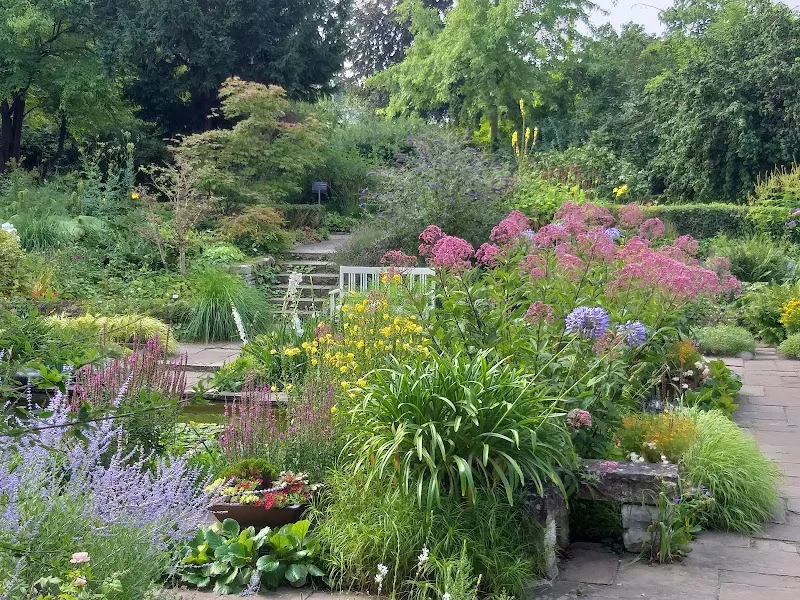
The actual visual power arises from the gardening order. Foerster combined perennials with bulbs, grasses, and woody plants so that visually appealing areas emerge in every season. The original layout was divided into six thematic areas: sunken garden, spring path, natural garden, autumn bed, rock garden, and experimental garden. Thus, the garden is not a static display but a living sequence of impressions that change with light, weather, and season. For this reason, the place is interesting for people who are not only looking for information but want to experience atmospheres, forms, and plant images. The garden tells its story through colors, levels, and transitions, making visible how consistently Karl Foerster translated design principles into a walkable composition. ([potsdam.de](https://www.potsdam.de/de/foerster-garten-potsdams-norden))
The district of Bornim also contributes to this impression. Karl Foerster lived and worked in Potsdam-Bornim, and the city describes the place as part of a garden landscape that is still strongly associated with his name. This is important for visitors because the impression of the ensemble is not limited to the property itself: The location in the north of Potsdam, the proximity to the city's garden culture, and the quiet surroundings give the visit a special character. Therefore, those looking for images or impressions for planning should not only pay attention to individual flower motifs but to the entire space: the transition from the path into the garden, the view of the residential house, the depth layering of the sunken garden, and the calm, very personal atmosphere of a place that has remained, at its core, a private garden realm. ([potsdam.de](https://www.potsdam.de/de/foerster-garten-potsdams-norden))
History of the Residential House and the Foerster Family
The residential house was built in 1910/11 simultaneously with the garden layout. The German Foundation for Monument Protection describes it as a building in typical country house architecture, created after the model of Hermann Muthesius and executed by the Swiss architect Albert Froelich. For Karl Foerster, the building was not an outbuilding but part of a life plan: From the property entrance, the house rises above the sunken garden, and he lived and worked here for almost 60 years. This temporal dimension already shows why the place must be understood not only as a garden but as a cultural biographical monument. The house represents the connection of living, working, writing, and gardening that has shaped Foerster's life path. ([denkmalschutz.de](https://www.denkmalschutz.de/denkmale-erhalten/stiftungseigene-denkmale/wohnhaus-und-garten-karl-foerster/haus.html))
Inside, the family character is still clearly palpable today. The foundation emphasizes that numerous furnishings have been preserved on the ground floor and that particularly the former study and the specialized library of the perennial breeder provide insights into the family's daily life. The interior design also follows a clear concept: individual floor plans, a thoughtful color scheme, and the close connection between living and garden worlds. The household included not only Karl Foerster but also his father Wilhelm Julius Foerster, his sister Martha, later his wife Eva, and from 1931 their daughter Marianne. This family dimension is important because it explains why the place does not feel like a classic museum. Rather, it conveys the life of a family whose private living space has grown into one of the most significant addresses in German garden culture. ([denkmalschutz.de](https://www.denkmalschutz.de/denkmale-erhalten/stiftungseigene-denkmale/wohnhaus-und-garten-karl-foerster/haus.html))
Sunken Garden, Garden Spaces, and Botanical Signature
With around 5,000 square meters, the Karl Foerster Garden is not a huge landscape park but a precisely composed garden realm. The official description names six garden spaces: spring path, sunken garden, natural garden or later private garden, rock garden, autumn bed, and experimental garden. This division follows the garden design of the early 20th century and makes the tour exciting because each area has different heights, transitions, and flowering aspects. Particularly important is the sunken garden, which is considered the centerpiece of the facility and is counted among the first of its kind in Germany. It was created on a former arable land and still shapes the image of the entire ensemble today. The small depression, the clear edges, and the framing by paths and walls make this space one of the strongest motifs of the garden. ([denkmalschutz.de](https://www.denkmalschutz.de/denkmale-erhalten/stiftungseigene-denkmale/wohnhaus-und-garten-karl-foerster/garten.html))
Foerster's botanical signature was based on diversity and structure. He focused on hardy perennials, grasses, ferns, bulbs, and woody plants, aiming not only to create a beautiful summer image but a garden that remains lively throughout the year. The city of Potsdam emphasizes that Foerster wanted to demonstrate the diversity of perennials and woody plants, viewing each plant as an individual being. The German Foundation for Monument Protection also reports that Foerster bred hundreds of plants, including nearly 70 delphiniums. This explains why the garden is both a vivid teaching example and an aesthetic pleasure: Those who visit do not merely see plant areas but a very consciously thought-out order of forms, colors, heights, and flowering phases. This connection of design and collection makes the place so unique. ([potsdam.de](https://www.potsdam.de/de/foerster-garten-potsdams-norden))
Additionally, there is the history of multiple redesigns. In the 1930s, Hermann Mattern created the terracing of the sunken garden with dry stone walls, a further revision took place in 1960/61 by Hermann Göritz, and in 1983 Göritz, together with Peter Herling, redesigned individual areas. Since 1981, the garden has been under monument protection as the Karl Foerster Memorial, and it was reconstructed as a garden monument for the Federal Garden Show 2001. This development shows that the facility has not remained in a single historical moment but has been professionally maintained, reconstructed, and adapted to preservation requirements over decades. For visitors, this is particularly exciting because both Foerster's ideas and later monument preservation can be read in the garden. The place thus tells not only of a person but also of the long preservation of a garden cultural icon. ([potsdam.de](https://www.potsdam.de/de/foerster-garten-potsdams-norden))
Opening Hours, Admission, and Tours
The visitor information is clear and practical: The garden is open year-round, from October to March daily from 9 AM to 5 PM and from April to September daily from 9 AM to 9 PM. It is closed on Mondays. Admission is free, and donations are welcome. At the same time, the foundation points out that the monument has no parking spaces and that the garden is largely accessible and experienceable without steps. Important for planning is also that the house is not publicly accessible according to current visitor information and can only be visited as part of house tours, which are expected to be offered from 2027. Therefore, those preparing a visit should distinguish between the freely accessible garden and the separately protected residential house. ([denkmalschutz.de](https://www.denkmalschutz.de/denkmale-erhalten/stiftungseigene-denkmale/wohnhaus-und-garten-karl-foerster/ihr-besuch.html))
For a deeper understanding, a tour is worthwhile. The German Foundation for Monument Protection offers various garden tours, especially from April to October, and the Potsdam information page additionally mentions monthly tours every first Sunday. Individual tours for groups can be booked. They last one hour, cost 120 euros per tour, are limited to a maximum of 20 people, and are offered in German or English. The meeting point is at the garden gate, Am Raubfang 7. These details are crucial for many inquiries as they show how the visit is practically organized. Those who want to not only see the garden but understand its history and structure are much better advised with a tour than with a mere walk. ([denkmalschutz.de](https://www.denkmalschutz.de/denkmale-erhalten/stiftungseigene-denkmale/wohnhaus-und-garten-karl-foerster/ihr-besuch.html))
Access, Parking, and Accessibility
Because there are no direct parking spaces, the foundation expressly recommends arriving by public transport. The bus lines 614, 692, 698, and N17 to the stop Amundsenstr./Potsdamer Str. are mentioned. An event by the state capital Potsdam also mentions the connection of bus lines 692 and 698 from Potsdam Central Station. For visitors, this is a significant practical advantage, as the route remains well-planned and the visit can be organized without searching for parking. The address is Am Raubfang 7, 14469 Potsdam. Therefore, those arriving by car should not expect a visitor parking space but consciously incorporate public transport into their daily planning. ([denkmalschutz.de](https://www.denkmalschutz.de/fileadmin/media/Bilder/Presse/PDF-Dateien/240229_DSD_Programm_Foerster_2024_RZ_web.pdf))
It is positive that the garden is largely accessible and experienceable without steps. This makes it relatively well accessible for guests with mobility impairments, even though it is a historic monument. At the same time, visitor information does not mention any gastronomy on site and only temporary sanitary facilities. This is important because it sets the right expectations: Karl Foerster House and Garden is not a leisure park with full service but a cultural monument whose strength lies in authenticity, atmosphere, and gardening quality. For the visit, this means: comfortable shoes, some time, and realistic planning with public transport are the best foundation to experience the place calmly and without haste. ([denkmalschutz.de](https://www.denkmalschutz.de/denkmale-erhalten/stiftungseigene-denkmale/wohnhaus-und-garten-karl-foerster/ihr-besuch.html))
Monument Protection, Maintenance, and Importance Today
The current significance of the ensemble is closely linked to monument protection and civic engagement. The garden has been under monument protection as the Karl Foerster Memorial since 1981 and was reconstructed as a garden monument for the Federal Garden Show 2001. The German Foundation for Monument Protection has been supporting the house and garden since 2004; since 2010, the property has been under the trust of the Marianne Foerster Foundation. Additionally, the monument was expanded in 2018, so today not only the residential house and garden but also the historic overall ensemble with the nursery, forest garden, office and half-timbered storage building, as well as the head gardener's house come into focus. This development shows that this is not just a backdrop but the permanent securing of a cultural site that has grown over generations. ([potsdam.de](https://www.potsdam.de/de/foerster-garten-potsdams-norden))
The maintenance of the place is also part of its history. The foundation reports on volunteer maintenance efforts that have been taking place in the summer since 2009. This keeps the garden not only preserved but actively cared for and experienceable as a living monument. At the same time, the German Foundation for Monument Protection describes Bornim as a mecca of the new garden movement and refers to Foerster's influence on generations of gardening professionals such as Ernst Pagels, Heinz Hagemann, Richard Hansen, Hermann Mattern, or Herta Hammerbacher. The city of Potsdam adds that Foerster's ideas even had an impact in America. Those looking for a place where garden art, family history, and cultural-historical influence connect directly will find a particularly clear example here. This is precisely where the lasting fascination of the Karl Foerster House and Garden lies: it is locally rooted and at the same time significant far beyond Potsdam. ([denkmalschutz.de](https://www.denkmalschutz.de/denkmal/wohnhaus-und-garten-karl-foerster.html))
This also explains why the place is relevant for so many different inquiries. People search for photos because the sunken garden and the residential house provide strong images. Others look for opening hours because the garden is freely accessible, but the house remains protected. Still, others want to book tours to better understand the garden spaces. And those interested in monument protection recognize here a teaching example of how historical garden art, residential architecture, and contemporary maintenance interconnect. The Karl Foerster Garden is therefore not only a destination but a reference point for garden enthusiasts, cultural travelers, and all those who want to get to know Potsdam through its unique garden landscape. ([denkmalschutz.de](https://www.denkmalschutz.de/denkmale-erhalten/stiftungseigene-denkmale/wohnhaus-und-garten-karl-foerster/ihr-besuch.html))
Sources:
- German Foundation for Monument Protection - Residential House and Garden Karl Foerster
- German Foundation for Monument Protection - Your Visit
- German Foundation for Monument Protection - House
- German Foundation for Monument Protection - Garden
- State Capital Potsdam - Foerster Garden in Northern Potsdam
- State Capital Potsdam - Residential House and Garden Karl Foerster
Show moreShow less
Karl Foerster House and Garden | Photos & Tours
The Karl Foerster House and Garden in Potsdam-Bornim is much more than a beautiful private garden. It is a historic ensemble of a residential house, garden spaces, breeding history, and lived garden culture, shaped by Karl Foerster over decades. The famous perennial breeder and garden poet lived and worked here for nearly 60 years after relocating his nursery from Berlin to Potsdam-Bornim in 1910. Today, the site is considered one of the most well-known garden monuments in Germany, the garden is open year-round, admission is free, and the visit can be well planned with a calm, conscious arrival, as parking is not available directly at the monument. Those looking for photos, opening hours, tours, or background information will find a facility that uniquely combines architecture, topography, and plant art. ([denkmalschutz.de](https://www.denkmalschutz.de/denkmal/wohnhaus-und-garten-karl-foerster.html))
Photos, Perspectives, and First Impressions at the Karl Foerster House and Garden
Anyone searching for photos of the Karl Foerster House and Garden quickly realizes why this place is so impressive. The residential house stands elevated above the famous sunken garden, and this spatial layering gives the ensemble its strong silhouette. The German Foundation for Monument Protection describes the house with its projections and recesses, the columned loggia, the winter garden, and the diverse roof surfaces as architecturally striking, while emphasizing that the house and garden form a harmonious unit. This is important for the first impression: It is not about an arbitrary garden with a house, but about a consciously composed overall facility where each element responds to the others. Therefore, those entering experience not just a monument but a sequence of perspectives, heights, and transitions that make the place particularly appealing for visual impressions. ([denkmalschutz.de](https://www.denkmalschutz.de/denkmale-erhalten/stiftungseigene-denkmale/wohnhaus-und-garten-karl-foerster/haus.html))
The actual visual power arises from the gardening order. Foerster combined perennials with bulbs, grasses, and woody plants so that visually appealing areas emerge in every season. The original layout was divided into six thematic areas: sunken garden, spring path, natural garden, autumn bed, rock garden, and experimental garden. Thus, the garden is not a static display but a living sequence of impressions that change with light, weather, and season. For this reason, the place is interesting for people who are not only looking for information but want to experience atmospheres, forms, and plant images. The garden tells its story through colors, levels, and transitions, making visible how consistently Karl Foerster translated design principles into a walkable composition. ([potsdam.de](https://www.potsdam.de/de/foerster-garten-potsdams-norden))
The district of Bornim also contributes to this impression. Karl Foerster lived and worked in Potsdam-Bornim, and the city describes the place as part of a garden landscape that is still strongly associated with his name. This is important for visitors because the impression of the ensemble is not limited to the property itself: The location in the north of Potsdam, the proximity to the city's garden culture, and the quiet surroundings give the visit a special character. Therefore, those looking for images or impressions for planning should not only pay attention to individual flower motifs but to the entire space: the transition from the path into the garden, the view of the residential house, the depth layering of the sunken garden, and the calm, very personal atmosphere of a place that has remained, at its core, a private garden realm. ([potsdam.de](https://www.potsdam.de/de/foerster-garten-potsdams-norden))
History of the Residential House and the Foerster Family
The residential house was built in 1910/11 simultaneously with the garden layout. The German Foundation for Monument Protection describes it as a building in typical country house architecture, created after the model of Hermann Muthesius and executed by the Swiss architect Albert Froelich. For Karl Foerster, the building was not an outbuilding but part of a life plan: From the property entrance, the house rises above the sunken garden, and he lived and worked here for almost 60 years. This temporal dimension already shows why the place must be understood not only as a garden but as a cultural biographical monument. The house represents the connection of living, working, writing, and gardening that has shaped Foerster's life path. ([denkmalschutz.de](https://www.denkmalschutz.de/denkmale-erhalten/stiftungseigene-denkmale/wohnhaus-und-garten-karl-foerster/haus.html))
Inside, the family character is still clearly palpable today. The foundation emphasizes that numerous furnishings have been preserved on the ground floor and that particularly the former study and the specialized library of the perennial breeder provide insights into the family's daily life. The interior design also follows a clear concept: individual floor plans, a thoughtful color scheme, and the close connection between living and garden worlds. The household included not only Karl Foerster but also his father Wilhelm Julius Foerster, his sister Martha, later his wife Eva, and from 1931 their daughter Marianne. This family dimension is important because it explains why the place does not feel like a classic museum. Rather, it conveys the life of a family whose private living space has grown into one of the most significant addresses in German garden culture. ([denkmalschutz.de](https://www.denkmalschutz.de/denkmale-erhalten/stiftungseigene-denkmale/wohnhaus-und-garten-karl-foerster/haus.html))
Sunken Garden, Garden Spaces, and Botanical Signature
With around 5,000 square meters, the Karl Foerster Garden is not a huge landscape park but a precisely composed garden realm. The official description names six garden spaces: spring path, sunken garden, natural garden or later private garden, rock garden, autumn bed, and experimental garden. This division follows the garden design of the early 20th century and makes the tour exciting because each area has different heights, transitions, and flowering aspects. Particularly important is the sunken garden, which is considered the centerpiece of the facility and is counted among the first of its kind in Germany. It was created on a former arable land and still shapes the image of the entire ensemble today. The small depression, the clear edges, and the framing by paths and walls make this space one of the strongest motifs of the garden. ([denkmalschutz.de](https://www.denkmalschutz.de/denkmale-erhalten/stiftungseigene-denkmale/wohnhaus-und-garten-karl-foerster/garten.html))
Foerster's botanical signature was based on diversity and structure. He focused on hardy perennials, grasses, ferns, bulbs, and woody plants, aiming not only to create a beautiful summer image but a garden that remains lively throughout the year. The city of Potsdam emphasizes that Foerster wanted to demonstrate the diversity of perennials and woody plants, viewing each plant as an individual being. The German Foundation for Monument Protection also reports that Foerster bred hundreds of plants, including nearly 70 delphiniums. This explains why the garden is both a vivid teaching example and an aesthetic pleasure: Those who visit do not merely see plant areas but a very consciously thought-out order of forms, colors, heights, and flowering phases. This connection of design and collection makes the place so unique. ([potsdam.de](https://www.potsdam.de/de/foerster-garten-potsdams-norden))
Additionally, there is the history of multiple redesigns. In the 1930s, Hermann Mattern created the terracing of the sunken garden with dry stone walls, a further revision took place in 1960/61 by Hermann Göritz, and in 1983 Göritz, together with Peter Herling, redesigned individual areas. Since 1981, the garden has been under monument protection as the Karl Foerster Memorial, and it was reconstructed as a garden monument for the Federal Garden Show 2001. This development shows that the facility has not remained in a single historical moment but has been professionally maintained, reconstructed, and adapted to preservation requirements over decades. For visitors, this is particularly exciting because both Foerster's ideas and later monument preservation can be read in the garden. The place thus tells not only of a person but also of the long preservation of a garden cultural icon. ([potsdam.de](https://www.potsdam.de/de/foerster-garten-potsdams-norden))
Opening Hours, Admission, and Tours
The visitor information is clear and practical: The garden is open year-round, from October to March daily from 9 AM to 5 PM and from April to September daily from 9 AM to 9 PM. It is closed on Mondays. Admission is free, and donations are welcome. At the same time, the foundation points out that the monument has no parking spaces and that the garden is largely accessible and experienceable without steps. Important for planning is also that the house is not publicly accessible according to current visitor information and can only be visited as part of house tours, which are expected to be offered from 2027. Therefore, those preparing a visit should distinguish between the freely accessible garden and the separately protected residential house. ([denkmalschutz.de](https://www.denkmalschutz.de/denkmale-erhalten/stiftungseigene-denkmale/wohnhaus-und-garten-karl-foerster/ihr-besuch.html))
For a deeper understanding, a tour is worthwhile. The German Foundation for Monument Protection offers various garden tours, especially from April to October, and the Potsdam information page additionally mentions monthly tours every first Sunday. Individual tours for groups can be booked. They last one hour, cost 120 euros per tour, are limited to a maximum of 20 people, and are offered in German or English. The meeting point is at the garden gate, Am Raubfang 7. These details are crucial for many inquiries as they show how the visit is practically organized. Those who want to not only see the garden but understand its history and structure are much better advised with a tour than with a mere walk. ([denkmalschutz.de](https://www.denkmalschutz.de/denkmale-erhalten/stiftungseigene-denkmale/wohnhaus-und-garten-karl-foerster/ihr-besuch.html))
Access, Parking, and Accessibility
Because there are no direct parking spaces, the foundation expressly recommends arriving by public transport. The bus lines 614, 692, 698, and N17 to the stop Amundsenstr./Potsdamer Str. are mentioned. An event by the state capital Potsdam also mentions the connection of bus lines 692 and 698 from Potsdam Central Station. For visitors, this is a significant practical advantage, as the route remains well-planned and the visit can be organized without searching for parking. The address is Am Raubfang 7, 14469 Potsdam. Therefore, those arriving by car should not expect a visitor parking space but consciously incorporate public transport into their daily planning. ([denkmalschutz.de](https://www.denkmalschutz.de/fileadmin/media/Bilder/Presse/PDF-Dateien/240229_DSD_Programm_Foerster_2024_RZ_web.pdf))
It is positive that the garden is largely accessible and experienceable without steps. This makes it relatively well accessible for guests with mobility impairments, even though it is a historic monument. At the same time, visitor information does not mention any gastronomy on site and only temporary sanitary facilities. This is important because it sets the right expectations: Karl Foerster House and Garden is not a leisure park with full service but a cultural monument whose strength lies in authenticity, atmosphere, and gardening quality. For the visit, this means: comfortable shoes, some time, and realistic planning with public transport are the best foundation to experience the place calmly and without haste. ([denkmalschutz.de](https://www.denkmalschutz.de/denkmale-erhalten/stiftungseigene-denkmale/wohnhaus-und-garten-karl-foerster/ihr-besuch.html))
Monument Protection, Maintenance, and Importance Today
The current significance of the ensemble is closely linked to monument protection and civic engagement. The garden has been under monument protection as the Karl Foerster Memorial since 1981 and was reconstructed as a garden monument for the Federal Garden Show 2001. The German Foundation for Monument Protection has been supporting the house and garden since 2004; since 2010, the property has been under the trust of the Marianne Foerster Foundation. Additionally, the monument was expanded in 2018, so today not only the residential house and garden but also the historic overall ensemble with the nursery, forest garden, office and half-timbered storage building, as well as the head gardener's house come into focus. This development shows that this is not just a backdrop but the permanent securing of a cultural site that has grown over generations. ([potsdam.de](https://www.potsdam.de/de/foerster-garten-potsdams-norden))
The maintenance of the place is also part of its history. The foundation reports on volunteer maintenance efforts that have been taking place in the summer since 2009. This keeps the garden not only preserved but actively cared for and experienceable as a living monument. At the same time, the German Foundation for Monument Protection describes Bornim as a mecca of the new garden movement and refers to Foerster's influence on generations of gardening professionals such as Ernst Pagels, Heinz Hagemann, Richard Hansen, Hermann Mattern, or Herta Hammerbacher. The city of Potsdam adds that Foerster's ideas even had an impact in America. Those looking for a place where garden art, family history, and cultural-historical influence connect directly will find a particularly clear example here. This is precisely where the lasting fascination of the Karl Foerster House and Garden lies: it is locally rooted and at the same time significant far beyond Potsdam. ([denkmalschutz.de](https://www.denkmalschutz.de/denkmal/wohnhaus-und-garten-karl-foerster.html))
This also explains why the place is relevant for so many different inquiries. People search for photos because the sunken garden and the residential house provide strong images. Others look for opening hours because the garden is freely accessible, but the house remains protected. Still, others want to book tours to better understand the garden spaces. And those interested in monument protection recognize here a teaching example of how historical garden art, residential architecture, and contemporary maintenance interconnect. The Karl Foerster Garden is therefore not only a destination but a reference point for garden enthusiasts, cultural travelers, and all those who want to get to know Potsdam through its unique garden landscape. ([denkmalschutz.de](https://www.denkmalschutz.de/denkmale-erhalten/stiftungseigene-denkmale/wohnhaus-und-garten-karl-foerster/ihr-besuch.html))
Sources:
- German Foundation for Monument Protection - Residential House and Garden Karl Foerster
- German Foundation for Monument Protection - Your Visit
- German Foundation for Monument Protection - House
- German Foundation for Monument Protection - Garden
- State Capital Potsdam - Foerster Garden in Northern Potsdam
- State Capital Potsdam - Residential House and Garden Karl Foerster
Karl Foerster House and Garden | Photos & Tours
The Karl Foerster House and Garden in Potsdam-Bornim is much more than a beautiful private garden. It is a historic ensemble of a residential house, garden spaces, breeding history, and lived garden culture, shaped by Karl Foerster over decades. The famous perennial breeder and garden poet lived and worked here for nearly 60 years after relocating his nursery from Berlin to Potsdam-Bornim in 1910. Today, the site is considered one of the most well-known garden monuments in Germany, the garden is open year-round, admission is free, and the visit can be well planned with a calm, conscious arrival, as parking is not available directly at the monument. Those looking for photos, opening hours, tours, or background information will find a facility that uniquely combines architecture, topography, and plant art. ([denkmalschutz.de](https://www.denkmalschutz.de/denkmal/wohnhaus-und-garten-karl-foerster.html))
Photos, Perspectives, and First Impressions at the Karl Foerster House and Garden
Anyone searching for photos of the Karl Foerster House and Garden quickly realizes why this place is so impressive. The residential house stands elevated above the famous sunken garden, and this spatial layering gives the ensemble its strong silhouette. The German Foundation for Monument Protection describes the house with its projections and recesses, the columned loggia, the winter garden, and the diverse roof surfaces as architecturally striking, while emphasizing that the house and garden form a harmonious unit. This is important for the first impression: It is not about an arbitrary garden with a house, but about a consciously composed overall facility where each element responds to the others. Therefore, those entering experience not just a monument but a sequence of perspectives, heights, and transitions that make the place particularly appealing for visual impressions. ([denkmalschutz.de](https://www.denkmalschutz.de/denkmale-erhalten/stiftungseigene-denkmale/wohnhaus-und-garten-karl-foerster/haus.html))
The actual visual power arises from the gardening order. Foerster combined perennials with bulbs, grasses, and woody plants so that visually appealing areas emerge in every season. The original layout was divided into six thematic areas: sunken garden, spring path, natural garden, autumn bed, rock garden, and experimental garden. Thus, the garden is not a static display but a living sequence of impressions that change with light, weather, and season. For this reason, the place is interesting for people who are not only looking for information but want to experience atmospheres, forms, and plant images. The garden tells its story through colors, levels, and transitions, making visible how consistently Karl Foerster translated design principles into a walkable composition. ([potsdam.de](https://www.potsdam.de/de/foerster-garten-potsdams-norden))
The district of Bornim also contributes to this impression. Karl Foerster lived and worked in Potsdam-Bornim, and the city describes the place as part of a garden landscape that is still strongly associated with his name. This is important for visitors because the impression of the ensemble is not limited to the property itself: The location in the north of Potsdam, the proximity to the city's garden culture, and the quiet surroundings give the visit a special character. Therefore, those looking for images or impressions for planning should not only pay attention to individual flower motifs but to the entire space: the transition from the path into the garden, the view of the residential house, the depth layering of the sunken garden, and the calm, very personal atmosphere of a place that has remained, at its core, a private garden realm. ([potsdam.de](https://www.potsdam.de/de/foerster-garten-potsdams-norden))
History of the Residential House and the Foerster Family
The residential house was built in 1910/11 simultaneously with the garden layout. The German Foundation for Monument Protection describes it as a building in typical country house architecture, created after the model of Hermann Muthesius and executed by the Swiss architect Albert Froelich. For Karl Foerster, the building was not an outbuilding but part of a life plan: From the property entrance, the house rises above the sunken garden, and he lived and worked here for almost 60 years. This temporal dimension already shows why the place must be understood not only as a garden but as a cultural biographical monument. The house represents the connection of living, working, writing, and gardening that has shaped Foerster's life path. ([denkmalschutz.de](https://www.denkmalschutz.de/denkmale-erhalten/stiftungseigene-denkmale/wohnhaus-und-garten-karl-foerster/haus.html))
Inside, the family character is still clearly palpable today. The foundation emphasizes that numerous furnishings have been preserved on the ground floor and that particularly the former study and the specialized library of the perennial breeder provide insights into the family's daily life. The interior design also follows a clear concept: individual floor plans, a thoughtful color scheme, and the close connection between living and garden worlds. The household included not only Karl Foerster but also his father Wilhelm Julius Foerster, his sister Martha, later his wife Eva, and from 1931 their daughter Marianne. This family dimension is important because it explains why the place does not feel like a classic museum. Rather, it conveys the life of a family whose private living space has grown into one of the most significant addresses in German garden culture. ([denkmalschutz.de](https://www.denkmalschutz.de/denkmale-erhalten/stiftungseigene-denkmale/wohnhaus-und-garten-karl-foerster/haus.html))
Sunken Garden, Garden Spaces, and Botanical Signature
With around 5,000 square meters, the Karl Foerster Garden is not a huge landscape park but a precisely composed garden realm. The official description names six garden spaces: spring path, sunken garden, natural garden or later private garden, rock garden, autumn bed, and experimental garden. This division follows the garden design of the early 20th century and makes the tour exciting because each area has different heights, transitions, and flowering aspects. Particularly important is the sunken garden, which is considered the centerpiece of the facility and is counted among the first of its kind in Germany. It was created on a former arable land and still shapes the image of the entire ensemble today. The small depression, the clear edges, and the framing by paths and walls make this space one of the strongest motifs of the garden. ([denkmalschutz.de](https://www.denkmalschutz.de/denkmale-erhalten/stiftungseigene-denkmale/wohnhaus-und-garten-karl-foerster/garten.html))
Foerster's botanical signature was based on diversity and structure. He focused on hardy perennials, grasses, ferns, bulbs, and woody plants, aiming not only to create a beautiful summer image but a garden that remains lively throughout the year. The city of Potsdam emphasizes that Foerster wanted to demonstrate the diversity of perennials and woody plants, viewing each plant as an individual being. The German Foundation for Monument Protection also reports that Foerster bred hundreds of plants, including nearly 70 delphiniums. This explains why the garden is both a vivid teaching example and an aesthetic pleasure: Those who visit do not merely see plant areas but a very consciously thought-out order of forms, colors, heights, and flowering phases. This connection of design and collection makes the place so unique. ([potsdam.de](https://www.potsdam.de/de/foerster-garten-potsdams-norden))
Additionally, there is the history of multiple redesigns. In the 1930s, Hermann Mattern created the terracing of the sunken garden with dry stone walls, a further revision took place in 1960/61 by Hermann Göritz, and in 1983 Göritz, together with Peter Herling, redesigned individual areas. Since 1981, the garden has been under monument protection as the Karl Foerster Memorial, and it was reconstructed as a garden monument for the Federal Garden Show 2001. This development shows that the facility has not remained in a single historical moment but has been professionally maintained, reconstructed, and adapted to preservation requirements over decades. For visitors, this is particularly exciting because both Foerster's ideas and later monument preservation can be read in the garden. The place thus tells not only of a person but also of the long preservation of a garden cultural icon. ([potsdam.de](https://www.potsdam.de/de/foerster-garten-potsdams-norden))
Opening Hours, Admission, and Tours
The visitor information is clear and practical: The garden is open year-round, from October to March daily from 9 AM to 5 PM and from April to September daily from 9 AM to 9 PM. It is closed on Mondays. Admission is free, and donations are welcome. At the same time, the foundation points out that the monument has no parking spaces and that the garden is largely accessible and experienceable without steps. Important for planning is also that the house is not publicly accessible according to current visitor information and can only be visited as part of house tours, which are expected to be offered from 2027. Therefore, those preparing a visit should distinguish between the freely accessible garden and the separately protected residential house. ([denkmalschutz.de](https://www.denkmalschutz.de/denkmale-erhalten/stiftungseigene-denkmale/wohnhaus-und-garten-karl-foerster/ihr-besuch.html))
For a deeper understanding, a tour is worthwhile. The German Foundation for Monument Protection offers various garden tours, especially from April to October, and the Potsdam information page additionally mentions monthly tours every first Sunday. Individual tours for groups can be booked. They last one hour, cost 120 euros per tour, are limited to a maximum of 20 people, and are offered in German or English. The meeting point is at the garden gate, Am Raubfang 7. These details are crucial for many inquiries as they show how the visit is practically organized. Those who want to not only see the garden but understand its history and structure are much better advised with a tour than with a mere walk. ([denkmalschutz.de](https://www.denkmalschutz.de/denkmale-erhalten/stiftungseigene-denkmale/wohnhaus-und-garten-karl-foerster/ihr-besuch.html))
Access, Parking, and Accessibility
Because there are no direct parking spaces, the foundation expressly recommends arriving by public transport. The bus lines 614, 692, 698, and N17 to the stop Amundsenstr./Potsdamer Str. are mentioned. An event by the state capital Potsdam also mentions the connection of bus lines 692 and 698 from Potsdam Central Station. For visitors, this is a significant practical advantage, as the route remains well-planned and the visit can be organized without searching for parking. The address is Am Raubfang 7, 14469 Potsdam. Therefore, those arriving by car should not expect a visitor parking space but consciously incorporate public transport into their daily planning. ([denkmalschutz.de](https://www.denkmalschutz.de/fileadmin/media/Bilder/Presse/PDF-Dateien/240229_DSD_Programm_Foerster_2024_RZ_web.pdf))
It is positive that the garden is largely accessible and experienceable without steps. This makes it relatively well accessible for guests with mobility impairments, even though it is a historic monument. At the same time, visitor information does not mention any gastronomy on site and only temporary sanitary facilities. This is important because it sets the right expectations: Karl Foerster House and Garden is not a leisure park with full service but a cultural monument whose strength lies in authenticity, atmosphere, and gardening quality. For the visit, this means: comfortable shoes, some time, and realistic planning with public transport are the best foundation to experience the place calmly and without haste. ([denkmalschutz.de](https://www.denkmalschutz.de/denkmale-erhalten/stiftungseigene-denkmale/wohnhaus-und-garten-karl-foerster/ihr-besuch.html))
Monument Protection, Maintenance, and Importance Today
The current significance of the ensemble is closely linked to monument protection and civic engagement. The garden has been under monument protection as the Karl Foerster Memorial since 1981 and was reconstructed as a garden monument for the Federal Garden Show 2001. The German Foundation for Monument Protection has been supporting the house and garden since 2004; since 2010, the property has been under the trust of the Marianne Foerster Foundation. Additionally, the monument was expanded in 2018, so today not only the residential house and garden but also the historic overall ensemble with the nursery, forest garden, office and half-timbered storage building, as well as the head gardener's house come into focus. This development shows that this is not just a backdrop but the permanent securing of a cultural site that has grown over generations. ([potsdam.de](https://www.potsdam.de/de/foerster-garten-potsdams-norden))
The maintenance of the place is also part of its history. The foundation reports on volunteer maintenance efforts that have been taking place in the summer since 2009. This keeps the garden not only preserved but actively cared for and experienceable as a living monument. At the same time, the German Foundation for Monument Protection describes Bornim as a mecca of the new garden movement and refers to Foerster's influence on generations of gardening professionals such as Ernst Pagels, Heinz Hagemann, Richard Hansen, Hermann Mattern, or Herta Hammerbacher. The city of Potsdam adds that Foerster's ideas even had an impact in America. Those looking for a place where garden art, family history, and cultural-historical influence connect directly will find a particularly clear example here. This is precisely where the lasting fascination of the Karl Foerster House and Garden lies: it is locally rooted and at the same time significant far beyond Potsdam. ([denkmalschutz.de](https://www.denkmalschutz.de/denkmal/wohnhaus-und-garten-karl-foerster.html))
This also explains why the place is relevant for so many different inquiries. People search for photos because the sunken garden and the residential house provide strong images. Others look for opening hours because the garden is freely accessible, but the house remains protected. Still, others want to book tours to better understand the garden spaces. And those interested in monument protection recognize here a teaching example of how historical garden art, residential architecture, and contemporary maintenance interconnect. The Karl Foerster Garden is therefore not only a destination but a reference point for garden enthusiasts, cultural travelers, and all those who want to get to know Potsdam through its unique garden landscape. ([denkmalschutz.de](https://www.denkmalschutz.de/denkmale-erhalten/stiftungseigene-denkmale/wohnhaus-und-garten-karl-foerster/ihr-besuch.html))
Sources:
- German Foundation for Monument Protection - Residential House and Garden Karl Foerster
- German Foundation for Monument Protection - Your Visit
- German Foundation for Monument Protection - House
- German Foundation for Monument Protection - Garden
- State Capital Potsdam - Foerster Garden in Northern Potsdam
- State Capital Potsdam - Residential House and Garden Karl Foerster
Upcoming Events
No events found
Frequently Asked Questions
Reviews
Yvonne Beck
6. June 2025
What an amazing garden this is. Filled with beautiful perennials and shrubs. Free to enter. No cafe or toilets available but stunning setting. The roses and thrift fragrance was amazing. As were the peonies. The house is privately owned.
Matthew Walthall
29. August 2025
Always interesting to see the garden develop throughout the year. Although it isn’t very large there many hidden spots to discover as you stroll through. Entrance is free and the garden center next door is also worth checking out.
Bethany Kaaz
26. August 2024
A beautiful, garden built around a house that was once the creator's, Karl Foerster. On some weekends, coffee & cake are available for purchase. The garden is especially nice in late spring and early summer, but each season offers beautiful flowers and plants to discover. It's partly accessible for wheelchair users. Plants one sees in the garden are available at the nursery on the property. Fun fact: It’s number 1 on the list of Brandenburg's Top 100 Gardens.
Yasukii Kwon
29. August 2022
the garden is like a cute magical place~ small but really really beautiful! it's noticeable that they take great care, thought and love into it. I've heard that you can see something bloom there in any of the four seasons.
Jonas
1. August 2024
A true garden paradise! So personal, so well kept but not like show off garden, so much part of history. Funny and relaxed, only Great Dixter (though much bigger) can compare to this! There's also a newer very beautiful more "wild" garden there so worth visiting too.