
Potsdam
Im Neuen Garten 10, 14469 Potsdam, Deutschland
Im Neuen Garten 10 | Parking & Opening Hours
Im Neuen Garten 10 today refers to the Meierei in the New Garden, a brewpub on the banks of the Jungfernsee in Potsdam's New Garden. The area is part of the UNESCO World Heritage Site of the Palaces and Parks of Potsdam and Berlin; the New Garden covers 102.5 hectares and is connected by sightlines to Sacrow, Peacock Island, Glienicke, and Babelsberg. This is exactly why this address is so interesting: it is not only a dining point but a historical place in the park where architecture, landscape, and brewing culture come together. Those who arrive here combine the search for an address with a walk, a break by the water, and a piece of Potsdam's city history. ([spsg.de](https://www.spsg.de/en/palaces-gardens/object/new-garden/))
Parking and Directions to the Meierei in the New Garden
The directions to the Meierei are clearly arranged for visitors arriving by car. The official directions recommend following the signs towards Cecilienhof and taking the road Am Neuen Garten to the entrance of the Meierei/Cecilienhof parking lot. This makes the visit easily combinable with a walk through the New Garden, as one enters the historical park landscape directly after parking. Particularly convenient: the location is such that a short stop for a meal is possible without having to take long walks between the parking lot and the destination. Those using navigation devices should use the exact address Im Neuen Garten 10, 14469 Potsdam, Germany, as the name of the street and the park area can easily be confused in everyday life. For local orientation, the reference to Cecilienhof is the best guide. ([meierei-potsdam.de](https://www.meierei-potsdam.de/wegweiser/))
Even without a car, the place is easily accessible. Potsdam Tourism explicitly mentions arriving at the Meierei by bicycle, public transport, and by train as sensible options. Additionally, there is a connection at the Cecilienhof station for star and circle shipping as well as for the water taxi. This fits perfectly with the location by the water, as the Meierei is located right by the Jungfernsee and is thus not only a destination but part of a small journey through Potsdam. Therefore, if one plans the visit as an excursion, arrival, walking, and dining can be combined. This location is particularly advantageous for guests who want to visit the New Garden, Cecilienhof Palace, or the Marble Palace. The address thus functions not only as a parking point but as the starting and ending point of a whole park experience. ([potsdam-tourism.com](https://www.potsdam-tourism.com/en/provider/801/cervecer%C3%ADa-meierei-en-el-jard%C3%ADn-nuevo))
Opening Hours and Reservations at a Glance
The official website of the Meierei currently states clear opening hours that are important for reliable visit planning. Monday is a day off. On Tuesdays, it is open from 2 PM to 9 PM, but only for snacks. On Wednesdays and Thursdays, it is open from 1 PM to 9 PM, Fridays from 1 PM to 10 PM, Saturdays from 12 PM to 10 PM, and Sundays from 12 PM to 9 PM. The kitchen closes at 7:00 PM each day. Those arriving later in the evening should therefore pay attention not only to the opening hours but also to the time of the last warm order. These details are important for a location in a historical park setting, as the visit is often combined with a walk or a tour and should not be decided spontaneously at the end of the day. ([meierei-potsdam.de](https://www.meierei-potsdam.de/))
For planning, it is also interesting that the Meierei offers an online reservation system. This is particularly useful for excursion gastronomy with high popularity, as the combination of lakeside location, beer garden, brewery, and historical surroundings makes the place attractive for individual guests, couples, and small groups. The website also presents several beers from its own production, including Meierei Hell, a non-alcoholic beer, Märzen, Weizenbock, and various versions of Weisse. This already makes it clear before the visit that the Meierei is not just a place to eat but also a craft brewery with its own profile. Those who pay attention to the times and reserve in advance can enjoy the visit with a drink, a meal, and a view of the Jungfernsee. ([meierei-potsdam.de](https://www.meierei-potsdam.de/))
History of the Meierei in the New Garden
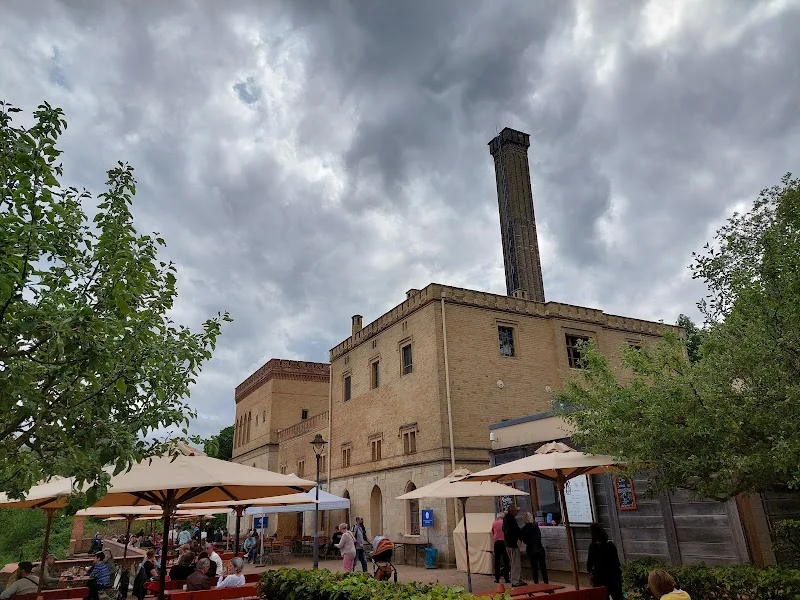
The history of the building dates back to the late 18th century. According to the Prussian Palaces and Gardens Foundation, the Meierei was built between 1790 and 1792 by Andreas Ludwig Krüger and Carl Gotthard Langhans, although the attribution to Langhans is sometimes marked with a question mark in the sources. The building included stables as well as a cabinet for Friedrich Wilhelm II. In 1844/45, an extension and renovation were carried out by Ludwig Persius. Around 1862, the dairy farming was dissolved, and the building was expanded for the pumping station. This sequence shows how closely usage, technology, and courtly representation were interconnected here. The Meierei was never just any economic building but part of a complex landscape and palace architecture by the water. ([spsg.de](https://www.spsg.de/fileadmin/user_upload/UNESCO25/1.3.Neuer_Garten_Potsdam.pdf))
In the 20th century, the house experienced dramatic breaks. After 1918, the restaurant operation was intensified; in 1945, the building burned down due to carelessness after the occupation by the Red Army, although the outer walls and pumping station remained intact. Since 1961, the facility was in the border strip and was hardly accessible. In 1979, the pumping station was modernized for the water supply of the New Garden, and after the removal of the GDR border security facilities in 1990, measures were initiated to preserve the substance. Further work on the pumping station followed in 1991 and 1992, securing the burned-out Meierei in 1997, and renovations took place in 2002/03; finally, the brewpub opened in 2003. This history makes the Meierei a place of restoration, not just of hospitality. ([spsg.de](https://www.spsg.de/fileadmin/user_upload/UNESCO25/1.3.Neuer_Garten_Potsdam.pdf))
Brewery, Beer Garden, and Facilities
Today, the Meierei presents itself as a brewpub with a rustic, deliberately down-to-earth character. Potsdam Tourism describes the atmosphere as cozy and reminiscent of a Prussian rural inn style. At the same time, the location by the water speaks for itself: located directly on the Jungfernsee, with a view of the King's Forest and Glienicke Public Park, the place connects nature experience and dining in a very direct way. According to the tourism notice, around 200 seats are available indoors and around 200 seats outdoors. This is important information for an excursion location, as it shows that the Meierei is well-equipped for both smaller visits and larger guest flows on weekends, holidays, and during the season. Especially in summer, the beer garden becomes the actual highlight of the visit. ([potsdam-tourism.com](https://www.potsdam-tourism.com/en/provider/801/cervecer%C3%ADa-meierei-en-el-jard%C3%ADn-nuevo?utm_source=openai))
The brewing concept itself is also clearly recognizable. The official website explicitly states that all mentioned beers are produced in-house. These include, among others, the house beer Meierei Hell with 5.2 percent alcohol by volume, a non-alcoholic beer, Märzen, Weizenbock, and various forms of Weisse. This product range shows that the Meierei not only maintains a gastronomic but also a craft identity. Those interested in brewing culture will find here more than just an ordinary restaurant visit: the house places its beers at the center of the experience and thus complements the historical surroundings with a contemporary enjoyment component. Especially in combination with the lake view and the park character, a visit emerges that feels both locally typical and distinct. ([meierei-potsdam.de](https://www.meierei-potsdam.de/))
The New Garden in Potsdam as a UNESCO World Heritage Site
The New Garden itself is a main reason why the address Im Neuen Garten 10 is so impactful. The SPSG describes the area as a 102.5-hectare park by the Jungfernsee in northern Potsdam. Its history begins in 1787 when, under Friedrich Wilhelm II., the establishment of a new garden began after the acquisition of the central area. The name was programmatic: away from the baroque formal constraints of Sanssouci, towards a landscape that was oriented towards English garden ideas. Johann August Eyserbeck was commissioned to implement this idea. The park thus developed into a place where nature, architecture, and sightlines were consciously interconnected. This is exactly why the Meierei does not appear isolated but as part of a larger spatial dramaturgy. ([spsg.de](https://www.spsg.de/en/palaces-gardens/object/new-garden/))
Between 1787 and 1792, important buildings were constructed, many of which are still preserved today. These include the Marble Palace, the palace kitchen as a sunken temple ruin, the Gothic Library, the Shingle House, the Orangery, the Grotto, the Pyramid as an ice cellar, and the Dutch Houses. The simple language of the SPSG also emphasizes the landscape quality with meadows, old trees, the pyramid, and other smaller buildings. Those visiting Im Neuen Garten 10 are thus moving in an ensemble that goes far beyond a single restaurant. The Meierei is part of a park that offers its buildings, views, and paths a self-contained cultural narrative. For guests, this means that a meal or a beer can be excellently combined here with architecture, history, and a walk through one of Potsdam's most important garden ensembles. ([spsg.de](https://www.spsg.de/leichte-sprache/leichte-sprache-neuer-garten))
Tips for Walking, Visiting, and Surroundings
Those visiting the Meierei should not only plan the stay as a restaurant appointment but as a small excursion into a cultural landscape. The SPSG points out the proximity to the water and the historical character of the park for the New Garden; at the same time, it also emphasizes the necessity to stay on paths and to be cautious in extreme weather, as old trees and dryness can lead to falling branches. This is particularly important for visitors because the charm of the place lies precisely in the mix of nature and monument. Those who plan the day wisely can combine the visit with a walk to the Marble Palace, a detour to Cecilienhof Palace, or a stroll along the Jungfernsee. Thus, a simple address becomes a whole day's point. ([spsg.de](https://www.spsg.de/en/palaces-gardens/object/new-garden/))
It is also practical that the Meierei is open to various modes of arrival. Whether on foot from the park, by bicycle, by public transport, by train, or via the Cecilienhof station by boat or water taxi: the location is chosen so that a visit remains flexible. This is particularly pleasant for guests who are looking for a reliable place to eat after a long walk and do not want to search for a free table in the city center. Through the combination of its own brewing culture, lake view, park proximity, and historical building, Im Neuen Garten 10 feels like a place where Potsdam shows itself from its relaxed yet culturally rich side. Those who reserve, park, or arrive here receive not just an address but a very characteristic access to the New Garden. ([meierei-potsdam.de](https://www.meierei-potsdam.de/))
Sources:
Mehr anzeigenWeniger anzeigen
Im Neuen Garten 10 | Parking & Opening Hours
Im Neuen Garten 10 today refers to the Meierei in the New Garden, a brewpub on the banks of the Jungfernsee in Potsdam's New Garden. The area is part of the UNESCO World Heritage Site of the Palaces and Parks of Potsdam and Berlin; the New Garden covers 102.5 hectares and is connected by sightlines to Sacrow, Peacock Island, Glienicke, and Babelsberg. This is exactly why this address is so interesting: it is not only a dining point but a historical place in the park where architecture, landscape, and brewing culture come together. Those who arrive here combine the search for an address with a walk, a break by the water, and a piece of Potsdam's city history. ([spsg.de](https://www.spsg.de/en/palaces-gardens/object/new-garden/))
Parking and Directions to the Meierei in the New Garden
The directions to the Meierei are clearly arranged for visitors arriving by car. The official directions recommend following the signs towards Cecilienhof and taking the road Am Neuen Garten to the entrance of the Meierei/Cecilienhof parking lot. This makes the visit easily combinable with a walk through the New Garden, as one enters the historical park landscape directly after parking. Particularly convenient: the location is such that a short stop for a meal is possible without having to take long walks between the parking lot and the destination. Those using navigation devices should use the exact address Im Neuen Garten 10, 14469 Potsdam, Germany, as the name of the street and the park area can easily be confused in everyday life. For local orientation, the reference to Cecilienhof is the best guide. ([meierei-potsdam.de](https://www.meierei-potsdam.de/wegweiser/))
Even without a car, the place is easily accessible. Potsdam Tourism explicitly mentions arriving at the Meierei by bicycle, public transport, and by train as sensible options. Additionally, there is a connection at the Cecilienhof station for star and circle shipping as well as for the water taxi. This fits perfectly with the location by the water, as the Meierei is located right by the Jungfernsee and is thus not only a destination but part of a small journey through Potsdam. Therefore, if one plans the visit as an excursion, arrival, walking, and dining can be combined. This location is particularly advantageous for guests who want to visit the New Garden, Cecilienhof Palace, or the Marble Palace. The address thus functions not only as a parking point but as the starting and ending point of a whole park experience. ([potsdam-tourism.com](https://www.potsdam-tourism.com/en/provider/801/cervecer%C3%ADa-meierei-en-el-jard%C3%ADn-nuevo))
Opening Hours and Reservations at a Glance
The official website of the Meierei currently states clear opening hours that are important for reliable visit planning. Monday is a day off. On Tuesdays, it is open from 2 PM to 9 PM, but only for snacks. On Wednesdays and Thursdays, it is open from 1 PM to 9 PM, Fridays from 1 PM to 10 PM, Saturdays from 12 PM to 10 PM, and Sundays from 12 PM to 9 PM. The kitchen closes at 7:00 PM each day. Those arriving later in the evening should therefore pay attention not only to the opening hours but also to the time of the last warm order. These details are important for a location in a historical park setting, as the visit is often combined with a walk or a tour and should not be decided spontaneously at the end of the day. ([meierei-potsdam.de](https://www.meierei-potsdam.de/))
For planning, it is also interesting that the Meierei offers an online reservation system. This is particularly useful for excursion gastronomy with high popularity, as the combination of lakeside location, beer garden, brewery, and historical surroundings makes the place attractive for individual guests, couples, and small groups. The website also presents several beers from its own production, including Meierei Hell, a non-alcoholic beer, Märzen, Weizenbock, and various versions of Weisse. This already makes it clear before the visit that the Meierei is not just a place to eat but also a craft brewery with its own profile. Those who pay attention to the times and reserve in advance can enjoy the visit with a drink, a meal, and a view of the Jungfernsee. ([meierei-potsdam.de](https://www.meierei-potsdam.de/))
History of the Meierei in the New Garden
The history of the building dates back to the late 18th century. According to the Prussian Palaces and Gardens Foundation, the Meierei was built between 1790 and 1792 by Andreas Ludwig Krüger and Carl Gotthard Langhans, although the attribution to Langhans is sometimes marked with a question mark in the sources. The building included stables as well as a cabinet for Friedrich Wilhelm II. In 1844/45, an extension and renovation were carried out by Ludwig Persius. Around 1862, the dairy farming was dissolved, and the building was expanded for the pumping station. This sequence shows how closely usage, technology, and courtly representation were interconnected here. The Meierei was never just any economic building but part of a complex landscape and palace architecture by the water. ([spsg.de](https://www.spsg.de/fileadmin/user_upload/UNESCO25/1.3.Neuer_Garten_Potsdam.pdf))
In the 20th century, the house experienced dramatic breaks. After 1918, the restaurant operation was intensified; in 1945, the building burned down due to carelessness after the occupation by the Red Army, although the outer walls and pumping station remained intact. Since 1961, the facility was in the border strip and was hardly accessible. In 1979, the pumping station was modernized for the water supply of the New Garden, and after the removal of the GDR border security facilities in 1990, measures were initiated to preserve the substance. Further work on the pumping station followed in 1991 and 1992, securing the burned-out Meierei in 1997, and renovations took place in 2002/03; finally, the brewpub opened in 2003. This history makes the Meierei a place of restoration, not just of hospitality. ([spsg.de](https://www.spsg.de/fileadmin/user_upload/UNESCO25/1.3.Neuer_Garten_Potsdam.pdf))
Brewery, Beer Garden, and Facilities
Today, the Meierei presents itself as a brewpub with a rustic, deliberately down-to-earth character. Potsdam Tourism describes the atmosphere as cozy and reminiscent of a Prussian rural inn style. At the same time, the location by the water speaks for itself: located directly on the Jungfernsee, with a view of the King's Forest and Glienicke Public Park, the place connects nature experience and dining in a very direct way. According to the tourism notice, around 200 seats are available indoors and around 200 seats outdoors. This is important information for an excursion location, as it shows that the Meierei is well-equipped for both smaller visits and larger guest flows on weekends, holidays, and during the season. Especially in summer, the beer garden becomes the actual highlight of the visit. ([potsdam-tourism.com](https://www.potsdam-tourism.com/en/provider/801/cervecer%C3%ADa-meierei-en-el-jard%C3%ADn-nuevo?utm_source=openai))
The brewing concept itself is also clearly recognizable. The official website explicitly states that all mentioned beers are produced in-house. These include, among others, the house beer Meierei Hell with 5.2 percent alcohol by volume, a non-alcoholic beer, Märzen, Weizenbock, and various forms of Weisse. This product range shows that the Meierei not only maintains a gastronomic but also a craft identity. Those interested in brewing culture will find here more than just an ordinary restaurant visit: the house places its beers at the center of the experience and thus complements the historical surroundings with a contemporary enjoyment component. Especially in combination with the lake view and the park character, a visit emerges that feels both locally typical and distinct. ([meierei-potsdam.de](https://www.meierei-potsdam.de/))
The New Garden in Potsdam as a UNESCO World Heritage Site
The New Garden itself is a main reason why the address Im Neuen Garten 10 is so impactful. The SPSG describes the area as a 102.5-hectare park by the Jungfernsee in northern Potsdam. Its history begins in 1787 when, under Friedrich Wilhelm II., the establishment of a new garden began after the acquisition of the central area. The name was programmatic: away from the baroque formal constraints of Sanssouci, towards a landscape that was oriented towards English garden ideas. Johann August Eyserbeck was commissioned to implement this idea. The park thus developed into a place where nature, architecture, and sightlines were consciously interconnected. This is exactly why the Meierei does not appear isolated but as part of a larger spatial dramaturgy. ([spsg.de](https://www.spsg.de/en/palaces-gardens/object/new-garden/))
Between 1787 and 1792, important buildings were constructed, many of which are still preserved today. These include the Marble Palace, the palace kitchen as a sunken temple ruin, the Gothic Library, the Shingle House, the Orangery, the Grotto, the Pyramid as an ice cellar, and the Dutch Houses. The simple language of the SPSG also emphasizes the landscape quality with meadows, old trees, the pyramid, and other smaller buildings. Those visiting Im Neuen Garten 10 are thus moving in an ensemble that goes far beyond a single restaurant. The Meierei is part of a park that offers its buildings, views, and paths a self-contained cultural narrative. For guests, this means that a meal or a beer can be excellently combined here with architecture, history, and a walk through one of Potsdam's most important garden ensembles. ([spsg.de](https://www.spsg.de/leichte-sprache/leichte-sprache-neuer-garten))
Tips for Walking, Visiting, and Surroundings
Those visiting the Meierei should not only plan the stay as a restaurant appointment but as a small excursion into a cultural landscape. The SPSG points out the proximity to the water and the historical character of the park for the New Garden; at the same time, it also emphasizes the necessity to stay on paths and to be cautious in extreme weather, as old trees and dryness can lead to falling branches. This is particularly important for visitors because the charm of the place lies precisely in the mix of nature and monument. Those who plan the day wisely can combine the visit with a walk to the Marble Palace, a detour to Cecilienhof Palace, or a stroll along the Jungfernsee. Thus, a simple address becomes a whole day's point. ([spsg.de](https://www.spsg.de/en/palaces-gardens/object/new-garden/))
It is also practical that the Meierei is open to various modes of arrival. Whether on foot from the park, by bicycle, by public transport, by train, or via the Cecilienhof station by boat or water taxi: the location is chosen so that a visit remains flexible. This is particularly pleasant for guests who are looking for a reliable place to eat after a long walk and do not want to search for a free table in the city center. Through the combination of its own brewing culture, lake view, park proximity, and historical building, Im Neuen Garten 10 feels like a place where Potsdam shows itself from its relaxed yet culturally rich side. Those who reserve, park, or arrive here receive not just an address but a very characteristic access to the New Garden. ([meierei-potsdam.de](https://www.meierei-potsdam.de/))
Sources:
Im Neuen Garten 10 | Parking & Opening Hours
Im Neuen Garten 10 today refers to the Meierei in the New Garden, a brewpub on the banks of the Jungfernsee in Potsdam's New Garden. The area is part of the UNESCO World Heritage Site of the Palaces and Parks of Potsdam and Berlin; the New Garden covers 102.5 hectares and is connected by sightlines to Sacrow, Peacock Island, Glienicke, and Babelsberg. This is exactly why this address is so interesting: it is not only a dining point but a historical place in the park where architecture, landscape, and brewing culture come together. Those who arrive here combine the search for an address with a walk, a break by the water, and a piece of Potsdam's city history. ([spsg.de](https://www.spsg.de/en/palaces-gardens/object/new-garden/))
Parking and Directions to the Meierei in the New Garden
The directions to the Meierei are clearly arranged for visitors arriving by car. The official directions recommend following the signs towards Cecilienhof and taking the road Am Neuen Garten to the entrance of the Meierei/Cecilienhof parking lot. This makes the visit easily combinable with a walk through the New Garden, as one enters the historical park landscape directly after parking. Particularly convenient: the location is such that a short stop for a meal is possible without having to take long walks between the parking lot and the destination. Those using navigation devices should use the exact address Im Neuen Garten 10, 14469 Potsdam, Germany, as the name of the street and the park area can easily be confused in everyday life. For local orientation, the reference to Cecilienhof is the best guide. ([meierei-potsdam.de](https://www.meierei-potsdam.de/wegweiser/))
Even without a car, the place is easily accessible. Potsdam Tourism explicitly mentions arriving at the Meierei by bicycle, public transport, and by train as sensible options. Additionally, there is a connection at the Cecilienhof station for star and circle shipping as well as for the water taxi. This fits perfectly with the location by the water, as the Meierei is located right by the Jungfernsee and is thus not only a destination but part of a small journey through Potsdam. Therefore, if one plans the visit as an excursion, arrival, walking, and dining can be combined. This location is particularly advantageous for guests who want to visit the New Garden, Cecilienhof Palace, or the Marble Palace. The address thus functions not only as a parking point but as the starting and ending point of a whole park experience. ([potsdam-tourism.com](https://www.potsdam-tourism.com/en/provider/801/cervecer%C3%ADa-meierei-en-el-jard%C3%ADn-nuevo))
Opening Hours and Reservations at a Glance
The official website of the Meierei currently states clear opening hours that are important for reliable visit planning. Monday is a day off. On Tuesdays, it is open from 2 PM to 9 PM, but only for snacks. On Wednesdays and Thursdays, it is open from 1 PM to 9 PM, Fridays from 1 PM to 10 PM, Saturdays from 12 PM to 10 PM, and Sundays from 12 PM to 9 PM. The kitchen closes at 7:00 PM each day. Those arriving later in the evening should therefore pay attention not only to the opening hours but also to the time of the last warm order. These details are important for a location in a historical park setting, as the visit is often combined with a walk or a tour and should not be decided spontaneously at the end of the day. ([meierei-potsdam.de](https://www.meierei-potsdam.de/))
For planning, it is also interesting that the Meierei offers an online reservation system. This is particularly useful for excursion gastronomy with high popularity, as the combination of lakeside location, beer garden, brewery, and historical surroundings makes the place attractive for individual guests, couples, and small groups. The website also presents several beers from its own production, including Meierei Hell, a non-alcoholic beer, Märzen, Weizenbock, and various versions of Weisse. This already makes it clear before the visit that the Meierei is not just a place to eat but also a craft brewery with its own profile. Those who pay attention to the times and reserve in advance can enjoy the visit with a drink, a meal, and a view of the Jungfernsee. ([meierei-potsdam.de](https://www.meierei-potsdam.de/))
History of the Meierei in the New Garden
The history of the building dates back to the late 18th century. According to the Prussian Palaces and Gardens Foundation, the Meierei was built between 1790 and 1792 by Andreas Ludwig Krüger and Carl Gotthard Langhans, although the attribution to Langhans is sometimes marked with a question mark in the sources. The building included stables as well as a cabinet for Friedrich Wilhelm II. In 1844/45, an extension and renovation were carried out by Ludwig Persius. Around 1862, the dairy farming was dissolved, and the building was expanded for the pumping station. This sequence shows how closely usage, technology, and courtly representation were interconnected here. The Meierei was never just any economic building but part of a complex landscape and palace architecture by the water. ([spsg.de](https://www.spsg.de/fileadmin/user_upload/UNESCO25/1.3.Neuer_Garten_Potsdam.pdf))
In the 20th century, the house experienced dramatic breaks. After 1918, the restaurant operation was intensified; in 1945, the building burned down due to carelessness after the occupation by the Red Army, although the outer walls and pumping station remained intact. Since 1961, the facility was in the border strip and was hardly accessible. In 1979, the pumping station was modernized for the water supply of the New Garden, and after the removal of the GDR border security facilities in 1990, measures were initiated to preserve the substance. Further work on the pumping station followed in 1991 and 1992, securing the burned-out Meierei in 1997, and renovations took place in 2002/03; finally, the brewpub opened in 2003. This history makes the Meierei a place of restoration, not just of hospitality. ([spsg.de](https://www.spsg.de/fileadmin/user_upload/UNESCO25/1.3.Neuer_Garten_Potsdam.pdf))
Brewery, Beer Garden, and Facilities
Today, the Meierei presents itself as a brewpub with a rustic, deliberately down-to-earth character. Potsdam Tourism describes the atmosphere as cozy and reminiscent of a Prussian rural inn style. At the same time, the location by the water speaks for itself: located directly on the Jungfernsee, with a view of the King's Forest and Glienicke Public Park, the place connects nature experience and dining in a very direct way. According to the tourism notice, around 200 seats are available indoors and around 200 seats outdoors. This is important information for an excursion location, as it shows that the Meierei is well-equipped for both smaller visits and larger guest flows on weekends, holidays, and during the season. Especially in summer, the beer garden becomes the actual highlight of the visit. ([potsdam-tourism.com](https://www.potsdam-tourism.com/en/provider/801/cervecer%C3%ADa-meierei-en-el-jard%C3%ADn-nuevo?utm_source=openai))
The brewing concept itself is also clearly recognizable. The official website explicitly states that all mentioned beers are produced in-house. These include, among others, the house beer Meierei Hell with 5.2 percent alcohol by volume, a non-alcoholic beer, Märzen, Weizenbock, and various forms of Weisse. This product range shows that the Meierei not only maintains a gastronomic but also a craft identity. Those interested in brewing culture will find here more than just an ordinary restaurant visit: the house places its beers at the center of the experience and thus complements the historical surroundings with a contemporary enjoyment component. Especially in combination with the lake view and the park character, a visit emerges that feels both locally typical and distinct. ([meierei-potsdam.de](https://www.meierei-potsdam.de/))
The New Garden in Potsdam as a UNESCO World Heritage Site
The New Garden itself is a main reason why the address Im Neuen Garten 10 is so impactful. The SPSG describes the area as a 102.5-hectare park by the Jungfernsee in northern Potsdam. Its history begins in 1787 when, under Friedrich Wilhelm II., the establishment of a new garden began after the acquisition of the central area. The name was programmatic: away from the baroque formal constraints of Sanssouci, towards a landscape that was oriented towards English garden ideas. Johann August Eyserbeck was commissioned to implement this idea. The park thus developed into a place where nature, architecture, and sightlines were consciously interconnected. This is exactly why the Meierei does not appear isolated but as part of a larger spatial dramaturgy. ([spsg.de](https://www.spsg.de/en/palaces-gardens/object/new-garden/))
Between 1787 and 1792, important buildings were constructed, many of which are still preserved today. These include the Marble Palace, the palace kitchen as a sunken temple ruin, the Gothic Library, the Shingle House, the Orangery, the Grotto, the Pyramid as an ice cellar, and the Dutch Houses. The simple language of the SPSG also emphasizes the landscape quality with meadows, old trees, the pyramid, and other smaller buildings. Those visiting Im Neuen Garten 10 are thus moving in an ensemble that goes far beyond a single restaurant. The Meierei is part of a park that offers its buildings, views, and paths a self-contained cultural narrative. For guests, this means that a meal or a beer can be excellently combined here with architecture, history, and a walk through one of Potsdam's most important garden ensembles. ([spsg.de](https://www.spsg.de/leichte-sprache/leichte-sprache-neuer-garten))
Tips for Walking, Visiting, and Surroundings
Those visiting the Meierei should not only plan the stay as a restaurant appointment but as a small excursion into a cultural landscape. The SPSG points out the proximity to the water and the historical character of the park for the New Garden; at the same time, it also emphasizes the necessity to stay on paths and to be cautious in extreme weather, as old trees and dryness can lead to falling branches. This is particularly important for visitors because the charm of the place lies precisely in the mix of nature and monument. Those who plan the day wisely can combine the visit with a walk to the Marble Palace, a detour to Cecilienhof Palace, or a stroll along the Jungfernsee. Thus, a simple address becomes a whole day's point. ([spsg.de](https://www.spsg.de/en/palaces-gardens/object/new-garden/))
It is also practical that the Meierei is open to various modes of arrival. Whether on foot from the park, by bicycle, by public transport, by train, or via the Cecilienhof station by boat or water taxi: the location is chosen so that a visit remains flexible. This is particularly pleasant for guests who are looking for a reliable place to eat after a long walk and do not want to search for a free table in the city center. Through the combination of its own brewing culture, lake view, park proximity, and historical building, Im Neuen Garten 10 feels like a place where Potsdam shows itself from its relaxed yet culturally rich side. Those who reserve, park, or arrive here receive not just an address but a very characteristic access to the New Garden. ([meierei-potsdam.de](https://www.meierei-potsdam.de/))
Sources:
Upcoming Events
No events found
Frequently Asked Questions
Reviews
No reviews found