
Potsdam
Hermann-Elflein-Straße 3, 14467 Potsdam, Deutschland
In the Golden Arm | Potsdam & Next Exhibition
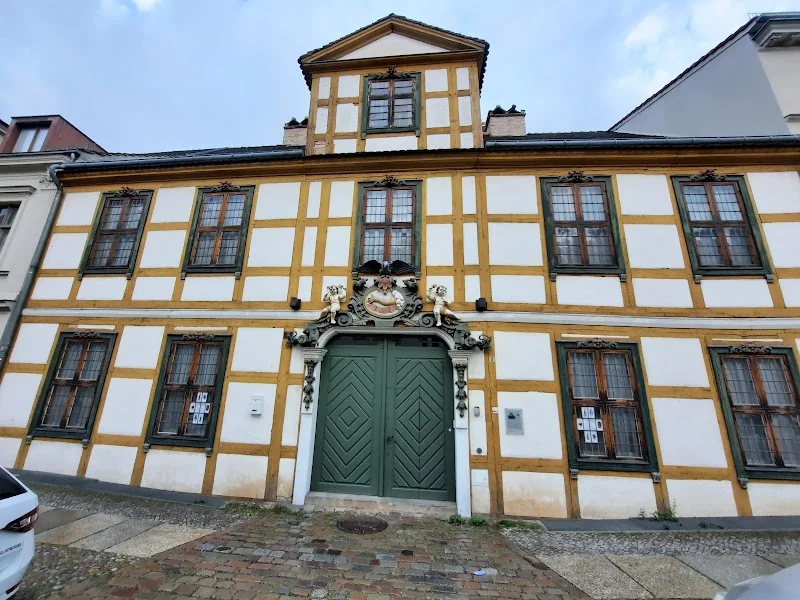
The museum house In the Golden Arm in Potsdam is much more than a historical facade: It is an original preserved baroque type house, a venue for changing exhibitions, a small cultural meeting point in the city center, and at the same time a monument of Potsdam's urban development. The house is located at Hermann-Elflein-Straße 3, just a few minutes' walk from the Sanssouci park entrance and Luisenplatz. Today, it is operated by the Brandenburg Cultural Association as a museum house and event venue. Visitors experience not only architectural history here but also contemporary art, readings, small concerts, and an open house concept with free admission. The official presentation particularly emphasizes the connection between historical original condition and vibrant use: The house is an exhibition space, a meeting place, and an exhibit in one. ([kulturbund.de](https://www.kulturbund.de/im-gueldenen-arm-historie/))
Next Exhibition in the Golden Arm
Those looking for the next exhibition in the Golden Arm will find a clearly recognizable, lively exhibition dramaturgy on the current event page of the Brandenburg Cultural Association. The venue explicitly does not see itself as a classic museum with a static tour but as an open house for art and culture, where the program changes regularly. According to the official concept page, about six exhibitions are shown in the house each year, along with literary readings, smaller concerts, and events in the house or in the courtyard. Currently, the exhibition STRAWALDE – New Images from the Last Decade is announced or opened; the exhibition duration is indicated from August 2 to September 27, 2026, and the opening hours are Wednesday to Sunday from 12:00 to 18:00. This very mix of current events and historical backdrop is what makes the house appealing: Art does not enter a neutral white cube but a baroque residence with visible history. So, anyone searching for terms like "next exhibition", "program", or "events" will find a place where art is experienced in ongoing operation and does not just take place sporadically. The Cultural Association describes the house as open to people who want to fill the Golden Arm with cultural life and points out that the rooms are particularly well-suited for small, fine formats. This is important for SEO searches around exhibitions and event character, as the house is not a large hall but a consciously small, personal place with changing content. ([kulturbund.de](https://www.kulturbund.de/rubrik/aktuelle-ausstellungen/?utm_source=openai))
This current program structure also explains why search queries like "in the golden arm next exhibition" or "in the golden arm events" are so relevant. The operator's website shows not just a single, fixed permanent concept but a sequence of changing presentations and accompanying dates. In the latest and current entries, there are exhibition openings, closing events, film nights, and book presentations that fit into the house without overwhelming it. At the same time, the operator emphasizes that the summer courtyard can be used for stays and that drinks or coffee are available for a donation. This creates the impression of a lively cultural house where exhibitions are not only viewed but experienced as part of a social place. For visitors, this practically means: The first glance should always go to the current exhibition overview because titles, durations, and accompanying events change. The place is particularly suitable for people who do not want to visit only large museums in Potsdam but are looking for an authentic, atmospheric cultural space with direct proximity to history and the present. The current exhibition is therefore not just an additional offer but the center of the visitor experience. ([kulturbund.de](https://www.kulturbund.de/rubrik/aktuelle-ausstellungen/?utm_source=openai))
History and Type House: The Baroque House from 1737
The history of In the Golden Arm begins in 1737, during the time of the second baroque expansion of Potsdam under Friedrich Wilhelm I. The house was built as a residence and belongs to that construction phase in which Potsdam was to grow quickly and comparatively cost-effectively with standardized type houses. Particularly important is that the building is not only an old house within the historical urban structure but also a monumentally significant original. The official historical presentation describes it as the oldest original restored house of the second baroque expansion of Potsdam. In the streets where these type houses were built, the construction method was then based on half-timbering; today's Hermann-Elflein-Straße and Jägerstraße were among them. The fact that this house has survived in its original construction makes it a rare testimony to Potsdam's building and social history. The portal is particularly illustrative: Above the door is the well-known house sign with putti and tools of the trade, and the masks above the windows from the time of its creation are preserved. They refer to August Melchior Erhardt, a wood sculptor and brewer from southern Germany, who received the house as a royal gift and named it. The golden arm in the name is therefore not coincidental but part of a tangible narrative of craftsmanship, art, and personal biography. The house is also protected as a monument and thus an important exhibit of Potsdam's urban development. ([kulturbund.de](https://www.kulturbund.de/im-gueldenen-arm-historie/))
For the SEO topics "house in the golden arm", "museum in the golden arm", and "in the golden arm history", these historical key data are central. The state capital Potsdam describes the building in its city tour as a type house and emphasizes that it represents an authentic testimony of urban and social history within the then construction program. The architectural classification is also interesting: Friedrich Wilhelm I. had such type houses built to accelerate the city's expansion. Between 1715 and 1740, about one thousand five- and seven-axle type houses were built in Potsdam. That is why In the Golden Arm is not only beautiful to look at but also historically significant. In the early 1990s, the house was faithfully restored by the Office for Monument Preservation; since autumn 2010, it has been operated by the Brandenburg Cultural Association as a museum house and event venue. This combination of baroque origin, monument preservation restoration, and today's cultural use is the core of the narrative. Therefore, when visiting the house, one does not simply see a backdrop but a place that embodies the urban planning idea of old Potsdam directly. Exactly therein lies its special charm: The building documents the origin of a baroque urban expansion and simultaneously shows how historical substance can be meaningfully used today. ([potsdamtourismus.de](https://www.potsdamtourismus.de/en/poi/museumshaus-im-gueldenen-arm))
Opening Hours, Admission, and Accessibility
For practical planning, the opening hours of In the Golden Arm are particularly important. Officially, the museum house is open from Wednesday to Sunday from 12:00 to 18:00, and admission is free. This makes the visit low-threshold and spontaneous, which is particularly attractive for guests from Potsdam, day-trippers, and cultural travelers. Those who have little time can also stop by without ticket planning and incorporate the house as a short but content-rich stop into the city center or Sanssouci route. At the same time, one should know that the building brings limitations due to its historical original condition. The operator's page explicitly points out that there is no elevator to the first floor and to the toilets, and that not all rooms on the ground floor are barrier-free accessible. This is not a minor detail but an important part of authentic preservation. Precisely because the house has been preserved so authentically, modern alterations can only be integrated to a limited extent. Visitors with mobility impairments should therefore plan for the limited accessibility in advance. For the search terms "opening hours", "admission", and "accessibility", this combination is crucial: freely accessible culture, but not a fully modern museum standard. This also fits the open house concept, which is not designed for large visitor flows but for personal, quiet visits. The character of the place remains intimate and attention-grabbing. The visit does not feel hectic but slows down, and that fits very well with a historical building with limited spatial structure. ([kulturbund.de](https://www.kulturbund.de/im-gueldenen-arm-historie/))
The surroundings also support an uncomplicated visit. The house is located in the Potsdam city center, in direct proximity to the Sanssouci park entrance, and the nearest tram stop is at Luisenplatz. From there, according to the operator, it is only a few minutes on foot. The state capital Potsdam describes Luisenplatz as a junction between the historic city center and the avenue to Sanssouci; from there, the park can be easily reached via the pedestrian paths of the city center. For those arriving by car, there are paid parking options available in the vicinity, including the underground garage under Luisenplatz and the parking garage on Hegelallee. However, in the central city center, this is more of a supplement than the best solution. Those coming by tram or bus save time and avoid the often tight parking situation in the inner-city area. This is particularly important for visitors who want a short combination of city tour, park walk, and exhibition. The location makes the place an ideal building block for a half or full day in Potsdam: first baroque city history, then art, and afterwards a walk towards Sanssouci or the Brandenburg Gate. For SEO research like "in the golden arm directions" or "in the golden arm parking", it can be said: The journey is manageable, the city center location is central, and public transport is the recommended option. ([kulturbund.de](https://www.kulturbund.de/im-gueldenen-arm-historie/))
Location, Directions, and Parking in Potsdam City Center
The address Hermann-Elflein-Straße 3 places In the Golden Arm right in the historical core of Potsdam. This is not only important for orientation but also shapes the visitor's experience. The path leads through a quarter where the baroque urban expansion can still be read well, and where the museum house itself appears as a prominent anchor point. The proximity to Luisenplatz and the access to Sanssouci is particularly helpful for the journey. Those coming by tram from the main train station typically travel towards Sanssouci or via the city center axes to Luisenplatz. From there, the museum house is reachable on foot in just a few minutes. This short remaining stretch is pleasant because it automatically embeds the visit into the historical urban landscape: One leaves the traffic and directly enters a dense, walkable cultural landscape. For people planning a Potsdam tour, this is ideal because the house can be integrated into a round trip without the need for large detours. The city describes the location at Luisenplatz and on the avenue to Sanssouci as an immediate connection between the old town and the park entrance. This location makes the museum house a sensible stopover for culture and walking enthusiasts. ([kulturbund.de](https://www.kulturbund.de/im-gueldenen-arm-historie/))
When it comes to parking, the city center location is a double-edged sword: On the one hand, much is within reach; on the other hand, space is limited. Official city documents mention the underground garage under Luisenplatz and the parking garage on Hegelallee as paid options outside the immediate street area. The central Potsdam city center is also well connected to public transport. That is why it is advisable not to rely primarily on the car for a visit to In the Golden Arm. Those who still come by car should expect parking fees and a short walk rather than a parking space directly at the door. This can even be an advantage because it slows down the visit and focuses more on the neighborhood. For search queries like "in the golden arm potsdam" or "in the golden arm hermann elflein street potsdam", the address is therefore clear, and for questions about parking, the honest answer is: central city center, few direct parking spaces, but practical paid parking garages nearby. Those who orient themselves in advance to tram and footpath arrive more stress-free and experience the house as it is intended: as a cultural place in a walkable historical urban landscape. ([potsdam.de](https://www.potsdam.de/system/files/documents/san-p16_begruendung_satzung_ausfertigung.pdf?utm_source=openai))
Photos, Architecture, and Special Details
When searching for "in the golden arm photos", it is usually not just about an image but about the impression of this house as a particularly photogenic monument. And indeed, the museum house offers several motifs that are memorable: the baroque facade, the historical portal, the golden arm above the door, the putti with tools of the trade, and the window masks from the time of its creation. The house is so photogenic because it has not been smoothly restored but has visibly retained its historical materiality. The official description emphasizes that the golden arm refers to August Melchior Erhardt and that the portal ornament still reminds of his craftsmanship. The historical structure is also recognizable inside: The state capital Potsdam names the original room layout and four different types of black tiled stoves from the 18th century as visible special features. For visitors, this means: Here one can not only see an exhibition but also read a building. Every angle tells something about baroque residential culture, about type house construction, and about monument preservation. That is why photos work particularly well here when they capture both the architecture and the atmosphere. The house is not isolated but is part of an urban network of historical streets and paths, so that even exterior shots have a lot of depth. ([kulturbund.de](https://www.kulturbund.de/im-gueldenen-arm-historie/))
Among the special details is also the courtyard, which, according to city materials, creates its own atmosphere with historical paving and climbing plants. The contrast between the old building and contemporary exhibitions is another reason why the place has such a strong visual impact. Inside, the cultural use changes regularly, while the building itself remains the historical constant. The Brandenburg Cultural Association also emphasizes that in summer the courtyard garden can be used and that there are small graphics, ceramics, and postcards available in the museum shop. Coffee, tea, and cold drinks are offered for a donation. This does not create a large gastro-production but a very personal form of hospitality. Those who want to take photos will therefore find not only facade details but also the atmosphere of a small cultural house where volunteer work, exhibitions, and everyday closeness come together. This character distinguishes In the Golden Arm from many classic museums: It is simultaneously a monument, a stage, a meeting point, and a space for remembrance. For visitors who want to see Potsdam not just as a castle scene but as a vibrant cultural city, this is a particularly rewarding place. The combination of historical type house, changing art, and carefully preserved details delivers exactly the kind of imagery that is sought in searches like photos, museum house, and historical peculiarities. ([kulturbund.de](https://www.kulturbund.de/im-gueldenen-arm-konzept/?utm_source=openai))
Events, Museum Shop, and Café
In the Golden Arm is not only an exhibition venue but also consciously a place for small cultural formats. The operator describes the house as open to citizens who want to actively shape culture. This results in the typical profile of the program: In addition to the changing art presentations, literary readings, smaller concerts, and other events take place here. These formats are particularly well-suited to the size and historical structure of the house because they create closeness instead of distance. One does not sit anonymously in a large hall but experiences culture in a building that is itself part of history. For search queries like "in the golden arm events" or "museum house in the golden arm potsdam", this is an important difference. The official concept page makes it clear that the courtyard garden can also become part of the experience in summer. This creates a mix of exhibition, conversation, and stay that makes the house attractive for different target groups: art enthusiasts, walkers, Potsdam visitors, locals, and people who consciously seek small formats. The current event notices also show that the place is regularly enlivened by readings, book presentations, and accompanying cultural dates. The house is thus not only a reception but also a production of culture in everyday urban life. ([kulturbund.de](https://www.kulturbund.de/im-gueldenen-arm-konzept/?utm_source=openai))
The museum shop and the small café round off this profile. Both are run voluntarily according to the operator, which fits well with the character of the house. Instead of a commercial large operation, there is a small selection of graphics, ceramics, and postcards. Those who want to take a break after the tour can receive coffee, tea, or cold drinks for a donation and sit in the courtyard in summer. This low threshold makes the place friendly and familiar. It also explains why many visitors experience the museum house as pleasantly quiet and personal. For the keyword world surrounding "house in the golden arm", "museum in the golden arm", and "in the golden arm photos", this impression is crucial: The house does not offer spectacular event architecture but a credible, atmospheric connection of history, exhibition, and hospitality. Additionally, the place can be excellently integrated into a round trip in the Potsdam city center. So, those who connect Sanssouci, Luisenplatz, and the historic city center get a cultural stopover with In the Golden Arm that enhances the journey itself. This may be the most important message of the entire research: This house is small but content-rich; historically old but culturally alive; and that is why it is so interesting for visits to Potsdam. ([kulturbund.de](https://www.kulturbund.de/im-gueldenen-arm-historie/))
Sources:
- Brandenburg Cultural Association – History of the Museum House In the Golden Arm
- Brandenburg Cultural Association – Concept and Use of the Museum House
- Brandenburg Cultural Association – Current Exhibitions and Events
- Potsdam Tourism – Museum House In the Golden Arm
- State Capital Potsdam – Between Brandenburg and Nauener Gate
- State Capital Potsdam – Museums and Museum Houses in Potsdam
Mehr anzeigenWeniger anzeigen
In the Golden Arm | Potsdam & Next Exhibition
The museum house In the Golden Arm in Potsdam is much more than a historical facade: It is an original preserved baroque type house, a venue for changing exhibitions, a small cultural meeting point in the city center, and at the same time a monument of Potsdam's urban development. The house is located at Hermann-Elflein-Straße 3, just a few minutes' walk from the Sanssouci park entrance and Luisenplatz. Today, it is operated by the Brandenburg Cultural Association as a museum house and event venue. Visitors experience not only architectural history here but also contemporary art, readings, small concerts, and an open house concept with free admission. The official presentation particularly emphasizes the connection between historical original condition and vibrant use: The house is an exhibition space, a meeting place, and an exhibit in one. ([kulturbund.de](https://www.kulturbund.de/im-gueldenen-arm-historie/))
Next Exhibition in the Golden Arm
Those looking for the next exhibition in the Golden Arm will find a clearly recognizable, lively exhibition dramaturgy on the current event page of the Brandenburg Cultural Association. The venue explicitly does not see itself as a classic museum with a static tour but as an open house for art and culture, where the program changes regularly. According to the official concept page, about six exhibitions are shown in the house each year, along with literary readings, smaller concerts, and events in the house or in the courtyard. Currently, the exhibition STRAWALDE – New Images from the Last Decade is announced or opened; the exhibition duration is indicated from August 2 to September 27, 2026, and the opening hours are Wednesday to Sunday from 12:00 to 18:00. This very mix of current events and historical backdrop is what makes the house appealing: Art does not enter a neutral white cube but a baroque residence with visible history. So, anyone searching for terms like "next exhibition", "program", or "events" will find a place where art is experienced in ongoing operation and does not just take place sporadically. The Cultural Association describes the house as open to people who want to fill the Golden Arm with cultural life and points out that the rooms are particularly well-suited for small, fine formats. This is important for SEO searches around exhibitions and event character, as the house is not a large hall but a consciously small, personal place with changing content. ([kulturbund.de](https://www.kulturbund.de/rubrik/aktuelle-ausstellungen/?utm_source=openai))
This current program structure also explains why search queries like "in the golden arm next exhibition" or "in the golden arm events" are so relevant. The operator's website shows not just a single, fixed permanent concept but a sequence of changing presentations and accompanying dates. In the latest and current entries, there are exhibition openings, closing events, film nights, and book presentations that fit into the house without overwhelming it. At the same time, the operator emphasizes that the summer courtyard can be used for stays and that drinks or coffee are available for a donation. This creates the impression of a lively cultural house where exhibitions are not only viewed but experienced as part of a social place. For visitors, this practically means: The first glance should always go to the current exhibition overview because titles, durations, and accompanying events change. The place is particularly suitable for people who do not want to visit only large museums in Potsdam but are looking for an authentic, atmospheric cultural space with direct proximity to history and the present. The current exhibition is therefore not just an additional offer but the center of the visitor experience. ([kulturbund.de](https://www.kulturbund.de/rubrik/aktuelle-ausstellungen/?utm_source=openai))
History and Type House: The Baroque House from 1737
The history of In the Golden Arm begins in 1737, during the time of the second baroque expansion of Potsdam under Friedrich Wilhelm I. The house was built as a residence and belongs to that construction phase in which Potsdam was to grow quickly and comparatively cost-effectively with standardized type houses. Particularly important is that the building is not only an old house within the historical urban structure but also a monumentally significant original. The official historical presentation describes it as the oldest original restored house of the second baroque expansion of Potsdam. In the streets where these type houses were built, the construction method was then based on half-timbering; today's Hermann-Elflein-Straße and Jägerstraße were among them. The fact that this house has survived in its original construction makes it a rare testimony to Potsdam's building and social history. The portal is particularly illustrative: Above the door is the well-known house sign with putti and tools of the trade, and the masks above the windows from the time of its creation are preserved. They refer to August Melchior Erhardt, a wood sculptor and brewer from southern Germany, who received the house as a royal gift and named it. The golden arm in the name is therefore not coincidental but part of a tangible narrative of craftsmanship, art, and personal biography. The house is also protected as a monument and thus an important exhibit of Potsdam's urban development. ([kulturbund.de](https://www.kulturbund.de/im-gueldenen-arm-historie/))
For the SEO topics "house in the golden arm", "museum in the golden arm", and "in the golden arm history", these historical key data are central. The state capital Potsdam describes the building in its city tour as a type house and emphasizes that it represents an authentic testimony of urban and social history within the then construction program. The architectural classification is also interesting: Friedrich Wilhelm I. had such type houses built to accelerate the city's expansion. Between 1715 and 1740, about one thousand five- and seven-axle type houses were built in Potsdam. That is why In the Golden Arm is not only beautiful to look at but also historically significant. In the early 1990s, the house was faithfully restored by the Office for Monument Preservation; since autumn 2010, it has been operated by the Brandenburg Cultural Association as a museum house and event venue. This combination of baroque origin, monument preservation restoration, and today's cultural use is the core of the narrative. Therefore, when visiting the house, one does not simply see a backdrop but a place that embodies the urban planning idea of old Potsdam directly. Exactly therein lies its special charm: The building documents the origin of a baroque urban expansion and simultaneously shows how historical substance can be meaningfully used today. ([potsdamtourismus.de](https://www.potsdamtourismus.de/en/poi/museumshaus-im-gueldenen-arm))
Opening Hours, Admission, and Accessibility
For practical planning, the opening hours of In the Golden Arm are particularly important. Officially, the museum house is open from Wednesday to Sunday from 12:00 to 18:00, and admission is free. This makes the visit low-threshold and spontaneous, which is particularly attractive for guests from Potsdam, day-trippers, and cultural travelers. Those who have little time can also stop by without ticket planning and incorporate the house as a short but content-rich stop into the city center or Sanssouci route. At the same time, one should know that the building brings limitations due to its historical original condition. The operator's page explicitly points out that there is no elevator to the first floor and to the toilets, and that not all rooms on the ground floor are barrier-free accessible. This is not a minor detail but an important part of authentic preservation. Precisely because the house has been preserved so authentically, modern alterations can only be integrated to a limited extent. Visitors with mobility impairments should therefore plan for the limited accessibility in advance. For the search terms "opening hours", "admission", and "accessibility", this combination is crucial: freely accessible culture, but not a fully modern museum standard. This also fits the open house concept, which is not designed for large visitor flows but for personal, quiet visits. The character of the place remains intimate and attention-grabbing. The visit does not feel hectic but slows down, and that fits very well with a historical building with limited spatial structure. ([kulturbund.de](https://www.kulturbund.de/im-gueldenen-arm-historie/))
The surroundings also support an uncomplicated visit. The house is located in the Potsdam city center, in direct proximity to the Sanssouci park entrance, and the nearest tram stop is at Luisenplatz. From there, according to the operator, it is only a few minutes on foot. The state capital Potsdam describes Luisenplatz as a junction between the historic city center and the avenue to Sanssouci; from there, the park can be easily reached via the pedestrian paths of the city center. For those arriving by car, there are paid parking options available in the vicinity, including the underground garage under Luisenplatz and the parking garage on Hegelallee. However, in the central city center, this is more of a supplement than the best solution. Those coming by tram or bus save time and avoid the often tight parking situation in the inner-city area. This is particularly important for visitors who want a short combination of city tour, park walk, and exhibition. The location makes the place an ideal building block for a half or full day in Potsdam: first baroque city history, then art, and afterwards a walk towards Sanssouci or the Brandenburg Gate. For SEO research like "in the golden arm directions" or "in the golden arm parking", it can be said: The journey is manageable, the city center location is central, and public transport is the recommended option. ([kulturbund.de](https://www.kulturbund.de/im-gueldenen-arm-historie/))
Location, Directions, and Parking in Potsdam City Center
The address Hermann-Elflein-Straße 3 places In the Golden Arm right in the historical core of Potsdam. This is not only important for orientation but also shapes the visitor's experience. The path leads through a quarter where the baroque urban expansion can still be read well, and where the museum house itself appears as a prominent anchor point. The proximity to Luisenplatz and the access to Sanssouci is particularly helpful for the journey. Those coming by tram from the main train station typically travel towards Sanssouci or via the city center axes to Luisenplatz. From there, the museum house is reachable on foot in just a few minutes. This short remaining stretch is pleasant because it automatically embeds the visit into the historical urban landscape: One leaves the traffic and directly enters a dense, walkable cultural landscape. For people planning a Potsdam tour, this is ideal because the house can be integrated into a round trip without the need for large detours. The city describes the location at Luisenplatz and on the avenue to Sanssouci as an immediate connection between the old town and the park entrance. This location makes the museum house a sensible stopover for culture and walking enthusiasts. ([kulturbund.de](https://www.kulturbund.de/im-gueldenen-arm-historie/))
When it comes to parking, the city center location is a double-edged sword: On the one hand, much is within reach; on the other hand, space is limited. Official city documents mention the underground garage under Luisenplatz and the parking garage on Hegelallee as paid options outside the immediate street area. The central Potsdam city center is also well connected to public transport. That is why it is advisable not to rely primarily on the car for a visit to In the Golden Arm. Those who still come by car should expect parking fees and a short walk rather than a parking space directly at the door. This can even be an advantage because it slows down the visit and focuses more on the neighborhood. For search queries like "in the golden arm potsdam" or "in the golden arm hermann elflein street potsdam", the address is therefore clear, and for questions about parking, the honest answer is: central city center, few direct parking spaces, but practical paid parking garages nearby. Those who orient themselves in advance to tram and footpath arrive more stress-free and experience the house as it is intended: as a cultural place in a walkable historical urban landscape. ([potsdam.de](https://www.potsdam.de/system/files/documents/san-p16_begruendung_satzung_ausfertigung.pdf?utm_source=openai))
Photos, Architecture, and Special Details
When searching for "in the golden arm photos", it is usually not just about an image but about the impression of this house as a particularly photogenic monument. And indeed, the museum house offers several motifs that are memorable: the baroque facade, the historical portal, the golden arm above the door, the putti with tools of the trade, and the window masks from the time of its creation. The house is so photogenic because it has not been smoothly restored but has visibly retained its historical materiality. The official description emphasizes that the golden arm refers to August Melchior Erhardt and that the portal ornament still reminds of his craftsmanship. The historical structure is also recognizable inside: The state capital Potsdam names the original room layout and four different types of black tiled stoves from the 18th century as visible special features. For visitors, this means: Here one can not only see an exhibition but also read a building. Every angle tells something about baroque residential culture, about type house construction, and about monument preservation. That is why photos work particularly well here when they capture both the architecture and the atmosphere. The house is not isolated but is part of an urban network of historical streets and paths, so that even exterior shots have a lot of depth. ([kulturbund.de](https://www.kulturbund.de/im-gueldenen-arm-historie/))
Among the special details is also the courtyard, which, according to city materials, creates its own atmosphere with historical paving and climbing plants. The contrast between the old building and contemporary exhibitions is another reason why the place has such a strong visual impact. Inside, the cultural use changes regularly, while the building itself remains the historical constant. The Brandenburg Cultural Association also emphasizes that in summer the courtyard garden can be used and that there are small graphics, ceramics, and postcards available in the museum shop. Coffee, tea, and cold drinks are offered for a donation. This does not create a large gastro-production but a very personal form of hospitality. Those who want to take photos will therefore find not only facade details but also the atmosphere of a small cultural house where volunteer work, exhibitions, and everyday closeness come together. This character distinguishes In the Golden Arm from many classic museums: It is simultaneously a monument, a stage, a meeting point, and a space for remembrance. For visitors who want to see Potsdam not just as a castle scene but as a vibrant cultural city, this is a particularly rewarding place. The combination of historical type house, changing art, and carefully preserved details delivers exactly the kind of imagery that is sought in searches like photos, museum house, and historical peculiarities. ([kulturbund.de](https://www.kulturbund.de/im-gueldenen-arm-konzept/?utm_source=openai))
Events, Museum Shop, and Café
In the Golden Arm is not only an exhibition venue but also consciously a place for small cultural formats. The operator describes the house as open to citizens who want to actively shape culture. This results in the typical profile of the program: In addition to the changing art presentations, literary readings, smaller concerts, and other events take place here. These formats are particularly well-suited to the size and historical structure of the house because they create closeness instead of distance. One does not sit anonymously in a large hall but experiences culture in a building that is itself part of history. For search queries like "in the golden arm events" or "museum house in the golden arm potsdam", this is an important difference. The official concept page makes it clear that the courtyard garden can also become part of the experience in summer. This creates a mix of exhibition, conversation, and stay that makes the house attractive for different target groups: art enthusiasts, walkers, Potsdam visitors, locals, and people who consciously seek small formats. The current event notices also show that the place is regularly enlivened by readings, book presentations, and accompanying cultural dates. The house is thus not only a reception but also a production of culture in everyday urban life. ([kulturbund.de](https://www.kulturbund.de/im-gueldenen-arm-konzept/?utm_source=openai))
The museum shop and the small café round off this profile. Both are run voluntarily according to the operator, which fits well with the character of the house. Instead of a commercial large operation, there is a small selection of graphics, ceramics, and postcards. Those who want to take a break after the tour can receive coffee, tea, or cold drinks for a donation and sit in the courtyard in summer. This low threshold makes the place friendly and familiar. It also explains why many visitors experience the museum house as pleasantly quiet and personal. For the keyword world surrounding "house in the golden arm", "museum in the golden arm", and "in the golden arm photos", this impression is crucial: The house does not offer spectacular event architecture but a credible, atmospheric connection of history, exhibition, and hospitality. Additionally, the place can be excellently integrated into a round trip in the Potsdam city center. So, those who connect Sanssouci, Luisenplatz, and the historic city center get a cultural stopover with In the Golden Arm that enhances the journey itself. This may be the most important message of the entire research: This house is small but content-rich; historically old but culturally alive; and that is why it is so interesting for visits to Potsdam. ([kulturbund.de](https://www.kulturbund.de/im-gueldenen-arm-historie/))
Sources:
- Brandenburg Cultural Association – History of the Museum House In the Golden Arm
- Brandenburg Cultural Association – Concept and Use of the Museum House
- Brandenburg Cultural Association – Current Exhibitions and Events
- Potsdam Tourism – Museum House In the Golden Arm
- State Capital Potsdam – Between Brandenburg and Nauener Gate
- State Capital Potsdam – Museums and Museum Houses in Potsdam
In the Golden Arm | Potsdam & Next Exhibition
The museum house In the Golden Arm in Potsdam is much more than a historical facade: It is an original preserved baroque type house, a venue for changing exhibitions, a small cultural meeting point in the city center, and at the same time a monument of Potsdam's urban development. The house is located at Hermann-Elflein-Straße 3, just a few minutes' walk from the Sanssouci park entrance and Luisenplatz. Today, it is operated by the Brandenburg Cultural Association as a museum house and event venue. Visitors experience not only architectural history here but also contemporary art, readings, small concerts, and an open house concept with free admission. The official presentation particularly emphasizes the connection between historical original condition and vibrant use: The house is an exhibition space, a meeting place, and an exhibit in one. ([kulturbund.de](https://www.kulturbund.de/im-gueldenen-arm-historie/))
Next Exhibition in the Golden Arm
Those looking for the next exhibition in the Golden Arm will find a clearly recognizable, lively exhibition dramaturgy on the current event page of the Brandenburg Cultural Association. The venue explicitly does not see itself as a classic museum with a static tour but as an open house for art and culture, where the program changes regularly. According to the official concept page, about six exhibitions are shown in the house each year, along with literary readings, smaller concerts, and events in the house or in the courtyard. Currently, the exhibition STRAWALDE – New Images from the Last Decade is announced or opened; the exhibition duration is indicated from August 2 to September 27, 2026, and the opening hours are Wednesday to Sunday from 12:00 to 18:00. This very mix of current events and historical backdrop is what makes the house appealing: Art does not enter a neutral white cube but a baroque residence with visible history. So, anyone searching for terms like "next exhibition", "program", or "events" will find a place where art is experienced in ongoing operation and does not just take place sporadically. The Cultural Association describes the house as open to people who want to fill the Golden Arm with cultural life and points out that the rooms are particularly well-suited for small, fine formats. This is important for SEO searches around exhibitions and event character, as the house is not a large hall but a consciously small, personal place with changing content. ([kulturbund.de](https://www.kulturbund.de/rubrik/aktuelle-ausstellungen/?utm_source=openai))
This current program structure also explains why search queries like "in the golden arm next exhibition" or "in the golden arm events" are so relevant. The operator's website shows not just a single, fixed permanent concept but a sequence of changing presentations and accompanying dates. In the latest and current entries, there are exhibition openings, closing events, film nights, and book presentations that fit into the house without overwhelming it. At the same time, the operator emphasizes that the summer courtyard can be used for stays and that drinks or coffee are available for a donation. This creates the impression of a lively cultural house where exhibitions are not only viewed but experienced as part of a social place. For visitors, this practically means: The first glance should always go to the current exhibition overview because titles, durations, and accompanying events change. The place is particularly suitable for people who do not want to visit only large museums in Potsdam but are looking for an authentic, atmospheric cultural space with direct proximity to history and the present. The current exhibition is therefore not just an additional offer but the center of the visitor experience. ([kulturbund.de](https://www.kulturbund.de/rubrik/aktuelle-ausstellungen/?utm_source=openai))
History and Type House: The Baroque House from 1737
The history of In the Golden Arm begins in 1737, during the time of the second baroque expansion of Potsdam under Friedrich Wilhelm I. The house was built as a residence and belongs to that construction phase in which Potsdam was to grow quickly and comparatively cost-effectively with standardized type houses. Particularly important is that the building is not only an old house within the historical urban structure but also a monumentally significant original. The official historical presentation describes it as the oldest original restored house of the second baroque expansion of Potsdam. In the streets where these type houses were built, the construction method was then based on half-timbering; today's Hermann-Elflein-Straße and Jägerstraße were among them. The fact that this house has survived in its original construction makes it a rare testimony to Potsdam's building and social history. The portal is particularly illustrative: Above the door is the well-known house sign with putti and tools of the trade, and the masks above the windows from the time of its creation are preserved. They refer to August Melchior Erhardt, a wood sculptor and brewer from southern Germany, who received the house as a royal gift and named it. The golden arm in the name is therefore not coincidental but part of a tangible narrative of craftsmanship, art, and personal biography. The house is also protected as a monument and thus an important exhibit of Potsdam's urban development. ([kulturbund.de](https://www.kulturbund.de/im-gueldenen-arm-historie/))
For the SEO topics "house in the golden arm", "museum in the golden arm", and "in the golden arm history", these historical key data are central. The state capital Potsdam describes the building in its city tour as a type house and emphasizes that it represents an authentic testimony of urban and social history within the then construction program. The architectural classification is also interesting: Friedrich Wilhelm I. had such type houses built to accelerate the city's expansion. Between 1715 and 1740, about one thousand five- and seven-axle type houses were built in Potsdam. That is why In the Golden Arm is not only beautiful to look at but also historically significant. In the early 1990s, the house was faithfully restored by the Office for Monument Preservation; since autumn 2010, it has been operated by the Brandenburg Cultural Association as a museum house and event venue. This combination of baroque origin, monument preservation restoration, and today's cultural use is the core of the narrative. Therefore, when visiting the house, one does not simply see a backdrop but a place that embodies the urban planning idea of old Potsdam directly. Exactly therein lies its special charm: The building documents the origin of a baroque urban expansion and simultaneously shows how historical substance can be meaningfully used today. ([potsdamtourismus.de](https://www.potsdamtourismus.de/en/poi/museumshaus-im-gueldenen-arm))
Opening Hours, Admission, and Accessibility
For practical planning, the opening hours of In the Golden Arm are particularly important. Officially, the museum house is open from Wednesday to Sunday from 12:00 to 18:00, and admission is free. This makes the visit low-threshold and spontaneous, which is particularly attractive for guests from Potsdam, day-trippers, and cultural travelers. Those who have little time can also stop by without ticket planning and incorporate the house as a short but content-rich stop into the city center or Sanssouci route. At the same time, one should know that the building brings limitations due to its historical original condition. The operator's page explicitly points out that there is no elevator to the first floor and to the toilets, and that not all rooms on the ground floor are barrier-free accessible. This is not a minor detail but an important part of authentic preservation. Precisely because the house has been preserved so authentically, modern alterations can only be integrated to a limited extent. Visitors with mobility impairments should therefore plan for the limited accessibility in advance. For the search terms "opening hours", "admission", and "accessibility", this combination is crucial: freely accessible culture, but not a fully modern museum standard. This also fits the open house concept, which is not designed for large visitor flows but for personal, quiet visits. The character of the place remains intimate and attention-grabbing. The visit does not feel hectic but slows down, and that fits very well with a historical building with limited spatial structure. ([kulturbund.de](https://www.kulturbund.de/im-gueldenen-arm-historie/))
The surroundings also support an uncomplicated visit. The house is located in the Potsdam city center, in direct proximity to the Sanssouci park entrance, and the nearest tram stop is at Luisenplatz. From there, according to the operator, it is only a few minutes on foot. The state capital Potsdam describes Luisenplatz as a junction between the historic city center and the avenue to Sanssouci; from there, the park can be easily reached via the pedestrian paths of the city center. For those arriving by car, there are paid parking options available in the vicinity, including the underground garage under Luisenplatz and the parking garage on Hegelallee. However, in the central city center, this is more of a supplement than the best solution. Those coming by tram or bus save time and avoid the often tight parking situation in the inner-city area. This is particularly important for visitors who want a short combination of city tour, park walk, and exhibition. The location makes the place an ideal building block for a half or full day in Potsdam: first baroque city history, then art, and afterwards a walk towards Sanssouci or the Brandenburg Gate. For SEO research like "in the golden arm directions" or "in the golden arm parking", it can be said: The journey is manageable, the city center location is central, and public transport is the recommended option. ([kulturbund.de](https://www.kulturbund.de/im-gueldenen-arm-historie/))
Location, Directions, and Parking in Potsdam City Center
The address Hermann-Elflein-Straße 3 places In the Golden Arm right in the historical core of Potsdam. This is not only important for orientation but also shapes the visitor's experience. The path leads through a quarter where the baroque urban expansion can still be read well, and where the museum house itself appears as a prominent anchor point. The proximity to Luisenplatz and the access to Sanssouci is particularly helpful for the journey. Those coming by tram from the main train station typically travel towards Sanssouci or via the city center axes to Luisenplatz. From there, the museum house is reachable on foot in just a few minutes. This short remaining stretch is pleasant because it automatically embeds the visit into the historical urban landscape: One leaves the traffic and directly enters a dense, walkable cultural landscape. For people planning a Potsdam tour, this is ideal because the house can be integrated into a round trip without the need for large detours. The city describes the location at Luisenplatz and on the avenue to Sanssouci as an immediate connection between the old town and the park entrance. This location makes the museum house a sensible stopover for culture and walking enthusiasts. ([kulturbund.de](https://www.kulturbund.de/im-gueldenen-arm-historie/))
When it comes to parking, the city center location is a double-edged sword: On the one hand, much is within reach; on the other hand, space is limited. Official city documents mention the underground garage under Luisenplatz and the parking garage on Hegelallee as paid options outside the immediate street area. The central Potsdam city center is also well connected to public transport. That is why it is advisable not to rely primarily on the car for a visit to In the Golden Arm. Those who still come by car should expect parking fees and a short walk rather than a parking space directly at the door. This can even be an advantage because it slows down the visit and focuses more on the neighborhood. For search queries like "in the golden arm potsdam" or "in the golden arm hermann elflein street potsdam", the address is therefore clear, and for questions about parking, the honest answer is: central city center, few direct parking spaces, but practical paid parking garages nearby. Those who orient themselves in advance to tram and footpath arrive more stress-free and experience the house as it is intended: as a cultural place in a walkable historical urban landscape. ([potsdam.de](https://www.potsdam.de/system/files/documents/san-p16_begruendung_satzung_ausfertigung.pdf?utm_source=openai))
Photos, Architecture, and Special Details
When searching for "in the golden arm photos", it is usually not just about an image but about the impression of this house as a particularly photogenic monument. And indeed, the museum house offers several motifs that are memorable: the baroque facade, the historical portal, the golden arm above the door, the putti with tools of the trade, and the window masks from the time of its creation. The house is so photogenic because it has not been smoothly restored but has visibly retained its historical materiality. The official description emphasizes that the golden arm refers to August Melchior Erhardt and that the portal ornament still reminds of his craftsmanship. The historical structure is also recognizable inside: The state capital Potsdam names the original room layout and four different types of black tiled stoves from the 18th century as visible special features. For visitors, this means: Here one can not only see an exhibition but also read a building. Every angle tells something about baroque residential culture, about type house construction, and about monument preservation. That is why photos work particularly well here when they capture both the architecture and the atmosphere. The house is not isolated but is part of an urban network of historical streets and paths, so that even exterior shots have a lot of depth. ([kulturbund.de](https://www.kulturbund.de/im-gueldenen-arm-historie/))
Among the special details is also the courtyard, which, according to city materials, creates its own atmosphere with historical paving and climbing plants. The contrast between the old building and contemporary exhibitions is another reason why the place has such a strong visual impact. Inside, the cultural use changes regularly, while the building itself remains the historical constant. The Brandenburg Cultural Association also emphasizes that in summer the courtyard garden can be used and that there are small graphics, ceramics, and postcards available in the museum shop. Coffee, tea, and cold drinks are offered for a donation. This does not create a large gastro-production but a very personal form of hospitality. Those who want to take photos will therefore find not only facade details but also the atmosphere of a small cultural house where volunteer work, exhibitions, and everyday closeness come together. This character distinguishes In the Golden Arm from many classic museums: It is simultaneously a monument, a stage, a meeting point, and a space for remembrance. For visitors who want to see Potsdam not just as a castle scene but as a vibrant cultural city, this is a particularly rewarding place. The combination of historical type house, changing art, and carefully preserved details delivers exactly the kind of imagery that is sought in searches like photos, museum house, and historical peculiarities. ([kulturbund.de](https://www.kulturbund.de/im-gueldenen-arm-konzept/?utm_source=openai))
Events, Museum Shop, and Café
In the Golden Arm is not only an exhibition venue but also consciously a place for small cultural formats. The operator describes the house as open to citizens who want to actively shape culture. This results in the typical profile of the program: In addition to the changing art presentations, literary readings, smaller concerts, and other events take place here. These formats are particularly well-suited to the size and historical structure of the house because they create closeness instead of distance. One does not sit anonymously in a large hall but experiences culture in a building that is itself part of history. For search queries like "in the golden arm events" or "museum house in the golden arm potsdam", this is an important difference. The official concept page makes it clear that the courtyard garden can also become part of the experience in summer. This creates a mix of exhibition, conversation, and stay that makes the house attractive for different target groups: art enthusiasts, walkers, Potsdam visitors, locals, and people who consciously seek small formats. The current event notices also show that the place is regularly enlivened by readings, book presentations, and accompanying cultural dates. The house is thus not only a reception but also a production of culture in everyday urban life. ([kulturbund.de](https://www.kulturbund.de/im-gueldenen-arm-konzept/?utm_source=openai))
The museum shop and the small café round off this profile. Both are run voluntarily according to the operator, which fits well with the character of the house. Instead of a commercial large operation, there is a small selection of graphics, ceramics, and postcards. Those who want to take a break after the tour can receive coffee, tea, or cold drinks for a donation and sit in the courtyard in summer. This low threshold makes the place friendly and familiar. It also explains why many visitors experience the museum house as pleasantly quiet and personal. For the keyword world surrounding "house in the golden arm", "museum in the golden arm", and "in the golden arm photos", this impression is crucial: The house does not offer spectacular event architecture but a credible, atmospheric connection of history, exhibition, and hospitality. Additionally, the place can be excellently integrated into a round trip in the Potsdam city center. So, those who connect Sanssouci, Luisenplatz, and the historic city center get a cultural stopover with In the Golden Arm that enhances the journey itself. This may be the most important message of the entire research: This house is small but content-rich; historically old but culturally alive; and that is why it is so interesting for visits to Potsdam. ([kulturbund.de](https://www.kulturbund.de/im-gueldenen-arm-historie/))
Sources:
- Brandenburg Cultural Association – History of the Museum House In the Golden Arm
- Brandenburg Cultural Association – Concept and Use of the Museum House
- Brandenburg Cultural Association – Current Exhibitions and Events
- Potsdam Tourism – Museum House In the Golden Arm
- State Capital Potsdam – Between Brandenburg and Nauener Gate
- State Capital Potsdam – Museums and Museum Houses in Potsdam
Frequently Asked Questions
Reviews
No reviews found