
Potsdam
Holländisches Viertel, 14467 Potsdam, Deutschland
Dutch Quarter | History & Tulip Festival
The Dutch Quarter in Potsdam is much more than a beautiful photo opportunity or a quick detour between Brandenburger Straße and Nauener Tor. It is a historic city district with a distinctive identity, consisting of four blocks and about 150 brick houses. At first glance, the houses appear as a closed ensemble from another world: unplastered red bricks, white joints, shutters, and partly curved gables shape the image. This very mix makes the quarter so special, as living space, everyday life, commerce, gastronomy, and history are still closely intertwined here. For many visitors, it is therefore not just a sight but a vibrant part of Potsdam's city center, where one can stroll, shop, eat, and soak in the atmosphere. Those traveling from Berlin can quickly reach Potsdam and find one of the city's most prominent destinations in the Dutch Quarter. ([potsdam.de](https://www.potsdam.de/de/hollaendisches-viertel))
History of the Dutch Quarter in Potsdam
The history of the Dutch Quarter begins in the 18th century with the desire of Frederick William I to attract experienced craftsmen for the construction and development of the city of Potsdam. Dutch carpenters and masons were brought to Potsdam, and under the leadership of Johann or Jan Bouman, construction of the quarter began in 1733. The complex was built between 1734 and 1742 and was constructed with Dutch-style brick architecture that was intended to be both functional and representative. The quarter was meant not only to create living space but also to provide a setting for the newly recruited craftsmen to work and live. Today, the Jan Bouman House at Mittelstraße 8 reminds us of these origins and the person who led the construction. Thus, the quarter is directly connected to the urban development of Potsdam and serves as an example of how targeted settlement policies, craftsmanship, and urban planning vision came together. ([potsdam.de](https://www.potsdam.de/de/hollaendisches-viertel))
What is exciting is not only the creation but also the later development of the quarter. After centuries of use, the quarter fell into disrepair at the end of the 20th century before renovation after the political turnaround opened up new perspectives. The city of Potsdam emphasizes that the renovation statute adopted in 1990 created the conditions for the quarter to become a vital neighborhood again through a combination of public and private engagement. Today, the quarter presents itself as a historically grown yet lively environment where living and tourism coexist. This connection is a significant part of its charm: it is not a backdrop without life, but a real quarter whose architecture, history, and usage reinforce each other. Many visitors perceive this as a special form of authenticity because here urban heritage is not preserved but continued in everyday life. ([potsdam.de](https://www.potsdam.de/de/hollaendisches-viertel))
Route, Access, and Parking in the Dutch Quarter
Those looking for the right route to the Dutch Quarter in Potsdam will find a very central location as the biggest plus. The quarter is located in the historic city center and is thus part of an area that can be excellently explored on foot. The official address is Mittelstraße, 14467 Potsdam. Those arriving by public transport benefit from the fact that tram and bus stops are reportedly only one to five minutes away. The general access to Potsdam is also uncomplicated: the state capital describes the city as well connected by trains, S-Bahn, and buses, with S7 and S1, among others, running from Berlin, as well as several regional trains. For visitors, this means: the quarter can easily be planned as a destination for a day trip, a weekend visit, or a walk through the city center. ([potsdam.de](https://www.potsdam.de/de/hollaendisches-viertel-als-veranstaltungsort))
When it comes to parking, the city of Potsdam mentions several nearby parking garages: Hebbelstraße about two minutes away, WilhelmGalerie at Platz der Einheit also about two minutes away, and Stadtpalais or Hegelallee about five minutes away. This is particularly practical for guests arriving by car who want to explore the quarter on foot afterward. Since the Dutch Quarter is strongly influenced by its historical character and residential environment, a walk is recommended instead of driving right to the doorstep. Those wishing to use the quarter as a starting point for further destinations can easily combine their visit with the city center, the city canal, or the area around Bassinplatz and Nauener Tor. The location is so compact that many sights are reachable within a short distance without constantly having to switch transport. This is exactly what makes the route to this quarter so pleasant: it is central, clear, and practical for everyday use. ([potsdam.de](https://www.potsdam.de/de/hollaendisches-viertel-als-veranstaltungsort))
Shops, Cafés, and Restaurants in the Dutch Quarter
A large part of the appeal of the Dutch Quarter lies in its mix of historic architecture and vibrant everyday life. The city of Potsdam explicitly describes the quarter as a place with living space, small shops, galleries, and restaurants, and the tourist information also refers to small shops, cafés, and bars as defining elements of the atmosphere. This makes the quarter not just a pure museum area but a neighborhood that attracts people throughout the day. One can stroll here peacefully, look at shop windows, take a break in a café, or plan a lunch or dinner. It is precisely this variety of uses that explains why the quarter is so popular with residents and guests. It is a place where one not only informs oneself but also spends time. ([potsdam.de](https://www.potsdam.de/de/hollaendisches-viertel))
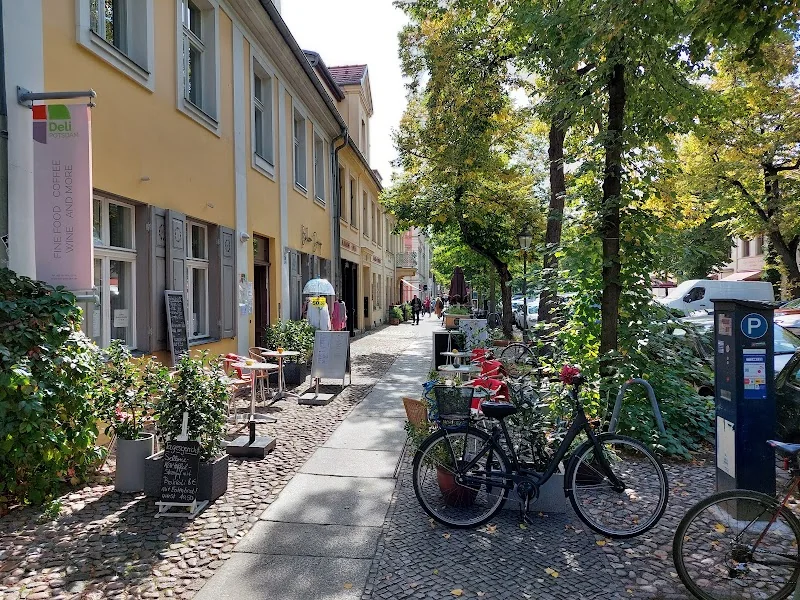
For SEO-relevant searches related to restaurants, cafés, and shops, it is important that the Dutch Quarter cannot be reduced to a single address. It is an entire quarter with several streets where gastronomy and retail are visibly present. The historical context enhances the experience: walking through the streets, one experiences the brick facades, the shutters, and the gables in conjunction with shop windows, outdoor tables, and small gathering spots. This is particularly attractive for visitors who want to get to know Potsdam not just as a city of palaces and parks but also as a city with an urban, walkable center. Therefore, the quarter is well-suited for a relaxed afternoon visit, for a coffee break after sightseeing, or as a culinary stop before or after a museum visit. Precisely because the architecture and uses are so closely connected here, a sense of urbanity emerges that feels both historical and contemporary. ([potsdam.de](https://www.potsdam.de/de/hollaendisches-viertel))
Jan Bouman House, Architecture, and Sights
Anyone who truly wants to understand the history of the Dutch Quarter should definitely consider the Jan Bouman House at Mittelstraße 8. The museum showcases the history of the quarter and explains the everyday culture of its residents. Particularly valuable is the ensemble of the front house, courtyard, half-timbered building, and garden from 1735. Historical furniture and household items provide an impression of life in the 18th century and make the architectural past tangible. The support association for the preservation of Dutch culture in Potsdam manages the house for the city and complements the exhibition with special exhibitions and events. Thus, the Jan Bouman House is not just an appendix to the quarter but a central place where history, architecture, and cultural mediation converge. ([jan-bouman-haus.byseum.de](https://jan-bouman-haus.byseum.de/))
Architecturally, the Dutch Quarter is a prime example of unity in variation. The four blocks are clearly structured, yet each house has its own small role in the overall picture. The red brick appearance, the white joints, and the characteristic gables give the quarter a strong visual identity that is immediately recognizable. The fact that the quarter is today a unique tourist attraction in Germany and Europe is thus not only related to its history but also to the consistent design language of the buildings. At the same time, it is precisely this cohesion that appeals to visitors searching for images, photo spots, or atmospheric city views. Walking through the quarter, one discovers not just a single house but a harmonious urban ensemble. Together with the museum, the close connections to Dutch culture, and the link to Potsdam's urban development, this creates a profile of sights that goes far beyond a quick glance. ([potsdam.de](https://www.potsdam.de/de/hollaendisches-viertel))
Tulip Festival, Sinterklaas, and Experiencing the Dutch Quarter Today
The Dutch Quarter is today particularly closely associated with two fixed highlights of events: the Tulip Festival in April and the Sinterklaas Festival in December. The Tulip Festival is described by the official website as a cheerful spring festival that takes place in the stylish ambiance of the Dutch Quarter and is organized in the largest Dutch residential complex outside the Netherlands. Music, dancers, craftsmen, and vendors shape the picture, and the festival is considered unique in Germany. The Sinterklaas Festival, on the other hand, is described by the city of Potsdam as a Christmas market with around 100 market stalls, featuring Dutch and local vendors, gastronomy, and craft demonstrations. For visitors, this means: the quarter is not only attractive in everyday life but develops a particularly special dynamic during these festivals. ([potsdam-tulpenfest.de](https://www.potsdam-tulpenfest.de/))
These events are also important because they showcase the current face of the quarter. The Dutch Quarter is not a static monument area but a place where cultural traditions continue to thrive and regularly attract new visitors. The support association for the preservation of Dutch culture in Potsdam has been a source of ideas and a partner for these festivals since 1996, which are visited by thousands of people each year. Particularly the Sinterklaas Festival emphasizes the Dutch character of the quarter, while the Tulip Festival vividly celebrates spring. Therefore, those who want to experience the quarter today should not only look at the buildings but also pay attention to the event calendar. For it is here that the connection between city history, neighborhood, culture, and tourism is most clearly visible. The quarter is thus both a space for everyday life, a backdrop for walks, and a stage for recurring festivals with regional impact. ([jan-bouman-haus.byseum.de](https://jan-bouman-haus.byseum.de/))
Images, Walks, and Tips for Your Visit
Those searching for images of the Dutch Quarter are often looking for the typical impression that one immediately perceives on site: red bricks, bright joints, shutters, slightly curved gables, and streets that form a closed ensemble through the city center of Potsdam. This imagery makes the quarter so photogenic and easily recognizable. It is a place that is not defined by a single monument but by the totality of the facades and the calm, orderly street structure. This is particularly pleasant for walks, as one discovers new perspectives and details at many points without having to leave the quarter. Those planning a longer stroll can also combine their visit with Brandenburger Straße, the city canal, or the area around Bassinplatz and Nauener Tor. This connection makes it easy to turn a short visit into a varied city center tour. ([potsdam.de](https://www.potsdam.de/de/hollaendisches-viertel))
A practical rule of thumb is: the Dutch Quarter unfolds its charm especially when one takes their time. A quick walkthrough shows the architecture, but only slow walking conveys the feeling for the place. Because the quarter is centrally located, it can be easily combined with gastronomy, museums, and other sights. The city of Potsdam explicitly recommends a mix of walking, city festivals, and urban stays for the quarter, and this fits well with the search intentions behind terms like route, parking, restaurants, or today. Therefore, those planning a day trip should not only clarify the route but also allow enough time for a coffee, a museum visit, and a second walk. Then, the sight becomes an experience that credibly connects history, present, and atmosphere. ([potsdam.de](https://www.potsdam.de/de/hollaendisches-viertel-als-veranstaltungsort))
Sources:
Show moreShow less
Dutch Quarter | History & Tulip Festival
The Dutch Quarter in Potsdam is much more than a beautiful photo opportunity or a quick detour between Brandenburger Straße and Nauener Tor. It is a historic city district with a distinctive identity, consisting of four blocks and about 150 brick houses. At first glance, the houses appear as a closed ensemble from another world: unplastered red bricks, white joints, shutters, and partly curved gables shape the image. This very mix makes the quarter so special, as living space, everyday life, commerce, gastronomy, and history are still closely intertwined here. For many visitors, it is therefore not just a sight but a vibrant part of Potsdam's city center, where one can stroll, shop, eat, and soak in the atmosphere. Those traveling from Berlin can quickly reach Potsdam and find one of the city's most prominent destinations in the Dutch Quarter. ([potsdam.de](https://www.potsdam.de/de/hollaendisches-viertel))
History of the Dutch Quarter in Potsdam
The history of the Dutch Quarter begins in the 18th century with the desire of Frederick William I to attract experienced craftsmen for the construction and development of the city of Potsdam. Dutch carpenters and masons were brought to Potsdam, and under the leadership of Johann or Jan Bouman, construction of the quarter began in 1733. The complex was built between 1734 and 1742 and was constructed with Dutch-style brick architecture that was intended to be both functional and representative. The quarter was meant not only to create living space but also to provide a setting for the newly recruited craftsmen to work and live. Today, the Jan Bouman House at Mittelstraße 8 reminds us of these origins and the person who led the construction. Thus, the quarter is directly connected to the urban development of Potsdam and serves as an example of how targeted settlement policies, craftsmanship, and urban planning vision came together. ([potsdam.de](https://www.potsdam.de/de/hollaendisches-viertel))
What is exciting is not only the creation but also the later development of the quarter. After centuries of use, the quarter fell into disrepair at the end of the 20th century before renovation after the political turnaround opened up new perspectives. The city of Potsdam emphasizes that the renovation statute adopted in 1990 created the conditions for the quarter to become a vital neighborhood again through a combination of public and private engagement. Today, the quarter presents itself as a historically grown yet lively environment where living and tourism coexist. This connection is a significant part of its charm: it is not a backdrop without life, but a real quarter whose architecture, history, and usage reinforce each other. Many visitors perceive this as a special form of authenticity because here urban heritage is not preserved but continued in everyday life. ([potsdam.de](https://www.potsdam.de/de/hollaendisches-viertel))
Route, Access, and Parking in the Dutch Quarter
Those looking for the right route to the Dutch Quarter in Potsdam will find a very central location as the biggest plus. The quarter is located in the historic city center and is thus part of an area that can be excellently explored on foot. The official address is Mittelstraße, 14467 Potsdam. Those arriving by public transport benefit from the fact that tram and bus stops are reportedly only one to five minutes away. The general access to Potsdam is also uncomplicated: the state capital describes the city as well connected by trains, S-Bahn, and buses, with S7 and S1, among others, running from Berlin, as well as several regional trains. For visitors, this means: the quarter can easily be planned as a destination for a day trip, a weekend visit, or a walk through the city center. ([potsdam.de](https://www.potsdam.de/de/hollaendisches-viertel-als-veranstaltungsort))
When it comes to parking, the city of Potsdam mentions several nearby parking garages: Hebbelstraße about two minutes away, WilhelmGalerie at Platz der Einheit also about two minutes away, and Stadtpalais or Hegelallee about five minutes away. This is particularly practical for guests arriving by car who want to explore the quarter on foot afterward. Since the Dutch Quarter is strongly influenced by its historical character and residential environment, a walk is recommended instead of driving right to the doorstep. Those wishing to use the quarter as a starting point for further destinations can easily combine their visit with the city center, the city canal, or the area around Bassinplatz and Nauener Tor. The location is so compact that many sights are reachable within a short distance without constantly having to switch transport. This is exactly what makes the route to this quarter so pleasant: it is central, clear, and practical for everyday use. ([potsdam.de](https://www.potsdam.de/de/hollaendisches-viertel-als-veranstaltungsort))
Shops, Cafés, and Restaurants in the Dutch Quarter
A large part of the appeal of the Dutch Quarter lies in its mix of historic architecture and vibrant everyday life. The city of Potsdam explicitly describes the quarter as a place with living space, small shops, galleries, and restaurants, and the tourist information also refers to small shops, cafés, and bars as defining elements of the atmosphere. This makes the quarter not just a pure museum area but a neighborhood that attracts people throughout the day. One can stroll here peacefully, look at shop windows, take a break in a café, or plan a lunch or dinner. It is precisely this variety of uses that explains why the quarter is so popular with residents and guests. It is a place where one not only informs oneself but also spends time. ([potsdam.de](https://www.potsdam.de/de/hollaendisches-viertel))
For SEO-relevant searches related to restaurants, cafés, and shops, it is important that the Dutch Quarter cannot be reduced to a single address. It is an entire quarter with several streets where gastronomy and retail are visibly present. The historical context enhances the experience: walking through the streets, one experiences the brick facades, the shutters, and the gables in conjunction with shop windows, outdoor tables, and small gathering spots. This is particularly attractive for visitors who want to get to know Potsdam not just as a city of palaces and parks but also as a city with an urban, walkable center. Therefore, the quarter is well-suited for a relaxed afternoon visit, for a coffee break after sightseeing, or as a culinary stop before or after a museum visit. Precisely because the architecture and uses are so closely connected here, a sense of urbanity emerges that feels both historical and contemporary. ([potsdam.de](https://www.potsdam.de/de/hollaendisches-viertel))
Jan Bouman House, Architecture, and Sights
Anyone who truly wants to understand the history of the Dutch Quarter should definitely consider the Jan Bouman House at Mittelstraße 8. The museum showcases the history of the quarter and explains the everyday culture of its residents. Particularly valuable is the ensemble of the front house, courtyard, half-timbered building, and garden from 1735. Historical furniture and household items provide an impression of life in the 18th century and make the architectural past tangible. The support association for the preservation of Dutch culture in Potsdam manages the house for the city and complements the exhibition with special exhibitions and events. Thus, the Jan Bouman House is not just an appendix to the quarter but a central place where history, architecture, and cultural mediation converge. ([jan-bouman-haus.byseum.de](https://jan-bouman-haus.byseum.de/))
Architecturally, the Dutch Quarter is a prime example of unity in variation. The four blocks are clearly structured, yet each house has its own small role in the overall picture. The red brick appearance, the white joints, and the characteristic gables give the quarter a strong visual identity that is immediately recognizable. The fact that the quarter is today a unique tourist attraction in Germany and Europe is thus not only related to its history but also to the consistent design language of the buildings. At the same time, it is precisely this cohesion that appeals to visitors searching for images, photo spots, or atmospheric city views. Walking through the quarter, one discovers not just a single house but a harmonious urban ensemble. Together with the museum, the close connections to Dutch culture, and the link to Potsdam's urban development, this creates a profile of sights that goes far beyond a quick glance. ([potsdam.de](https://www.potsdam.de/de/hollaendisches-viertel))
Tulip Festival, Sinterklaas, and Experiencing the Dutch Quarter Today
The Dutch Quarter is today particularly closely associated with two fixed highlights of events: the Tulip Festival in April and the Sinterklaas Festival in December. The Tulip Festival is described by the official website as a cheerful spring festival that takes place in the stylish ambiance of the Dutch Quarter and is organized in the largest Dutch residential complex outside the Netherlands. Music, dancers, craftsmen, and vendors shape the picture, and the festival is considered unique in Germany. The Sinterklaas Festival, on the other hand, is described by the city of Potsdam as a Christmas market with around 100 market stalls, featuring Dutch and local vendors, gastronomy, and craft demonstrations. For visitors, this means: the quarter is not only attractive in everyday life but develops a particularly special dynamic during these festivals. ([potsdam-tulpenfest.de](https://www.potsdam-tulpenfest.de/))
These events are also important because they showcase the current face of the quarter. The Dutch Quarter is not a static monument area but a place where cultural traditions continue to thrive and regularly attract new visitors. The support association for the preservation of Dutch culture in Potsdam has been a source of ideas and a partner for these festivals since 1996, which are visited by thousands of people each year. Particularly the Sinterklaas Festival emphasizes the Dutch character of the quarter, while the Tulip Festival vividly celebrates spring. Therefore, those who want to experience the quarter today should not only look at the buildings but also pay attention to the event calendar. For it is here that the connection between city history, neighborhood, culture, and tourism is most clearly visible. The quarter is thus both a space for everyday life, a backdrop for walks, and a stage for recurring festivals with regional impact. ([jan-bouman-haus.byseum.de](https://jan-bouman-haus.byseum.de/))
Images, Walks, and Tips for Your Visit
Those searching for images of the Dutch Quarter are often looking for the typical impression that one immediately perceives on site: red bricks, bright joints, shutters, slightly curved gables, and streets that form a closed ensemble through the city center of Potsdam. This imagery makes the quarter so photogenic and easily recognizable. It is a place that is not defined by a single monument but by the totality of the facades and the calm, orderly street structure. This is particularly pleasant for walks, as one discovers new perspectives and details at many points without having to leave the quarter. Those planning a longer stroll can also combine their visit with Brandenburger Straße, the city canal, or the area around Bassinplatz and Nauener Tor. This connection makes it easy to turn a short visit into a varied city center tour. ([potsdam.de](https://www.potsdam.de/de/hollaendisches-viertel))
A practical rule of thumb is: the Dutch Quarter unfolds its charm especially when one takes their time. A quick walkthrough shows the architecture, but only slow walking conveys the feeling for the place. Because the quarter is centrally located, it can be easily combined with gastronomy, museums, and other sights. The city of Potsdam explicitly recommends a mix of walking, city festivals, and urban stays for the quarter, and this fits well with the search intentions behind terms like route, parking, restaurants, or today. Therefore, those planning a day trip should not only clarify the route but also allow enough time for a coffee, a museum visit, and a second walk. Then, the sight becomes an experience that credibly connects history, present, and atmosphere. ([potsdam.de](https://www.potsdam.de/de/hollaendisches-viertel-als-veranstaltungsort))
Sources:
Dutch Quarter | History & Tulip Festival
The Dutch Quarter in Potsdam is much more than a beautiful photo opportunity or a quick detour between Brandenburger Straße and Nauener Tor. It is a historic city district with a distinctive identity, consisting of four blocks and about 150 brick houses. At first glance, the houses appear as a closed ensemble from another world: unplastered red bricks, white joints, shutters, and partly curved gables shape the image. This very mix makes the quarter so special, as living space, everyday life, commerce, gastronomy, and history are still closely intertwined here. For many visitors, it is therefore not just a sight but a vibrant part of Potsdam's city center, where one can stroll, shop, eat, and soak in the atmosphere. Those traveling from Berlin can quickly reach Potsdam and find one of the city's most prominent destinations in the Dutch Quarter. ([potsdam.de](https://www.potsdam.de/de/hollaendisches-viertel))
History of the Dutch Quarter in Potsdam
The history of the Dutch Quarter begins in the 18th century with the desire of Frederick William I to attract experienced craftsmen for the construction and development of the city of Potsdam. Dutch carpenters and masons were brought to Potsdam, and under the leadership of Johann or Jan Bouman, construction of the quarter began in 1733. The complex was built between 1734 and 1742 and was constructed with Dutch-style brick architecture that was intended to be both functional and representative. The quarter was meant not only to create living space but also to provide a setting for the newly recruited craftsmen to work and live. Today, the Jan Bouman House at Mittelstraße 8 reminds us of these origins and the person who led the construction. Thus, the quarter is directly connected to the urban development of Potsdam and serves as an example of how targeted settlement policies, craftsmanship, and urban planning vision came together. ([potsdam.de](https://www.potsdam.de/de/hollaendisches-viertel))
What is exciting is not only the creation but also the later development of the quarter. After centuries of use, the quarter fell into disrepair at the end of the 20th century before renovation after the political turnaround opened up new perspectives. The city of Potsdam emphasizes that the renovation statute adopted in 1990 created the conditions for the quarter to become a vital neighborhood again through a combination of public and private engagement. Today, the quarter presents itself as a historically grown yet lively environment where living and tourism coexist. This connection is a significant part of its charm: it is not a backdrop without life, but a real quarter whose architecture, history, and usage reinforce each other. Many visitors perceive this as a special form of authenticity because here urban heritage is not preserved but continued in everyday life. ([potsdam.de](https://www.potsdam.de/de/hollaendisches-viertel))
Route, Access, and Parking in the Dutch Quarter
Those looking for the right route to the Dutch Quarter in Potsdam will find a very central location as the biggest plus. The quarter is located in the historic city center and is thus part of an area that can be excellently explored on foot. The official address is Mittelstraße, 14467 Potsdam. Those arriving by public transport benefit from the fact that tram and bus stops are reportedly only one to five minutes away. The general access to Potsdam is also uncomplicated: the state capital describes the city as well connected by trains, S-Bahn, and buses, with S7 and S1, among others, running from Berlin, as well as several regional trains. For visitors, this means: the quarter can easily be planned as a destination for a day trip, a weekend visit, or a walk through the city center. ([potsdam.de](https://www.potsdam.de/de/hollaendisches-viertel-als-veranstaltungsort))
When it comes to parking, the city of Potsdam mentions several nearby parking garages: Hebbelstraße about two minutes away, WilhelmGalerie at Platz der Einheit also about two minutes away, and Stadtpalais or Hegelallee about five minutes away. This is particularly practical for guests arriving by car who want to explore the quarter on foot afterward. Since the Dutch Quarter is strongly influenced by its historical character and residential environment, a walk is recommended instead of driving right to the doorstep. Those wishing to use the quarter as a starting point for further destinations can easily combine their visit with the city center, the city canal, or the area around Bassinplatz and Nauener Tor. The location is so compact that many sights are reachable within a short distance without constantly having to switch transport. This is exactly what makes the route to this quarter so pleasant: it is central, clear, and practical for everyday use. ([potsdam.de](https://www.potsdam.de/de/hollaendisches-viertel-als-veranstaltungsort))
Shops, Cafés, and Restaurants in the Dutch Quarter
A large part of the appeal of the Dutch Quarter lies in its mix of historic architecture and vibrant everyday life. The city of Potsdam explicitly describes the quarter as a place with living space, small shops, galleries, and restaurants, and the tourist information also refers to small shops, cafés, and bars as defining elements of the atmosphere. This makes the quarter not just a pure museum area but a neighborhood that attracts people throughout the day. One can stroll here peacefully, look at shop windows, take a break in a café, or plan a lunch or dinner. It is precisely this variety of uses that explains why the quarter is so popular with residents and guests. It is a place where one not only informs oneself but also spends time. ([potsdam.de](https://www.potsdam.de/de/hollaendisches-viertel))
For SEO-relevant searches related to restaurants, cafés, and shops, it is important that the Dutch Quarter cannot be reduced to a single address. It is an entire quarter with several streets where gastronomy and retail are visibly present. The historical context enhances the experience: walking through the streets, one experiences the brick facades, the shutters, and the gables in conjunction with shop windows, outdoor tables, and small gathering spots. This is particularly attractive for visitors who want to get to know Potsdam not just as a city of palaces and parks but also as a city with an urban, walkable center. Therefore, the quarter is well-suited for a relaxed afternoon visit, for a coffee break after sightseeing, or as a culinary stop before or after a museum visit. Precisely because the architecture and uses are so closely connected here, a sense of urbanity emerges that feels both historical and contemporary. ([potsdam.de](https://www.potsdam.de/de/hollaendisches-viertel))
Jan Bouman House, Architecture, and Sights
Anyone who truly wants to understand the history of the Dutch Quarter should definitely consider the Jan Bouman House at Mittelstraße 8. The museum showcases the history of the quarter and explains the everyday culture of its residents. Particularly valuable is the ensemble of the front house, courtyard, half-timbered building, and garden from 1735. Historical furniture and household items provide an impression of life in the 18th century and make the architectural past tangible. The support association for the preservation of Dutch culture in Potsdam manages the house for the city and complements the exhibition with special exhibitions and events. Thus, the Jan Bouman House is not just an appendix to the quarter but a central place where history, architecture, and cultural mediation converge. ([jan-bouman-haus.byseum.de](https://jan-bouman-haus.byseum.de/))
Architecturally, the Dutch Quarter is a prime example of unity in variation. The four blocks are clearly structured, yet each house has its own small role in the overall picture. The red brick appearance, the white joints, and the characteristic gables give the quarter a strong visual identity that is immediately recognizable. The fact that the quarter is today a unique tourist attraction in Germany and Europe is thus not only related to its history but also to the consistent design language of the buildings. At the same time, it is precisely this cohesion that appeals to visitors searching for images, photo spots, or atmospheric city views. Walking through the quarter, one discovers not just a single house but a harmonious urban ensemble. Together with the museum, the close connections to Dutch culture, and the link to Potsdam's urban development, this creates a profile of sights that goes far beyond a quick glance. ([potsdam.de](https://www.potsdam.de/de/hollaendisches-viertel))
Tulip Festival, Sinterklaas, and Experiencing the Dutch Quarter Today
The Dutch Quarter is today particularly closely associated with two fixed highlights of events: the Tulip Festival in April and the Sinterklaas Festival in December. The Tulip Festival is described by the official website as a cheerful spring festival that takes place in the stylish ambiance of the Dutch Quarter and is organized in the largest Dutch residential complex outside the Netherlands. Music, dancers, craftsmen, and vendors shape the picture, and the festival is considered unique in Germany. The Sinterklaas Festival, on the other hand, is described by the city of Potsdam as a Christmas market with around 100 market stalls, featuring Dutch and local vendors, gastronomy, and craft demonstrations. For visitors, this means: the quarter is not only attractive in everyday life but develops a particularly special dynamic during these festivals. ([potsdam-tulpenfest.de](https://www.potsdam-tulpenfest.de/))
These events are also important because they showcase the current face of the quarter. The Dutch Quarter is not a static monument area but a place where cultural traditions continue to thrive and regularly attract new visitors. The support association for the preservation of Dutch culture in Potsdam has been a source of ideas and a partner for these festivals since 1996, which are visited by thousands of people each year. Particularly the Sinterklaas Festival emphasizes the Dutch character of the quarter, while the Tulip Festival vividly celebrates spring. Therefore, those who want to experience the quarter today should not only look at the buildings but also pay attention to the event calendar. For it is here that the connection between city history, neighborhood, culture, and tourism is most clearly visible. The quarter is thus both a space for everyday life, a backdrop for walks, and a stage for recurring festivals with regional impact. ([jan-bouman-haus.byseum.de](https://jan-bouman-haus.byseum.de/))
Images, Walks, and Tips for Your Visit
Those searching for images of the Dutch Quarter are often looking for the typical impression that one immediately perceives on site: red bricks, bright joints, shutters, slightly curved gables, and streets that form a closed ensemble through the city center of Potsdam. This imagery makes the quarter so photogenic and easily recognizable. It is a place that is not defined by a single monument but by the totality of the facades and the calm, orderly street structure. This is particularly pleasant for walks, as one discovers new perspectives and details at many points without having to leave the quarter. Those planning a longer stroll can also combine their visit with Brandenburger Straße, the city canal, or the area around Bassinplatz and Nauener Tor. This connection makes it easy to turn a short visit into a varied city center tour. ([potsdam.de](https://www.potsdam.de/de/hollaendisches-viertel))
A practical rule of thumb is: the Dutch Quarter unfolds its charm especially when one takes their time. A quick walkthrough shows the architecture, but only slow walking conveys the feeling for the place. Because the quarter is centrally located, it can be easily combined with gastronomy, museums, and other sights. The city of Potsdam explicitly recommends a mix of walking, city festivals, and urban stays for the quarter, and this fits well with the search intentions behind terms like route, parking, restaurants, or today. Therefore, those planning a day trip should not only clarify the route but also allow enough time for a coffee, a museum visit, and a second walk. Then, the sight becomes an experience that credibly connects history, present, and atmosphere. ([potsdam.de](https://www.potsdam.de/de/hollaendisches-viertel-als-veranstaltungsort))
Sources:
Frequently Asked Questions
Reviews
No reviews found