
Potsdam
Breite Str. 7, 14467 Potsdam, Deutschland
Garrison Church Potsdam | Reconstruction & Tower Dome
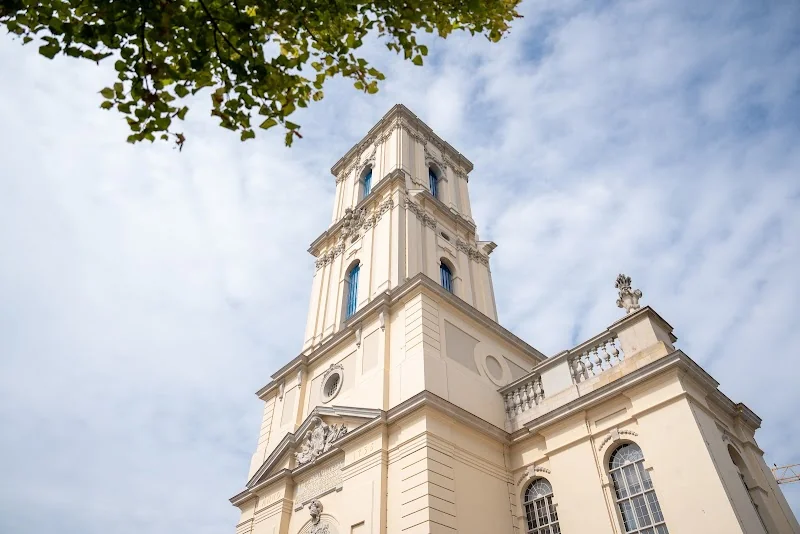
The Garrison Church Potsdam at Breiten Straße 7 is today much more than a historical site or a tourist attraction for a quick photo stop. Those who enter the tower experience a space where architecture, memory, education, view, and social dialogue connect in a special way. The tower, which will open in 2024, offers a wide view over the UNESCO World Heritage City from the observation deck Potsdam Panorama at a height of 57 meters, overlooking its historic neighborhoods and, in clear weather, even as far as Berlin. At the same time, the site recalls a nearly 300-year history marked by baroque architecture, political appropriation, destruction, GDR history, and a controversial reconstruction. This very tension makes the Garrison Church so interesting for many visitors: it is not just a building, but a historical place of learning with relevance to the present. The foundation explicitly understands the site as a place for peace, democracy, tolerance, and respectful engagement. This is evident in the building, in the exhibition, in the educational program, and also in the way the history of the house is told. Therefore, those searching for Garrison Church Potsdam today, currently, earlier, or 2026 will not only find tourist information but a multifaceted narrative about Potsdam itself and about German history in the 20th century. ([garrisonchurch-potsdam.de](https://garnisonkirche-potsdam.de/en/about-us/?utm_source=openai))
History of the Garrison Church Potsdam: From Baroque Building to Demolition
The history of the Garrison Church begins at a time when Potsdam, as a garrison city, was heavily influenced by the military. According to official accounts, the church was built from 1730 to 1735 by architect Philipp Gerlach for the Prussian King Frederick William I. The building was intended for soldiers and their families and was a central symbol of urban development in the then garrison city. The foundation's sources also make it clear that the nave was designed for around 3000 people at that time. Thus, the church was not just any secondary building, but a cityscape-defining center with great religious, social, and representative significance. Architecturally, it was one of the outstanding examples of North German Baroque and was part of the famous Three Churches View, which has shaped Potsdam's silhouette for centuries. Its carillon was also one of the memories associated with the historic site. However, this history was brutally interrupted: in 1945, the baroque church was destroyed by fire during the bombing of Potsdam. In 1950, the Holy Cross Chapel was established in the tower as a place for peace before the church-hostile GDR regime had the remains of the nave and the tower blown up in 1968 and built a data processing center on parts of the site. The official history of the church is thus not only a story of architecture but also a story of war, ideology, loss, and urban change. This is precisely why many users search for terms like history, earlier, nave, or carillon when approaching the Garrison Church. ([garrisonchurch-potsdam.de](https://garnisonkirche-potsdam.de/ueber-uns/?utm_source=openai))
Reconstruction of the Garrison Church Potsdam: Tower, Dome, and Status 2026
The current reconstruction is part of a long debate about urban appearance, memory, and historical responsibility. According to the foundation, the reconstruction of the Garrison Church Potsdam began in 2017. The basis was a resolution by the city council from 1990, which provided for the reconstruction in the interest of the historical cityscape. In the first step, the tower was built, which opened in 2024 and is externally oriented towards the baroque original but works with a modern space and usage concept inside. What this building offers today is especially important for the public: a fully accessible observation deck, exhibition rooms, educational offerings, and quality of stay. At the same time, the reconstruction is not yet completed in every respect. According to the foundation, the tower is to be completed in 2026 with a 30-meter-high dome, a dome, and a weather vane; earlier communications had already predicted the completion of the tower dome for early 2026. Thus, the search queries for tower dome, dome, and 2026 are closely linked to the actual construction progress. For visitors, the reconstruction is not an abstract topic but a visible process: the reconstruction closes an urban gap, simultaneously opens a new cultural and viewing location, and aims not just to copy the original form but to translate it into contemporary use. This makes the Garrison Church a very special case among Potsdam's locations, as here reconstruction and critical reflection are explicitly connected. The foundation emphasizes that the site should unite memory, culture, and discourse. ([garrisonchurch-potsdam.de](https://garnisonkirche-potsdam.de/en/about-us/))
Climbing the Tower in Potsdam: Observation Deck, Tickets, and Accessibility
A central reason for the visit is the tower climb. The Potsdam Panorama is located at a height of 57 meters and is accessible barrier-free by elevator; alternatively, 365 steps lead up. These numbers already make it clear why the Garrison Church appears in many search queries with terms like tower climb, observation deck, or today. At the top, a 360-degree view opens up over Potsdam, its palaces, gardens, and the historic center. The foundation describes the view as a panorama of Potsdam's most important sights and even as far as Berlin. Especially for people visiting Potsdam for the first time, this is a very strong experience: the tower becomes a point of orientation from which the city can be read geographically and historically. Practically important is also that the visit is clearly organized. Tickets can be purchased online or at the cash desk in the foyer; when purchasing, a time slot is booked, and groups of ten or more receive a discount. Currently, the foundation states a price of 12 euros for adults, 7 euros reduced, 25 euros for families, 10 euros for groups of ten or more, and 9 euros for holders of a Welcome Card, depending on the type of ticket. The opening hours are regulated seasonally: from April to October, Tuesday to Sunday, from November to March, Wednesday to Sunday. The last admission is earlier than the closing time of the platform, depending on the day of the week. Accessibility is also detailed: the entire building is accessible according to official visitor information, with ground-level access, elevators with acoustic announcements and Braille buttons, wheelchair-accessible exhibition areas, and a barrier-free WC. Therefore, those looking for a combination of view, comfort, and understandable visitor guidance will find a modern, well-structured solution here. ([garrisonchurch-potsdam.de](https://garnisonkirche-potsdam.de/besuch/))
Interior, Exhibition, and Carillon: What Visitors Can Expect Today
The interior of the Garrison Church is not intended as a classic sacred venue with mere reconstruction but as an exhibition and mediation space with a clear content-oriented stance. The official website emphasizes that exhibiting here does not only mean placing something but critically examining the history of the site in the context of German and European history. For this purpose, the foundation uses exhibits, images, documents, and multimedia deepening stations. The central permanent orientation is faith, power, and military, aiming to make threats to democracies visible, reflect on human actions, and provide impulses for a pluralistic society. This is precisely why the keyword interior fits so well with the actual offering: the interior is not a neutral background but a consciously designed learning and memory space. Additionally, the Nail Cross Chapel serves as a place of spiritual life. Regular morning prayers, peace prayers, memorial services, and church services take place there; the chapel is also open outside these times. Thus, the Garrison Church connects exhibition and spirituality, historical reflection, and current practice. The foundation also points out that exhibition texts and information on site are available in German and English. The historical reference to the carillon remains important, as the church was once part of the Three Churches View and delighted with its carillon. In today's reconstruction, this memory stands alongside modern use: workshops, discussions, music, and educational formats complement the tour and make the visit much more than a short tower climb. Thus, those searching for interior, carillon, or currently will not find a purely tourist backdrop but a place with a conscious content-related claim. ([garrisonchurch-potsdam.de](https://garnisonkirche-potsdam.de/besuch/))
Garrison Church Potsdam Today: A Place for Peace, Democracy, and Dialogue
The Garrison Church Potsdam today is a place that explicitly deals with the present and future. The foundation's guiding principle speaks of remembering history in order to learn from it for today and tomorrow. At the same time, the site should provide space for dialogue and controversy in mutual respect. The foundation emphasizes openness to the world, diversity, mindful coexistence, and commitment to peace and democracy; it also clearly stands against discrimination, exclusion, anti-Semitism, racism, and historical revisionism. The inscription on the tower, which refers to the paths of peace in five languages, is also part of this self-understanding. This is important because the Garrison Church is seen in many debates not only as a reconstructed monument but as a site with political and historical responsibility. Therefore, those searching for currently or today are not only asking about visiting hours but also how the church impacts the present. Here lies one of the great strengths of the house: it connects tourism with historical education, sacred use with cultural programming, and city panorama with moral self-reflection. Additionally, the educational work explicitly targets schools, groups, and interested visitors. There are guided tours, workshops, project days, peace and democracy workshops, encounters with GDR contemporaries, as well as digital materials and online courses. Thus, the site is not merely a restored building but a platform for debates about memory culture, political imagery, language, and the responsibility of historical sites. This focus explains why the Garrison Church today is so strongly associated with the terms today, currently, and reconstruction. ([garrisonchurch-potsdam.de](https://garnisonkirche-potsdam.de/en/about-us/?utm_source=openai))
Hitler and the Day of Potsdam: Why History Does Not End Here
Hardly any search term is as loaded and simultaneously as in need of explanation as Hitler in connection with the Garrison Church. The reason lies in the so-called Day of Potsdam on March 21, 1933. According to the foundation's official account, the state act took place in the Garrison Church, with which the National Socialist dictatorship symbolically established itself and politically and symbolically pushed back the young republican democracy in Germany. The historical representations of the foundation describe how Adolf Hitler was staged in Potsdam and how the site was used as a traditional venue to legitimize the Nazi regime. This connection between architecture and propaganda makes the Garrison Church a sensitive memorial site. The church was already seen in its historical form as a symbol of militarism and a place for anti-democratic and traditionalist forces. Today, this past is not concealed but explicitly made the starting point for educational work. The foundation organizes events, project days, and discussions that address the Day of Potsdam, right-wing extremism then and now, and the question of democratic vigilance. This is no coincidence but part of the mission: the site should help to understand the mechanisms of political appropriation and take historical misdevelopments seriously in their effects to this day. Therefore, the Garrison Church is also a place where terms like Hitler, Day of Potsdam, or earlier cannot remain isolated. They belong to a larger history of power, staging, destruction, and new beginnings. Precisely because the memory is so loaded, it is openly and actively processed here. The goal is not repression but critical engagement and historical learning with a view to the present. ([garrisonchurch-potsdam.de](https://garnisonkirche-potsdam.de/live-dabei-projekttag-zum-tag-von-potsdam/?utm_source=openai))
Directions, Parking, and Le Petit Café at the Garrison Church Potsdam
For practical planning, the location of the Garrison Church is ideal: the address is Breite Straße 7, 14467 Potsdam. From Berlin, travel is possible by regional train or S-Bahn; from Potsdam Central Station, it is about a ten-minute walk according to official visitor information. The nearest tram and bus stop is Alter Markt/Landtag. Those arriving by car will find several parking options nearby, including the P+R parking garage Bahnhofspassagen on Babelsberger Straße, the IHK Potsdam parking garage on Henning-von-Tresckow-Straße, the Marktcenter parking garage on Breiten Straße, and the parking lot Am Lustgarten. Accessibility is also ensured: there is a ground-level entrance, elevators, wheelchair-accessible exhibition and passage areas, and a barrier-free WC on the first floor. Visitors are allowed to take private photos and videos in the tower; however, larger bags must be stored in lockers, and dogs are not allowed except for assistance and guide dogs. A nice conclusion to the visit is Le Petit Café right at the tower. There, small French dishes, drinks, as well as quiche, croques, salads, and cakes are available, either indoors or at the outdoor tables in front of the tower. Therefore, those planning the Garrison Church as a destination for half a day or a whole day can easily combine the ascent, the exhibition, and a break in the café. For many guests, this combination of view, historical depth, good accessibility, and a short culinary break is what makes the place special. ([garrisonchurch-potsdam.de](https://garnisonkirche-potsdam.de/en/visit/))
Sources:
- Garrison Church Potsdam – About Us ([garrisonchurch-potsdam.de](https://garnisonkirche-potsdam.de/ueber-uns/?utm_source=openai))
- Garrison Church Potsdam – Visit ([garrisonchurch-potsdam.de](https://garnisonkirche-potsdam.de/besuch/))
- Garrison Church Potsdam – Homepage ([garrisonchurch-potsdam.de](https://garnisonkirche-potsdam.de/?utm_source=openai))
- Garrison Church Potsdam – The Day of Potsdam ([garrisonchurch-potsdam.de](https://garnisonkirche-potsdam.de/tag-von-potsdam/?utm_source=openai))
Mehr anzeigenWeniger anzeigen
Garrison Church Potsdam | Reconstruction & Tower Dome
The Garrison Church Potsdam at Breiten Straße 7 is today much more than a historical site or a tourist attraction for a quick photo stop. Those who enter the tower experience a space where architecture, memory, education, view, and social dialogue connect in a special way. The tower, which will open in 2024, offers a wide view over the UNESCO World Heritage City from the observation deck Potsdam Panorama at a height of 57 meters, overlooking its historic neighborhoods and, in clear weather, even as far as Berlin. At the same time, the site recalls a nearly 300-year history marked by baroque architecture, political appropriation, destruction, GDR history, and a controversial reconstruction. This very tension makes the Garrison Church so interesting for many visitors: it is not just a building, but a historical place of learning with relevance to the present. The foundation explicitly understands the site as a place for peace, democracy, tolerance, and respectful engagement. This is evident in the building, in the exhibition, in the educational program, and also in the way the history of the house is told. Therefore, those searching for Garrison Church Potsdam today, currently, earlier, or 2026 will not only find tourist information but a multifaceted narrative about Potsdam itself and about German history in the 20th century. ([garrisonchurch-potsdam.de](https://garnisonkirche-potsdam.de/en/about-us/?utm_source=openai))
History of the Garrison Church Potsdam: From Baroque Building to Demolition
The history of the Garrison Church begins at a time when Potsdam, as a garrison city, was heavily influenced by the military. According to official accounts, the church was built from 1730 to 1735 by architect Philipp Gerlach for the Prussian King Frederick William I. The building was intended for soldiers and their families and was a central symbol of urban development in the then garrison city. The foundation's sources also make it clear that the nave was designed for around 3000 people at that time. Thus, the church was not just any secondary building, but a cityscape-defining center with great religious, social, and representative significance. Architecturally, it was one of the outstanding examples of North German Baroque and was part of the famous Three Churches View, which has shaped Potsdam's silhouette for centuries. Its carillon was also one of the memories associated with the historic site. However, this history was brutally interrupted: in 1945, the baroque church was destroyed by fire during the bombing of Potsdam. In 1950, the Holy Cross Chapel was established in the tower as a place for peace before the church-hostile GDR regime had the remains of the nave and the tower blown up in 1968 and built a data processing center on parts of the site. The official history of the church is thus not only a story of architecture but also a story of war, ideology, loss, and urban change. This is precisely why many users search for terms like history, earlier, nave, or carillon when approaching the Garrison Church. ([garrisonchurch-potsdam.de](https://garnisonkirche-potsdam.de/ueber-uns/?utm_source=openai))
Reconstruction of the Garrison Church Potsdam: Tower, Dome, and Status 2026
The current reconstruction is part of a long debate about urban appearance, memory, and historical responsibility. According to the foundation, the reconstruction of the Garrison Church Potsdam began in 2017. The basis was a resolution by the city council from 1990, which provided for the reconstruction in the interest of the historical cityscape. In the first step, the tower was built, which opened in 2024 and is externally oriented towards the baroque original but works with a modern space and usage concept inside. What this building offers today is especially important for the public: a fully accessible observation deck, exhibition rooms, educational offerings, and quality of stay. At the same time, the reconstruction is not yet completed in every respect. According to the foundation, the tower is to be completed in 2026 with a 30-meter-high dome, a dome, and a weather vane; earlier communications had already predicted the completion of the tower dome for early 2026. Thus, the search queries for tower dome, dome, and 2026 are closely linked to the actual construction progress. For visitors, the reconstruction is not an abstract topic but a visible process: the reconstruction closes an urban gap, simultaneously opens a new cultural and viewing location, and aims not just to copy the original form but to translate it into contemporary use. This makes the Garrison Church a very special case among Potsdam's locations, as here reconstruction and critical reflection are explicitly connected. The foundation emphasizes that the site should unite memory, culture, and discourse. ([garrisonchurch-potsdam.de](https://garnisonkirche-potsdam.de/en/about-us/))
Climbing the Tower in Potsdam: Observation Deck, Tickets, and Accessibility
A central reason for the visit is the tower climb. The Potsdam Panorama is located at a height of 57 meters and is accessible barrier-free by elevator; alternatively, 365 steps lead up. These numbers already make it clear why the Garrison Church appears in many search queries with terms like tower climb, observation deck, or today. At the top, a 360-degree view opens up over Potsdam, its palaces, gardens, and the historic center. The foundation describes the view as a panorama of Potsdam's most important sights and even as far as Berlin. Especially for people visiting Potsdam for the first time, this is a very strong experience: the tower becomes a point of orientation from which the city can be read geographically and historically. Practically important is also that the visit is clearly organized. Tickets can be purchased online or at the cash desk in the foyer; when purchasing, a time slot is booked, and groups of ten or more receive a discount. Currently, the foundation states a price of 12 euros for adults, 7 euros reduced, 25 euros for families, 10 euros for groups of ten or more, and 9 euros for holders of a Welcome Card, depending on the type of ticket. The opening hours are regulated seasonally: from April to October, Tuesday to Sunday, from November to March, Wednesday to Sunday. The last admission is earlier than the closing time of the platform, depending on the day of the week. Accessibility is also detailed: the entire building is accessible according to official visitor information, with ground-level access, elevators with acoustic announcements and Braille buttons, wheelchair-accessible exhibition areas, and a barrier-free WC. Therefore, those looking for a combination of view, comfort, and understandable visitor guidance will find a modern, well-structured solution here. ([garrisonchurch-potsdam.de](https://garnisonkirche-potsdam.de/besuch/))
Interior, Exhibition, and Carillon: What Visitors Can Expect Today
The interior of the Garrison Church is not intended as a classic sacred venue with mere reconstruction but as an exhibition and mediation space with a clear content-oriented stance. The official website emphasizes that exhibiting here does not only mean placing something but critically examining the history of the site in the context of German and European history. For this purpose, the foundation uses exhibits, images, documents, and multimedia deepening stations. The central permanent orientation is faith, power, and military, aiming to make threats to democracies visible, reflect on human actions, and provide impulses for a pluralistic society. This is precisely why the keyword interior fits so well with the actual offering: the interior is not a neutral background but a consciously designed learning and memory space. Additionally, the Nail Cross Chapel serves as a place of spiritual life. Regular morning prayers, peace prayers, memorial services, and church services take place there; the chapel is also open outside these times. Thus, the Garrison Church connects exhibition and spirituality, historical reflection, and current practice. The foundation also points out that exhibition texts and information on site are available in German and English. The historical reference to the carillon remains important, as the church was once part of the Three Churches View and delighted with its carillon. In today's reconstruction, this memory stands alongside modern use: workshops, discussions, music, and educational formats complement the tour and make the visit much more than a short tower climb. Thus, those searching for interior, carillon, or currently will not find a purely tourist backdrop but a place with a conscious content-related claim. ([garrisonchurch-potsdam.de](https://garnisonkirche-potsdam.de/besuch/))
Garrison Church Potsdam Today: A Place for Peace, Democracy, and Dialogue
The Garrison Church Potsdam today is a place that explicitly deals with the present and future. The foundation's guiding principle speaks of remembering history in order to learn from it for today and tomorrow. At the same time, the site should provide space for dialogue and controversy in mutual respect. The foundation emphasizes openness to the world, diversity, mindful coexistence, and commitment to peace and democracy; it also clearly stands against discrimination, exclusion, anti-Semitism, racism, and historical revisionism. The inscription on the tower, which refers to the paths of peace in five languages, is also part of this self-understanding. This is important because the Garrison Church is seen in many debates not only as a reconstructed monument but as a site with political and historical responsibility. Therefore, those searching for currently or today are not only asking about visiting hours but also how the church impacts the present. Here lies one of the great strengths of the house: it connects tourism with historical education, sacred use with cultural programming, and city panorama with moral self-reflection. Additionally, the educational work explicitly targets schools, groups, and interested visitors. There are guided tours, workshops, project days, peace and democracy workshops, encounters with GDR contemporaries, as well as digital materials and online courses. Thus, the site is not merely a restored building but a platform for debates about memory culture, political imagery, language, and the responsibility of historical sites. This focus explains why the Garrison Church today is so strongly associated with the terms today, currently, and reconstruction. ([garrisonchurch-potsdam.de](https://garnisonkirche-potsdam.de/en/about-us/?utm_source=openai))
Hitler and the Day of Potsdam: Why History Does Not End Here
Hardly any search term is as loaded and simultaneously as in need of explanation as Hitler in connection with the Garrison Church. The reason lies in the so-called Day of Potsdam on March 21, 1933. According to the foundation's official account, the state act took place in the Garrison Church, with which the National Socialist dictatorship symbolically established itself and politically and symbolically pushed back the young republican democracy in Germany. The historical representations of the foundation describe how Adolf Hitler was staged in Potsdam and how the site was used as a traditional venue to legitimize the Nazi regime. This connection between architecture and propaganda makes the Garrison Church a sensitive memorial site. The church was already seen in its historical form as a symbol of militarism and a place for anti-democratic and traditionalist forces. Today, this past is not concealed but explicitly made the starting point for educational work. The foundation organizes events, project days, and discussions that address the Day of Potsdam, right-wing extremism then and now, and the question of democratic vigilance. This is no coincidence but part of the mission: the site should help to understand the mechanisms of political appropriation and take historical misdevelopments seriously in their effects to this day. Therefore, the Garrison Church is also a place where terms like Hitler, Day of Potsdam, or earlier cannot remain isolated. They belong to a larger history of power, staging, destruction, and new beginnings. Precisely because the memory is so loaded, it is openly and actively processed here. The goal is not repression but critical engagement and historical learning with a view to the present. ([garrisonchurch-potsdam.de](https://garnisonkirche-potsdam.de/live-dabei-projekttag-zum-tag-von-potsdam/?utm_source=openai))
Directions, Parking, and Le Petit Café at the Garrison Church Potsdam
For practical planning, the location of the Garrison Church is ideal: the address is Breite Straße 7, 14467 Potsdam. From Berlin, travel is possible by regional train or S-Bahn; from Potsdam Central Station, it is about a ten-minute walk according to official visitor information. The nearest tram and bus stop is Alter Markt/Landtag. Those arriving by car will find several parking options nearby, including the P+R parking garage Bahnhofspassagen on Babelsberger Straße, the IHK Potsdam parking garage on Henning-von-Tresckow-Straße, the Marktcenter parking garage on Breiten Straße, and the parking lot Am Lustgarten. Accessibility is also ensured: there is a ground-level entrance, elevators, wheelchair-accessible exhibition and passage areas, and a barrier-free WC on the first floor. Visitors are allowed to take private photos and videos in the tower; however, larger bags must be stored in lockers, and dogs are not allowed except for assistance and guide dogs. A nice conclusion to the visit is Le Petit Café right at the tower. There, small French dishes, drinks, as well as quiche, croques, salads, and cakes are available, either indoors or at the outdoor tables in front of the tower. Therefore, those planning the Garrison Church as a destination for half a day or a whole day can easily combine the ascent, the exhibition, and a break in the café. For many guests, this combination of view, historical depth, good accessibility, and a short culinary break is what makes the place special. ([garrisonchurch-potsdam.de](https://garnisonkirche-potsdam.de/en/visit/))
Sources:
- Garrison Church Potsdam – About Us ([garrisonchurch-potsdam.de](https://garnisonkirche-potsdam.de/ueber-uns/?utm_source=openai))
- Garrison Church Potsdam – Visit ([garrisonchurch-potsdam.de](https://garnisonkirche-potsdam.de/besuch/))
- Garrison Church Potsdam – Homepage ([garrisonchurch-potsdam.de](https://garnisonkirche-potsdam.de/?utm_source=openai))
- Garrison Church Potsdam – The Day of Potsdam ([garrisonchurch-potsdam.de](https://garnisonkirche-potsdam.de/tag-von-potsdam/?utm_source=openai))
Garrison Church Potsdam | Reconstruction & Tower Dome
The Garrison Church Potsdam at Breiten Straße 7 is today much more than a historical site or a tourist attraction for a quick photo stop. Those who enter the tower experience a space where architecture, memory, education, view, and social dialogue connect in a special way. The tower, which will open in 2024, offers a wide view over the UNESCO World Heritage City from the observation deck Potsdam Panorama at a height of 57 meters, overlooking its historic neighborhoods and, in clear weather, even as far as Berlin. At the same time, the site recalls a nearly 300-year history marked by baroque architecture, political appropriation, destruction, GDR history, and a controversial reconstruction. This very tension makes the Garrison Church so interesting for many visitors: it is not just a building, but a historical place of learning with relevance to the present. The foundation explicitly understands the site as a place for peace, democracy, tolerance, and respectful engagement. This is evident in the building, in the exhibition, in the educational program, and also in the way the history of the house is told. Therefore, those searching for Garrison Church Potsdam today, currently, earlier, or 2026 will not only find tourist information but a multifaceted narrative about Potsdam itself and about German history in the 20th century. ([garrisonchurch-potsdam.de](https://garnisonkirche-potsdam.de/en/about-us/?utm_source=openai))
History of the Garrison Church Potsdam: From Baroque Building to Demolition
The history of the Garrison Church begins at a time when Potsdam, as a garrison city, was heavily influenced by the military. According to official accounts, the church was built from 1730 to 1735 by architect Philipp Gerlach for the Prussian King Frederick William I. The building was intended for soldiers and their families and was a central symbol of urban development in the then garrison city. The foundation's sources also make it clear that the nave was designed for around 3000 people at that time. Thus, the church was not just any secondary building, but a cityscape-defining center with great religious, social, and representative significance. Architecturally, it was one of the outstanding examples of North German Baroque and was part of the famous Three Churches View, which has shaped Potsdam's silhouette for centuries. Its carillon was also one of the memories associated with the historic site. However, this history was brutally interrupted: in 1945, the baroque church was destroyed by fire during the bombing of Potsdam. In 1950, the Holy Cross Chapel was established in the tower as a place for peace before the church-hostile GDR regime had the remains of the nave and the tower blown up in 1968 and built a data processing center on parts of the site. The official history of the church is thus not only a story of architecture but also a story of war, ideology, loss, and urban change. This is precisely why many users search for terms like history, earlier, nave, or carillon when approaching the Garrison Church. ([garrisonchurch-potsdam.de](https://garnisonkirche-potsdam.de/ueber-uns/?utm_source=openai))
Reconstruction of the Garrison Church Potsdam: Tower, Dome, and Status 2026
The current reconstruction is part of a long debate about urban appearance, memory, and historical responsibility. According to the foundation, the reconstruction of the Garrison Church Potsdam began in 2017. The basis was a resolution by the city council from 1990, which provided for the reconstruction in the interest of the historical cityscape. In the first step, the tower was built, which opened in 2024 and is externally oriented towards the baroque original but works with a modern space and usage concept inside. What this building offers today is especially important for the public: a fully accessible observation deck, exhibition rooms, educational offerings, and quality of stay. At the same time, the reconstruction is not yet completed in every respect. According to the foundation, the tower is to be completed in 2026 with a 30-meter-high dome, a dome, and a weather vane; earlier communications had already predicted the completion of the tower dome for early 2026. Thus, the search queries for tower dome, dome, and 2026 are closely linked to the actual construction progress. For visitors, the reconstruction is not an abstract topic but a visible process: the reconstruction closes an urban gap, simultaneously opens a new cultural and viewing location, and aims not just to copy the original form but to translate it into contemporary use. This makes the Garrison Church a very special case among Potsdam's locations, as here reconstruction and critical reflection are explicitly connected. The foundation emphasizes that the site should unite memory, culture, and discourse. ([garrisonchurch-potsdam.de](https://garnisonkirche-potsdam.de/en/about-us/))
Climbing the Tower in Potsdam: Observation Deck, Tickets, and Accessibility
A central reason for the visit is the tower climb. The Potsdam Panorama is located at a height of 57 meters and is accessible barrier-free by elevator; alternatively, 365 steps lead up. These numbers already make it clear why the Garrison Church appears in many search queries with terms like tower climb, observation deck, or today. At the top, a 360-degree view opens up over Potsdam, its palaces, gardens, and the historic center. The foundation describes the view as a panorama of Potsdam's most important sights and even as far as Berlin. Especially for people visiting Potsdam for the first time, this is a very strong experience: the tower becomes a point of orientation from which the city can be read geographically and historically. Practically important is also that the visit is clearly organized. Tickets can be purchased online or at the cash desk in the foyer; when purchasing, a time slot is booked, and groups of ten or more receive a discount. Currently, the foundation states a price of 12 euros for adults, 7 euros reduced, 25 euros for families, 10 euros for groups of ten or more, and 9 euros for holders of a Welcome Card, depending on the type of ticket. The opening hours are regulated seasonally: from April to October, Tuesday to Sunday, from November to March, Wednesday to Sunday. The last admission is earlier than the closing time of the platform, depending on the day of the week. Accessibility is also detailed: the entire building is accessible according to official visitor information, with ground-level access, elevators with acoustic announcements and Braille buttons, wheelchair-accessible exhibition areas, and a barrier-free WC. Therefore, those looking for a combination of view, comfort, and understandable visitor guidance will find a modern, well-structured solution here. ([garrisonchurch-potsdam.de](https://garnisonkirche-potsdam.de/besuch/))
Interior, Exhibition, and Carillon: What Visitors Can Expect Today
The interior of the Garrison Church is not intended as a classic sacred venue with mere reconstruction but as an exhibition and mediation space with a clear content-oriented stance. The official website emphasizes that exhibiting here does not only mean placing something but critically examining the history of the site in the context of German and European history. For this purpose, the foundation uses exhibits, images, documents, and multimedia deepening stations. The central permanent orientation is faith, power, and military, aiming to make threats to democracies visible, reflect on human actions, and provide impulses for a pluralistic society. This is precisely why the keyword interior fits so well with the actual offering: the interior is not a neutral background but a consciously designed learning and memory space. Additionally, the Nail Cross Chapel serves as a place of spiritual life. Regular morning prayers, peace prayers, memorial services, and church services take place there; the chapel is also open outside these times. Thus, the Garrison Church connects exhibition and spirituality, historical reflection, and current practice. The foundation also points out that exhibition texts and information on site are available in German and English. The historical reference to the carillon remains important, as the church was once part of the Three Churches View and delighted with its carillon. In today's reconstruction, this memory stands alongside modern use: workshops, discussions, music, and educational formats complement the tour and make the visit much more than a short tower climb. Thus, those searching for interior, carillon, or currently will not find a purely tourist backdrop but a place with a conscious content-related claim. ([garrisonchurch-potsdam.de](https://garnisonkirche-potsdam.de/besuch/))
Garrison Church Potsdam Today: A Place for Peace, Democracy, and Dialogue
The Garrison Church Potsdam today is a place that explicitly deals with the present and future. The foundation's guiding principle speaks of remembering history in order to learn from it for today and tomorrow. At the same time, the site should provide space for dialogue and controversy in mutual respect. The foundation emphasizes openness to the world, diversity, mindful coexistence, and commitment to peace and democracy; it also clearly stands against discrimination, exclusion, anti-Semitism, racism, and historical revisionism. The inscription on the tower, which refers to the paths of peace in five languages, is also part of this self-understanding. This is important because the Garrison Church is seen in many debates not only as a reconstructed monument but as a site with political and historical responsibility. Therefore, those searching for currently or today are not only asking about visiting hours but also how the church impacts the present. Here lies one of the great strengths of the house: it connects tourism with historical education, sacred use with cultural programming, and city panorama with moral self-reflection. Additionally, the educational work explicitly targets schools, groups, and interested visitors. There are guided tours, workshops, project days, peace and democracy workshops, encounters with GDR contemporaries, as well as digital materials and online courses. Thus, the site is not merely a restored building but a platform for debates about memory culture, political imagery, language, and the responsibility of historical sites. This focus explains why the Garrison Church today is so strongly associated with the terms today, currently, and reconstruction. ([garrisonchurch-potsdam.de](https://garnisonkirche-potsdam.de/en/about-us/?utm_source=openai))
Hitler and the Day of Potsdam: Why History Does Not End Here
Hardly any search term is as loaded and simultaneously as in need of explanation as Hitler in connection with the Garrison Church. The reason lies in the so-called Day of Potsdam on March 21, 1933. According to the foundation's official account, the state act took place in the Garrison Church, with which the National Socialist dictatorship symbolically established itself and politically and symbolically pushed back the young republican democracy in Germany. The historical representations of the foundation describe how Adolf Hitler was staged in Potsdam and how the site was used as a traditional venue to legitimize the Nazi regime. This connection between architecture and propaganda makes the Garrison Church a sensitive memorial site. The church was already seen in its historical form as a symbol of militarism and a place for anti-democratic and traditionalist forces. Today, this past is not concealed but explicitly made the starting point for educational work. The foundation organizes events, project days, and discussions that address the Day of Potsdam, right-wing extremism then and now, and the question of democratic vigilance. This is no coincidence but part of the mission: the site should help to understand the mechanisms of political appropriation and take historical misdevelopments seriously in their effects to this day. Therefore, the Garrison Church is also a place where terms like Hitler, Day of Potsdam, or earlier cannot remain isolated. They belong to a larger history of power, staging, destruction, and new beginnings. Precisely because the memory is so loaded, it is openly and actively processed here. The goal is not repression but critical engagement and historical learning with a view to the present. ([garrisonchurch-potsdam.de](https://garnisonkirche-potsdam.de/live-dabei-projekttag-zum-tag-von-potsdam/?utm_source=openai))
Directions, Parking, and Le Petit Café at the Garrison Church Potsdam
For practical planning, the location of the Garrison Church is ideal: the address is Breite Straße 7, 14467 Potsdam. From Berlin, travel is possible by regional train or S-Bahn; from Potsdam Central Station, it is about a ten-minute walk according to official visitor information. The nearest tram and bus stop is Alter Markt/Landtag. Those arriving by car will find several parking options nearby, including the P+R parking garage Bahnhofspassagen on Babelsberger Straße, the IHK Potsdam parking garage on Henning-von-Tresckow-Straße, the Marktcenter parking garage on Breiten Straße, and the parking lot Am Lustgarten. Accessibility is also ensured: there is a ground-level entrance, elevators, wheelchair-accessible exhibition and passage areas, and a barrier-free WC on the first floor. Visitors are allowed to take private photos and videos in the tower; however, larger bags must be stored in lockers, and dogs are not allowed except for assistance and guide dogs. A nice conclusion to the visit is Le Petit Café right at the tower. There, small French dishes, drinks, as well as quiche, croques, salads, and cakes are available, either indoors or at the outdoor tables in front of the tower. Therefore, those planning the Garrison Church as a destination for half a day or a whole day can easily combine the ascent, the exhibition, and a break in the café. For many guests, this combination of view, historical depth, good accessibility, and a short culinary break is what makes the place special. ([garrisonchurch-potsdam.de](https://garnisonkirche-potsdam.de/en/visit/))
Sources:
- Garrison Church Potsdam – About Us ([garrisonchurch-potsdam.de](https://garnisonkirche-potsdam.de/ueber-uns/?utm_source=openai))
- Garrison Church Potsdam – Visit ([garrisonchurch-potsdam.de](https://garnisonkirche-potsdam.de/besuch/))
- Garrison Church Potsdam – Homepage ([garrisonchurch-potsdam.de](https://garnisonkirche-potsdam.de/?utm_source=openai))
- Garrison Church Potsdam – The Day of Potsdam ([garrisonchurch-potsdam.de](https://garnisonkirche-potsdam.de/tag-von-potsdam/?utm_source=openai))
Frequently Asked Questions
Reviews
TiggersBounce
7. December 2025
Entrance to the tower is too expensive. I thought Potsdam had enough churches, so I don’t understand why resources were spent on this. Donations are the decision of the donors, but tax money was also used. I see no community benefit from this reconstructed church. And then there's the debatable historical context.
Guide
8. April 2020
Impressive baroque architecture and a building with a very shifting past. It serves as a place of pacification and reconciliation.
Antoine
6. May 2019
Fascinating site of the old Garrison Church ruin. Was under construction when I was here in Potsdam.
Jiri Kropac
1. April 2023
⛪️✌🏻
Benni Dithmar
2. December 2025
We were there with a large group (48) from an evangelical church community. We had booked a guided tour. The volunteers were super helpful and provided us with extensive information. Special assistance was given to the frail people among us. Highly interesting exhibition with breathtaking views. There’s even a conference room that can be rented. Highly recommended!