
Potsdam
Große Weinmeisterstraße 49b, 14469 Potsdam-Nördliche Vorstadt, Deutschland
Ev. Pentecostal Church | Services & Photos
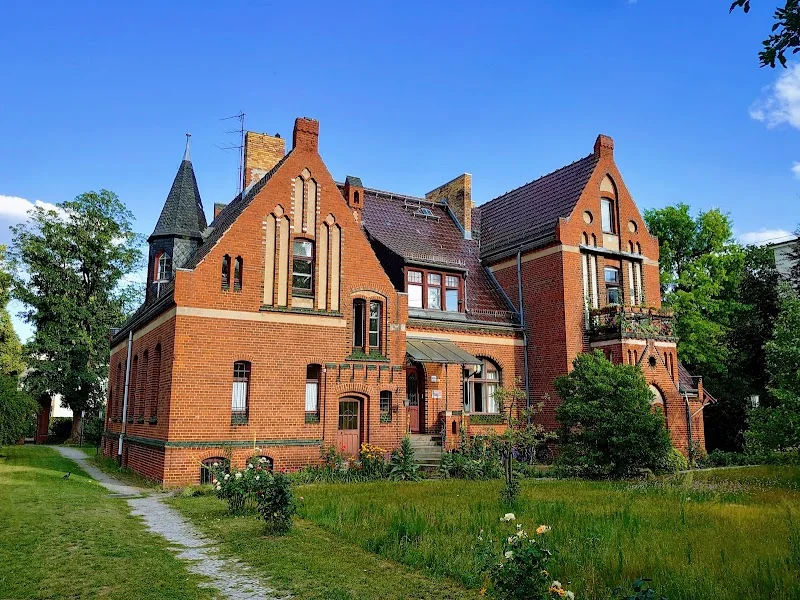
The Ev. Pentecostal Church in Potsdam is a place where architectural history, community life, monument preservation, and the unique landscape of the Pfingstberg connect in an unusually dense way. It is located in the Nauener Vorstadt on Große Weinmeisterstraße at the foot of the Pfingstberg, between the restored Belvedere and the New Garden, and is one of those Potsdam locations that not only looks good on a map but especially unfolds a strong atmosphere on site. The official community describes the Pentecostal Church community as a campus community with around 2,200 members and refers to a vibrant music and community life as well as the claim to not only preserve historical substance but to actively use it. This is exactly what makes the Pentecostal Church so interesting for inquiries about photos, history, services, directions, or special buildings: Here, no single church building stands isolated, but an ensemble that has grown from the 19th century to the present day and presents itself in a very photogenic and distinctive way through the interplay of red brick, garden landscape, restored windows, and ecclesiastical use. The search phrase with Berlin can also be misleading, as the sought-after church is clearly located in Potsdam; for this reason, a precise, search engine-friendly classification is important. ([evangelisch-in-potsdam.de](https://www.evangelisch-in-potsdam.de/fileadmin/sites/kirchenkreis-potsdam.de/Gemeinden/Pfingst/Dateien/Willkommensflyer_2023_01.pdf))
History of the Ev. Pentecostal Church and the Pentecostal House
The history of the Pentecostal Church begins long before the actual consecration of the church building. When Johann Hinrich Wichern preached in the Friedenskirche in 1849, he inspired the Potsdam court preacher Albert Heym to promote the establishment of an institution of the Inner Mission in Potsdam. Already in 1851, a rescue institution for neglected boys was opened in the old Jehnke winegrower's house on Große Weinmeisterstraße, which soon became simply known as the Pentecostal House due to its proximity to the Pfingstberg. Thus, the beginning was not only a church project but primarily a social one. When the Pentecostal House urgently needed repairs around 1892 and a renovation seemed too expensive, the board turned to Empress Auguste Viktoria. Through Ernst Freiherr von Mirbach and the Protestant Church Building Association, the new building was organized, architect Ludwig von Tiedemann was involved, and the project was set up so that alongside the new Pentecostal House, a chapel could also be built. Construction began on May 4, 1893, and already on October 15, 1894, the New Pentecostal House and the chapel were put into service. In 1896, the rectory followed, and in 1899/1900 a community hall with a widow's house, which is now used as an Evangelical primary school. In 1902, the Pentecostal chapel was named Pentecostal Church, and in 1910 the community finally became independent; until then, the church had been a branch of the Friedenskirche. This development shows that the Pentecostal Church was never just a sacred building but always also a response to social, educational, and urban planning needs in northern Potsdam. ([evangelisch-in-potsdam.de](https://www.evangelisch-in-potsdam.de/fileadmin/sites/kirchenkreis-potsdam.de/Gemeinden/Pfingst/Dateien/Willkommensflyer_2023_01.pdf))
In the 20th century, the history of the place remained closely linked to political and ecclesiastical upheavals. After the death of Empress Auguste Viktoria in 1921, the church bore the name Kaiserin-Auguste-Viktoria-Memorial Church until 1946. In the 1930s, there were severe conflicts within the community between German Christians and the Confessing Church, which went so far that members of the Confessing Church were denied access to the Pentecostal Church. In 1937, the representative of the German Christians was finally able to take office, before his tenure ended in 1948. After World War II, the occupation of many houses around the Pentecostal Church by the Soviet Army shaped the situation until 1994. Despite this burden, the community remained. After the withdrawal of the Russian troops from the so-called Military Town No. 7, the entire building ensemble could be reunited and renovated. This long period makes it clear why the Pentecostal Church can be read today as a historical memorial site: it tells of social care, imperial support, community formation, experiences of dictatorship, post-war reality, and the careful recovery of a church site. For visitors, this history is not abstract but remains visible in the grounds, buildings, and restored details. ([evangelisch-in-potsdam.de](https://www.evangelisch-in-potsdam.de/fileadmin/sites/kirchenkreis-potsdam.de/Gemeinden/Pfingst/Dateien/Willkommensflyer_2023_01.pdf))
Services, Community Life, and Church Music
The Pentecostal Church is still primarily an active community location. According to the current service page of the Evangelical Pentecostal Church community, the service in the Pentecostal Church takes place every Sunday at 11:00 AM; additionally, there is a school service on Wednesdays at 12:30 PM, which is not held during the holidays. The community also works with several locations, including the Heilandskirche in Sacrow and the Emmaushaus, but the Pentecostal Church remains the heart of the locally visible community life. This is as important for SEO as it is for visitors, as the inquiries are not only aimed at a building but often at a vibrant program. The community flyer describes the Pentecostal Church community as the largest community in the northern region of Potsdam with around 2,200 members. This size explains why the place not only offers Sunday liturgy but also organizes conversation, support, and culture in everyday life. The Pentecostal Church is not a silent museum ruin but a place with regular service times, reliable structure, and a clear profile that can be felt on site. Those who visit the church experience not only architecture but an ongoing community operation with fixed rhythms, recurring meetings, and a recognizable presence in the neighborhood. ([kirchenkreis-potsdam.de](https://www.kirchenkreis-potsdam.de/gemeinden/ev-pfingstkirchengemeinde-potsdam/gottesdienste/termindetails/gottesdienst-61))
The musical life is particularly formative. The community flyer mentions an active brass choir and regular small concerts in the church; furthermore, the community refers to a church music offering that opens the place well beyond the normal service operation. This is complemented by the children's church, which offers a large children's service in the community center once a month in parallel with the main service. Additionally, there is a close connection with the Evangelical Kindergarten and Evangelical Primary School, both on the grounds or in the immediate vicinity. The community sees itself as a campus community and emphasizes the connection of culture at Pfingstberg, meaning the exchange with the neighborhood, education, and culture. This is particularly attractive for families, music lovers, and people looking for a versatile church location. Therefore, those searching for photos or typical events do not only encounter exterior views but an ensemble that is actively used: services on Sunday, school services during the week, church music, children's work, concert formats, and open community work interconnect. This creates the impression of a place that does not conserve tradition but translates it into the present. ([evangelisch-in-potsdam.de](https://www.evangelisch-in-potsdam.de/fileadmin/sites/kirchenkreis-potsdam.de/Gemeinden/Pfingst/Dateien/Willkommensflyer_2023_01.pdf))
Architecture, Interior, and Schuke Organ
Architecturally, the Ev. Pentecostal Church is a building that may appear restrained at first glance and precisely for this reason convinces upon closer inspection. The German Foundation for Monument Protection describes the church as an elongated hall building made of red brick with a high gable roof and a recessed choir tower. This clarity of form fits very well with the location at Pfingstberg, as the building does not compete with the landscape but integrates into it. The Potsdam side describes the ensemble at the foot of the Pfingstberg as a picturesque sight, and this impression also explains why the church is so popular for photos: brick, garden, historical path references, and the ensemble of Pentecostal House, rectory, and outbuildings create an image that is both strict and soft. The Pentecostal Church is thus one of the Potsdam locations where architecture works not through monumental size but through proportion, material, and embedding. The impression is not that of a large city church with a dominant tower but that of a carefully composed place where social tasks, devotion, and landscape intertwine. For SEO and for visitors, this is important because this interplay distinguishes the Pentecostal Church from many other Potsdam churches. ([denkmalschutz.de](https://www.denkmalschutz.de/denkmal/pfingstkirche.html?utm_source=openai))
Inside, an exceptionally large amount has been restored in recent years. The community flyer highlights that in 2019, the main nave was historically restored, including the floral wall paintings and the valuable stained glass windows. In this context, the new Schuke organ was also fully put into operation; it has 25 registers and 1,431 pipes. Thus, the Pentecostal Church is not only a visually appealing building but also an acoustically and art-historically enhanced space. The interior lives from the combination of restored ornamentation, colored windows, and clear spatial guidance. The side access leads into the central main aisle, directing the view at festive occasions to the restored windows and the design order of the church nave. It is precisely the combination of historical expression and careful renovation that makes the Pentecostal Church so interesting for visitors: those who enter here see not just a worship space but a restored example of monument preservation, craftsmanship, and ecclesiastical usability. For photography, this means that outside, the brick and garden location are appealing, while inside, light, color, and details such as windows, wood, tiles, and organ determine the character. This is also a reason why inquiries for photos and history find a particularly good match here. ([evangelisch-in-potsdam.de](https://www.evangelisch-in-potsdam.de/fileadmin/sites/kirchenkreis-potsdam.de/Gemeinden/Pfingst/Dateien/Willkommensflyer_2023_01.pdf))
Location at Pfingstberg, Access and Parking
The Ev. Pentecostal Church is located at Große Weinmeisterstraße 49b or throughout the Pentecostal grounds 49a-d in the Nauener Vorstadt of Potsdam. This location is crucial for the perception of the place. The community describes the Pentecostal grounds as centrally located and situates it between the Pfingstberg with its well-known Belvedere and the New Garden, exactly where Potsdam's UNESCO-shaped park and palace landscape appears particularly dense. The city of Potsdam emphasizes that the ensemble at the foot of the Pfingstberg offers a picturesque view with the former Pentecostal House Foundation. For visitors, this is more than a nice addition: the surroundings significantly shape the character of the church and explain why the place feels both calm, cultivated, and historically rich. Even the arrival here feels like part of the experience, as the paths between Pfingstberg, garden facilities, and church lead through an urban yet green environment. Therefore, those looking for a location with a photogenic environment find here a backdrop that consists not of effects but of grown substance. This is exactly what distinguishes the Pentecostal Church from many other church locations that, while easily accessible, are significantly less embedded in the landscape. ([evangelisch-in-potsdam.de](https://www.evangelisch-in-potsdam.de/fileadmin/sites/kirchenkreis-potsdam.de/Gemeinden/Pfingst/Dateien/Willkommensflyer_2023_01.pdf))
For travel, the community provides very concrete connections: Bus line 603 to Glumestraße as well as tram lines 92 and 96 to Puschkinallee. This makes it clear that the Pentecostal Church is well accessible by public transport. On the official community and city pages, public transport is particularly emphasized; a large visitor parking area is not designated there. Therefore, those arriving by car should check the city’s parking guidelines in Potsdam in advance and allow sufficient time for the final stretch. This note is particularly important during events, concerts, or open days. At the same time, the journey belongs to the identity of the place: the way does not lead into a pure parking area but into a historically grown neighborhood with garden references, monument character, and dense proximity. This makes the Pentecostal Church particularly interesting for visitors who want to not only arrive but also embed their visit in a small Potsdam walk. Those who want to take photos additionally benefit from this environment, as church, paths, greenery, and historical buildings can be combined in several perspectives. ([evangelisch-in-potsdam.de](https://www.evangelisch-in-potsdam.de/fileadmin/sites/kirchenkreis-potsdam.de/Gemeinden/Pfingst/Dateien/Willkommensflyer_2023_01.pdf))
Capacity, Ensemble, and Visitor Experience
For practical classification, the capacity of the church is an important point. In the community materials, the Pentecostal Church is described with about 300 seats. This makes it a rather intimate but still versatile space for services, small concerts, and special events. This size is particularly attractive for many visitors because it allows for a closeness between space, music, and community without the place feeling cramped. The ensemble includes not only the church itself but also the rectory, the community center, the former widow's house, now Evangelical Primary School, as well as the Old and New Pentecostal House and other outbuildings. The Potsdam tourism page additionally mentions a stable building and an entrance portal. This makes it clear that the grounds should not be seen as a single monument but as a historically grown social and architectural unit. It is a place of care, education, devotion, and neighborhood, whose buildings have taken on and continue to take on various functions. This ensemble quality is one of the main reasons why the Pentecostal Church is so fruitful for inquiries about history, photos, and special features. Here, one can not only look at a facade but recognize a whole structure of paths, courtyards, gardens, and uses. ([evangelisch-in-potsdam.de](https://www.evangelisch-in-potsdam.de/fileadmin/sites/kirchenkreis-potsdam.de/Gemeinden/Pfingst/Dateien/Willkommensflyer_2023_01.pdf))
The monument and association work also significantly contributes to the current impression. The church and organ building association has been committed to the ensemble around the Pentecostal Church since 1995; the city of Potsdam honors this commitment by including it in the project Cultural Heritage Potsdam. The association's documents also emphasize that children and young people should be introduced to the historical substance through crafts and garden architecture. This fits well with the character of the grounds, which not only has historical buildings but also path references, garden structures, and a park-like overall impression. In an urban text, there is also mention of a 16-hectare area between Große Weinmeisterstraße and the New Garden that was monumentally reconstructed after 1990. For the visitor, this means: The Pentecostal Church is not only interesting on Sundays or during concerts but also during tours, monument days, and quiet visits. The grounds convey a rare mix of spiritual use, historical depth, and photographic quality. Those looking for a place suitable for both outdoor and indoor shots will find here a very strong combination of brick, greenery, restored details, and grown neighborhood. ([evangelisch-in-potsdam.de](https://www.evangelisch-in-potsdam.de/fileadmin/sites/kirchenkreis-potsdam.de/Gemeinden/Pfingst/Dateien/Willkommensflyer_2023_01.pdf))
Sources:
- Church & Organ Building Association of the Ev. Pentecostal Church Community Potsdam e.V. - Welcome Flyer
- Evangelical Church District Potsdam - Services in the Pentecostal Community
- State Capital Potsdam - Pentecostal Church
- German Foundation for Monument Protection - Pentecostal Church Potsdam
- Potsdam Tourism - Pentecostal Church
Mehr anzeigenWeniger anzeigen
Ev. Pentecostal Church | Services & Photos
The Ev. Pentecostal Church in Potsdam is a place where architectural history, community life, monument preservation, and the unique landscape of the Pfingstberg connect in an unusually dense way. It is located in the Nauener Vorstadt on Große Weinmeisterstraße at the foot of the Pfingstberg, between the restored Belvedere and the New Garden, and is one of those Potsdam locations that not only looks good on a map but especially unfolds a strong atmosphere on site. The official community describes the Pentecostal Church community as a campus community with around 2,200 members and refers to a vibrant music and community life as well as the claim to not only preserve historical substance but to actively use it. This is exactly what makes the Pentecostal Church so interesting for inquiries about photos, history, services, directions, or special buildings: Here, no single church building stands isolated, but an ensemble that has grown from the 19th century to the present day and presents itself in a very photogenic and distinctive way through the interplay of red brick, garden landscape, restored windows, and ecclesiastical use. The search phrase with Berlin can also be misleading, as the sought-after church is clearly located in Potsdam; for this reason, a precise, search engine-friendly classification is important. ([evangelisch-in-potsdam.de](https://www.evangelisch-in-potsdam.de/fileadmin/sites/kirchenkreis-potsdam.de/Gemeinden/Pfingst/Dateien/Willkommensflyer_2023_01.pdf))
History of the Ev. Pentecostal Church and the Pentecostal House
The history of the Pentecostal Church begins long before the actual consecration of the church building. When Johann Hinrich Wichern preached in the Friedenskirche in 1849, he inspired the Potsdam court preacher Albert Heym to promote the establishment of an institution of the Inner Mission in Potsdam. Already in 1851, a rescue institution for neglected boys was opened in the old Jehnke winegrower's house on Große Weinmeisterstraße, which soon became simply known as the Pentecostal House due to its proximity to the Pfingstberg. Thus, the beginning was not only a church project but primarily a social one. When the Pentecostal House urgently needed repairs around 1892 and a renovation seemed too expensive, the board turned to Empress Auguste Viktoria. Through Ernst Freiherr von Mirbach and the Protestant Church Building Association, the new building was organized, architect Ludwig von Tiedemann was involved, and the project was set up so that alongside the new Pentecostal House, a chapel could also be built. Construction began on May 4, 1893, and already on October 15, 1894, the New Pentecostal House and the chapel were put into service. In 1896, the rectory followed, and in 1899/1900 a community hall with a widow's house, which is now used as an Evangelical primary school. In 1902, the Pentecostal chapel was named Pentecostal Church, and in 1910 the community finally became independent; until then, the church had been a branch of the Friedenskirche. This development shows that the Pentecostal Church was never just a sacred building but always also a response to social, educational, and urban planning needs in northern Potsdam. ([evangelisch-in-potsdam.de](https://www.evangelisch-in-potsdam.de/fileadmin/sites/kirchenkreis-potsdam.de/Gemeinden/Pfingst/Dateien/Willkommensflyer_2023_01.pdf))
In the 20th century, the history of the place remained closely linked to political and ecclesiastical upheavals. After the death of Empress Auguste Viktoria in 1921, the church bore the name Kaiserin-Auguste-Viktoria-Memorial Church until 1946. In the 1930s, there were severe conflicts within the community between German Christians and the Confessing Church, which went so far that members of the Confessing Church were denied access to the Pentecostal Church. In 1937, the representative of the German Christians was finally able to take office, before his tenure ended in 1948. After World War II, the occupation of many houses around the Pentecostal Church by the Soviet Army shaped the situation until 1994. Despite this burden, the community remained. After the withdrawal of the Russian troops from the so-called Military Town No. 7, the entire building ensemble could be reunited and renovated. This long period makes it clear why the Pentecostal Church can be read today as a historical memorial site: it tells of social care, imperial support, community formation, experiences of dictatorship, post-war reality, and the careful recovery of a church site. For visitors, this history is not abstract but remains visible in the grounds, buildings, and restored details. ([evangelisch-in-potsdam.de](https://www.evangelisch-in-potsdam.de/fileadmin/sites/kirchenkreis-potsdam.de/Gemeinden/Pfingst/Dateien/Willkommensflyer_2023_01.pdf))
Services, Community Life, and Church Music
The Pentecostal Church is still primarily an active community location. According to the current service page of the Evangelical Pentecostal Church community, the service in the Pentecostal Church takes place every Sunday at 11:00 AM; additionally, there is a school service on Wednesdays at 12:30 PM, which is not held during the holidays. The community also works with several locations, including the Heilandskirche in Sacrow and the Emmaushaus, but the Pentecostal Church remains the heart of the locally visible community life. This is as important for SEO as it is for visitors, as the inquiries are not only aimed at a building but often at a vibrant program. The community flyer describes the Pentecostal Church community as the largest community in the northern region of Potsdam with around 2,200 members. This size explains why the place not only offers Sunday liturgy but also organizes conversation, support, and culture in everyday life. The Pentecostal Church is not a silent museum ruin but a place with regular service times, reliable structure, and a clear profile that can be felt on site. Those who visit the church experience not only architecture but an ongoing community operation with fixed rhythms, recurring meetings, and a recognizable presence in the neighborhood. ([kirchenkreis-potsdam.de](https://www.kirchenkreis-potsdam.de/gemeinden/ev-pfingstkirchengemeinde-potsdam/gottesdienste/termindetails/gottesdienst-61))
The musical life is particularly formative. The community flyer mentions an active brass choir and regular small concerts in the church; furthermore, the community refers to a church music offering that opens the place well beyond the normal service operation. This is complemented by the children's church, which offers a large children's service in the community center once a month in parallel with the main service. Additionally, there is a close connection with the Evangelical Kindergarten and Evangelical Primary School, both on the grounds or in the immediate vicinity. The community sees itself as a campus community and emphasizes the connection of culture at Pfingstberg, meaning the exchange with the neighborhood, education, and culture. This is particularly attractive for families, music lovers, and people looking for a versatile church location. Therefore, those searching for photos or typical events do not only encounter exterior views but an ensemble that is actively used: services on Sunday, school services during the week, church music, children's work, concert formats, and open community work interconnect. This creates the impression of a place that does not conserve tradition but translates it into the present. ([evangelisch-in-potsdam.de](https://www.evangelisch-in-potsdam.de/fileadmin/sites/kirchenkreis-potsdam.de/Gemeinden/Pfingst/Dateien/Willkommensflyer_2023_01.pdf))
Architecture, Interior, and Schuke Organ
Architecturally, the Ev. Pentecostal Church is a building that may appear restrained at first glance and precisely for this reason convinces upon closer inspection. The German Foundation for Monument Protection describes the church as an elongated hall building made of red brick with a high gable roof and a recessed choir tower. This clarity of form fits very well with the location at Pfingstberg, as the building does not compete with the landscape but integrates into it. The Potsdam side describes the ensemble at the foot of the Pfingstberg as a picturesque sight, and this impression also explains why the church is so popular for photos: brick, garden, historical path references, and the ensemble of Pentecostal House, rectory, and outbuildings create an image that is both strict and soft. The Pentecostal Church is thus one of the Potsdam locations where architecture works not through monumental size but through proportion, material, and embedding. The impression is not that of a large city church with a dominant tower but that of a carefully composed place where social tasks, devotion, and landscape intertwine. For SEO and for visitors, this is important because this interplay distinguishes the Pentecostal Church from many other Potsdam churches. ([denkmalschutz.de](https://www.denkmalschutz.de/denkmal/pfingstkirche.html?utm_source=openai))
Inside, an exceptionally large amount has been restored in recent years. The community flyer highlights that in 2019, the main nave was historically restored, including the floral wall paintings and the valuable stained glass windows. In this context, the new Schuke organ was also fully put into operation; it has 25 registers and 1,431 pipes. Thus, the Pentecostal Church is not only a visually appealing building but also an acoustically and art-historically enhanced space. The interior lives from the combination of restored ornamentation, colored windows, and clear spatial guidance. The side access leads into the central main aisle, directing the view at festive occasions to the restored windows and the design order of the church nave. It is precisely the combination of historical expression and careful renovation that makes the Pentecostal Church so interesting for visitors: those who enter here see not just a worship space but a restored example of monument preservation, craftsmanship, and ecclesiastical usability. For photography, this means that outside, the brick and garden location are appealing, while inside, light, color, and details such as windows, wood, tiles, and organ determine the character. This is also a reason why inquiries for photos and history find a particularly good match here. ([evangelisch-in-potsdam.de](https://www.evangelisch-in-potsdam.de/fileadmin/sites/kirchenkreis-potsdam.de/Gemeinden/Pfingst/Dateien/Willkommensflyer_2023_01.pdf))
Location at Pfingstberg, Access and Parking
The Ev. Pentecostal Church is located at Große Weinmeisterstraße 49b or throughout the Pentecostal grounds 49a-d in the Nauener Vorstadt of Potsdam. This location is crucial for the perception of the place. The community describes the Pentecostal grounds as centrally located and situates it between the Pfingstberg with its well-known Belvedere and the New Garden, exactly where Potsdam's UNESCO-shaped park and palace landscape appears particularly dense. The city of Potsdam emphasizes that the ensemble at the foot of the Pfingstberg offers a picturesque view with the former Pentecostal House Foundation. For visitors, this is more than a nice addition: the surroundings significantly shape the character of the church and explain why the place feels both calm, cultivated, and historically rich. Even the arrival here feels like part of the experience, as the paths between Pfingstberg, garden facilities, and church lead through an urban yet green environment. Therefore, those looking for a location with a photogenic environment find here a backdrop that consists not of effects but of grown substance. This is exactly what distinguishes the Pentecostal Church from many other church locations that, while easily accessible, are significantly less embedded in the landscape. ([evangelisch-in-potsdam.de](https://www.evangelisch-in-potsdam.de/fileadmin/sites/kirchenkreis-potsdam.de/Gemeinden/Pfingst/Dateien/Willkommensflyer_2023_01.pdf))
For travel, the community provides very concrete connections: Bus line 603 to Glumestraße as well as tram lines 92 and 96 to Puschkinallee. This makes it clear that the Pentecostal Church is well accessible by public transport. On the official community and city pages, public transport is particularly emphasized; a large visitor parking area is not designated there. Therefore, those arriving by car should check the city’s parking guidelines in Potsdam in advance and allow sufficient time for the final stretch. This note is particularly important during events, concerts, or open days. At the same time, the journey belongs to the identity of the place: the way does not lead into a pure parking area but into a historically grown neighborhood with garden references, monument character, and dense proximity. This makes the Pentecostal Church particularly interesting for visitors who want to not only arrive but also embed their visit in a small Potsdam walk. Those who want to take photos additionally benefit from this environment, as church, paths, greenery, and historical buildings can be combined in several perspectives. ([evangelisch-in-potsdam.de](https://www.evangelisch-in-potsdam.de/fileadmin/sites/kirchenkreis-potsdam.de/Gemeinden/Pfingst/Dateien/Willkommensflyer_2023_01.pdf))
Capacity, Ensemble, and Visitor Experience
For practical classification, the capacity of the church is an important point. In the community materials, the Pentecostal Church is described with about 300 seats. This makes it a rather intimate but still versatile space for services, small concerts, and special events. This size is particularly attractive for many visitors because it allows for a closeness between space, music, and community without the place feeling cramped. The ensemble includes not only the church itself but also the rectory, the community center, the former widow's house, now Evangelical Primary School, as well as the Old and New Pentecostal House and other outbuildings. The Potsdam tourism page additionally mentions a stable building and an entrance portal. This makes it clear that the grounds should not be seen as a single monument but as a historically grown social and architectural unit. It is a place of care, education, devotion, and neighborhood, whose buildings have taken on and continue to take on various functions. This ensemble quality is one of the main reasons why the Pentecostal Church is so fruitful for inquiries about history, photos, and special features. Here, one can not only look at a facade but recognize a whole structure of paths, courtyards, gardens, and uses. ([evangelisch-in-potsdam.de](https://www.evangelisch-in-potsdam.de/fileadmin/sites/kirchenkreis-potsdam.de/Gemeinden/Pfingst/Dateien/Willkommensflyer_2023_01.pdf))
The monument and association work also significantly contributes to the current impression. The church and organ building association has been committed to the ensemble around the Pentecostal Church since 1995; the city of Potsdam honors this commitment by including it in the project Cultural Heritage Potsdam. The association's documents also emphasize that children and young people should be introduced to the historical substance through crafts and garden architecture. This fits well with the character of the grounds, which not only has historical buildings but also path references, garden structures, and a park-like overall impression. In an urban text, there is also mention of a 16-hectare area between Große Weinmeisterstraße and the New Garden that was monumentally reconstructed after 1990. For the visitor, this means: The Pentecostal Church is not only interesting on Sundays or during concerts but also during tours, monument days, and quiet visits. The grounds convey a rare mix of spiritual use, historical depth, and photographic quality. Those looking for a place suitable for both outdoor and indoor shots will find here a very strong combination of brick, greenery, restored details, and grown neighborhood. ([evangelisch-in-potsdam.de](https://www.evangelisch-in-potsdam.de/fileadmin/sites/kirchenkreis-potsdam.de/Gemeinden/Pfingst/Dateien/Willkommensflyer_2023_01.pdf))
Sources:
- Church & Organ Building Association of the Ev. Pentecostal Church Community Potsdam e.V. - Welcome Flyer
- Evangelical Church District Potsdam - Services in the Pentecostal Community
- State Capital Potsdam - Pentecostal Church
- German Foundation for Monument Protection - Pentecostal Church Potsdam
- Potsdam Tourism - Pentecostal Church
Upcoming Events
No events found
Frequently Asked Questions
Reviews
Wenzel Friebe
21. September 2025
I was there recently because my sister celebrated her wedding anniversary with her husband, very beautiful garden and community center, the only downside is that it's unfortunately not wheelchair accessible, maybe they should think about that! Otherwise, top!👍
Cornelia Engelhardt
15. December 2022
I was there for a concert in favor of the further renovation of the interior painting. I'm glad to see that things are progressing well in this regard. I felt that during the concert, a speaker made a mockery of Christmas as a festival of peace. Given the crises in the world, I find that inappropriate.
Benedikt Paetzholdt
8. May 2025
An incredibly beautiful architectural ensemble surrounded by a lovely garden
Lu Kre
9. August 2024
A beautiful building.
Uldemär Corda
16. December 2023
Super beautiful church!!