
Potsdam
Gellertstraße 1A, 14476 Potsdam, Deutschland
Former Barracks Krampnitz | History & Photos
The former barracks Krampnitz is one of the most prominent historical sites in the north of Potsdam. Between Potsdamer Chaussee, Mark Brandenburg landscape, and the development areas of the new urban district lies a vast area, whose appearance is shaped by military architecture, listed buildings, and a varied history of use. Those searching for former barracks Krampnitz photos, barracks Krampnitz history, or Krampnitz Lost Place encounter a site caught between memory, architectural decay, and urban future. However, the facility is not a classic event location with a fixed program, regular ticket sales, seating plans, or designated hall capacity. It is rather a historical barracks ensemble and part of one of the largest urban development projects in Potsdam.
The history begins during the time of Nazi rearmament. From the mid-1930s, a military riding and driving school with an attached cavalry school was established here. After 1945, the military use changed: Soviet troops took over the site and shaped it until the end of their stationing in Germany. After their withdrawal, the facility remained a closed-off place for years, attracting the interest of historians, photographers, and Lost Place fans due to its architecture, dimensions, and traces of the past. Today, the focus is no longer solely on the past. Krampnitz is being developed into a new urban district with housing, jobs, schools, daycare centers, open spaces, and improved transport connections.
The following information categorizes the most important search topics: history, photos, monument protection, military use, officers' settlement, location, visits, and future. It is important to distinguish between secured historical information and romanticized Lost Place narratives. Krampnitz is not a freely accessible adventure area, but a sensitive historical site in transition. The buildings and open spaces should therefore be viewed with respect and only visited on officially approved paths or as part of authorized offers.
Barracks Krampnitz History: From Military Riding and Driving School to Soviet Military Facility
The barracks Krampnitz was planned in the 1930s as a military training center. The focus was on the training of riders, drivers, and cavalry units. The designation military riding and driving school as well as cavalry school refers to the site's significance at that time. The facility was not established by chance at this location. The northern part of Potsdam offered large open spaces, a suitable landscape environment, and a transport connection between Potsdam and the Berlin area. For a military training facility with horses, vehicles, stables, practice areas, and accommodations, these conditions were particularly important.
The architectural planning was implemented with an extensive ensemble of barracks buildings, functional buildings, streets, open spaces, and residential houses for officers and other employees. The buildings were not exclusively purpose-oriented. As with many military facilities of this time, value was placed on a uniform urban planning effect. Brick facades, clearly structured building bodies, towers, courtyards, and green areas characterize the character of the area. As a result, Krampnitz still appears more like a closed quarter than a collection of individual buildings.
With the end of World War II, the political and military function changed. Soviet troops occupied the barracks and used it for decades. During this phase, the site was largely inaccessible to the public. The military use led to structural changes, additions, and adaptations to new requirements. At the same time, the basic structure of the historical facility remained recognizable in many parts. It is precisely this overlay of different historical layers that makes the site so interesting today: the original German military architecture, the Soviet use, and the long phase of vacancy are interconnected in the perception of the area.
After the withdrawal of the Soviet armed forces in the early 1990s, the barracks were not immediately converted into a normal residential or commercial area. Many buildings stood empty while questions of ownership, contamination, security, monument preservation, and future use had to be clarified. During this time, the site developed in public perception into a Lost Place. Abandoned rooms, overgrown paths, and visible signs of use created a special atmosphere, but should not obscure the fact that it is an old military site with potential dangers and legal restrictions.
The current planning follows a different approach. The history should not be erased but incorporated into the development of the new urban district. Preserved and listed structures form an important part of Krampnitz's identity. Thus, the former barracks will not become just any new construction site, but a quarter where historical buildings, new architecture, landscape, and contemporary infrastructure are to be connected.
Former Barracks Krampnitz Photos and Architecture of the Historical Area
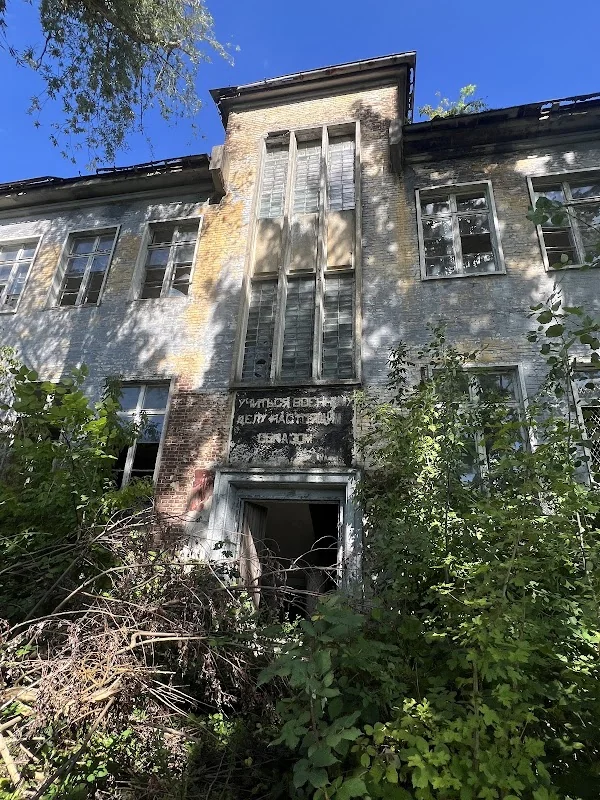
Those searching for former barracks Krampnitz photos usually find images with a strong contrast: on one side are monumental, clearly ordered buildings and wide paths, while on the other side, images show vacancy, plant growth, damaged surfaces, and traces of decades of use. This contrast explains why Krampnitz became so well-known among photographers and people interested in contemporary history. The facility possesses a visual language that oscillates between military order and visible dissolution.
Notable features include the large barracks buildings, functionally structured courtyards, and distinctive roof and tower elements. The architecture cannot be equated with a single hall or a single main building. Krampnitz consists of an ensemble with different building types. These include accommodations, administrative and training buildings, technical areas, and other structures that enabled the operation of an extensive military school. The spatial arrangement still conveys the impression of a self-contained small town with clear paths and separate functional areas.
A particularly important component is the so-called officers' settlement or the adjacent Bergviertel. There, residential houses were built for married non-commissioned officers, civilian employees, and other members of the military facility. The settlement differs in scale and atmosphere from the large barracks buildings. Duplex houses, multi-family houses, gardens, and a more residential-oriented design conveyed a more village-like appearance. This connection of military workplace and residential settlement shows how comprehensive Krampnitz was originally organized.
Historical photos, official brochures, and publicly accessible image collections document the development of the site from various perspectives. It should be noted that not every image circulated on the internet is current and that some images date back to times when the structural condition differed significantly from the present. Also, with private Lost Place photos, image rights, access permissions, and the protection of sensitive areas must be considered. The publication of a photo does not automatically mean that entering a building was allowed or is allowed today.
For historical classification, plans and documentation are also more valuable than mere atmospheric images. They make visible how the individual buildings are interconnected, which areas are under monument protection, and how the former military use was organized. Photos can convey the impression of an abandoned single location, while maps show that Krampnitz is a large-scale area with complex infrastructure. This combination of architecture, landscape, and history makes the image search for Krampnitz particularly fruitful.
Krampnitz Barracks and Monument Protection: Buildings, Officers' Settlement, and Commemorative Value
The term Krampnitz barracks stands for an ensemble that must be considered in its entirety. The monument preservation value lies not only in individual facades but also in the urban planning order, the street spaces, the open spaces, and the relationship between the barracks area and the residential settlement. In historical facilities of this size, paths, sight axes, and building distances tell as much about the original use as inscriptions or preserved building components.
Monument protection presents particular challenges for development. On the one hand, the characteristic structures and historical traces must be preserved. On the other hand, buildings must be modernized, secured, and adapted to new uses. Housing, commerce, education, leisure, and public infrastructure require current standards in fire protection, energy, accessibility, safety, and technical equipment. The challenge is to implement these requirements in such a way that the historical character is not completely lost.
The officers' settlement and the Bergviertel expand the view of Krampnitz. They make it clear that the facility consisted not only of military purpose buildings. Families, civilian employees, and military personnel lived in close proximity. The residential houses were embedded in a landscape-shaped environment and therefore convey a different impression than the large barracks courtyards. In future development, these smaller structures can contribute to creating a diverse urban district with different forms of housing.
Historical responsibility in Krampnitz also means not romanticizing the problematic conditions of its creation. The facility was established in the context of German rearmament and National Socialism. A contemporary representation must therefore consider the military function, the political history, World War II, Soviet post-war use, and the transformation after 1990 together. The site should not be presented solely as an aesthetic Lost Place or as a spectacular photo backdrop. Its significance arises precisely from the connection of architecture and history.
In future public use, exhibitions, information offers, educational formats, or guided tours could help convey these layers understandably. Whether and in what form such offers will be permanently established depends on the respective planning and approvals. However, it is certain that the historical buildings will play an important role in the identity of the new quarter. Krampnitz should not simply disappear behind new facades but remain recognizable as a place with its own history.
Krampnitz Potsdam History and Development into a New Urban District
The current development of Krampnitz is one of the significant urban planning projects in Potsdam. The former barracks area covers around 140 hectares and is to become an urban, mixed-use district in the north of Potsdam. The plans provide for housing for around 10,000 people. Additionally, commercial spaces for up to 3,000 jobs, schools, daycare centers, public spaces, green areas, and leisure offerings are planned. Thus, a new piece of city is being created from the previously closed military area.
This transformation fundamentally changes the significance of the site. While the barracks previously served a clearly defined military function, Krampnitz is to become a neighborhood with various uses in the future. Housing, jobs, educational institutions, and social infrastructure should not stand isolated next to each other but be organized in a cohesive urban structure. The aim is to create short distances, public spaces, and a good connection to the surrounding landscape.
The historical building substance is an important starting point in this process. New buildings must fit into an area already characterized by listed structures and a special spatial order. This does not mean that every historical use can continue. Rather, it is about securing, converting, or embedding suitable buildings into new contexts. The former barracks can thus become an example of how military conversion areas can be transformed into civilian urban districts.
The development also raises critical questions. A new urban district requires efficient transport routes, public transport, schools, medical services, shopping opportunities, and social facilities. At the same time, nature, landscape, species protection, and monument protection must be considered. The size of the project makes it clear that Krampnitz will not be fully completed in a short time. The site will change over several construction and development phases.
This creates a tension field for public perception. Some people associate Krampnitz with abandoned buildings, historical photos, and the atmosphere of a Lost Place. Others primarily see housing, infrastructure, and the opportunity to strengthen the north of Potsdam in the long term. Both perspectives are part of the present of the site but should not be confused. Krampnitz is neither an unchanged ruin site nor a fully completed district. It is in a transition where history, planning, and ongoing change are simultaneously visible.
Krampnitz Access, Location, and Visiting Notes
The former barracks Krampnitz is located in the north of Potsdam in the district of Fahrland. The address given is Gellertstraße 1A, 14476 Potsdam, Germany. In historical and local representations, the area is also associated with Potsdamer Chaussee 1 or 1A on Federal Highway 2. These different designations can lead to confusion when orienting oneself, as the historical barracks complex extends over a larger area and urban development creates new street and district references.
The location between Potsdam and Berlin is a significant part of the development perspective. The area lies in the northern part of Potsdam and is characterized by landscapes, districts, and traffic axes. For the future, improvements in access and a stronger integration into public transport are planned. A possible regional train connection via Marquardt and towards Berlin is also being discussed in connection with the long-term development of the northern Potsdam area. However, binding timetables, specific stops, or completion dates should always be checked based on current information from the relevant authorities.
For visitors, it is crucial that the former barracks cannot be treated like a freely accessible museum or a regular park. Vacant buildings may be at risk of collapse, materials may contain harmful substances, and construction areas may change. Additionally, property rights, barriers, and safety regulations may apply. Unauthorized entry into buildings or restricted areas should therefore be avoided. Those wishing to see Krampnitz should use official information, approved tours, public events, or designated paths.
Traveling by car should also not be confused with a classic event parking lot. A permanently designated visitor parking area for the former barracks is not indicated as general event information. Parking vehicles on construction site access roads, private areas, emergency routes, or non-approved areas can be dangerous or unlawful. Those arriving for a specific appointment should pay attention to the instructions of the respective organizer or the responsible development office.
The best form of visiting currently consists of a respectful approach to history. Information, maps, historical photographs, and official documentation allow insights without needing to enter sensitive buildings. Especially at a site like Krampnitz, this restraint is sensible: it protects people, preserves the building substance, and prevents historical traces from being damaged by uncontrolled visits.
Krampnitz Lost Place, Reviews, and Public Perception
The search term Krampnitz Lost Place primarily describes the phase in which the former barracks stood empty for a long time after military use. Lost Places exert a special fascination because they make past functions visible. In Krampnitz, large-scale architecture, overgrown open spaces, old signage, and the imagination of former residents and soldiers come together. The atmosphere arises not from a tourist staging but from the juxtaposition of preserved structures and visible signs of decay.
Reviews and comments on the internet should be read with caution regarding this site. The rating of 4.3 stars from 12 reviews given by the location database is a small sample and cannot be considered a representative scientific evaluation of the entire historical area. Furthermore, people may evaluate different aspects: the photographic motifs, the atmosphere, the history, accessibility, or individual guided offers. A star rating therefore does not replace verified historical or urban planning information.
Many reports come from years when the structural condition differed significantly from the current situation. Due to security measures, construction work, demolition, renovation, new access, and changing access regulations, the impression of the site can change. Photos or reviews from the past should therefore not automatically be understood as current visitor information. Especially regarding information about entrances, parking options, and accessible buildings, timeliness is crucial.
The public perception moves between curiosity, criticism, nostalgia, and historical interest. For some, Krampnitz is an impressive testimony to past military history. Others see the risks of a romanticized portrayal of National Socialist architecture or the Soviet legacy. Responsible communication should consider both levels. Aesthetic images can create attention but should be supplemented by context.
With the development into a new urban district, the term Lost Place will also change. When housing, schools, streets, and public spaces are created, Krampnitz will no longer be an abandoned place. However, the memory of the Lost Place can still be part of local history. It is crucial that the transformation occurs transparently and that the historical significance is not overshadowed by pure marketing. Thus, a forgotten site can become a vibrant place that knows its past while also receiving a new future.
Sources:
- Living Krampnitz – History of the former barracks complex
- State Capital Potsdam – Former Military Base Krampnitz Becomes Residential Location
- State Capital Potsdam – Curtain Up for Potsdam's New North
- PotsdamWiki – Barracks Krampnitz
- Wikipedia – Krampnitz
- Wikimedia Commons – Image Collection Potsdam-Krampnitz
Mehr anzeigenWeniger anzeigen
Former Barracks Krampnitz | History & Photos
The former barracks Krampnitz is one of the most prominent historical sites in the north of Potsdam. Between Potsdamer Chaussee, Mark Brandenburg landscape, and the development areas of the new urban district lies a vast area, whose appearance is shaped by military architecture, listed buildings, and a varied history of use. Those searching for former barracks Krampnitz photos, barracks Krampnitz history, or Krampnitz Lost Place encounter a site caught between memory, architectural decay, and urban future. However, the facility is not a classic event location with a fixed program, regular ticket sales, seating plans, or designated hall capacity. It is rather a historical barracks ensemble and part of one of the largest urban development projects in Potsdam.
The history begins during the time of Nazi rearmament. From the mid-1930s, a military riding and driving school with an attached cavalry school was established here. After 1945, the military use changed: Soviet troops took over the site and shaped it until the end of their stationing in Germany. After their withdrawal, the facility remained a closed-off place for years, attracting the interest of historians, photographers, and Lost Place fans due to its architecture, dimensions, and traces of the past. Today, the focus is no longer solely on the past. Krampnitz is being developed into a new urban district with housing, jobs, schools, daycare centers, open spaces, and improved transport connections.
The following information categorizes the most important search topics: history, photos, monument protection, military use, officers' settlement, location, visits, and future. It is important to distinguish between secured historical information and romanticized Lost Place narratives. Krampnitz is not a freely accessible adventure area, but a sensitive historical site in transition. The buildings and open spaces should therefore be viewed with respect and only visited on officially approved paths or as part of authorized offers.
Barracks Krampnitz History: From Military Riding and Driving School to Soviet Military Facility
The barracks Krampnitz was planned in the 1930s as a military training center. The focus was on the training of riders, drivers, and cavalry units. The designation military riding and driving school as well as cavalry school refers to the site's significance at that time. The facility was not established by chance at this location. The northern part of Potsdam offered large open spaces, a suitable landscape environment, and a transport connection between Potsdam and the Berlin area. For a military training facility with horses, vehicles, stables, practice areas, and accommodations, these conditions were particularly important.
The architectural planning was implemented with an extensive ensemble of barracks buildings, functional buildings, streets, open spaces, and residential houses for officers and other employees. The buildings were not exclusively purpose-oriented. As with many military facilities of this time, value was placed on a uniform urban planning effect. Brick facades, clearly structured building bodies, towers, courtyards, and green areas characterize the character of the area. As a result, Krampnitz still appears more like a closed quarter than a collection of individual buildings.
With the end of World War II, the political and military function changed. Soviet troops occupied the barracks and used it for decades. During this phase, the site was largely inaccessible to the public. The military use led to structural changes, additions, and adaptations to new requirements. At the same time, the basic structure of the historical facility remained recognizable in many parts. It is precisely this overlay of different historical layers that makes the site so interesting today: the original German military architecture, the Soviet use, and the long phase of vacancy are interconnected in the perception of the area.
After the withdrawal of the Soviet armed forces in the early 1990s, the barracks were not immediately converted into a normal residential or commercial area. Many buildings stood empty while questions of ownership, contamination, security, monument preservation, and future use had to be clarified. During this time, the site developed in public perception into a Lost Place. Abandoned rooms, overgrown paths, and visible signs of use created a special atmosphere, but should not obscure the fact that it is an old military site with potential dangers and legal restrictions.
The current planning follows a different approach. The history should not be erased but incorporated into the development of the new urban district. Preserved and listed structures form an important part of Krampnitz's identity. Thus, the former barracks will not become just any new construction site, but a quarter where historical buildings, new architecture, landscape, and contemporary infrastructure are to be connected.
Former Barracks Krampnitz Photos and Architecture of the Historical Area
Those searching for former barracks Krampnitz photos usually find images with a strong contrast: on one side are monumental, clearly ordered buildings and wide paths, while on the other side, images show vacancy, plant growth, damaged surfaces, and traces of decades of use. This contrast explains why Krampnitz became so well-known among photographers and people interested in contemporary history. The facility possesses a visual language that oscillates between military order and visible dissolution.
Notable features include the large barracks buildings, functionally structured courtyards, and distinctive roof and tower elements. The architecture cannot be equated with a single hall or a single main building. Krampnitz consists of an ensemble with different building types. These include accommodations, administrative and training buildings, technical areas, and other structures that enabled the operation of an extensive military school. The spatial arrangement still conveys the impression of a self-contained small town with clear paths and separate functional areas.
A particularly important component is the so-called officers' settlement or the adjacent Bergviertel. There, residential houses were built for married non-commissioned officers, civilian employees, and other members of the military facility. The settlement differs in scale and atmosphere from the large barracks buildings. Duplex houses, multi-family houses, gardens, and a more residential-oriented design conveyed a more village-like appearance. This connection of military workplace and residential settlement shows how comprehensive Krampnitz was originally organized.
Historical photos, official brochures, and publicly accessible image collections document the development of the site from various perspectives. It should be noted that not every image circulated on the internet is current and that some images date back to times when the structural condition differed significantly from the present. Also, with private Lost Place photos, image rights, access permissions, and the protection of sensitive areas must be considered. The publication of a photo does not automatically mean that entering a building was allowed or is allowed today.
For historical classification, plans and documentation are also more valuable than mere atmospheric images. They make visible how the individual buildings are interconnected, which areas are under monument protection, and how the former military use was organized. Photos can convey the impression of an abandoned single location, while maps show that Krampnitz is a large-scale area with complex infrastructure. This combination of architecture, landscape, and history makes the image search for Krampnitz particularly fruitful.
Krampnitz Barracks and Monument Protection: Buildings, Officers' Settlement, and Commemorative Value
The term Krampnitz barracks stands for an ensemble that must be considered in its entirety. The monument preservation value lies not only in individual facades but also in the urban planning order, the street spaces, the open spaces, and the relationship between the barracks area and the residential settlement. In historical facilities of this size, paths, sight axes, and building distances tell as much about the original use as inscriptions or preserved building components.
Monument protection presents particular challenges for development. On the one hand, the characteristic structures and historical traces must be preserved. On the other hand, buildings must be modernized, secured, and adapted to new uses. Housing, commerce, education, leisure, and public infrastructure require current standards in fire protection, energy, accessibility, safety, and technical equipment. The challenge is to implement these requirements in such a way that the historical character is not completely lost.
The officers' settlement and the Bergviertel expand the view of Krampnitz. They make it clear that the facility consisted not only of military purpose buildings. Families, civilian employees, and military personnel lived in close proximity. The residential houses were embedded in a landscape-shaped environment and therefore convey a different impression than the large barracks courtyards. In future development, these smaller structures can contribute to creating a diverse urban district with different forms of housing.
Historical responsibility in Krampnitz also means not romanticizing the problematic conditions of its creation. The facility was established in the context of German rearmament and National Socialism. A contemporary representation must therefore consider the military function, the political history, World War II, Soviet post-war use, and the transformation after 1990 together. The site should not be presented solely as an aesthetic Lost Place or as a spectacular photo backdrop. Its significance arises precisely from the connection of architecture and history.
In future public use, exhibitions, information offers, educational formats, or guided tours could help convey these layers understandably. Whether and in what form such offers will be permanently established depends on the respective planning and approvals. However, it is certain that the historical buildings will play an important role in the identity of the new quarter. Krampnitz should not simply disappear behind new facades but remain recognizable as a place with its own history.
Krampnitz Potsdam History and Development into a New Urban District
The current development of Krampnitz is one of the significant urban planning projects in Potsdam. The former barracks area covers around 140 hectares and is to become an urban, mixed-use district in the north of Potsdam. The plans provide for housing for around 10,000 people. Additionally, commercial spaces for up to 3,000 jobs, schools, daycare centers, public spaces, green areas, and leisure offerings are planned. Thus, a new piece of city is being created from the previously closed military area.
This transformation fundamentally changes the significance of the site. While the barracks previously served a clearly defined military function, Krampnitz is to become a neighborhood with various uses in the future. Housing, jobs, educational institutions, and social infrastructure should not stand isolated next to each other but be organized in a cohesive urban structure. The aim is to create short distances, public spaces, and a good connection to the surrounding landscape.
The historical building substance is an important starting point in this process. New buildings must fit into an area already characterized by listed structures and a special spatial order. This does not mean that every historical use can continue. Rather, it is about securing, converting, or embedding suitable buildings into new contexts. The former barracks can thus become an example of how military conversion areas can be transformed into civilian urban districts.
The development also raises critical questions. A new urban district requires efficient transport routes, public transport, schools, medical services, shopping opportunities, and social facilities. At the same time, nature, landscape, species protection, and monument protection must be considered. The size of the project makes it clear that Krampnitz will not be fully completed in a short time. The site will change over several construction and development phases.
This creates a tension field for public perception. Some people associate Krampnitz with abandoned buildings, historical photos, and the atmosphere of a Lost Place. Others primarily see housing, infrastructure, and the opportunity to strengthen the north of Potsdam in the long term. Both perspectives are part of the present of the site but should not be confused. Krampnitz is neither an unchanged ruin site nor a fully completed district. It is in a transition where history, planning, and ongoing change are simultaneously visible.
Krampnitz Access, Location, and Visiting Notes
The former barracks Krampnitz is located in the north of Potsdam in the district of Fahrland. The address given is Gellertstraße 1A, 14476 Potsdam, Germany. In historical and local representations, the area is also associated with Potsdamer Chaussee 1 or 1A on Federal Highway 2. These different designations can lead to confusion when orienting oneself, as the historical barracks complex extends over a larger area and urban development creates new street and district references.
The location between Potsdam and Berlin is a significant part of the development perspective. The area lies in the northern part of Potsdam and is characterized by landscapes, districts, and traffic axes. For the future, improvements in access and a stronger integration into public transport are planned. A possible regional train connection via Marquardt and towards Berlin is also being discussed in connection with the long-term development of the northern Potsdam area. However, binding timetables, specific stops, or completion dates should always be checked based on current information from the relevant authorities.
For visitors, it is crucial that the former barracks cannot be treated like a freely accessible museum or a regular park. Vacant buildings may be at risk of collapse, materials may contain harmful substances, and construction areas may change. Additionally, property rights, barriers, and safety regulations may apply. Unauthorized entry into buildings or restricted areas should therefore be avoided. Those wishing to see Krampnitz should use official information, approved tours, public events, or designated paths.
Traveling by car should also not be confused with a classic event parking lot. A permanently designated visitor parking area for the former barracks is not indicated as general event information. Parking vehicles on construction site access roads, private areas, emergency routes, or non-approved areas can be dangerous or unlawful. Those arriving for a specific appointment should pay attention to the instructions of the respective organizer or the responsible development office.
The best form of visiting currently consists of a respectful approach to history. Information, maps, historical photographs, and official documentation allow insights without needing to enter sensitive buildings. Especially at a site like Krampnitz, this restraint is sensible: it protects people, preserves the building substance, and prevents historical traces from being damaged by uncontrolled visits.
Krampnitz Lost Place, Reviews, and Public Perception
The search term Krampnitz Lost Place primarily describes the phase in which the former barracks stood empty for a long time after military use. Lost Places exert a special fascination because they make past functions visible. In Krampnitz, large-scale architecture, overgrown open spaces, old signage, and the imagination of former residents and soldiers come together. The atmosphere arises not from a tourist staging but from the juxtaposition of preserved structures and visible signs of decay.
Reviews and comments on the internet should be read with caution regarding this site. The rating of 4.3 stars from 12 reviews given by the location database is a small sample and cannot be considered a representative scientific evaluation of the entire historical area. Furthermore, people may evaluate different aspects: the photographic motifs, the atmosphere, the history, accessibility, or individual guided offers. A star rating therefore does not replace verified historical or urban planning information.
Many reports come from years when the structural condition differed significantly from the current situation. Due to security measures, construction work, demolition, renovation, new access, and changing access regulations, the impression of the site can change. Photos or reviews from the past should therefore not automatically be understood as current visitor information. Especially regarding information about entrances, parking options, and accessible buildings, timeliness is crucial.
The public perception moves between curiosity, criticism, nostalgia, and historical interest. For some, Krampnitz is an impressive testimony to past military history. Others see the risks of a romanticized portrayal of National Socialist architecture or the Soviet legacy. Responsible communication should consider both levels. Aesthetic images can create attention but should be supplemented by context.
With the development into a new urban district, the term Lost Place will also change. When housing, schools, streets, and public spaces are created, Krampnitz will no longer be an abandoned place. However, the memory of the Lost Place can still be part of local history. It is crucial that the transformation occurs transparently and that the historical significance is not overshadowed by pure marketing. Thus, a forgotten site can become a vibrant place that knows its past while also receiving a new future.
Sources:
- Living Krampnitz – History of the former barracks complex
- State Capital Potsdam – Former Military Base Krampnitz Becomes Residential Location
- State Capital Potsdam – Curtain Up for Potsdam's New North
- PotsdamWiki – Barracks Krampnitz
- Wikipedia – Krampnitz
- Wikimedia Commons – Image Collection Potsdam-Krampnitz
Upcoming Events
No events found
Frequently Asked Questions
Reviews
No reviews found