
Potsdam
Hauptstraße, 14476 Potsdam, Deutschland
Village Church Marquardt | History & Services
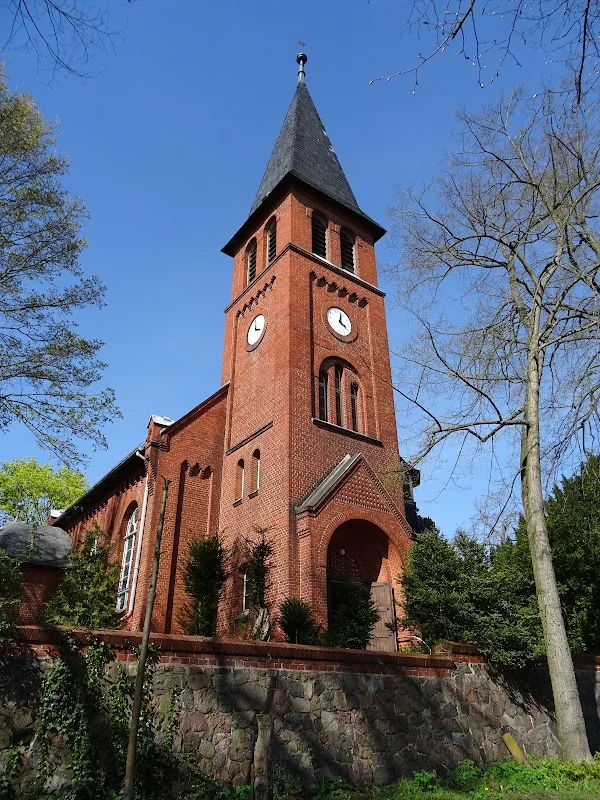
The Village Church Marquardt is one of those Potsdam village churches that appear simple at first glance but unfold an astonishingly rich history upon closer inspection. It is located in the district of Marquardt in the state capital Potsdam, right at the edge of the palace park and in close proximity to the historical manor and village structure of the area. The verified sources describe the building as a neo-Romanesque brick construction from 1901 with uniform furnishings from the time of construction; it is also emphasized that it was built in neo-Gothic forms and adorned with cast iron reliefs manufactured by the builder himself. This makes the church a special example of representative village church architecture from the late 19th and early 20th centuries in Brandenburg. ([potsdam.de](https://www.potsdam.de/de/content/dorfkirche-marquardt))
Today, anyone searching for marquardt church, village church marquardt, or even the often misspelled variant village church markau will not only encounter a sacred building but also a monument connected to the palace park, family history, music culture, and vibrant community practice. The church is listed among the open churches of Brandenburg, the community regularly celebrates services there, and weddings also take place in the vicinity of the area. For visitors, the ensemble of village, park, and church is particularly appealing because history does not seem museum-like here but remains tangible in a landscape that is still used today. ([altekirchen.de](https://www.altekirchen.de/offene-kirchen/kirchen/dorfkirche-marquardt))
History of the Village Church Marquardt and Old Schorin
The history of the Village Church Marquardt begins long before the current building. The Potsdam city page for the village church refers to the origin of the place name: The Prussian State Minister Marquardt Ludwig von Printzen was only the owner of the then still called Schorin village for a short time, but since that era the place has borne its current name. The palace park contribution additionally makes it clear that the older village core and the ownership structures of Marquardt have been historically documented since the Middle Ages and that the place was considered early on as a landscape and historically significant site. Fontane literary memorialized Marquardt in the 19th century, describing the place as an old Slavic village with a turbulent past. This literary and historical framing explains why the village church should not be viewed in isolation but as part of a developed cultural landscape. ([potsdam.de](https://www.potsdam.de/de/content/dorfkirche-marquardt))
Particularly important for the current church is the time around 1892. At that time, the Berlin iron manufacturer Louis Ravené Jr. became the lord of the manor in Marquardt. He had the current village church built after the older structure from 1733 had increasingly fallen into disrepair and was demolished in 1900. The city of Potsdam explicitly mentions the neo-Gothic forms and the decoration with cast iron reliefs from its own production. The palace park text adds that the earlier church building was consecrated in 1733 and demolished in 1900; the new building was constructed in 1900/1901 as a replacement. This shows a clear development line: from the baroque predecessor through the decline of the old building to a representative, patronage-influenced new construction phase under Ravené. ([potsdam.de](https://www.potsdam.de/de/content/dorfkirche-marquardt))
This construction history is also a piece of family and local history. The connection between the manor, the palace, and the church was close, as the patronage family Ravené did not see the church building merely as a functional replacement building but as an expression of representation, care, and memory. In the verified sources, the current church is therefore described not only as a village church but also as a monument of an era in which industrial money, landed gentry tradition, and church construction activity intertwined. This makes Marquardt interesting for anyone searching for marquardt potsdam, church marquardt potsdam, or the historical development of the place. It is particularly evident in the interplay of palace, park, and church how strongly the place was shaped by its manor history. ([potsdam.de](https://www.potsdam.de/de/schlosspark-marquardt))
Architecture, Brick, and Furnishings of the Village Church Marquardt
Architecturally, the Village Church Marquardt belongs to the striking Mark Brandenburg brick buildings of its time. The verified sources describe the building as a neo-Romanesque brick construction from 1901 and at the same time as a church in neo-Gothic forms. This connection is typical of the historicist church construction around 1900, in which forms from earlier epochs were consciously cited. The church was built according to the plans of the Berlin architect Paul Stegmüller; other representations name Adolf Stegmüller, but both sources agree that a Berlin architect and the patron Louis Ravené Jr. were responsible for the new construction. The city of Potsdam emphasizes that the exterior effect of the building was highlighted by cast iron reliefs from Ravené's own production. Thus, a building was created that clearly distinguishes itself from the traditional Mark Brandenburg field stone church and consciously focuses on representation. ([potsdam.de](https://www.potsdam.de/de/content/dorfkirche-marquardt))
The floor plan and spatial arrangement are also remarkable. The Wikipedia-supported building description mentions a cross-shaped floor plan, a nave with a transept, a recessed, three-sided closed choir in the north, and a church tower in the south. The lateral additions include a baptismal chapel and the crypt of the Ravené family. The church thus stands not only as a village church but as a spatially complex sacred building with clear axis formation and symbolic division. For search queries such as village church marquardt, neo-Gothic church, or brick church, these features are central because they precisely describe the character of the building. The uniform furnishings from the time of construction, which the Förderkreis Alte Kirchen points out, enhance the impression of a largely closed ensemble. ([altekirchen.de](https://www.altekirchen.de/offene-kirchen/kirchen/dorfkirche-marquardt))
Inside, the Village Church Marquardt thrives on the connection between historical substance and functional simplicity. The furnishings from the time of construction are described as closed, which is particularly appealing to visitors because such furnishings reflect the mindset of an entire era: Here, the altar area, gallery, organ, and side rooms were not arbitrarily supplemented but conceived as a unified overall concept. The church building language around 1900 aimed to express dignity, order, and awareness of tradition. At the same time, the architectural setting reminds us that the church space in Marquardt was not only used liturgically but also served the representation of the patronage family. Therefore, those searching for the building will find not a neutral hall but a historically charged space where liturgy, memory, and local identity merge. ([potsdam.de](https://www.potsdam.de/de/content/dorfkirche-marquardt))
Ravené Crypt, Organ, and Special Details Inside the Church
One of the strongest features of the Village Church Marquardt is the patronage crypt of the Ravené family. Below the church are four zinc sarcophagi containing the coffins of Louis Auguste Ravené, his wife Martha, his son Enno, and his son-in-law Heinz von Bardeleben; two memorial plaques honor other family members. The Wikipedia description also notes that the coffins were restored in 2005. Together with the information from the Förderkreis Alte Kirchen, which explicitly refers to a patronage crypt, it becomes clear that the church was not only a house of worship but also a place of remembrance for the owning family of the estate. This crypt is one of the most impressive elements of the building for visitors because it makes the social history of the place immediately visible. ([de.wikipedia.org](https://de.wikipedia.org/wiki/Dorfkirche_Marquardt?utm_source=openai))
Another defining element is the organ. The organ directory lists an instrument from 1901 for the Marquardt church, built by the Dinse brothers from Berlin, with ten registers on two manuals and pedal; additionally, the organ was rededicated in 2011 after restoration work. Thus, the Village Church Marquardt possesses a historical instrument that fits well with the architectural character of the space and supports liturgical as well as musical use. The community itself also makes it clear that church music and culture play an important role in the parish area of Töplitz. The church choir rehearses regularly, and music events are part of community life. For users of search terms like organ marquardt, marquardt church, or church marquardt potsdam, this is relevant because the church also has a fixed place in church life as a sound space. ([orgel-verzeichnis.de](https://orgel-verzeichnis.de/marquardt-potsdam-marquardter-kirche/?utm_source=openai))
The special atmosphere of the church is also evident in its use for weddings and cultural events. The EKMB explicitly describes that the Marquardt church is often used for weddings because one can celebrate well at the palace. This makes it visible how strongly the ensemble of church, palace, and park is still experienced as a cohesive place today. For weddings, family celebrations, and cultural visits, this connection is particularly attractive: The church offers historical dignity, the palace provides festive enhancement, and the park offers a landscape of tranquility. Therefore, those searching for ravené crypt or palace park marquardt will encounter more than individual attractions; it is about a holistic image of memory, music, and festive use that keeps the place alive to this day. ([ekmb.de](https://ekmb.de/gemeinden/toeplitz))
Services, Parish Area, and Marquardt Pastor
Church-wise, the Village Church Marquardt today belongs to the parish area of Töplitz within the Ev. Heilig-Geist-Kirchengemeinde Werder (Havel). The community explicitly names Marquardt as one of the places where services take place and states that services are celebrated there twice a month, just like in Töplitz and Phöben. For the search for marquardt pastor, it is important to note: The church is not organized as an independent parish but is integrated into a larger community association. The verified pages do not name any individual pastor directly on the Marquardt detail page but refer to the community contact pages. Those interested in baptisms, weddings, funerals, or pastoral questions can find the official contacts through the community of Werder and the parish area of Töplitz. ([kirche-werder.de](https://www.kirche-werder.de/pfarrbereich-toplitz/gottesdienste-im-pfarrbereich-toplitz))
The current dates show that Marquardt is actively involved in liturgical life. In the published service dates for February and March 2026, specific services in the Marquardt church or in the sacristy of Marquardt, as well as further Passion services in the vicinity of the parish area, are listed. This underscores that the church is not only a monument but is regularly used. Those searching for services marquardt or church marquardt potsdam will find a genuine local practice and not just historical information. This connection between monument preservation and the present is typical for the Village Church Marquardt: It remains a space for services, a community space, and a place of remembrance at the same time. The community also describes its own offerings as open to visitors, families, choir enthusiasts, and people who want to participate in regional church culture. ([kirche-werder.de](https://www.kirche-werder.de/pfarrbereich-toplitz/gottesdienste-im-pfarrbereich-toplitz/gottesdiensttermine))
The church environment is also noteworthy. The parish area of Töplitz includes other places such as Töplitz, Uetz, Phöben, Kemnitz, and Nattwerder in addition to Marquardt. This structure explains why the Village Church Marquardt, while possessing its own local identity, is organizationally embedded in a larger region. For visitors, this means: Before a visit or a service, it is worth checking the current dates of the community, as the use is oriented towards the regional processes of the parish area. Therefore, anyone specifically searching for marquardt pastor, events, or church marquardt should use the community website as the first point of contact to obtain current information. ([kirche-werder.de](https://www.kirche-werder.de/pfarrbereich-toplitz/gottesdienste-im-pfarrbereich-toplitz))
Access, Location, Parking, and Visiting the Village Church Marquardt
The location of the Village Church Marquardt is one of its great advantages. The church is located in the Potsdam district of Marquardt, at the edge of the palace park and in an environment that is explicitly described as picturesque and historically appealing. Potsdam refers to the district of Marquardt for good transport connections via the federal road 273, the Berlin Ring A10, as well as regular train and bus services. For visitors from Potsdam and Berlin, Marquardt is therefore relatively easy to reach, even though the church itself is rather rural and quiet. In practice, this means: Those who want to combine access and location will find a place here that feels calm but is not isolated in terms of traffic. This makes searching for palace park marquardt, marquardt potsdam, or opening hours church marquardt particularly meaningful. ([potsdam.de](https://www.potsdam.de/de/schlosspark-marquardt))
The verified official pages do not provide detailed visitor guidance for specific parking areas. Therefore, when planning a visit, one should rather consider the local and park context than a designated large parking lot. At the same time, the Village Church is listed in the open churches database with a contact for key arrangements; the contact person mentioned is the Grittner family at Park 1 with a phone number for inquiries. This is helpful for anyone wishing to visit the church outside of a service. Those who want to be sure on-site should contact the community or the key contact point in advance. This keeps the visit reliable and respectful of the ongoing use of the church. For search queries like opening hours church marquardt, it is therefore important that not only an opening time exists but also a concrete access regulation. ([altekirchen.de](https://www.altekirchen.de/offene-kirchen/kirchen/dorfkirche-marquardt))
The connection between the church and the palace park is particularly beautiful for walks. The church is located by the park, which was designed according to a plan by Peter Joseph Lenné, and in close proximity to the Marquardt Palace, which today is also used as an event venue. The place is therefore ideal for a short church visit, a walk through the park, and a look at the historical estate. The open churches page emphasizes that the church is open, while the community makes the life on-site visible in its dates and offerings. Thus, a search term like village church marquardt becomes not only an architectural theme but a concrete visit suggestion for people who want to combine village, monument, landscape, and church culture in an excursion. ([potsdam.de](https://www.potsdam.de/de/schlosspark-marquardt))
Sources:
- State Capital Potsdam - Village Church Marquardt
- State Capital Potsdam - Marquardt Nature and History
- State Capital Potsdam - Palace Park Marquardt
- Ev. Holy Spirit Church Community Werder (Havel) - Services in the Parish Area Töplitz
- Ev. Holy Spirit Church Community Werder (Havel) - Service Dates
- Association for the Preservation of Old Churches Berlin-Brandenburg e.V. - Village Church Marquardt
- Evangelical Church District Mittelmark-Brandenburg - Töplitz
- Organ Directory - Potsdam / Marquardt, Marquardt Church
Mehr anzeigenWeniger anzeigen
Village Church Marquardt | History & Services
The Village Church Marquardt is one of those Potsdam village churches that appear simple at first glance but unfold an astonishingly rich history upon closer inspection. It is located in the district of Marquardt in the state capital Potsdam, right at the edge of the palace park and in close proximity to the historical manor and village structure of the area. The verified sources describe the building as a neo-Romanesque brick construction from 1901 with uniform furnishings from the time of construction; it is also emphasized that it was built in neo-Gothic forms and adorned with cast iron reliefs manufactured by the builder himself. This makes the church a special example of representative village church architecture from the late 19th and early 20th centuries in Brandenburg. ([potsdam.de](https://www.potsdam.de/de/content/dorfkirche-marquardt))
Today, anyone searching for marquardt church, village church marquardt, or even the often misspelled variant village church markau will not only encounter a sacred building but also a monument connected to the palace park, family history, music culture, and vibrant community practice. The church is listed among the open churches of Brandenburg, the community regularly celebrates services there, and weddings also take place in the vicinity of the area. For visitors, the ensemble of village, park, and church is particularly appealing because history does not seem museum-like here but remains tangible in a landscape that is still used today. ([altekirchen.de](https://www.altekirchen.de/offene-kirchen/kirchen/dorfkirche-marquardt))
History of the Village Church Marquardt and Old Schorin
The history of the Village Church Marquardt begins long before the current building. The Potsdam city page for the village church refers to the origin of the place name: The Prussian State Minister Marquardt Ludwig von Printzen was only the owner of the then still called Schorin village for a short time, but since that era the place has borne its current name. The palace park contribution additionally makes it clear that the older village core and the ownership structures of Marquardt have been historically documented since the Middle Ages and that the place was considered early on as a landscape and historically significant site. Fontane literary memorialized Marquardt in the 19th century, describing the place as an old Slavic village with a turbulent past. This literary and historical framing explains why the village church should not be viewed in isolation but as part of a developed cultural landscape. ([potsdam.de](https://www.potsdam.de/de/content/dorfkirche-marquardt))
Particularly important for the current church is the time around 1892. At that time, the Berlin iron manufacturer Louis Ravené Jr. became the lord of the manor in Marquardt. He had the current village church built after the older structure from 1733 had increasingly fallen into disrepair and was demolished in 1900. The city of Potsdam explicitly mentions the neo-Gothic forms and the decoration with cast iron reliefs from its own production. The palace park text adds that the earlier church building was consecrated in 1733 and demolished in 1900; the new building was constructed in 1900/1901 as a replacement. This shows a clear development line: from the baroque predecessor through the decline of the old building to a representative, patronage-influenced new construction phase under Ravené. ([potsdam.de](https://www.potsdam.de/de/content/dorfkirche-marquardt))
This construction history is also a piece of family and local history. The connection between the manor, the palace, and the church was close, as the patronage family Ravené did not see the church building merely as a functional replacement building but as an expression of representation, care, and memory. In the verified sources, the current church is therefore described not only as a village church but also as a monument of an era in which industrial money, landed gentry tradition, and church construction activity intertwined. This makes Marquardt interesting for anyone searching for marquardt potsdam, church marquardt potsdam, or the historical development of the place. It is particularly evident in the interplay of palace, park, and church how strongly the place was shaped by its manor history. ([potsdam.de](https://www.potsdam.de/de/schlosspark-marquardt))
Architecture, Brick, and Furnishings of the Village Church Marquardt
Architecturally, the Village Church Marquardt belongs to the striking Mark Brandenburg brick buildings of its time. The verified sources describe the building as a neo-Romanesque brick construction from 1901 and at the same time as a church in neo-Gothic forms. This connection is typical of the historicist church construction around 1900, in which forms from earlier epochs were consciously cited. The church was built according to the plans of the Berlin architect Paul Stegmüller; other representations name Adolf Stegmüller, but both sources agree that a Berlin architect and the patron Louis Ravené Jr. were responsible for the new construction. The city of Potsdam emphasizes that the exterior effect of the building was highlighted by cast iron reliefs from Ravené's own production. Thus, a building was created that clearly distinguishes itself from the traditional Mark Brandenburg field stone church and consciously focuses on representation. ([potsdam.de](https://www.potsdam.de/de/content/dorfkirche-marquardt))
The floor plan and spatial arrangement are also remarkable. The Wikipedia-supported building description mentions a cross-shaped floor plan, a nave with a transept, a recessed, three-sided closed choir in the north, and a church tower in the south. The lateral additions include a baptismal chapel and the crypt of the Ravené family. The church thus stands not only as a village church but as a spatially complex sacred building with clear axis formation and symbolic division. For search queries such as village church marquardt, neo-Gothic church, or brick church, these features are central because they precisely describe the character of the building. The uniform furnishings from the time of construction, which the Förderkreis Alte Kirchen points out, enhance the impression of a largely closed ensemble. ([altekirchen.de](https://www.altekirchen.de/offene-kirchen/kirchen/dorfkirche-marquardt))
Inside, the Village Church Marquardt thrives on the connection between historical substance and functional simplicity. The furnishings from the time of construction are described as closed, which is particularly appealing to visitors because such furnishings reflect the mindset of an entire era: Here, the altar area, gallery, organ, and side rooms were not arbitrarily supplemented but conceived as a unified overall concept. The church building language around 1900 aimed to express dignity, order, and awareness of tradition. At the same time, the architectural setting reminds us that the church space in Marquardt was not only used liturgically but also served the representation of the patronage family. Therefore, those searching for the building will find not a neutral hall but a historically charged space where liturgy, memory, and local identity merge. ([potsdam.de](https://www.potsdam.de/de/content/dorfkirche-marquardt))
Ravené Crypt, Organ, and Special Details Inside the Church
One of the strongest features of the Village Church Marquardt is the patronage crypt of the Ravené family. Below the church are four zinc sarcophagi containing the coffins of Louis Auguste Ravené, his wife Martha, his son Enno, and his son-in-law Heinz von Bardeleben; two memorial plaques honor other family members. The Wikipedia description also notes that the coffins were restored in 2005. Together with the information from the Förderkreis Alte Kirchen, which explicitly refers to a patronage crypt, it becomes clear that the church was not only a house of worship but also a place of remembrance for the owning family of the estate. This crypt is one of the most impressive elements of the building for visitors because it makes the social history of the place immediately visible. ([de.wikipedia.org](https://de.wikipedia.org/wiki/Dorfkirche_Marquardt?utm_source=openai))
Another defining element is the organ. The organ directory lists an instrument from 1901 for the Marquardt church, built by the Dinse brothers from Berlin, with ten registers on two manuals and pedal; additionally, the organ was rededicated in 2011 after restoration work. Thus, the Village Church Marquardt possesses a historical instrument that fits well with the architectural character of the space and supports liturgical as well as musical use. The community itself also makes it clear that church music and culture play an important role in the parish area of Töplitz. The church choir rehearses regularly, and music events are part of community life. For users of search terms like organ marquardt, marquardt church, or church marquardt potsdam, this is relevant because the church also has a fixed place in church life as a sound space. ([orgel-verzeichnis.de](https://orgel-verzeichnis.de/marquardt-potsdam-marquardter-kirche/?utm_source=openai))
The special atmosphere of the church is also evident in its use for weddings and cultural events. The EKMB explicitly describes that the Marquardt church is often used for weddings because one can celebrate well at the palace. This makes it visible how strongly the ensemble of church, palace, and park is still experienced as a cohesive place today. For weddings, family celebrations, and cultural visits, this connection is particularly attractive: The church offers historical dignity, the palace provides festive enhancement, and the park offers a landscape of tranquility. Therefore, those searching for ravené crypt or palace park marquardt will encounter more than individual attractions; it is about a holistic image of memory, music, and festive use that keeps the place alive to this day. ([ekmb.de](https://ekmb.de/gemeinden/toeplitz))
Services, Parish Area, and Marquardt Pastor
Church-wise, the Village Church Marquardt today belongs to the parish area of Töplitz within the Ev. Heilig-Geist-Kirchengemeinde Werder (Havel). The community explicitly names Marquardt as one of the places where services take place and states that services are celebrated there twice a month, just like in Töplitz and Phöben. For the search for marquardt pastor, it is important to note: The church is not organized as an independent parish but is integrated into a larger community association. The verified pages do not name any individual pastor directly on the Marquardt detail page but refer to the community contact pages. Those interested in baptisms, weddings, funerals, or pastoral questions can find the official contacts through the community of Werder and the parish area of Töplitz. ([kirche-werder.de](https://www.kirche-werder.de/pfarrbereich-toplitz/gottesdienste-im-pfarrbereich-toplitz))
The current dates show that Marquardt is actively involved in liturgical life. In the published service dates for February and March 2026, specific services in the Marquardt church or in the sacristy of Marquardt, as well as further Passion services in the vicinity of the parish area, are listed. This underscores that the church is not only a monument but is regularly used. Those searching for services marquardt or church marquardt potsdam will find a genuine local practice and not just historical information. This connection between monument preservation and the present is typical for the Village Church Marquardt: It remains a space for services, a community space, and a place of remembrance at the same time. The community also describes its own offerings as open to visitors, families, choir enthusiasts, and people who want to participate in regional church culture. ([kirche-werder.de](https://www.kirche-werder.de/pfarrbereich-toplitz/gottesdienste-im-pfarrbereich-toplitz/gottesdiensttermine))
The church environment is also noteworthy. The parish area of Töplitz includes other places such as Töplitz, Uetz, Phöben, Kemnitz, and Nattwerder in addition to Marquardt. This structure explains why the Village Church Marquardt, while possessing its own local identity, is organizationally embedded in a larger region. For visitors, this means: Before a visit or a service, it is worth checking the current dates of the community, as the use is oriented towards the regional processes of the parish area. Therefore, anyone specifically searching for marquardt pastor, events, or church marquardt should use the community website as the first point of contact to obtain current information. ([kirche-werder.de](https://www.kirche-werder.de/pfarrbereich-toplitz/gottesdienste-im-pfarrbereich-toplitz))
Access, Location, Parking, and Visiting the Village Church Marquardt
The location of the Village Church Marquardt is one of its great advantages. The church is located in the Potsdam district of Marquardt, at the edge of the palace park and in an environment that is explicitly described as picturesque and historically appealing. Potsdam refers to the district of Marquardt for good transport connections via the federal road 273, the Berlin Ring A10, as well as regular train and bus services. For visitors from Potsdam and Berlin, Marquardt is therefore relatively easy to reach, even though the church itself is rather rural and quiet. In practice, this means: Those who want to combine access and location will find a place here that feels calm but is not isolated in terms of traffic. This makes searching for palace park marquardt, marquardt potsdam, or opening hours church marquardt particularly meaningful. ([potsdam.de](https://www.potsdam.de/de/schlosspark-marquardt))
The verified official pages do not provide detailed visitor guidance for specific parking areas. Therefore, when planning a visit, one should rather consider the local and park context than a designated large parking lot. At the same time, the Village Church is listed in the open churches database with a contact for key arrangements; the contact person mentioned is the Grittner family at Park 1 with a phone number for inquiries. This is helpful for anyone wishing to visit the church outside of a service. Those who want to be sure on-site should contact the community or the key contact point in advance. This keeps the visit reliable and respectful of the ongoing use of the church. For search queries like opening hours church marquardt, it is therefore important that not only an opening time exists but also a concrete access regulation. ([altekirchen.de](https://www.altekirchen.de/offene-kirchen/kirchen/dorfkirche-marquardt))
The connection between the church and the palace park is particularly beautiful for walks. The church is located by the park, which was designed according to a plan by Peter Joseph Lenné, and in close proximity to the Marquardt Palace, which today is also used as an event venue. The place is therefore ideal for a short church visit, a walk through the park, and a look at the historical estate. The open churches page emphasizes that the church is open, while the community makes the life on-site visible in its dates and offerings. Thus, a search term like village church marquardt becomes not only an architectural theme but a concrete visit suggestion for people who want to combine village, monument, landscape, and church culture in an excursion. ([potsdam.de](https://www.potsdam.de/de/schlosspark-marquardt))
Sources:
- State Capital Potsdam - Village Church Marquardt
- State Capital Potsdam - Marquardt Nature and History
- State Capital Potsdam - Palace Park Marquardt
- Ev. Holy Spirit Church Community Werder (Havel) - Services in the Parish Area Töplitz
- Ev. Holy Spirit Church Community Werder (Havel) - Service Dates
- Association for the Preservation of Old Churches Berlin-Brandenburg e.V. - Village Church Marquardt
- Evangelical Church District Mittelmark-Brandenburg - Töplitz
- Organ Directory - Potsdam / Marquardt, Marquardt Church
Village Church Marquardt | History & Services
The Village Church Marquardt is one of those Potsdam village churches that appear simple at first glance but unfold an astonishingly rich history upon closer inspection. It is located in the district of Marquardt in the state capital Potsdam, right at the edge of the palace park and in close proximity to the historical manor and village structure of the area. The verified sources describe the building as a neo-Romanesque brick construction from 1901 with uniform furnishings from the time of construction; it is also emphasized that it was built in neo-Gothic forms and adorned with cast iron reliefs manufactured by the builder himself. This makes the church a special example of representative village church architecture from the late 19th and early 20th centuries in Brandenburg. ([potsdam.de](https://www.potsdam.de/de/content/dorfkirche-marquardt))
Today, anyone searching for marquardt church, village church marquardt, or even the often misspelled variant village church markau will not only encounter a sacred building but also a monument connected to the palace park, family history, music culture, and vibrant community practice. The church is listed among the open churches of Brandenburg, the community regularly celebrates services there, and weddings also take place in the vicinity of the area. For visitors, the ensemble of village, park, and church is particularly appealing because history does not seem museum-like here but remains tangible in a landscape that is still used today. ([altekirchen.de](https://www.altekirchen.de/offene-kirchen/kirchen/dorfkirche-marquardt))
History of the Village Church Marquardt and Old Schorin
The history of the Village Church Marquardt begins long before the current building. The Potsdam city page for the village church refers to the origin of the place name: The Prussian State Minister Marquardt Ludwig von Printzen was only the owner of the then still called Schorin village for a short time, but since that era the place has borne its current name. The palace park contribution additionally makes it clear that the older village core and the ownership structures of Marquardt have been historically documented since the Middle Ages and that the place was considered early on as a landscape and historically significant site. Fontane literary memorialized Marquardt in the 19th century, describing the place as an old Slavic village with a turbulent past. This literary and historical framing explains why the village church should not be viewed in isolation but as part of a developed cultural landscape. ([potsdam.de](https://www.potsdam.de/de/content/dorfkirche-marquardt))
Particularly important for the current church is the time around 1892. At that time, the Berlin iron manufacturer Louis Ravené Jr. became the lord of the manor in Marquardt. He had the current village church built after the older structure from 1733 had increasingly fallen into disrepair and was demolished in 1900. The city of Potsdam explicitly mentions the neo-Gothic forms and the decoration with cast iron reliefs from its own production. The palace park text adds that the earlier church building was consecrated in 1733 and demolished in 1900; the new building was constructed in 1900/1901 as a replacement. This shows a clear development line: from the baroque predecessor through the decline of the old building to a representative, patronage-influenced new construction phase under Ravené. ([potsdam.de](https://www.potsdam.de/de/content/dorfkirche-marquardt))
This construction history is also a piece of family and local history. The connection between the manor, the palace, and the church was close, as the patronage family Ravené did not see the church building merely as a functional replacement building but as an expression of representation, care, and memory. In the verified sources, the current church is therefore described not only as a village church but also as a monument of an era in which industrial money, landed gentry tradition, and church construction activity intertwined. This makes Marquardt interesting for anyone searching for marquardt potsdam, church marquardt potsdam, or the historical development of the place. It is particularly evident in the interplay of palace, park, and church how strongly the place was shaped by its manor history. ([potsdam.de](https://www.potsdam.de/de/schlosspark-marquardt))
Architecture, Brick, and Furnishings of the Village Church Marquardt
Architecturally, the Village Church Marquardt belongs to the striking Mark Brandenburg brick buildings of its time. The verified sources describe the building as a neo-Romanesque brick construction from 1901 and at the same time as a church in neo-Gothic forms. This connection is typical of the historicist church construction around 1900, in which forms from earlier epochs were consciously cited. The church was built according to the plans of the Berlin architect Paul Stegmüller; other representations name Adolf Stegmüller, but both sources agree that a Berlin architect and the patron Louis Ravené Jr. were responsible for the new construction. The city of Potsdam emphasizes that the exterior effect of the building was highlighted by cast iron reliefs from Ravené's own production. Thus, a building was created that clearly distinguishes itself from the traditional Mark Brandenburg field stone church and consciously focuses on representation. ([potsdam.de](https://www.potsdam.de/de/content/dorfkirche-marquardt))
The floor plan and spatial arrangement are also remarkable. The Wikipedia-supported building description mentions a cross-shaped floor plan, a nave with a transept, a recessed, three-sided closed choir in the north, and a church tower in the south. The lateral additions include a baptismal chapel and the crypt of the Ravené family. The church thus stands not only as a village church but as a spatially complex sacred building with clear axis formation and symbolic division. For search queries such as village church marquardt, neo-Gothic church, or brick church, these features are central because they precisely describe the character of the building. The uniform furnishings from the time of construction, which the Förderkreis Alte Kirchen points out, enhance the impression of a largely closed ensemble. ([altekirchen.de](https://www.altekirchen.de/offene-kirchen/kirchen/dorfkirche-marquardt))
Inside, the Village Church Marquardt thrives on the connection between historical substance and functional simplicity. The furnishings from the time of construction are described as closed, which is particularly appealing to visitors because such furnishings reflect the mindset of an entire era: Here, the altar area, gallery, organ, and side rooms were not arbitrarily supplemented but conceived as a unified overall concept. The church building language around 1900 aimed to express dignity, order, and awareness of tradition. At the same time, the architectural setting reminds us that the church space in Marquardt was not only used liturgically but also served the representation of the patronage family. Therefore, those searching for the building will find not a neutral hall but a historically charged space where liturgy, memory, and local identity merge. ([potsdam.de](https://www.potsdam.de/de/content/dorfkirche-marquardt))
Ravené Crypt, Organ, and Special Details Inside the Church
One of the strongest features of the Village Church Marquardt is the patronage crypt of the Ravené family. Below the church are four zinc sarcophagi containing the coffins of Louis Auguste Ravené, his wife Martha, his son Enno, and his son-in-law Heinz von Bardeleben; two memorial plaques honor other family members. The Wikipedia description also notes that the coffins were restored in 2005. Together with the information from the Förderkreis Alte Kirchen, which explicitly refers to a patronage crypt, it becomes clear that the church was not only a house of worship but also a place of remembrance for the owning family of the estate. This crypt is one of the most impressive elements of the building for visitors because it makes the social history of the place immediately visible. ([de.wikipedia.org](https://de.wikipedia.org/wiki/Dorfkirche_Marquardt?utm_source=openai))
Another defining element is the organ. The organ directory lists an instrument from 1901 for the Marquardt church, built by the Dinse brothers from Berlin, with ten registers on two manuals and pedal; additionally, the organ was rededicated in 2011 after restoration work. Thus, the Village Church Marquardt possesses a historical instrument that fits well with the architectural character of the space and supports liturgical as well as musical use. The community itself also makes it clear that church music and culture play an important role in the parish area of Töplitz. The church choir rehearses regularly, and music events are part of community life. For users of search terms like organ marquardt, marquardt church, or church marquardt potsdam, this is relevant because the church also has a fixed place in church life as a sound space. ([orgel-verzeichnis.de](https://orgel-verzeichnis.de/marquardt-potsdam-marquardter-kirche/?utm_source=openai))
The special atmosphere of the church is also evident in its use for weddings and cultural events. The EKMB explicitly describes that the Marquardt church is often used for weddings because one can celebrate well at the palace. This makes it visible how strongly the ensemble of church, palace, and park is still experienced as a cohesive place today. For weddings, family celebrations, and cultural visits, this connection is particularly attractive: The church offers historical dignity, the palace provides festive enhancement, and the park offers a landscape of tranquility. Therefore, those searching for ravené crypt or palace park marquardt will encounter more than individual attractions; it is about a holistic image of memory, music, and festive use that keeps the place alive to this day. ([ekmb.de](https://ekmb.de/gemeinden/toeplitz))
Services, Parish Area, and Marquardt Pastor
Church-wise, the Village Church Marquardt today belongs to the parish area of Töplitz within the Ev. Heilig-Geist-Kirchengemeinde Werder (Havel). The community explicitly names Marquardt as one of the places where services take place and states that services are celebrated there twice a month, just like in Töplitz and Phöben. For the search for marquardt pastor, it is important to note: The church is not organized as an independent parish but is integrated into a larger community association. The verified pages do not name any individual pastor directly on the Marquardt detail page but refer to the community contact pages. Those interested in baptisms, weddings, funerals, or pastoral questions can find the official contacts through the community of Werder and the parish area of Töplitz. ([kirche-werder.de](https://www.kirche-werder.de/pfarrbereich-toplitz/gottesdienste-im-pfarrbereich-toplitz))
The current dates show that Marquardt is actively involved in liturgical life. In the published service dates for February and March 2026, specific services in the Marquardt church or in the sacristy of Marquardt, as well as further Passion services in the vicinity of the parish area, are listed. This underscores that the church is not only a monument but is regularly used. Those searching for services marquardt or church marquardt potsdam will find a genuine local practice and not just historical information. This connection between monument preservation and the present is typical for the Village Church Marquardt: It remains a space for services, a community space, and a place of remembrance at the same time. The community also describes its own offerings as open to visitors, families, choir enthusiasts, and people who want to participate in regional church culture. ([kirche-werder.de](https://www.kirche-werder.de/pfarrbereich-toplitz/gottesdienste-im-pfarrbereich-toplitz/gottesdiensttermine))
The church environment is also noteworthy. The parish area of Töplitz includes other places such as Töplitz, Uetz, Phöben, Kemnitz, and Nattwerder in addition to Marquardt. This structure explains why the Village Church Marquardt, while possessing its own local identity, is organizationally embedded in a larger region. For visitors, this means: Before a visit or a service, it is worth checking the current dates of the community, as the use is oriented towards the regional processes of the parish area. Therefore, anyone specifically searching for marquardt pastor, events, or church marquardt should use the community website as the first point of contact to obtain current information. ([kirche-werder.de](https://www.kirche-werder.de/pfarrbereich-toplitz/gottesdienste-im-pfarrbereich-toplitz))
Access, Location, Parking, and Visiting the Village Church Marquardt
The location of the Village Church Marquardt is one of its great advantages. The church is located in the Potsdam district of Marquardt, at the edge of the palace park and in an environment that is explicitly described as picturesque and historically appealing. Potsdam refers to the district of Marquardt for good transport connections via the federal road 273, the Berlin Ring A10, as well as regular train and bus services. For visitors from Potsdam and Berlin, Marquardt is therefore relatively easy to reach, even though the church itself is rather rural and quiet. In practice, this means: Those who want to combine access and location will find a place here that feels calm but is not isolated in terms of traffic. This makes searching for palace park marquardt, marquardt potsdam, or opening hours church marquardt particularly meaningful. ([potsdam.de](https://www.potsdam.de/de/schlosspark-marquardt))
The verified official pages do not provide detailed visitor guidance for specific parking areas. Therefore, when planning a visit, one should rather consider the local and park context than a designated large parking lot. At the same time, the Village Church is listed in the open churches database with a contact for key arrangements; the contact person mentioned is the Grittner family at Park 1 with a phone number for inquiries. This is helpful for anyone wishing to visit the church outside of a service. Those who want to be sure on-site should contact the community or the key contact point in advance. This keeps the visit reliable and respectful of the ongoing use of the church. For search queries like opening hours church marquardt, it is therefore important that not only an opening time exists but also a concrete access regulation. ([altekirchen.de](https://www.altekirchen.de/offene-kirchen/kirchen/dorfkirche-marquardt))
The connection between the church and the palace park is particularly beautiful for walks. The church is located by the park, which was designed according to a plan by Peter Joseph Lenné, and in close proximity to the Marquardt Palace, which today is also used as an event venue. The place is therefore ideal for a short church visit, a walk through the park, and a look at the historical estate. The open churches page emphasizes that the church is open, while the community makes the life on-site visible in its dates and offerings. Thus, a search term like village church marquardt becomes not only an architectural theme but a concrete visit suggestion for people who want to combine village, monument, landscape, and church culture in an excursion. ([potsdam.de](https://www.potsdam.de/de/schlosspark-marquardt))
Sources:
- State Capital Potsdam - Village Church Marquardt
- State Capital Potsdam - Marquardt Nature and History
- State Capital Potsdam - Palace Park Marquardt
- Ev. Holy Spirit Church Community Werder (Havel) - Services in the Parish Area Töplitz
- Ev. Holy Spirit Church Community Werder (Havel) - Service Dates
- Association for the Preservation of Old Churches Berlin-Brandenburg e.V. - Village Church Marquardt
- Evangelical Church District Mittelmark-Brandenburg - Töplitz
- Organ Directory - Potsdam / Marquardt, Marquardt Church
Frequently Asked Questions
Reviews
No reviews found