
Feldweg - Nattwerder, Potsdam Nord
Feldweg - Nattwerder, 14469 Potsdam, Germany
Dorfkirche Nattwerder | History & Photos
The village church of Nattwerder is one of those places where landscape, memory, and lived tradition connect in an unusually calm way. In the Potsdam district of Nattwerder, on a historic settlement area west of the city, stands a church building that stands out not only for its long history but also for its special location amidst an environment shaped by water, paths, and wide views. Those searching for Dorfkirche Nattwerder, Kirche Nattwerder, or Nattwerder history are truly looking for an authentic piece of Potsdam away from the well-known palaces and avenues. Here, the history of Swiss settlers, the Reformed tradition of faith, and the quiet aura of a place that is still valued today as a destination, place of worship, and concert church come together. The official pages of the city of Potsdam and the Swiss Colonist Village Nattwerder association describe the church as one of the oldest and most character-defining places in the district. It is precisely this mix of historical weight and quiet presence that makes the charm of the place. ([potsdam.de](https://www.potsdam.de/de/dorfkirche-nattwerder))
Today, the village church of Nattwerder is much more than a monument. It is a visible anchor point for visitors who wish to discover the quiet side of Potsdam, and at the same time, a lively meeting place for services, baptisms, weddings, and summer concerts. The local association commemorates the Swiss settlement history, maintains the memory of the settler families, and highlights the special character of the place through events such as summer music. Those looking for photos will find a church with a low tower, simple silhouette, and an environment that seems almost made for contemplative moments. Those seeking history will find tales of travel, settlement, land drainage, and centuries of care. Those looking for a quiet place for a break, a walk, or a cultural detour will find in Nattwerder one of the most exciting insider tips in northern Potsdam. ([potsdam.de](https://www.potsdam.de/de/content/nattwerder-das-kleine-schweizer-kolonistendorf))
History of the Dorfkirche Nattwerder and the Swiss Colonists
The history of the village church of Nattwerder begins with a political and economic strategy of the Great Elector Frederick William. To secure the supply of the growing residence city of Potsdam and to revive the depopulated land after the Thirty Years' War, colonists were recruited in the late 17th century. The place Nattwerder, whose name refers to the low moorland and water-rich terrain, was settled by Swiss farming families from the regions of Bern and Aarau. The Swiss Colonist Village Nattwerder association describes the arrival of 14 families in 1685 and emphasizes the long, arduous journey by water via the Rhine, North Sea, Elbe, and Havel. In this way, a difficult settlement area became a place with its own identity. The city of Potsdam highlights that the then Natte Werder was settled with Swiss farmers as part of the repopulation and that the church was already established in 1685. Thus, Nattwerder remains a particularly clear testimony to early modern settlement policy in Brandenburg to this day. ([potsdam.de](https://www.potsdam.de/de/dorfkirche-nattwerder))
The village church was from the very beginning more than an ancillary building. In the contractual arrangements for settlement, having its own Reformed church played an important role, as the colonists were to receive not only land but also religious and social security. The official Nattwerder history states that the Reformed church was originally even called the Peace Church and was consecrated on November 16, 1690, by court preacher Anton Brunsenius. This consecration marked the beginning of a usage that continues to this day. Later, after the union of 1835, the church belonged to the Töplitz parish. The immediate surroundings also speak to the deep historical roots: The cemetery around the church preserves the structure of the original colonist settlement, and the oldest grave dates back to 1856. Nattwerder itself is now a landscape monument, meaning not only the church but the entire village image is under special protection. This makes the village church a key location for anyone searching for Nattwerder history, Swiss Colonist Village Nattwerder, or the oldest church in Potsdam. ([nattwerder.de](https://www.nattwerder.de/geschichte.html))
Historically interesting is also how closely the village church is linked to the development of the entire place. The Swiss colonists had to drain the Golmer Luch and deal with the conditions of a difficult settlement area that was only limitedly suitable for agriculture. Despite these adversities, a place emerged whose structure remains recognizable to this day. The association reports that four farms burned down in 1867 due to lightning strikes and were rebuilt in their original dimensions later that same year. This preserved the settlement form, even though the uses changed over time. The history of the church is therefore always also the history of a small, resilient place that emerged from a migration and faith story. Today, those walking through Nattwerder see not only a pretty little church but a space where European migration history, Brandenburg agricultural history, and local memory culture intertwine. This depth gives the village church its special significance in northern Potsdam. ([potsdam.de](https://www.potsdam.de/de/content/nattwerder-das-kleine-schweizer-kolonistendorf))
Photos, Architecture, and the Quiet Image of the Church Ensemble
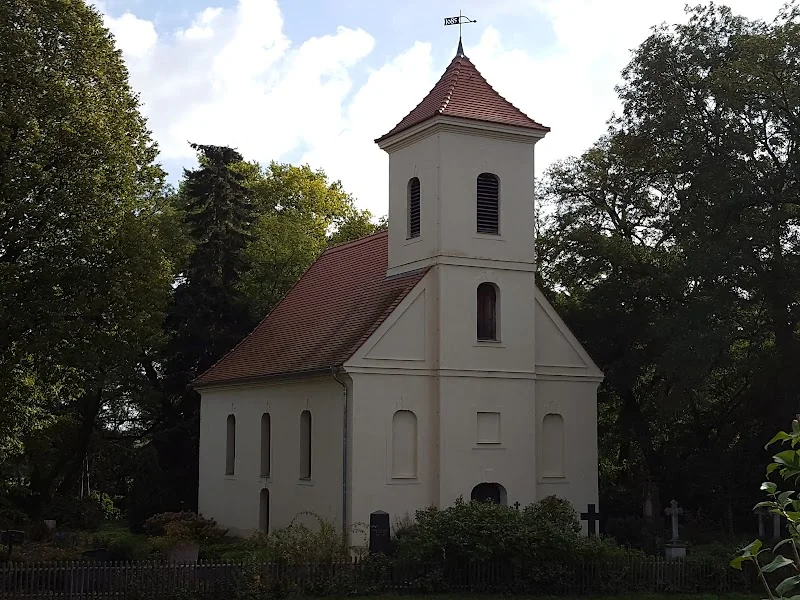
Those searching for photos of the village church in Nattwerder encounter an astonishingly simple yet impressive image. The church has a low, square west tower with a tiled pyramid roof, giving the building a calm, almost defenseless silhouette. This simplicity is part of its effect. Unlike many representative sacred buildings, the village church of Nattwerder does not rely on size or splendor but on clear forms that fit well into the landscape. The official description from the city of Potsdam emphasizes that the gallery above the tower entrance and the wooden pulpit date from the time of construction. This means that the impression visitors receive today is not merely a later reconstruction but, in essential parts, a historically grown interior and exterior space. For SEO and search interests around kirche nattwerder or dorfkirche nattwerder, this is crucial: It is about an authentic monument that does not stage itself but convinces through restraint. ([potsdam.de](https://www.potsdam.de/de/dorfkirche-nattwerder))
The surroundings also contribute to the special imagery of the place. The church is framed by the cemetery and village structure, and the original arrangement of the place is still clearly recognizable today. The Nattwerder history mentions that the cemetery surrounding the church is worth seeing and that the original division among the individual colonists remains visible. The oldest grave dates back to 1856, adding another historical layer to the place. At the same time, the location in greenery makes the place a popular motif for quiet, atmospheric shots: a church in a play of light, sky, paths, and old trees. The official tourism presentation of Potsdam shows the church with several images and refers to the map and route, making it easier for visitors to orient themselves. Those looking at the photos quickly understand why Nattwerder is considered an insider tip: Here, it is not size but atmosphere that creates the lasting impression. This atmosphere is particularly valuable for day-trippers, culture lovers, and those seeking quiet places in the Potsdam area. ([nattwerder.de](https://www.nattwerder.de/geschichte.html))
The architecture can best be read as a simple, Calvinistically influenced sacred building. The official Nattwerder page describes the interior as largely preserved in its original state and refers to the almost austere character that makes the Reformed spirit of the 17th century visible. This is important because the village church of Nattwerder does not appear like a baroque overloaded church but speaks through proportion, material, and light. It is precisely this reduced impression that makes it photographically interesting for many visitors. The gaze lingers on the form of the tower, the wooden pulpit, the gallery, and the clear lines of the space. In search queries like dorfkirche in nattwerder fotos or kirche nattwerder, there is often more than just a simple image search: It is the desire to see a place that is both simple and historically rich. The village church delivers exactly this mix. It does not appear urban but rural, not monumental but concentrated, not loud but quiet. This creates that special visual identity that many visitors perceive as characteristic of Nattwerder. ([nattwerder.de](https://www.nattwerder.de/geschichte.html))
Organ, Interior, and Reconstruction
The inner history of the village church of Nattwerder is closely linked to the organ. As early as 1797, an east gallery for a small organ was built above the altar table. The city of Potsdam and the tourism page point out that in 1996, the Potsdam organ workshop Schuke installed an instrument with eight stops into the historical case. This is a remarkable detail because it shows the continuity between the historical space and today's musical use. The church is thus not only a monument but also an acoustic and cultural place. The formulation on the official page that the sun and moon return at the restored prospect with cymbal sound emphasizes the poetic significance of the instrument and refers to how strongly the organ is connected to the space. Those searching for orgel nattwerder discover not only a technical instrument but a living connection between craftsmanship, music history, and liturgical practice. ([potsdam.de](https://www.potsdam.de/de/dorfkirche-nattwerder))
The reconstruction of the church is another central point. The city of Potsdam states that reconstruction has been ongoing at the village church since 2009, while the Potsdam tourism page specifies the period from 2007 to 2012 for the reconstruction. For the content classification, it is particularly important that the church was comprehensively secured and restored in the 2000s. In doing so, the simple character was preserved rather than being overlaid. This also corresponds to the historical self-understanding of the place: The village church was never meant to be a representative building but a house of worship for a Reformed settler community. Today, visitors benefit from the fact that the building does not appear museum-like but remains accessible in restored form. Especially because the interior furnishings largely date from the time of construction, the space is particularly exciting for people interested in architectural history, sacred space, and regional identity. The reconstruction is therefore not only a structural measure but a piece of cultural preservation. It makes the place equally attractive for photos, visits, and events. ([potsdam.de](https://www.potsdam.de/de/dorfkirche-nattwerder))
The interior itself stands for a rare degree of simplicity. The official history emphasizes that the original furnishings, except for the east gallery and the organ, are essentially completely preserved. This includes the wooden pulpit and the altar table, which particularly clearly reflects the Calvinist spirit of the late 17th century. This furnishing tells of a community that did not define itself through decorative wealth but through faith practice, sobriety, and clear order. Today, this often impresses visitors particularly because modern viewing habits frequently linger on such concentration. The village church of Nattwerder is thus an ideal example of a space where history does not need to be explained but can be experienced. This makes it relevant for visitors with different interests: for architecture enthusiasts, for church historians, for concert-goers, and for anyone seeking a quiet place in Potsdam that is not overcrowded. Upon entering the church, one quickly senses that more has been preserved here than just a building. A form of life and faith has been preserved that is otherwise rarely experienced so directly in Brandenburg. ([nattwerder.de](https://www.nattwerder.de/geschichte.html))
Summer Music, Services, and Events
The village church of Nattwerder is still an active event venue today. The official tourism page notes under the opening hours that it is open for services, and the historical presentation of the association explicitly mentions regular services, baptisms, and weddings. In summer, the church is also used for concerts. This is precisely where another search focus lies, reflected in terms like sommermusik nattwerder or veranstaltungen dorfkirche nattwerder. The church is thus not only a place of remembrance but also a space for current encounters. This combination of liturgical use and cultural program is typical for many village churches in Brandenburg, but in Nattwerder, it is particularly well-experienced due to the intimate architectural and landscape situation. Those attending a concert experience music in a space that is acoustically and atmospherically shaped by history. Those attending a service experience a place that lives not only touristically but also ecclesiastically. This dual function makes the village church particularly exciting for visitors. ([potsdamtourismus.de](https://www.potsdamtourismus.de/poi/dorfkirche-nattwerder))
For the year 2025, the association's calendar lists a four-part summer music series in the village church of Nattwerder. Among others, Trio Florian Kellerhals will perform with modern classical music and tango, Ensemble á tre Potsdam with musical rarities for flute, horn, or alphorn and organ, Duo Walbrecht with jazz compositions, and Matthias Hübner on cello and electric cello. Admission is 15 euros, and children up to 14 years are free. These details vividly illustrate that the village church of Nattwerder is not an isolated museum but a place where different musical styles meet historical architecture. Those searching for a cultural outing in Potsdam will find here a program that consciously remains small-scale and high-quality. It is not about large crowds but about closeness, concentration, and a hearable dialogue between music and space. For local search queries around program, tickets, or church events, this is a strong argument because the concert series provides evidence of real, recurring use. ([nattwerder.de](https://www.nattwerder.de/veranstaltungen.html))
The historical background of the events also fits the place. The association commemorates the landing of the Swiss families in the 17th century with a memorial stone project, linking memory culture with current association work. This means that the concerts are not detached from the history of the space but build on a vibrant local identity. This connection makes Nattwerder interesting for cultural travelers who are looking for not only a beautiful event venue but also a narrated place. When music takes place here, it is embedded in a centuries-old history where settlement, faith, landscape, and community belong together. For visitors, this creates an unusually coherent overall picture: a small church, a large historical context, intimate concert formats, and an environment that consciously slows down. Therefore, those searching for dorfkirche nattwerder, sommermusik nattwerder, or kirche nattwerder in connection with culture will find here exactly what the terms promise: a place with sound, tranquility, and significance. ([nattwerder.de](https://www.nattwerder.de/veranstaltungen.html))
Access, Wublitz, and Walks around Nattwerder
Nattwerder is located in the northwest of Potsdam between Töplitz and Golm, directly on the Wublitz, a tributary of the Havel. This location is crucial for the perception of the village church. The place is not designed for quick transit but for discovery on foot, by bicycle, or even from the water. The official Potsdam page even explicitly describes Nattwerder as an ideal place for extensive walks and hikes. From the church, a circular path leads around the Wublitz, which crosses a wooden bridge to the island of Töplitz and then returns to Nattwerder via Leest and Grube. For visitors, this means: The church is not only a destination but also a starting point for a landscape experience. Those searching for anfahrt nattwerder or nattwerder potsdam usually want exactly this combination of orientation and experience. The official pages provide the essential foundations: address, map, and route information. ([potsdam.de](https://www.potsdam.de/de/content/nattwerder-das-kleine-schweizer-kolonistendorf))
The specific address varies slightly in the tourist information but is always clearly categorized in the area of Dorfstraße or Feldweg-Nattwerder, 14469 Potsdam. This is helpful for visitors because the village church is located in a small, historically grown district and not on a major thoroughfare. Exploring the surroundings also reveals that Nattwerder itself is part of a larger landscape context shaped by water, bridges, and protected shores. The Potsdam pages emphasize that the church also invites longer walks, and the footpath from Grube to Nattwerder takes about 20 minutes. This makes it clear: The place is particularly suitable for people who consciously plan a quiet day trip. For the keyword profile, this is important because terms like anfahrt, öffnungszeiten, and geschichte meet a real visiting mode here. Nattwerder is not a place of haste but a place of slow approach. This makes it particularly attractive for cyclists, cultural walks, and quiet afternoons. ([potsdam.de](https://www.potsdam.de/de/content/nattwerder-das-kleine-schweizer-kolonistendorf))
Even though the official pages do not publish detailed parking lists, the visitor guidance is clearly recognizable: There are indications for arriving by car and by train, the map is embedded, and the surroundings are oriented towards paths, bridges, and nature experiences. Therefore, anyone planning a visit should understand it more as a small outing than a quick stop. This fits excellently with the village church of Nattwerder, as the charm of the place lies in the slow experience. Many visitors combine their church visit with a walk along the Wublitz, a break on the bench in front of the church, or a view of the historic village ensemble. This makes Nattwerder a destination worth visiting for both locals and guests from Berlin and Potsdam. Those wishing to combine photos, history, and quiet nature in one place will find a rare hit here. The village church is thus not only a monument but also a very practical orientation point for a relaxed half-day trip in northern Potsdam. ([potsdamtourismus.de](https://www.potsdamtourismus.de/poi/dorfkirche-nattwerder))
Why the Dorfkirche Nattwerder is a Special Place in Potsdam
The special quality of the village church of Nattwerder lies in the connection between historical authenticity and contemporary liveliness. The church was built in 1685, preserves essential parts of its original furnishings, and is at the same time a place where services, baptisms, weddings, and summer concerts still take place today. It does not stand isolated but is part of a landscape monument that makes the history of the entire place readable. Thus, a visit to Nattwerder becomes more than a brief sightseeing tour. One enters a context of settlement history, faith, landscape, and cultural care. Those specifically searching for dorfkirche nattwerder, geschichte, fotos, or kirche will find here no interchangeable sight but a genuine unique in northern Potsdam. This is also the reason why the official city page highlights the church as the oldest used and preserved church in Potsdam. This status is not only a superlative but an expression of special preservation and local responsibility that has grown over generations. ([potsdam.de](https://www.potsdam.de/de/dorfkirche-nattwerder))
For SEO, editorial work, and visit planning, Nattwerder can therefore be well thought of as a quiet cultural location, historical village church, and excursion destination at the same time. The search intentions behind the most important keywords are clear: People want to see photos, understand the history, hear the organ, check events, and know how to get there. This place answers these questions convincingly in content. The church is small but significant; simple but rich in history; remote but well embedded in paths and water. Those who visit experience a decelerated moment in a region often associated with palaces and large ensembles. Nattwerder shows the quieter, more human side of the same cultural landscape. And therein lies the strength of this place: It is not loud, not over-staged, but credible, locally anchored, and historically dense. Therefore, it is worth consciously planning it as a destination for a small discovery tour, a concert visit, or a historical walk. ([potsdam.de](https://www.potsdam.de/de/content/nattwerder-das-kleine-schweizer-kolonistendorf))
Sources:
Show moreShow less
Dorfkirche Nattwerder | History & Photos
The village church of Nattwerder is one of those places where landscape, memory, and lived tradition connect in an unusually calm way. In the Potsdam district of Nattwerder, on a historic settlement area west of the city, stands a church building that stands out not only for its long history but also for its special location amidst an environment shaped by water, paths, and wide views. Those searching for Dorfkirche Nattwerder, Kirche Nattwerder, or Nattwerder history are truly looking for an authentic piece of Potsdam away from the well-known palaces and avenues. Here, the history of Swiss settlers, the Reformed tradition of faith, and the quiet aura of a place that is still valued today as a destination, place of worship, and concert church come together. The official pages of the city of Potsdam and the Swiss Colonist Village Nattwerder association describe the church as one of the oldest and most character-defining places in the district. It is precisely this mix of historical weight and quiet presence that makes the charm of the place. ([potsdam.de](https://www.potsdam.de/de/dorfkirche-nattwerder))
Today, the village church of Nattwerder is much more than a monument. It is a visible anchor point for visitors who wish to discover the quiet side of Potsdam, and at the same time, a lively meeting place for services, baptisms, weddings, and summer concerts. The local association commemorates the Swiss settlement history, maintains the memory of the settler families, and highlights the special character of the place through events such as summer music. Those looking for photos will find a church with a low tower, simple silhouette, and an environment that seems almost made for contemplative moments. Those seeking history will find tales of travel, settlement, land drainage, and centuries of care. Those looking for a quiet place for a break, a walk, or a cultural detour will find in Nattwerder one of the most exciting insider tips in northern Potsdam. ([potsdam.de](https://www.potsdam.de/de/content/nattwerder-das-kleine-schweizer-kolonistendorf))
History of the Dorfkirche Nattwerder and the Swiss Colonists
The history of the village church of Nattwerder begins with a political and economic strategy of the Great Elector Frederick William. To secure the supply of the growing residence city of Potsdam and to revive the depopulated land after the Thirty Years' War, colonists were recruited in the late 17th century. The place Nattwerder, whose name refers to the low moorland and water-rich terrain, was settled by Swiss farming families from the regions of Bern and Aarau. The Swiss Colonist Village Nattwerder association describes the arrival of 14 families in 1685 and emphasizes the long, arduous journey by water via the Rhine, North Sea, Elbe, and Havel. In this way, a difficult settlement area became a place with its own identity. The city of Potsdam highlights that the then Natte Werder was settled with Swiss farmers as part of the repopulation and that the church was already established in 1685. Thus, Nattwerder remains a particularly clear testimony to early modern settlement policy in Brandenburg to this day. ([potsdam.de](https://www.potsdam.de/de/dorfkirche-nattwerder))
The village church was from the very beginning more than an ancillary building. In the contractual arrangements for settlement, having its own Reformed church played an important role, as the colonists were to receive not only land but also religious and social security. The official Nattwerder history states that the Reformed church was originally even called the Peace Church and was consecrated on November 16, 1690, by court preacher Anton Brunsenius. This consecration marked the beginning of a usage that continues to this day. Later, after the union of 1835, the church belonged to the Töplitz parish. The immediate surroundings also speak to the deep historical roots: The cemetery around the church preserves the structure of the original colonist settlement, and the oldest grave dates back to 1856. Nattwerder itself is now a landscape monument, meaning not only the church but the entire village image is under special protection. This makes the village church a key location for anyone searching for Nattwerder history, Swiss Colonist Village Nattwerder, or the oldest church in Potsdam. ([nattwerder.de](https://www.nattwerder.de/geschichte.html))
Historically interesting is also how closely the village church is linked to the development of the entire place. The Swiss colonists had to drain the Golmer Luch and deal with the conditions of a difficult settlement area that was only limitedly suitable for agriculture. Despite these adversities, a place emerged whose structure remains recognizable to this day. The association reports that four farms burned down in 1867 due to lightning strikes and were rebuilt in their original dimensions later that same year. This preserved the settlement form, even though the uses changed over time. The history of the church is therefore always also the history of a small, resilient place that emerged from a migration and faith story. Today, those walking through Nattwerder see not only a pretty little church but a space where European migration history, Brandenburg agricultural history, and local memory culture intertwine. This depth gives the village church its special significance in northern Potsdam. ([potsdam.de](https://www.potsdam.de/de/content/nattwerder-das-kleine-schweizer-kolonistendorf))
Photos, Architecture, and the Quiet Image of the Church Ensemble
Those searching for photos of the village church in Nattwerder encounter an astonishingly simple yet impressive image. The church has a low, square west tower with a tiled pyramid roof, giving the building a calm, almost defenseless silhouette. This simplicity is part of its effect. Unlike many representative sacred buildings, the village church of Nattwerder does not rely on size or splendor but on clear forms that fit well into the landscape. The official description from the city of Potsdam emphasizes that the gallery above the tower entrance and the wooden pulpit date from the time of construction. This means that the impression visitors receive today is not merely a later reconstruction but, in essential parts, a historically grown interior and exterior space. For SEO and search interests around kirche nattwerder or dorfkirche nattwerder, this is crucial: It is about an authentic monument that does not stage itself but convinces through restraint. ([potsdam.de](https://www.potsdam.de/de/dorfkirche-nattwerder))
The surroundings also contribute to the special imagery of the place. The church is framed by the cemetery and village structure, and the original arrangement of the place is still clearly recognizable today. The Nattwerder history mentions that the cemetery surrounding the church is worth seeing and that the original division among the individual colonists remains visible. The oldest grave dates back to 1856, adding another historical layer to the place. At the same time, the location in greenery makes the place a popular motif for quiet, atmospheric shots: a church in a play of light, sky, paths, and old trees. The official tourism presentation of Potsdam shows the church with several images and refers to the map and route, making it easier for visitors to orient themselves. Those looking at the photos quickly understand why Nattwerder is considered an insider tip: Here, it is not size but atmosphere that creates the lasting impression. This atmosphere is particularly valuable for day-trippers, culture lovers, and those seeking quiet places in the Potsdam area. ([nattwerder.de](https://www.nattwerder.de/geschichte.html))
The architecture can best be read as a simple, Calvinistically influenced sacred building. The official Nattwerder page describes the interior as largely preserved in its original state and refers to the almost austere character that makes the Reformed spirit of the 17th century visible. This is important because the village church of Nattwerder does not appear like a baroque overloaded church but speaks through proportion, material, and light. It is precisely this reduced impression that makes it photographically interesting for many visitors. The gaze lingers on the form of the tower, the wooden pulpit, the gallery, and the clear lines of the space. In search queries like dorfkirche in nattwerder fotos or kirche nattwerder, there is often more than just a simple image search: It is the desire to see a place that is both simple and historically rich. The village church delivers exactly this mix. It does not appear urban but rural, not monumental but concentrated, not loud but quiet. This creates that special visual identity that many visitors perceive as characteristic of Nattwerder. ([nattwerder.de](https://www.nattwerder.de/geschichte.html))
Organ, Interior, and Reconstruction
The inner history of the village church of Nattwerder is closely linked to the organ. As early as 1797, an east gallery for a small organ was built above the altar table. The city of Potsdam and the tourism page point out that in 1996, the Potsdam organ workshop Schuke installed an instrument with eight stops into the historical case. This is a remarkable detail because it shows the continuity between the historical space and today's musical use. The church is thus not only a monument but also an acoustic and cultural place. The formulation on the official page that the sun and moon return at the restored prospect with cymbal sound emphasizes the poetic significance of the instrument and refers to how strongly the organ is connected to the space. Those searching for orgel nattwerder discover not only a technical instrument but a living connection between craftsmanship, music history, and liturgical practice. ([potsdam.de](https://www.potsdam.de/de/dorfkirche-nattwerder))
The reconstruction of the church is another central point. The city of Potsdam states that reconstruction has been ongoing at the village church since 2009, while the Potsdam tourism page specifies the period from 2007 to 2012 for the reconstruction. For the content classification, it is particularly important that the church was comprehensively secured and restored in the 2000s. In doing so, the simple character was preserved rather than being overlaid. This also corresponds to the historical self-understanding of the place: The village church was never meant to be a representative building but a house of worship for a Reformed settler community. Today, visitors benefit from the fact that the building does not appear museum-like but remains accessible in restored form. Especially because the interior furnishings largely date from the time of construction, the space is particularly exciting for people interested in architectural history, sacred space, and regional identity. The reconstruction is therefore not only a structural measure but a piece of cultural preservation. It makes the place equally attractive for photos, visits, and events. ([potsdam.de](https://www.potsdam.de/de/dorfkirche-nattwerder))
The interior itself stands for a rare degree of simplicity. The official history emphasizes that the original furnishings, except for the east gallery and the organ, are essentially completely preserved. This includes the wooden pulpit and the altar table, which particularly clearly reflects the Calvinist spirit of the late 17th century. This furnishing tells of a community that did not define itself through decorative wealth but through faith practice, sobriety, and clear order. Today, this often impresses visitors particularly because modern viewing habits frequently linger on such concentration. The village church of Nattwerder is thus an ideal example of a space where history does not need to be explained but can be experienced. This makes it relevant for visitors with different interests: for architecture enthusiasts, for church historians, for concert-goers, and for anyone seeking a quiet place in Potsdam that is not overcrowded. Upon entering the church, one quickly senses that more has been preserved here than just a building. A form of life and faith has been preserved that is otherwise rarely experienced so directly in Brandenburg. ([nattwerder.de](https://www.nattwerder.de/geschichte.html))
Summer Music, Services, and Events
The village church of Nattwerder is still an active event venue today. The official tourism page notes under the opening hours that it is open for services, and the historical presentation of the association explicitly mentions regular services, baptisms, and weddings. In summer, the church is also used for concerts. This is precisely where another search focus lies, reflected in terms like sommermusik nattwerder or veranstaltungen dorfkirche nattwerder. The church is thus not only a place of remembrance but also a space for current encounters. This combination of liturgical use and cultural program is typical for many village churches in Brandenburg, but in Nattwerder, it is particularly well-experienced due to the intimate architectural and landscape situation. Those attending a concert experience music in a space that is acoustically and atmospherically shaped by history. Those attending a service experience a place that lives not only touristically but also ecclesiastically. This dual function makes the village church particularly exciting for visitors. ([potsdamtourismus.de](https://www.potsdamtourismus.de/poi/dorfkirche-nattwerder))
For the year 2025, the association's calendar lists a four-part summer music series in the village church of Nattwerder. Among others, Trio Florian Kellerhals will perform with modern classical music and tango, Ensemble á tre Potsdam with musical rarities for flute, horn, or alphorn and organ, Duo Walbrecht with jazz compositions, and Matthias Hübner on cello and electric cello. Admission is 15 euros, and children up to 14 years are free. These details vividly illustrate that the village church of Nattwerder is not an isolated museum but a place where different musical styles meet historical architecture. Those searching for a cultural outing in Potsdam will find here a program that consciously remains small-scale and high-quality. It is not about large crowds but about closeness, concentration, and a hearable dialogue between music and space. For local search queries around program, tickets, or church events, this is a strong argument because the concert series provides evidence of real, recurring use. ([nattwerder.de](https://www.nattwerder.de/veranstaltungen.html))
The historical background of the events also fits the place. The association commemorates the landing of the Swiss families in the 17th century with a memorial stone project, linking memory culture with current association work. This means that the concerts are not detached from the history of the space but build on a vibrant local identity. This connection makes Nattwerder interesting for cultural travelers who are looking for not only a beautiful event venue but also a narrated place. When music takes place here, it is embedded in a centuries-old history where settlement, faith, landscape, and community belong together. For visitors, this creates an unusually coherent overall picture: a small church, a large historical context, intimate concert formats, and an environment that consciously slows down. Therefore, those searching for dorfkirche nattwerder, sommermusik nattwerder, or kirche nattwerder in connection with culture will find here exactly what the terms promise: a place with sound, tranquility, and significance. ([nattwerder.de](https://www.nattwerder.de/veranstaltungen.html))
Access, Wublitz, and Walks around Nattwerder
Nattwerder is located in the northwest of Potsdam between Töplitz and Golm, directly on the Wublitz, a tributary of the Havel. This location is crucial for the perception of the village church. The place is not designed for quick transit but for discovery on foot, by bicycle, or even from the water. The official Potsdam page even explicitly describes Nattwerder as an ideal place for extensive walks and hikes. From the church, a circular path leads around the Wublitz, which crosses a wooden bridge to the island of Töplitz and then returns to Nattwerder via Leest and Grube. For visitors, this means: The church is not only a destination but also a starting point for a landscape experience. Those searching for anfahrt nattwerder or nattwerder potsdam usually want exactly this combination of orientation and experience. The official pages provide the essential foundations: address, map, and route information. ([potsdam.de](https://www.potsdam.de/de/content/nattwerder-das-kleine-schweizer-kolonistendorf))
The specific address varies slightly in the tourist information but is always clearly categorized in the area of Dorfstraße or Feldweg-Nattwerder, 14469 Potsdam. This is helpful for visitors because the village church is located in a small, historically grown district and not on a major thoroughfare. Exploring the surroundings also reveals that Nattwerder itself is part of a larger landscape context shaped by water, bridges, and protected shores. The Potsdam pages emphasize that the church also invites longer walks, and the footpath from Grube to Nattwerder takes about 20 minutes. This makes it clear: The place is particularly suitable for people who consciously plan a quiet day trip. For the keyword profile, this is important because terms like anfahrt, öffnungszeiten, and geschichte meet a real visiting mode here. Nattwerder is not a place of haste but a place of slow approach. This makes it particularly attractive for cyclists, cultural walks, and quiet afternoons. ([potsdam.de](https://www.potsdam.de/de/content/nattwerder-das-kleine-schweizer-kolonistendorf))
Even though the official pages do not publish detailed parking lists, the visitor guidance is clearly recognizable: There are indications for arriving by car and by train, the map is embedded, and the surroundings are oriented towards paths, bridges, and nature experiences. Therefore, anyone planning a visit should understand it more as a small outing than a quick stop. This fits excellently with the village church of Nattwerder, as the charm of the place lies in the slow experience. Many visitors combine their church visit with a walk along the Wublitz, a break on the bench in front of the church, or a view of the historic village ensemble. This makes Nattwerder a destination worth visiting for both locals and guests from Berlin and Potsdam. Those wishing to combine photos, history, and quiet nature in one place will find a rare hit here. The village church is thus not only a monument but also a very practical orientation point for a relaxed half-day trip in northern Potsdam. ([potsdamtourismus.de](https://www.potsdamtourismus.de/poi/dorfkirche-nattwerder))
Why the Dorfkirche Nattwerder is a Special Place in Potsdam
The special quality of the village church of Nattwerder lies in the connection between historical authenticity and contemporary liveliness. The church was built in 1685, preserves essential parts of its original furnishings, and is at the same time a place where services, baptisms, weddings, and summer concerts still take place today. It does not stand isolated but is part of a landscape monument that makes the history of the entire place readable. Thus, a visit to Nattwerder becomes more than a brief sightseeing tour. One enters a context of settlement history, faith, landscape, and cultural care. Those specifically searching for dorfkirche nattwerder, geschichte, fotos, or kirche will find here no interchangeable sight but a genuine unique in northern Potsdam. This is also the reason why the official city page highlights the church as the oldest used and preserved church in Potsdam. This status is not only a superlative but an expression of special preservation and local responsibility that has grown over generations. ([potsdam.de](https://www.potsdam.de/de/dorfkirche-nattwerder))
For SEO, editorial work, and visit planning, Nattwerder can therefore be well thought of as a quiet cultural location, historical village church, and excursion destination at the same time. The search intentions behind the most important keywords are clear: People want to see photos, understand the history, hear the organ, check events, and know how to get there. This place answers these questions convincingly in content. The church is small but significant; simple but rich in history; remote but well embedded in paths and water. Those who visit experience a decelerated moment in a region often associated with palaces and large ensembles. Nattwerder shows the quieter, more human side of the same cultural landscape. And therein lies the strength of this place: It is not loud, not over-staged, but credible, locally anchored, and historically dense. Therefore, it is worth consciously planning it as a destination for a small discovery tour, a concert visit, or a historical walk. ([potsdam.de](https://www.potsdam.de/de/content/nattwerder-das-kleine-schweizer-kolonistendorf))
Sources:
Dorfkirche Nattwerder | History & Photos
The village church of Nattwerder is one of those places where landscape, memory, and lived tradition connect in an unusually calm way. In the Potsdam district of Nattwerder, on a historic settlement area west of the city, stands a church building that stands out not only for its long history but also for its special location amidst an environment shaped by water, paths, and wide views. Those searching for Dorfkirche Nattwerder, Kirche Nattwerder, or Nattwerder history are truly looking for an authentic piece of Potsdam away from the well-known palaces and avenues. Here, the history of Swiss settlers, the Reformed tradition of faith, and the quiet aura of a place that is still valued today as a destination, place of worship, and concert church come together. The official pages of the city of Potsdam and the Swiss Colonist Village Nattwerder association describe the church as one of the oldest and most character-defining places in the district. It is precisely this mix of historical weight and quiet presence that makes the charm of the place. ([potsdam.de](https://www.potsdam.de/de/dorfkirche-nattwerder))
Today, the village church of Nattwerder is much more than a monument. It is a visible anchor point for visitors who wish to discover the quiet side of Potsdam, and at the same time, a lively meeting place for services, baptisms, weddings, and summer concerts. The local association commemorates the Swiss settlement history, maintains the memory of the settler families, and highlights the special character of the place through events such as summer music. Those looking for photos will find a church with a low tower, simple silhouette, and an environment that seems almost made for contemplative moments. Those seeking history will find tales of travel, settlement, land drainage, and centuries of care. Those looking for a quiet place for a break, a walk, or a cultural detour will find in Nattwerder one of the most exciting insider tips in northern Potsdam. ([potsdam.de](https://www.potsdam.de/de/content/nattwerder-das-kleine-schweizer-kolonistendorf))
History of the Dorfkirche Nattwerder and the Swiss Colonists
The history of the village church of Nattwerder begins with a political and economic strategy of the Great Elector Frederick William. To secure the supply of the growing residence city of Potsdam and to revive the depopulated land after the Thirty Years' War, colonists were recruited in the late 17th century. The place Nattwerder, whose name refers to the low moorland and water-rich terrain, was settled by Swiss farming families from the regions of Bern and Aarau. The Swiss Colonist Village Nattwerder association describes the arrival of 14 families in 1685 and emphasizes the long, arduous journey by water via the Rhine, North Sea, Elbe, and Havel. In this way, a difficult settlement area became a place with its own identity. The city of Potsdam highlights that the then Natte Werder was settled with Swiss farmers as part of the repopulation and that the church was already established in 1685. Thus, Nattwerder remains a particularly clear testimony to early modern settlement policy in Brandenburg to this day. ([potsdam.de](https://www.potsdam.de/de/dorfkirche-nattwerder))
The village church was from the very beginning more than an ancillary building. In the contractual arrangements for settlement, having its own Reformed church played an important role, as the colonists were to receive not only land but also religious and social security. The official Nattwerder history states that the Reformed church was originally even called the Peace Church and was consecrated on November 16, 1690, by court preacher Anton Brunsenius. This consecration marked the beginning of a usage that continues to this day. Later, after the union of 1835, the church belonged to the Töplitz parish. The immediate surroundings also speak to the deep historical roots: The cemetery around the church preserves the structure of the original colonist settlement, and the oldest grave dates back to 1856. Nattwerder itself is now a landscape monument, meaning not only the church but the entire village image is under special protection. This makes the village church a key location for anyone searching for Nattwerder history, Swiss Colonist Village Nattwerder, or the oldest church in Potsdam. ([nattwerder.de](https://www.nattwerder.de/geschichte.html))
Historically interesting is also how closely the village church is linked to the development of the entire place. The Swiss colonists had to drain the Golmer Luch and deal with the conditions of a difficult settlement area that was only limitedly suitable for agriculture. Despite these adversities, a place emerged whose structure remains recognizable to this day. The association reports that four farms burned down in 1867 due to lightning strikes and were rebuilt in their original dimensions later that same year. This preserved the settlement form, even though the uses changed over time. The history of the church is therefore always also the history of a small, resilient place that emerged from a migration and faith story. Today, those walking through Nattwerder see not only a pretty little church but a space where European migration history, Brandenburg agricultural history, and local memory culture intertwine. This depth gives the village church its special significance in northern Potsdam. ([potsdam.de](https://www.potsdam.de/de/content/nattwerder-das-kleine-schweizer-kolonistendorf))
Photos, Architecture, and the Quiet Image of the Church Ensemble
Those searching for photos of the village church in Nattwerder encounter an astonishingly simple yet impressive image. The church has a low, square west tower with a tiled pyramid roof, giving the building a calm, almost defenseless silhouette. This simplicity is part of its effect. Unlike many representative sacred buildings, the village church of Nattwerder does not rely on size or splendor but on clear forms that fit well into the landscape. The official description from the city of Potsdam emphasizes that the gallery above the tower entrance and the wooden pulpit date from the time of construction. This means that the impression visitors receive today is not merely a later reconstruction but, in essential parts, a historically grown interior and exterior space. For SEO and search interests around kirche nattwerder or dorfkirche nattwerder, this is crucial: It is about an authentic monument that does not stage itself but convinces through restraint. ([potsdam.de](https://www.potsdam.de/de/dorfkirche-nattwerder))
The surroundings also contribute to the special imagery of the place. The church is framed by the cemetery and village structure, and the original arrangement of the place is still clearly recognizable today. The Nattwerder history mentions that the cemetery surrounding the church is worth seeing and that the original division among the individual colonists remains visible. The oldest grave dates back to 1856, adding another historical layer to the place. At the same time, the location in greenery makes the place a popular motif for quiet, atmospheric shots: a church in a play of light, sky, paths, and old trees. The official tourism presentation of Potsdam shows the church with several images and refers to the map and route, making it easier for visitors to orient themselves. Those looking at the photos quickly understand why Nattwerder is considered an insider tip: Here, it is not size but atmosphere that creates the lasting impression. This atmosphere is particularly valuable for day-trippers, culture lovers, and those seeking quiet places in the Potsdam area. ([nattwerder.de](https://www.nattwerder.de/geschichte.html))
The architecture can best be read as a simple, Calvinistically influenced sacred building. The official Nattwerder page describes the interior as largely preserved in its original state and refers to the almost austere character that makes the Reformed spirit of the 17th century visible. This is important because the village church of Nattwerder does not appear like a baroque overloaded church but speaks through proportion, material, and light. It is precisely this reduced impression that makes it photographically interesting for many visitors. The gaze lingers on the form of the tower, the wooden pulpit, the gallery, and the clear lines of the space. In search queries like dorfkirche in nattwerder fotos or kirche nattwerder, there is often more than just a simple image search: It is the desire to see a place that is both simple and historically rich. The village church delivers exactly this mix. It does not appear urban but rural, not monumental but concentrated, not loud but quiet. This creates that special visual identity that many visitors perceive as characteristic of Nattwerder. ([nattwerder.de](https://www.nattwerder.de/geschichte.html))
Organ, Interior, and Reconstruction
The inner history of the village church of Nattwerder is closely linked to the organ. As early as 1797, an east gallery for a small organ was built above the altar table. The city of Potsdam and the tourism page point out that in 1996, the Potsdam organ workshop Schuke installed an instrument with eight stops into the historical case. This is a remarkable detail because it shows the continuity between the historical space and today's musical use. The church is thus not only a monument but also an acoustic and cultural place. The formulation on the official page that the sun and moon return at the restored prospect with cymbal sound emphasizes the poetic significance of the instrument and refers to how strongly the organ is connected to the space. Those searching for orgel nattwerder discover not only a technical instrument but a living connection between craftsmanship, music history, and liturgical practice. ([potsdam.de](https://www.potsdam.de/de/dorfkirche-nattwerder))
The reconstruction of the church is another central point. The city of Potsdam states that reconstruction has been ongoing at the village church since 2009, while the Potsdam tourism page specifies the period from 2007 to 2012 for the reconstruction. For the content classification, it is particularly important that the church was comprehensively secured and restored in the 2000s. In doing so, the simple character was preserved rather than being overlaid. This also corresponds to the historical self-understanding of the place: The village church was never meant to be a representative building but a house of worship for a Reformed settler community. Today, visitors benefit from the fact that the building does not appear museum-like but remains accessible in restored form. Especially because the interior furnishings largely date from the time of construction, the space is particularly exciting for people interested in architectural history, sacred space, and regional identity. The reconstruction is therefore not only a structural measure but a piece of cultural preservation. It makes the place equally attractive for photos, visits, and events. ([potsdam.de](https://www.potsdam.de/de/dorfkirche-nattwerder))
The interior itself stands for a rare degree of simplicity. The official history emphasizes that the original furnishings, except for the east gallery and the organ, are essentially completely preserved. This includes the wooden pulpit and the altar table, which particularly clearly reflects the Calvinist spirit of the late 17th century. This furnishing tells of a community that did not define itself through decorative wealth but through faith practice, sobriety, and clear order. Today, this often impresses visitors particularly because modern viewing habits frequently linger on such concentration. The village church of Nattwerder is thus an ideal example of a space where history does not need to be explained but can be experienced. This makes it relevant for visitors with different interests: for architecture enthusiasts, for church historians, for concert-goers, and for anyone seeking a quiet place in Potsdam that is not overcrowded. Upon entering the church, one quickly senses that more has been preserved here than just a building. A form of life and faith has been preserved that is otherwise rarely experienced so directly in Brandenburg. ([nattwerder.de](https://www.nattwerder.de/geschichte.html))
Summer Music, Services, and Events
The village church of Nattwerder is still an active event venue today. The official tourism page notes under the opening hours that it is open for services, and the historical presentation of the association explicitly mentions regular services, baptisms, and weddings. In summer, the church is also used for concerts. This is precisely where another search focus lies, reflected in terms like sommermusik nattwerder or veranstaltungen dorfkirche nattwerder. The church is thus not only a place of remembrance but also a space for current encounters. This combination of liturgical use and cultural program is typical for many village churches in Brandenburg, but in Nattwerder, it is particularly well-experienced due to the intimate architectural and landscape situation. Those attending a concert experience music in a space that is acoustically and atmospherically shaped by history. Those attending a service experience a place that lives not only touristically but also ecclesiastically. This dual function makes the village church particularly exciting for visitors. ([potsdamtourismus.de](https://www.potsdamtourismus.de/poi/dorfkirche-nattwerder))
For the year 2025, the association's calendar lists a four-part summer music series in the village church of Nattwerder. Among others, Trio Florian Kellerhals will perform with modern classical music and tango, Ensemble á tre Potsdam with musical rarities for flute, horn, or alphorn and organ, Duo Walbrecht with jazz compositions, and Matthias Hübner on cello and electric cello. Admission is 15 euros, and children up to 14 years are free. These details vividly illustrate that the village church of Nattwerder is not an isolated museum but a place where different musical styles meet historical architecture. Those searching for a cultural outing in Potsdam will find here a program that consciously remains small-scale and high-quality. It is not about large crowds but about closeness, concentration, and a hearable dialogue between music and space. For local search queries around program, tickets, or church events, this is a strong argument because the concert series provides evidence of real, recurring use. ([nattwerder.de](https://www.nattwerder.de/veranstaltungen.html))
The historical background of the events also fits the place. The association commemorates the landing of the Swiss families in the 17th century with a memorial stone project, linking memory culture with current association work. This means that the concerts are not detached from the history of the space but build on a vibrant local identity. This connection makes Nattwerder interesting for cultural travelers who are looking for not only a beautiful event venue but also a narrated place. When music takes place here, it is embedded in a centuries-old history where settlement, faith, landscape, and community belong together. For visitors, this creates an unusually coherent overall picture: a small church, a large historical context, intimate concert formats, and an environment that consciously slows down. Therefore, those searching for dorfkirche nattwerder, sommermusik nattwerder, or kirche nattwerder in connection with culture will find here exactly what the terms promise: a place with sound, tranquility, and significance. ([nattwerder.de](https://www.nattwerder.de/veranstaltungen.html))
Access, Wublitz, and Walks around Nattwerder
Nattwerder is located in the northwest of Potsdam between Töplitz and Golm, directly on the Wublitz, a tributary of the Havel. This location is crucial for the perception of the village church. The place is not designed for quick transit but for discovery on foot, by bicycle, or even from the water. The official Potsdam page even explicitly describes Nattwerder as an ideal place for extensive walks and hikes. From the church, a circular path leads around the Wublitz, which crosses a wooden bridge to the island of Töplitz and then returns to Nattwerder via Leest and Grube. For visitors, this means: The church is not only a destination but also a starting point for a landscape experience. Those searching for anfahrt nattwerder or nattwerder potsdam usually want exactly this combination of orientation and experience. The official pages provide the essential foundations: address, map, and route information. ([potsdam.de](https://www.potsdam.de/de/content/nattwerder-das-kleine-schweizer-kolonistendorf))
The specific address varies slightly in the tourist information but is always clearly categorized in the area of Dorfstraße or Feldweg-Nattwerder, 14469 Potsdam. This is helpful for visitors because the village church is located in a small, historically grown district and not on a major thoroughfare. Exploring the surroundings also reveals that Nattwerder itself is part of a larger landscape context shaped by water, bridges, and protected shores. The Potsdam pages emphasize that the church also invites longer walks, and the footpath from Grube to Nattwerder takes about 20 minutes. This makes it clear: The place is particularly suitable for people who consciously plan a quiet day trip. For the keyword profile, this is important because terms like anfahrt, öffnungszeiten, and geschichte meet a real visiting mode here. Nattwerder is not a place of haste but a place of slow approach. This makes it particularly attractive for cyclists, cultural walks, and quiet afternoons. ([potsdam.de](https://www.potsdam.de/de/content/nattwerder-das-kleine-schweizer-kolonistendorf))
Even though the official pages do not publish detailed parking lists, the visitor guidance is clearly recognizable: There are indications for arriving by car and by train, the map is embedded, and the surroundings are oriented towards paths, bridges, and nature experiences. Therefore, anyone planning a visit should understand it more as a small outing than a quick stop. This fits excellently with the village church of Nattwerder, as the charm of the place lies in the slow experience. Many visitors combine their church visit with a walk along the Wublitz, a break on the bench in front of the church, or a view of the historic village ensemble. This makes Nattwerder a destination worth visiting for both locals and guests from Berlin and Potsdam. Those wishing to combine photos, history, and quiet nature in one place will find a rare hit here. The village church is thus not only a monument but also a very practical orientation point for a relaxed half-day trip in northern Potsdam. ([potsdamtourismus.de](https://www.potsdamtourismus.de/poi/dorfkirche-nattwerder))
Why the Dorfkirche Nattwerder is a Special Place in Potsdam
The special quality of the village church of Nattwerder lies in the connection between historical authenticity and contemporary liveliness. The church was built in 1685, preserves essential parts of its original furnishings, and is at the same time a place where services, baptisms, weddings, and summer concerts still take place today. It does not stand isolated but is part of a landscape monument that makes the history of the entire place readable. Thus, a visit to Nattwerder becomes more than a brief sightseeing tour. One enters a context of settlement history, faith, landscape, and cultural care. Those specifically searching for dorfkirche nattwerder, geschichte, fotos, or kirche will find here no interchangeable sight but a genuine unique in northern Potsdam. This is also the reason why the official city page highlights the church as the oldest used and preserved church in Potsdam. This status is not only a superlative but an expression of special preservation and local responsibility that has grown over generations. ([potsdam.de](https://www.potsdam.de/de/dorfkirche-nattwerder))
For SEO, editorial work, and visit planning, Nattwerder can therefore be well thought of as a quiet cultural location, historical village church, and excursion destination at the same time. The search intentions behind the most important keywords are clear: People want to see photos, understand the history, hear the organ, check events, and know how to get there. This place answers these questions convincingly in content. The church is small but significant; simple but rich in history; remote but well embedded in paths and water. Those who visit experience a decelerated moment in a region often associated with palaces and large ensembles. Nattwerder shows the quieter, more human side of the same cultural landscape. And therein lies the strength of this place: It is not loud, not over-staged, but credible, locally anchored, and historically dense. Therefore, it is worth consciously planning it as a destination for a small discovery tour, a concert visit, or a historical walk. ([potsdam.de](https://www.potsdam.de/de/content/nattwerder-das-kleine-schweizer-kolonistendorf))
Sources:
Upcoming Events
No events found
Frequently Asked Questions
Reviews
Thomas Schmiedgen
6. September 2025
20250906_simple small sacred building in Nettwerder with reference to the village community
Friedemann
26. October 2024
A lovely little village church. It's often open and freely accessible. A great place to rest during a bike ride. With a nice bench right in front, it's also perfect for a picnic. The peaceful setting creates a lovely, contemplative atmosphere.
Jürgen S
13. April 2025
Located somewhat off the beaten track, the church is lovingly maintained alongside all the others and is a true jewel in this wonderful landscape.
U G
10. April 2023
Nattwerder Four farming families settled on the "wet island" and simultaneously received their own church at the Elector's expense. The Reformed court preacher Anton Brusenius consecrated the church on November 12, 1690. In 1797, the simple hall church received an additional gallery in the eastern part of the nave, along with an organ. Nattwerder Four farming families settled on the area of the "wet island" and simultaneously received their own church at the Elector's expense. The Reformed court preacher Anton Brusenius consecrated the church on November 12, 1690. In 1797, the simple hall building received an additional gallery in the eastern part of the nave and an organ was installed there. Translated with DeepL Source: Wikipedia
Somer Abbass Yacoub
13. August 2022
A charming little church that hosts wonderful concerts. It's well worth a visit.