
Potsdam
August-Bebel-Straße 26-53, Haus 4, 14482 Potsdam, Deutschland
DEFA 70 | Cinema Potsdam & 70mm Event Cinema
DEFA 70 in Potsdam-Babelsberg is a place where film history, studio technology, and contemporary event usage come together in an unusually dense way. The space now belongs to Rotor Film GmbH and is listed on the official website as part of the Babelsberg location in House 4 at August-Bebel-Straße 26-53. At the same time, it carries the memory of the legendary 70mm studio cinema, which during the DEFA era was one of the few places where widescreen film, mixing studio, and cinema presentation were directly connected. This combination of historical significance, technical uniqueness, and modern usage explains why DEFA 70 remains a strong search term for Potsdam, Babelsberg, cinema, event location, and film culture to this day. For visitors interested in GDR film history, extraordinary screening rooms, and high-quality audiovisual technology, this place is therefore much more than just a name. It is a piece of lived media city that does not separate past and present but makes them visible together. ([rotor-film.com](https://rotor-film.com/services))
How a 70mm Studio Cinema Became a Modern Event Space
The history of DEFA 70 does not begin as a classic neighborhood cinema but as part of a specialized film area in Babelsberg. According to research by the DEFA Foundation, DEFA developed the 70 Reflex camera in the 1960s, a proprietary 70mm camera with integrated sound, which was publicly presented in 1964. The film of the same name, DEFA 70, was produced from 1965 to 1966 under the direction of Werner Bergmann and was released in 1967 in 70mm format as an experimental feature film. It was precisely from this atmosphere of technical and artistic upheaval that the later cinema function on the DEFA grounds emerged. The building in House 4 was constructed in 1964 as a mixing studio; from 1965, it was also intended as a public cinema for the population on weekends. Thus, DEFA 70 was from the very beginning not an ordinary screening venue but a hybrid space of production, testing, and presentation. The special idea behind it was clear: the new should not only be developed but also be immediately experienced by an audience. ([defa-stiftung.de](https://www.defa-stiftung.de/defa/geschichte/daten-und-fakten/defa-chronik/1967/?utm_source=openai))
The reason this place remained so strongly in memory is also due to its role as a cultural test case for the GDR film industry. The cinema served not only to screen individual productions but also for the official approval of DEFA films. According to Tagesspiegel, it was the place where DEFA had its films officially approved, and from 1968 it was open to the public on weekends. The 70mm format was then perceived as a technical innovation with particular prestige, but it was associated with significant effort. The DEFA Foundation describes that the experimental film DEFA 70 could only be technically shown in five cinemas in the GDR upon its completion. This rarity makes the name interesting today: DEFA 70 stands not only for a cinema but for a moment of cinematic longing for the future. The place thus combines historical exceptionalism with the charm of an industrial and cultural monument that has never completely shed its origins, even if it is used differently today. ([defa-stiftung.de](https://www.defa-stiftung.de/filme/filme-suchen/defa-70/))
Technology, Screen, and Seats in the DEFA 70 Event Cinema
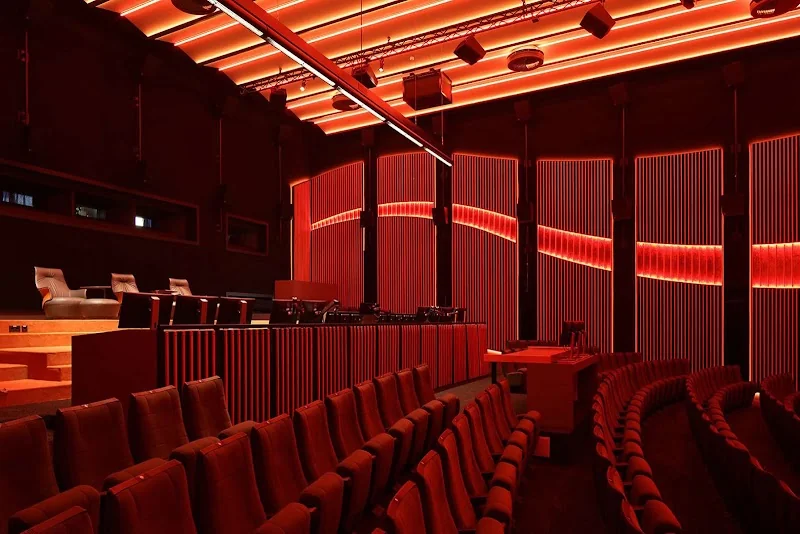
Anyone entering or researching DEFA 70 today encounters not only history but also an impressive technical present. Rotor Film describes the hall as Studio F and lists it on the website as one of the state-of-the-art technologies of the company. It features 3,200 cubic meters of room volume, an 88 square meter screen, a BARCO digital projection with integrated cinema server, Baselight TWO, a 71-speaker system from Meyersound, as well as Dolby Atmos, IMAX, Auro3D, DTS:X, 5.1, and 7.1 capabilities. Additionally, Rotor Film mentions 193 audience seats. This clearly shows that the space goes far beyond a nostalgic cinema hall. It is a high-quality screening and mixing room suitable for cinematic presentations as well as for demanding screenings, audiovisual events, and post-production workflows. Especially in Babelsberg, where film and media technology have been closely intertwined for decades, this equipment fits perfectly with the location's content. ([rotor-film.com](https://rotor-film.com/))
The particular strength of DEFA 70 lies in the connection of heritage and contemporaneity. The space not only preserves the character of a former studio cinema but also meets the demands of a modern premium location for image and sound. Rotor Film itself refers to it as Europe’s largest grading & mixing stage, making it one of the largest grading and mixing rooms in Europe. This classification is crucial for the positioning of the place because it shows that DEFA 70 is not a museum relic but a productively used working and presentation space. For organizers, film teams, and cultural partners, this means: Here, historical atmosphere meets professional infrastructure. The stage, the seats, and the technical setup are adapted to today's requirements without destroying the character of the place. This balance makes the space interesting for screenings followed by discussions, exclusive premieres, industry events, or curated film series. Those looking for a place with genuine cinema values but simultaneously modern performance will find an unusually strong solution here. ([rotor-film.com](https://rotor-film.com/))
DEFA 70, 70 Reflex, and the Technical DNA of GDR Film History
The name DEFA 70 is closely linked to the technical ambition of the GDR film industry. The DEFA Foundation explains that the 70 Reflex camera was developed under the leadership of engineer Georg Maidorn and was presented to the public in October 1964. It was a compact 70mm camera with integrated sound and is considered a significant step within East German film technology. In the same environment, the idea also emerged to create a large mixing studio for the new format with public weekend use. This explains why the later cinema space was not just an accidental hall but a deliberately technologically charged place. The DEFA 70 film itself was used as an experiment in 70mm technology to explore the possibilities of the format and present it to the audience. Thus, DEFA 70 stands for a moment when cinema understood itself as a technical future industry and not just as an entertainment medium. In today's SEO language, this would be exactly the content mix of history, innovation, and culture that keeps users on a page particularly long. ([defa-stiftung.de](https://www.defa-stiftung.de/defa/geschichte/daten-und-fakten/defa-chronik/1967/?utm_source=openai))
The Tagesspiegel research places this technical dream even more strongly. It describes DEFA 70 as a place that stood for the widescreen format of 70 millimeters, whose effort was considerable and which nevertheless seemed only briefly truly profitable. Mentioned are, among others, Goya, Signals – a Space Adventure, and Orpheus in the Underworld as examples of the productions associated with the format. At the same time, the DEFA Foundation points out that the experimental film DEFA 70 could only be technically screened in five cinemas in the GDR. This shows how exclusive this format was at the time. For SEO analysis, this topic complex is important because users searching for terms like defa 70 feature film, defa 70 reflex, or 70mm cinema potsdam are not just looking for a place but a story of cinematic innovation. DEFA 70 fulfills this search intention particularly well because here the name itself already carries a technical claim. Those interested in the origin of widescreen film in Babelsberg will find in this place a vivid example of the connection between industrial history and cinematic aesthetics. ([tagesspiegel.de](https://www.tagesspiegel.de/potsdam/potsdam-kultur/verlorene-kulturorte-in-potsdam-im-defa-70-traumte-die-ddr-von-ganz-grossem-kino-14102426.html?icid=single-topic_14297879___))
Location in Babelsberg, Address and Environment of the Media City Babelsberg
The specific address is clear and central for any approach: Rotor Film lists the Babelsberg location under August-Bebel-Straße 26-53, House 4, D-14482 Potsdam. This information is the most reliable basis for visitors, service providers, and event partners when searching for DEFA 70 on maps or in navigation systems. The location is in Babelsberg, which is the historically and media-wise particularly shaped part of Potsdam. Rotor Film describes its own location as part of a grown Babelsberg film environment and refers to the proximity to post-production, creative, and technical work processes. The city of Potsdam also explicitly mentions an appointment in 2020 in the DEFA 70 Event Cinema of Rotor Film GmbH in its Economic Council report, confirming that the place continues to be used as an event space. For search queries like defa 70 cinema potsdam, defa 70 babelsberg, or house 4 potsdam, a clear geographical core is thus established. The combination of street, house number, district, and company name makes the assignment very precise and prevents confusion with other cinemas or studios in Potsdam. ([rotor-film.com](https://rotor-film.com/services))
The environment is as important for the perception of the place as the address itself. Babelsberg has stood for film production, post-production, and media technical infrastructure for decades. According to its own About page, Rotor Film positions itself in the midst of this traditional environment and describes the location as part of one of the oldest large studio grounds in the world. For DEFA 70, this means: The space is not isolated but embedded in a place where film is not only shown but made, processed, and further developed. That is why search terms like media city babelsberg or rotor film babelsberg fit so well with the profile of the location. Anyone planning the way to DEFA 70 should therefore not only think of a cinema but of a working and event environment with a strong industry connection. The website provides the address and contact details, while specific parking information is not the focus there. This is an important practical finding for all who prepare their arrival: The address is reliable for navigation and appointment planning, while direct contact with the team remains the most sensible way for detailed questions about the event. ([rotor-film.com](https://rotor-film.com/about?utm_source=openai))
Screenings, Events, and Current Use in the DEFA 70 Event Cinema
Today, DEFA 70 is primarily a place for screenings, presentations, and events with a cinematic focus. Rotor Film explicitly lists Screening & Event as a service area on the services page, which summarizes the current use of the hall very well. It is clear that the space is no longer operated like a classic neighborhood cinema with a daily standard program but as a flexible location for selected screenings, internal presentations, cultural formats, and event occasions. This also fits with the technical equipment, as a hall with an 88 square meter screen, 193 seats, and professional audio infrastructure is particularly suitable for curated content and high-quality presentations. This is an attractive setup, especially for producers, distributors, film festivals, universities, or companies with media relevance. Those looking for a special place in Potsdam where content can not only be shown but staged will find a very credible combination of history, spatial effect, and technology here. DEFA 70 is thus less an everyday cinema than a location with a strong identity core and professional utilization competence. ([rotor-film.com](https://rotor-film.com/services))
For practical purposes, it is also important how to get in touch and what information is officially available. Rotor Film provides the Babelsberg contact details as well as a central phone number and email address on the website. This makes inquiries for events, screenings, or technical questions uncomplicated. At the same time, the public self-presentation of the house is strongly focused on image and sound post-production, which shows that the space is part of a professional workflow and not a detached event building. This gives it its special charm: DEFA 70 combines historical cinema use with a contemporary studio and event context. So, those searching for terms like defa 70 event cinema, studio cinema babelsberg, or rotor film potsdam do not just find a venue but a place with documented past and clear current function. For SEO and user intention, this is ideal because the content answers both informational questions about history and practical questions about usage, capacity, and technical suitability. In this way, an old-sounding name becomes a very current, versatile, and credible location story. ([rotor-film.com](https://rotor-film.com/services))
Why DEFA 70 in Potsdam-Babelsberg Remains So Strong in Searches
DEFA 70 performs well in search behavior because the term serves multiple levels simultaneously. On one hand, it is a historical name from DEFA film technology, on the other hand, it is a current location of Rotor Film in Potsdam-Babelsberg, and thirdly, it is an anchor for questions about cinema, event space, 70mm format, and GDR film history. Precisely for this reason, keyword analysis reveals not only direct search queries like defa 70 cinema potsdam or defa 70 feature film but also technical and contextual terms like defa 70 reflex, 70mm cinema potsdam, studio cinema babelsberg, and rotor film babelsberg. For an SEO page, this is an advantage because the content can be organically derived from these search intentions. The location has enough historical depth for long, informative texts and at the same time enough current relevance for practical inquiries. The result is a place that appears in search engines not just as a name but functions as an answer to various user questions. Those searching for DEFA 70 are usually not looking for just any cinema but a special connection of film culture, media technology, and Potsdam's location history. This connection makes the location permanently relevant. ([tagesspiegel.de](https://www.tagesspiegel.de/potsdam/potsdam-kultur/verlorene-kulturorte-in-potsdam-im-defa-70-traumte-die-ddr-von-ganz-grossem-kino-14102426.html?icid=single-topic_14297879___))
The narrative structure of the place is also strong. From the 70mm experiment through the weekend screenings of the GDR era, the official film approval, and the later closure to today's use by Rotor Film, a clear story emerges with turning points, technical progress, and cultural transformation. Additionally, there is the strong physical presence of the space: large screen, many speakers, seats for an audience that wants to see and hear attentively, and an environment shaped by Babelsberg media work. For visitors, this means an experience with character; for organizers, a location with story and substance; for search engines, a text with high thematic coherence. Therefore, those calling up DEFA 70 expect not only facts but also atmosphere and orientation. For this reason, it makes sense to structure the page so that history, technology, location, and usage are presented equally. Thus, a historical term becomes a modern, user-oriented content hub for Potsdam-Babelsberg. ([rotor-film.com](https://rotor-film.com/))
Sources:
- Rotor Film - Official Website
- Rotor Film - Services and Screening & Event
- Rotor Film - About and Facilities
- Tagesspiegel - Lost Cultural Places in Potsdam: In DEFA 70, the GDR Dreamed of Great Cinema
- DEFA Foundation - Film Details DEFA 70
- DEFA Foundation - Chronicle 1967 and 70 Reflex
- State Capital Potsdam - Economic Council Report 2021
Mehr anzeigenWeniger anzeigen
DEFA 70 | Cinema Potsdam & 70mm Event Cinema
DEFA 70 in Potsdam-Babelsberg is a place where film history, studio technology, and contemporary event usage come together in an unusually dense way. The space now belongs to Rotor Film GmbH and is listed on the official website as part of the Babelsberg location in House 4 at August-Bebel-Straße 26-53. At the same time, it carries the memory of the legendary 70mm studio cinema, which during the DEFA era was one of the few places where widescreen film, mixing studio, and cinema presentation were directly connected. This combination of historical significance, technical uniqueness, and modern usage explains why DEFA 70 remains a strong search term for Potsdam, Babelsberg, cinema, event location, and film culture to this day. For visitors interested in GDR film history, extraordinary screening rooms, and high-quality audiovisual technology, this place is therefore much more than just a name. It is a piece of lived media city that does not separate past and present but makes them visible together. ([rotor-film.com](https://rotor-film.com/services))
How a 70mm Studio Cinema Became a Modern Event Space
The history of DEFA 70 does not begin as a classic neighborhood cinema but as part of a specialized film area in Babelsberg. According to research by the DEFA Foundation, DEFA developed the 70 Reflex camera in the 1960s, a proprietary 70mm camera with integrated sound, which was publicly presented in 1964. The film of the same name, DEFA 70, was produced from 1965 to 1966 under the direction of Werner Bergmann and was released in 1967 in 70mm format as an experimental feature film. It was precisely from this atmosphere of technical and artistic upheaval that the later cinema function on the DEFA grounds emerged. The building in House 4 was constructed in 1964 as a mixing studio; from 1965, it was also intended as a public cinema for the population on weekends. Thus, DEFA 70 was from the very beginning not an ordinary screening venue but a hybrid space of production, testing, and presentation. The special idea behind it was clear: the new should not only be developed but also be immediately experienced by an audience. ([defa-stiftung.de](https://www.defa-stiftung.de/defa/geschichte/daten-und-fakten/defa-chronik/1967/?utm_source=openai))
The reason this place remained so strongly in memory is also due to its role as a cultural test case for the GDR film industry. The cinema served not only to screen individual productions but also for the official approval of DEFA films. According to Tagesspiegel, it was the place where DEFA had its films officially approved, and from 1968 it was open to the public on weekends. The 70mm format was then perceived as a technical innovation with particular prestige, but it was associated with significant effort. The DEFA Foundation describes that the experimental film DEFA 70 could only be technically shown in five cinemas in the GDR upon its completion. This rarity makes the name interesting today: DEFA 70 stands not only for a cinema but for a moment of cinematic longing for the future. The place thus combines historical exceptionalism with the charm of an industrial and cultural monument that has never completely shed its origins, even if it is used differently today. ([defa-stiftung.de](https://www.defa-stiftung.de/filme/filme-suchen/defa-70/))
Technology, Screen, and Seats in the DEFA 70 Event Cinema
Anyone entering or researching DEFA 70 today encounters not only history but also an impressive technical present. Rotor Film describes the hall as Studio F and lists it on the website as one of the state-of-the-art technologies of the company. It features 3,200 cubic meters of room volume, an 88 square meter screen, a BARCO digital projection with integrated cinema server, Baselight TWO, a 71-speaker system from Meyersound, as well as Dolby Atmos, IMAX, Auro3D, DTS:X, 5.1, and 7.1 capabilities. Additionally, Rotor Film mentions 193 audience seats. This clearly shows that the space goes far beyond a nostalgic cinema hall. It is a high-quality screening and mixing room suitable for cinematic presentations as well as for demanding screenings, audiovisual events, and post-production workflows. Especially in Babelsberg, where film and media technology have been closely intertwined for decades, this equipment fits perfectly with the location's content. ([rotor-film.com](https://rotor-film.com/))
The particular strength of DEFA 70 lies in the connection of heritage and contemporaneity. The space not only preserves the character of a former studio cinema but also meets the demands of a modern premium location for image and sound. Rotor Film itself refers to it as Europe’s largest grading & mixing stage, making it one of the largest grading and mixing rooms in Europe. This classification is crucial for the positioning of the place because it shows that DEFA 70 is not a museum relic but a productively used working and presentation space. For organizers, film teams, and cultural partners, this means: Here, historical atmosphere meets professional infrastructure. The stage, the seats, and the technical setup are adapted to today's requirements without destroying the character of the place. This balance makes the space interesting for screenings followed by discussions, exclusive premieres, industry events, or curated film series. Those looking for a place with genuine cinema values but simultaneously modern performance will find an unusually strong solution here. ([rotor-film.com](https://rotor-film.com/))
DEFA 70, 70 Reflex, and the Technical DNA of GDR Film History
The name DEFA 70 is closely linked to the technical ambition of the GDR film industry. The DEFA Foundation explains that the 70 Reflex camera was developed under the leadership of engineer Georg Maidorn and was presented to the public in October 1964. It was a compact 70mm camera with integrated sound and is considered a significant step within East German film technology. In the same environment, the idea also emerged to create a large mixing studio for the new format with public weekend use. This explains why the later cinema space was not just an accidental hall but a deliberately technologically charged place. The DEFA 70 film itself was used as an experiment in 70mm technology to explore the possibilities of the format and present it to the audience. Thus, DEFA 70 stands for a moment when cinema understood itself as a technical future industry and not just as an entertainment medium. In today's SEO language, this would be exactly the content mix of history, innovation, and culture that keeps users on a page particularly long. ([defa-stiftung.de](https://www.defa-stiftung.de/defa/geschichte/daten-und-fakten/defa-chronik/1967/?utm_source=openai))
The Tagesspiegel research places this technical dream even more strongly. It describes DEFA 70 as a place that stood for the widescreen format of 70 millimeters, whose effort was considerable and which nevertheless seemed only briefly truly profitable. Mentioned are, among others, Goya, Signals – a Space Adventure, and Orpheus in the Underworld as examples of the productions associated with the format. At the same time, the DEFA Foundation points out that the experimental film DEFA 70 could only be technically screened in five cinemas in the GDR. This shows how exclusive this format was at the time. For SEO analysis, this topic complex is important because users searching for terms like defa 70 feature film, defa 70 reflex, or 70mm cinema potsdam are not just looking for a place but a story of cinematic innovation. DEFA 70 fulfills this search intention particularly well because here the name itself already carries a technical claim. Those interested in the origin of widescreen film in Babelsberg will find in this place a vivid example of the connection between industrial history and cinematic aesthetics. ([tagesspiegel.de](https://www.tagesspiegel.de/potsdam/potsdam-kultur/verlorene-kulturorte-in-potsdam-im-defa-70-traumte-die-ddr-von-ganz-grossem-kino-14102426.html?icid=single-topic_14297879___))
Location in Babelsberg, Address and Environment of the Media City Babelsberg
The specific address is clear and central for any approach: Rotor Film lists the Babelsberg location under August-Bebel-Straße 26-53, House 4, D-14482 Potsdam. This information is the most reliable basis for visitors, service providers, and event partners when searching for DEFA 70 on maps or in navigation systems. The location is in Babelsberg, which is the historically and media-wise particularly shaped part of Potsdam. Rotor Film describes its own location as part of a grown Babelsberg film environment and refers to the proximity to post-production, creative, and technical work processes. The city of Potsdam also explicitly mentions an appointment in 2020 in the DEFA 70 Event Cinema of Rotor Film GmbH in its Economic Council report, confirming that the place continues to be used as an event space. For search queries like defa 70 cinema potsdam, defa 70 babelsberg, or house 4 potsdam, a clear geographical core is thus established. The combination of street, house number, district, and company name makes the assignment very precise and prevents confusion with other cinemas or studios in Potsdam. ([rotor-film.com](https://rotor-film.com/services))
The environment is as important for the perception of the place as the address itself. Babelsberg has stood for film production, post-production, and media technical infrastructure for decades. According to its own About page, Rotor Film positions itself in the midst of this traditional environment and describes the location as part of one of the oldest large studio grounds in the world. For DEFA 70, this means: The space is not isolated but embedded in a place where film is not only shown but made, processed, and further developed. That is why search terms like media city babelsberg or rotor film babelsberg fit so well with the profile of the location. Anyone planning the way to DEFA 70 should therefore not only think of a cinema but of a working and event environment with a strong industry connection. The website provides the address and contact details, while specific parking information is not the focus there. This is an important practical finding for all who prepare their arrival: The address is reliable for navigation and appointment planning, while direct contact with the team remains the most sensible way for detailed questions about the event. ([rotor-film.com](https://rotor-film.com/about?utm_source=openai))
Screenings, Events, and Current Use in the DEFA 70 Event Cinema
Today, DEFA 70 is primarily a place for screenings, presentations, and events with a cinematic focus. Rotor Film explicitly lists Screening & Event as a service area on the services page, which summarizes the current use of the hall very well. It is clear that the space is no longer operated like a classic neighborhood cinema with a daily standard program but as a flexible location for selected screenings, internal presentations, cultural formats, and event occasions. This also fits with the technical equipment, as a hall with an 88 square meter screen, 193 seats, and professional audio infrastructure is particularly suitable for curated content and high-quality presentations. This is an attractive setup, especially for producers, distributors, film festivals, universities, or companies with media relevance. Those looking for a special place in Potsdam where content can not only be shown but staged will find a very credible combination of history, spatial effect, and technology here. DEFA 70 is thus less an everyday cinema than a location with a strong identity core and professional utilization competence. ([rotor-film.com](https://rotor-film.com/services))
For practical purposes, it is also important how to get in touch and what information is officially available. Rotor Film provides the Babelsberg contact details as well as a central phone number and email address on the website. This makes inquiries for events, screenings, or technical questions uncomplicated. At the same time, the public self-presentation of the house is strongly focused on image and sound post-production, which shows that the space is part of a professional workflow and not a detached event building. This gives it its special charm: DEFA 70 combines historical cinema use with a contemporary studio and event context. So, those searching for terms like defa 70 event cinema, studio cinema babelsberg, or rotor film potsdam do not just find a venue but a place with documented past and clear current function. For SEO and user intention, this is ideal because the content answers both informational questions about history and practical questions about usage, capacity, and technical suitability. In this way, an old-sounding name becomes a very current, versatile, and credible location story. ([rotor-film.com](https://rotor-film.com/services))
Why DEFA 70 in Potsdam-Babelsberg Remains So Strong in Searches
DEFA 70 performs well in search behavior because the term serves multiple levels simultaneously. On one hand, it is a historical name from DEFA film technology, on the other hand, it is a current location of Rotor Film in Potsdam-Babelsberg, and thirdly, it is an anchor for questions about cinema, event space, 70mm format, and GDR film history. Precisely for this reason, keyword analysis reveals not only direct search queries like defa 70 cinema potsdam or defa 70 feature film but also technical and contextual terms like defa 70 reflex, 70mm cinema potsdam, studio cinema babelsberg, and rotor film babelsberg. For an SEO page, this is an advantage because the content can be organically derived from these search intentions. The location has enough historical depth for long, informative texts and at the same time enough current relevance for practical inquiries. The result is a place that appears in search engines not just as a name but functions as an answer to various user questions. Those searching for DEFA 70 are usually not looking for just any cinema but a special connection of film culture, media technology, and Potsdam's location history. This connection makes the location permanently relevant. ([tagesspiegel.de](https://www.tagesspiegel.de/potsdam/potsdam-kultur/verlorene-kulturorte-in-potsdam-im-defa-70-traumte-die-ddr-von-ganz-grossem-kino-14102426.html?icid=single-topic_14297879___))
The narrative structure of the place is also strong. From the 70mm experiment through the weekend screenings of the GDR era, the official film approval, and the later closure to today's use by Rotor Film, a clear story emerges with turning points, technical progress, and cultural transformation. Additionally, there is the strong physical presence of the space: large screen, many speakers, seats for an audience that wants to see and hear attentively, and an environment shaped by Babelsberg media work. For visitors, this means an experience with character; for organizers, a location with story and substance; for search engines, a text with high thematic coherence. Therefore, those calling up DEFA 70 expect not only facts but also atmosphere and orientation. For this reason, it makes sense to structure the page so that history, technology, location, and usage are presented equally. Thus, a historical term becomes a modern, user-oriented content hub for Potsdam-Babelsberg. ([rotor-film.com](https://rotor-film.com/))
Sources:
- Rotor Film - Official Website
- Rotor Film - Services and Screening & Event
- Rotor Film - About and Facilities
- Tagesspiegel - Lost Cultural Places in Potsdam: In DEFA 70, the GDR Dreamed of Great Cinema
- DEFA Foundation - Film Details DEFA 70
- DEFA Foundation - Chronicle 1967 and 70 Reflex
- State Capital Potsdam - Economic Council Report 2021
DEFA 70 | Cinema Potsdam & 70mm Event Cinema
DEFA 70 in Potsdam-Babelsberg is a place where film history, studio technology, and contemporary event usage come together in an unusually dense way. The space now belongs to Rotor Film GmbH and is listed on the official website as part of the Babelsberg location in House 4 at August-Bebel-Straße 26-53. At the same time, it carries the memory of the legendary 70mm studio cinema, which during the DEFA era was one of the few places where widescreen film, mixing studio, and cinema presentation were directly connected. This combination of historical significance, technical uniqueness, and modern usage explains why DEFA 70 remains a strong search term for Potsdam, Babelsberg, cinema, event location, and film culture to this day. For visitors interested in GDR film history, extraordinary screening rooms, and high-quality audiovisual technology, this place is therefore much more than just a name. It is a piece of lived media city that does not separate past and present but makes them visible together. ([rotor-film.com](https://rotor-film.com/services))
How a 70mm Studio Cinema Became a Modern Event Space
The history of DEFA 70 does not begin as a classic neighborhood cinema but as part of a specialized film area in Babelsberg. According to research by the DEFA Foundation, DEFA developed the 70 Reflex camera in the 1960s, a proprietary 70mm camera with integrated sound, which was publicly presented in 1964. The film of the same name, DEFA 70, was produced from 1965 to 1966 under the direction of Werner Bergmann and was released in 1967 in 70mm format as an experimental feature film. It was precisely from this atmosphere of technical and artistic upheaval that the later cinema function on the DEFA grounds emerged. The building in House 4 was constructed in 1964 as a mixing studio; from 1965, it was also intended as a public cinema for the population on weekends. Thus, DEFA 70 was from the very beginning not an ordinary screening venue but a hybrid space of production, testing, and presentation. The special idea behind it was clear: the new should not only be developed but also be immediately experienced by an audience. ([defa-stiftung.de](https://www.defa-stiftung.de/defa/geschichte/daten-und-fakten/defa-chronik/1967/?utm_source=openai))
The reason this place remained so strongly in memory is also due to its role as a cultural test case for the GDR film industry. The cinema served not only to screen individual productions but also for the official approval of DEFA films. According to Tagesspiegel, it was the place where DEFA had its films officially approved, and from 1968 it was open to the public on weekends. The 70mm format was then perceived as a technical innovation with particular prestige, but it was associated with significant effort. The DEFA Foundation describes that the experimental film DEFA 70 could only be technically shown in five cinemas in the GDR upon its completion. This rarity makes the name interesting today: DEFA 70 stands not only for a cinema but for a moment of cinematic longing for the future. The place thus combines historical exceptionalism with the charm of an industrial and cultural monument that has never completely shed its origins, even if it is used differently today. ([defa-stiftung.de](https://www.defa-stiftung.de/filme/filme-suchen/defa-70/))
Technology, Screen, and Seats in the DEFA 70 Event Cinema
Anyone entering or researching DEFA 70 today encounters not only history but also an impressive technical present. Rotor Film describes the hall as Studio F and lists it on the website as one of the state-of-the-art technologies of the company. It features 3,200 cubic meters of room volume, an 88 square meter screen, a BARCO digital projection with integrated cinema server, Baselight TWO, a 71-speaker system from Meyersound, as well as Dolby Atmos, IMAX, Auro3D, DTS:X, 5.1, and 7.1 capabilities. Additionally, Rotor Film mentions 193 audience seats. This clearly shows that the space goes far beyond a nostalgic cinema hall. It is a high-quality screening and mixing room suitable for cinematic presentations as well as for demanding screenings, audiovisual events, and post-production workflows. Especially in Babelsberg, where film and media technology have been closely intertwined for decades, this equipment fits perfectly with the location's content. ([rotor-film.com](https://rotor-film.com/))
The particular strength of DEFA 70 lies in the connection of heritage and contemporaneity. The space not only preserves the character of a former studio cinema but also meets the demands of a modern premium location for image and sound. Rotor Film itself refers to it as Europe’s largest grading & mixing stage, making it one of the largest grading and mixing rooms in Europe. This classification is crucial for the positioning of the place because it shows that DEFA 70 is not a museum relic but a productively used working and presentation space. For organizers, film teams, and cultural partners, this means: Here, historical atmosphere meets professional infrastructure. The stage, the seats, and the technical setup are adapted to today's requirements without destroying the character of the place. This balance makes the space interesting for screenings followed by discussions, exclusive premieres, industry events, or curated film series. Those looking for a place with genuine cinema values but simultaneously modern performance will find an unusually strong solution here. ([rotor-film.com](https://rotor-film.com/))
DEFA 70, 70 Reflex, and the Technical DNA of GDR Film History
The name DEFA 70 is closely linked to the technical ambition of the GDR film industry. The DEFA Foundation explains that the 70 Reflex camera was developed under the leadership of engineer Georg Maidorn and was presented to the public in October 1964. It was a compact 70mm camera with integrated sound and is considered a significant step within East German film technology. In the same environment, the idea also emerged to create a large mixing studio for the new format with public weekend use. This explains why the later cinema space was not just an accidental hall but a deliberately technologically charged place. The DEFA 70 film itself was used as an experiment in 70mm technology to explore the possibilities of the format and present it to the audience. Thus, DEFA 70 stands for a moment when cinema understood itself as a technical future industry and not just as an entertainment medium. In today's SEO language, this would be exactly the content mix of history, innovation, and culture that keeps users on a page particularly long. ([defa-stiftung.de](https://www.defa-stiftung.de/defa/geschichte/daten-und-fakten/defa-chronik/1967/?utm_source=openai))
The Tagesspiegel research places this technical dream even more strongly. It describes DEFA 70 as a place that stood for the widescreen format of 70 millimeters, whose effort was considerable and which nevertheless seemed only briefly truly profitable. Mentioned are, among others, Goya, Signals – a Space Adventure, and Orpheus in the Underworld as examples of the productions associated with the format. At the same time, the DEFA Foundation points out that the experimental film DEFA 70 could only be technically screened in five cinemas in the GDR. This shows how exclusive this format was at the time. For SEO analysis, this topic complex is important because users searching for terms like defa 70 feature film, defa 70 reflex, or 70mm cinema potsdam are not just looking for a place but a story of cinematic innovation. DEFA 70 fulfills this search intention particularly well because here the name itself already carries a technical claim. Those interested in the origin of widescreen film in Babelsberg will find in this place a vivid example of the connection between industrial history and cinematic aesthetics. ([tagesspiegel.de](https://www.tagesspiegel.de/potsdam/potsdam-kultur/verlorene-kulturorte-in-potsdam-im-defa-70-traumte-die-ddr-von-ganz-grossem-kino-14102426.html?icid=single-topic_14297879___))
Location in Babelsberg, Address and Environment of the Media City Babelsberg
The specific address is clear and central for any approach: Rotor Film lists the Babelsberg location under August-Bebel-Straße 26-53, House 4, D-14482 Potsdam. This information is the most reliable basis for visitors, service providers, and event partners when searching for DEFA 70 on maps or in navigation systems. The location is in Babelsberg, which is the historically and media-wise particularly shaped part of Potsdam. Rotor Film describes its own location as part of a grown Babelsberg film environment and refers to the proximity to post-production, creative, and technical work processes. The city of Potsdam also explicitly mentions an appointment in 2020 in the DEFA 70 Event Cinema of Rotor Film GmbH in its Economic Council report, confirming that the place continues to be used as an event space. For search queries like defa 70 cinema potsdam, defa 70 babelsberg, or house 4 potsdam, a clear geographical core is thus established. The combination of street, house number, district, and company name makes the assignment very precise and prevents confusion with other cinemas or studios in Potsdam. ([rotor-film.com](https://rotor-film.com/services))
The environment is as important for the perception of the place as the address itself. Babelsberg has stood for film production, post-production, and media technical infrastructure for decades. According to its own About page, Rotor Film positions itself in the midst of this traditional environment and describes the location as part of one of the oldest large studio grounds in the world. For DEFA 70, this means: The space is not isolated but embedded in a place where film is not only shown but made, processed, and further developed. That is why search terms like media city babelsberg or rotor film babelsberg fit so well with the profile of the location. Anyone planning the way to DEFA 70 should therefore not only think of a cinema but of a working and event environment with a strong industry connection. The website provides the address and contact details, while specific parking information is not the focus there. This is an important practical finding for all who prepare their arrival: The address is reliable for navigation and appointment planning, while direct contact with the team remains the most sensible way for detailed questions about the event. ([rotor-film.com](https://rotor-film.com/about?utm_source=openai))
Screenings, Events, and Current Use in the DEFA 70 Event Cinema
Today, DEFA 70 is primarily a place for screenings, presentations, and events with a cinematic focus. Rotor Film explicitly lists Screening & Event as a service area on the services page, which summarizes the current use of the hall very well. It is clear that the space is no longer operated like a classic neighborhood cinema with a daily standard program but as a flexible location for selected screenings, internal presentations, cultural formats, and event occasions. This also fits with the technical equipment, as a hall with an 88 square meter screen, 193 seats, and professional audio infrastructure is particularly suitable for curated content and high-quality presentations. This is an attractive setup, especially for producers, distributors, film festivals, universities, or companies with media relevance. Those looking for a special place in Potsdam where content can not only be shown but staged will find a very credible combination of history, spatial effect, and technology here. DEFA 70 is thus less an everyday cinema than a location with a strong identity core and professional utilization competence. ([rotor-film.com](https://rotor-film.com/services))
For practical purposes, it is also important how to get in touch and what information is officially available. Rotor Film provides the Babelsberg contact details as well as a central phone number and email address on the website. This makes inquiries for events, screenings, or technical questions uncomplicated. At the same time, the public self-presentation of the house is strongly focused on image and sound post-production, which shows that the space is part of a professional workflow and not a detached event building. This gives it its special charm: DEFA 70 combines historical cinema use with a contemporary studio and event context. So, those searching for terms like defa 70 event cinema, studio cinema babelsberg, or rotor film potsdam do not just find a venue but a place with documented past and clear current function. For SEO and user intention, this is ideal because the content answers both informational questions about history and practical questions about usage, capacity, and technical suitability. In this way, an old-sounding name becomes a very current, versatile, and credible location story. ([rotor-film.com](https://rotor-film.com/services))
Why DEFA 70 in Potsdam-Babelsberg Remains So Strong in Searches
DEFA 70 performs well in search behavior because the term serves multiple levels simultaneously. On one hand, it is a historical name from DEFA film technology, on the other hand, it is a current location of Rotor Film in Potsdam-Babelsberg, and thirdly, it is an anchor for questions about cinema, event space, 70mm format, and GDR film history. Precisely for this reason, keyword analysis reveals not only direct search queries like defa 70 cinema potsdam or defa 70 feature film but also technical and contextual terms like defa 70 reflex, 70mm cinema potsdam, studio cinema babelsberg, and rotor film babelsberg. For an SEO page, this is an advantage because the content can be organically derived from these search intentions. The location has enough historical depth for long, informative texts and at the same time enough current relevance for practical inquiries. The result is a place that appears in search engines not just as a name but functions as an answer to various user questions. Those searching for DEFA 70 are usually not looking for just any cinema but a special connection of film culture, media technology, and Potsdam's location history. This connection makes the location permanently relevant. ([tagesspiegel.de](https://www.tagesspiegel.de/potsdam/potsdam-kultur/verlorene-kulturorte-in-potsdam-im-defa-70-traumte-die-ddr-von-ganz-grossem-kino-14102426.html?icid=single-topic_14297879___))
The narrative structure of the place is also strong. From the 70mm experiment through the weekend screenings of the GDR era, the official film approval, and the later closure to today's use by Rotor Film, a clear story emerges with turning points, technical progress, and cultural transformation. Additionally, there is the strong physical presence of the space: large screen, many speakers, seats for an audience that wants to see and hear attentively, and an environment shaped by Babelsberg media work. For visitors, this means an experience with character; for organizers, a location with story and substance; for search engines, a text with high thematic coherence. Therefore, those calling up DEFA 70 expect not only facts but also atmosphere and orientation. For this reason, it makes sense to structure the page so that history, technology, location, and usage are presented equally. Thus, a historical term becomes a modern, user-oriented content hub for Potsdam-Babelsberg. ([rotor-film.com](https://rotor-film.com/))
Sources:
- Rotor Film - Official Website
- Rotor Film - Services and Screening & Event
- Rotor Film - About and Facilities
- Tagesspiegel - Lost Cultural Places in Potsdam: In DEFA 70, the GDR Dreamed of Great Cinema
- DEFA Foundation - Film Details DEFA 70
- DEFA Foundation - Chronicle 1967 and 70 Reflex
- State Capital Potsdam - Economic Council Report 2021
Upcoming Events
No events found
Frequently Asked Questions
Reviews
No reviews found