
Potsdam
Brandenburger Str., 14467 Potsdam, Deutschland
Brandenburger Straße | Shops & Parking in Potsdam
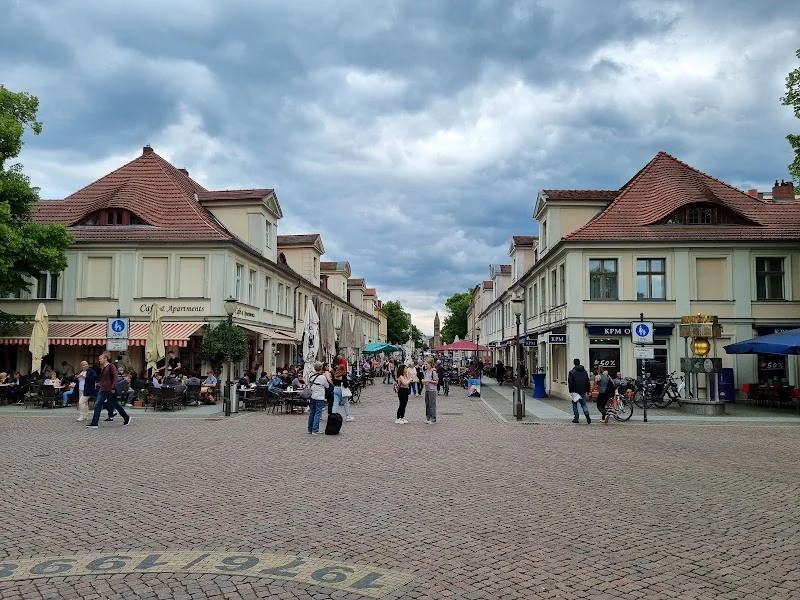
The Brandenburger Straße is one of the most well-known addresses in Potsdam and is much more than just a street. Between Friedrich-Ebert-Straße, Bassinplatz, and Brandenburger Tor, it forms the boulevard of the city center, where strolling, shopping, dining, culture, and city history come together in a compact space. The city describes the Brandenburger Straße as centrally located in the historic city center and affectionately calls it the boulevard by the residents of Potsdam. Since March 2026, the section between Am Bassin and Friedrich-Ebert-Straße has been officially designated as a pedestrian zone, further enhancing its character as a continuous promenade and shopping axis. Those searching for Brandenburger Straße Potsdam maps, shops, or parking want to find exactly this mix of orientation, movement, and urban experience. Here, the path itself is already part of the goal: short distances, a lot of history, vibrant ground floor zones, and a location that draws visitors directly into the heart of the city. ([potsdam.de](https://www.potsdam.de/de/brandenburger-strasse-als-veranstaltungsort))
Location, Maps, and Orientation in Potsdam's City Center
The Brandenburger Straße runs as an important east-west axis through the Potsdam city center, connecting the area around Bassinplatz with Luisenplatz and Brandenburger Tor. The city explicitly refers to it as the central pedestrian axis of the shopping city center and also describes it as a connection between the coach parking lot at Bassinplatz, Luisenplatz, and Park Sanssouci. This makes the street attractive not only for walks but also for quick spatial orientation. Those unfamiliar with Potsdam find the Brandenburger Straße to be a very simple reference point: to the west lies Luisenplatz, to the east the path opens towards Bassinplatz and further into the city center, while Brandenburger Tor forms the well-known historical conclusion. This is particularly helpful in map or route inquiries because the street is part of a very clear cityscape and can be read at several prominent locations. The official description additionally emphasizes that the pedestrian zone is centrally located in the historic city center and that residents, historical backdrops, and emergency routes must be considered during events. This shows that it is an urban space with high quality of stay that is also carefully organized. So, those searching for a Potsdam-Brandenburger-Straße map do not get an anonymous traffic area in practice, but a well-readable city center axis with clear transitions, short paths, and many points of connection for a walk. ([potsdam.de](https://www.potsdam.de/de/377-sanierung-der-fussgaengerzone-brandenburger-strasse-geht-weiter))
Particularly striking is the location in the historic city center, as at the western end stands the Brandenburger Tor at Luisenplatz. The city describes the gate as part of a straight line leading from Brandenburger Straße to the St. Peter and Paul Church. This makes the street not only a shopping street but also an urban planning axis that makes Potsdam's historical order visible. For visitors, this means: Walking along Brandenburger Straße, one moves in a space where orientation almost automatically works through familiar urban building blocks. Side streets, small squares, and transitions to other parts of the city center open up to the left and right; at the same time, the main path remains well-readable and easy to navigate. This is also important for people visiting the street for the first time, as the combination of a clear axis, central landmarks, and pedestrian zone allows for a relaxed experience. The term boulevard fits very well, as it describes not only a shopping street but also an urban promenade with visual relationships, quality of stay, and a high recognition value. Those planning photos, maps, or routes can best understand Brandenburger Straße as the backbone of Potsdam's city center, linking Luisenplatz, Brandenburger Tor, and Bassinplatz while maintaining the character of an open, inviting city center. ([potsdam.de](https://www.potsdam.de/de/content/brandenburger-tor-brandenburg-gate))
Shops, Cafés, and Restaurants on Potsdam's Boulevard
Those interested in Brandenburger Straße Potsdam shops are actually looking for a lively mix of retail, gastronomy, and strolling culture. This very mix is clearly described on the city website: The Brandenburger Straße and its side streets invite to stroll, and here there are many small and large shops, cozy cafés, and restaurants. This is important for visitors because the boulevard is not just a classic thoroughfare but a place where one can linger, compare, browse, and take a break in between. Unlike pure shopping centers, the street thrives on its urban environment and the interplay between shop windows, gastronomic offerings, and short paths to other city center points. This makes it a perfect fit for inquiries about shops, restaurants, and city center shopping. The interplay of shopping atmosphere and public space is what makes it appealing: One can spontaneously have a coffee, continue walking, turn again, and discover new shops without losing orientation. For families, day visitors, or people with little time, this is ideal because the street offers a concentrated experience in a compact form. The side streets also contribute to this, as they expand the offerings and give the boulevard an almost market-like character, where not only large brands but also smaller, individual addresses have their place. Those who want to not just see Potsdam but experience it will find a city center designed for movement, visual contacts, and short stays between stations. ([potsdam.de](https://www.potsdam.de/de/content/brandenburger-strasse-3))
A special anchor is the Karstadt Stadtpalais, which the city explicitly describes as a worthwhile visit with its beautiful light courtyard, even if one does not want to shop. This is important for Brandenburger Straße because it shows that the street does not only function through its shop lines but also through striking interiors and architectural features. Those interested in Brandenburger Straße Potsdam restaurants or cafés benefit from the proximity to an area where quality of stay, architecture, and gastronomy converge. The official presentation also places the street in parallel with the Dutch Quarter, which is also appreciated for its shops and cafés. This creates an image of Potsdam's city center, where one can easily switch between strolling, dining, and continuing on. Particularly pleasant is that the street, due to its pedestrian zone quality, conveys little stress: There is no hectic through traffic shaping the experience, but rather slow looking, comparing, and discovering. This is exactly what makes Brandenburger Straße so appealing for people who want to shop in Potsdam, eat something, or simply take an atmospheric city walk. The street is not only practical but also a stage for everyday urban experiences that rarely come together so compactly. ([potsdam.de](https://www.potsdam.de/de/content/brandenburger-strasse-3))
Access, Public Transport, and Parking at Brandenburger Straße
For inquiries such as Brandenburger Straße Potsdam access or Brandenburger Straße Potsdam parking, it is crucial that the location in the city center is easily accessible but not directly passable by car. The city points out that tram and bus stops are located about 1 to 5 minutes away from Brandenburger Straße. At the same time, Potsdam is well connected to the surrounding area and Berlin by trains, S-Bahn, and buses, and in the city center, buses and trams of the Potsdam transport company operate. For visitors, this means: Traveling by public transport is often the most relaxed solution, especially if one wants to explore the boulevard, Brandenburger Tor, or the surrounding squares on foot. Those coming from Berlin can orient themselves to the general city connection, as Potsdam is, according to the city, well accessible from all directions by public transport. This is exactly why Brandenburger Straße is also suitable for day trips, short city visits, and spontaneous stops. The paths from the stop into the pedestrian zone are short, the city center is closely linked, and the most important destinations can be comfortably connected on foot. ([potsdam.de](https://www.potsdam.de/de/brandenburger-strasse-als-veranstaltungsort))
When it comes to parking, the city recommends specific options in the immediate vicinity: the underground garage at Luisenplatz and the parking garage Stadtpalais Hegelallee. Officially, the state capital states that the underground garage at Luisenplatz is reachable in 1 to 5 minutes and the parking garage Stadtpalais in 2 to 7 minutes. This is very useful for visitors as it provides a realistic, walkable parking strategy instead of a vague recommendation. Especially in a pedestrian zone, it is important because Brandenburger Straße itself is not a place where one simply parks in front of the shop door; rather, it makes sense to park the car at the edge and walk the last meters. This form of arrival also fits the character of the boulevard, which is designed for strolling and lingering. For people with luggage, families, or older visitors, the short distance is particularly pleasant as it makes the city center visit manageable. Additionally, the official street description shows that Brandenburger Straße can only be partially used as an event venue and that emergency routes must be kept clear. This underscores that mobility in this area is consciously organized. So, those searching for Brandenburger Straße Potsdam parking should plan for the nearby parking garages and understand the rest of the way as part of the urban experience. Thus, the journey becomes not an obstacle but a small walk into the city center. ([potsdam.de](https://www.potsdam.de/de/brandenburger-strasse-als-veranstaltungsort))
In recent years, Brandenburger Straße has also been gradually developed as a pedestrian zone. In March 2026, the city announced that the section between Am Bassin and Friedrich-Ebert-Straße was officially opened. Even before that, the street had been described in the historic center as the central pedestrian axis, and the official renovation announcements show how strongly the quality of stay and traffic in this area is considered. For visitors, this means less car traffic, more space for walking, and an even clearer separation between motorized parking at the edge and the actual experience in the boulevard. So, those planning a route should prepare for short walks from the parking lot or stop and consciously incorporate this distance. This is exactly where the advantage of Brandenburger Straße lies: The last meters do not lead through a parking garage labyrinth but through an orderly city center with good connection options, clear landmarks, and many destinations in close proximity. ([potsdam.de](https://www.potsdam.de/de/109-weiterer-abschnitt-der-fussgaengerzone-freigegeben?utm_source=openai))
Brandenburger Tor, Luisenplatz, and Historical Backdrop
The Brandenburger Straße is not only a shopping and pedestrian zone but also an urban planning part of Potsdam with a strong historical character. At the western end lies the Brandenburger Tor at Luisenplatz. The city describes the gate as a structure on a straight line from the St. Peter and Paul Church and points out that it was completed in 1770. This places Brandenburger Straße in a historical context that goes far beyond the everyday life of a shopping street. Visitors do not experience an arbitrary city location here but an axis connected to classical Potsdam history, Prussian urban development, and spatial order. The connection of the gate, square, and pedestrian zone is what makes the area appealing. One feels that the street has not developed in isolation but is part of a larger urban system in which squares, sight axes, and building fronts respond to each other. For photos, city walks, or first visits, this is ideal because one can experience the historical core of Potsdam in a very compact section. The official tourism presentation emphasizes that Brandenburger Straße and its side streets invite to stroll and that the light courtyard of the Stadtpalais is also worth a visit. This is exactly the kind of backdrop that makes a city center not only functional but also atmospheric. ([potsdam.de](https://www.potsdam.de/de/content/brandenburger-tor-brandenburg-gate))
The Luisenplatz itself complements this backdrop with another important building block. The city describes it as a square in the historic city center between Brandenburger Tor and the avenue to Sanssouci, in immediate proximity to the pedestrian zone Brandenburger Straße. For visitors, this means an ideal starting or ending point for a walk, as paths lead from there both into the city center and towards the Sanssouci Palace Park. This is particularly attractive for a city like Potsdam, where city, architecture, and landscape come together very closely. Walking along the boulevard, one quickly senses that Brandenburger Straße is not just for shopping but functions as a connection between several iconic places. The square at the gate, the pedestrian zone, the proximity to the park, and the historical architecture create an almost cinematic urban scene that can be easily explored on foot. The official event description also makes it clear that the space is suitable for concerts, special markets, city festivals, and historical festivities. This shows how versatile the historical backdrop is used today. Thus, Brandenburger Straße is an example of a city center that does not preserve the past but uses it as a living framework for the present, trade, and urban experience. ([potsdam.de](https://www.potsdam.de/de/luisenplatz-als-veranstaltungsort))
The special effect of the street also arises from the fact that it does not feel like a museum in everyday life but like a lively city boulevard with real usability. The historical backdrop is not just a background but part of a real, functioning city center. This is why the city emphasizes in several texts the respect for residents, emergency routes, and the built environment. Thus, Brandenburger Straße is not only maintained but consciously developed in its historically sensitive role. This is pleasant for visitors because it creates authenticity: One strolls through a city center where history, trade, and public use do not work against each other but complement each other. Those who connect Luisenplatz, Brandenburger Tor, and Brandenburger Straße in a walk experience one of the clearest and densest city center areas in Potsdam. This connection of function and beauty is a key reason why the boulevard is one of the city's most popular addresses. ([potsdam.de](https://www.potsdam.de/de/brandenburger-strasse-als-veranstaltungsort))
Events, Christmas Market, and Art Market on the Boulevard
The Brandenburger Straße is not only designed for everyday strolling but is also officially intended as an event space. The city names it suitable for information booths, promotional actions, Christmas markets, and smaller city festivals. At the same time, it points out that the area is only partially available because guiding areas and emergency routes must not be built upon. This is important information for both visitors and organizers: The boulevard is not an empty space but a well-organized urban area with clear rules. For the city, this is an advantage because culture, trade, and temporary actions can fit in meaningfully. For guests, it is attractive because special formats can repeatedly appear along a single axis without destroying the character of the pedestrian zone. Therefore, those searching for Brandenburger Straße Potsdam events do not find an arbitrary event space but an urban place where markets, actions, and seasonal formats are embedded in a historical cityscape. Particularly beautiful is that the official description of the street as a traffic and event space also emphasizes everyday utility: The paved surface, short paths, and central location make Brandenburger Straße a place that makes city life visible and tangible. ([potsdam.de](https://www.potsdam.de/de/brandenburger-strasse-als-veranstaltungsort))
A specific highlight is the art market at the corner of Lindenstraße, which, according to the city, takes place every Saturday and Sunday. Such details make the boulevard particularly interesting for weekend visits, as they connect the stroll with an additional goal. Art market, window shopping, and café breaks can be very well combined here. Whether with family, friends, or alone through the city center, one can plan the market as a fixed anchor and spontaneously design the rest of the walk. Brandenburger Straße is excellent for this because it offers enough calm as a pedestrian zone to look around while also providing enough movement to never seem still. This character particularly shines during seasonal formats such as Christmas markets. The city describes the street not only as suitable for such events but also emphasizes the proximity to a historical backdrop that must be considered in the design. It is clear that events on Brandenburger Straße should not be effects for their own sake but should respect the place. The result is an urban environment where visitors ideally experience exactly what makes Potsdam special: a public space that is beautiful, useful, and lively at the same time. ([potsdam.de](https://www.potsdam.de/de/brandenburger-strasse-als-veranstaltungsort))
The topic of ground and spatial structure also plays a role in events. According to the city, Brandenburger Straße is paved with large cobblestones and has no weight restrictions; at the same time, the individual sections are precisely described with their areas. This is particularly interesting for event planning but also shows visitors why the street appears so distinctive: It has a clearly recognizable materiality that contributes to the historical ambiance. In conjunction with the adjacent squares, side streets, and the weekend art market, an image of a city center emerges that not only consumes but also shows. This complexity is likely one of the reasons why Brandenburger Straße has established itself as a brand in the urban space. People come here to search for something, to see something, or simply to stroll, often discovering more than originally planned. This is exactly where the strength of the street as an event venue lies: It is large enough for special occasions but close enough to the everyday functions of the city center that every action becomes an immediate part of urban life. ([potsdam.de](https://www.potsdam.de/de/brandenburger-strasse-als-veranstaltungsort))
Boulevard of Films and Potsdam's Film History
The perhaps special contemporary note of Brandenburger Straße is the Boulevard of Films. In July 2024, the first granite slabs were unveiled there, and the city announced that a total of 55 square slabs with titles of important films shot in Potsdam would be incorporated into the new paving. This literally brings Potsdam's cinematic heritage into the city center. The official announcement emphasizes that the film from Babelsberg is being brought to the heart of the city and simultaneously names Brandenburger Straße as the place where this cultural memory becomes visible. For visitors, this is a strong added value because the pedestrian zone thus becomes not only a shopping boulevard but also an urban memory space. The slabs lie between Friedrich-Ebert-Straße and Jägerstraße and mark a place where city history and pop culture come together. So, those searching for Boulevard of Films Potsdam find no abstract tribute on Brandenburger Straße but a directly walkable, material access to the city's film history. ([potsdam.de](https://www.potsdam.de/de/284-auftakt-fuer-den-boulevard-des-films))
Potsdam itself is a special film city in this context. The city reminds that after mobile screenings around 1900 and the first cinema with a fixed location in 1909, the construction of the first glass studio in 1911 marked the beginning of film production, which continues to this day. Since October 30, 2019, Potsdam has held the title of UNESCO Creative City of Film as the only German city. This is more than an honorary title, as it explains why the Boulevard of Films works so well on Brandenburger Straße: The city center thus receives a visible connection to a long-grown production and memory landscape. The city announcement also highlights that in more than 112 years, several hundred cinema, television, animation, documentary, and advertising films have been produced in Babelsberg and throughout the city area. For visitors, this means that a walk along Brandenburger Straße is not only urban but also culturally charged. One moves through a place where film has played a role not just since yesterday but is deeply rooted in the city's identity. ([potsdam.de](https://www.potsdam.de/de/284-auftakt-fuer-den-boulevard-des-films))
Particularly interesting is that the film history of Brandenburger Straße is dynamically being rewritten. In March 2026, the city announced the opening of the section between Am Bassin and Friedrich-Ebert-Straße as a pedestrian zone; at the same time, the announcement referred to the fact that the Boulevard of Films was supplemented by another six film slabs. This creates an image of a street that is simultaneously being renovated, expanded, and culturally charged. For those interested in urban development, film locations, or modern city centers, this is a very good case: Here, infrastructure, quality of stay, and cultural marking are not viewed separately but are implemented together. The result is a place where one does not only shop or pass through but where one can read a piece of Potsdam's identity. This is exactly why the Boulevard of Films is such a fitting component for Brandenburger Straße. It gives the street a distinctive theme that goes beyond mere retail and connects the boulevard with the creative history of the city. ([potsdam.de](https://www.potsdam.de/de/109-weiterer-abschnitt-der-fussgaengerzone-freigegeben?utm_source=openai))
The combination of pedestrian zone, film slabs, and historical backdrop also makes the street very memorable for first-time visitors. Those who want to experience Potsdam in just one afternoon get a lot of city history, culture, and present all at once over a few hundred meters. This is interesting from an SEO perspective because inquiries about attractions, city center, shopping, and film city actually lead to the same place. Exactly here lies the strength of Brandenburger Straße: It is not just a path between two points but an identity-forming urban space that continually invites visitors to stop. Whether one is specifically searching for Brandenburger Straße attractions or is casually looking for a walk through Potsdam's city center, the Boulevard of Films provides a clear, modern anchor. It connects the past of the film city with a current, visible, and walkable form, making the street much more than just a shopping address. ([potsdam.de](https://www.potsdam.de/de/284-auftakt-fuer-den-boulevard-des-films))
Practical Visitor Tips for Strolling, Markets, and City Center Walks
Those visiting Brandenburger Straße should not plan the walk too tightly. The boulevard thrives on lingering at shop windows, cafés, small branches, and visual relationships. The official city description explicitly invites to stroll and refers to many small and large shops as well as cozy cafés and restaurants. Therefore, the best strategy is often to find a rough starting point, such as Luisenplatz, Brandenburger Tor, or Bassinplatz, and then simply walk along the axis. If one wishes, they can combine the visit with the art market at the corner of Lindenstraße or use the boulevard as access to the surrounding city center areas. It is important that Brandenburger Straße is a pedestrian place: The last meters ideally run on foot, and this is not a disadvantage but part of the experience. Especially due to the large cobblestones and the historical environment, it is worth wearing comfortable shoes and being more leisurely than hurried. The city also emphasizes that the street can only be partially used for events because emergency routes must be kept clear. For visitors, this mainly means that the space is well organized and does not appear arbitrarily overloaded. ([potsdam.de](https://www.potsdam.de/de/content/brandenburger-strasse-3))
A good visit often connects multiple goals. For example, one can start at Luisenplatz, look at Brandenburger Tor, stroll along the boulevard, take a look at the light courtyard in Stadtpalais, and later continue towards Bassinplatz. Those interested in parks can also extend the walk towards Sanssouci, as Brandenburger Straße is, according to the city, a footpath between the city center, Luisenplatz, and Park Sanssouci. This makes it an ideal route for people who want to not just see Potsdam but discover it in a meaningful sequence. For photographing visitors, the sight axes are particularly pleasant because historical architecture, pedestrian zone, and urban space can be repeatedly combined anew. And for those looking for a lively but not overwhelming city center, this is the right place: There is movement but no hustle; shops but also space; history but no rigid backdrop. This is exactly why the street works so well as a day destination. It is central, easy to find, and offers a wide variety of impressions over a short distance that reinforce each other. ([potsdam.de](https://www.potsdam.de/de/377-sanierung-der-fussgaengerzone-brandenburger-strasse-geht-weiter))
In summary, Brandenburger Straße is the kind of place best visited with open eyes. Those who just pass through quickly see a beautiful pedestrian zone. But those who linger discover a multifaceted piece of Potsdam with shopping, gastronomy, film history, art market, historical urban space, and clear orientation. This is exactly what makes it so attractive for search intentions around Potsdam city center, maps, parking, restaurants, and attractions. The boulevard is practical enough for everyday life and special enough for an outing. It is centrally located, easily accessible, and with the Boulevard of Films has an additional distinguishing feature that sets it apart from many other city center streets. Those who want to experience Potsdam in a concentrated form will find an excellent address here where history and present meet in a compact space. ([potsdam.de](https://www.potsdam.de/de/brandenburger-strasse-als-veranstaltungsort))
Sources:
- State Capital Potsdam - Brandenburger Straße as an Event Venue ([potsdam.de](https://www.potsdam.de/de/brandenburger-strasse-als-veranstaltungsort))
- State Capital Potsdam - Brandenburger Straße ([potsdam.de](https://www.potsdam.de/de/content/brandenburger-strasse-3))
- State Capital Potsdam - Further Section of the Pedestrian Zone Released ([potsdam.de](https://www.potsdam.de/de/109-weiterer-abschnitt-der-fussgaengerzone-freigegeben?utm_source=openai))
- State Capital Potsdam - Kick-off for the Boulevard of Films ([potsdam.de](https://www.potsdam.de/de/284-auftakt-fuer-den-boulevard-des-films))
- State Capital Potsdam - Luisenplatz as an Event Venue ([potsdam.de](https://www.potsdam.de/de/luisenplatz-als-veranstaltungsort))
- State Capital Potsdam - Brandenburger Tor ([potsdam.de](https://www.potsdam.de/de/content/brandenburger-tor-brandenburg-gate))
- State Capital Potsdam - Arrival by Public Transport ([potsdam.de](https://www.potsdam.de/de/content/anreise-oepnv))
Mehr anzeigenWeniger anzeigen
Brandenburger Straße | Shops & Parking in Potsdam
The Brandenburger Straße is one of the most well-known addresses in Potsdam and is much more than just a street. Between Friedrich-Ebert-Straße, Bassinplatz, and Brandenburger Tor, it forms the boulevard of the city center, where strolling, shopping, dining, culture, and city history come together in a compact space. The city describes the Brandenburger Straße as centrally located in the historic city center and affectionately calls it the boulevard by the residents of Potsdam. Since March 2026, the section between Am Bassin and Friedrich-Ebert-Straße has been officially designated as a pedestrian zone, further enhancing its character as a continuous promenade and shopping axis. Those searching for Brandenburger Straße Potsdam maps, shops, or parking want to find exactly this mix of orientation, movement, and urban experience. Here, the path itself is already part of the goal: short distances, a lot of history, vibrant ground floor zones, and a location that draws visitors directly into the heart of the city. ([potsdam.de](https://www.potsdam.de/de/brandenburger-strasse-als-veranstaltungsort))
Location, Maps, and Orientation in Potsdam's City Center
The Brandenburger Straße runs as an important east-west axis through the Potsdam city center, connecting the area around Bassinplatz with Luisenplatz and Brandenburger Tor. The city explicitly refers to it as the central pedestrian axis of the shopping city center and also describes it as a connection between the coach parking lot at Bassinplatz, Luisenplatz, and Park Sanssouci. This makes the street attractive not only for walks but also for quick spatial orientation. Those unfamiliar with Potsdam find the Brandenburger Straße to be a very simple reference point: to the west lies Luisenplatz, to the east the path opens towards Bassinplatz and further into the city center, while Brandenburger Tor forms the well-known historical conclusion. This is particularly helpful in map or route inquiries because the street is part of a very clear cityscape and can be read at several prominent locations. The official description additionally emphasizes that the pedestrian zone is centrally located in the historic city center and that residents, historical backdrops, and emergency routes must be considered during events. This shows that it is an urban space with high quality of stay that is also carefully organized. So, those searching for a Potsdam-Brandenburger-Straße map do not get an anonymous traffic area in practice, but a well-readable city center axis with clear transitions, short paths, and many points of connection for a walk. ([potsdam.de](https://www.potsdam.de/de/377-sanierung-der-fussgaengerzone-brandenburger-strasse-geht-weiter))
Particularly striking is the location in the historic city center, as at the western end stands the Brandenburger Tor at Luisenplatz. The city describes the gate as part of a straight line leading from Brandenburger Straße to the St. Peter and Paul Church. This makes the street not only a shopping street but also an urban planning axis that makes Potsdam's historical order visible. For visitors, this means: Walking along Brandenburger Straße, one moves in a space where orientation almost automatically works through familiar urban building blocks. Side streets, small squares, and transitions to other parts of the city center open up to the left and right; at the same time, the main path remains well-readable and easy to navigate. This is also important for people visiting the street for the first time, as the combination of a clear axis, central landmarks, and pedestrian zone allows for a relaxed experience. The term boulevard fits very well, as it describes not only a shopping street but also an urban promenade with visual relationships, quality of stay, and a high recognition value. Those planning photos, maps, or routes can best understand Brandenburger Straße as the backbone of Potsdam's city center, linking Luisenplatz, Brandenburger Tor, and Bassinplatz while maintaining the character of an open, inviting city center. ([potsdam.de](https://www.potsdam.de/de/content/brandenburger-tor-brandenburg-gate))
Shops, Cafés, and Restaurants on Potsdam's Boulevard
Those interested in Brandenburger Straße Potsdam shops are actually looking for a lively mix of retail, gastronomy, and strolling culture. This very mix is clearly described on the city website: The Brandenburger Straße and its side streets invite to stroll, and here there are many small and large shops, cozy cafés, and restaurants. This is important for visitors because the boulevard is not just a classic thoroughfare but a place where one can linger, compare, browse, and take a break in between. Unlike pure shopping centers, the street thrives on its urban environment and the interplay between shop windows, gastronomic offerings, and short paths to other city center points. This makes it a perfect fit for inquiries about shops, restaurants, and city center shopping. The interplay of shopping atmosphere and public space is what makes it appealing: One can spontaneously have a coffee, continue walking, turn again, and discover new shops without losing orientation. For families, day visitors, or people with little time, this is ideal because the street offers a concentrated experience in a compact form. The side streets also contribute to this, as they expand the offerings and give the boulevard an almost market-like character, where not only large brands but also smaller, individual addresses have their place. Those who want to not just see Potsdam but experience it will find a city center designed for movement, visual contacts, and short stays between stations. ([potsdam.de](https://www.potsdam.de/de/content/brandenburger-strasse-3))
A special anchor is the Karstadt Stadtpalais, which the city explicitly describes as a worthwhile visit with its beautiful light courtyard, even if one does not want to shop. This is important for Brandenburger Straße because it shows that the street does not only function through its shop lines but also through striking interiors and architectural features. Those interested in Brandenburger Straße Potsdam restaurants or cafés benefit from the proximity to an area where quality of stay, architecture, and gastronomy converge. The official presentation also places the street in parallel with the Dutch Quarter, which is also appreciated for its shops and cafés. This creates an image of Potsdam's city center, where one can easily switch between strolling, dining, and continuing on. Particularly pleasant is that the street, due to its pedestrian zone quality, conveys little stress: There is no hectic through traffic shaping the experience, but rather slow looking, comparing, and discovering. This is exactly what makes Brandenburger Straße so appealing for people who want to shop in Potsdam, eat something, or simply take an atmospheric city walk. The street is not only practical but also a stage for everyday urban experiences that rarely come together so compactly. ([potsdam.de](https://www.potsdam.de/de/content/brandenburger-strasse-3))
Access, Public Transport, and Parking at Brandenburger Straße
For inquiries such as Brandenburger Straße Potsdam access or Brandenburger Straße Potsdam parking, it is crucial that the location in the city center is easily accessible but not directly passable by car. The city points out that tram and bus stops are located about 1 to 5 minutes away from Brandenburger Straße. At the same time, Potsdam is well connected to the surrounding area and Berlin by trains, S-Bahn, and buses, and in the city center, buses and trams of the Potsdam transport company operate. For visitors, this means: Traveling by public transport is often the most relaxed solution, especially if one wants to explore the boulevard, Brandenburger Tor, or the surrounding squares on foot. Those coming from Berlin can orient themselves to the general city connection, as Potsdam is, according to the city, well accessible from all directions by public transport. This is exactly why Brandenburger Straße is also suitable for day trips, short city visits, and spontaneous stops. The paths from the stop into the pedestrian zone are short, the city center is closely linked, and the most important destinations can be comfortably connected on foot. ([potsdam.de](https://www.potsdam.de/de/brandenburger-strasse-als-veranstaltungsort))
When it comes to parking, the city recommends specific options in the immediate vicinity: the underground garage at Luisenplatz and the parking garage Stadtpalais Hegelallee. Officially, the state capital states that the underground garage at Luisenplatz is reachable in 1 to 5 minutes and the parking garage Stadtpalais in 2 to 7 minutes. This is very useful for visitors as it provides a realistic, walkable parking strategy instead of a vague recommendation. Especially in a pedestrian zone, it is important because Brandenburger Straße itself is not a place where one simply parks in front of the shop door; rather, it makes sense to park the car at the edge and walk the last meters. This form of arrival also fits the character of the boulevard, which is designed for strolling and lingering. For people with luggage, families, or older visitors, the short distance is particularly pleasant as it makes the city center visit manageable. Additionally, the official street description shows that Brandenburger Straße can only be partially used as an event venue and that emergency routes must be kept clear. This underscores that mobility in this area is consciously organized. So, those searching for Brandenburger Straße Potsdam parking should plan for the nearby parking garages and understand the rest of the way as part of the urban experience. Thus, the journey becomes not an obstacle but a small walk into the city center. ([potsdam.de](https://www.potsdam.de/de/brandenburger-strasse-als-veranstaltungsort))
In recent years, Brandenburger Straße has also been gradually developed as a pedestrian zone. In March 2026, the city announced that the section between Am Bassin and Friedrich-Ebert-Straße was officially opened. Even before that, the street had been described in the historic center as the central pedestrian axis, and the official renovation announcements show how strongly the quality of stay and traffic in this area is considered. For visitors, this means less car traffic, more space for walking, and an even clearer separation between motorized parking at the edge and the actual experience in the boulevard. So, those planning a route should prepare for short walks from the parking lot or stop and consciously incorporate this distance. This is exactly where the advantage of Brandenburger Straße lies: The last meters do not lead through a parking garage labyrinth but through an orderly city center with good connection options, clear landmarks, and many destinations in close proximity. ([potsdam.de](https://www.potsdam.de/de/109-weiterer-abschnitt-der-fussgaengerzone-freigegeben?utm_source=openai))
Brandenburger Tor, Luisenplatz, and Historical Backdrop
The Brandenburger Straße is not only a shopping and pedestrian zone but also an urban planning part of Potsdam with a strong historical character. At the western end lies the Brandenburger Tor at Luisenplatz. The city describes the gate as a structure on a straight line from the St. Peter and Paul Church and points out that it was completed in 1770. This places Brandenburger Straße in a historical context that goes far beyond the everyday life of a shopping street. Visitors do not experience an arbitrary city location here but an axis connected to classical Potsdam history, Prussian urban development, and spatial order. The connection of the gate, square, and pedestrian zone is what makes the area appealing. One feels that the street has not developed in isolation but is part of a larger urban system in which squares, sight axes, and building fronts respond to each other. For photos, city walks, or first visits, this is ideal because one can experience the historical core of Potsdam in a very compact section. The official tourism presentation emphasizes that Brandenburger Straße and its side streets invite to stroll and that the light courtyard of the Stadtpalais is also worth a visit. This is exactly the kind of backdrop that makes a city center not only functional but also atmospheric. ([potsdam.de](https://www.potsdam.de/de/content/brandenburger-tor-brandenburg-gate))
The Luisenplatz itself complements this backdrop with another important building block. The city describes it as a square in the historic city center between Brandenburger Tor and the avenue to Sanssouci, in immediate proximity to the pedestrian zone Brandenburger Straße. For visitors, this means an ideal starting or ending point for a walk, as paths lead from there both into the city center and towards the Sanssouci Palace Park. This is particularly attractive for a city like Potsdam, where city, architecture, and landscape come together very closely. Walking along the boulevard, one quickly senses that Brandenburger Straße is not just for shopping but functions as a connection between several iconic places. The square at the gate, the pedestrian zone, the proximity to the park, and the historical architecture create an almost cinematic urban scene that can be easily explored on foot. The official event description also makes it clear that the space is suitable for concerts, special markets, city festivals, and historical festivities. This shows how versatile the historical backdrop is used today. Thus, Brandenburger Straße is an example of a city center that does not preserve the past but uses it as a living framework for the present, trade, and urban experience. ([potsdam.de](https://www.potsdam.de/de/luisenplatz-als-veranstaltungsort))
The special effect of the street also arises from the fact that it does not feel like a museum in everyday life but like a lively city boulevard with real usability. The historical backdrop is not just a background but part of a real, functioning city center. This is why the city emphasizes in several texts the respect for residents, emergency routes, and the built environment. Thus, Brandenburger Straße is not only maintained but consciously developed in its historically sensitive role. This is pleasant for visitors because it creates authenticity: One strolls through a city center where history, trade, and public use do not work against each other but complement each other. Those who connect Luisenplatz, Brandenburger Tor, and Brandenburger Straße in a walk experience one of the clearest and densest city center areas in Potsdam. This connection of function and beauty is a key reason why the boulevard is one of the city's most popular addresses. ([potsdam.de](https://www.potsdam.de/de/brandenburger-strasse-als-veranstaltungsort))
Events, Christmas Market, and Art Market on the Boulevard
The Brandenburger Straße is not only designed for everyday strolling but is also officially intended as an event space. The city names it suitable for information booths, promotional actions, Christmas markets, and smaller city festivals. At the same time, it points out that the area is only partially available because guiding areas and emergency routes must not be built upon. This is important information for both visitors and organizers: The boulevard is not an empty space but a well-organized urban area with clear rules. For the city, this is an advantage because culture, trade, and temporary actions can fit in meaningfully. For guests, it is attractive because special formats can repeatedly appear along a single axis without destroying the character of the pedestrian zone. Therefore, those searching for Brandenburger Straße Potsdam events do not find an arbitrary event space but an urban place where markets, actions, and seasonal formats are embedded in a historical cityscape. Particularly beautiful is that the official description of the street as a traffic and event space also emphasizes everyday utility: The paved surface, short paths, and central location make Brandenburger Straße a place that makes city life visible and tangible. ([potsdam.de](https://www.potsdam.de/de/brandenburger-strasse-als-veranstaltungsort))
A specific highlight is the art market at the corner of Lindenstraße, which, according to the city, takes place every Saturday and Sunday. Such details make the boulevard particularly interesting for weekend visits, as they connect the stroll with an additional goal. Art market, window shopping, and café breaks can be very well combined here. Whether with family, friends, or alone through the city center, one can plan the market as a fixed anchor and spontaneously design the rest of the walk. Brandenburger Straße is excellent for this because it offers enough calm as a pedestrian zone to look around while also providing enough movement to never seem still. This character particularly shines during seasonal formats such as Christmas markets. The city describes the street not only as suitable for such events but also emphasizes the proximity to a historical backdrop that must be considered in the design. It is clear that events on Brandenburger Straße should not be effects for their own sake but should respect the place. The result is an urban environment where visitors ideally experience exactly what makes Potsdam special: a public space that is beautiful, useful, and lively at the same time. ([potsdam.de](https://www.potsdam.de/de/brandenburger-strasse-als-veranstaltungsort))
The topic of ground and spatial structure also plays a role in events. According to the city, Brandenburger Straße is paved with large cobblestones and has no weight restrictions; at the same time, the individual sections are precisely described with their areas. This is particularly interesting for event planning but also shows visitors why the street appears so distinctive: It has a clearly recognizable materiality that contributes to the historical ambiance. In conjunction with the adjacent squares, side streets, and the weekend art market, an image of a city center emerges that not only consumes but also shows. This complexity is likely one of the reasons why Brandenburger Straße has established itself as a brand in the urban space. People come here to search for something, to see something, or simply to stroll, often discovering more than originally planned. This is exactly where the strength of the street as an event venue lies: It is large enough for special occasions but close enough to the everyday functions of the city center that every action becomes an immediate part of urban life. ([potsdam.de](https://www.potsdam.de/de/brandenburger-strasse-als-veranstaltungsort))
Boulevard of Films and Potsdam's Film History
The perhaps special contemporary note of Brandenburger Straße is the Boulevard of Films. In July 2024, the first granite slabs were unveiled there, and the city announced that a total of 55 square slabs with titles of important films shot in Potsdam would be incorporated into the new paving. This literally brings Potsdam's cinematic heritage into the city center. The official announcement emphasizes that the film from Babelsberg is being brought to the heart of the city and simultaneously names Brandenburger Straße as the place where this cultural memory becomes visible. For visitors, this is a strong added value because the pedestrian zone thus becomes not only a shopping boulevard but also an urban memory space. The slabs lie between Friedrich-Ebert-Straße and Jägerstraße and mark a place where city history and pop culture come together. So, those searching for Boulevard of Films Potsdam find no abstract tribute on Brandenburger Straße but a directly walkable, material access to the city's film history. ([potsdam.de](https://www.potsdam.de/de/284-auftakt-fuer-den-boulevard-des-films))
Potsdam itself is a special film city in this context. The city reminds that after mobile screenings around 1900 and the first cinema with a fixed location in 1909, the construction of the first glass studio in 1911 marked the beginning of film production, which continues to this day. Since October 30, 2019, Potsdam has held the title of UNESCO Creative City of Film as the only German city. This is more than an honorary title, as it explains why the Boulevard of Films works so well on Brandenburger Straße: The city center thus receives a visible connection to a long-grown production and memory landscape. The city announcement also highlights that in more than 112 years, several hundred cinema, television, animation, documentary, and advertising films have been produced in Babelsberg and throughout the city area. For visitors, this means that a walk along Brandenburger Straße is not only urban but also culturally charged. One moves through a place where film has played a role not just since yesterday but is deeply rooted in the city's identity. ([potsdam.de](https://www.potsdam.de/de/284-auftakt-fuer-den-boulevard-des-films))
Particularly interesting is that the film history of Brandenburger Straße is dynamically being rewritten. In March 2026, the city announced the opening of the section between Am Bassin and Friedrich-Ebert-Straße as a pedestrian zone; at the same time, the announcement referred to the fact that the Boulevard of Films was supplemented by another six film slabs. This creates an image of a street that is simultaneously being renovated, expanded, and culturally charged. For those interested in urban development, film locations, or modern city centers, this is a very good case: Here, infrastructure, quality of stay, and cultural marking are not viewed separately but are implemented together. The result is a place where one does not only shop or pass through but where one can read a piece of Potsdam's identity. This is exactly why the Boulevard of Films is such a fitting component for Brandenburger Straße. It gives the street a distinctive theme that goes beyond mere retail and connects the boulevard with the creative history of the city. ([potsdam.de](https://www.potsdam.de/de/109-weiterer-abschnitt-der-fussgaengerzone-freigegeben?utm_source=openai))
The combination of pedestrian zone, film slabs, and historical backdrop also makes the street very memorable for first-time visitors. Those who want to experience Potsdam in just one afternoon get a lot of city history, culture, and present all at once over a few hundred meters. This is interesting from an SEO perspective because inquiries about attractions, city center, shopping, and film city actually lead to the same place. Exactly here lies the strength of Brandenburger Straße: It is not just a path between two points but an identity-forming urban space that continually invites visitors to stop. Whether one is specifically searching for Brandenburger Straße attractions or is casually looking for a walk through Potsdam's city center, the Boulevard of Films provides a clear, modern anchor. It connects the past of the film city with a current, visible, and walkable form, making the street much more than just a shopping address. ([potsdam.de](https://www.potsdam.de/de/284-auftakt-fuer-den-boulevard-des-films))
Practical Visitor Tips for Strolling, Markets, and City Center Walks
Those visiting Brandenburger Straße should not plan the walk too tightly. The boulevard thrives on lingering at shop windows, cafés, small branches, and visual relationships. The official city description explicitly invites to stroll and refers to many small and large shops as well as cozy cafés and restaurants. Therefore, the best strategy is often to find a rough starting point, such as Luisenplatz, Brandenburger Tor, or Bassinplatz, and then simply walk along the axis. If one wishes, they can combine the visit with the art market at the corner of Lindenstraße or use the boulevard as access to the surrounding city center areas. It is important that Brandenburger Straße is a pedestrian place: The last meters ideally run on foot, and this is not a disadvantage but part of the experience. Especially due to the large cobblestones and the historical environment, it is worth wearing comfortable shoes and being more leisurely than hurried. The city also emphasizes that the street can only be partially used for events because emergency routes must be kept clear. For visitors, this mainly means that the space is well organized and does not appear arbitrarily overloaded. ([potsdam.de](https://www.potsdam.de/de/content/brandenburger-strasse-3))
A good visit often connects multiple goals. For example, one can start at Luisenplatz, look at Brandenburger Tor, stroll along the boulevard, take a look at the light courtyard in Stadtpalais, and later continue towards Bassinplatz. Those interested in parks can also extend the walk towards Sanssouci, as Brandenburger Straße is, according to the city, a footpath between the city center, Luisenplatz, and Park Sanssouci. This makes it an ideal route for people who want to not just see Potsdam but discover it in a meaningful sequence. For photographing visitors, the sight axes are particularly pleasant because historical architecture, pedestrian zone, and urban space can be repeatedly combined anew. And for those looking for a lively but not overwhelming city center, this is the right place: There is movement but no hustle; shops but also space; history but no rigid backdrop. This is exactly why the street works so well as a day destination. It is central, easy to find, and offers a wide variety of impressions over a short distance that reinforce each other. ([potsdam.de](https://www.potsdam.de/de/377-sanierung-der-fussgaengerzone-brandenburger-strasse-geht-weiter))
In summary, Brandenburger Straße is the kind of place best visited with open eyes. Those who just pass through quickly see a beautiful pedestrian zone. But those who linger discover a multifaceted piece of Potsdam with shopping, gastronomy, film history, art market, historical urban space, and clear orientation. This is exactly what makes it so attractive for search intentions around Potsdam city center, maps, parking, restaurants, and attractions. The boulevard is practical enough for everyday life and special enough for an outing. It is centrally located, easily accessible, and with the Boulevard of Films has an additional distinguishing feature that sets it apart from many other city center streets. Those who want to experience Potsdam in a concentrated form will find an excellent address here where history and present meet in a compact space. ([potsdam.de](https://www.potsdam.de/de/brandenburger-strasse-als-veranstaltungsort))
Sources:
- State Capital Potsdam - Brandenburger Straße as an Event Venue ([potsdam.de](https://www.potsdam.de/de/brandenburger-strasse-als-veranstaltungsort))
- State Capital Potsdam - Brandenburger Straße ([potsdam.de](https://www.potsdam.de/de/content/brandenburger-strasse-3))
- State Capital Potsdam - Further Section of the Pedestrian Zone Released ([potsdam.de](https://www.potsdam.de/de/109-weiterer-abschnitt-der-fussgaengerzone-freigegeben?utm_source=openai))
- State Capital Potsdam - Kick-off for the Boulevard of Films ([potsdam.de](https://www.potsdam.de/de/284-auftakt-fuer-den-boulevard-des-films))
- State Capital Potsdam - Luisenplatz as an Event Venue ([potsdam.de](https://www.potsdam.de/de/luisenplatz-als-veranstaltungsort))
- State Capital Potsdam - Brandenburger Tor ([potsdam.de](https://www.potsdam.de/de/content/brandenburger-tor-brandenburg-gate))
- State Capital Potsdam - Arrival by Public Transport ([potsdam.de](https://www.potsdam.de/de/content/anreise-oepnv))
Brandenburger Straße | Shops & Parking in Potsdam
The Brandenburger Straße is one of the most well-known addresses in Potsdam and is much more than just a street. Between Friedrich-Ebert-Straße, Bassinplatz, and Brandenburger Tor, it forms the boulevard of the city center, where strolling, shopping, dining, culture, and city history come together in a compact space. The city describes the Brandenburger Straße as centrally located in the historic city center and affectionately calls it the boulevard by the residents of Potsdam. Since March 2026, the section between Am Bassin and Friedrich-Ebert-Straße has been officially designated as a pedestrian zone, further enhancing its character as a continuous promenade and shopping axis. Those searching for Brandenburger Straße Potsdam maps, shops, or parking want to find exactly this mix of orientation, movement, and urban experience. Here, the path itself is already part of the goal: short distances, a lot of history, vibrant ground floor zones, and a location that draws visitors directly into the heart of the city. ([potsdam.de](https://www.potsdam.de/de/brandenburger-strasse-als-veranstaltungsort))
Location, Maps, and Orientation in Potsdam's City Center
The Brandenburger Straße runs as an important east-west axis through the Potsdam city center, connecting the area around Bassinplatz with Luisenplatz and Brandenburger Tor. The city explicitly refers to it as the central pedestrian axis of the shopping city center and also describes it as a connection between the coach parking lot at Bassinplatz, Luisenplatz, and Park Sanssouci. This makes the street attractive not only for walks but also for quick spatial orientation. Those unfamiliar with Potsdam find the Brandenburger Straße to be a very simple reference point: to the west lies Luisenplatz, to the east the path opens towards Bassinplatz and further into the city center, while Brandenburger Tor forms the well-known historical conclusion. This is particularly helpful in map or route inquiries because the street is part of a very clear cityscape and can be read at several prominent locations. The official description additionally emphasizes that the pedestrian zone is centrally located in the historic city center and that residents, historical backdrops, and emergency routes must be considered during events. This shows that it is an urban space with high quality of stay that is also carefully organized. So, those searching for a Potsdam-Brandenburger-Straße map do not get an anonymous traffic area in practice, but a well-readable city center axis with clear transitions, short paths, and many points of connection for a walk. ([potsdam.de](https://www.potsdam.de/de/377-sanierung-der-fussgaengerzone-brandenburger-strasse-geht-weiter))
Particularly striking is the location in the historic city center, as at the western end stands the Brandenburger Tor at Luisenplatz. The city describes the gate as part of a straight line leading from Brandenburger Straße to the St. Peter and Paul Church. This makes the street not only a shopping street but also an urban planning axis that makes Potsdam's historical order visible. For visitors, this means: Walking along Brandenburger Straße, one moves in a space where orientation almost automatically works through familiar urban building blocks. Side streets, small squares, and transitions to other parts of the city center open up to the left and right; at the same time, the main path remains well-readable and easy to navigate. This is also important for people visiting the street for the first time, as the combination of a clear axis, central landmarks, and pedestrian zone allows for a relaxed experience. The term boulevard fits very well, as it describes not only a shopping street but also an urban promenade with visual relationships, quality of stay, and a high recognition value. Those planning photos, maps, or routes can best understand Brandenburger Straße as the backbone of Potsdam's city center, linking Luisenplatz, Brandenburger Tor, and Bassinplatz while maintaining the character of an open, inviting city center. ([potsdam.de](https://www.potsdam.de/de/content/brandenburger-tor-brandenburg-gate))
Shops, Cafés, and Restaurants on Potsdam's Boulevard
Those interested in Brandenburger Straße Potsdam shops are actually looking for a lively mix of retail, gastronomy, and strolling culture. This very mix is clearly described on the city website: The Brandenburger Straße and its side streets invite to stroll, and here there are many small and large shops, cozy cafés, and restaurants. This is important for visitors because the boulevard is not just a classic thoroughfare but a place where one can linger, compare, browse, and take a break in between. Unlike pure shopping centers, the street thrives on its urban environment and the interplay between shop windows, gastronomic offerings, and short paths to other city center points. This makes it a perfect fit for inquiries about shops, restaurants, and city center shopping. The interplay of shopping atmosphere and public space is what makes it appealing: One can spontaneously have a coffee, continue walking, turn again, and discover new shops without losing orientation. For families, day visitors, or people with little time, this is ideal because the street offers a concentrated experience in a compact form. The side streets also contribute to this, as they expand the offerings and give the boulevard an almost market-like character, where not only large brands but also smaller, individual addresses have their place. Those who want to not just see Potsdam but experience it will find a city center designed for movement, visual contacts, and short stays between stations. ([potsdam.de](https://www.potsdam.de/de/content/brandenburger-strasse-3))
A special anchor is the Karstadt Stadtpalais, which the city explicitly describes as a worthwhile visit with its beautiful light courtyard, even if one does not want to shop. This is important for Brandenburger Straße because it shows that the street does not only function through its shop lines but also through striking interiors and architectural features. Those interested in Brandenburger Straße Potsdam restaurants or cafés benefit from the proximity to an area where quality of stay, architecture, and gastronomy converge. The official presentation also places the street in parallel with the Dutch Quarter, which is also appreciated for its shops and cafés. This creates an image of Potsdam's city center, where one can easily switch between strolling, dining, and continuing on. Particularly pleasant is that the street, due to its pedestrian zone quality, conveys little stress: There is no hectic through traffic shaping the experience, but rather slow looking, comparing, and discovering. This is exactly what makes Brandenburger Straße so appealing for people who want to shop in Potsdam, eat something, or simply take an atmospheric city walk. The street is not only practical but also a stage for everyday urban experiences that rarely come together so compactly. ([potsdam.de](https://www.potsdam.de/de/content/brandenburger-strasse-3))
Access, Public Transport, and Parking at Brandenburger Straße
For inquiries such as Brandenburger Straße Potsdam access or Brandenburger Straße Potsdam parking, it is crucial that the location in the city center is easily accessible but not directly passable by car. The city points out that tram and bus stops are located about 1 to 5 minutes away from Brandenburger Straße. At the same time, Potsdam is well connected to the surrounding area and Berlin by trains, S-Bahn, and buses, and in the city center, buses and trams of the Potsdam transport company operate. For visitors, this means: Traveling by public transport is often the most relaxed solution, especially if one wants to explore the boulevard, Brandenburger Tor, or the surrounding squares on foot. Those coming from Berlin can orient themselves to the general city connection, as Potsdam is, according to the city, well accessible from all directions by public transport. This is exactly why Brandenburger Straße is also suitable for day trips, short city visits, and spontaneous stops. The paths from the stop into the pedestrian zone are short, the city center is closely linked, and the most important destinations can be comfortably connected on foot. ([potsdam.de](https://www.potsdam.de/de/brandenburger-strasse-als-veranstaltungsort))
When it comes to parking, the city recommends specific options in the immediate vicinity: the underground garage at Luisenplatz and the parking garage Stadtpalais Hegelallee. Officially, the state capital states that the underground garage at Luisenplatz is reachable in 1 to 5 minutes and the parking garage Stadtpalais in 2 to 7 minutes. This is very useful for visitors as it provides a realistic, walkable parking strategy instead of a vague recommendation. Especially in a pedestrian zone, it is important because Brandenburger Straße itself is not a place where one simply parks in front of the shop door; rather, it makes sense to park the car at the edge and walk the last meters. This form of arrival also fits the character of the boulevard, which is designed for strolling and lingering. For people with luggage, families, or older visitors, the short distance is particularly pleasant as it makes the city center visit manageable. Additionally, the official street description shows that Brandenburger Straße can only be partially used as an event venue and that emergency routes must be kept clear. This underscores that mobility in this area is consciously organized. So, those searching for Brandenburger Straße Potsdam parking should plan for the nearby parking garages and understand the rest of the way as part of the urban experience. Thus, the journey becomes not an obstacle but a small walk into the city center. ([potsdam.de](https://www.potsdam.de/de/brandenburger-strasse-als-veranstaltungsort))
In recent years, Brandenburger Straße has also been gradually developed as a pedestrian zone. In March 2026, the city announced that the section between Am Bassin and Friedrich-Ebert-Straße was officially opened. Even before that, the street had been described in the historic center as the central pedestrian axis, and the official renovation announcements show how strongly the quality of stay and traffic in this area is considered. For visitors, this means less car traffic, more space for walking, and an even clearer separation between motorized parking at the edge and the actual experience in the boulevard. So, those planning a route should prepare for short walks from the parking lot or stop and consciously incorporate this distance. This is exactly where the advantage of Brandenburger Straße lies: The last meters do not lead through a parking garage labyrinth but through an orderly city center with good connection options, clear landmarks, and many destinations in close proximity. ([potsdam.de](https://www.potsdam.de/de/109-weiterer-abschnitt-der-fussgaengerzone-freigegeben?utm_source=openai))
Brandenburger Tor, Luisenplatz, and Historical Backdrop
The Brandenburger Straße is not only a shopping and pedestrian zone but also an urban planning part of Potsdam with a strong historical character. At the western end lies the Brandenburger Tor at Luisenplatz. The city describes the gate as a structure on a straight line from the St. Peter and Paul Church and points out that it was completed in 1770. This places Brandenburger Straße in a historical context that goes far beyond the everyday life of a shopping street. Visitors do not experience an arbitrary city location here but an axis connected to classical Potsdam history, Prussian urban development, and spatial order. The connection of the gate, square, and pedestrian zone is what makes the area appealing. One feels that the street has not developed in isolation but is part of a larger urban system in which squares, sight axes, and building fronts respond to each other. For photos, city walks, or first visits, this is ideal because one can experience the historical core of Potsdam in a very compact section. The official tourism presentation emphasizes that Brandenburger Straße and its side streets invite to stroll and that the light courtyard of the Stadtpalais is also worth a visit. This is exactly the kind of backdrop that makes a city center not only functional but also atmospheric. ([potsdam.de](https://www.potsdam.de/de/content/brandenburger-tor-brandenburg-gate))
The Luisenplatz itself complements this backdrop with another important building block. The city describes it as a square in the historic city center between Brandenburger Tor and the avenue to Sanssouci, in immediate proximity to the pedestrian zone Brandenburger Straße. For visitors, this means an ideal starting or ending point for a walk, as paths lead from there both into the city center and towards the Sanssouci Palace Park. This is particularly attractive for a city like Potsdam, where city, architecture, and landscape come together very closely. Walking along the boulevard, one quickly senses that Brandenburger Straße is not just for shopping but functions as a connection between several iconic places. The square at the gate, the pedestrian zone, the proximity to the park, and the historical architecture create an almost cinematic urban scene that can be easily explored on foot. The official event description also makes it clear that the space is suitable for concerts, special markets, city festivals, and historical festivities. This shows how versatile the historical backdrop is used today. Thus, Brandenburger Straße is an example of a city center that does not preserve the past but uses it as a living framework for the present, trade, and urban experience. ([potsdam.de](https://www.potsdam.de/de/luisenplatz-als-veranstaltungsort))
The special effect of the street also arises from the fact that it does not feel like a museum in everyday life but like a lively city boulevard with real usability. The historical backdrop is not just a background but part of a real, functioning city center. This is why the city emphasizes in several texts the respect for residents, emergency routes, and the built environment. Thus, Brandenburger Straße is not only maintained but consciously developed in its historically sensitive role. This is pleasant for visitors because it creates authenticity: One strolls through a city center where history, trade, and public use do not work against each other but complement each other. Those who connect Luisenplatz, Brandenburger Tor, and Brandenburger Straße in a walk experience one of the clearest and densest city center areas in Potsdam. This connection of function and beauty is a key reason why the boulevard is one of the city's most popular addresses. ([potsdam.de](https://www.potsdam.de/de/brandenburger-strasse-als-veranstaltungsort))
Events, Christmas Market, and Art Market on the Boulevard
The Brandenburger Straße is not only designed for everyday strolling but is also officially intended as an event space. The city names it suitable for information booths, promotional actions, Christmas markets, and smaller city festivals. At the same time, it points out that the area is only partially available because guiding areas and emergency routes must not be built upon. This is important information for both visitors and organizers: The boulevard is not an empty space but a well-organized urban area with clear rules. For the city, this is an advantage because culture, trade, and temporary actions can fit in meaningfully. For guests, it is attractive because special formats can repeatedly appear along a single axis without destroying the character of the pedestrian zone. Therefore, those searching for Brandenburger Straße Potsdam events do not find an arbitrary event space but an urban place where markets, actions, and seasonal formats are embedded in a historical cityscape. Particularly beautiful is that the official description of the street as a traffic and event space also emphasizes everyday utility: The paved surface, short paths, and central location make Brandenburger Straße a place that makes city life visible and tangible. ([potsdam.de](https://www.potsdam.de/de/brandenburger-strasse-als-veranstaltungsort))
A specific highlight is the art market at the corner of Lindenstraße, which, according to the city, takes place every Saturday and Sunday. Such details make the boulevard particularly interesting for weekend visits, as they connect the stroll with an additional goal. Art market, window shopping, and café breaks can be very well combined here. Whether with family, friends, or alone through the city center, one can plan the market as a fixed anchor and spontaneously design the rest of the walk. Brandenburger Straße is excellent for this because it offers enough calm as a pedestrian zone to look around while also providing enough movement to never seem still. This character particularly shines during seasonal formats such as Christmas markets. The city describes the street not only as suitable for such events but also emphasizes the proximity to a historical backdrop that must be considered in the design. It is clear that events on Brandenburger Straße should not be effects for their own sake but should respect the place. The result is an urban environment where visitors ideally experience exactly what makes Potsdam special: a public space that is beautiful, useful, and lively at the same time. ([potsdam.de](https://www.potsdam.de/de/brandenburger-strasse-als-veranstaltungsort))
The topic of ground and spatial structure also plays a role in events. According to the city, Brandenburger Straße is paved with large cobblestones and has no weight restrictions; at the same time, the individual sections are precisely described with their areas. This is particularly interesting for event planning but also shows visitors why the street appears so distinctive: It has a clearly recognizable materiality that contributes to the historical ambiance. In conjunction with the adjacent squares, side streets, and the weekend art market, an image of a city center emerges that not only consumes but also shows. This complexity is likely one of the reasons why Brandenburger Straße has established itself as a brand in the urban space. People come here to search for something, to see something, or simply to stroll, often discovering more than originally planned. This is exactly where the strength of the street as an event venue lies: It is large enough for special occasions but close enough to the everyday functions of the city center that every action becomes an immediate part of urban life. ([potsdam.de](https://www.potsdam.de/de/brandenburger-strasse-als-veranstaltungsort))
Boulevard of Films and Potsdam's Film History
The perhaps special contemporary note of Brandenburger Straße is the Boulevard of Films. In July 2024, the first granite slabs were unveiled there, and the city announced that a total of 55 square slabs with titles of important films shot in Potsdam would be incorporated into the new paving. This literally brings Potsdam's cinematic heritage into the city center. The official announcement emphasizes that the film from Babelsberg is being brought to the heart of the city and simultaneously names Brandenburger Straße as the place where this cultural memory becomes visible. For visitors, this is a strong added value because the pedestrian zone thus becomes not only a shopping boulevard but also an urban memory space. The slabs lie between Friedrich-Ebert-Straße and Jägerstraße and mark a place where city history and pop culture come together. So, those searching for Boulevard of Films Potsdam find no abstract tribute on Brandenburger Straße but a directly walkable, material access to the city's film history. ([potsdam.de](https://www.potsdam.de/de/284-auftakt-fuer-den-boulevard-des-films))
Potsdam itself is a special film city in this context. The city reminds that after mobile screenings around 1900 and the first cinema with a fixed location in 1909, the construction of the first glass studio in 1911 marked the beginning of film production, which continues to this day. Since October 30, 2019, Potsdam has held the title of UNESCO Creative City of Film as the only German city. This is more than an honorary title, as it explains why the Boulevard of Films works so well on Brandenburger Straße: The city center thus receives a visible connection to a long-grown production and memory landscape. The city announcement also highlights that in more than 112 years, several hundred cinema, television, animation, documentary, and advertising films have been produced in Babelsberg and throughout the city area. For visitors, this means that a walk along Brandenburger Straße is not only urban but also culturally charged. One moves through a place where film has played a role not just since yesterday but is deeply rooted in the city's identity. ([potsdam.de](https://www.potsdam.de/de/284-auftakt-fuer-den-boulevard-des-films))
Particularly interesting is that the film history of Brandenburger Straße is dynamically being rewritten. In March 2026, the city announced the opening of the section between Am Bassin and Friedrich-Ebert-Straße as a pedestrian zone; at the same time, the announcement referred to the fact that the Boulevard of Films was supplemented by another six film slabs. This creates an image of a street that is simultaneously being renovated, expanded, and culturally charged. For those interested in urban development, film locations, or modern city centers, this is a very good case: Here, infrastructure, quality of stay, and cultural marking are not viewed separately but are implemented together. The result is a place where one does not only shop or pass through but where one can read a piece of Potsdam's identity. This is exactly why the Boulevard of Films is such a fitting component for Brandenburger Straße. It gives the street a distinctive theme that goes beyond mere retail and connects the boulevard with the creative history of the city. ([potsdam.de](https://www.potsdam.de/de/109-weiterer-abschnitt-der-fussgaengerzone-freigegeben?utm_source=openai))
The combination of pedestrian zone, film slabs, and historical backdrop also makes the street very memorable for first-time visitors. Those who want to experience Potsdam in just one afternoon get a lot of city history, culture, and present all at once over a few hundred meters. This is interesting from an SEO perspective because inquiries about attractions, city center, shopping, and film city actually lead to the same place. Exactly here lies the strength of Brandenburger Straße: It is not just a path between two points but an identity-forming urban space that continually invites visitors to stop. Whether one is specifically searching for Brandenburger Straße attractions or is casually looking for a walk through Potsdam's city center, the Boulevard of Films provides a clear, modern anchor. It connects the past of the film city with a current, visible, and walkable form, making the street much more than just a shopping address. ([potsdam.de](https://www.potsdam.de/de/284-auftakt-fuer-den-boulevard-des-films))
Practical Visitor Tips for Strolling, Markets, and City Center Walks
Those visiting Brandenburger Straße should not plan the walk too tightly. The boulevard thrives on lingering at shop windows, cafés, small branches, and visual relationships. The official city description explicitly invites to stroll and refers to many small and large shops as well as cozy cafés and restaurants. Therefore, the best strategy is often to find a rough starting point, such as Luisenplatz, Brandenburger Tor, or Bassinplatz, and then simply walk along the axis. If one wishes, they can combine the visit with the art market at the corner of Lindenstraße or use the boulevard as access to the surrounding city center areas. It is important that Brandenburger Straße is a pedestrian place: The last meters ideally run on foot, and this is not a disadvantage but part of the experience. Especially due to the large cobblestones and the historical environment, it is worth wearing comfortable shoes and being more leisurely than hurried. The city also emphasizes that the street can only be partially used for events because emergency routes must be kept clear. For visitors, this mainly means that the space is well organized and does not appear arbitrarily overloaded. ([potsdam.de](https://www.potsdam.de/de/content/brandenburger-strasse-3))
A good visit often connects multiple goals. For example, one can start at Luisenplatz, look at Brandenburger Tor, stroll along the boulevard, take a look at the light courtyard in Stadtpalais, and later continue towards Bassinplatz. Those interested in parks can also extend the walk towards Sanssouci, as Brandenburger Straße is, according to the city, a footpath between the city center, Luisenplatz, and Park Sanssouci. This makes it an ideal route for people who want to not just see Potsdam but discover it in a meaningful sequence. For photographing visitors, the sight axes are particularly pleasant because historical architecture, pedestrian zone, and urban space can be repeatedly combined anew. And for those looking for a lively but not overwhelming city center, this is the right place: There is movement but no hustle; shops but also space; history but no rigid backdrop. This is exactly why the street works so well as a day destination. It is central, easy to find, and offers a wide variety of impressions over a short distance that reinforce each other. ([potsdam.de](https://www.potsdam.de/de/377-sanierung-der-fussgaengerzone-brandenburger-strasse-geht-weiter))
In summary, Brandenburger Straße is the kind of place best visited with open eyes. Those who just pass through quickly see a beautiful pedestrian zone. But those who linger discover a multifaceted piece of Potsdam with shopping, gastronomy, film history, art market, historical urban space, and clear orientation. This is exactly what makes it so attractive for search intentions around Potsdam city center, maps, parking, restaurants, and attractions. The boulevard is practical enough for everyday life and special enough for an outing. It is centrally located, easily accessible, and with the Boulevard of Films has an additional distinguishing feature that sets it apart from many other city center streets. Those who want to experience Potsdam in a concentrated form will find an excellent address here where history and present meet in a compact space. ([potsdam.de](https://www.potsdam.de/de/brandenburger-strasse-als-veranstaltungsort))
Sources:
- State Capital Potsdam - Brandenburger Straße as an Event Venue ([potsdam.de](https://www.potsdam.de/de/brandenburger-strasse-als-veranstaltungsort))
- State Capital Potsdam - Brandenburger Straße ([potsdam.de](https://www.potsdam.de/de/content/brandenburger-strasse-3))
- State Capital Potsdam - Further Section of the Pedestrian Zone Released ([potsdam.de](https://www.potsdam.de/de/109-weiterer-abschnitt-der-fussgaengerzone-freigegeben?utm_source=openai))
- State Capital Potsdam - Kick-off for the Boulevard of Films ([potsdam.de](https://www.potsdam.de/de/284-auftakt-fuer-den-boulevard-des-films))
- State Capital Potsdam - Luisenplatz as an Event Venue ([potsdam.de](https://www.potsdam.de/de/luisenplatz-als-veranstaltungsort))
- State Capital Potsdam - Brandenburger Tor ([potsdam.de](https://www.potsdam.de/de/content/brandenburger-tor-brandenburg-gate))
- State Capital Potsdam - Arrival by Public Transport ([potsdam.de](https://www.potsdam.de/de/content/anreise-oepnv))
Frequently Asked Questions
Reviews
No reviews found