
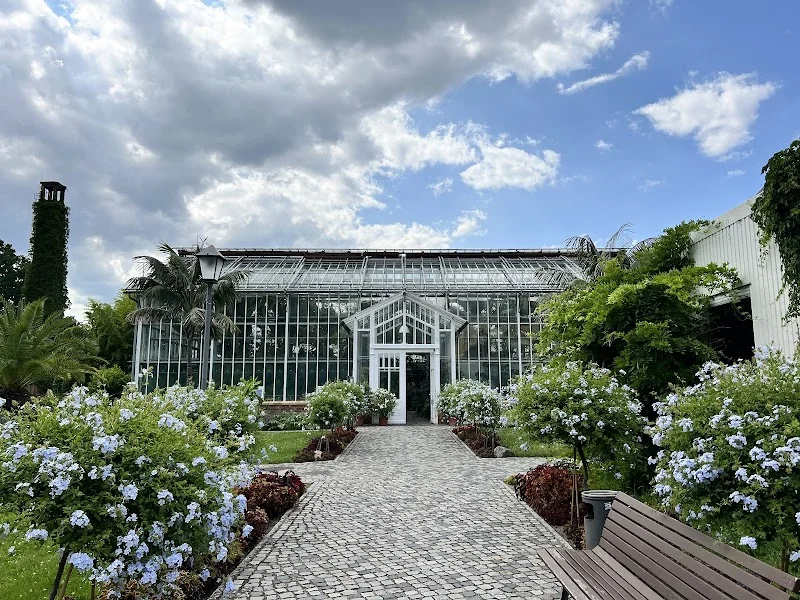
Paradiesgarten, Maulbeerallee 2, Potsdam-Westliche Vorstadt
Paradiesgarten, Maulbeerallee 2, 14469 Potsdam, Germany
Botanical Garden of the University of Potsdam | Tickets & Photos
The Botanical Garden of the University of Potsdam is much more than a quiet outing in nature. It combines scientific plant collections, historical architecture, natural education, and a surprisingly diverse visitor experience all in one place. Those looking for tickets, photos, reviews, or practical information for their visit will find a garden that offers much with its display greenhouses, outdoor facilities south and north of Maulbeerallee, and a strong focus on research and conservation. Visitors experience tropical air in the palm house, aquatic plants in the aquarium hall, blooming rhododendrons in the paradise garden, and a landscape that reveals different perspectives depending on the season. With around 10,000 plant species or taxa and a collection that spans numerous specialty groups, the garden is a destination for plant enthusiasts, families, students, school classes, and anyone who wants to experience Potsdam from a quieter, botanical side. Guest feedback aligns with this image: well-maintained greenhouses, a wide variety of species, friendly staff, and a relaxed visit characterize the experience. That is why it is worth taking a closer look at opening hours, admission, directions, special collections, and the history of this place.
Opening Hours, Admission Prices, and Tickets for the Botanical Garden Potsdam
Those looking for tickets for the Botanical Garden Potsdam should first understand the layout of the grounds. Admission primarily refers to the display greenhouses, while the outdoor facilities can be visited for free. This is a significant advantage for many visitors, as an intensive tour can be arranged even on a small budget. The official admission prices are intentionally kept low: Adults pay 2.00 euros, students, pupils, and people with disabilities pay 1.00 euro, groups of eight or more also pay 1.00 euro per person, and school classes pay 0.50 euros per pupil. Children up to six years old have free admission. This is a compelling argument, especially for families, school groups, and spontaneous outings. Those visiting the outdoor facilities pay nothing but can still experience large parts of the grounds and spend plenty of time in nature. This makes the garden attractive for repeat visits, as a walk through the outdoor areas is always possible without having to factor in the greenhouses each time.
The opening hours are also clearly defined. The Botanical Garden is open daily. The display greenhouses and the biological garden south of Maulbeerallee are accessible from April 1 to September 30 from 9:30 AM to 5:00 PM and from October 1 to March 31 from 9:30 AM to 4:00 PM. The paradise garden north of Maulbeerallee is open year-round from 8:00 AM until sunset. Ticket sales end and the last admission is 30 minutes before closing. There are also closing days on Christmas Eve, New Year's Eve, and New Year's Day for the greenhouses. This is important for planning a visit, as a late arrival can quickly lead to not being able to make good use of the admission. Those wishing to take photos should also plan some buffer time, as there are many motifs in the garden that are not just seen in passing. Visitor reviews reflect this quality: the well-maintained facility, good plant diversity, and relaxed, quiet experience are often highlighted. This aligns with the official information stating that the garden comprises about 10,000 taxa and 16,500 accessions, creating an unusually dense botanical offering for an urban area in Potsdam.
For inquiries regarding tickets and reviews, visitor comfort is also important. Admission prices are transparent, there are clear rules for groups and school classes, and the free outdoor facilities allow for flexible visits. Therefore, those primarily interested in photos, a short walk, or the historical outdoor facilities do not necessarily have to set the complete greenhouse visit as their main goal. At the same time, the ticket is particularly worthwhile if one wants to see the special features of the tropical and subtropical collections. Many visitors therefore associate the garden with a very good price-performance ratio. This is a strong SEO and user value factor, especially in a city like Potsdam, as inquiries about tickets, prices, and reviews directly lead to a family-friendly, culturally interesting, and scientifically relevant offering. For a day trip, it is advisable to visit the greenhouses first and then explore the free facilities. This way, one can optimally utilize the opening hours and then flexibly decide how much time to spend in the paradise garden or the biological garden.
Directions, Bus 695, and Parking at the Botanical Garden of the University of Potsdam
The Botanical Garden of the University of Potsdam is well described for directions but is not designed for car traffic. The official address is Maulbeerallee 2 in 14469 Potsdam. For public transport, the university recommends bus 695 to the Orangerie stop, accessible from Potsdam Central Station or Sanssouci Station, among others. This is convenient, as the garden can thus be easily integrated into a visit to Potsdam without a car. For day visitors who are already visiting the UNESCO World Heritage site of Sanssouci, the parks, and other attractions, the location is particularly favorable. The garden is situated in a historical environment that enhances the visit without having to navigate a busy city center. Those arriving by car should pay close attention to parking regulations: car parking spaces are only available in limited numbers on weekends. This suggests planning the visit early or alternatively choosing the bus directly.
The grounds are spatially divided by Maulbeerallee. The greenhouses and the biological garden lie to the south, while the paradise garden is to the north of Maulbeerallee. For visitors, this means that one should structure the tour well to avoid walking back and forth between the sections without planning the order. For example, those traveling with children or with a camera benefit from exploring the greenhouses first and then the outdoor facilities. This way, short distances, varied impressions, and better lighting conditions for photos arise. This division is particularly interesting for the keyword photos, as the facility offers very different motifs: interiors with tropical light, historical brick and glass architecture, open garden spaces with seasonal blooms, and structured theme gardens. The result is a place where one can capture both plants in detail and atmospheric overall views.
Even for visitors with little time, the directions are well planned. Those with only a short stay in Potsdam can use the garden as a half-day destination, as the admission prices are low and the main areas are clearly marked. Those who have more time can combine the garden with walks in the surrounding area. The location in Potsdam-Westliche Vorstadt and near Sanssouci Park makes this sensible. For SEO-relevant inquiries regarding directions and parking, it is important that the official recommendation clearly refers to bus 695 and limited car options on weekends. This is genuine user information that directly influences the decision for or against a car. Those relying on public transport avoid parking searches and can start their visit more relaxed. Those arriving by car should understand the limited parking spaces as a hint, not as a guarantee. This does not complicate the arrival but requires a bit of preparation, especially on busy weekends or during events.
Greenhouses, Collections, and Special Plants in the Botanical Garden Potsdam
The centerpiece of the Botanical Garden of the University of Potsdam is the greenhouses and their collections. Officially, there are ten greenhouses and five hectares of outdoor space; elsewhere, the university mentions about 10,000 plant species or taxa and 16,500 accessions. In another university announcement, it is stated that there are 8,000 plant species, ten greenhouses, and 15,000 accessions. What is crucial for the visitor experience is that the diversity is extraordinarily large, and it is made visible not only through numbers but also through very different habitats. Even the palm house conveys an impression of tropical proportions, although the roof does not reach the height of real rainforest giants. In the epiphyte house, one learns about plants that live in the crowns of tropical trees without contact with the ground. The useful plants house showcases tropical crops such as coffee, cocoa, sugar cane, cotton, cassava, and guava. In the house of tropical diversity, one finds, among others, gesneriads, begonias, sansevierias, and carnivorous plants. The cactus house illustrates how plants adapt to hot and dry habitats. In the aquarium hall and the Victoria house, one encounters water and marsh plants, including the spectacularly blooming giant water lily Victoria cruziana in summer. The orchid house showcases the enormous diversity of this plant family, while the fern house focuses on flowering plants with astonishing forms. This is complemented by a greenhouse connector where changing exhibitions are shown.
What is particularly appealing is that the collections do not stand isolated next to each other but are didactically structured. Those interested in plant photos thus receive very different visual worlds: large leaf shapes, fine fern fronds, architectural cacti, colorful orchid flowers, water plants, succulents, and tropical plants with their own light and color play. The collection focuses range from conservation cultures of native plants to sansevieria, aloaceae, bromeliads, aizoaceae, rhododendron, passiflora, agave, chimeras, iris, medicinal plants, and cactaceae to further botanical specialty groups. This shows that the garden is not just a beautiful place but also a highly scientific collection of living plants. Visitors therefore do not experience just any random greenhouse landscape but a curated botanical world where plants are organized by characteristics, origin, life form, and relationship.
This is particularly exciting for all those searching for Botanical Garden Potsdam photos or botanical garden uni potsdam, as the visual diversity is directly linked to scientific diversity. The garden provides motifs that change significantly from room to room. Additionally, there is the historical dimension: the palm house and the Victoria house date back to the early 20th century and are listed original buildings. Thus, plant diversity is combined with an architecture that is already part of the experience. Therefore, those only interested in a quick walk may overlook how interconnected the greenhouses are and how clearly they convey different botanical themes. This is where one of the greatest advantages of the garden lies: it can be experienced informatively, aesthetically, and scientifically at the same time. And precisely because the admission prices are low, a second visit is worthwhile to not have to take everything in during a single tour.
Paradise Garden, Biological Garden, and Outdoor Facilities: From the Alpine Garden to the Rhododendron Slope
The outdoor facilities make the Botanical Garden Potsdam just as exciting outdoors as under glass. South of Maulbeerallee lies the biological garden with the East Asia quarter, the arboretum, the biological-morphological department, the Loki-Schmidt bed, useful, medicinal, and spice plants, protected plants, outdoor succulents, the primrose and fern quarter, as well as the undergrowth of the Central European deciduous forest. North of Maulbeerallee lies the paradise garden with its systematic plant section and the habitat sections. Here, one finds alpine plants, steppe and prairie gardens, bulb flower meadows, rhododendron slopes, heath gardens, and water and shore gardens. For visitors, this means: the garden is not just a greenhouse complex but a deliberately designed landscape that makes plant geographical, ecological, and aesthetic connections visible. Those searching for photos will find particularly strong motifs here, especially in spring and early summer. The rhododendron slope is a striking attraction in May and June, while the alpine garden showcases mountain plants from Europe, Asia, and North America, and the bulb flower meadow features early bloomers.
The paradise garden also has a historical depth that many visitors may not immediately realize. It houses the Stibadium, a gem of Prussian architecture that has been restored to new splendor after an extensive renovation. Among the oldest structures in the garden are the fountain house or Stibadium and the water staircase from the mid-19th century. This shows that the garden is not only a botanical collection but also a historical garden facility. The water and shore garden is particularly interesting, where hardy marsh and water plants grow. Some species threatened with extinction in Brandenburg are even cultivated in the shore zones to be reintroduced if necessary. This makes the garden a place of practical nature conservation. The biological garden also contains much didactic work: the morphological department shows the diversity of leaves, shoots, roots, flowers, and fruits, while the useful plants section is divided into dye, fiber, food, and medicinal and spice plants. This makes the garden particularly valuable for families, school groups, and anyone who wants to understand plants not just as decoration but as a basis for life.
In the East Asia quarter and the arboretum, this perspective is further expanded. Here, perennials and woody plants from the Far East, as well as deciduous and coniferous trees from various taxonomic groups, are the focus. The facility shows how plants adapt to different climate and site conditions. This is not only scientifically interesting but also visually very varied. During a tour, one thus experiences several levels: designed garden spaces, botanical orders, ecological habitats, and historical monuments. This is important information for users searching for botanical Potsdam or botanical garden university potsdam, as the garden cannot be reduced to a single main motif. Those coming here can make a quiet walk, a botanical learning journey, or an extensive photo tour out of it. And because the outdoor facilities are freely accessible, the visit can easily be combined with a short detour or a longer stay.
History, Research, and Events in the Botanical Garden of the University of Potsdam
The history of the Botanical Garden is closely linked to the University of Potsdam and the use of the grounds on Maulbeerallee. The garden was founded in 1950 as part of the new Brandenburg State University, the predecessor institution of the Pedagogical University and the current University of Potsdam. It initially served mainly for teaching and training biology teachers. Instead of a complete new establishment, the grounds of the former royal nursery could be used. Between 1908 and 1912, a greenhouse complex was built there, the outlines of which essentially still exist today. The large palm house and the Victoria house are original buildings from this time and are now protected as historical monuments. Even older is the paradise garden north of Maulbeerallee, which was already established around 1845. This creates an unusual connection between Prussian garden culture, university research, and modern environmental education. For visitors, this is particularly attractive because one not only sees plants but can also read history in the space.
The garden also plays an important role scientifically. The University of Potsdam emphasizes that around 250 students receive botanical education there each year. This includes events such as botany for geoecologists, vegetation of Central Europe, vegetation ecology, green classroom, student laboratory botanical garden, botanical identification exercises, field exercises, and botanical-ecological Saturday excursions. In addition, the garden serves as a research site, as living plants from all over the world, greenhouses, outdoor beds, and gardening expertise enable experimental work. The collections are also used for focal projects, such as those on tropical and subtropical plants, sansevieria, aloe, clavija, or native plants like Dryopteris expansa and Gentianella. Furthermore, the garden engages with its colonial past: there are stations along the tour that inform about collection practices, economic exploitation of natural resources, and Eurocentric narratives, placing the colonial context in perspective. This openness to self-reflection was even honored in 2024 with the Potsdam Climate Prize in the special category of Climate Justice and Anticolonialism. This gives the garden additional societal relevance.
Visitors will also find the event program interesting. Regularly, there are guided tours, exhibitions, photo exhibitions, the green classroom, children's programs, plant markets, garden festivals, workshops, and special formats like an escape game. This shows that the Botanical Garden is not just a place for quiet contemplation but also a lively event venue. Especially the exhibitions and guided tours generate additional inquiries about programs, photos, reviews, and tickets. Those visiting the garden with children will find natural science offerings and thematic activities. Those interested in plants and colonial history will find content-rich guided tours. Those simply looking for beautiful motifs can experience photo exhibitions or seasonal blooming events. Thus, the garden fulfills exactly what many visitors seek in Potsdam: a place that combines relaxation, education, and aesthetics. And since the official pages regularly announce new dates, the Botanical Garden will also be an active part of the cultural and scientific life of the city in 2026.
Sources:
- Botanical Garden of the University of Potsdam - Official Website
- Opening Hours - Botanical Garden of the University of Potsdam
- Admission Prices - Botanical Garden of the University of Potsdam
- Address and Directions - Botanical Garden of the University of Potsdam
- Site Map - Botanical Garden of the University of Potsdam
- University of Potsdam News - Garden History and Anniversary
- Collections - Botanical Garden of the University of Potsdam
Show moreShow less
Botanical Garden of the University of Potsdam | Tickets & Photos
The Botanical Garden of the University of Potsdam is much more than a quiet outing in nature. It combines scientific plant collections, historical architecture, natural education, and a surprisingly diverse visitor experience all in one place. Those looking for tickets, photos, reviews, or practical information for their visit will find a garden that offers much with its display greenhouses, outdoor facilities south and north of Maulbeerallee, and a strong focus on research and conservation. Visitors experience tropical air in the palm house, aquatic plants in the aquarium hall, blooming rhododendrons in the paradise garden, and a landscape that reveals different perspectives depending on the season. With around 10,000 plant species or taxa and a collection that spans numerous specialty groups, the garden is a destination for plant enthusiasts, families, students, school classes, and anyone who wants to experience Potsdam from a quieter, botanical side. Guest feedback aligns with this image: well-maintained greenhouses, a wide variety of species, friendly staff, and a relaxed visit characterize the experience. That is why it is worth taking a closer look at opening hours, admission, directions, special collections, and the history of this place.
Opening Hours, Admission Prices, and Tickets for the Botanical Garden Potsdam
Those looking for tickets for the Botanical Garden Potsdam should first understand the layout of the grounds. Admission primarily refers to the display greenhouses, while the outdoor facilities can be visited for free. This is a significant advantage for many visitors, as an intensive tour can be arranged even on a small budget. The official admission prices are intentionally kept low: Adults pay 2.00 euros, students, pupils, and people with disabilities pay 1.00 euro, groups of eight or more also pay 1.00 euro per person, and school classes pay 0.50 euros per pupil. Children up to six years old have free admission. This is a compelling argument, especially for families, school groups, and spontaneous outings. Those visiting the outdoor facilities pay nothing but can still experience large parts of the grounds and spend plenty of time in nature. This makes the garden attractive for repeat visits, as a walk through the outdoor areas is always possible without having to factor in the greenhouses each time.
The opening hours are also clearly defined. The Botanical Garden is open daily. The display greenhouses and the biological garden south of Maulbeerallee are accessible from April 1 to September 30 from 9:30 AM to 5:00 PM and from October 1 to March 31 from 9:30 AM to 4:00 PM. The paradise garden north of Maulbeerallee is open year-round from 8:00 AM until sunset. Ticket sales end and the last admission is 30 minutes before closing. There are also closing days on Christmas Eve, New Year's Eve, and New Year's Day for the greenhouses. This is important for planning a visit, as a late arrival can quickly lead to not being able to make good use of the admission. Those wishing to take photos should also plan some buffer time, as there are many motifs in the garden that are not just seen in passing. Visitor reviews reflect this quality: the well-maintained facility, good plant diversity, and relaxed, quiet experience are often highlighted. This aligns with the official information stating that the garden comprises about 10,000 taxa and 16,500 accessions, creating an unusually dense botanical offering for an urban area in Potsdam.
For inquiries regarding tickets and reviews, visitor comfort is also important. Admission prices are transparent, there are clear rules for groups and school classes, and the free outdoor facilities allow for flexible visits. Therefore, those primarily interested in photos, a short walk, or the historical outdoor facilities do not necessarily have to set the complete greenhouse visit as their main goal. At the same time, the ticket is particularly worthwhile if one wants to see the special features of the tropical and subtropical collections. Many visitors therefore associate the garden with a very good price-performance ratio. This is a strong SEO and user value factor, especially in a city like Potsdam, as inquiries about tickets, prices, and reviews directly lead to a family-friendly, culturally interesting, and scientifically relevant offering. For a day trip, it is advisable to visit the greenhouses first and then explore the free facilities. This way, one can optimally utilize the opening hours and then flexibly decide how much time to spend in the paradise garden or the biological garden.
Directions, Bus 695, and Parking at the Botanical Garden of the University of Potsdam
The Botanical Garden of the University of Potsdam is well described for directions but is not designed for car traffic. The official address is Maulbeerallee 2 in 14469 Potsdam. For public transport, the university recommends bus 695 to the Orangerie stop, accessible from Potsdam Central Station or Sanssouci Station, among others. This is convenient, as the garden can thus be easily integrated into a visit to Potsdam without a car. For day visitors who are already visiting the UNESCO World Heritage site of Sanssouci, the parks, and other attractions, the location is particularly favorable. The garden is situated in a historical environment that enhances the visit without having to navigate a busy city center. Those arriving by car should pay close attention to parking regulations: car parking spaces are only available in limited numbers on weekends. This suggests planning the visit early or alternatively choosing the bus directly.
The grounds are spatially divided by Maulbeerallee. The greenhouses and the biological garden lie to the south, while the paradise garden is to the north of Maulbeerallee. For visitors, this means that one should structure the tour well to avoid walking back and forth between the sections without planning the order. For example, those traveling with children or with a camera benefit from exploring the greenhouses first and then the outdoor facilities. This way, short distances, varied impressions, and better lighting conditions for photos arise. This division is particularly interesting for the keyword photos, as the facility offers very different motifs: interiors with tropical light, historical brick and glass architecture, open garden spaces with seasonal blooms, and structured theme gardens. The result is a place where one can capture both plants in detail and atmospheric overall views.
Even for visitors with little time, the directions are well planned. Those with only a short stay in Potsdam can use the garden as a half-day destination, as the admission prices are low and the main areas are clearly marked. Those who have more time can combine the garden with walks in the surrounding area. The location in Potsdam-Westliche Vorstadt and near Sanssouci Park makes this sensible. For SEO-relevant inquiries regarding directions and parking, it is important that the official recommendation clearly refers to bus 695 and limited car options on weekends. This is genuine user information that directly influences the decision for or against a car. Those relying on public transport avoid parking searches and can start their visit more relaxed. Those arriving by car should understand the limited parking spaces as a hint, not as a guarantee. This does not complicate the arrival but requires a bit of preparation, especially on busy weekends or during events.
Greenhouses, Collections, and Special Plants in the Botanical Garden Potsdam
The centerpiece of the Botanical Garden of the University of Potsdam is the greenhouses and their collections. Officially, there are ten greenhouses and five hectares of outdoor space; elsewhere, the university mentions about 10,000 plant species or taxa and 16,500 accessions. In another university announcement, it is stated that there are 8,000 plant species, ten greenhouses, and 15,000 accessions. What is crucial for the visitor experience is that the diversity is extraordinarily large, and it is made visible not only through numbers but also through very different habitats. Even the palm house conveys an impression of tropical proportions, although the roof does not reach the height of real rainforest giants. In the epiphyte house, one learns about plants that live in the crowns of tropical trees without contact with the ground. The useful plants house showcases tropical crops such as coffee, cocoa, sugar cane, cotton, cassava, and guava. In the house of tropical diversity, one finds, among others, gesneriads, begonias, sansevierias, and carnivorous plants. The cactus house illustrates how plants adapt to hot and dry habitats. In the aquarium hall and the Victoria house, one encounters water and marsh plants, including the spectacularly blooming giant water lily Victoria cruziana in summer. The orchid house showcases the enormous diversity of this plant family, while the fern house focuses on flowering plants with astonishing forms. This is complemented by a greenhouse connector where changing exhibitions are shown.
What is particularly appealing is that the collections do not stand isolated next to each other but are didactically structured. Those interested in plant photos thus receive very different visual worlds: large leaf shapes, fine fern fronds, architectural cacti, colorful orchid flowers, water plants, succulents, and tropical plants with their own light and color play. The collection focuses range from conservation cultures of native plants to sansevieria, aloaceae, bromeliads, aizoaceae, rhododendron, passiflora, agave, chimeras, iris, medicinal plants, and cactaceae to further botanical specialty groups. This shows that the garden is not just a beautiful place but also a highly scientific collection of living plants. Visitors therefore do not experience just any random greenhouse landscape but a curated botanical world where plants are organized by characteristics, origin, life form, and relationship.
This is particularly exciting for all those searching for Botanical Garden Potsdam photos or botanical garden uni potsdam, as the visual diversity is directly linked to scientific diversity. The garden provides motifs that change significantly from room to room. Additionally, there is the historical dimension: the palm house and the Victoria house date back to the early 20th century and are listed original buildings. Thus, plant diversity is combined with an architecture that is already part of the experience. Therefore, those only interested in a quick walk may overlook how interconnected the greenhouses are and how clearly they convey different botanical themes. This is where one of the greatest advantages of the garden lies: it can be experienced informatively, aesthetically, and scientifically at the same time. And precisely because the admission prices are low, a second visit is worthwhile to not have to take everything in during a single tour.
Paradise Garden, Biological Garden, and Outdoor Facilities: From the Alpine Garden to the Rhododendron Slope
The outdoor facilities make the Botanical Garden Potsdam just as exciting outdoors as under glass. South of Maulbeerallee lies the biological garden with the East Asia quarter, the arboretum, the biological-morphological department, the Loki-Schmidt bed, useful, medicinal, and spice plants, protected plants, outdoor succulents, the primrose and fern quarter, as well as the undergrowth of the Central European deciduous forest. North of Maulbeerallee lies the paradise garden with its systematic plant section and the habitat sections. Here, one finds alpine plants, steppe and prairie gardens, bulb flower meadows, rhododendron slopes, heath gardens, and water and shore gardens. For visitors, this means: the garden is not just a greenhouse complex but a deliberately designed landscape that makes plant geographical, ecological, and aesthetic connections visible. Those searching for photos will find particularly strong motifs here, especially in spring and early summer. The rhododendron slope is a striking attraction in May and June, while the alpine garden showcases mountain plants from Europe, Asia, and North America, and the bulb flower meadow features early bloomers.
The paradise garden also has a historical depth that many visitors may not immediately realize. It houses the Stibadium, a gem of Prussian architecture that has been restored to new splendor after an extensive renovation. Among the oldest structures in the garden are the fountain house or Stibadium and the water staircase from the mid-19th century. This shows that the garden is not only a botanical collection but also a historical garden facility. The water and shore garden is particularly interesting, where hardy marsh and water plants grow. Some species threatened with extinction in Brandenburg are even cultivated in the shore zones to be reintroduced if necessary. This makes the garden a place of practical nature conservation. The biological garden also contains much didactic work: the morphological department shows the diversity of leaves, shoots, roots, flowers, and fruits, while the useful plants section is divided into dye, fiber, food, and medicinal and spice plants. This makes the garden particularly valuable for families, school groups, and anyone who wants to understand plants not just as decoration but as a basis for life.
In the East Asia quarter and the arboretum, this perspective is further expanded. Here, perennials and woody plants from the Far East, as well as deciduous and coniferous trees from various taxonomic groups, are the focus. The facility shows how plants adapt to different climate and site conditions. This is not only scientifically interesting but also visually very varied. During a tour, one thus experiences several levels: designed garden spaces, botanical orders, ecological habitats, and historical monuments. This is important information for users searching for botanical Potsdam or botanical garden university potsdam, as the garden cannot be reduced to a single main motif. Those coming here can make a quiet walk, a botanical learning journey, or an extensive photo tour out of it. And because the outdoor facilities are freely accessible, the visit can easily be combined with a short detour or a longer stay.
History, Research, and Events in the Botanical Garden of the University of Potsdam
The history of the Botanical Garden is closely linked to the University of Potsdam and the use of the grounds on Maulbeerallee. The garden was founded in 1950 as part of the new Brandenburg State University, the predecessor institution of the Pedagogical University and the current University of Potsdam. It initially served mainly for teaching and training biology teachers. Instead of a complete new establishment, the grounds of the former royal nursery could be used. Between 1908 and 1912, a greenhouse complex was built there, the outlines of which essentially still exist today. The large palm house and the Victoria house are original buildings from this time and are now protected as historical monuments. Even older is the paradise garden north of Maulbeerallee, which was already established around 1845. This creates an unusual connection between Prussian garden culture, university research, and modern environmental education. For visitors, this is particularly attractive because one not only sees plants but can also read history in the space.
The garden also plays an important role scientifically. The University of Potsdam emphasizes that around 250 students receive botanical education there each year. This includes events such as botany for geoecologists, vegetation of Central Europe, vegetation ecology, green classroom, student laboratory botanical garden, botanical identification exercises, field exercises, and botanical-ecological Saturday excursions. In addition, the garden serves as a research site, as living plants from all over the world, greenhouses, outdoor beds, and gardening expertise enable experimental work. The collections are also used for focal projects, such as those on tropical and subtropical plants, sansevieria, aloe, clavija, or native plants like Dryopteris expansa and Gentianella. Furthermore, the garden engages with its colonial past: there are stations along the tour that inform about collection practices, economic exploitation of natural resources, and Eurocentric narratives, placing the colonial context in perspective. This openness to self-reflection was even honored in 2024 with the Potsdam Climate Prize in the special category of Climate Justice and Anticolonialism. This gives the garden additional societal relevance.
Visitors will also find the event program interesting. Regularly, there are guided tours, exhibitions, photo exhibitions, the green classroom, children's programs, plant markets, garden festivals, workshops, and special formats like an escape game. This shows that the Botanical Garden is not just a place for quiet contemplation but also a lively event venue. Especially the exhibitions and guided tours generate additional inquiries about programs, photos, reviews, and tickets. Those visiting the garden with children will find natural science offerings and thematic activities. Those interested in plants and colonial history will find content-rich guided tours. Those simply looking for beautiful motifs can experience photo exhibitions or seasonal blooming events. Thus, the garden fulfills exactly what many visitors seek in Potsdam: a place that combines relaxation, education, and aesthetics. And since the official pages regularly announce new dates, the Botanical Garden will also be an active part of the cultural and scientific life of the city in 2026.
Sources:
- Botanical Garden of the University of Potsdam - Official Website
- Opening Hours - Botanical Garden of the University of Potsdam
- Admission Prices - Botanical Garden of the University of Potsdam
- Address and Directions - Botanical Garden of the University of Potsdam
- Site Map - Botanical Garden of the University of Potsdam
- University of Potsdam News - Garden History and Anniversary
- Collections - Botanical Garden of the University of Potsdam
Botanical Garden of the University of Potsdam | Tickets & Photos
The Botanical Garden of the University of Potsdam is much more than a quiet outing in nature. It combines scientific plant collections, historical architecture, natural education, and a surprisingly diverse visitor experience all in one place. Those looking for tickets, photos, reviews, or practical information for their visit will find a garden that offers much with its display greenhouses, outdoor facilities south and north of Maulbeerallee, and a strong focus on research and conservation. Visitors experience tropical air in the palm house, aquatic plants in the aquarium hall, blooming rhododendrons in the paradise garden, and a landscape that reveals different perspectives depending on the season. With around 10,000 plant species or taxa and a collection that spans numerous specialty groups, the garden is a destination for plant enthusiasts, families, students, school classes, and anyone who wants to experience Potsdam from a quieter, botanical side. Guest feedback aligns with this image: well-maintained greenhouses, a wide variety of species, friendly staff, and a relaxed visit characterize the experience. That is why it is worth taking a closer look at opening hours, admission, directions, special collections, and the history of this place.
Opening Hours, Admission Prices, and Tickets for the Botanical Garden Potsdam
Those looking for tickets for the Botanical Garden Potsdam should first understand the layout of the grounds. Admission primarily refers to the display greenhouses, while the outdoor facilities can be visited for free. This is a significant advantage for many visitors, as an intensive tour can be arranged even on a small budget. The official admission prices are intentionally kept low: Adults pay 2.00 euros, students, pupils, and people with disabilities pay 1.00 euro, groups of eight or more also pay 1.00 euro per person, and school classes pay 0.50 euros per pupil. Children up to six years old have free admission. This is a compelling argument, especially for families, school groups, and spontaneous outings. Those visiting the outdoor facilities pay nothing but can still experience large parts of the grounds and spend plenty of time in nature. This makes the garden attractive for repeat visits, as a walk through the outdoor areas is always possible without having to factor in the greenhouses each time.
The opening hours are also clearly defined. The Botanical Garden is open daily. The display greenhouses and the biological garden south of Maulbeerallee are accessible from April 1 to September 30 from 9:30 AM to 5:00 PM and from October 1 to March 31 from 9:30 AM to 4:00 PM. The paradise garden north of Maulbeerallee is open year-round from 8:00 AM until sunset. Ticket sales end and the last admission is 30 minutes before closing. There are also closing days on Christmas Eve, New Year's Eve, and New Year's Day for the greenhouses. This is important for planning a visit, as a late arrival can quickly lead to not being able to make good use of the admission. Those wishing to take photos should also plan some buffer time, as there are many motifs in the garden that are not just seen in passing. Visitor reviews reflect this quality: the well-maintained facility, good plant diversity, and relaxed, quiet experience are often highlighted. This aligns with the official information stating that the garden comprises about 10,000 taxa and 16,500 accessions, creating an unusually dense botanical offering for an urban area in Potsdam.
For inquiries regarding tickets and reviews, visitor comfort is also important. Admission prices are transparent, there are clear rules for groups and school classes, and the free outdoor facilities allow for flexible visits. Therefore, those primarily interested in photos, a short walk, or the historical outdoor facilities do not necessarily have to set the complete greenhouse visit as their main goal. At the same time, the ticket is particularly worthwhile if one wants to see the special features of the tropical and subtropical collections. Many visitors therefore associate the garden with a very good price-performance ratio. This is a strong SEO and user value factor, especially in a city like Potsdam, as inquiries about tickets, prices, and reviews directly lead to a family-friendly, culturally interesting, and scientifically relevant offering. For a day trip, it is advisable to visit the greenhouses first and then explore the free facilities. This way, one can optimally utilize the opening hours and then flexibly decide how much time to spend in the paradise garden or the biological garden.
Directions, Bus 695, and Parking at the Botanical Garden of the University of Potsdam
The Botanical Garden of the University of Potsdam is well described for directions but is not designed for car traffic. The official address is Maulbeerallee 2 in 14469 Potsdam. For public transport, the university recommends bus 695 to the Orangerie stop, accessible from Potsdam Central Station or Sanssouci Station, among others. This is convenient, as the garden can thus be easily integrated into a visit to Potsdam without a car. For day visitors who are already visiting the UNESCO World Heritage site of Sanssouci, the parks, and other attractions, the location is particularly favorable. The garden is situated in a historical environment that enhances the visit without having to navigate a busy city center. Those arriving by car should pay close attention to parking regulations: car parking spaces are only available in limited numbers on weekends. This suggests planning the visit early or alternatively choosing the bus directly.
The grounds are spatially divided by Maulbeerallee. The greenhouses and the biological garden lie to the south, while the paradise garden is to the north of Maulbeerallee. For visitors, this means that one should structure the tour well to avoid walking back and forth between the sections without planning the order. For example, those traveling with children or with a camera benefit from exploring the greenhouses first and then the outdoor facilities. This way, short distances, varied impressions, and better lighting conditions for photos arise. This division is particularly interesting for the keyword photos, as the facility offers very different motifs: interiors with tropical light, historical brick and glass architecture, open garden spaces with seasonal blooms, and structured theme gardens. The result is a place where one can capture both plants in detail and atmospheric overall views.
Even for visitors with little time, the directions are well planned. Those with only a short stay in Potsdam can use the garden as a half-day destination, as the admission prices are low and the main areas are clearly marked. Those who have more time can combine the garden with walks in the surrounding area. The location in Potsdam-Westliche Vorstadt and near Sanssouci Park makes this sensible. For SEO-relevant inquiries regarding directions and parking, it is important that the official recommendation clearly refers to bus 695 and limited car options on weekends. This is genuine user information that directly influences the decision for or against a car. Those relying on public transport avoid parking searches and can start their visit more relaxed. Those arriving by car should understand the limited parking spaces as a hint, not as a guarantee. This does not complicate the arrival but requires a bit of preparation, especially on busy weekends or during events.
Greenhouses, Collections, and Special Plants in the Botanical Garden Potsdam
The centerpiece of the Botanical Garden of the University of Potsdam is the greenhouses and their collections. Officially, there are ten greenhouses and five hectares of outdoor space; elsewhere, the university mentions about 10,000 plant species or taxa and 16,500 accessions. In another university announcement, it is stated that there are 8,000 plant species, ten greenhouses, and 15,000 accessions. What is crucial for the visitor experience is that the diversity is extraordinarily large, and it is made visible not only through numbers but also through very different habitats. Even the palm house conveys an impression of tropical proportions, although the roof does not reach the height of real rainforest giants. In the epiphyte house, one learns about plants that live in the crowns of tropical trees without contact with the ground. The useful plants house showcases tropical crops such as coffee, cocoa, sugar cane, cotton, cassava, and guava. In the house of tropical diversity, one finds, among others, gesneriads, begonias, sansevierias, and carnivorous plants. The cactus house illustrates how plants adapt to hot and dry habitats. In the aquarium hall and the Victoria house, one encounters water and marsh plants, including the spectacularly blooming giant water lily Victoria cruziana in summer. The orchid house showcases the enormous diversity of this plant family, while the fern house focuses on flowering plants with astonishing forms. This is complemented by a greenhouse connector where changing exhibitions are shown.
What is particularly appealing is that the collections do not stand isolated next to each other but are didactically structured. Those interested in plant photos thus receive very different visual worlds: large leaf shapes, fine fern fronds, architectural cacti, colorful orchid flowers, water plants, succulents, and tropical plants with their own light and color play. The collection focuses range from conservation cultures of native plants to sansevieria, aloaceae, bromeliads, aizoaceae, rhododendron, passiflora, agave, chimeras, iris, medicinal plants, and cactaceae to further botanical specialty groups. This shows that the garden is not just a beautiful place but also a highly scientific collection of living plants. Visitors therefore do not experience just any random greenhouse landscape but a curated botanical world where plants are organized by characteristics, origin, life form, and relationship.
This is particularly exciting for all those searching for Botanical Garden Potsdam photos or botanical garden uni potsdam, as the visual diversity is directly linked to scientific diversity. The garden provides motifs that change significantly from room to room. Additionally, there is the historical dimension: the palm house and the Victoria house date back to the early 20th century and are listed original buildings. Thus, plant diversity is combined with an architecture that is already part of the experience. Therefore, those only interested in a quick walk may overlook how interconnected the greenhouses are and how clearly they convey different botanical themes. This is where one of the greatest advantages of the garden lies: it can be experienced informatively, aesthetically, and scientifically at the same time. And precisely because the admission prices are low, a second visit is worthwhile to not have to take everything in during a single tour.
Paradise Garden, Biological Garden, and Outdoor Facilities: From the Alpine Garden to the Rhododendron Slope
The outdoor facilities make the Botanical Garden Potsdam just as exciting outdoors as under glass. South of Maulbeerallee lies the biological garden with the East Asia quarter, the arboretum, the biological-morphological department, the Loki-Schmidt bed, useful, medicinal, and spice plants, protected plants, outdoor succulents, the primrose and fern quarter, as well as the undergrowth of the Central European deciduous forest. North of Maulbeerallee lies the paradise garden with its systematic plant section and the habitat sections. Here, one finds alpine plants, steppe and prairie gardens, bulb flower meadows, rhododendron slopes, heath gardens, and water and shore gardens. For visitors, this means: the garden is not just a greenhouse complex but a deliberately designed landscape that makes plant geographical, ecological, and aesthetic connections visible. Those searching for photos will find particularly strong motifs here, especially in spring and early summer. The rhododendron slope is a striking attraction in May and June, while the alpine garden showcases mountain plants from Europe, Asia, and North America, and the bulb flower meadow features early bloomers.
The paradise garden also has a historical depth that many visitors may not immediately realize. It houses the Stibadium, a gem of Prussian architecture that has been restored to new splendor after an extensive renovation. Among the oldest structures in the garden are the fountain house or Stibadium and the water staircase from the mid-19th century. This shows that the garden is not only a botanical collection but also a historical garden facility. The water and shore garden is particularly interesting, where hardy marsh and water plants grow. Some species threatened with extinction in Brandenburg are even cultivated in the shore zones to be reintroduced if necessary. This makes the garden a place of practical nature conservation. The biological garden also contains much didactic work: the morphological department shows the diversity of leaves, shoots, roots, flowers, and fruits, while the useful plants section is divided into dye, fiber, food, and medicinal and spice plants. This makes the garden particularly valuable for families, school groups, and anyone who wants to understand plants not just as decoration but as a basis for life.
In the East Asia quarter and the arboretum, this perspective is further expanded. Here, perennials and woody plants from the Far East, as well as deciduous and coniferous trees from various taxonomic groups, are the focus. The facility shows how plants adapt to different climate and site conditions. This is not only scientifically interesting but also visually very varied. During a tour, one thus experiences several levels: designed garden spaces, botanical orders, ecological habitats, and historical monuments. This is important information for users searching for botanical Potsdam or botanical garden university potsdam, as the garden cannot be reduced to a single main motif. Those coming here can make a quiet walk, a botanical learning journey, or an extensive photo tour out of it. And because the outdoor facilities are freely accessible, the visit can easily be combined with a short detour or a longer stay.
History, Research, and Events in the Botanical Garden of the University of Potsdam
The history of the Botanical Garden is closely linked to the University of Potsdam and the use of the grounds on Maulbeerallee. The garden was founded in 1950 as part of the new Brandenburg State University, the predecessor institution of the Pedagogical University and the current University of Potsdam. It initially served mainly for teaching and training biology teachers. Instead of a complete new establishment, the grounds of the former royal nursery could be used. Between 1908 and 1912, a greenhouse complex was built there, the outlines of which essentially still exist today. The large palm house and the Victoria house are original buildings from this time and are now protected as historical monuments. Even older is the paradise garden north of Maulbeerallee, which was already established around 1845. This creates an unusual connection between Prussian garden culture, university research, and modern environmental education. For visitors, this is particularly attractive because one not only sees plants but can also read history in the space.
The garden also plays an important role scientifically. The University of Potsdam emphasizes that around 250 students receive botanical education there each year. This includes events such as botany for geoecologists, vegetation of Central Europe, vegetation ecology, green classroom, student laboratory botanical garden, botanical identification exercises, field exercises, and botanical-ecological Saturday excursions. In addition, the garden serves as a research site, as living plants from all over the world, greenhouses, outdoor beds, and gardening expertise enable experimental work. The collections are also used for focal projects, such as those on tropical and subtropical plants, sansevieria, aloe, clavija, or native plants like Dryopteris expansa and Gentianella. Furthermore, the garden engages with its colonial past: there are stations along the tour that inform about collection practices, economic exploitation of natural resources, and Eurocentric narratives, placing the colonial context in perspective. This openness to self-reflection was even honored in 2024 with the Potsdam Climate Prize in the special category of Climate Justice and Anticolonialism. This gives the garden additional societal relevance.
Visitors will also find the event program interesting. Regularly, there are guided tours, exhibitions, photo exhibitions, the green classroom, children's programs, plant markets, garden festivals, workshops, and special formats like an escape game. This shows that the Botanical Garden is not just a place for quiet contemplation but also a lively event venue. Especially the exhibitions and guided tours generate additional inquiries about programs, photos, reviews, and tickets. Those visiting the garden with children will find natural science offerings and thematic activities. Those interested in plants and colonial history will find content-rich guided tours. Those simply looking for beautiful motifs can experience photo exhibitions or seasonal blooming events. Thus, the garden fulfills exactly what many visitors seek in Potsdam: a place that combines relaxation, education, and aesthetics. And since the official pages regularly announce new dates, the Botanical Garden will also be an active part of the cultural and scientific life of the city in 2026.
Sources:
- Botanical Garden of the University of Potsdam - Official Website
- Opening Hours - Botanical Garden of the University of Potsdam
- Admission Prices - Botanical Garden of the University of Potsdam
- Address and Directions - Botanical Garden of the University of Potsdam
- Site Map - Botanical Garden of the University of Potsdam
- University of Potsdam News - Garden History and Anniversary
- Collections - Botanical Garden of the University of Potsdam
Upcoming Events
No events found
Frequently Asked Questions
Reviews
Julia D
25. January 2026
Beautiful place!! Nice species Relaxing visit
Marques
13. February 2024
Really loved my visit here. The greenhouses are well maintained and diverse in their content. Most of the information is only in German, but I didn’t find this a problem. There are newly introduced panels putting the history of the botanical garden in the context of colonialism and Imperial Germany. I thought this was fantastic. Tickets are only £2 so it’s very affordable too.
Omotayo Gbadamosi
14. July 2023
This Botanical garden is so beautiful. Well taken care of and nice staff. If you are a plant lover, you will like it here. The ticket is 2€, we bought it right there and there was no waiting time.
KungFuKaninchen
20. May 2025
Beautiful ! Lovely staff, interesting tour and information, amazing gardens and plants with an amazing scenery all around
D Karagac
15. April 2022
It was a marvelous experience to hear peaceful chirpy voices of birds. And the amazing display of diverse plants. Nothing more guys, hope u can visit there one day.