
Potsdam
Leipziger Str. 60, 14473 Potsdam, Deutschland
Archive Potsdam | Concerts & Events
The Archive Potsdam is not just any event venue, but a grown house project with a clear stance, its own history, and a program that moves between concerts, workshops, parties, exchanges, and communal cultural work. Those who visit the Archive encounter an alternative cultural palace that has existed since 1994 and is now supported by the Archive e. V. The house is located at Leipziger Straße 60 in Potsdam, in close proximity to the Speicherstadt and not far from the main train station. Currently, the Archive describes itself as a place with a bar, café, and concert hall; at the same time, open formats such as studio and table tennis remain important components of everyday life. This very mix of free space, culture, and solidarity-based self-organization makes the place so special for visitors, bands, collectives, and neighbors. ([archiv-potsdam.de](https://archiv-potsdam.de/?utm_source=openai))
Events, Concerts, and Current Program at the Archive Potsdam
Those looking for the program at the Archive Potsdam are usually not just searching for a single evening, but a specific type of culture: approachable, direct, political, loud, or creative. The official website regularly announces concerts, workshops, lectures, jam sessions, and parties; in addition, there are special formats that often arise from the scene itself. The Archive emphasizes that events are usually organized by hosts from Potsdam or the surrounding area and are oriented towards their interests. This makes the house a place where a rigid event concept does not dominate, but the community helps to determine the direction. This is crucial for search queries like program, concerts, or events because the Archive is not an interchangeable location, but a vibrant free space with its own identity and a consciously non-commercial claim. ([archiv-potsdam.de](https://archiv-potsdam.de/veranstalterinnen/?utm_source=openai))
This character is also very evident in everyday life. The website lists current opening hours, which are based on the available bar staff and the event calendar: Monday and Tuesday from 7 PM bar operation, Thursday from 8 PM with table tennis and studio, Friday and Saturday depending on events, Wednesday only spontaneously. This makes the Archive not only a place for shows in the evening but also a meeting point during the week where people can meet, play, work, or simply stay. This connection of bar, stage, and workshop is an important reason why the Archive appears so independent as a cultural venue. It is not a pure club and not just a rehearsal space, but an open house where program and everyday life intertwine. ([archiv-potsdam.de](https://archiv-potsdam.de/?utm_source=openai))
For its external impact, it is also important that the Archive has been perceived as a place for different scenes for years. The website speaks of a house that enables concerts, workshops, and encounters, and the retrospective indicates that everything from small art groups to internationally known acts has played here. For search intentions like tickets, concert hall, or event calendar, this range is relevant: The Archive is large enough for a real live evening but remains small enough to maintain closeness and a DIY atmosphere. Therefore, those who follow the program experience not only individual acts but usually also the special atmosphere of a house that continues its own history with each event. ([archiv-potsdam.de](https://archiv-potsdam.de/rueckblick/?utm_source=openai))
Opening Hours, Meeting Points, and Daily Life in the House
The current opening hours are just as important for many visitors as the actual event. The Archive points out that the times must be adjusted repeatedly, among other things due to the availability of bar staff. This is typical for a self-managed house project: The operation is not purely commercially organized but depends on commitment, teamwork, and continuous cooperation. This results in a flexible but honest opening logic. Those who simply want to drop by for a drink, table tennis, or creative encounters should keep an eye on the website or the calendar, as times may vary on event days. Thus, the Archive remains a place where it is not just about consumption but about participation and shared responsibility. ([archiv-potsdam.de](https://archiv-potsdam.de/?utm_source=openai))
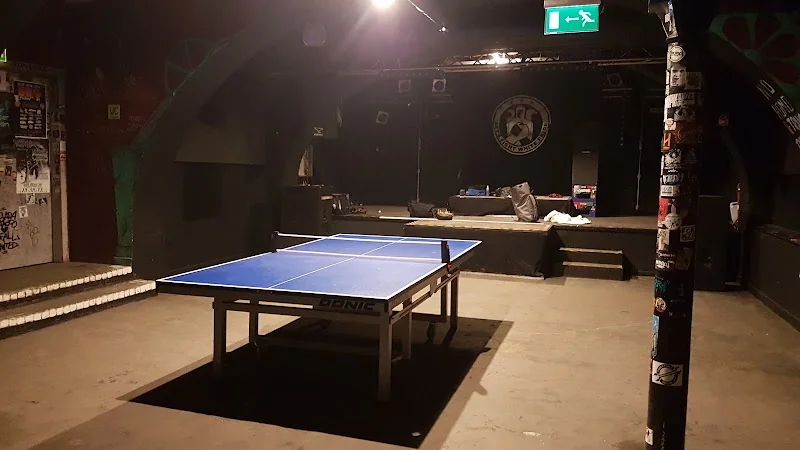
Thursday is particularly characteristic. According to the website, the table tennis table is ready in the hall, and the open studio invites creative work. These two formats are more than just nice additional offers: They show that the Archive is a space where culture does not only take place on stage but also at tables, walls, and workbenches. This fits with the roots of the house as a place where different projects have coexisted over the years. So, those looking for table tennis, studio, or open workshop will not find mere decoration here, but lived practice. For many guests, this is precisely the reason why the Archive remains memorable beyond an evening: One comes for a concert and leaves with the feeling of having experienced a social space that can do more than just play music. ([archiv-potsdam.de](https://archiv-potsdam.de/?utm_source=openai))
The location in the residential area also shapes daily life. The Archive asks its guests to use only the indoor area after 10 PM and to be considerate of the nighttime peace outside. This is not a trivial note but part of the respectful handling of the surroundings. Therefore, those who visit the house experience not only a program but also a culture of togetherness, where consideration, solidarity, and communication hold a high value. For visitors, this means very practically: The Archive is open but not arbitrary; lively but not silent at the expense of others. This balance of energy and neighborly spirit is another characteristic of the house and contributes to its special role in Potsdam's cultural life. ([archiv-potsdam.de](https://archiv-potsdam.de/?utm_source=openai))
History of the House and Self-Understanding of the Archive e. V.
The history of the Archive is a central part of its identity. The association states that the house has existed since 1994, was initially occupied, cleared in 1997, and subsequently reclaimed. Thus, the Archive belongs to the few house projects that have remained at their original location. This history is not just a chapter in the background but explains why the house is still so strongly associated with self-management, political stance, and independence. For search queries about history, background, or cultural palace, this is relevant: The Archive did not arise by chance but through conflict, commitment, and long perseverance. It has been cared for, defended, and repeatedly revitalized over decades. This gives the place a depth that one often feels immediately upon a first visit. ([archiv-potsdam.de](https://archiv-potsdam.de/archiv-ev/?utm_source=openai))
At the same time, the building itself represents Potsdam's history. The website describes that it was built in the 18th century as a royal brewery and is now a listed building. This is important for the practical use of the house because certain requirements arise from it, such as during renovation and fire protection. The Archive's retrospectives make it clear that these structural requirements have limited the house's scope over the years. At times, not all areas were available, and users had to concentrate on less space. Nevertheless, the house remained active and visible. This mix of historical building, political self-organization, and structural challenges makes the Archive a place where history does not feel museum-like but is directly palpable in everyday life. ([archiv-potsdam.de](https://archiv-potsdam.de/rueckblick/?utm_source=openai))
The recent development also shows how much the Archive thrives on support and self-initiative. In recent years, the website has repeatedly documented fundraising campaigns, construction phases, and renovation work, including the building envelope renovation with roof and facade. The Archive explicitly sees itself as a place that relies on solidarity from the urban community. The association openly states that projects, construction, finances, and voluntary work are necessary to secure the house in the long term. For a location page, this is an important point because it explains why the place can not only be visited but also supported. The Archive is a free space, but one that only exists because many people continuously fill it with work, ideas, and support. ([archiv-potsdam.de](https://archiv-potsdam.de/projekte/?utm_source=openai))
Directions to the Archive Potsdam: Address, Route, and Accessibility Notes
The official address is Leipziger Straße 60, 14473 Potsdam. For orientation, the Archive is very clear, as the directions page describes a specific route from Potsdam main station. Those arriving on foot exit the main station via the north exit, cross the street at the traffic light, and then follow the waterfront path along the Havel towards Lange Brücke. Once you reach the Speicherstadt at the large playground, the building with the towers is an important landmark; behind it lies the Archive. Then, you walk left past the building, cross Leipziger Straße, and reach the entrance via the backyard. This is practical for guests because the route is described not only as an address but as a comprehensible path. ([archiv-potsdam.de](https://archiv-potsdam.de/anfahrt/?utm_source=openai))
Particularly helpful are the notes for people in wheelchairs or with mobility impairments. The Archive explicitly recommends the route along the waterfront and points out lowered curbs on Leipziger Straße. At the same time, it is openly stated that the courtyard has cobblestones and the entrance slopes slightly uphill. This honesty is important because it makes expectations realistic and facilitates travel decisions. For those with limited mobility, this provides a clear idea of the situation on site in advance. In practice, this means: The location is not perfectly smooth, but it makes visible where hurdles lie and which paths are better suited. This is more helpful than a beautified description and fits with the house's claim to deal transparently and respectfully with its visitors. ([archiv-potsdam.de](https://archiv-potsdam.de/anfahrt/?utm_source=openai))
The surroundings also shape the way to the house. The Archive is located in the Speicherstadt and is described on the website as part of a vibrant neighborhood, where the path unfolds organically over waterfronts and backyards. For guests, this means: Not only the door but also the journey is part of the experience. The house is central enough to be easily accessible from the city center but still retains a certain hiddenness that fits its character. Especially for search terms like directions, entrance, or accessibility, this combination of precise orientation and slightly rough location image is important. Therefore, those visiting the Archive should not expect a sterile foyer but a historical, urban place with corners, edges, and clear directions. ([archiv-potsdam.de](https://archiv-potsdam.de/anfahrt/?utm_source=openai))
Rooms, Projects, and Participation in the Archive
The Archive has historically been much more than just a stage. The association describes that until 2008, the house provided a bar, café, concert hall, studio, screen printing shop, a small gym, and rehearsal rooms. Today, according to the website, the bar, café, and concert hall are currently usable. This information is important from an SEO perspective because it shows what search intentions lie behind terms like concert hall, café, or studio. At the same time, it tells a lot about the self-understanding of the house: The Archive is a space for various uses, not just for one evening but for many types of cultural work. It is thus a place where audience, art, craft, and community intertwine. ([archiv-potsdam.de](https://archiv-potsdam.de/archiv-ev/?utm_source=openai))
This principle is particularly strong in the area of studio and projects. The website describes the studio as an open creative space for painting, sculpture, and other forms of creative work. Every Thursday evening, it opens its doors for interested parties, and materials are available on site, often donated by friends and supporters. The project page also makes it clear that the house is constantly evolving and is in a process where users not only consume but also create. For visitors looking for participation, projects, or free space, this is a clear indication: The Archive is not closed but open to ideas, commitment, and collective use. This is where its special strength as a cultural venue lies. ([archiv-potsdam.de](https://archiv-potsdam.de/atelier/?utm_source=openai))
For artists, bands, and organizers, there are also clear processes. The page for organizers emphasizes personal contact, refers to the regular event plenary, and makes it clear that awareness plays a role in planning. Booking inquiries should not simply go through the contact form but should be organized through the designated channels. This is logical for a self-managed house and important for outsiders to know: Those who want to perform or create a format at the Archive should contact the local contact and respect the culture of the house. This keeps the program open but not arbitrary. Especially because the Archive is a participatory project, clarity, mutual coordination, and a common framework are crucial. ([archiv-potsdam.de](https://archiv-potsdam.de/veranstalterinnen/?utm_source=openai))
Awareness, House Rules, and Trustworthy Contacts
The Archive visibly values awareness. The website explains that awareness stands for a mindful, supportive, and solidary attitude that respects the boundaries of others and puts those affected at the center. The goal is a safe, inclusive, and positive environment for guests and crew. For visitors, this is an essential part of the experience because it shows that the house understands itself not only as an event venue but also as a social space. Especially in scenes where closeness, nightlife, and different physicalities meet, a clear understanding of awareness is important. The Archive does not formulate this claim as a marketing formula but as a concrete practice that should be lived in everyday life. ([archiv-potsdam.de](https://archiv-potsdam.de/awareness/?utm_source=openai))
Additionally, there are trusted contacts who can be approached in case of negative experiences, conflicts, or suggestions for improvement. The website explains that these contacts support communication with the Archive and protect anonymity. This is a strong signal to guests who want to feel safer or who have experienced a problematic situation in the house. For a location page, this is particularly relevant because it makes it clear that culture consists not only of programs but also of responsibility. Those wondering if the Archive is an open and reflective place will find a very clear answer here: Yes, and not only in terms of external presentation but with concrete structures. ([archiv-potsdam.de](https://archiv-potsdam.de/vertrauenspersonen/?utm_source=openai))
This self-understanding also includes the handling of the surroundings. The Archive reminds its guests to use only the indoor area after 10 PM and to maintain nighttime peace outside. This rule fits with the location in the residential area and emphasizes that consideration is part of the house concept. Together with the notes on discrimination-free behavior, solidarity, and respectful communication, a visit framework emerges that is clear yet inviting. The Archive aims to be a place where one can unfold freely without overriding others. This mix of openness and responsibility gives the house its special character and explains why it is much more to many people in Potsdam than just another event address. ([archiv-potsdam.de](https://archiv-potsdam.de/?utm_source=openai))
Sources:
Mehr anzeigenWeniger anzeigen
Archive Potsdam | Concerts & Events
The Archive Potsdam is not just any event venue, but a grown house project with a clear stance, its own history, and a program that moves between concerts, workshops, parties, exchanges, and communal cultural work. Those who visit the Archive encounter an alternative cultural palace that has existed since 1994 and is now supported by the Archive e. V. The house is located at Leipziger Straße 60 in Potsdam, in close proximity to the Speicherstadt and not far from the main train station. Currently, the Archive describes itself as a place with a bar, café, and concert hall; at the same time, open formats such as studio and table tennis remain important components of everyday life. This very mix of free space, culture, and solidarity-based self-organization makes the place so special for visitors, bands, collectives, and neighbors. ([archiv-potsdam.de](https://archiv-potsdam.de/?utm_source=openai))
Events, Concerts, and Current Program at the Archive Potsdam
Those looking for the program at the Archive Potsdam are usually not just searching for a single evening, but a specific type of culture: approachable, direct, political, loud, or creative. The official website regularly announces concerts, workshops, lectures, jam sessions, and parties; in addition, there are special formats that often arise from the scene itself. The Archive emphasizes that events are usually organized by hosts from Potsdam or the surrounding area and are oriented towards their interests. This makes the house a place where a rigid event concept does not dominate, but the community helps to determine the direction. This is crucial for search queries like program, concerts, or events because the Archive is not an interchangeable location, but a vibrant free space with its own identity and a consciously non-commercial claim. ([archiv-potsdam.de](https://archiv-potsdam.de/veranstalterinnen/?utm_source=openai))
This character is also very evident in everyday life. The website lists current opening hours, which are based on the available bar staff and the event calendar: Monday and Tuesday from 7 PM bar operation, Thursday from 8 PM with table tennis and studio, Friday and Saturday depending on events, Wednesday only spontaneously. This makes the Archive not only a place for shows in the evening but also a meeting point during the week where people can meet, play, work, or simply stay. This connection of bar, stage, and workshop is an important reason why the Archive appears so independent as a cultural venue. It is not a pure club and not just a rehearsal space, but an open house where program and everyday life intertwine. ([archiv-potsdam.de](https://archiv-potsdam.de/?utm_source=openai))
For its external impact, it is also important that the Archive has been perceived as a place for different scenes for years. The website speaks of a house that enables concerts, workshops, and encounters, and the retrospective indicates that everything from small art groups to internationally known acts has played here. For search intentions like tickets, concert hall, or event calendar, this range is relevant: The Archive is large enough for a real live evening but remains small enough to maintain closeness and a DIY atmosphere. Therefore, those who follow the program experience not only individual acts but usually also the special atmosphere of a house that continues its own history with each event. ([archiv-potsdam.de](https://archiv-potsdam.de/rueckblick/?utm_source=openai))
Opening Hours, Meeting Points, and Daily Life in the House
The current opening hours are just as important for many visitors as the actual event. The Archive points out that the times must be adjusted repeatedly, among other things due to the availability of bar staff. This is typical for a self-managed house project: The operation is not purely commercially organized but depends on commitment, teamwork, and continuous cooperation. This results in a flexible but honest opening logic. Those who simply want to drop by for a drink, table tennis, or creative encounters should keep an eye on the website or the calendar, as times may vary on event days. Thus, the Archive remains a place where it is not just about consumption but about participation and shared responsibility. ([archiv-potsdam.de](https://archiv-potsdam.de/?utm_source=openai))
Thursday is particularly characteristic. According to the website, the table tennis table is ready in the hall, and the open studio invites creative work. These two formats are more than just nice additional offers: They show that the Archive is a space where culture does not only take place on stage but also at tables, walls, and workbenches. This fits with the roots of the house as a place where different projects have coexisted over the years. So, those looking for table tennis, studio, or open workshop will not find mere decoration here, but lived practice. For many guests, this is precisely the reason why the Archive remains memorable beyond an evening: One comes for a concert and leaves with the feeling of having experienced a social space that can do more than just play music. ([archiv-potsdam.de](https://archiv-potsdam.de/?utm_source=openai))
The location in the residential area also shapes daily life. The Archive asks its guests to use only the indoor area after 10 PM and to be considerate of the nighttime peace outside. This is not a trivial note but part of the respectful handling of the surroundings. Therefore, those who visit the house experience not only a program but also a culture of togetherness, where consideration, solidarity, and communication hold a high value. For visitors, this means very practically: The Archive is open but not arbitrary; lively but not silent at the expense of others. This balance of energy and neighborly spirit is another characteristic of the house and contributes to its special role in Potsdam's cultural life. ([archiv-potsdam.de](https://archiv-potsdam.de/?utm_source=openai))
History of the House and Self-Understanding of the Archive e. V.
The history of the Archive is a central part of its identity. The association states that the house has existed since 1994, was initially occupied, cleared in 1997, and subsequently reclaimed. Thus, the Archive belongs to the few house projects that have remained at their original location. This history is not just a chapter in the background but explains why the house is still so strongly associated with self-management, political stance, and independence. For search queries about history, background, or cultural palace, this is relevant: The Archive did not arise by chance but through conflict, commitment, and long perseverance. It has been cared for, defended, and repeatedly revitalized over decades. This gives the place a depth that one often feels immediately upon a first visit. ([archiv-potsdam.de](https://archiv-potsdam.de/archiv-ev/?utm_source=openai))
At the same time, the building itself represents Potsdam's history. The website describes that it was built in the 18th century as a royal brewery and is now a listed building. This is important for the practical use of the house because certain requirements arise from it, such as during renovation and fire protection. The Archive's retrospectives make it clear that these structural requirements have limited the house's scope over the years. At times, not all areas were available, and users had to concentrate on less space. Nevertheless, the house remained active and visible. This mix of historical building, political self-organization, and structural challenges makes the Archive a place where history does not feel museum-like but is directly palpable in everyday life. ([archiv-potsdam.de](https://archiv-potsdam.de/rueckblick/?utm_source=openai))
The recent development also shows how much the Archive thrives on support and self-initiative. In recent years, the website has repeatedly documented fundraising campaigns, construction phases, and renovation work, including the building envelope renovation with roof and facade. The Archive explicitly sees itself as a place that relies on solidarity from the urban community. The association openly states that projects, construction, finances, and voluntary work are necessary to secure the house in the long term. For a location page, this is an important point because it explains why the place can not only be visited but also supported. The Archive is a free space, but one that only exists because many people continuously fill it with work, ideas, and support. ([archiv-potsdam.de](https://archiv-potsdam.de/projekte/?utm_source=openai))
Directions to the Archive Potsdam: Address, Route, and Accessibility Notes
The official address is Leipziger Straße 60, 14473 Potsdam. For orientation, the Archive is very clear, as the directions page describes a specific route from Potsdam main station. Those arriving on foot exit the main station via the north exit, cross the street at the traffic light, and then follow the waterfront path along the Havel towards Lange Brücke. Once you reach the Speicherstadt at the large playground, the building with the towers is an important landmark; behind it lies the Archive. Then, you walk left past the building, cross Leipziger Straße, and reach the entrance via the backyard. This is practical for guests because the route is described not only as an address but as a comprehensible path. ([archiv-potsdam.de](https://archiv-potsdam.de/anfahrt/?utm_source=openai))
Particularly helpful are the notes for people in wheelchairs or with mobility impairments. The Archive explicitly recommends the route along the waterfront and points out lowered curbs on Leipziger Straße. At the same time, it is openly stated that the courtyard has cobblestones and the entrance slopes slightly uphill. This honesty is important because it makes expectations realistic and facilitates travel decisions. For those with limited mobility, this provides a clear idea of the situation on site in advance. In practice, this means: The location is not perfectly smooth, but it makes visible where hurdles lie and which paths are better suited. This is more helpful than a beautified description and fits with the house's claim to deal transparently and respectfully with its visitors. ([archiv-potsdam.de](https://archiv-potsdam.de/anfahrt/?utm_source=openai))
The surroundings also shape the way to the house. The Archive is located in the Speicherstadt and is described on the website as part of a vibrant neighborhood, where the path unfolds organically over waterfronts and backyards. For guests, this means: Not only the door but also the journey is part of the experience. The house is central enough to be easily accessible from the city center but still retains a certain hiddenness that fits its character. Especially for search terms like directions, entrance, or accessibility, this combination of precise orientation and slightly rough location image is important. Therefore, those visiting the Archive should not expect a sterile foyer but a historical, urban place with corners, edges, and clear directions. ([archiv-potsdam.de](https://archiv-potsdam.de/anfahrt/?utm_source=openai))
Rooms, Projects, and Participation in the Archive
The Archive has historically been much more than just a stage. The association describes that until 2008, the house provided a bar, café, concert hall, studio, screen printing shop, a small gym, and rehearsal rooms. Today, according to the website, the bar, café, and concert hall are currently usable. This information is important from an SEO perspective because it shows what search intentions lie behind terms like concert hall, café, or studio. At the same time, it tells a lot about the self-understanding of the house: The Archive is a space for various uses, not just for one evening but for many types of cultural work. It is thus a place where audience, art, craft, and community intertwine. ([archiv-potsdam.de](https://archiv-potsdam.de/archiv-ev/?utm_source=openai))
This principle is particularly strong in the area of studio and projects. The website describes the studio as an open creative space for painting, sculpture, and other forms of creative work. Every Thursday evening, it opens its doors for interested parties, and materials are available on site, often donated by friends and supporters. The project page also makes it clear that the house is constantly evolving and is in a process where users not only consume but also create. For visitors looking for participation, projects, or free space, this is a clear indication: The Archive is not closed but open to ideas, commitment, and collective use. This is where its special strength as a cultural venue lies. ([archiv-potsdam.de](https://archiv-potsdam.de/atelier/?utm_source=openai))
For artists, bands, and organizers, there are also clear processes. The page for organizers emphasizes personal contact, refers to the regular event plenary, and makes it clear that awareness plays a role in planning. Booking inquiries should not simply go through the contact form but should be organized through the designated channels. This is logical for a self-managed house and important for outsiders to know: Those who want to perform or create a format at the Archive should contact the local contact and respect the culture of the house. This keeps the program open but not arbitrary. Especially because the Archive is a participatory project, clarity, mutual coordination, and a common framework are crucial. ([archiv-potsdam.de](https://archiv-potsdam.de/veranstalterinnen/?utm_source=openai))
Awareness, House Rules, and Trustworthy Contacts
The Archive visibly values awareness. The website explains that awareness stands for a mindful, supportive, and solidary attitude that respects the boundaries of others and puts those affected at the center. The goal is a safe, inclusive, and positive environment for guests and crew. For visitors, this is an essential part of the experience because it shows that the house understands itself not only as an event venue but also as a social space. Especially in scenes where closeness, nightlife, and different physicalities meet, a clear understanding of awareness is important. The Archive does not formulate this claim as a marketing formula but as a concrete practice that should be lived in everyday life. ([archiv-potsdam.de](https://archiv-potsdam.de/awareness/?utm_source=openai))
Additionally, there are trusted contacts who can be approached in case of negative experiences, conflicts, or suggestions for improvement. The website explains that these contacts support communication with the Archive and protect anonymity. This is a strong signal to guests who want to feel safer or who have experienced a problematic situation in the house. For a location page, this is particularly relevant because it makes it clear that culture consists not only of programs but also of responsibility. Those wondering if the Archive is an open and reflective place will find a very clear answer here: Yes, and not only in terms of external presentation but with concrete structures. ([archiv-potsdam.de](https://archiv-potsdam.de/vertrauenspersonen/?utm_source=openai))
This self-understanding also includes the handling of the surroundings. The Archive reminds its guests to use only the indoor area after 10 PM and to maintain nighttime peace outside. This rule fits with the location in the residential area and emphasizes that consideration is part of the house concept. Together with the notes on discrimination-free behavior, solidarity, and respectful communication, a visit framework emerges that is clear yet inviting. The Archive aims to be a place where one can unfold freely without overriding others. This mix of openness and responsibility gives the house its special character and explains why it is much more to many people in Potsdam than just another event address. ([archiv-potsdam.de](https://archiv-potsdam.de/?utm_source=openai))
Sources:
Archive Potsdam | Concerts & Events
The Archive Potsdam is not just any event venue, but a grown house project with a clear stance, its own history, and a program that moves between concerts, workshops, parties, exchanges, and communal cultural work. Those who visit the Archive encounter an alternative cultural palace that has existed since 1994 and is now supported by the Archive e. V. The house is located at Leipziger Straße 60 in Potsdam, in close proximity to the Speicherstadt and not far from the main train station. Currently, the Archive describes itself as a place with a bar, café, and concert hall; at the same time, open formats such as studio and table tennis remain important components of everyday life. This very mix of free space, culture, and solidarity-based self-organization makes the place so special for visitors, bands, collectives, and neighbors. ([archiv-potsdam.de](https://archiv-potsdam.de/?utm_source=openai))
Events, Concerts, and Current Program at the Archive Potsdam
Those looking for the program at the Archive Potsdam are usually not just searching for a single evening, but a specific type of culture: approachable, direct, political, loud, or creative. The official website regularly announces concerts, workshops, lectures, jam sessions, and parties; in addition, there are special formats that often arise from the scene itself. The Archive emphasizes that events are usually organized by hosts from Potsdam or the surrounding area and are oriented towards their interests. This makes the house a place where a rigid event concept does not dominate, but the community helps to determine the direction. This is crucial for search queries like program, concerts, or events because the Archive is not an interchangeable location, but a vibrant free space with its own identity and a consciously non-commercial claim. ([archiv-potsdam.de](https://archiv-potsdam.de/veranstalterinnen/?utm_source=openai))
This character is also very evident in everyday life. The website lists current opening hours, which are based on the available bar staff and the event calendar: Monday and Tuesday from 7 PM bar operation, Thursday from 8 PM with table tennis and studio, Friday and Saturday depending on events, Wednesday only spontaneously. This makes the Archive not only a place for shows in the evening but also a meeting point during the week where people can meet, play, work, or simply stay. This connection of bar, stage, and workshop is an important reason why the Archive appears so independent as a cultural venue. It is not a pure club and not just a rehearsal space, but an open house where program and everyday life intertwine. ([archiv-potsdam.de](https://archiv-potsdam.de/?utm_source=openai))
For its external impact, it is also important that the Archive has been perceived as a place for different scenes for years. The website speaks of a house that enables concerts, workshops, and encounters, and the retrospective indicates that everything from small art groups to internationally known acts has played here. For search intentions like tickets, concert hall, or event calendar, this range is relevant: The Archive is large enough for a real live evening but remains small enough to maintain closeness and a DIY atmosphere. Therefore, those who follow the program experience not only individual acts but usually also the special atmosphere of a house that continues its own history with each event. ([archiv-potsdam.de](https://archiv-potsdam.de/rueckblick/?utm_source=openai))
Opening Hours, Meeting Points, and Daily Life in the House
The current opening hours are just as important for many visitors as the actual event. The Archive points out that the times must be adjusted repeatedly, among other things due to the availability of bar staff. This is typical for a self-managed house project: The operation is not purely commercially organized but depends on commitment, teamwork, and continuous cooperation. This results in a flexible but honest opening logic. Those who simply want to drop by for a drink, table tennis, or creative encounters should keep an eye on the website or the calendar, as times may vary on event days. Thus, the Archive remains a place where it is not just about consumption but about participation and shared responsibility. ([archiv-potsdam.de](https://archiv-potsdam.de/?utm_source=openai))
Thursday is particularly characteristic. According to the website, the table tennis table is ready in the hall, and the open studio invites creative work. These two formats are more than just nice additional offers: They show that the Archive is a space where culture does not only take place on stage but also at tables, walls, and workbenches. This fits with the roots of the house as a place where different projects have coexisted over the years. So, those looking for table tennis, studio, or open workshop will not find mere decoration here, but lived practice. For many guests, this is precisely the reason why the Archive remains memorable beyond an evening: One comes for a concert and leaves with the feeling of having experienced a social space that can do more than just play music. ([archiv-potsdam.de](https://archiv-potsdam.de/?utm_source=openai))
The location in the residential area also shapes daily life. The Archive asks its guests to use only the indoor area after 10 PM and to be considerate of the nighttime peace outside. This is not a trivial note but part of the respectful handling of the surroundings. Therefore, those who visit the house experience not only a program but also a culture of togetherness, where consideration, solidarity, and communication hold a high value. For visitors, this means very practically: The Archive is open but not arbitrary; lively but not silent at the expense of others. This balance of energy and neighborly spirit is another characteristic of the house and contributes to its special role in Potsdam's cultural life. ([archiv-potsdam.de](https://archiv-potsdam.de/?utm_source=openai))
History of the House and Self-Understanding of the Archive e. V.
The history of the Archive is a central part of its identity. The association states that the house has existed since 1994, was initially occupied, cleared in 1997, and subsequently reclaimed. Thus, the Archive belongs to the few house projects that have remained at their original location. This history is not just a chapter in the background but explains why the house is still so strongly associated with self-management, political stance, and independence. For search queries about history, background, or cultural palace, this is relevant: The Archive did not arise by chance but through conflict, commitment, and long perseverance. It has been cared for, defended, and repeatedly revitalized over decades. This gives the place a depth that one often feels immediately upon a first visit. ([archiv-potsdam.de](https://archiv-potsdam.de/archiv-ev/?utm_source=openai))
At the same time, the building itself represents Potsdam's history. The website describes that it was built in the 18th century as a royal brewery and is now a listed building. This is important for the practical use of the house because certain requirements arise from it, such as during renovation and fire protection. The Archive's retrospectives make it clear that these structural requirements have limited the house's scope over the years. At times, not all areas were available, and users had to concentrate on less space. Nevertheless, the house remained active and visible. This mix of historical building, political self-organization, and structural challenges makes the Archive a place where history does not feel museum-like but is directly palpable in everyday life. ([archiv-potsdam.de](https://archiv-potsdam.de/rueckblick/?utm_source=openai))
The recent development also shows how much the Archive thrives on support and self-initiative. In recent years, the website has repeatedly documented fundraising campaigns, construction phases, and renovation work, including the building envelope renovation with roof and facade. The Archive explicitly sees itself as a place that relies on solidarity from the urban community. The association openly states that projects, construction, finances, and voluntary work are necessary to secure the house in the long term. For a location page, this is an important point because it explains why the place can not only be visited but also supported. The Archive is a free space, but one that only exists because many people continuously fill it with work, ideas, and support. ([archiv-potsdam.de](https://archiv-potsdam.de/projekte/?utm_source=openai))
Directions to the Archive Potsdam: Address, Route, and Accessibility Notes
The official address is Leipziger Straße 60, 14473 Potsdam. For orientation, the Archive is very clear, as the directions page describes a specific route from Potsdam main station. Those arriving on foot exit the main station via the north exit, cross the street at the traffic light, and then follow the waterfront path along the Havel towards Lange Brücke. Once you reach the Speicherstadt at the large playground, the building with the towers is an important landmark; behind it lies the Archive. Then, you walk left past the building, cross Leipziger Straße, and reach the entrance via the backyard. This is practical for guests because the route is described not only as an address but as a comprehensible path. ([archiv-potsdam.de](https://archiv-potsdam.de/anfahrt/?utm_source=openai))
Particularly helpful are the notes for people in wheelchairs or with mobility impairments. The Archive explicitly recommends the route along the waterfront and points out lowered curbs on Leipziger Straße. At the same time, it is openly stated that the courtyard has cobblestones and the entrance slopes slightly uphill. This honesty is important because it makes expectations realistic and facilitates travel decisions. For those with limited mobility, this provides a clear idea of the situation on site in advance. In practice, this means: The location is not perfectly smooth, but it makes visible where hurdles lie and which paths are better suited. This is more helpful than a beautified description and fits with the house's claim to deal transparently and respectfully with its visitors. ([archiv-potsdam.de](https://archiv-potsdam.de/anfahrt/?utm_source=openai))
The surroundings also shape the way to the house. The Archive is located in the Speicherstadt and is described on the website as part of a vibrant neighborhood, where the path unfolds organically over waterfronts and backyards. For guests, this means: Not only the door but also the journey is part of the experience. The house is central enough to be easily accessible from the city center but still retains a certain hiddenness that fits its character. Especially for search terms like directions, entrance, or accessibility, this combination of precise orientation and slightly rough location image is important. Therefore, those visiting the Archive should not expect a sterile foyer but a historical, urban place with corners, edges, and clear directions. ([archiv-potsdam.de](https://archiv-potsdam.de/anfahrt/?utm_source=openai))
Rooms, Projects, and Participation in the Archive
The Archive has historically been much more than just a stage. The association describes that until 2008, the house provided a bar, café, concert hall, studio, screen printing shop, a small gym, and rehearsal rooms. Today, according to the website, the bar, café, and concert hall are currently usable. This information is important from an SEO perspective because it shows what search intentions lie behind terms like concert hall, café, or studio. At the same time, it tells a lot about the self-understanding of the house: The Archive is a space for various uses, not just for one evening but for many types of cultural work. It is thus a place where audience, art, craft, and community intertwine. ([archiv-potsdam.de](https://archiv-potsdam.de/archiv-ev/?utm_source=openai))
This principle is particularly strong in the area of studio and projects. The website describes the studio as an open creative space for painting, sculpture, and other forms of creative work. Every Thursday evening, it opens its doors for interested parties, and materials are available on site, often donated by friends and supporters. The project page also makes it clear that the house is constantly evolving and is in a process where users not only consume but also create. For visitors looking for participation, projects, or free space, this is a clear indication: The Archive is not closed but open to ideas, commitment, and collective use. This is where its special strength as a cultural venue lies. ([archiv-potsdam.de](https://archiv-potsdam.de/atelier/?utm_source=openai))
For artists, bands, and organizers, there are also clear processes. The page for organizers emphasizes personal contact, refers to the regular event plenary, and makes it clear that awareness plays a role in planning. Booking inquiries should not simply go through the contact form but should be organized through the designated channels. This is logical for a self-managed house and important for outsiders to know: Those who want to perform or create a format at the Archive should contact the local contact and respect the culture of the house. This keeps the program open but not arbitrary. Especially because the Archive is a participatory project, clarity, mutual coordination, and a common framework are crucial. ([archiv-potsdam.de](https://archiv-potsdam.de/veranstalterinnen/?utm_source=openai))
Awareness, House Rules, and Trustworthy Contacts
The Archive visibly values awareness. The website explains that awareness stands for a mindful, supportive, and solidary attitude that respects the boundaries of others and puts those affected at the center. The goal is a safe, inclusive, and positive environment for guests and crew. For visitors, this is an essential part of the experience because it shows that the house understands itself not only as an event venue but also as a social space. Especially in scenes where closeness, nightlife, and different physicalities meet, a clear understanding of awareness is important. The Archive does not formulate this claim as a marketing formula but as a concrete practice that should be lived in everyday life. ([archiv-potsdam.de](https://archiv-potsdam.de/awareness/?utm_source=openai))
Additionally, there are trusted contacts who can be approached in case of negative experiences, conflicts, or suggestions for improvement. The website explains that these contacts support communication with the Archive and protect anonymity. This is a strong signal to guests who want to feel safer or who have experienced a problematic situation in the house. For a location page, this is particularly relevant because it makes it clear that culture consists not only of programs but also of responsibility. Those wondering if the Archive is an open and reflective place will find a very clear answer here: Yes, and not only in terms of external presentation but with concrete structures. ([archiv-potsdam.de](https://archiv-potsdam.de/vertrauenspersonen/?utm_source=openai))
This self-understanding also includes the handling of the surroundings. The Archive reminds its guests to use only the indoor area after 10 PM and to maintain nighttime peace outside. This rule fits with the location in the residential area and emphasizes that consideration is part of the house concept. Together with the notes on discrimination-free behavior, solidarity, and respectful communication, a visit framework emerges that is clear yet inviting. The Archive aims to be a place where one can unfold freely without overriding others. This mix of openness and responsibility gives the house its special character and explains why it is much more to many people in Potsdam than just another event address. ([archiv-potsdam.de](https://archiv-potsdam.de/?utm_source=openai))
Sources:
Frequently Asked Questions
Reviews
No reviews found