
Samantha Cristoforetti
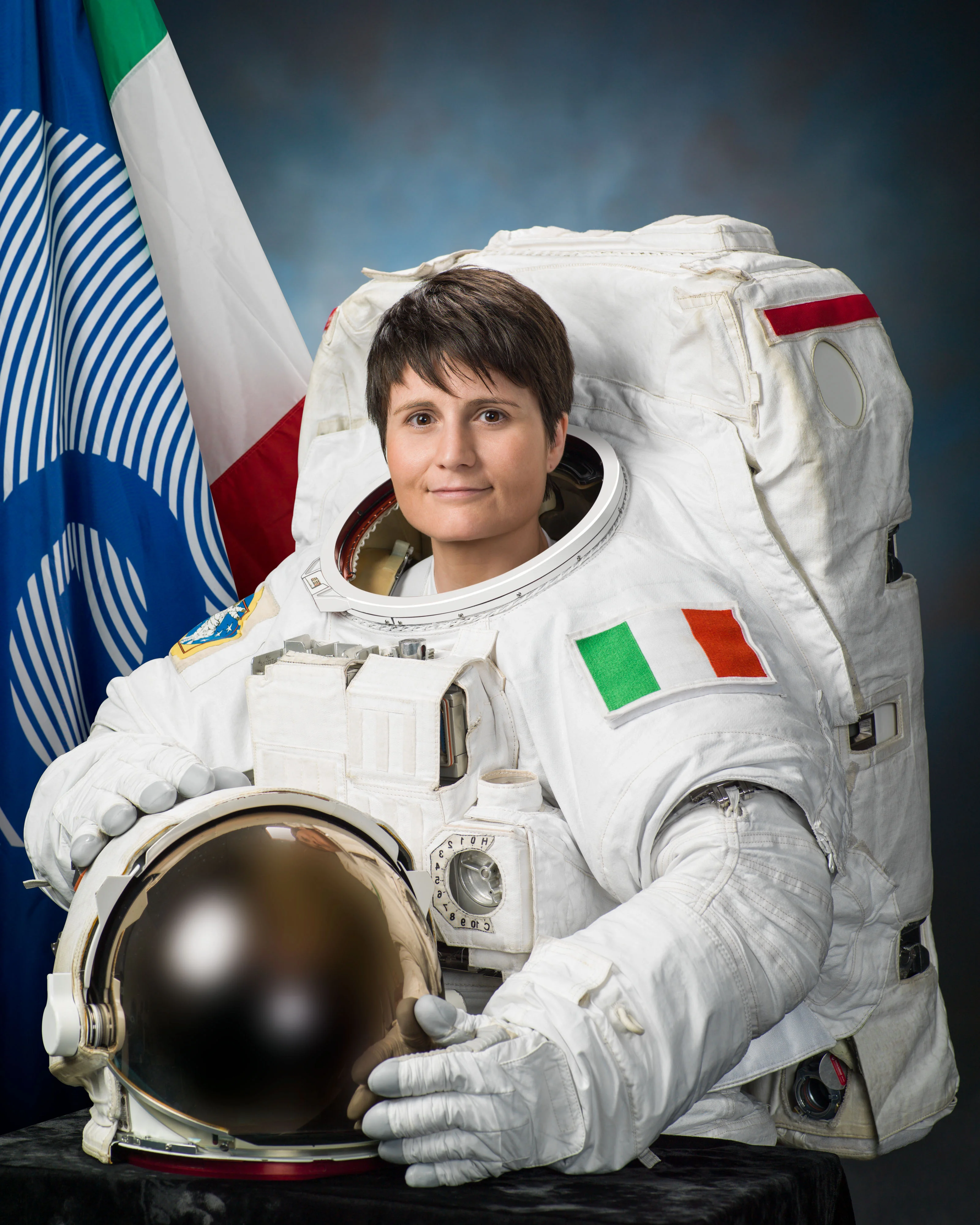
Image from Wikipedia
Image from Wikipedia
Samantha Cristoforetti: The European Spaceflight Icon with Courage, Precision, and Pioneer Spirit
An Astronaut Who Has Made European Space History
Samantha Cristoforetti, born on April 26, 1977, in Milan, is one of the most influential figures in European spaceflight. She is an ESA astronaut, a former fighter pilot in the Italian Air Force, and the first woman from Italy in space. Her career combines technical skill, operational calm, and an extraordinary public presence that has made her well-known beyond the expert community. ([esa.int](https://www.esa.int/Science_Exploration/Human_and_Robotic_Exploration/Astronauts/Samantha_Cristoforetti?utm_source=openai))
Her name represents records and symbolic firsts: she was the first European woman to conduct a spacewalk, and with 199 days and 16 hours, she held the record for the longest uninterrupted spaceflight by a European woman. In 2022, she also became the first European woman to command the International Space Station (ISS), making her a key figure for the visibility of women in manned spaceflight. ([esa.int](https://www.esa.int/Science_Exploration/Human_and_Robotic_Exploration/Minerva/ESA_astronaut_Samantha_Cristoforetti_becomes_first_European_female_ISS_commander?s=09&utm_source=openai))
Biography: From Milan via the Air Force to the ESA
Cristoforetti attended Liceo Scientifico in Trento and previously spent an exchange year in the USA. She then studied aerospace engineering at the Technical University of Munich, focusing on aerospace propulsion and lightweight construction. During her studies, she also completed research stays in Toulouse and Moscow before earning a Bachelor’s degree in Aerospace Science from the University of Naples Federico II. This combination of engineering knowledge and international education shapes her profile to this day. ([esa.int](https://www.esa.int/Science_Exploration/Human_and_Robotic_Exploration/Astronauts/Samantha_Cristoforetti?utm_source=openai))
In 2001, she joined the Italian Air Force, completed officer training, and subsequently gained operational experience as a jet pilot. Upon returning to Italy, she flew the AM-X ground attack aircraft with the 51st Bomber Wing in Istrana. In 2009, she was selected as an ESA astronaut, transitioned to the ESA in September of the same year, and completed basic training in 2010. After that, she took on roles as a reserve astronaut, acquired qualifications in spacewalks and robotics, and became certified as a flight engineer for Soyuz. ([esa.int](https://www.esa.int/Science_Exploration/Human_and_Robotic_Exploration/Astronauts/Samantha_Cristoforetti?utm_source=openai))
Career Highlights: Futura, Minerva, and the Leap to the Top
Her first long-duration mission to the ISS began in 2014 as part of the Futura mission, lasting nearly 200 days. As part of Expeditions 42 and 43, Cristoforetti worked on scientific experiments that cannot be conducted on Earth and assisted in the operation of the lab in microgravity. She was also involved in the docking of supply ships and took on the role of lead operator during the undocking of the last Automated Transfer Vehicle from ESA. ([esa.int](https://www.esa.int/Science_Exploration/Human_and_Robotic_Exploration/Futura/Futura_mission_in_brief))
During her second mission, Minerva, she returned to the ISS with Crew-4 on April 27, 2022. There, she served as Mission Specialist and USOS Lead, responsible for all activities in the U.S. Orbital Segment with modules and components from the U.S., Europe, Japan, and Canada. This mission lasted 170 days, included numerous European and international experiments, and made her the first European woman to conduct a spacewalk from the space station. ([esa.int](https://www.esa.int/Science_Exploration/Human_and_Robotic_Exploration/Minerva?utm_source=openai))
On September 28, 2022, she took command of the ISS, becoming the fifth European commander of the space station and the first woman in this role. ESA described her leadership as critical for the station's safe operation, crew coordination, and communication flow with teams on the ground. Cristoforetti's rise to command marks one of the most significant moments in the history of European astronautics. ([esa.int](https://www.esa.int/Science_Exploration/Human_and_Robotic_Exploration/Minerva/ESA_astronaut_Samantha_Cristoforetti_becomes_first_European_female_ISS_commander?s=09))
Current Projects and Professional Responsibilities
After her return from Minerva, Cristoforetti took on technical and management roles at the European Astronaut Centre. According to ESA, she worked for years on the Spaceship EAC initiative, which addresses technological challenges of future lunar missions, and subsequently served for two years as Crew Representative for the Gateway project. There, she contributed expertise on crew systems and habitability for the I-Hab module provided by Europe. This role shows that her career goes far beyond individual spaceflights. ([esa.int](https://www.esa.int/Science_Exploration/Human_and_Robotic_Exploration/Astronauts/Samantha_Cristoforetti?utm_source=openai))
In 2024, she will also remain present in the ESA universe: official ESA pages continue to feature her in astronaut and human-spaceflight contexts, and her photo profiles and conference appearances underscore her status as a key voice in European spaceflight. ESA highlighting her in current media and conference formats illustrates her ongoing significance as a representative for exploration, science, and public engagement. ([esa.int](https://www.esa.int/Science_Exploration/Human_and_Robotic_Exploration/Astronauts?utm_source=openai))
Space Discography: Missions, Milestones, and Scientific Achievements
For an astronaut, the mission chronicle replaces a musician's discography: Futura stands for her first major long-duration flight, Minerva for her second mission with an expanded leadership role. Both missions combined operational precision with scientific work and intensive public relations. ESA emphasizes that she supported experiments in physics, biology, human physiology, radiation, and technology on both missions, preparing for future explorations of the solar system. ([esa.int](https://www.esa.int/Science_Exploration/Human_and_Robotic_Exploration/Futura/Futura_mission_in_brief))
Key highlights include her role as Flight Engineer, her involvement in supply maneuvers, her first spacewalk, and her assumption of ISS command. The scientific benefits of her flights range from materials research to experiments with closed-loop systems, such as recycling carbon dioxide for food and oxygen. Cristoforetti thus exemplifies a spaceflight that intertwines technology, science, and education. ([esa.int](https://www.esa.int/Science_Exploration/Human_and_Robotic_Exploration/Futura/Futura_mission_in_brief))
Style and Impact: Precision, Calm, and Media Presence
Cristoforetti's public impact arises from a rare blend of discipline and accessibility. ESA describes her as a reader with a passion for science, technology, and the humanities, as linguistically curious and versatile in her leisure activities. This breadth adds a human dimension to her communication, making spaceflight comprehensible and approachable. ([esa.int](https://www.esa.int/Science_Exploration/Human_and_Robotic_Exploration/Astronauts/Samantha_Cristoforetti?utm_source=openai))
Her style is particularly strong in conveying spaceflight as a collective effort. In ESA materials, she emphasizes the importance of community, future-oriented thinking, and collaboration while clearly and calmly explaining technical processes. Her authority stems not from pathos but from understandable competence and credible experience in orbit. ([esa.int](https://www.esa.int/Science_Exploration/Human_and_Robotic_Exploration/Futura/Futura_mission_in_brief))
Cultural Influence: A Role Model for a New Generation
Cristoforetti is not only a record holder but a powerful symbol of European scientific culture. Her role as the first Italian woman in space, the first European spacewalker, and the first female commander of the ISS has transformed her career into a cultural narrative that extends far beyond spaceflight. Especially in Italy and among young European audiences, she is seen as a role model for STEM professions, leadership skills, and international cooperation. ([esa.int](https://www.esa.int/Science_Exploration/Human_and_Robotic_Exploration/Minerva/ESA_astronaut_Samantha_Cristoforetti_becomes_first_European_female_ISS_commander?s=09&utm_source=openai))
Her media presence on digital platforms also contributes to this effect. TikTok confirmed that she has opened an official account under @astrosamantha; ESA also refers to her personal social media channels during the Minerva mission. This not only documents her work but also becomes part of a new form of scientific public outreach that directly engages young people. ([newsroom.tiktok.com](https://newsroom.tiktok.com/samantha-cristoforetti-su-tiktok?lang=it-IT))
Conclusion: A Career with Impact Far Beyond the Orbit
Samantha Cristoforetti fascinates because she combines performance, discipline, and communication skills at the highest level. Her career tells a story of technical excellence, operational responsibility, and a rare ability to make complex spaceflight accessible to a broad audience. Anyone who wants to understand European spaceflight cannot overlook her. ([esa.int](https://www.esa.int/Science_Exploration/Human_and_Robotic_Exploration/Astronauts/Samantha_Cristoforetti?utm_source=openai))
Her life path shows how education, courage, and scientific curiosity can create an international symbol. Cristoforetti represents a future in which exploration, research, and leadership are thought together. For this reason, she remains a figure to watch, as her story is far from over. ([esa.int](https://www.esa.int/Science_Exploration/Human_and_Robotic_Exploration/Astronauts/Samantha_Cristoforetti?utm_source=openai))
Official Channels of Samantha Cristoforetti:
- Instagram: No official profile found
- Facebook: No official profile found
- YouTube: No official profile found
- Spotify: No official profile found
- TikTok: https://www.tiktok.com/@astrosamantha
- Twitter/X: https://twitter.com/AstroSamantha
Sources:
Upcoming Events
Literature Festival Potsdam: Europe in Space