
Raoul Schrott
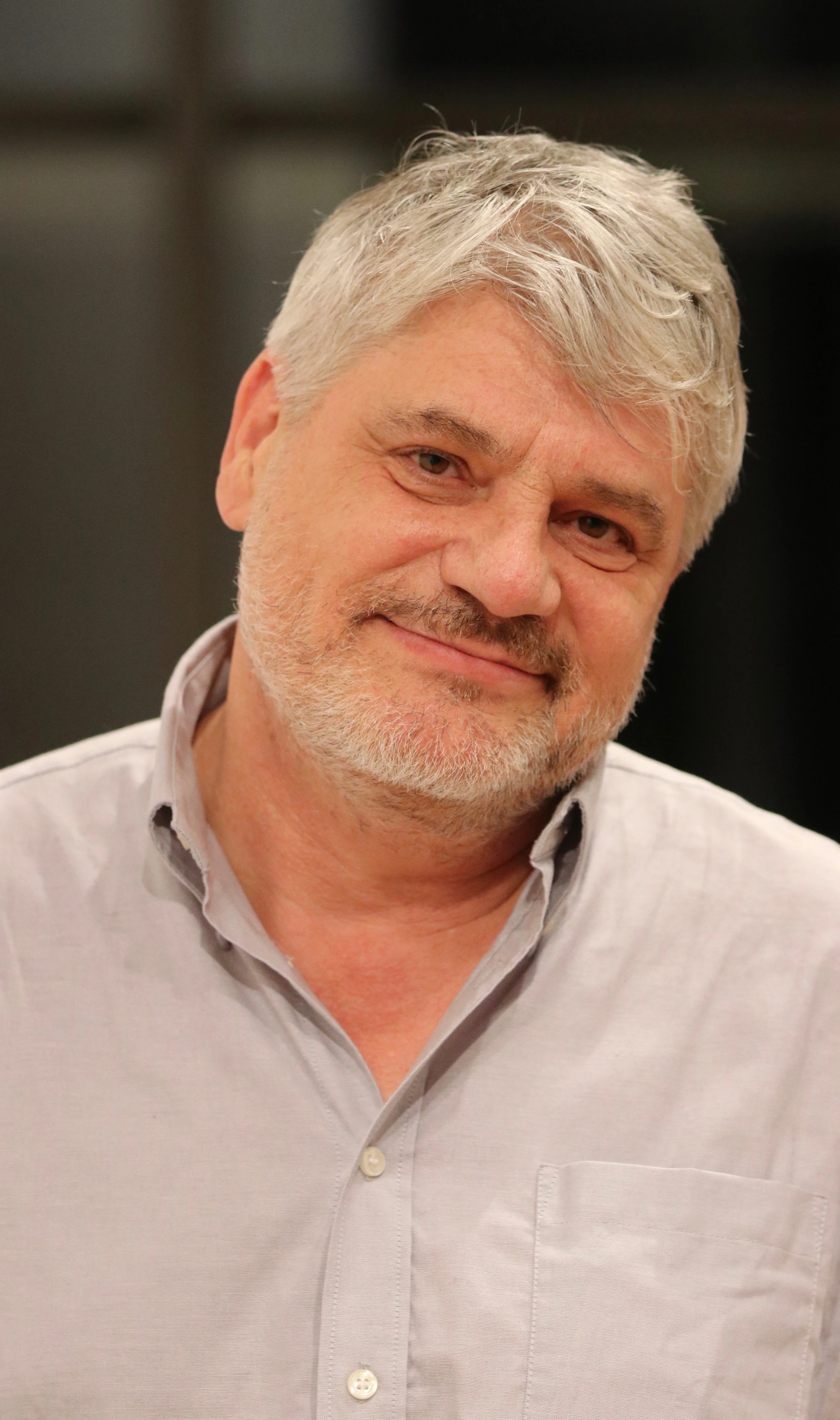
Image from Wikipedia
Image from Wikipedia
Raoul Schrott: The Austrian Author Between Poetry, Knowledge, and Worldview
A writer who connects literature, science, and imagination into a grand panorama
Raoul Schrott, born on January 17, 1964, in Landeck, Tyrol, is one of the most distinctive voices in contemporary Austrian literature. As a literary scholar, comparatist, essayist, translator, and author, he combines poetic form, philological precision, and a broad perspective on cultural history. His work revolves around the question of how literature organizes, expands knowledge, and transforms it into narrative energy.
Schrott's oeuvre is characterized by mobility: geographically, intellectually, and stylistically. He studied in Innsbruck, Norwich, Paris, and Berlin, worked in Naples as a lecturer for German studies, and published poetry, prose, essays, and translations. This versatility makes him an extraordinary figure in the German-language literary scene, as his texts never merely tell stories but always think, measure, and connect anew.
Origin and Early Influences
The biographical stages of Raoul Schrott read like the groundwork for a body of work that takes boundaries seriously while simultaneously transcending them. Growing up between Tyrol, Tunisia, and Switzerland, he became acquainted with different cultural spaces early on. This experience of mobility and shifting perspectives continues to shape his literary attitude to this day.
His academic path led him into language and literature sciences, subsequently to a doctorate on Dada in Tyrol and a habilitation with a thesis on poetic structures from ancient Greece to Dadaism. This reveals already in his early profile the dual approach that defines his entire work: scholarly precision and poetic boldness.
The Literary Breakthrough and the Power of Prose
Schrott achieved his breakthrough as a writer with the novel Finis Terrae – A Legacy in 1995. The book made him known to a wider audience and established him as an author who brings together historical subjects, cultural spaces, and narrative perspectives into a complex interplay. The accolades at the Bachmann Prize and the G7 Literature Prize early on underscored his literary significance.
Schrott's prose often ventures to the edges of the classic novel. His texts open up to essay, reportage, historical reconstruction, and philosophical reflection. This is precisely where the special quality of his musical career, in a broader cultural journalistic sense, lies: not as a musician but as an author of a composition of voices, materials, and forms of knowledge that is rarely so thoroughly developed in German-language literature.
Lyricism as a Laboratory for Language and Knowledge
In poetry, Schrott emerges as an author with great formal discipline and a wide-ranging imagination. His poetry collections and poetological works are not mere mood spaces but precisely constructed inquiries into what language can achieve. Time and again, he asks how perception, myth, and science unite in poetry.
His ambitious project The Invention of Poetry / Poems of the First Four Thousand Years particularly gained attention, broadening the view of early literary forms. Here, Schrott not only appears as a lyricist but also as an archaeologist of poetry, making poetic traditions from various cultures visible and placing them in a new context. His artistic development thus shows an unusual consistency: poetry as world knowledge.
Translation, Antiquity, and Work on Cultural Memory
A central part of Schrott's work consists of his translations and reinterpretations of ancient texts. Particularly, his reinterpretation of Homer's Iliad garnered attention and sparked discussion. Rather than mere philological reproduction, Schrott pursues an approach that translates the text into today's linguistic world and makes its energy palpable anew.
This work demonstrates his authority as a literary scholar: he does not only think about texts but actively intervenes in their mediation. For reception, this meant resonance and contradiction at once, which is typical for an author of this caliber. Schrott uses translation not as a service but as a creative act that brings the present into conversation with antiquity.
Novels, Epic, and the Broad Horizon
Following the success of Finis Terrae, Schrott continued his work on large-scale prose projects. Tristan da Cunha or Half the Earth, The Lop Nor Desert, The Silent Child, and later A Story of the Wind showcase an author who understands places, biographies, and historical fractures as literary experimental setups. As a result, no simple narratives emerge, but dense cultural spaces.
His universalist claim is particularly evident in works that bring together geography, natural science, mythology, and historical research. The epic First Earth and the project Atlas of the Starry Skies and Creation Myths of Humanity stand for this expansive poetics. Schrott writes literature that does not diminish the world but rather expands it.
Style, Language, and Intellectual Signature
Schrott's style is unmistakable: imagery-rich, intellectual, rhythmic, and often characterized by controlled opulence. His texts operate with shifts in perspective, documentary elements, and an awareness of the historical depths of language. His prose and poetry remain never dryly academic but develop a strong aesthetic tension.
This very mixture is highlighted in many critiques: the connection of scholarship and narrative courage, the richness of material, and formal rigor. Schrott does not seek easy readability at all costs. Instead, he challenges his audience, but also opens a literary space where thinking, telling, and creating poetry find a common vocabulary.
Critical Reception and Cultural Influence
Raoul Schrott is among the authors who are not only read in the literary field but also intensely discussed. His works have been awarded numerous prizes, including the Austrian State Scholarship for Literature, the Leonce-and-Lena Prize, the Rauris Literature Prize, the Peter-Huchel Prize, and the Joseph-Breitbach Prize. This recognition reflects his status as an important mediator between poetry, science, and narrative form.
His cultural influence is particularly evident in the opening of literary possibilities. Schrott stands for a literature that is not confined to one genre. He acts as an author who makes the thinking of the present about origin, myth, knowledge, and language particularly visible. This is precisely where the lasting tension of his work lies.
Current Projects and Later Works
Even in recent years, Schrott remains productive and thematically wide-ranging. His work on large knowledge and narrative contexts continues, including books and projects that touch on ancient heritage, natural history, and questions of humanity. Thus, he remains an author who does not stagnate in his own oeuvre but continually opens up new intellectual horizons.
The current relevance of his work arises precisely from this: Schrott writes against simplification. His books appeal to readers who take literature as a form of knowledge seriously. Those who engage with him encounter not merely a storyteller but an artisan of thought.
Conclusion: Why Raoul Schrott Fascinates
Raoul Schrott fascinates because he understands literature as a grand project: as a connection of poetry, science, history, and the present. His work demands attention but rewards it with depth, breadth, and unusual linguistic energy. Those interested in ambitious contemporary literature in German will find here an author of genuine intellectual radiance.
A live experience in the literary sense, such as a reading, a conversation, or an event with Raoul Schrott, offers an even more direct access to this unique voice. His stage presence, knowledge, and artistic development make it clear why he is considered one of the most important authors of his generation.
Official Channels of Raoul Schrott:
- Instagram: no official profile found
- Facebook: no official profile found
- YouTube: no official profile found
- Spotify: no official profile found
- TikTok: no official profile found
Sources:
- Wikipedia – Raoul Schrott
- Rowohlt Theater Verlag – Raoul Schrott
- Literaturhaus Graz – Raoul Schrott
- Literarischer Frühling – Raoul Schrott
- Poetry International – Raoul Schrott
- FAU Erlangen-Nürnberg – Raoul Schrott
- wissen.de – Raoul Schrott
- Cicero – Title: Alone on the Island of the Island
- Wikipedia: Image and text source
Upcoming Events
Reading: Raoul Schrott - The Language of the Stars
Raoul Schrott - Reading and Conversation in Potsdam