
Jakob Bänsch
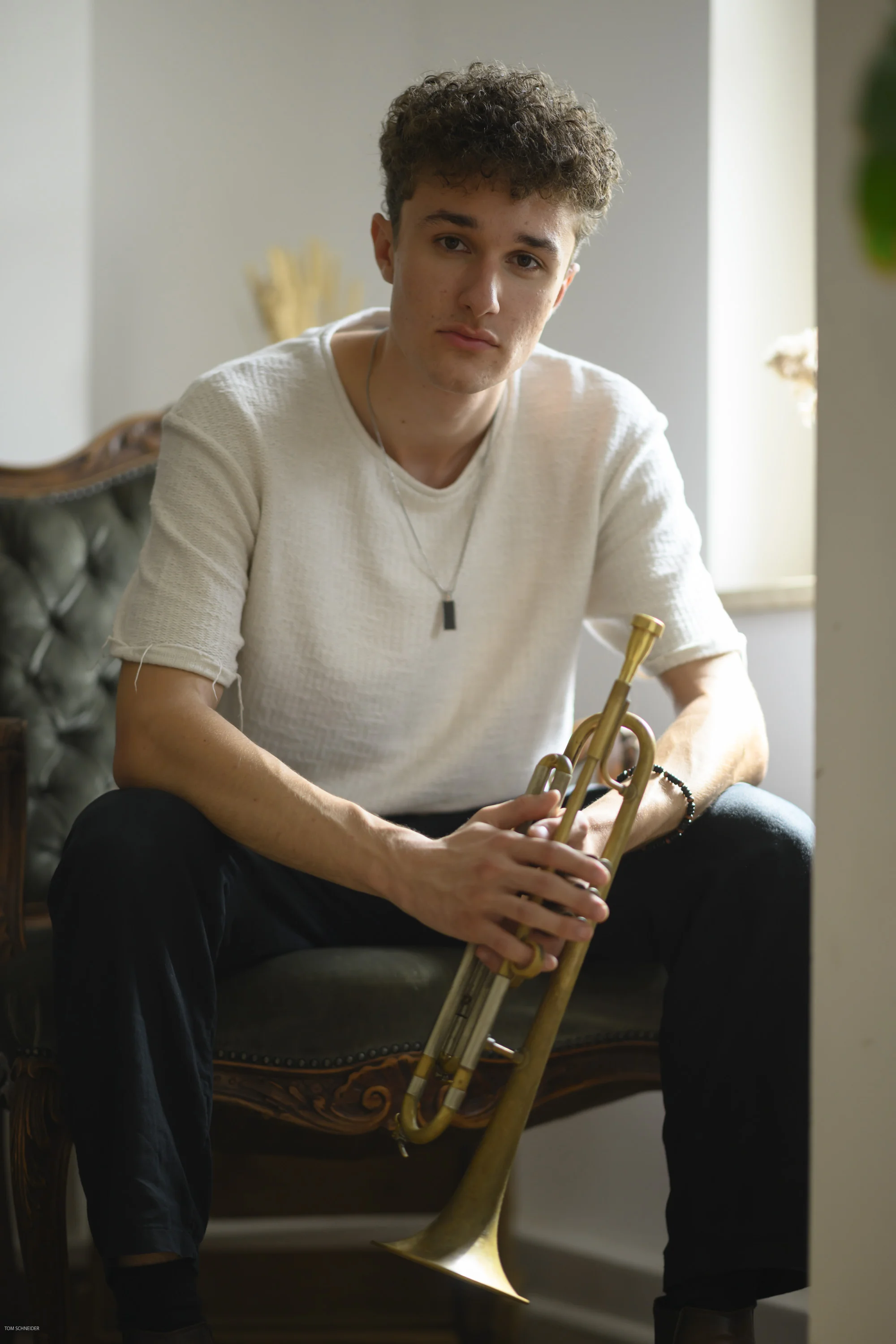
Image from Wikipedia
Image from Wikipedia
Jakob Bänsch – the young trumpeter who reinterprets modern jazz
An extraordinary talent from Pforzheim with a sound bridging classical and contemporary jazz
Jakob Bänsch, born on January 17, 2003, in Pforzheim, belongs to that rare generation of young jazz musicians who early on combine technical maturity, compositional curiosity, and a clear artistic standpoint. As a trumpeter, flugelhornist, and composer, he has quickly established himself as one of the most distinctive voices in European jazz. His career combines classical training, improvisational freedom, and a pronounced narrative approach to music. (de.wikipedia.org)
Early years, education, and musical influences
Bänsch grew up as the son of classical musicians near Pforzheim and received early impulses in both classical and jazz music. He began playing the trumpet at the age of eight after initially receiving piano lessons; by the age of twelve, his interest in jazz had fully awakened. A crucial influence was the bassoonist and saxophonist Libor Sima, with whom he played in a jazz band and came to know the classics of Chet Baker and Miles Davis in depth. (kulturnews.de)
This dual socialization continues to shape his artistic development to this day. Bänsch is not a musician of quick effects, but one of carefully constructed form: classical discipline meets improvisational fantasy. As a teenager, he was a member of the state youth orchestra of Baden-Württemberg and the state youth jazz orchestra of Baden-Württemberg; in 2020, he was accepted into the federal jazz orchestra. Later, he studied jazz trumpet in Cologne and received training in composition at the HfMT Cologne. (theactagency.com)
The path to the great stages of jazz
Bänsch made his mark on the German jazz scene early on. He gained recognition at competitions and support programs, such as winning the Young Lions Jazz Award in 2019 and placing second and additionally winning the soloist award with his quartet in 2022 at the Young Munich Jazz Award. Such successes not only mark a competitive advantage but also document an unusually rapid artistic maturation. (de.wikipedia.org)
His presence on stages grew significantly in parallel. He performed with his own groups at renowned festivals and important jazz clubs, including the Leverkusener Jazztage, Jazz Baltica, JazzOpen Stuttgart, and the Frankfurt Jazz Festival. It is particularly noteworthy that he did not appear there merely as a new talent, but as a musician whose performances evidently had an impact on the audience: in Frankfurt, he received standing ovations. (theactagency.com)
Bänsch also early on collaborated internationally with prominent names. Among others, he has worked with Melissa Aldana, Theo Croker, Nathan East, Nils Landgren, Wolfgang Haffner, Emil Mangelsdorff, and Michael Abene, as well as performing as a soloist with the WDR Big Band. These engagements show that his music career extends beyond youth promotion and already reaches into the professional core of current jazz. (theactagency.com)
The breakthrough with "Opening"
In April 2023, Jakob Bänsch released his debut album Opening on the Jazzline label. The response was exceptionally strong: New York critic Bill Milkowski praised the album as one of the most promising debuts of a trumpeter since Wynton Marsalis. London Jazz News also recognized his music as possessing a "Bach-like intensity," underscoring the impression of a stylistically broad yet rigorously formed language. (de.wikipedia.org)
However, the real breakthrough was not only in the awards and critical acclaim but also in the clear aesthetic positioning. Bänsch presented himself not as a stylistic epigone but as a composer with a strong sense of form. Opening was awarded the German Jazz Prize as "Debut Album of the Year" in 2024, further securing his position in German jazz. This catapulted him into the class of young musicians whose first album is already perceived as a reference point. (de.wikipedia.org)
"All The Others": the second album as an artistic expansion
In February 2025, the second album All The Others followed, showcasing Bänsch as a more mature, evolving artist. According to ACT, the work combines impressionistic classical music, modern jazz, and folk elements and is structured as a suite or musically narrated sequence of characters and themes. The pieces draw their inspiration from literature, films, series, and the real world, giving the album a distinct narrative dimension. (theactagency.com)
The critics also responded positively. jpc describes the album as a work that tells personal stories and resonates deeply; particularly highlighted are the narrative depth of the compositions and the close chemistry of his working band with Niklas Roever, Jakob Obleser, and Leo Asal. Complemented by Ella Zirina and Zuza Jasinska, the album unfolds a colorful, chamber-music-oriented jazz language. This shows that Bänsch develops his profile not through volume but through structure, sound, and dramaturgy. (jpc.de)
Style, composition, and musical signature
Jakob Bänsch's sound world is distinctly shaped by the intersection of classical modernity and improvised music. According to ACT, his works draw inspiration from the music around 1900 – referencing Maurice Ravel, Claude Debussy, and Alexander Scriabin – as well as from the modern jazz of the 1960s and 1970s, such as Wayne Shorter and Herbie Hancock. This creates a sound that is lyrical, symphonic in thought, and also highly virtuosic. (theactagency.com)
It is precisely this connection that makes his compositional strength. Bänsch thinks in arcs, colors, and fields of tension; his arrangements often resemble small narratives with clear contours. The ACT Agency describes the quartet's music as expressive, atmospheric, and story-driven. This is not merely a marketing formula but an apt description of a jazz understanding that treats melody, form, and emotional depth as equal. (theactagency.com)
The band configuration and the significance of the quartet
A central component of his artistic development is the Jakob Bänsch Quartet. The lineup featuring Niklas Roever on piano, Jakob Obleser on bass, and Leo Asal on drums showcases an ensemble designed for dialogue and transparency. The group merges modern jazz language with influences from classical music and film scores, focusing on sound, ambiance, and musical connection rather than purely demonstrative virtuosity. (theactagency.com)
This working method also explains why Bänsch's music has such a strong impact on stage. The quartet culture allows him to implement compositional forms precisely while maintaining improvisational openness. In his live formats and festival appearances, a field of tension arises between controlled architecture and vibrant risk – a characteristic that is rarely so clearly pronounced among young jazz musicians. (theactagency.com)
Current projects and artistic presence
Beyond his two albums, Bänsch remains active and present. The ACT Agency highlights current projects in 2026, including readings with music alongside Claudia Michelsen in several German cities. Such formats demonstrate that his art is not limited to the traditional jazz concert but extends into interdisciplinary contexts. (theactagency.com)
Additionally, Bänsch is active as a sideman in the bands of Joachim Kühn, Tania Giannouli, Gee Hye Lee, and Benny Greb. This broadens his profile as a musician who not only develops his own concepts but also impresses in highly diverse aesthetic environments. His current presence in France, the United Kingdom, Italy, and Morocco underscores the European reach of his music career. (theactagency.com)
Critical reception and cultural significance
The reception of Jakob Bänsch is not only positive but remarkably consistent. In addition to being awarded the German Jazz Prize, media and agencies describe him as a rising star of the European jazz scene. The Süddeutsche Zeitung emphasizes that he has achieved a remarkable debut that stands in the tradition of artfully modern jazz while simultaneously breaking away from its usual mythologies. (theactagency.com)
The Stuttgarter Nachrichten also classify his career as exceptionally early and targeted, referring to his path from classical instruction to specialized jazz trumpet. At the same time, his open, culture-interested attitude is emphasized: Bänsch thinks not only musically but culturally, with a view towards literature, painting, and other forms of aesthetic experience. This feeds into his cultural influence: from the ability to articulate jazz as a contemporary art form with historical awareness. (stuttgarter-nachrichten.de)
Conclusion: Why Jakob Bänsch is so exciting right now
Jakob Bänsch unusually combines virtuosity, compositional intelligence, and stylistic openness. His existing discography shows a musician who has already made a significant mark with his debut album and expanded his language with his second album. Those seeking modern jazz with depth, a sense of form, and narrative power will find an artist with a true profile here. (de.wikipedia.org)
It is precisely this mix of youthful energy and mature artistry that makes him exciting. Jakob Bänsch is among those musicians whose development one should not only follow but ideally experience live. On stage, his art unfolds in full tension: precise, atmospheric, emotional, and with a stage presence that elevates modern jazz from the niche into a grand musical narrative format. (theactagency.com)
Official channels of Jakob Bänsch:
- Instagram: no official profile found
- Facebook: no official profile found
- YouTube: no official profile found
- Spotify: no official profile found
- TikTok: no official profile found
Sources:
Upcoming Events
Jakob Bänsch Quartet in Bielefeld: Modern Jazz at Bunker Ulmenwall
An evening full of sound depth in Bielefeld: The Jakob Bänsch Quartet plays the latest jazz very close to the audience at Bunker Ulmenwall. #Jazz
Jakob Bänsch (Jazz Trumpet)
An evening of jazz with excitement and substance: Jakob Bänsch debuts at Nikolaisaal Potsdam and combines virtuosity, conversation, and sound magic. #Jazz