
Ethel Smyth
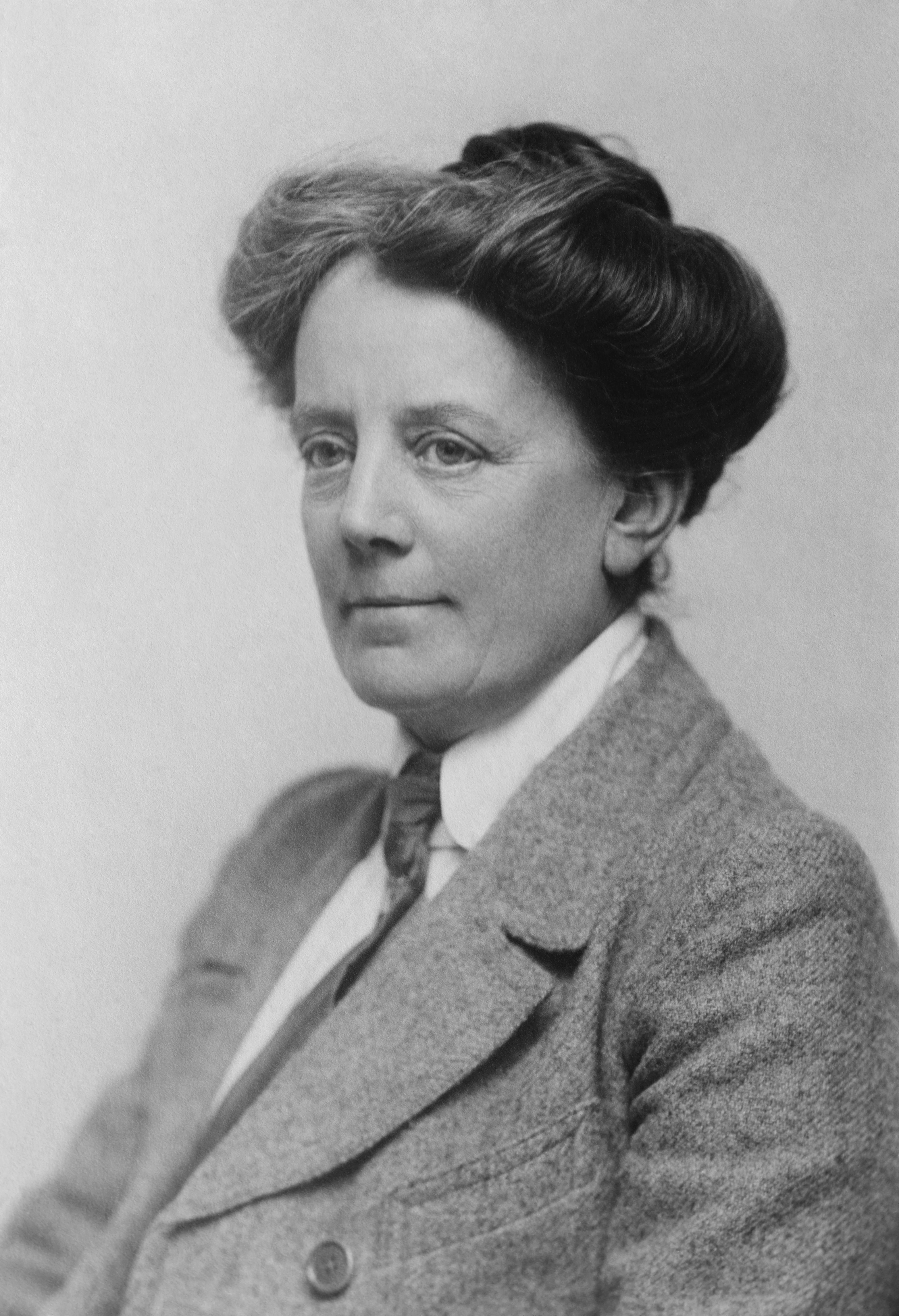
Image from Wikipedia
Image from Wikipedia
Ethel Smyth: The Uncompromising Composer Who Brought Together Opera, Protest, and Modernity
An Extraordinary Artist Biography Between Concert Hall and Political Awakening
Dame Ethel Mary Smyth was a British composer, conductor, writer, and one of the most prominent advocates of the British suffragette movement. Born on April 23, 1858, in Sidcup near Kent and dying on May 8, 1944, in Woking, Surrey, she became one of the most influential musical figures of her time by asserting herself with great determination in a male-dominated musical world. Her work ranges from symphonic compositions to chamber music, choral works, and operas, and it is precisely this stylistic range that keeps her name significant to this day. ([britannica.com](https://www.britannica.com/biography/Ethel-Smyth))
Early Years: The Will to Become a Composer
Smyth's artistic development began in the face of resistance, as her father, a general in the Royal Artillery, firmly rejected a musical career. Nevertheless, her decision was made early on, and even as a teenager, she wanted to be a composer, not just to make music but to create original works. Her biography reveals the central motive of her life: the struggle for recognition as a creative artist on par with her male colleagues. ([britannica.com](https://www.britannica.com/biography/Ethel-Smyth))
In 1887, she began her studies at the Leipzig Conservatory but soon left the institution due to dissatisfaction with the teaching and staff. Instead, she continued her education in harmony and counterpoint and encountered important composers of the era in Leipzig and beyond, including Johannes Brahms, Antonín Dvořák, Clara Schumann, and Pyotr Ilyich Tchaikovsky. These connections strengthened her awareness of European musical traditions and added depth and breadth to her later musical language. ([wisemusicclassical.com](https://www.wisemusicclassical.com/composer/1471/Ethel-Smyth/))
The Breakthrough: From Early Career to Opera Composer
The real breakthrough came with opera. Smyth's first opera, Fantasio, premiered in 1898 in Weimar; in 1902, Der Wald followed, which had its premiere in Berlin and was soon performed at the Royal Opera House in Covent Garden. In 1903, she achieved a historic milestone with Der Wald at the Metropolitan Opera in New York, becoming the first woman whose complete opera was performed there. These milestones not only mark her artistic ascent but also a cultural breakthrough in an opera landscape that had been heavily male-dominated until then. ([wisemusicclassical.com](https://www.wisemusicclassical.com/composer/1471/Ethel-Smyth/))
Particularly important for her reputation was The Wreckers, her third opera, which was performed in its entirety by Thomas Beecham at the Royal Opera House in 1909. The work is regarded as her most renowned operatic work and is still read today as a powerful music drama about community, violence, and morality. The score unites dramatic intensity with a sense of landscape and showcases Smyth as a composer who employs music not decoratively but with dramatic precision. ([wisemusicclassical.com](https://www.wisemusicclassical.com/composer/1471/Ethel-Smyth/))
The Suffragettes and "March of the Women"
Smyth's significance extends far beyond music, as she was an active advocate for women's suffrage. In 1911, March of the Women became the anthem of the British women's movement, and the piece turned into a resonant symbol of political self-empowerment. The connection between composition and protest is not a peripheral aspect for Smyth but a core part of her artistic identity, which firmly anchors her name in cultural history to this day. ([britishmusiccollection.org.uk](https://britishmusiccollection.org.uk/composer/ethel-smyth))
Her political determination also had consequences: in 1912, she was arrested for protesting the rejection of women's suffrage and spent two months in Holloway Prison. Her biography thus combines musical authority and civil disobedience in an extraordinary way. In 1922, she was awarded the title DBE for her contributions to music, a belated official recognition of the acknowledgment she fought for against many obstacles. ([wisemusicclassical.com](https://www.wisemusicclassical.com/composer/1471/Ethel-Smyth/))
Style and Musical Language: Late-Romantic with Individuality
Stylistically, Ethel Smyth is often described as versatile and eclectic, with a range from conventional to experimental. Her works include chamber music, choral works, orchestral pieces, piano music, and vocal compositions; she also wrote librettos, essays, articles, and books. This versatility makes her a composer who not only left behind works but designed a complete artistic universe where text, music, and attitude are closely intertwined. ([britannica.com](https://www.britannica.com/biography/Ethel-Smyth))
Her musical language is often described as late-Romantic, powerful, and original in reception. Smyth worked with great dramatic energy without losing formal ambition, and she skillfully used orchestral colors as well as vocal lines. Particularly in her operas, her ability to shape musical tension from characters, conflicts, and landscapes, rather than merely stringing together striking numbers, is evident. ([classical-music.com](https://www.classical-music.com/features/composers/who-was-ethel-smyth))
Discography and Work Profile: The Key Pillars of Her Oeuvre
Central works by Smyth include the operas Fantasio, Der Wald, and The Wreckers, along with the Mass in D, chamber music works, and numerous pieces for choir, orchestra, and solo instruments. The British Music Collection explicitly notes her diversity as a composer and refers to works such as the Sonata for Cello and Piano, early operas, and other genres. The work profile reveals a composer who was not confined to a single genre but adeptly mastered various ensembles and forms of expression. ([britishmusiccollection.org.uk](https://britishmusiccollection.org.uk/composer/ethel-smyth))
It is particularly noteworthy that Smyth often conducted her music herself and even broadcast parts of it. This underscores her claim to actively bring her art to the public, not just compose quietly as a professional musician. This attitude is as important for music history as the scores themselves, as it portrays Smyth as a modern, self-determined artist who understood the performance process as part of her authorship. ([britishmusiccollection.org.uk](https://britishmusiccollection.org.uk/composer/ethel-smyth))
Cultural Influence: A Pioneer of Musical Equality
Ethel Smyth is today regarded as one of the most important women in classical music history, as she forced artistic visibility in a rigid cultural environment. British music historiography emphasizes her role as a significant representative of the suffragette movement and as a composer who persistently challenged institutional boundaries. Her name stands for a dual legacy: musical quality and cultural emancipation. ([wisemusicclassical.com](https://www.wisemusicclassical.com/composer/1471/Ethel-Smyth/))
Her networks were also extraordinary: she was connected with prominent figures of her time, including Virginia Woolf, Emmeline and Sylvia Pankhurst, George Bernard Shaw, Thomas Beecham, and Vita Sackville-West. These connections illustrate how deeply Smyth was embedded in the intellectual and political debates of the early 20th century. Therefore, her work is not only music history but also contemporary history in resonant form. ([britishmusiccollection.org.uk](https://britishmusiccollection.org.uk/composer/ethel-smyth))
Current Assessment: Why Ethel Smyth is Relevant Today
Since Ethel Smyth passed away in 1944, there are no current projects, no new albums, and no contemporary tours in the modern sense. Nevertheless, her relevance is by no means historically concluded, as her operas, choral works, and her protest song March of the Women continually attract new attention. Especially her role as a trailblazer for women in classical music makes her as intriguing for today’s listeners as for music researchers and opera houses. ([britannica.com](https://www.britannica.com/biography/Ethel-Smyth))
At a time when the music scene increasingly focuses on diversity, repertoire expansion, and cultural justice, Smyth's life's work seems remarkably current. Her career tells of persistence, artistic self-assertion, and the courage to impose her own voice. Those who listen to her operas and orchestral works encounter not only a historical figure but a composer with presence, power, and an unmistakable signature. ([britishmusiccollection.org.uk](https://britishmusiccollection.org.uk/composer/ethel-smyth))
Conclusion
Ethel Smyth is compelling because she not only wrote music history but fought for it against resistance. Her operas, her political engagement, and her uncompromising will for artistic recognition make her one of the most fascinating figures in British music of the late 19th and early 20th centuries. Anyone seeking great dramatic music, cultural pioneering work, and historical relevance should definitely discover Ethel Smyth—and experience her works live whenever possible. ([britishmusiccollection.org.uk](https://britishmusiccollection.org.uk/composer/ethel-smyth))
Official Channels of Ethel Smyth:
- Instagram: No official profile found
- Facebook: No official profile found
- YouTube: No official profile found
- Spotify: No official profile found
- TikTok: No official profile found