
Carminho
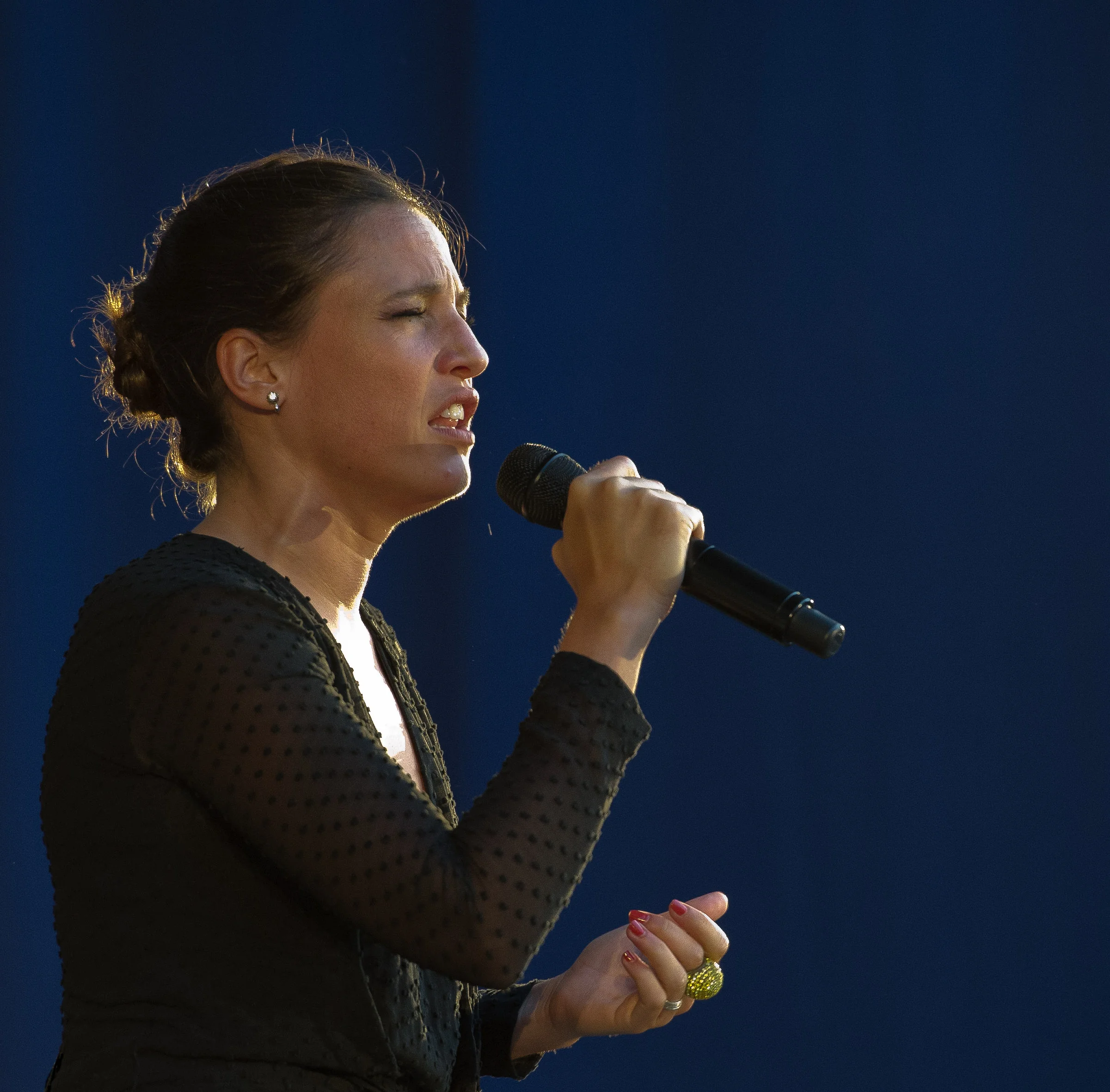
Image from Wikipedia
Image from Wikipedia
Carminho – The Great Modern Voice of Fado
A Portuguese exceptional artist bridging tradition, authorship, and international appeal
Carminho, whose real name is Maria do Carmo de Carvalho Rebelo de Andrade, is one of the defining voices of contemporary Fado. Born on August 20, 1984, in Lisbon, she has evolved from a Fadista deeply rooted in tradition to an internationally recognized artist who combines classical form, poetic lyricism, and modern production into a distinctive musical language. Her career exemplifies a rare balance of authenticity, artistic curiosity, and cultural authority. ([en.wikipedia.org](https://en.wikipedia.org/wiki/Carminho?utm_source=openai))
Biographical Roots and Early Influences
Carminho grew up in Lisbon, a city intimately connected to Fado as an urban soundscape. Her background anchors her in a musical environment that thrives on memory, longing, and collective identity. In her biography, personal development intertwines with an art form regarded in Portugal as a cultural memory while remaining open to new interpretations. ([en.wikipedia.org](https://en.wikipedia.org/wiki/Carminho?utm_source=openai))
Her artistic journey early on demonstrates a commitment to a music career that prioritizes depth and awareness of form over fleeting trends. Carminho has become the voice of a generation that perceives Fado not as a museum piece but as a vibrant form of expression. This is precisely where her impact lies: she represents tradition without stagnation and the present without rupture. ([carminho.music](https://carminho.music/))
The Breakthrough with "Fado" and the Path to International Recognition
In 2009, Carminho released her debut album "Fado," which achieved platinum status and was awarded the best album of the year 2011 by the British magazine Songlines. This early success not only made her visible in Portugal but also opened doors for her on international stages. Performances at Womex in Copenhagen and at UNESCO headquarters in Paris, in the context of recognizing Fado as a World Heritage, underscored her role as an ambassador for an entire genre. ([carminho.music](https://carminho.music/))
Another milestone followed with her collaboration with Pablo Alborán, making her the first Portuguese artist to reach the top of the Spanish charts. This collaboration was more than a commercial success; it demonstrated that Carminho's voice possesses emotional and cultural depth even outside the context of Fado. As a result, her name has become a firm reference point within the Iberian pop and world music landscape. ([carminho.music](https://carminho.music/))
"Alma," "Canto," and the Deepening of Her Artistic Profile
In 2012, with "Alma," she released her second album which solidified her reputation as a serious interpreter and strong stage artist. In this journey, Carminho consciously sought proximity to great voices and authorities of Brazilian music, including Milton Nascimento, Chico Buarque, and Nana Caymmi. The resultant Brazilian reissue featuring previously unreleased tracks not only documents her openness but also the depth of her relationship with the Lusophone musical space. ([carminho.music](https://carminho.music/))
In 2014, "Canto" followed, an album that further deepened her connection to Brazil and included a first collaboration with Caetano Veloso as well as Marisa Monte. This phase showcases Carminho's art as a dialogue between Fado, Brazilian songcraft, and poetic storytelling. Her discography here becomes a tapestry of tradition, repertoire awareness, and stylistic expansion. ([carminho.music](https://carminho.music/))
Tom Jobim, Brazilian Classics, and the Art of Respecting the Canon
In 2016, Carminho recorded "Carminho Canta Tom Jobim," one of her most remarkable projects, invited by the composer's family and accompanied by the last band that supported Jobim in his final years. The album connects Fado with Brazilian popular music in a way that does not sound like mere fusion but rather historical reverence and musical sovereignty. With guests such as Chico Buarque, Maria Bethânia, Marisa Monte, and Fernanda Montenegro, the project also provides a panorama of significant figures of Brazilian culture. ([carminho.music](https://carminho.music/))
The reception was equally strong: the album garnered significant acclaim, achieved platinum status, and earned Carminho a Globo de Ouro for best album. In her discography, this work marks a high point as it encapsulates her ability to maintain a balance between canon and the present, interpretation and individuality. Here, her expertise is evident not only as a singer but also as a cultural curator of an expanded Fado concept. ([carminho.music](https://carminho.music/))
"Maria," "Portuguesa," and the Return to Her Own Handwriting
With "Maria," released in 2018, Carminho produced an album that featured several of her own songs. This work delved deeper into her familial and stylistic roots, presenting Fado as a personal language composed of memory, self-reflection, and formal clarity. The production enhanced the impression of an artist who not only interprets but also crafts her sound world with precision. ([carminho.music](https://carminho.music/))
In 2023, "Portuguesa," her sixth studio album, was described in a promotional publication as a work consisting of 14 compositions in which Carminho serves as both interpreter, author, and producer. The album has been characterized as a profound exploration of Fado and its forms while also being read as an expression of contemporary Portugal. Particularly notable was the presentation of "Estrela" before Pope Francis during World Youth Day to a massive international audience. ([compostelacultura.gal](https://www.compostelacultura.gal/sites/default/files/carminho_docpromo_pt.pdf))
Current Projects, EPs, and Artistic Presence
In 2024, Carminho released her first EP "Carminho at Electrical Audio," recorded in Chicago with the late producer Steve Albini. This release is particularly significant for her current phase as it places Fado in an analog, reduced, and experimental production context. It includes two original Fados, a setting of António Gedeão's "Gota de Água," and "Os Argonautas" by Caetano Veloso featuring his participation. ([carminho.music](https://carminho.music/))
In January 2025, Carminho also performed at NPR Tiny Desk, a format internationally recognized for showcasing artists with high musical precision and strong stage presence. In October 2025, two new works, "Eu Vou Morrer de Amor ou Resistir" and the later title "Balada do país que dói," were released, indicating a continued quest to expand Fado. Sony Music described this phase as a new creative stage where poetry, experimentation, and tradition intertwine. ([nonesuch.com](https://www.nonesuch.com/journal/watch-carminho-performs-npr-tiny-desk-concert-2025-01-23?utm_source=openai))
Style, Voice, and Musical Development
Carminho's singing combines the expressive intensity of Fado with an exceptionally controlled phrasing. Her voice is simultaneously warm, clear, and compelling, with a timbre that merges melancholic tension with inner calm. In her art, every vibrato, every pause, and every dynamic nuance becomes part of a narrative architecture. ([carminho.music](https://carminho.music/))
Particularly striking is her approach to arrangement and production. Whether with Portuguese guitar, electric colors, choral passages, or experimental sound textures, Carminho treats Fado not as a rigid heritage but as a living form space. The official description of her recent materials emphasizes this approach, aiming to open Fado to other musical languages without losing its emotional essence. ([youtube.com](https://www.youtube.com/Carminho?utm_source=openai))
Cultural Influence, Awards, and International Reach
Carminho is among the artists who have made Fado more visible worldwide in the 2010s and 2020s. Awards such as Globo de Ouro, platinum achievements, and a nomination for a Latin Grammy attest to her authority in the Portuguese-speaking music scene. Additionally, her presence in film and on major stages, such as a special role in "Poor Things" and performances with Coldplay and Caetano Veloso, further underscores her prominence. ([carminho.music](https://carminho.music/))
Her cultural influence also stems from her role as a mediator between Portugal and Brazil. She is not merely a representative of a regional tradition but a musician who makes cultural connections audible and brings an expanded repertoire into new contexts. Her authority lies precisely in this: Carminho represents a Fado that does not look back to freeze but rather to progress. ([carminho.music](https://carminho.music/))
Conclusion: Why Carminho Remains So Compelling
Carminho fascinates because she renews Fado with high aesthetic standards, strong emotional presence, and a clear artistic signature. Her music career narrates stories of discipline, cultural depth, and a rare ability to transform tradition into the present. For those wishing to experience Portuguese music in all its expressive power, Carminho stands out as one of the most important voices of our time. ([carminho.music](https://carminho.music/))
Especially live, her stage presence unfolds with remarkable intensity: intimate depth, technical precision, and direct emotional engagement combine to create an experience that resonates long after. Carminho represents a Fado that breathes, transforms, and remains deeply recognizable. Experiencing her live means witnessing a great modern interpreter in her element. ([carminho.music](https://carminho.music/))
Official Channels of Carminho:
- Instagram: https://www.instagram.com/carminho/
- Facebook: https://www.facebook.com/CarminhoMusic
- YouTube: https://www.youtube.com/@carminho
- Spotify: https://open.spotify.com/artist/6I1r8xKn6bCeionvZVdzdR?si=67gDl-sjRnyGfTx1s5e9Zg
- TikTok: No official profile found
Sources:
- Carminho Music – Official Website
- Carminho Music – Official Website (EN)
- Sony Music Portugal – Carminho releases new album
- Nonesuch Records – New Carminho EP, Carminho at Electrical Audio
- Nonesuch Records – Carminho Performs NPR Tiny Desk Concert
- YouTube – Carminho Official Artist Channel
- Carminho – Press Text/Promo PDF "Portuguesa"
- Wikipedia – Carminho