
Bruno Balz
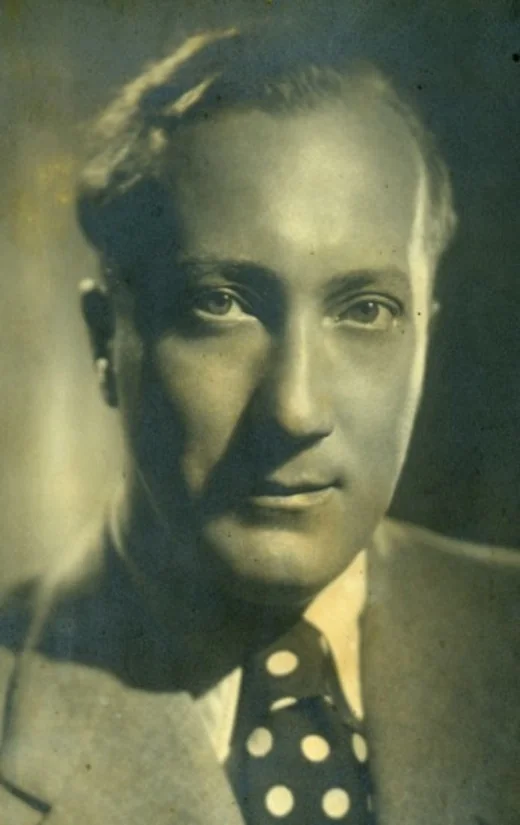
Image from Wikipedia
Image from Wikipedia
Bruno Balz – the great German lyricist between Schlager, film, and contemporary history
A master of phrasing in the best sense: Bruno Balz and the art of songwriting
Bruno Balz was one of the defining lyricists of German-language Schlager and film hits. Born on October 6, 1902, in Berlin and passing away on March 14, 1988, in Bad Wiessee, he wrote over 1,000 song lyrics, libretti, and opera texts, transforming succinct lines of verse into resonant everyday poetry. His career began early, but its true impact unfolded with the advent of the German sound film, which from 1929 carried his signature onto the big screen. ([de.wikipedia.org](https://de.wikipedia.org/wiki/Bruno_Balz))
Balz was not merely a provider of catchy rhymes but a keen observer of emotion, character, and social climate. His lyrics intertwined melody, language, and theatrical figures so closely that they became enduring trademarks for stars like Zarah Leander, Heinz Rühmann, Rosita Serrano, Peter Alexander, and Heidi Brühl. Even today, titles such as “Kann denn Liebe Sünde sein?”, “Ich brech’ die Herzen der stolzesten Frau’n”, or “Wir wollen niemals auseinandergehn” shape the collective memory of German entertainment music. ([de.wikipedia.org](https://de.wikipedia.org/wiki/Bruno_Balz))
Early years in Berlin: New beginnings, scenes, and literary curiosity
Balz grew up in the cultural tension of the Weimar Republic, in a city where cabaret, revue, and cinema shaped a new audience. He published his first song lyrics in 1923; his actual film career began in 1929 with the lyrics for the first German sound film “Dich hab’ ich geliebt”. This marked his entry into that boundary space between entertainment and popular culture, where German Schlager became a mass art form. ([de.wikipedia.org](https://de.wikipedia.org/wiki/Bruno_Balz))
The Berlin Modern left traces in his attitude toward language. The official Bruno Balz site emphasizes his desire for freedom, independence, and the new beginnings of the 1920s; it also mentions his contact with Magnus Hirschfeld and his membership in the “Bund für Menschenrecht.” These biographical contexts help us to understand Balz not only as a successful author but also as a cultural figure of an emancipatory, yet endangered time. ([bruno-balz.com](https://www.bruno-balz.com/))
The breakthrough in film: Michael Jary, Ufa, and the sound of great emotion
His actual artistic breakthrough came with his close collaboration with Michael Jary, which, according to Wikipedia, spanned from 1937 to the 1960s. Together they formed a duo that provided the dramaturgy of German film with concise, instantly singable lyrics, particularly making Zarah Leander an international star. The official Bruno Balz site describes this success as the beginning of a great career that started with the sound film “Dich hab’ ich geliebt” in 1929 and grew increasingly over the following years. ([de.wikipedia.org](https://de.wikipedia.org/wiki/Bruno_Balz))
Balz had a knack for translating characters into speech patterns. For Heinz Rühmann, he created the archetype of the shy hero; for Zarah Leander, the mix of pathos, defiance, and dark elegance; for Rosita Serrano, the shimmering, melancholic timbre. This very ability to psychologically sharpen melodic figures explains why his songs do not come across as mere accompaniment texts, but rather as significant roles in the films themselves. ([bruno-balz.com](https://www.bruno-balz.com/))
Pursuit and survival: Bruno Balz in the shadow of the Nazi regime
Balz was homosexual and was persecuted under the Nazi regime. Wikipedia and other sources report several arrests; particularly well-known is the episode around 1941 when the Gestapo detained him and Michael Jary expedited his release through intervention. During this time, two of his most famous titles were created in quick succession: “Davon geht die Welt nicht unter” and “Ich weiß, es wird einmal ein Wunder gescheh’n.” ([de.wikipedia.org](https://de.wikipedia.org/wiki/Bruno_Balz))
These songs illustrate the ambivalence of his work. On one hand, they were interpreted as endurance or propaganda songs, on the other hand, they were understood as encrypted signals of hope that resonated with many people far beyond their original context. The cultural explosive power lies in the fact that Balz mastered a dual register in the language of the entertainment song: compliance with the film industry while simultaneously expressing a subcutaneous emotional counter-narrative. ([de.wikipedia.org](https://de.wikipedia.org/wiki/Bruno_Balz))
Post-war period, popularity, and the lasting echo of the evergreens
After 1945, Balz initially came under pressure due to his work for Nazi films. Wikipedia describes that he was prosecuted by the Allies for his so-called endurance Schlager and had to speak out about his homosexuality and a fake marriage against his will before being acquitted in 1946. Nevertheless, he remained productive and continued writing for film and Schlager in the 1950s, although his name increasingly faded behind the prominent interpreters and composers. ([de.wikipedia.org](https://de.wikipedia.org/wiki/Bruno_Balz))
However, his lyrics lived on, not only in the original recordings but also in later repertoire and film narratives. According to Wikipedia, his hit songs are present in modern films like “Die Blechtrommel,” “Das Boot,” “Schtonk!,” and “Aimée & Jaguar.” Thus, the Schlager poet became a lasting part of German pop and film history, with lines that have endured across generations. ([de.wikipedia.org](https://de.wikipedia.org/wiki/Bruno_Balz))
Discography, core works, and critical reception
Bruno Balz does not have a classical discography in the sense of an interpreter, but he does have a catalog of works with substantial reach. Wikipedia cites key texts such as “Der Wind hat mir ein Lied erzählt,” “Kann denn Liebe Sünde sein?,” “Ich brech’ die Herzen der stolzesten Frau’n,” “Das kann doch einen Seemann nicht erschüttern,” “Ich weiß, es wird einmal ein Wunder gescheh’n,” “Davon geht die Welt nicht unter,” “Berlin bleibt doch Berlin,” “Das machen nur die Beine von Dolores,” “Wir wollen niemals auseinandergehn,” “Mamma,” and “Kleine Möwe, flieg nach Helgoland.” These titles mark various phases of his work: before the war, in film melodrama, in post-war Schlager, and in the late evergreen period. ([de.wikipedia.org](https://de.wikipedia.org/wiki/Bruno_Balz))
Furthermore, critical reception is now much clearer than during his lifetime. WELT describes how Balz combined cheeky, suggestive, rebellious, or sentimental verses into a distinctive tone with Michael Jary, while also emphasizing that his significance was long underestimated. The documentary “Im Schatten der Träume” and entries on filmportal.de now anchor Balz more firmly in cultural and historical memory, positioning his work as a central component of German music film. ([welt.de](https://www.welt.de/kultur/article6996c5eefc148b255d14f982/bruno-balz-liebe-kann-nicht-suende-sein-das-verborgene-leben-des-hitschreibers.html))
Late recognition, legacy, and cultural heritage
In the 1960s, Balz increasingly withdrew into private life; 1960 marked a final major success with “Wir wollen niemals auseinandergehn” featuring Heidi Brühl. His will stipulated that no one should speak about him in the first ten years after his death, which is why his estate was systematically worked through only from 1998. This late rediscovery explains why Balz is regarded today as an author of enormous reach but with a long, narrow public biography. ([de.wikipedia.org](https://de.wikipedia.org/wiki/Bruno_Balz))
Part of his legacy includes the Bruno Balz Prize, which has promoted young chanson talents since 2021. Additionally, in 2024, the documentary “Im Schatten der Träume” about Balz and Jary was released; filmportal.de and Wikipedia locate therein the historical significance of the duo for Zarah Leander's musical career and German cinema of the 1940s. Thus, Balz is not only remembered but is also newly read as part of a vibrant culture of music and memory. ([de.wikipedia.org](https://de.wikipedia.org/wiki/Bruno_Balz))
Conclusion: Why Bruno Balz fascinates to this day
Bruno Balz remains captivating because his work reflects the full tension of the 20th century: brilliance and threat, entertainment and persecution, mass appeal and personal vulnerability. His lyrics possess a rare mix of directness, melodic precision, and emotional double meanings, making them relevant even today. Anyone who wants to understand German music history cannot overlook Balz. ([de.wikipedia.org](https://de.wikipedia.org/wiki/Bruno_Balz))
His songs work equally well on stage, in film, and in collective memory. That is why it is worth rediscovering Bruno Balz repeatedly: as a poet of Schlager, as a chronicler of feelings, and as a key name in German cultural history. While a genuine live experience today is only indirectly attainable, his lyrics continue to live on in concerts, films, and interpretations, deserving every renewed encounter. ([de.wikipedia.org](https://de.wikipedia.org/wiki/Bruno_Balz))
Official channels of Bruno Balz:
- Instagram: No official profile found
- Facebook: No official profile found
- YouTube: No official profile found
- Spotify: No official profile found
- TikTok: No official profile found