
Augusto Boal
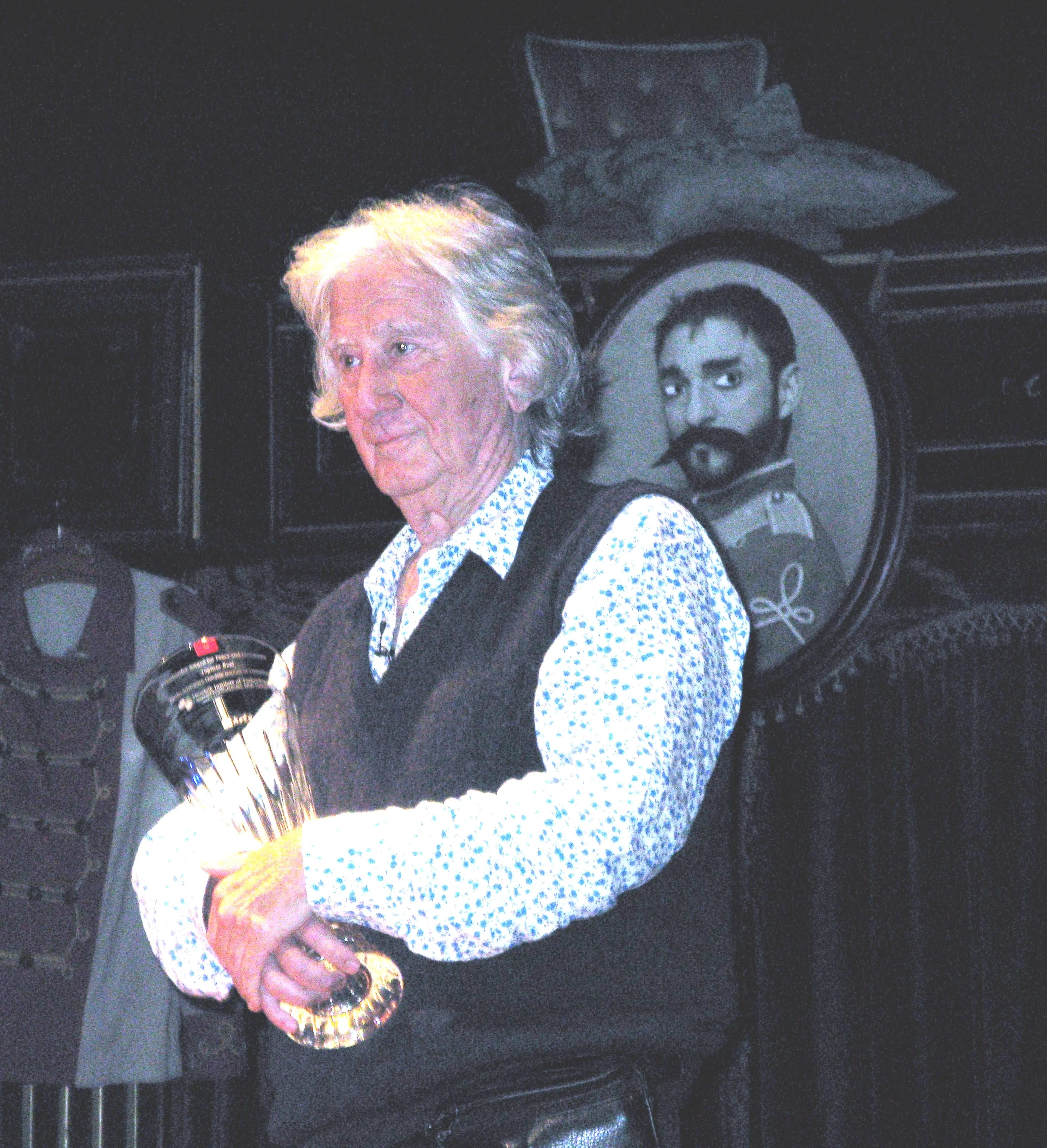
Image from Wikipedia
Image from Wikipedia
Augusto Boal: The Theater Thinker Who Redefined Stage and Society
An Artistic Life Between Rio de Janeiro, Political Urgency, and Global Influence
Augusto Boal was one of the most influential theater makers of the 20th century: director, playwright, theater theorist, and political thinker who understood theater as a tool for social change. Born on March 16, 1931, in Rio de Janeiro and passing away there on May 2, 2009, he shaped the "Theater of the Oppressed," which remains one of the most impactful forms of political and participatory theater today. His approach transformed spectators into active participants and made the stage a space for social intervention. ([britannica.com](https://www.britannica.com/biography/Augusto-Boal?utm_source=openai))
Biography: From Rio de Janeiro to an International Theater Authority
Boal grew up in Rio de Janeiro and initially studied chemical engineering; later, he delved into theater studies at Columbia University in New York. His career began in 1956 at the Teatro de Arena in São Paulo, where he quickly became a shaping force and served as artistic director until 1971. During this phase, he developed the foundations of a theater that not only tells stories but intervenes, debates, and makes social reality visible. ([britannica.com](https://www.britannica.com/biography/Augusto-Boal?utm_source=openai))
Boal's thinking arose in the tension between Brazilian society, political repression, and the desire for cultural emancipation. The German influence of Bertolt Brecht and the acting realism of Konstantin Stanislavski were among the important reference points of his work. From these impulses, he shaped a theater practice that aims not at distance but at participation and translates social conflicts into playable, changeable situations. ([en.wikipedia.org](https://en.wikipedia.org/wiki/Augusto_Boal?utm_source=openai))
Career and Breakthrough: The Theater of the Oppressed as a Universal Language
Boal's international breakthrough is inextricably linked to the "Theater of the Oppressed," a collective term for several methods, including Forum Theatre, Invisible Theatre, Legislative Theatre, and the later "Rainbow of Wishes." These forms turned theater into a democratic laboratory: no longer did the stage alone create meaning, but rather the audience's reaction, the participants' intervention, and the collective search for solutions. In doing so, Boal shifted the boundary between art, pedagogy, and political practice. ([britannica.com](https://www.britannica.com/biography/Augusto-Boal?utm_source=openai))
Particularly influential was the development of Legislative Theatre during his time as a city councilor in Rio de Janeiro from 1993 to 1997. There, he combined theater and community politics in a radical way: citizens became co-creators of political proposals that emerged from scenic processes. This connection between stage and legislation made Boal an exceptional figure because he understood aesthetic form not as an end in itself, but as an instrument of social participation. ([en.wikipedia.org](https://en.wikipedia.org/wiki/Augusto_Boal?utm_source=openai))
Work and Methods: Interactive Theater Instead of Passive Observation
Boal's theoretical core is the conviction that theater can not only reflect reality but also change it. Forum Theatre works with conflict scenes that are interrupted, re-enacted, and collectively rewritten by the audience; Invisible Theatre brings social issues into everyday spaces; Legislative Theatre extends this practice into political decision-making processes. In theater education, Boal is therefore considered a central reference for participatory, emancipatory, and community-based formats. ([en.wikipedia.org](https://en.wikipedia.org/wiki/Theatre_of_the_Oppressed?utm_source=openai))
His methods also arose from experiences of exile, censorship, and political pressure. Especially after his return to Brazil in 1986, Boal developed new, so-called prospective and introspective techniques that have been adopted in education, acting training, therapeutic contexts, and teamwork. Thus, the theater maker became a global theorist of agency, whose ideas extend far beyond the stage. ([fr.wikipedia.org](https://fr.wikipedia.org/wiki/Augusto_Boal?utm_source=openai))
Discography, Publications, and Cultural Reception
Augusto Boal does not have a classic discography in the musical sense; his work consists of plays, theoretical writings, productions, and educational methods. Among his most important cultural reference points is the music theater Opinião, which premiered on December 11, 1964, at the Teatro Arena in Rio de Janeiro under his direction. This work demonstrates how closely Boal intertwined theater, music, political statements, and public debate. ([kclpure.kcl.ac.uk](https://kclpure.kcl.ac.uk/portal/en/publications/opini%C3%A3o-50-years-after/?utm_source=openai))
Other sources also reference his collaboration with Brazilian and Latin American theater and cultural workers as well as projects that moved between performance, political articulation, and social activism. The reception of his work spans from academic studies on theater education to international honors. Among them are the UNESCO Pablo Picasso Medal, the Cross Border Award for Peace and Democracy, and a Career Achievement Award from the Association of Theatre in Higher Education. ([montgomery.dartmouth.edu](https://montgomery.dartmouth.edu/people/augusto-boal?utm_source=openai))
Style, Language, and Artistic Signature
Boal's artistic signature is clear, direct, and highly functional: he sought no decorative aesthetics but effective form. His dramaturgy focuses on conflict, participation, and knowledge acquisition in the moment of play. Those who observe his work recognize a thinking in structure, intervention, and collective experience that resembles the precision of great musical compositions, though it emerges from the art of theater. ([britannica.com](https://www.britannica.com/biography/Augusto-Boal?utm_source=openai))
At the center is always the question of power, voice, and visibility. Boal's theater makes oppression analyzable without simplifying it and simultaneously opens up concrete possibilities for action. It is precisely this combination of theory, practice, and social empathy that explains why his methods are still applied worldwide in education, activism, and cultural work. ([en.wikipedia.org](https://en.wikipedia.org/wiki/Theatre_of_the_Oppressed?utm_source=openai))
Cultural Influence: Why Augusto Boal Remains Relevant Today
Boal is regarded as a significant theater educator and was even nominated for the Nobel Peace Prize. His impact ranges from community theater to political education, social work, conflict resolution, and organizational development. In many countries, his approach is an integral part of a theater that does not just observe but actively questions social relations. ([en.wikipedia.org](https://en.wikipedia.org/wiki/Augusto_Boal?utm_source=openai))
The ongoing presence of his work is also evident in the fact that the Augusto Boal estate and the associated Instituto actively maintain and document the reception of his work. There, texts, interviews, and materials are published that make his artistic and theoretical significance more accessible. Thus, Boal remains not only a historical figure but a living reference point for all who understand art as a social practice. ([augustoboal.com.br](https://augustoboal.com.br/?utm_source=openai))
Conclusion: A Theater Revolutionary Who Engaged the Audience in Responsibility
Augusto Boal remains intriguing because he liberated theater from passivity and transformed it into a form of shared insight. His work combines political intelligence, dramaturgical precision, and a rare closeness to people's lived realities. Those who experience Boal's thinking encounter an art that not only moves but organizes change. ([britannica.com](https://www.britannica.com/biography/Augusto-Boal?utm_source=openai))
Anyone interested in socially impactful stage art, theater education, and participatory culture should definitely experience Boal's work live or in workshops, productions, and readings. His legacy shows that theater can be more than representation: a space of dignity, analysis, and action. ([en.wikipedia.org](https://en.wikipedia.org/wiki/Theatre_of_the_Oppressed?utm_source=openai))
Official Channels of Augusto Boal:
- Instagram: No official profile found
- Facebook: No official profile found
- YouTube: No official profile found
- Spotify: No official profile found
- TikTok: No official profile found
Sources:
- Augusto Boal - Official Website of the Instituto Augusto Boal
- Augusto Boal - Interviews / Archive Material of the Instituto Augusto Boal
- Britannica - Augusto Boal
- Wikipedia - Augusto Boal
- Wikipedia - Theatre of the Oppressed
- King's College London - Opinião 50 years after...
- Dartmouth - The Montgomery Fellows Program: Augusto Boal
- Pedagogy and Theatre of the Oppressed - A Brief Biography of Augusto Boal