Healthy Living in Potsdam: Yoga & Retreat Time Out
Healthy Living in Potsdam 2026: Courses & Retreats Between Havel and Forest
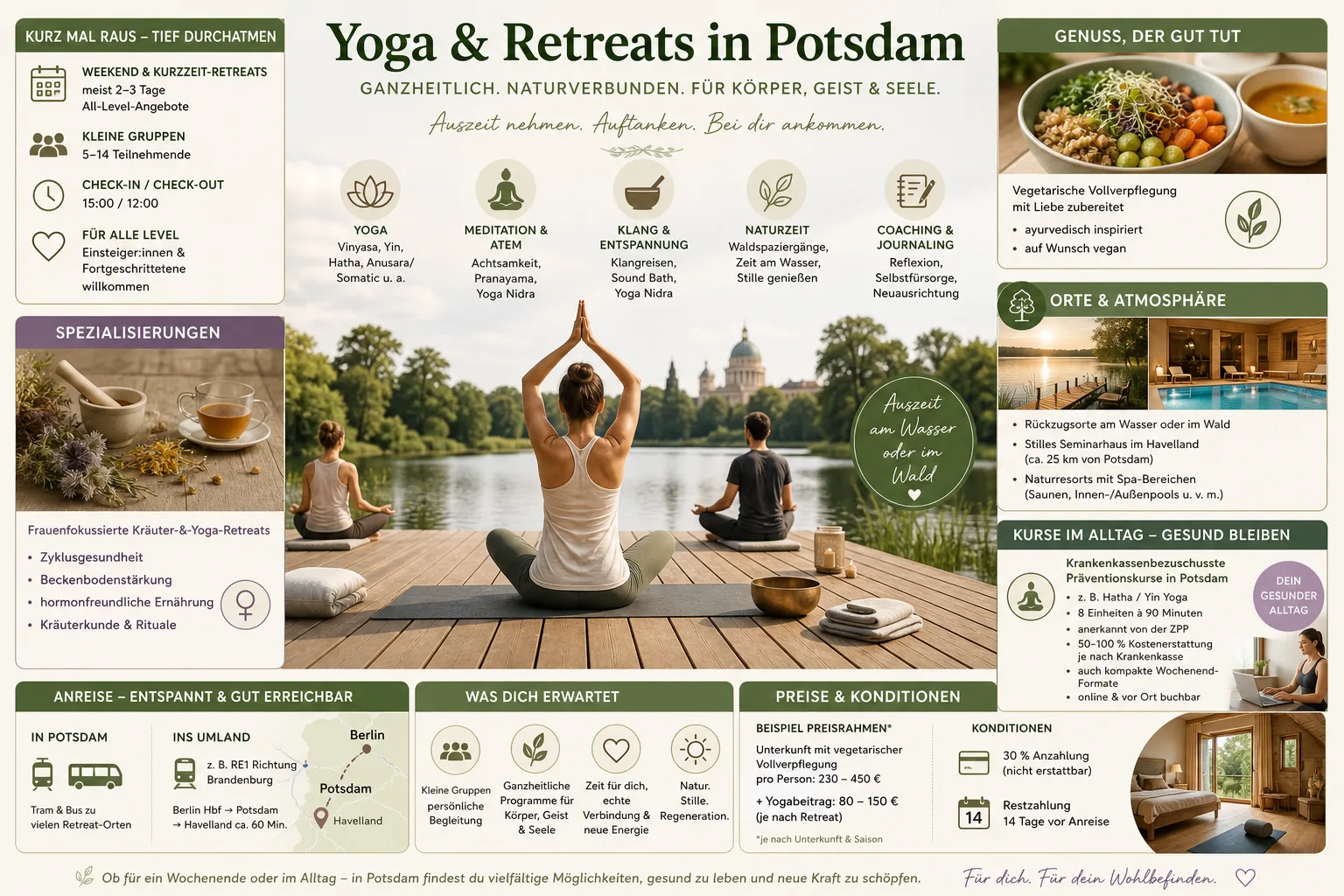
If you want to live more mindfully in the coming weeks or months, Potsdam 2026 offers many opportunities for a planned break: yoga, meditation, mindfulness in nature – as a weekend retreat or as a course that becomes a lasting part of your daily life.
Meditation, Sound & Mindfulness: Deeper Regeneration
If you want to regenerate not just physically but also mentally in 2026, it’s worth looking at programs with a clear meditation and mindfulness component. These are often guided sitting meditations, mindful walking (often in parks or by the water), or short exercises you can repeat later in everyday life.
Sound Formats: Sound Baths, Singing Bowls & Gentle Yoga Sequences
Many retreats and evening workshops combine yoga with sound (e.g., singing bowls, gongs, or ambient soundscapes). The focus is usually on relaxation and body awareness. If you are sensitive to sounds, check in advance about volume, duration, and whether you can leave the room at any time.
Journaling & Reflection: So the Break Has a Lasting Effect
Some formats integrate guided reflection (e.g., journaling questions or coaching impulses). For your planning, it helps: Good programs clearly announce whether and how much group exchange is planned – so you can choose a retreat that matches your need for silence or community.
By the Water, in the Forest: Nature as a Practice Space
Potsdam offers ideal conditions for nature-focused retreats in 2026: Havel riverbanks, lakes, forests, and wide paths for peaceful walks. Many providers consciously focus on “less stimulus, more perception” – for example, through silent walking times, mindfulness exercises by the water, or practice on a meadow (if weather and permits allow).
Nutrition & Organization: How to Plan Realistically
Many retreats in and around Potsdam in 2026 are offered as packages (accommodation + meals + program). The cuisine is often vegetarian; vegan options or intolerances should be clarified in advance. For a relaxing weekend, reliability is more important than “trendy nutrition”: regular meal times, sufficient drinking options, and food that doesn’t burden you.
Check-in, Group Size, Quiet Times
- Arrival/Start: A weekend often starts in the afternoon/evening; it’s important to know if a first session on the arrival day is mandatory.
- Group Size: Smaller groups often allow more individual adjustments (e.g., for knee/back issues).
- Retreat: Some retreats plan “silent times” or phone-free phases. Check if this fits your daily life (e.g., family obligations).
Arrival: City & Surroundings Without Stress
If you plan to come without a car, choose offers with clear public transport connections (close to train station, shuttle options, understandable directions). For your relaxation, it’s important that the journey doesn’t become a stress test: better to choose a location you can reach easily than a perfect-sounding program with complicated transfers.
Costs & Cancellation: What to Check Before Booking
Serious providers state price components transparently (accommodation, meals, program), payment deadlines, and cancellation conditions. Also read: minimum number of participants, rules for alternative dates, and whether you need or want travel cancellation insurance.
Courses in Everyday Life: Routine Instead of Exception
If you want to live healthier not just occasionally but long-term in 2026, regular courses in Potsdam are a more stable foundation: yoga (Hatha, Yin, back yoga), meditation, breathwork, or stress management. The advantage: you train continuity – and that is crucial for many health goals.
Prevention Courses: Possible Cost Reimbursement
Some courses can be certified as prevention offers according to § 20 SGB V. Whether and to what extent your health insurance subsidizes depends on course certification and your insurance conditions. Clarify before the course starts: course ID/ZPP proof, participation conditions, and reimbursement process.
Everyday Micro-Routines
- 5–10 minutes of breathing in the morning (e.g., calm, even, without performance pressure).
- Short mobilization after long sitting (neck, hips, back).
- 1 fixed course time per week as a non-negotiable appointment.
If you are currently under a lot of stress, plan consciously low-threshold: one course per week is often more effective than an overambitious program that breaks off after two weeks.
Who is Suited for What? Decision Aid
The best choice for 2026 doesn’t depend on “the right retreat,” but on your goal, your stress level, and your daily life.
If You Mainly Want to Reduce Stress
- Choose calm formats (Yin/Restorative, meditation, mindfulness) and enough breaks.
- Pay attention to a clear daily structure and enough sleep time.
- Prefer smaller groups and quiet accommodation.
If You Want to Get Moving Again
- Choose courses/retreats with moderate, well-guided practice and variations.
- Check if there are options for beginners (also in Vinyasa).
- Plan for regeneration: sauna/spa sounds good, but is not automatically relaxing for everyone.
If Nature Is Your Main Motivation
- Prioritize programs with daily outdoor time (walks, mindful walking, practice outside).
- Check season/month and weather concept (bad weather alternatives without “permanent indoor time”).
Quality & Safety: What to Look for in Providers
For trustworthy planning in 2026, a quick quality check is worthwhile, especially if you have health restrictions or want to get back into it after a stressful phase.
Qualifications & Teaching Style
- Training: Is it stated transparently what yoga/meditation training is present and how much teaching experience there is?
- Didactics: Are there variations/alternatives, clear instructions for breaks, and an invitation to respect boundaries?
- Group Setting: Are intensity, physical contact/adjustments, and exchange formats described in advance?
Health Notes (Without Alarmism)
Yoga, meditation, and mindfulness can support well-being, but do not replace medical or psychotherapeutic treatment. If you are currently in treatment or have acute complaints, clarify in advance with your treating professional what level of exertion is appropriate, and inform the course leader about relevant restrictions (if you feel comfortable doing so).
Conclusion
For 2026, Potsdam is a strong starting point to plan health-oriented breaks within reach: whether a structured weekend retreat with a nature focus or a regular course that stabilizes you week after week. If you choose clearly (goal, intensity, nature component, framework conditions) and pay attention to transparency from providers, your wish for peace becomes a concrete, well-planned next step.